
SOCIALEMOTIONAL DEVELOPMENT OF PRESCHOOLERS SELF AWARENESS Toddlers will
- Slides: 22
SOCIAL-EMOTIONAL DEVELOPMENT OF PRESCHOOLERS
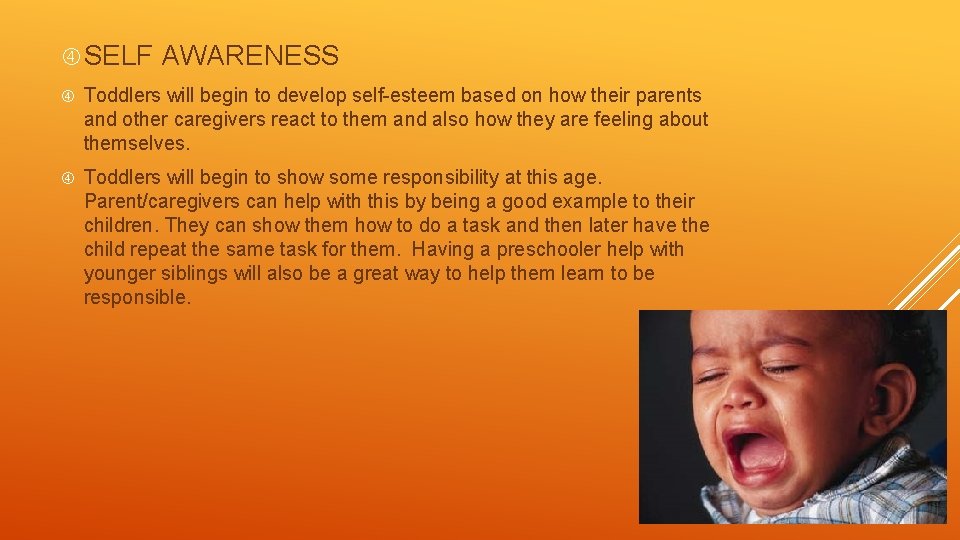
SELF AWARENESS Toddlers will begin to develop self-esteem based on how their parents and other caregivers react to them and also how they are feeling about themselves. Toddlers will begin to show some responsibility at this age. Parent/caregivers can help with this by being a good example to their children. They can show them how to do a task and then later have the child repeat the same task for them. Having a preschooler help with younger siblings will also be a great way to help them learn to be responsible.
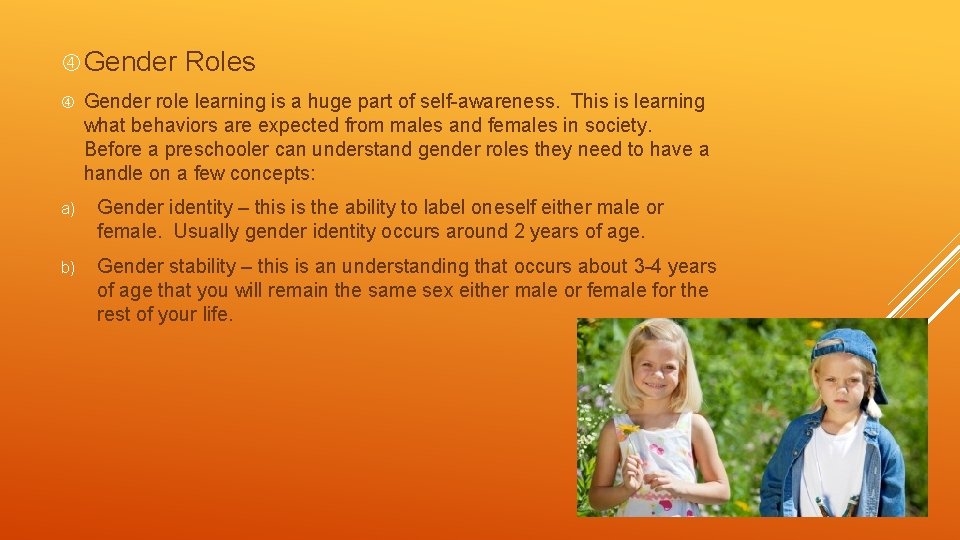
Gender Roles Gender role learning is a huge part of self-awareness. This is learning what behaviors are expected from males and females in society. Before a preschooler can understand gender roles they need to have a handle on a few concepts: a) Gender identity – this is the ability to label oneself either male or female. Usually gender identity occurs around 2 years of age. b) Gender stability – this is an understanding that occurs about 3 -4 years of age that you will remain the same sex either male or female for the rest of your life.
Gender Roles c) Gender constancy – this is an understanding that even if you change your clothes, hair style and actions you will still be the same gender. Once preschoolers understand these 3 basic concepts it will help them learn their gender role. They will soon start sex typing which is the process where a person adopts the attitudes and behaviors that are culturally appropriate for his/her gender.
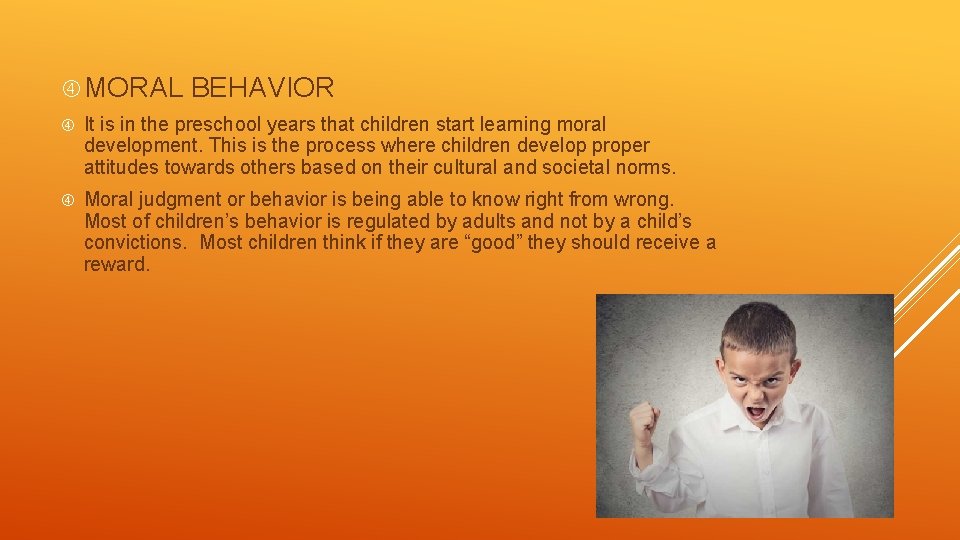
MORAL BEHAVIOR It is in the preschool years that children start learning moral development. This is the process where children develop proper attitudes towards others based on their cultural and societal norms. Moral judgment or behavior is being able to know right from wrong. Most of children’s behavior is regulated by adults and not by a child’s convictions. Most children think if they are “good” they should receive a reward.
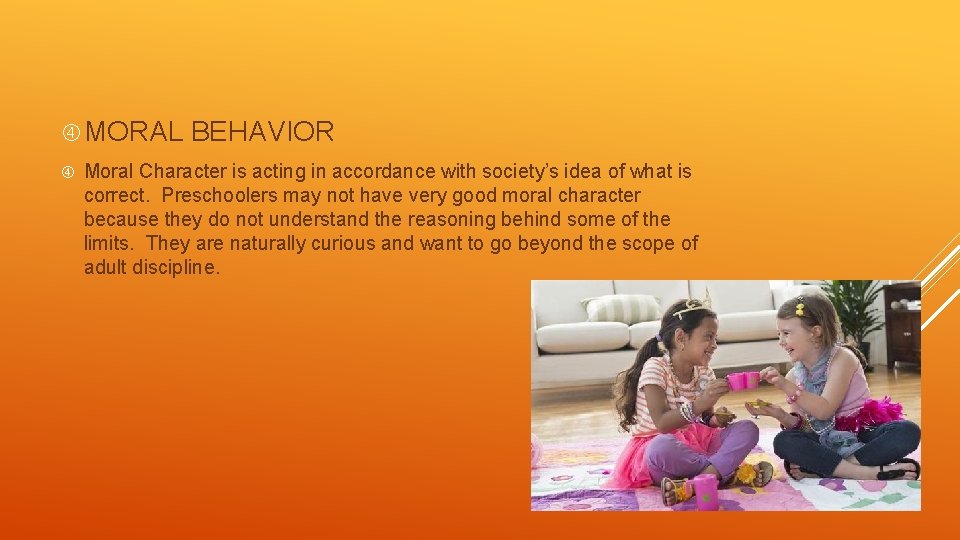
MORAL BEHAVIOR Moral Character is acting in accordance with society’s idea of what is correct. Preschoolers may not have very good moral character because they do not understand the reasoning behind some of the limits. They are naturally curious and want to go beyond the scope of adult discipline.
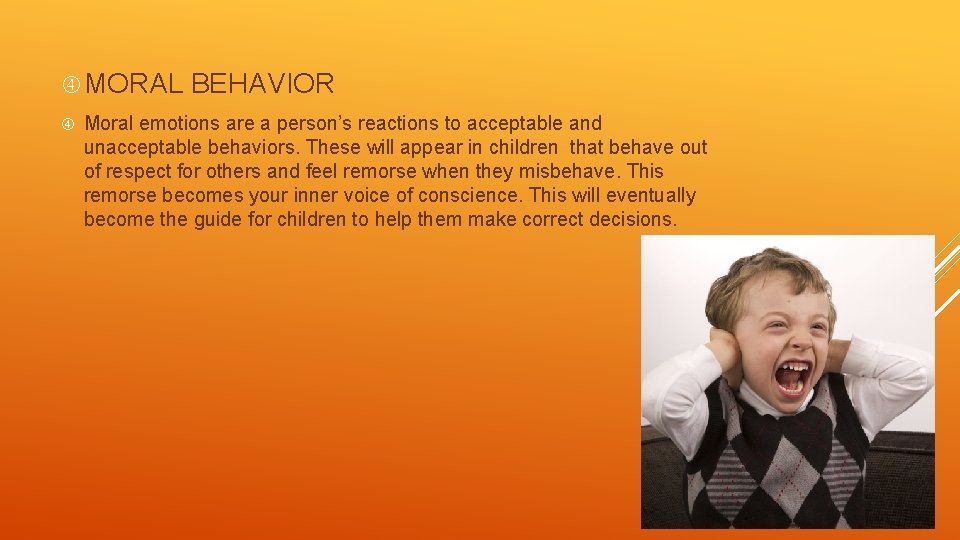
MORAL BEHAVIOR Moral emotions are a person’s reactions to acceptable and unacceptable behaviors. These will appear in children that behave out of respect for others and feel remorse when they misbehave. This remorse becomes your inner voice of conscience. This will eventually become the guide for children to help them make correct decisions.
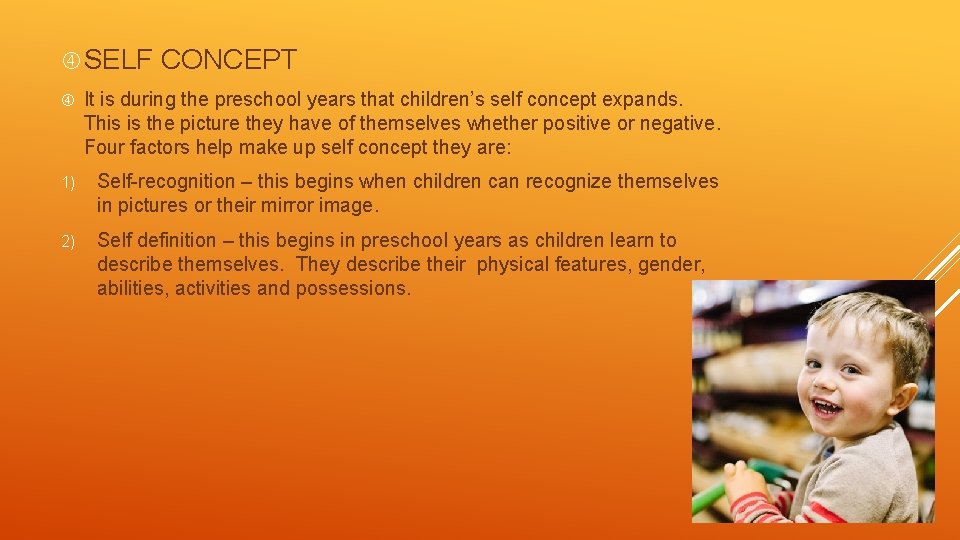
SELF CONCEPT It is during the preschool years that children’s self concept expands. This is the picture they have of themselves whether positive or negative. Four factors help make up self concept they are: 1) Self-recognition – this begins when children can recognize themselves in pictures or their mirror image. 2) Self definition – this begins in preschool years as children learn to describe themselves. They describe their physical features, gender, abilities, activities and possessions.
SELF CONCEPT 3) Self-esteem – as toddlers this is where children start to develop feelings of self worth. For a toddler to develop a healthy self concept they need to have unconditional love, be accepted, have secure attachments and they should have positive discipline and guidance. 4) Self-correction – this is where preschooler believe that they can do better. They may start over when they begin a drawing or want a do over when they compete in athletics.
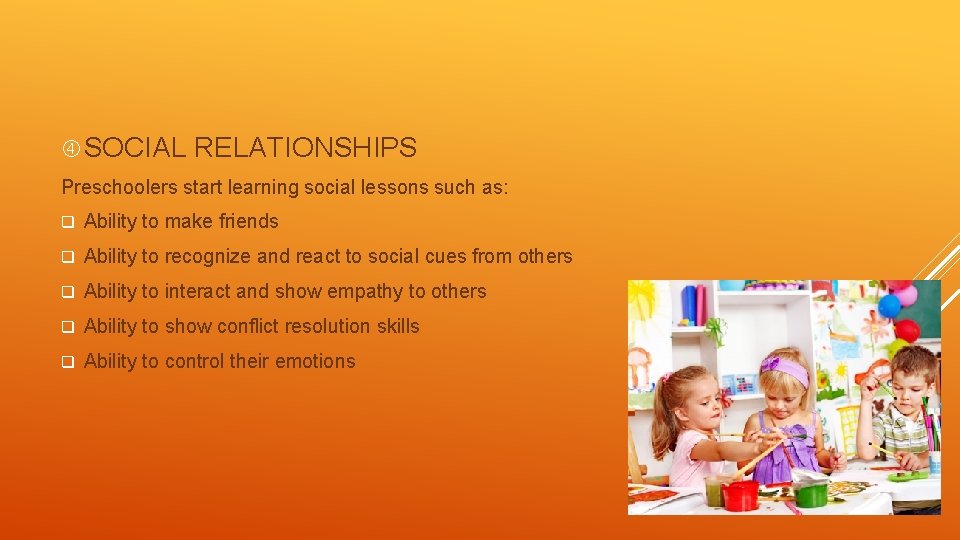
SOCIAL RELATIONSHIPS Preschoolers start learning social lessons such as: q Ability to make friends q Ability to recognize and react to social cues from others q Ability to interact and show empathy to others q Ability to show conflict resolution skills q Ability to control their emotions
INTERACTING WITH OTHERS Preschoolers still depend on adults to meet many of their needs. Caregivers must continue to impose limits on behaviors of their children and explain why they are imposing them. Caregivers should be good examples for their children as role models, gender models, self-control models, manners and much more.
INTERACTING WITH OTHERS Siblings and peers are more important to preschoolers than to toddlers. They are learning how to play with others and it will be a while before any real friendships are formed. Preschoolers learn may social skills playing with other children. They learn to share, take turns, they learn to give and receive from others. They also learn how to manage their impulses and emotions watching how others act.
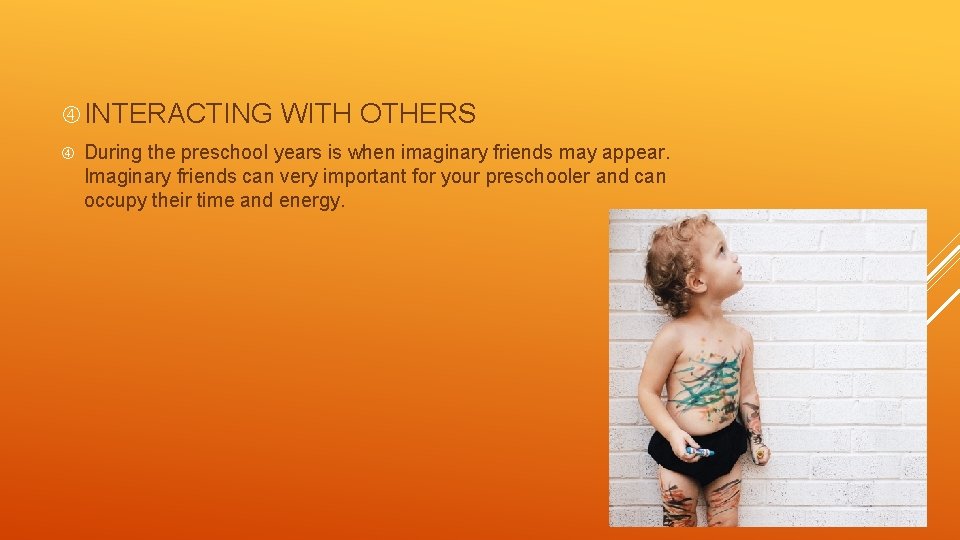
INTERACTING WITH OTHERS During the preschool years is when imaginary friends may appear. Imaginary friends can very important for your preschooler and can occupy their time and energy.
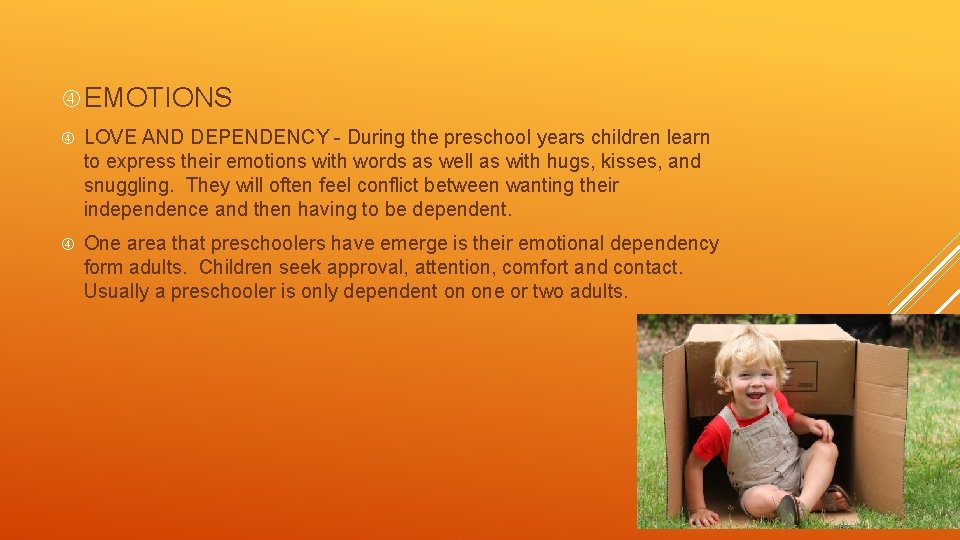
EMOTIONS LOVE AND DEPENDENCY - During the preschool years children learn to express their emotions with words as well as with hugs, kisses, and snuggling. They will often feel conflict between wanting their independence and then having to be dependent. One area that preschoolers have emerge is their emotional dependency form adults. Children seek approval, attention, comfort and contact. Usually a preschooler is only dependent on one or two adults.
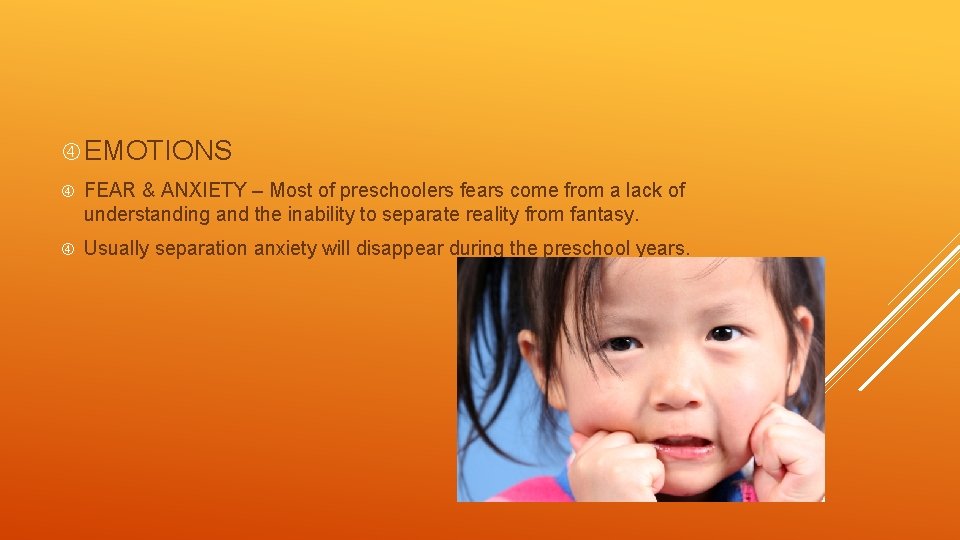
EMOTIONS FEAR & ANXIETY – Most of preschoolers fears come from a lack of understanding and the inability to separate reality from fantasy. Usually separation anxiety will disappear during the preschool years.
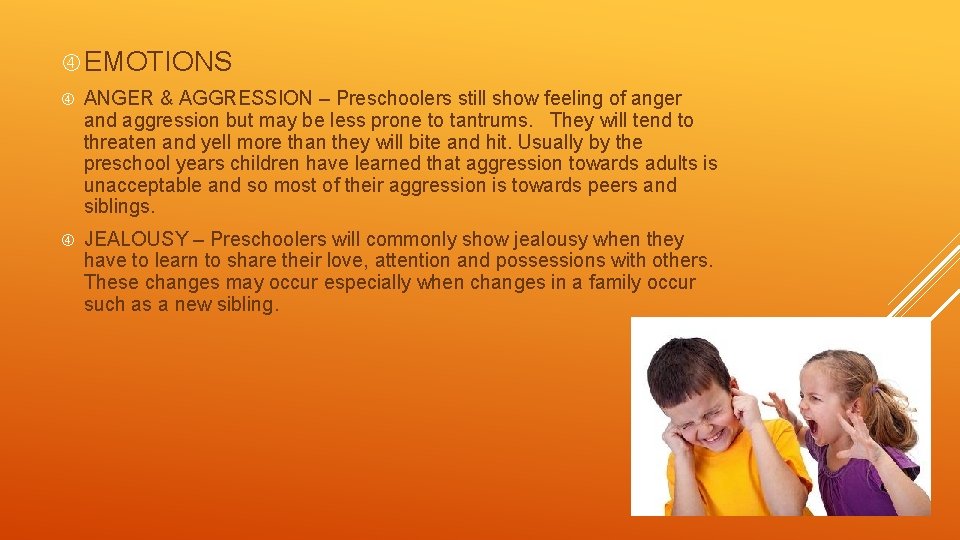
EMOTIONS ANGER & AGGRESSION – Preschoolers still show feeling of anger and aggression but may be less prone to tantrums. They will tend to threaten and yell more than they will bite and hit. Usually by the preschool years children have learned that aggression towards adults is unacceptable and so most of their aggression is towards peers and siblings. JEALOUSY – Preschoolers will commonly show jealousy when they have to learn to share their love, attention and possessions with others. These changes may occur especially when changes in a family occur such as a new sibling.
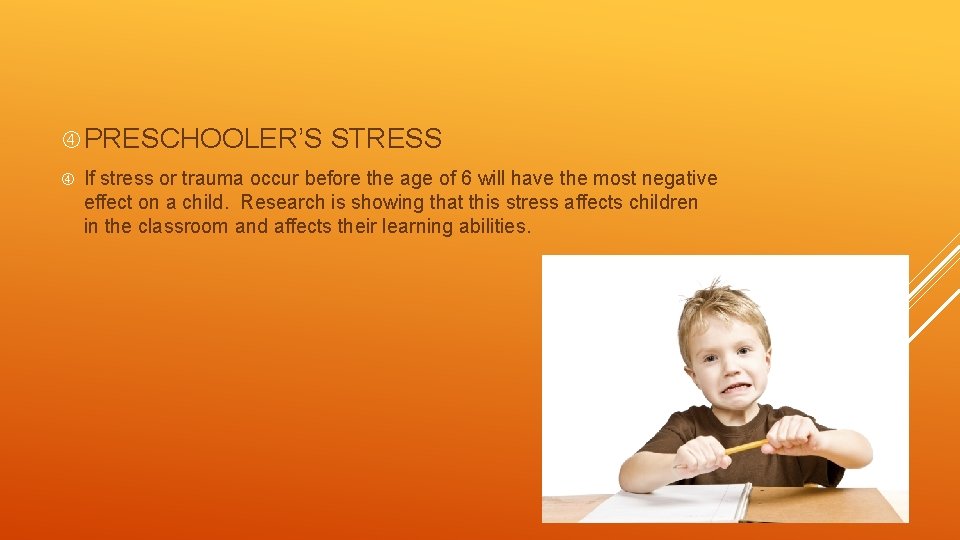
PRESCHOOLER’S STRESS If stress or trauma occur before the age of 6 will have the most negative effect on a child. Research is showing that this stress affects children in the classroom and affects their learning abilities.
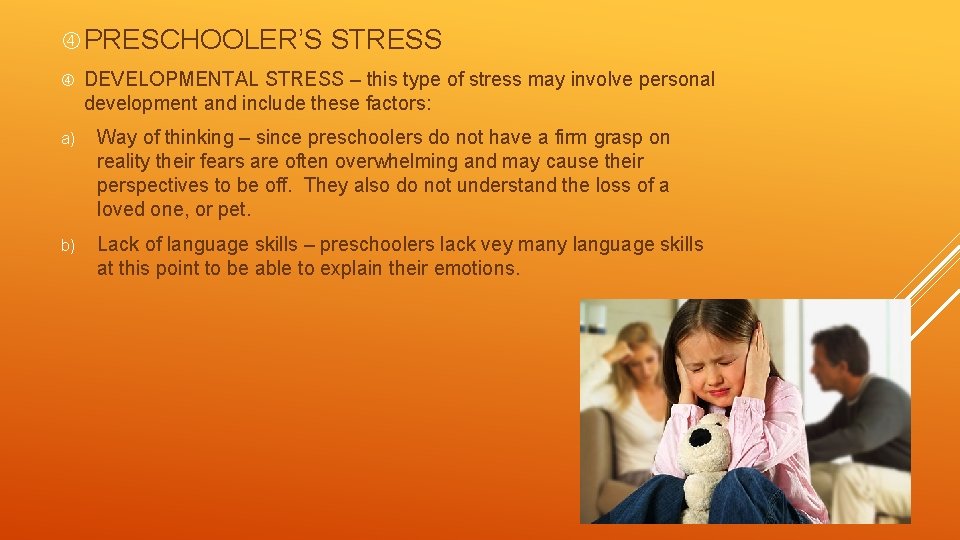
PRESCHOOLER’S STRESS DEVELOPMENTAL STRESS – this type of stress may involve personal development and include these factors: a) Way of thinking – since preschoolers do not have a firm grasp on reality their fears are often overwhelming and may cause their perspectives to be off. They also do not understand the loss of a loved one, or pet. b) Lack of language skills – preschoolers lack vey many language skills at this point to be able to explain their emotions.
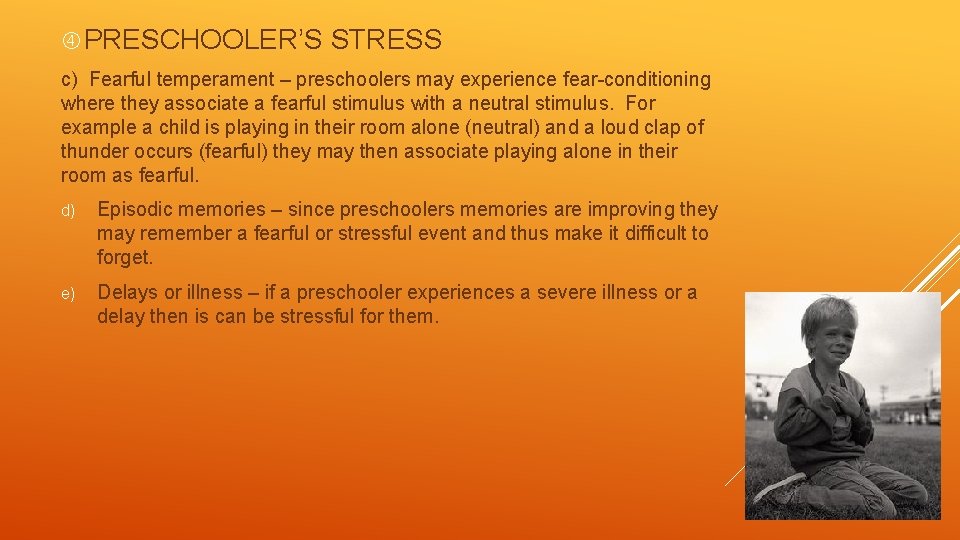
PRESCHOOLER’S STRESS c) Fearful temperament – preschoolers may experience fear-conditioning where they associate a fearful stimulus with a neutral stimulus. For example a child is playing in their room alone (neutral) and a loud clap of thunder occurs (fearful) they may then associate playing alone in their room as fearful. d) Episodic memories – since preschoolers memories are improving they may remember a fearful or stressful event and thus make it difficult to forget. e) Delays or illness – if a preschooler experiences a severe illness or a delay then is can be stressful for them.
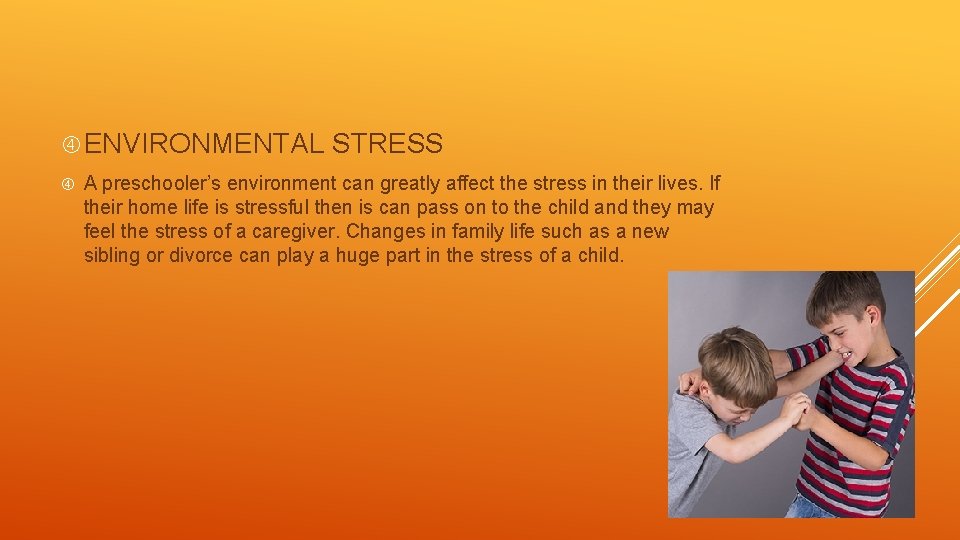
ENVIRONMENTAL STRESS A preschooler’s environment can greatly affect the stress in their lives. If their home life is stressful then is can pass on to the child and they may feel the stress of a caregiver. Changes in family life such as a new sibling or divorce can play a huge part in the stress of a child.
SOCIAL-EMOTIONAL DEVELOPMENTAL MILESTONES 3 YEAR OLDS q Shows interest in new things q Enjoys helping with chores q Fears the unknown, pain and the dark q Shows affection for special friends, comforts hurt children
SOCIAL-EMOTIONAL DEVELOPMENTAL MILESTONES 4 YEAR OLDS q Takes turns, shares and cooperates q Resents adults directions and limitations and challenges authority q Fears monsters q Expresses anger by yelling 5 YEAR OLDS q Is sensitive to the needs of other children q Begins to follow rules and play fairly q Has a gender role concept q Begins to distinguish fantasy from reality