
Social Thinking and Social Influence Introduction Social Psychology

- Slides: 24
Social Thinking and Social Influence
Introduction
Social Psychology • The scientific study of how people think about, influence, and relate to one another
Social Thinking
Social Thinking: Attributing Behavior to Personal Disposition or the Situation
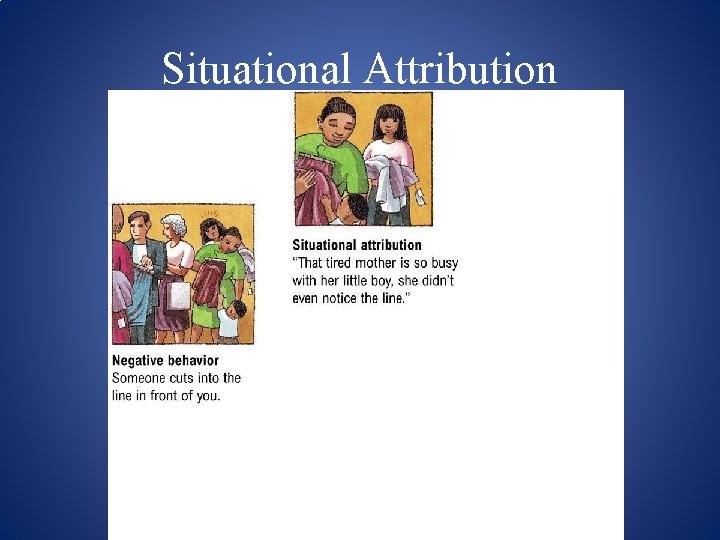
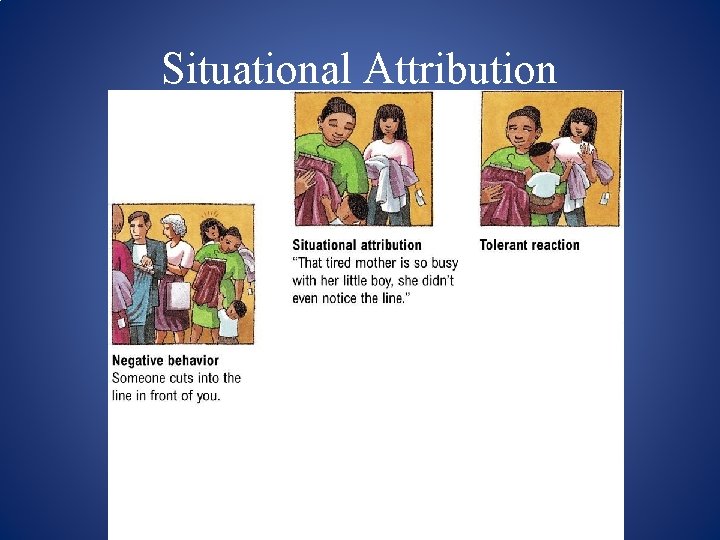
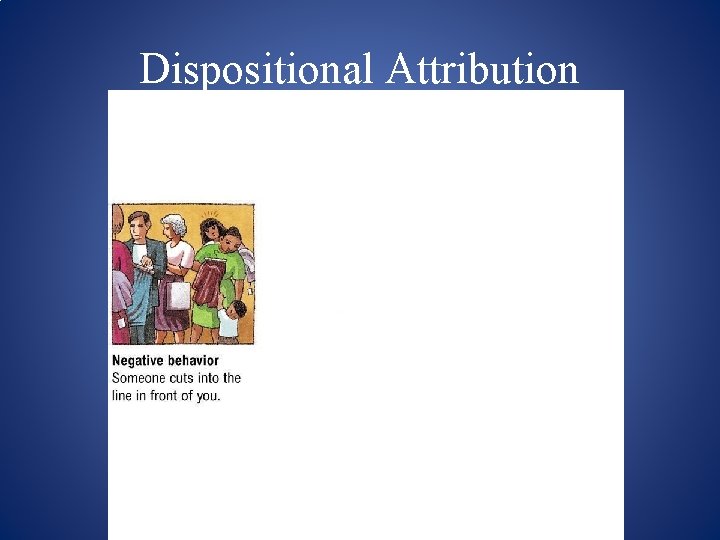
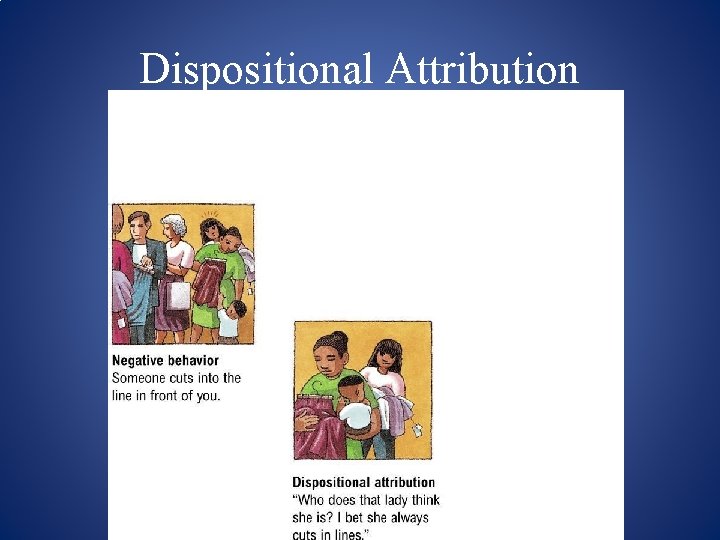
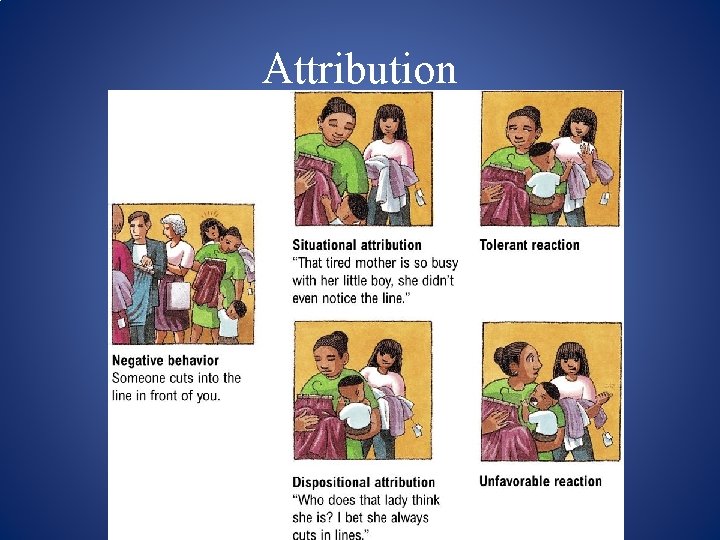
Attribution Theory • Theory that we tend to explain the behavior of others as an aspect of either an internal disposition (an inner trait) or the situation
Situational Disposition • Attributing someone’s actions to the various factors in the situation
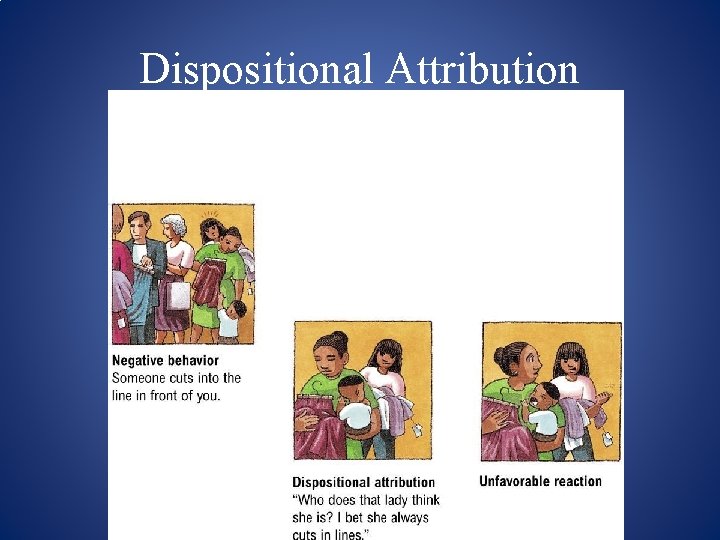
Dispositional Attribution • Attributing someone’s actions to the person’s disposition, i. e. their thoughts, feelings, personality characteristics, etc.
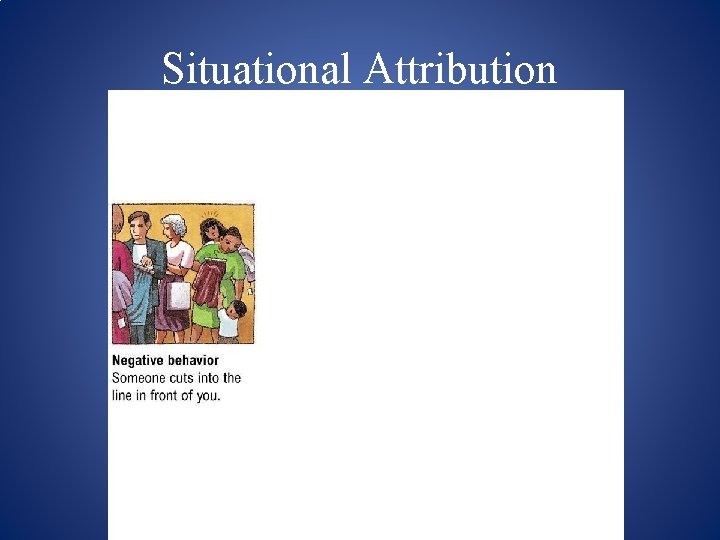
Situational Attribution
Situational Attribution
Situational Attribution
Dispositional Attribution
Dispositional Attribution
Dispositional Attribution
Attribution
Fundamental Attribution Error • Tendency to attribute the behavior of others to internal disposition rather than to situations • People tend to blame or credit the person more than the situation
Social Thinking: Attitudes and Actions
Attitude • Belief and feeling that predisposes someone to respond in a particular way to objects, people, and events
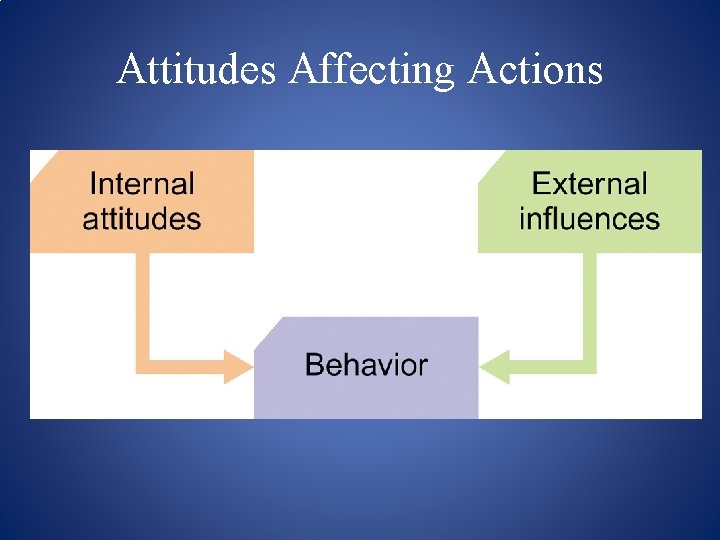
Attitudes Affecting Actions • Many studies suggest a person’s attitudes do not match their actions • Attitudes can predict behavior if: – Outside influences are minimal – People are aware of their attitudes – Attitude is relevant to behavior
Attitudes Affecting Actions
Actions Affecting Attitudes • Under some circumstances one’s actions can influence attitudes. They include: – Foot-in-the-door phenomenon – Role playing – Cognitive dissonance
Foot-in-the-Door Phenomenon • Tendency for people who have first agreed to a small request to comply later with a larger request
Role Playing • Playing a role can influence or change one’s attitude • Zimbardo’s Prison Study – College students played the role of guard or prisoner in a simulated prison. – The study was ended when the guards became too aggressive and cruel.
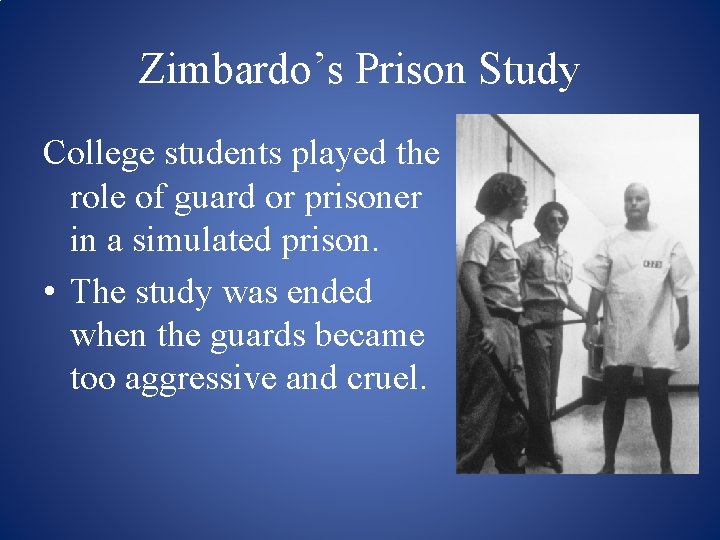
Zimbardo’s Prison Study College students played the role of guard or prisoner in a simulated prison. • The study was ended when the guards became too aggressive and cruel.