
Social Support Resilience and Irish Children Family Services

- Slides: 49
Social Support, Resilience and Irish Children & Family Services Charles University, Prague 14 th March 2011 Prof. Pat Dolan, Ph. D
Today we will explore…. 1. Key Underpinnings in Social Support theory 2. Aspects of Resilience Building as a core service Function 3. Application in Irish Children Services within the key issue of Meeting Need
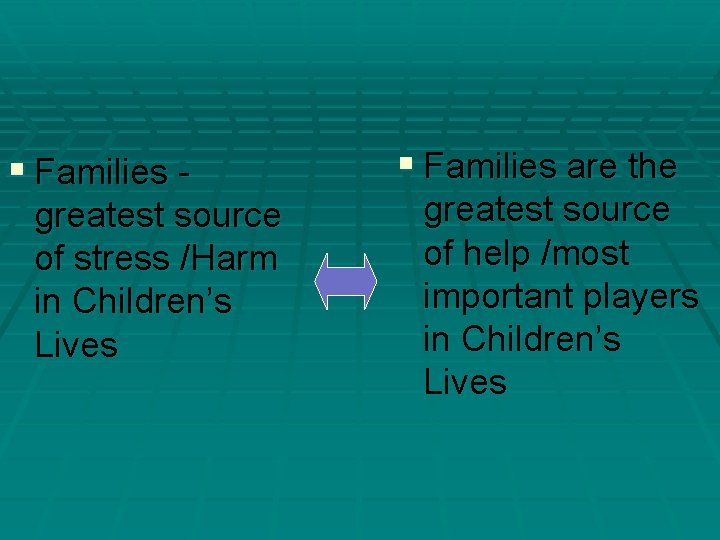
§ Families - greatest source of stress /Harm in Children’s Lives § Families are the greatest source of help /most important players in Children’s Lives
Aware of Differing Views of Differing Development in Children § Intellectual Development - Piaget Assimilation § Personality Development Sigmund. Formulated - Id, Ego and Superego. § Reality Theory pioneers G Stanley Hall 1904. Storm and Stress. § Erikson. 1950 s- Victory and defeat Stages of Childhood and Adolescence § Moral Development in Children - Kholberg
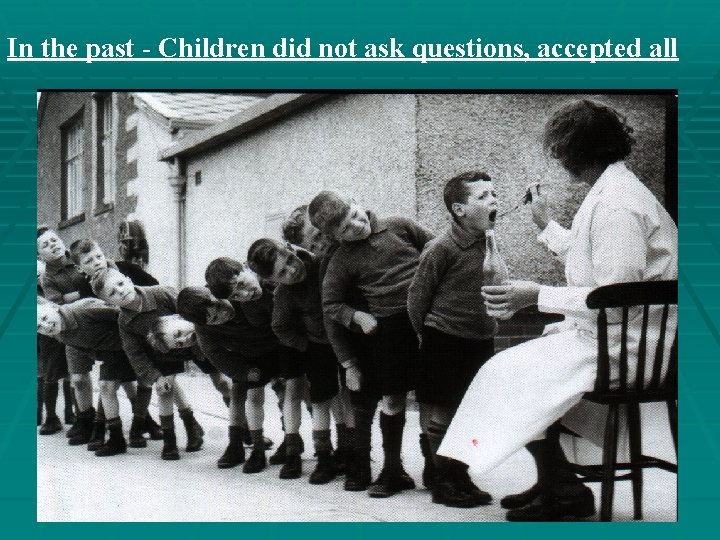
In the past - Children did not ask questions, accepted all
Contextual Factors! § 80 to 85% of Irish Children have normative § § experiences - of 15% 90% grow out of problems Timing of events growing up and issues coming at the same time effect coping. Problems in childhood often correlated to mental health issues poverty, education or disability (Coping issues) Risk of labelling Children ie one parent family labelling - Historical Pattern in Ireland Major Changes in Irish Economy = affecting service provision
Understanding Social Support
Acts of Assistance Between Human Beings (Tracy and Whittaker, 1994) Key issue of Informal Sources of Support
TEA as a model for Types of Social Support Dolan. 2008
Qualities of Social Support Closeness Reciprocity Admonishment Durability Note: relationship between four qualities Context of Events and how one views quality of support on offer
Outside of Family Remember the Role of Friendships for Children
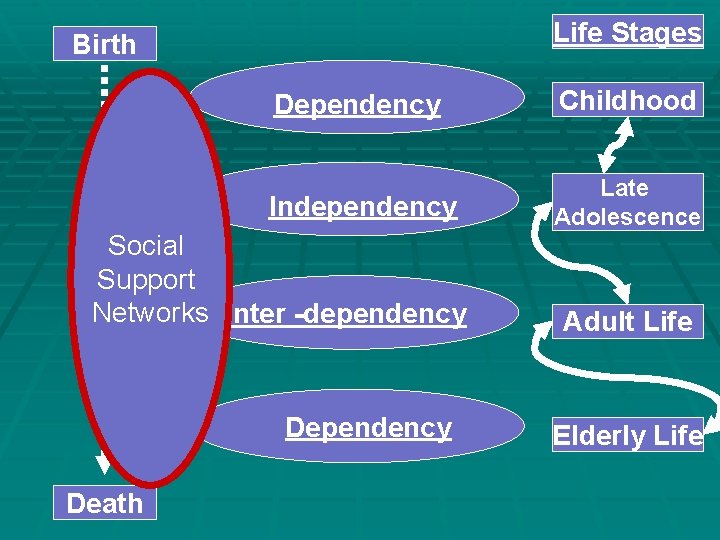
Life Stages Birth Dependency Childhood Independency Late Adolescence Social Support Networks Inter -dependency Death Adult Life Elderly Life
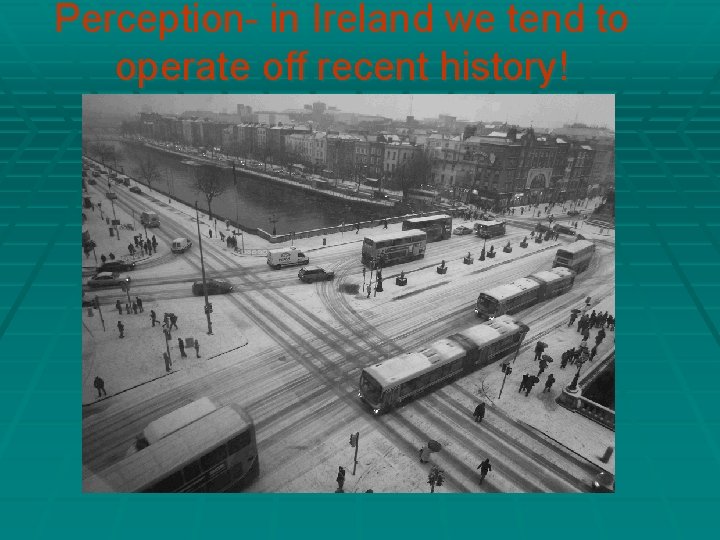
Perception- in Ireland we tend to operate off recent history!
Understanding Children’s Needs
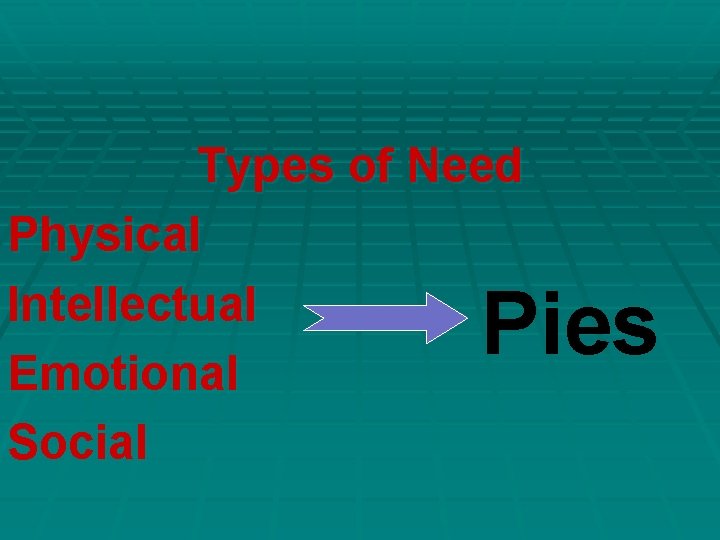
Types of Need Physical Intellectual Emotional Social Pies
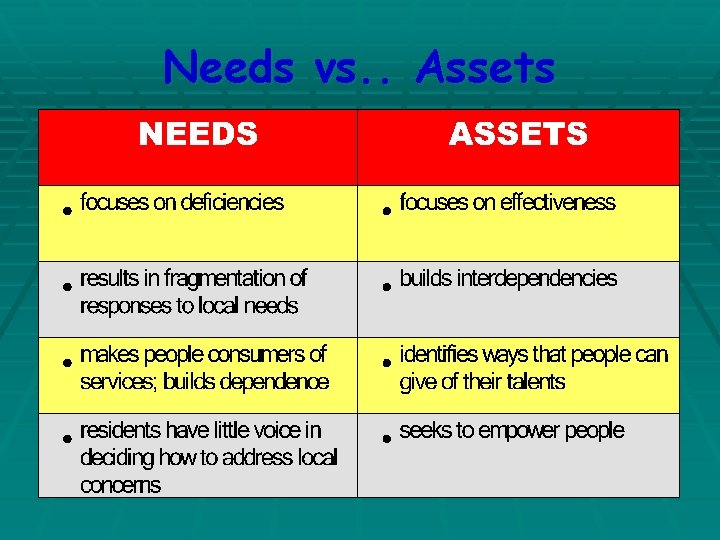
Needs vs. . Assets
Understanding Resilience
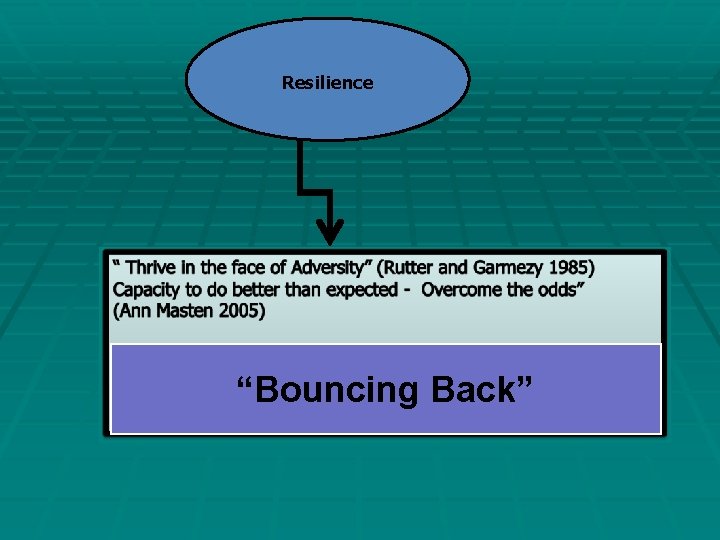
Resilience “Bouncing Back”
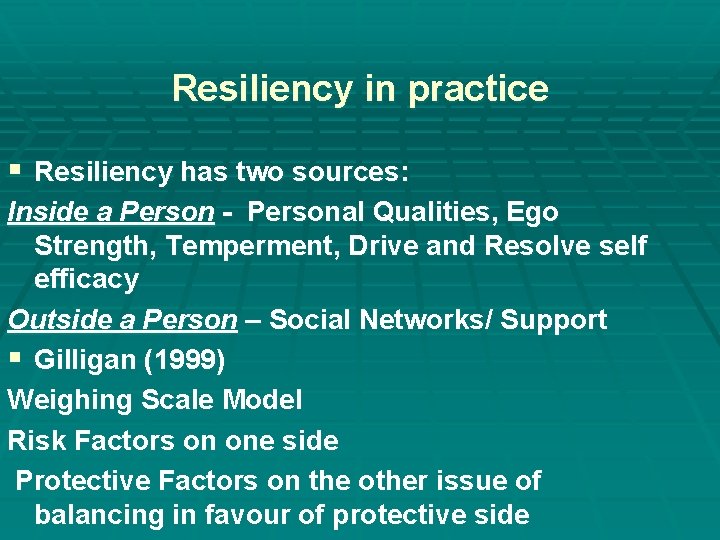
Resiliency in practice § Resiliency has two sources: Inside a Person - Personal Qualities, Ego Strength, Temperment, Drive and Resolve self efficacy Outside a Person – Social Networks/ Support § Gilligan (1999) Weighing Scale Model Risk Factors on one side Protective Factors on the other issue of balancing in favour of protective side
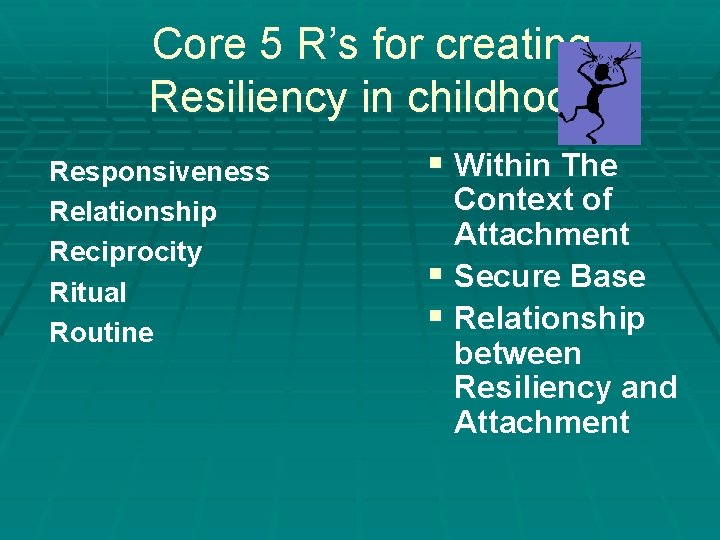
Core 5 R’s for creating Resiliency in childhood Responsiveness Relationship Reciprocity Ritual Routine § Within The Context of Attachment § Secure Base § Relationship between Resiliency and Attachment
Serendipity § Resilient children are those who can take § § opportunities that come their way Resilient Families and Communities Role of Social Support Personal Affect Personal Resolve
Resiliency in a Practice Context § The measurement of Resiliency its connection to Coping during childhood § Coping with past, current or potential events or circumstances § Relationship between Resiliency and Mental Health / Well-being § Benson’s 40 Developmental Assets – (Quota of 14 needed to survive)
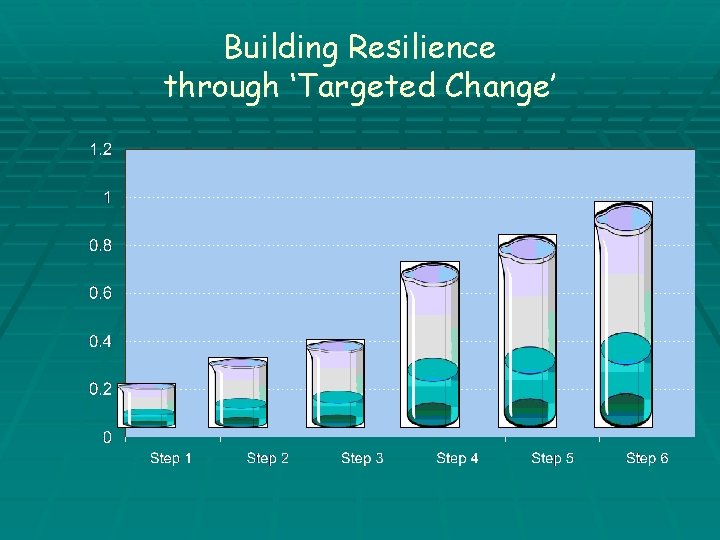
Building Resilience through ‘Targeted Change’
ANCHORING RESILIENCY THEORY: § Success in one area of ones life…. . § § leading to personal belief and as a way of building resiliency in children Success in a hobby for a child Manufactured success in working with service users Success in a parent, parenting a specific event Compensatory function of Resiliency e. g. losing a tooth!
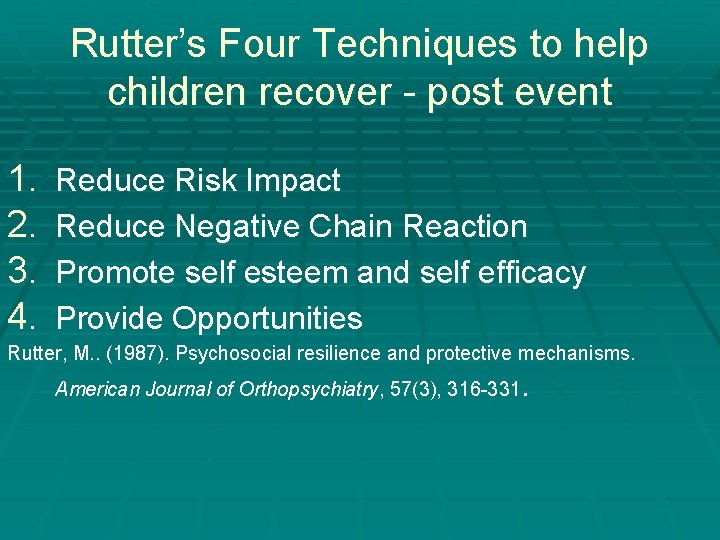
Rutter’s Four Techniques to help children recover - post event 1. 2. 3. 4. Reduce Risk Impact Reduce Negative Chain Reaction Promote self esteem and self efficacy Provide Opportunities Rutter, M. . (1987). Psychosocial resilience and protective mechanisms. . American Journal of Orthopsychiatry, 57(3), 316 -331
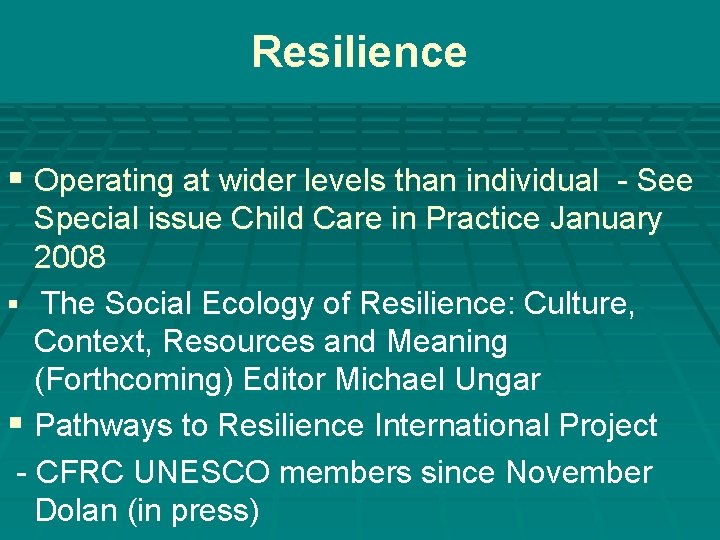
Resilience § Operating at wider levels than individual - See Special issue Child Care in Practice January 2008 § The Social Ecology of Resilience: Culture, Context, Resources and Meaning (Forthcoming) Editor Michael Ungar § Pathways to Resilience International Project - CFRC UNESCO members since November Dolan (in press)
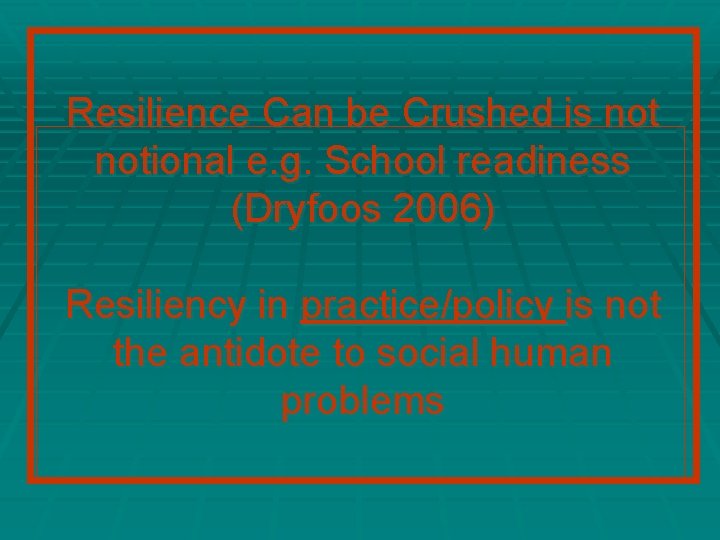
Resilience Can be Crushed is notional e. g. School readiness (Dryfoos 2006) Resiliency in practice/policy is not the antidote to social human problems
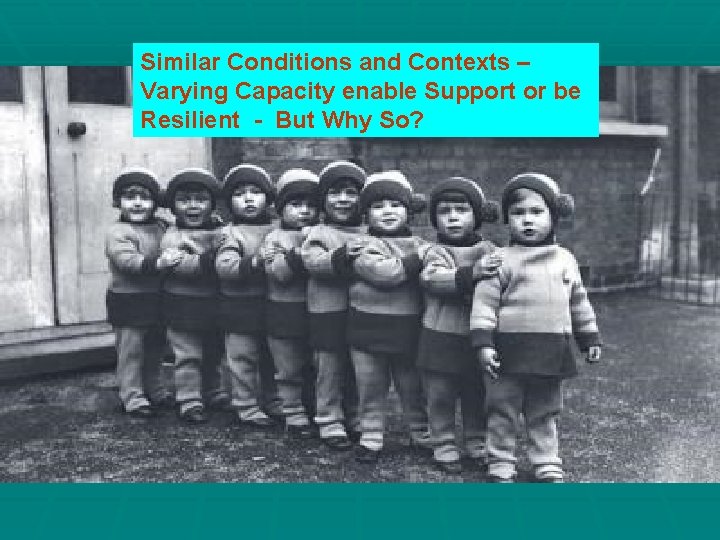
Similar Conditions and Contexts – Varying Capacity enable Support or be Resilient - But Why So?
Judging Presence of Resilience § Two Judgments have to be present § First—has to be significant threat or hazard– past or present- Demonstrable Risk § Second –has to be Good or Good Enough adaptation—highly complex—hard to measure
Identifying resilience § Not directly measured § Based on two judgements: § is the person doing ok? § is there now or has their been any significant risk or adversity to be overcome?
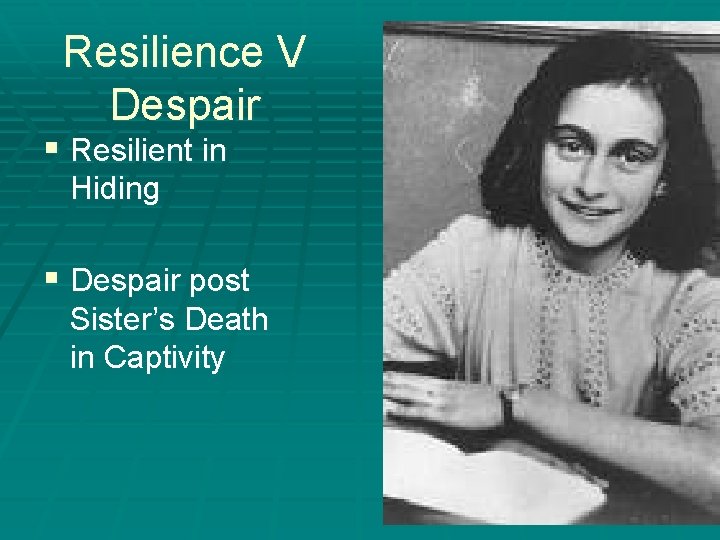
Resilience V Despair § Resilient in Hiding § Despair post Sister’s Death in Captivity
Risk Factors family § Low birth weight § Poor parental supervision and discipline § Family conflict § Family history of antisocial behaviour § Parental attitudes condoning anti social behaviour § Low income poor housing
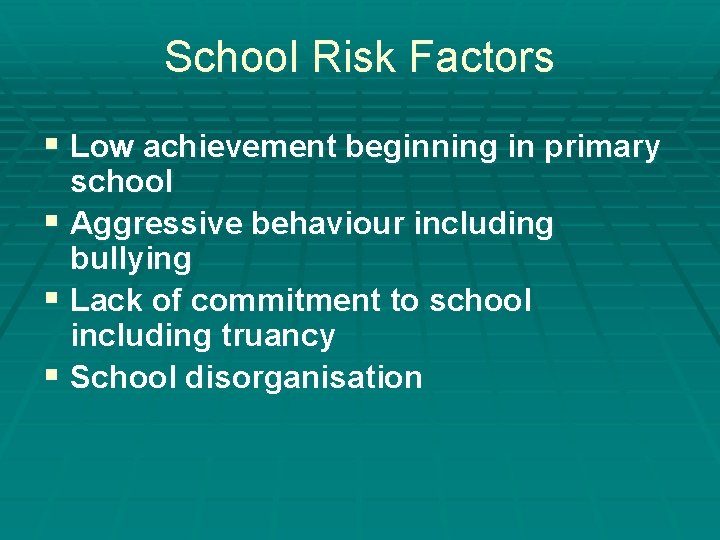
School Risk Factors § Low achievement beginning in primary school § Aggressive behaviour including bullying § Lack of commitment to school including truancy § School disorganisation
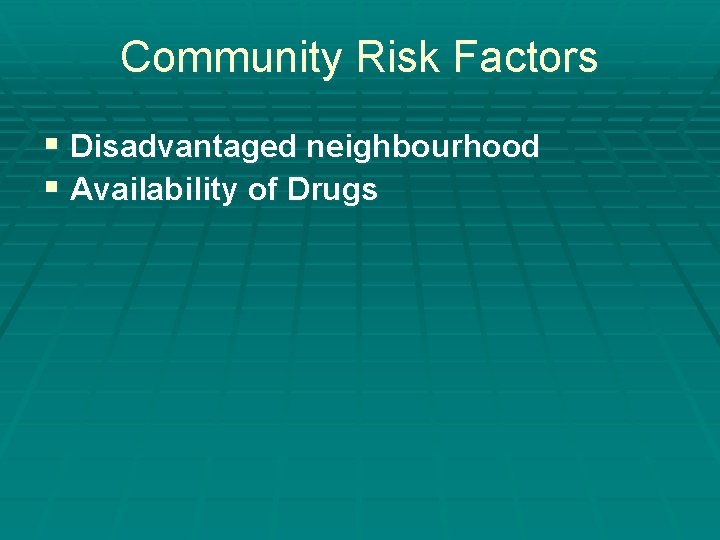
Community Risk Factors § Disadvantaged neighbourhood § Availability of Drugs
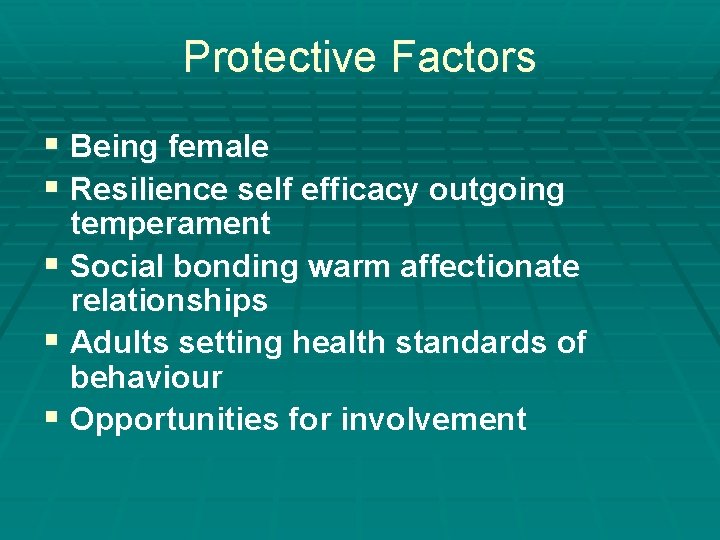
Protective Factors § Being female § Resilience self efficacy outgoing temperament § Social bonding warm affectionate relationships § Adults setting health standards of behaviour § Opportunities for involvement
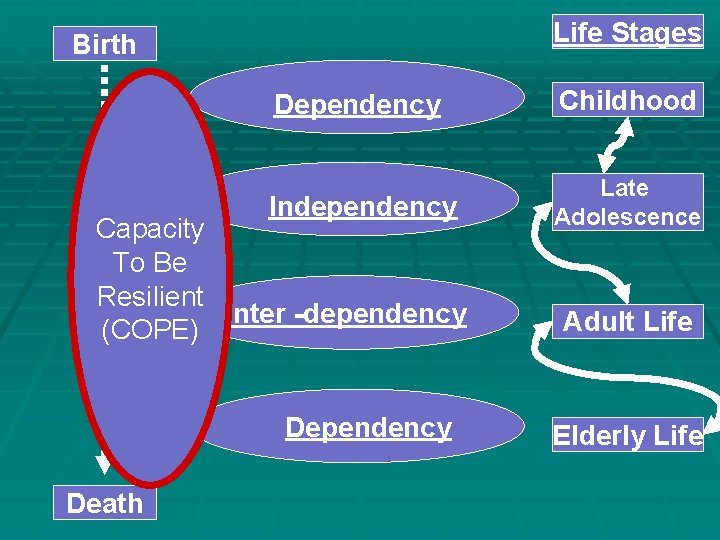
Life Stages Birth Dependency Childhood Independency Late Adolescence Capacity To Be Resilient Inter -dependency (COPE) Dependency Death Adult Life Elderly Life
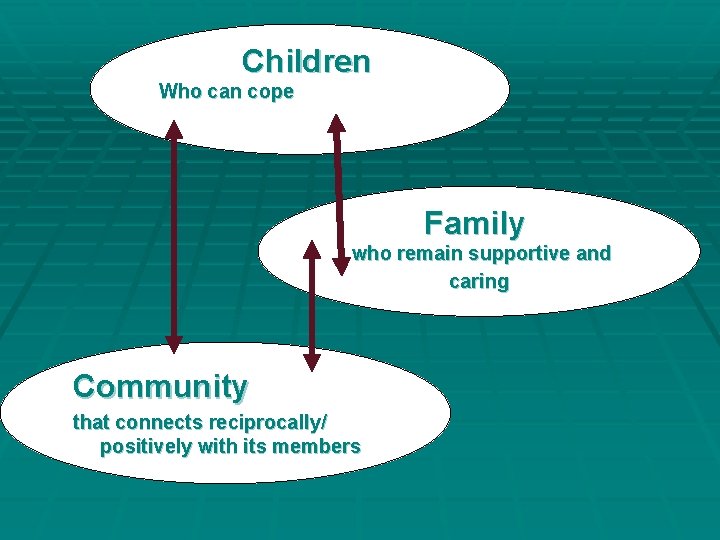
Children Who can cope Family who remain supportive and caring Community that connects reciprocally/ positively with its members
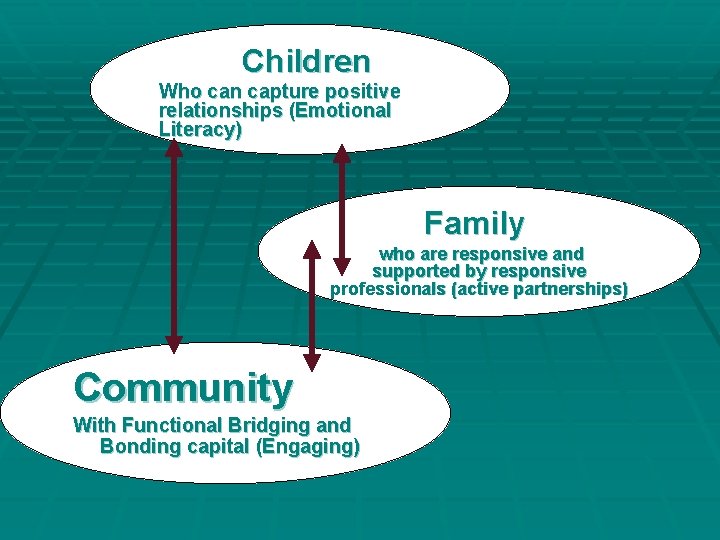
Children Who can capture positive relationships (Emotional Literacy) Family who are responsive and supported by responsive professionals (active partnerships) Community With Functional Bridging and Bonding capital (Engaging)
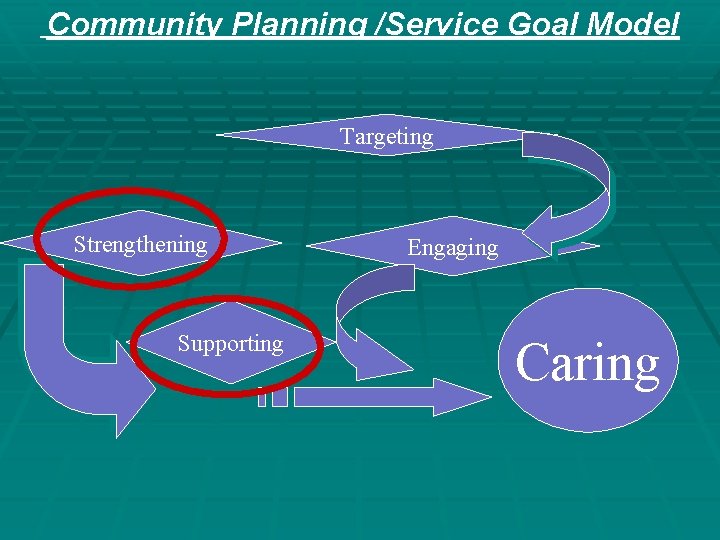
Community Planning /Service Goal Model Targeting Strengthening Supporting Engaging Caring
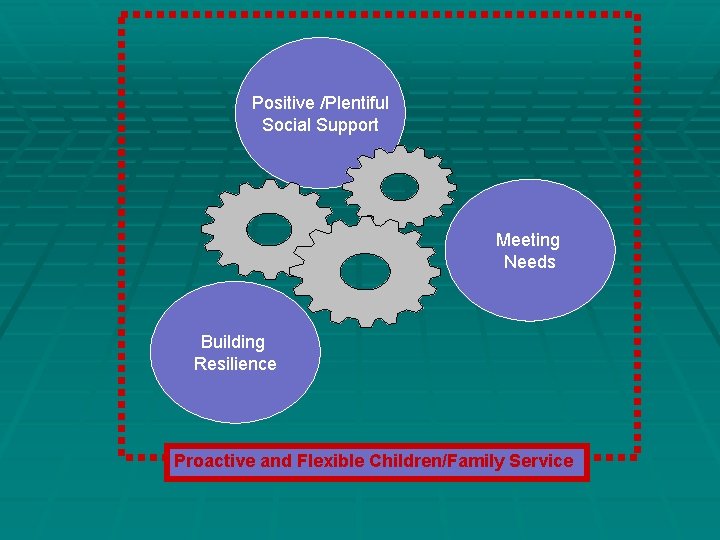
Positive /Plentiful Social Support Meeting Needs Building Resilience Proactive and Flexible Children/Family Service
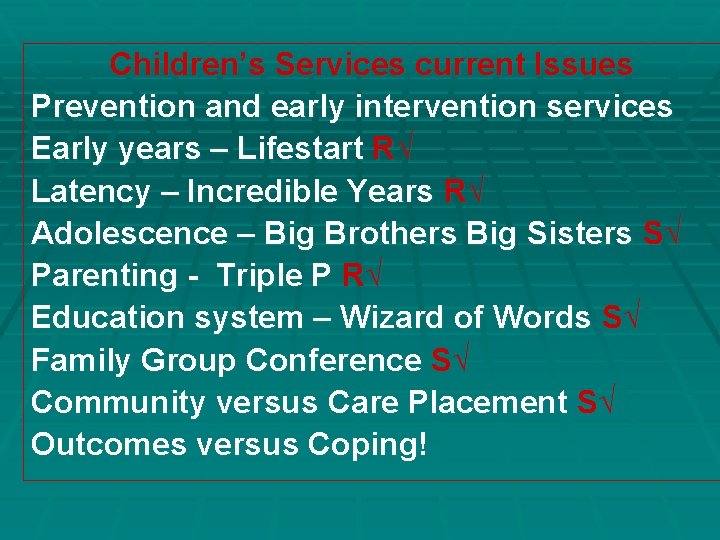
Children’s Services current Issues Prevention and early intervention services Early years – Lifestart R√ Latency – Incredible Years R√ Adolescence – Big Brothers Big Sisters S√ Parenting - Triple P R√ Education system – Wizard of Words S√ Family Group Conference S√ Community versus Care Placement S√ Outcomes versus Coping!
National Children Strategy (2000) Ecological Perspective Mindful of Resilience (Dolan et al 2006)
A ‘movement’ for the Rights of Children’s Rights above Parents and Paramount But in Counterbalance Child Protection Services in Ireland an ongoing Issue Church and State Harm and Help Resilience and Social Support
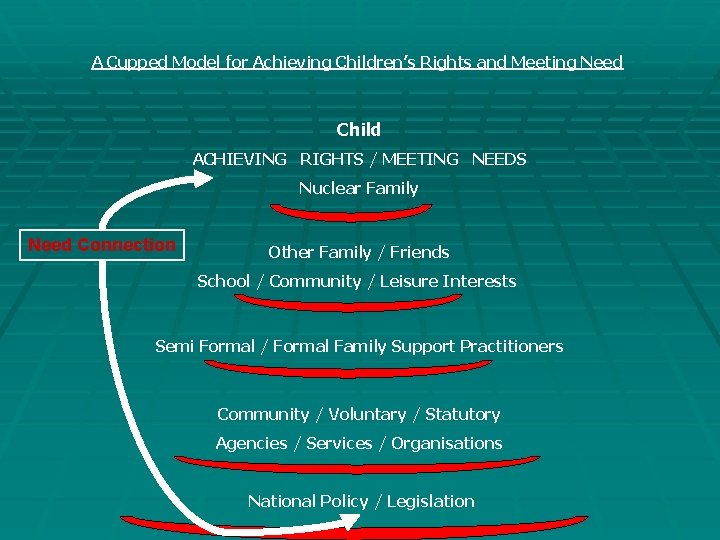
A Cupped Model for Achieving Children’s Rights and Meeting Need Child ACHIEVING RIGHTS / MEETING NEEDS Nuclear Family Need Connection Other Family / Friends School / Community / Leisure Interests Semi Formal / Formal Family Support Practitioners Community / Voluntary / Statutory Agencies / Services / Organisations National Policy / Legislation
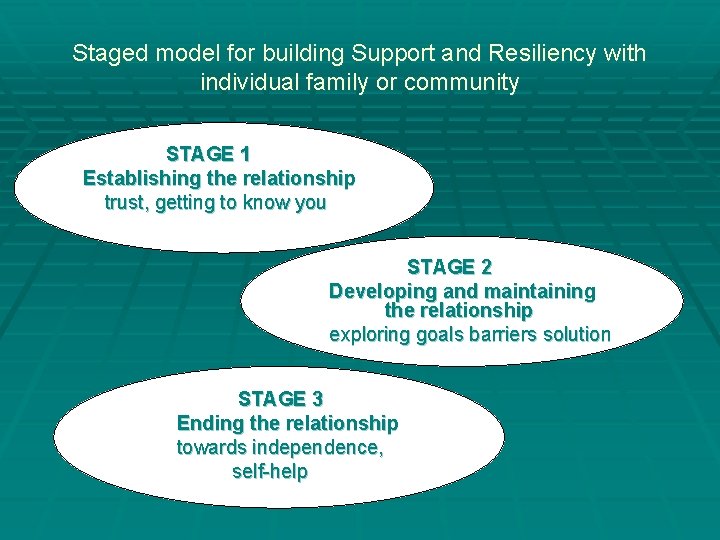
Staged model for building Support and Resiliency with individual family or community STAGE 1 Establishing the relationship trust, getting to know you STAGE 2 Developing and maintaining the relationship exploring goals barriers solution STAGE 3 Ending the relationship towards independence, self-help
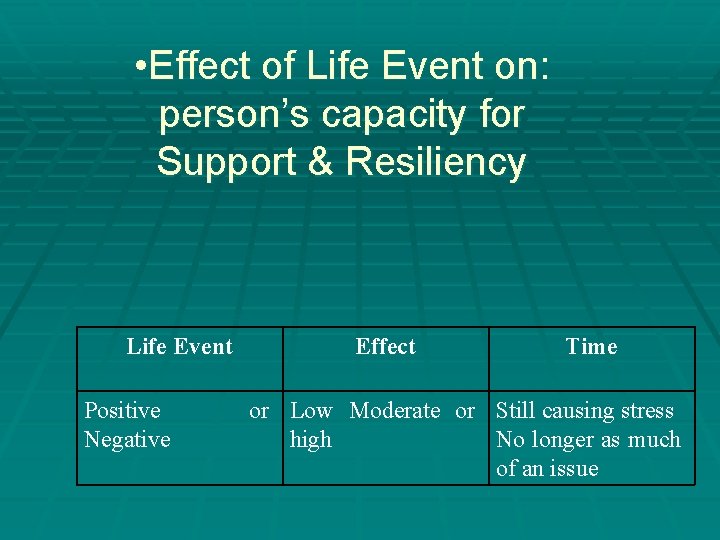
• Effect of Life Event on: person’s capacity for Support & Resiliency Life Event Positive Negative Effect Time or Low Moderate or Still causing stress high No longer as much of an issue
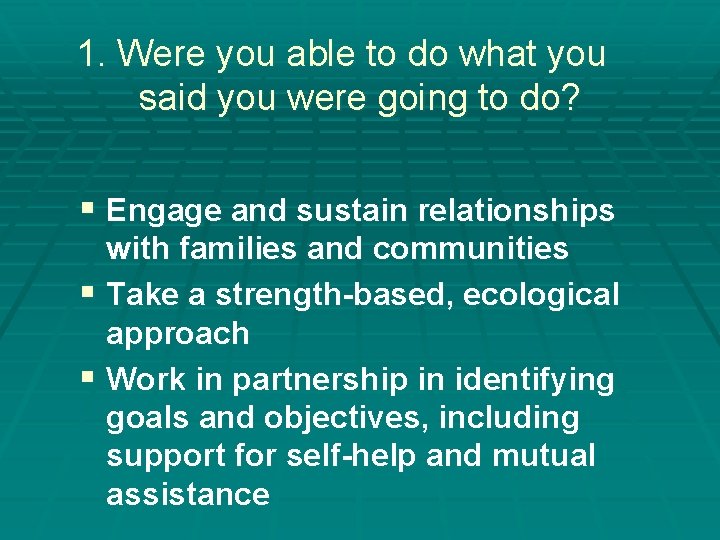
1. Were you able to do what you said you were going to do? § Engage and sustain relationships with families and communities § Take a strength-based, ecological approach § Work in partnership in identifying goals and objectives, including support for self-help and mutual assistance
Finally… Instilling predictable hope in others that they can and will overcome the odds