
Social Support Groups Matrix Intensive Outpatient Program Social



- Slides: 10
Social Support Groups Matrix Intensive Outpatient Program
Social Support Groups £Assist patients in establishing new non-drug related friends and activities £Provides ongoing support £Less structured and topic focused £Content is based on the needs of the members attending
Social Support (continuing care) £ Starts on the 4 th month, once a week, 36 sessions £ Overlaps with primary treatment, primarily discussion sessions £ Re-socialize with clients who are older in the program £ Strengthens experienced participants recovery by serving as role models £ 90 minutes long groups of 10 people
Goals £ Provide a safe discussion group where clients practice resocialization skills. £ Provide opportunities for clients who are advanced in treatment and recovery to serve as role models for clients who have been in recovery for less time. £ Encourage clients to broaden their support system of abstinent, recovering contacts with whom they can attend 12 -Step or mutual-help meetings. £ Provide a less structured and more independent group environment that helps clients progress from treatment in the more structured environments of Early Recovery Skills and Relapse Prevention groups to recovery maintained with group support but without clinical support.
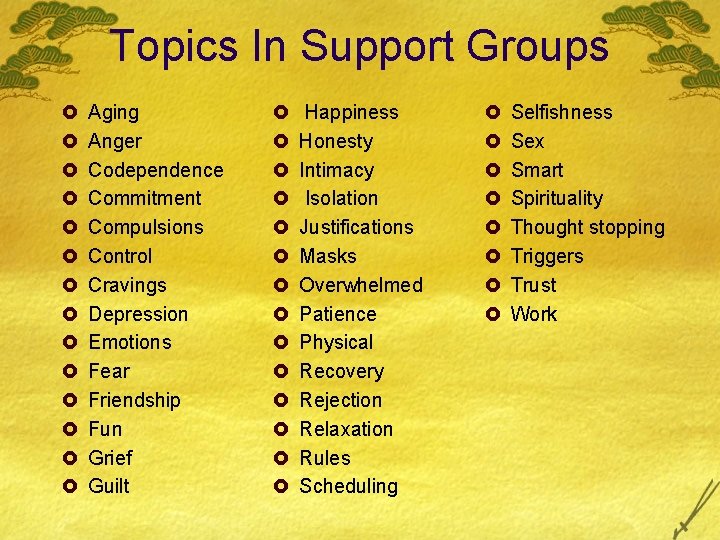
Topics In Support Groups £ £ £ £ Aging Anger Codependence Commitment Compulsions Control Cravings Depression Emotions Fear Friendship Fun Grief Guilt £ £ £ £ Happiness Honesty Intimacy Isolation Justifications Masks Overwhelmed Patience Physical Recovery Rejection Relaxation Rules Scheduling £ £ £ £ Selfishness Sex Smart Spirituality Thought stopping Triggers Trust Work
£Other relevant topics may be chosen £Not necessarily follow a particular sequence £Client facilitators – emotionally stable, intellectually competent, recovery strength, commit to attending 6 months of sessions, meets with facilitator prior to session
Discussion Guidelines £ Listen to clients, help them clarify what they are saying, but do not speak for them or provide answers. £ Encourage group members to accept and support one another. £ Focus on the members; do not assume a position of authority or monopolize the discussion. £ Permit clients to depart briefly from the session’s topic if the discussion seems beneficial to all clients in the group.
Discussion Guidelines £ Steer participants away from lengthy stories of using that might act as triggers for others. £ Make sure that the group is not dominated by one or two members and that everyone in the group gets time to speak. £ Avoid making generalizations. £ Avoid asking “why” questions of members (e. g. , questioning their actions or motivations)
AA/NA Meetings £One night per week done on premises £Standard AA £Patients are encouraged to participate £Part of the recovery plan