
Social Studies Review Fourth Grade South American Tribes
Social Studies Review Fourth Grade
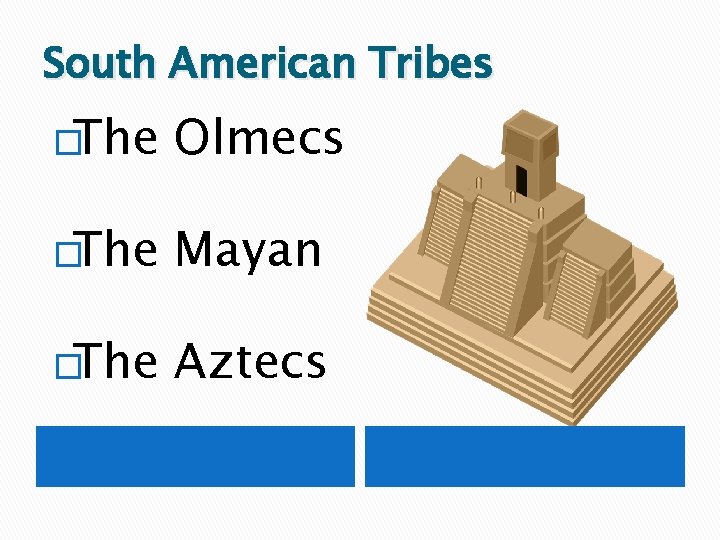
South American Tribes �The Olmecs �The Mayan �The Aztecs
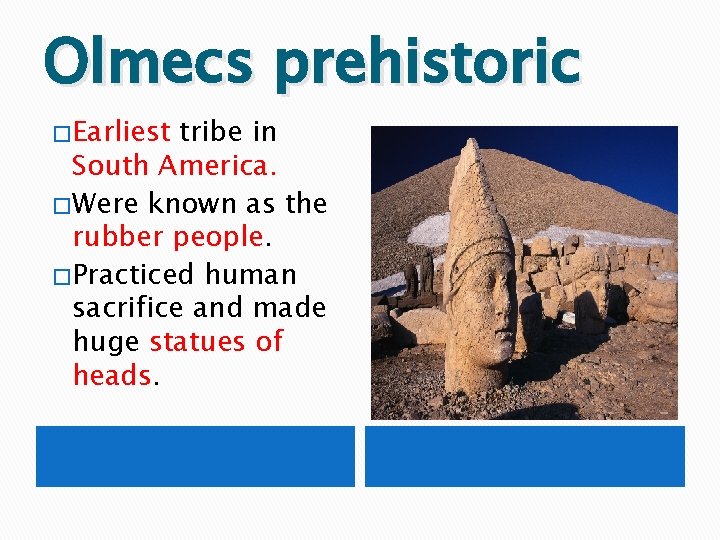
Olmecs prehistoric � Earliest tribe in South America. � Were known as the rubber people. � Practiced human sacrifice and made huge statues of heads.
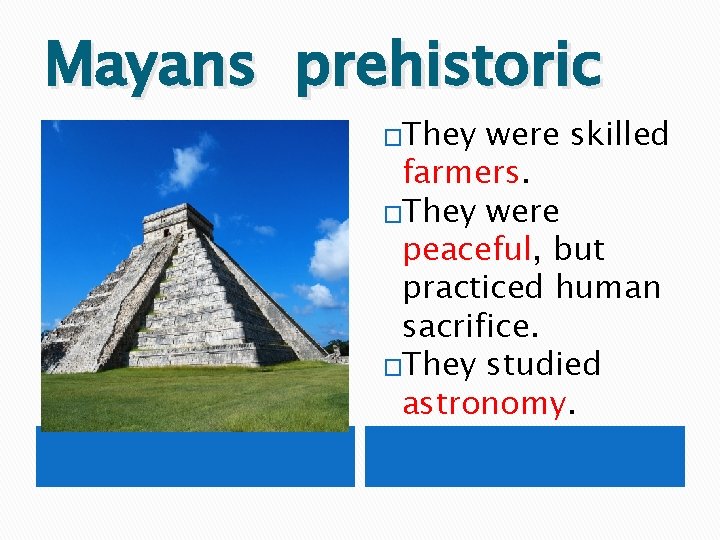
Mayans prehistoric �They were skilled farmers. �They were peaceful, but practiced human sacrifice. �They studied astronomy.

Aztecs � Lived in South America. � Were known for being great warriors. � Practiced a lot of human sacrifice. � A huge population. � Technochtitlan was one of the largest cities at the time.
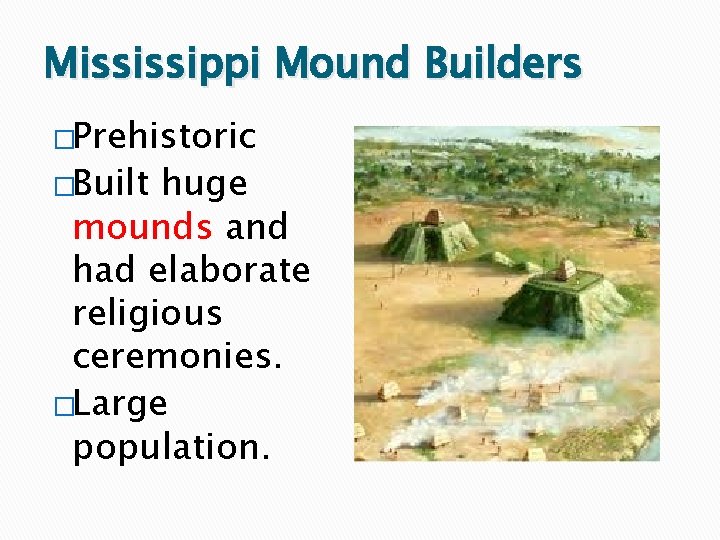
Mississippi Mound Builders �Prehistoric �Built huge mounds and had elaborate religious ceremonies. �Large population.
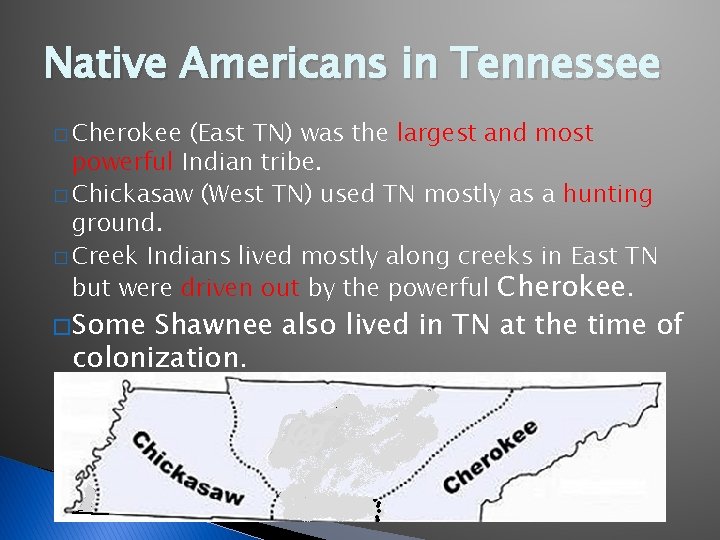
Native Americans in Tennessee � Cherokee (East TN) was the largest and most powerful Indian tribe. � Chickasaw (West TN) used TN mostly as a hunting ground. � Creek Indians lived mostly along creeks in East TN but were driven out by the powerful Cherokee. � Some Shawnee also lived in TN at the time of colonization. .
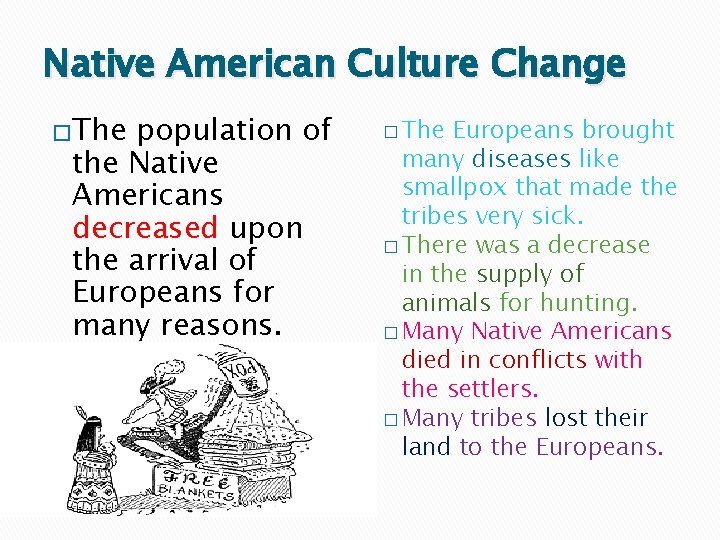
Native American Culture Change �The population of the Native Americans decreased upon the arrival of Europeans for many reasons. � The Europeans brought many diseases like smallpox that made the tribes very sick. � There was a decrease in the supply of animals for hunting. � Many Native Americans died in conflicts with the settlers. � Many tribes lost their land to the Europeans.
Conflict with Native Americans � Most conflict was caused by disputes over land hunting. � As the population of settlers increased, the supply of food and water decreased causing the groups to compete for resources.
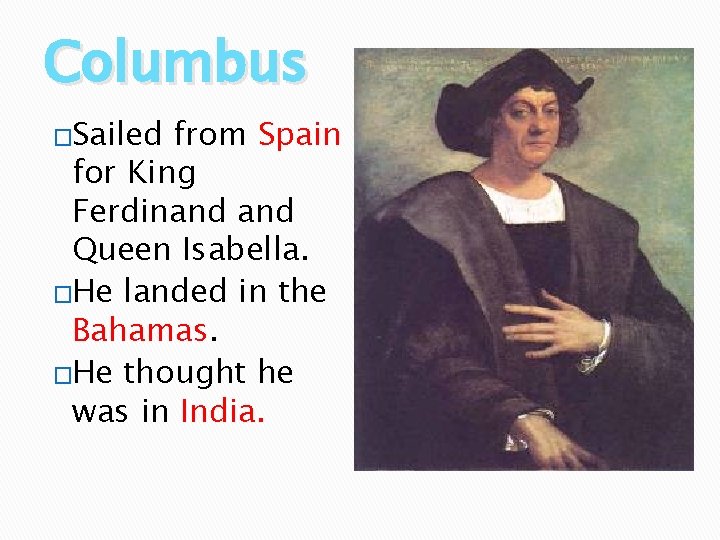
Columbus �Sailed from Spain for King Ferdinand Queen Isabella. �He landed in the Bahamas. �He thought he was in India.
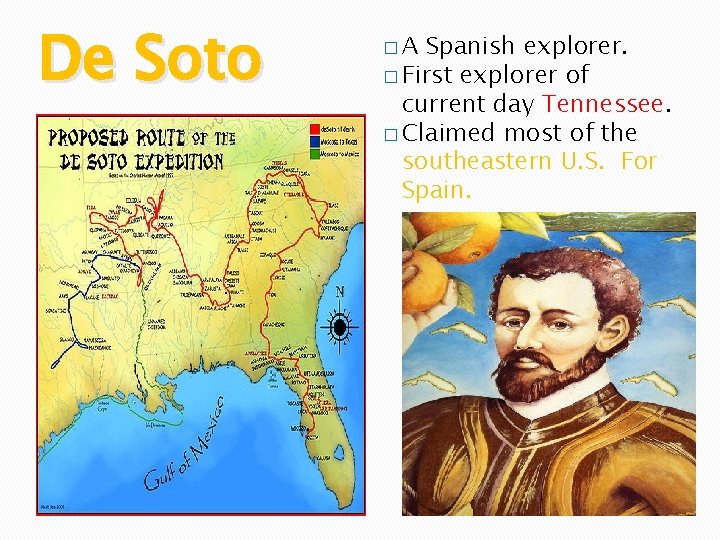
De Soto �A Spanish explorer. � First explorer of current day Tennessee. � Claimed most of the southeastern U. S. For Spain.

Balboa �A Spanish explorer. �Claimed the Pacific Ocean for Spain.
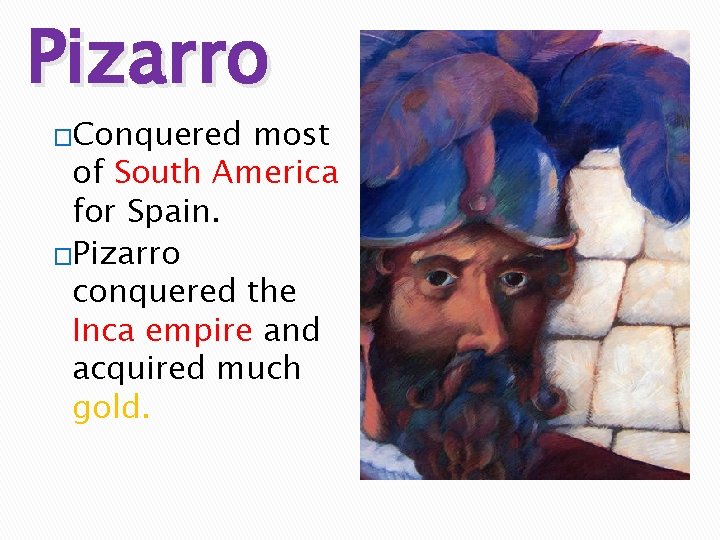
Pizarro �Conquered most of South America for Spain. �Pizarro conquered the Inca empire and acquired much gold.
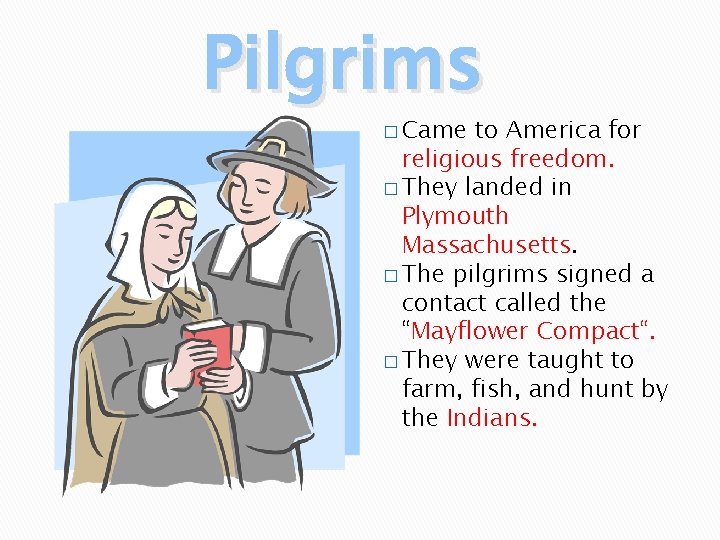
Pilgrims � Came to America for religious freedom. � They landed in Plymouth Massachusetts. � The pilgrims signed a contact called the “Mayflower Compact“. � They were taught to farm, fish, and hunt by the Indians.
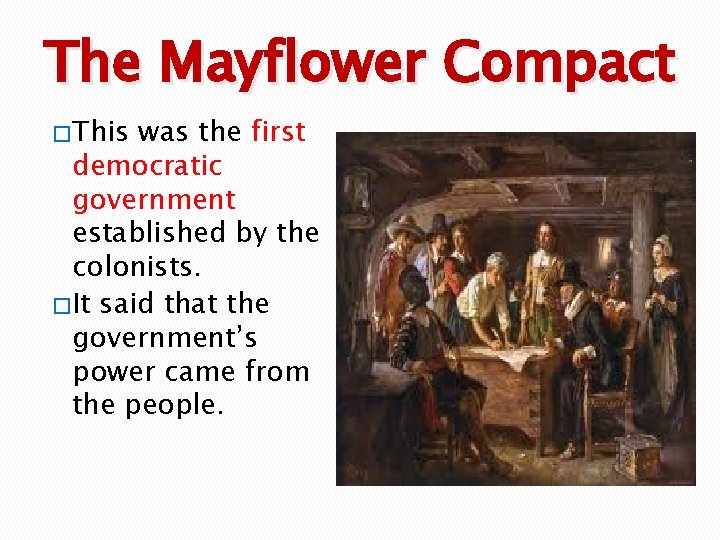
The Mayflower Compact � This was the first democratic government established by the colonists. � It said that the government’s power came from the people.
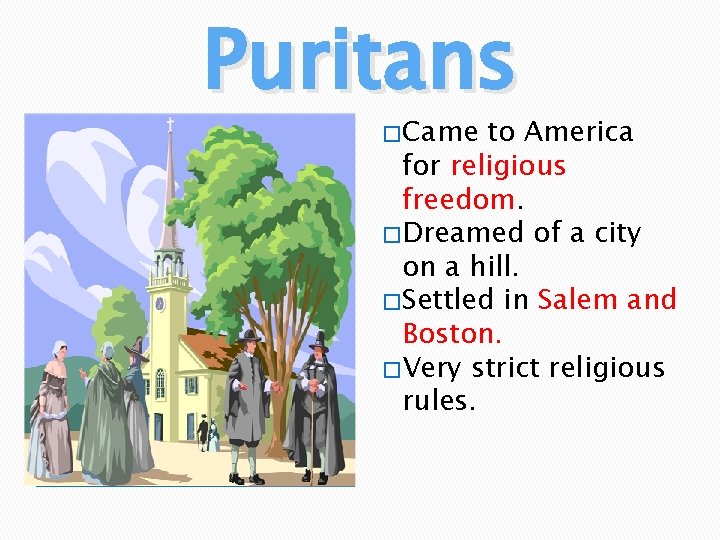
Puritans � Came to America for religious freedom. � Dreamed of a city on a hill. � Settled in Salem and Boston. � Very strict religious rules.

Quakers � Came to America from England for religious freedom. � Treated the Native Americans very well. � Settled in New England areas of America.
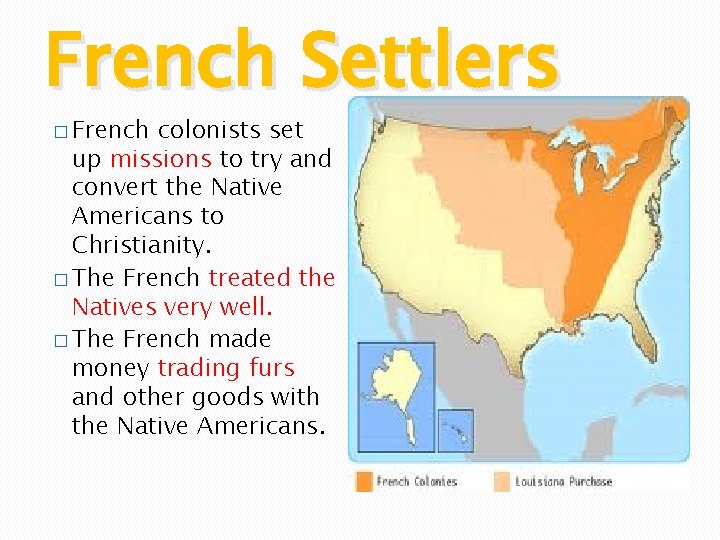
French Settlers � French colonists set up missions to try and convert the Native Americans to Christianity. � The French treated the Natives very well. � The French made money trading furs and other goods with the Native Americans.

The Spanish Settlers � The Spanish explorers treated the natives harshly. � The Spanish settlers were mostly looking for gold. � The Spanish settled mainly in current day Florida and Texas.
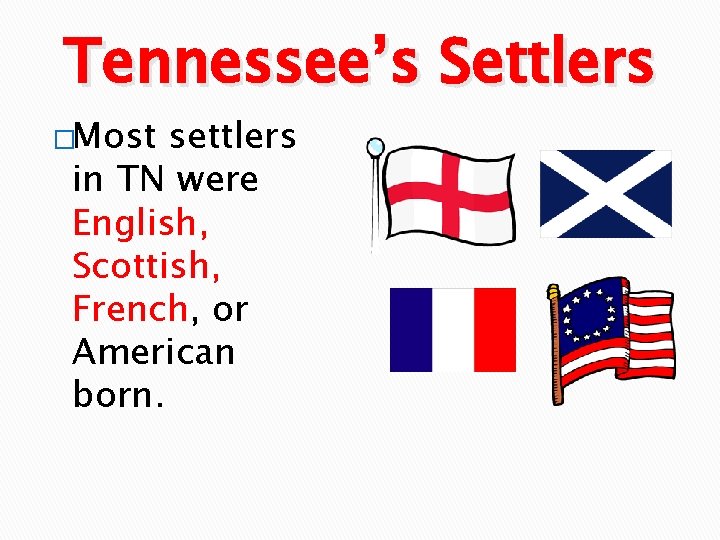
Tennessee’s Settlers �Most settlers in TN were English, Scottish, French, or American born.
Reasons for colonization of America �Religious Freedom �Hopes of getting rich. �Freedom to start a new life.
Colonial Industries � The New England colonies fished and sold lumber. � The middle colonies were called the bread colonies because they grew a lot of grains. � The southern colonies grew mostly cotton, rice, and tobacco on large plantations. http: //www. history. org/Almanack/life/trades/tradehdr. cfm
The French and Indian War � This war was fought between 1754 and 1763. � The conflict was caused because both France and England were claiming the same land England wanted to expand its trading with the Natives. � Most “Indians” sided with the French. � The is the first battle that made George Washington famous. � The French signed the Treaty of Paris to end the war and gave all land east of the Mississippi to England.
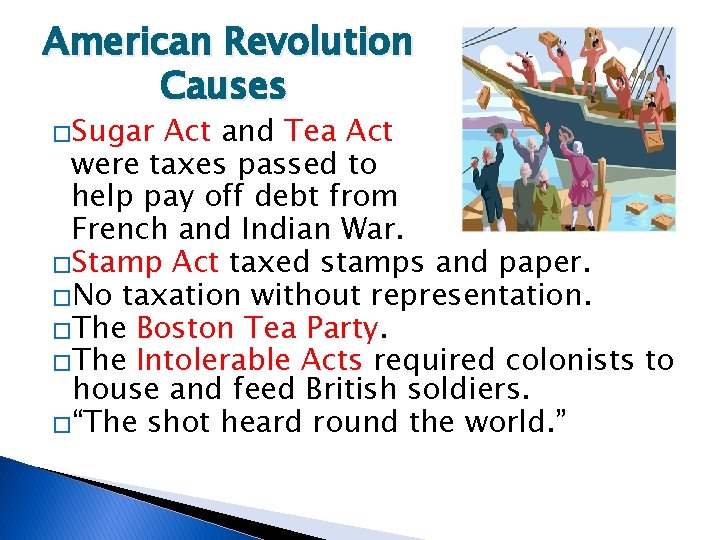
American Revolution Causes �Sugar Act and Tea Act were taxes passed to help pay off debt from French and Indian War. �Stamp Act taxed stamps and paper. �No taxation without representation. �The Boston Tea Party. �The Intolerable Acts required colonists to house and feed British soldiers. �“The shot heard round the world. ”
The Declaration of Independence �Was written by Thomas Jefferson. �Signed at the Second Continental Congress. �July 4, 1776 �Declared the colonies independent of Great Britain.
Reasons for success of American Revolution � George Washington was a great general. �Colonists worked together. �The colonist knew the land better that England. �The French sided with colonists and sent troops to help the colonists.
Life after the American Revolution �The colonist would struggle to develop a new way to govern. �England no longer traded with America and so there was a shortage of many things. �England no longer protected the colonists from attacks by the Native American or from other countries.
Articles of Confederation The colonists first attempt at creating a new government � Congress could manage relationships with other countries. � Print money � Borrow money � Supervise mail � Solve boundary disputes The Articles were considered too weak. �Congress could not raise taxes. �Did not have an executive branch. �Did not have a judicial branch. There was a need for a new constitution.
A New Constitution �There was no judicial system and no law enforcement. �There was an imbalance of representation between the big states and the smaller states. �A new constitution was needed because there was no single currency and that made it difficult for the states to trade.
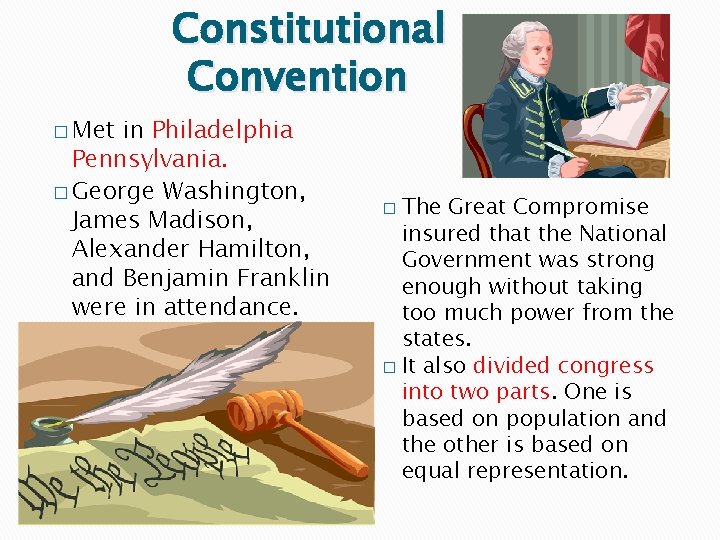
Constitutional Convention � Met in Philadelphia Pennsylvania. � George Washington, James Madison, Alexander Hamilton, and Benjamin Franklin were in attendance. The Great Compromise insured that the National Government was strong enough without taking too much power from the states. � It also divided congress into two parts. One is based on population and the other is based on equal representation. �
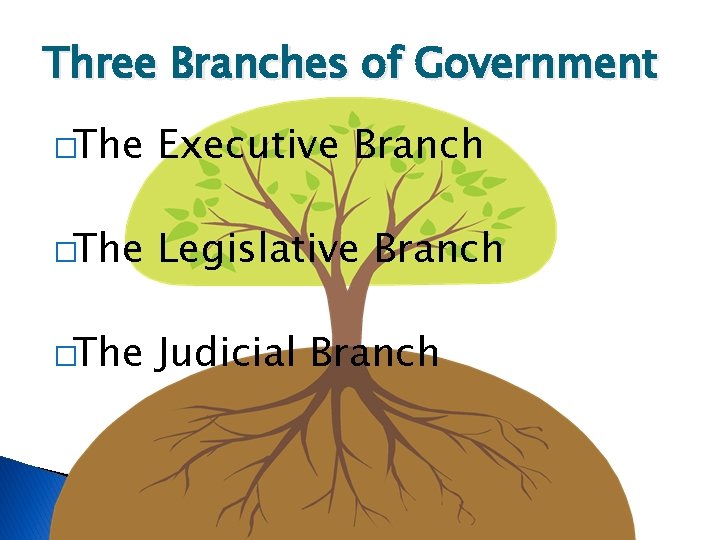
Three Branches of Government �The Executive Branch �The Legislative Branch �The Judicial Branch
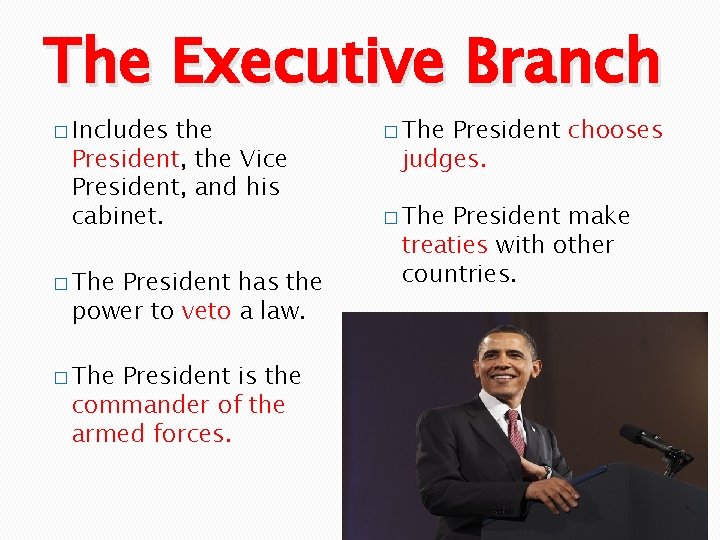
The Executive Branch � Includes the President, the Vice President, and his cabinet. � The President has the power to veto a law. � The President is the commander of the armed forces. � The President chooses judges. � The President make treaties with other countries.
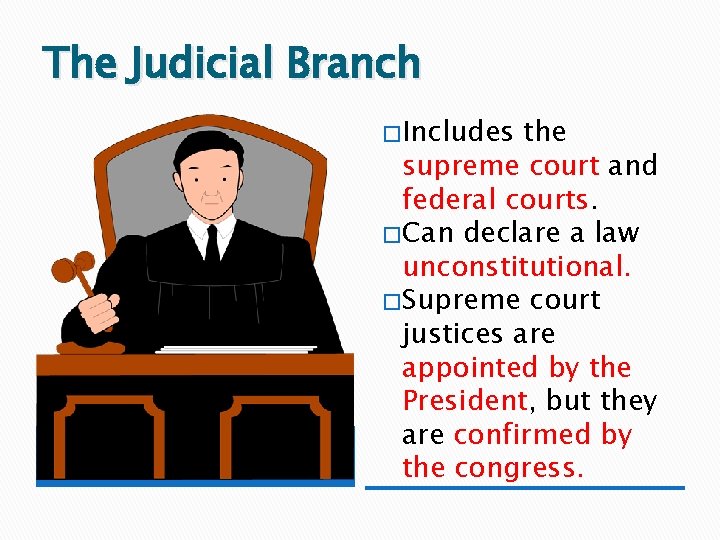
The Judicial Branch � Includes the supreme court and federal courts. � Can declare a law unconstitutional. � Supreme court justices are appointed by the President, but they are confirmed by the congress.
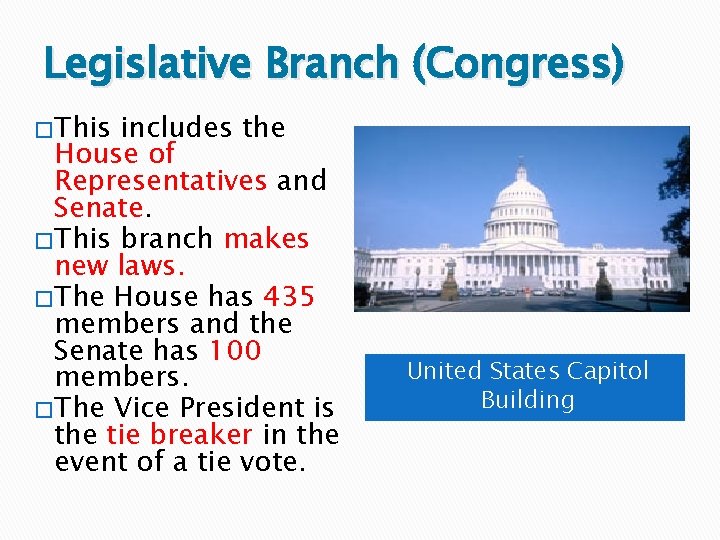
Legislative Branch (Congress) � This includes the House of Representatives and Senate. � This branch makes new laws. � The House has 435 members and the Senate has 100 members. � The Vice President is the tie breaker in the event of a tie vote. United States Capitol Building
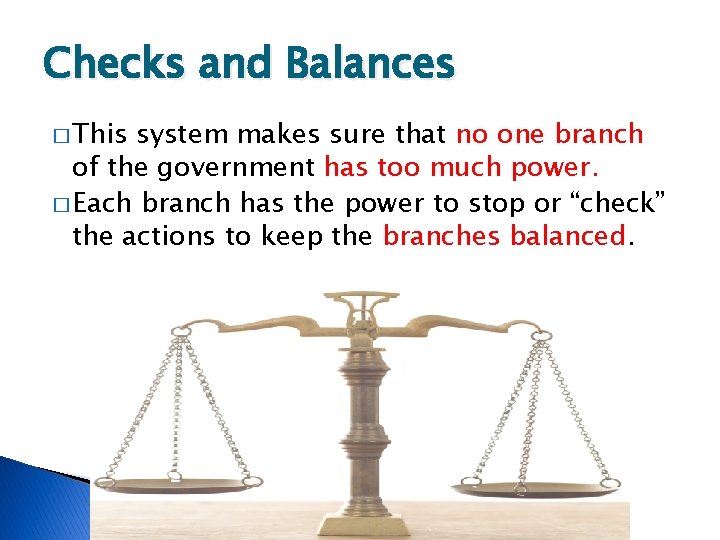
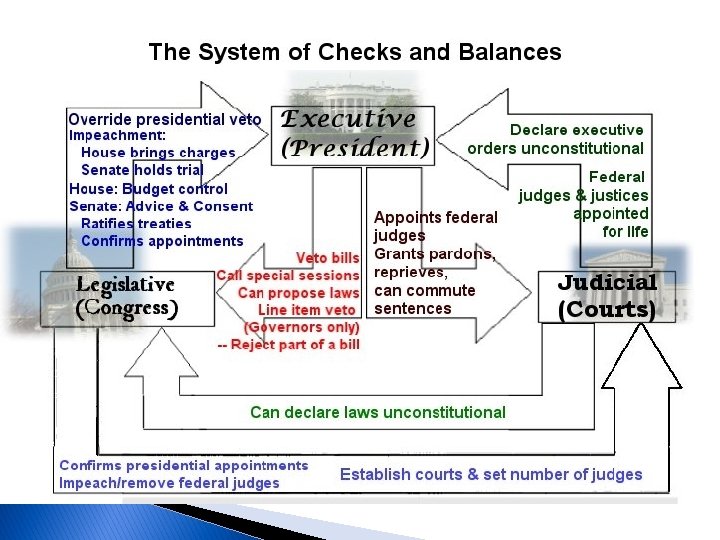
Checks and Balances � This system makes sure that no one branch of the government has too much power. � Each branch has the power to stop or “check” the actions to keep the branches balanced.
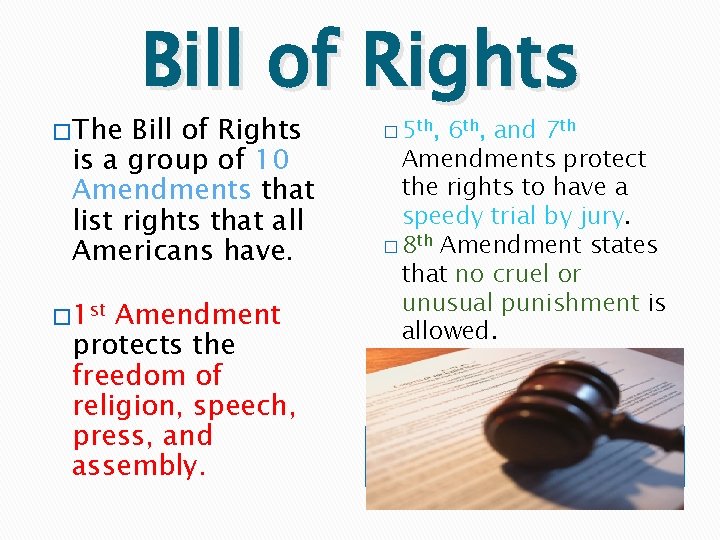
� The Bill of Rights is a group of 10 Amendments that list rights that all Americans have. � 1 st Amendment protects the freedom of religion, speech, press, and assembly. � 5 th, 6 th, and 7 th Amendments protect the rights to have a speedy trial by jury. � 8 th Amendment states that no cruel or unusual punishment is allowed.
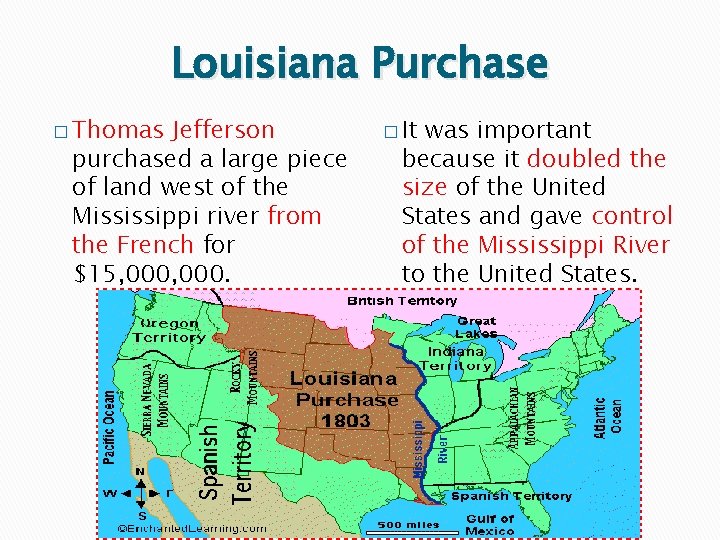
Louisiana Purchase � Thomas Jefferson purchased a large piece of land west of the Mississippi river from the French for $15, 000. � It was important because it doubled the size of the United States and gave control of the Mississippi River to the United States.
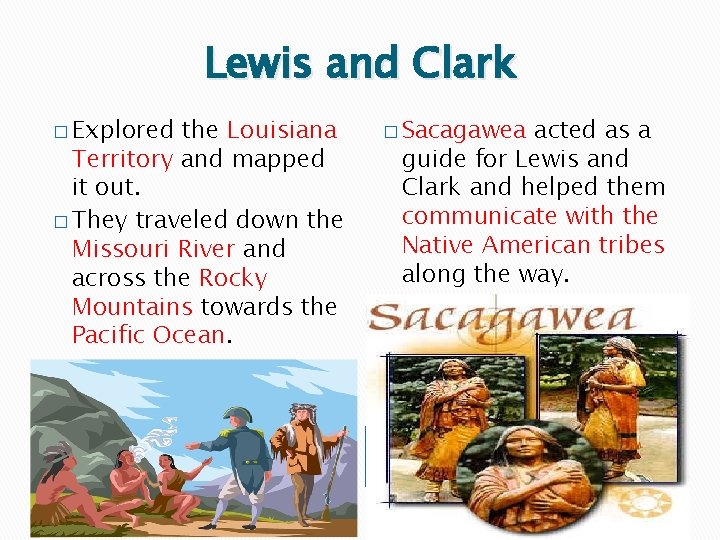
Lewis and Clark � Explored the Louisiana Territory and mapped it out. � They traveled down the Missouri River and across the Rocky Mountains towards the Pacific Ocean. � Sacagawea acted as a guide for Lewis and Clark and helped them communicate with the Native American tribes along the way.
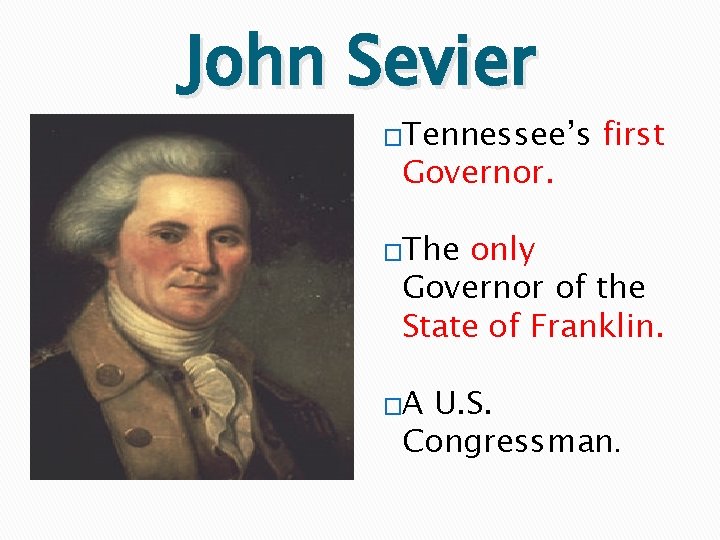
John Sevier �Tennessee’s Governor. first �The only Governor of the State of Franklin. �A U. S. Congressman.
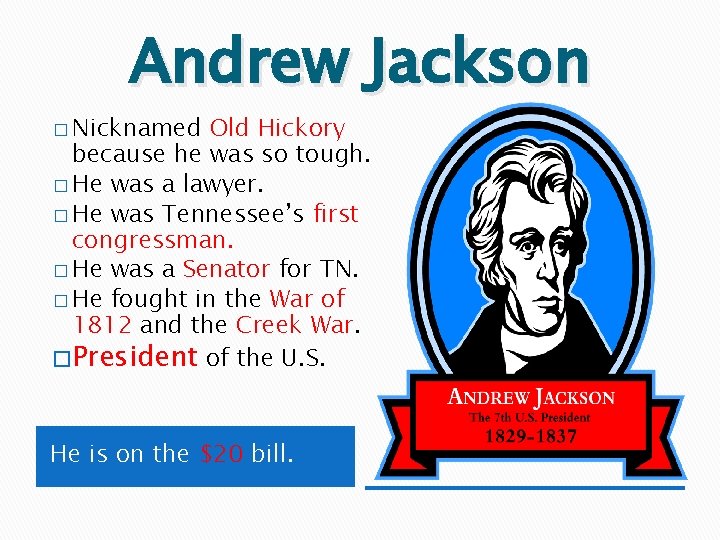
Andrew Jackson � Nicknamed Old Hickory because he was so tough. � He was a lawyer. � He was Tennessee’s first congressman. � He was a Senator for TN. � He fought in the War of 1812 and the Creek War. � President of the U. S. He is on the $20 bill.
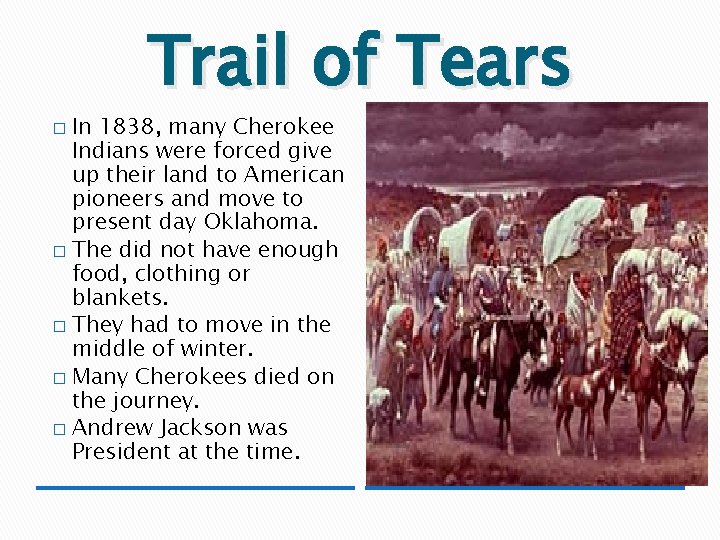
Trail of Tears In 1838, many Cherokee Indians were forced give up their land to American pioneers and move to present day Oklahoma. � The did not have enough food, clothing or blankets. � They had to move in the middle of winter. � Many Cherokees died on the journey. � Andrew Jackson was President at the time. �
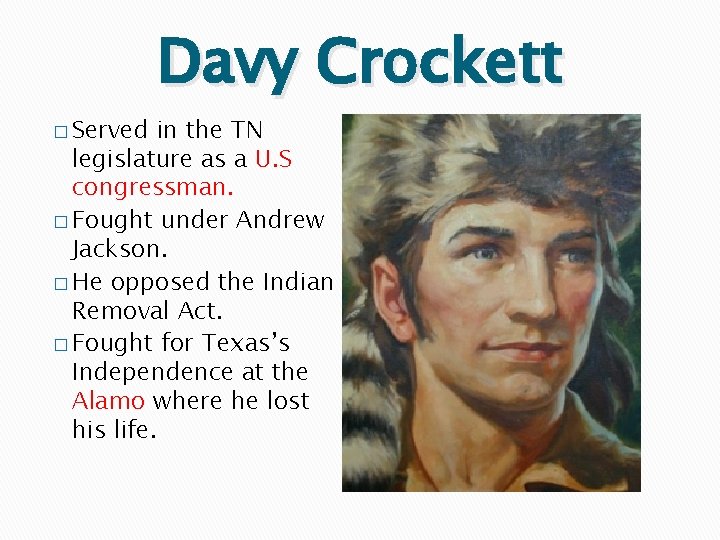
Davy Crockett � Served in the TN legislature as a U. S congressman. � Fought under Andrew Jackson. � He opposed the Indian Removal Act. � Fought for Texas’s Independence at the Alamo where he lost his life.
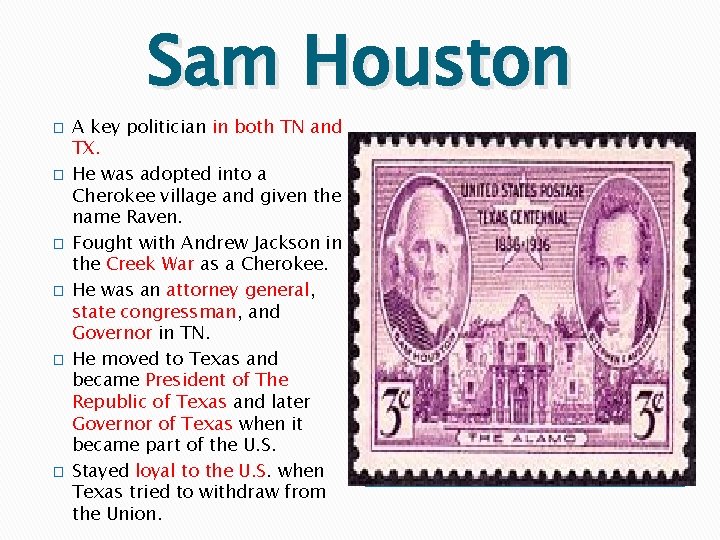
Sam Houston � � � A key politician in both TN and TX. He was adopted into a Cherokee village and given the name Raven. Fought with Andrew Jackson in the Creek War as a Cherokee. He was an attorney general, state congressman, and Governor in TN. He moved to Texas and became President of The Republic of Texas and later Governor of Texas when it became part of the U. S. Stayed loyal to the U. S. when Texas tried to withdraw from the Union.
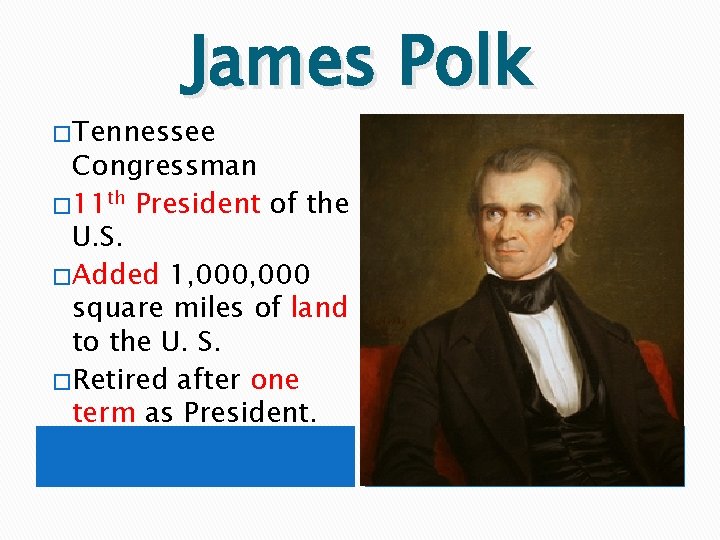
James Polk � Tennessee Congressman � 11 th President of the U. S. � Added 1, 000 square miles of land to the U. S. � Retired after one term as President.
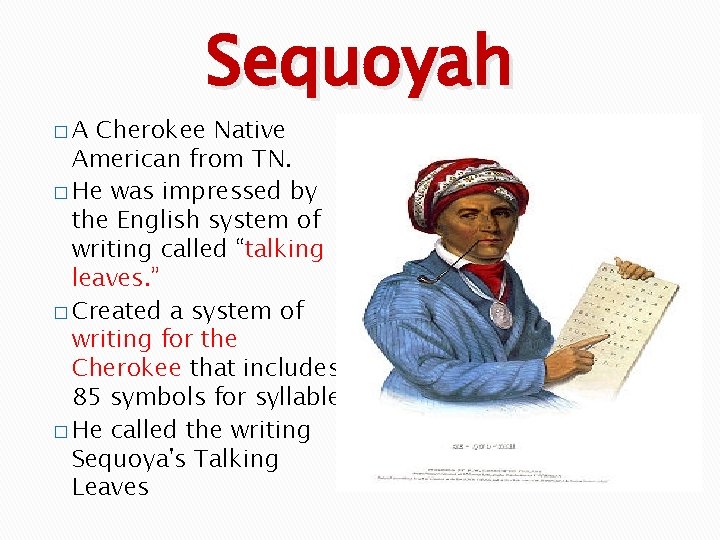
�A Sequoyah Cherokee Native American from TN. � He was impressed by the English system of writing called “talking leaves. ” � Created a system of writing for the Cherokee that includes 85 symbols for syllables. � He called the writing Sequoya's Talking Leaves
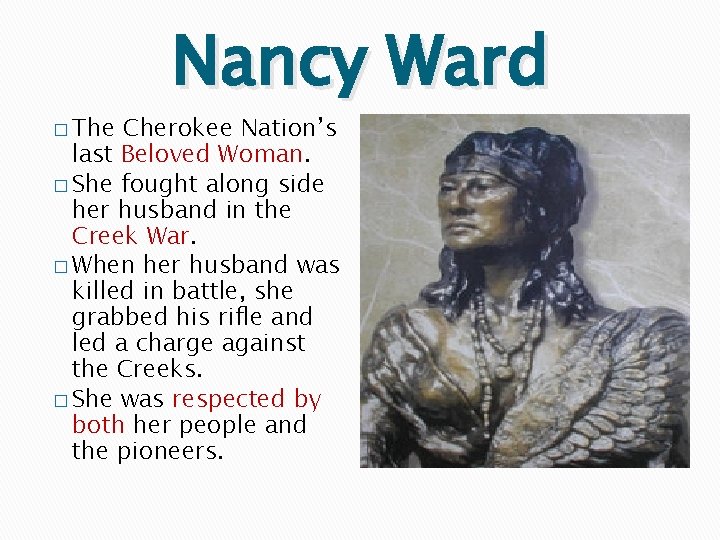
� The Nancy Ward Cherokee Nation’s last Beloved Woman. � She fought along side her husband in the Creek War. � When her husband was killed in battle, she grabbed his rifle and led a charge against the Creeks. � She was respected by both her people and the pioneers.
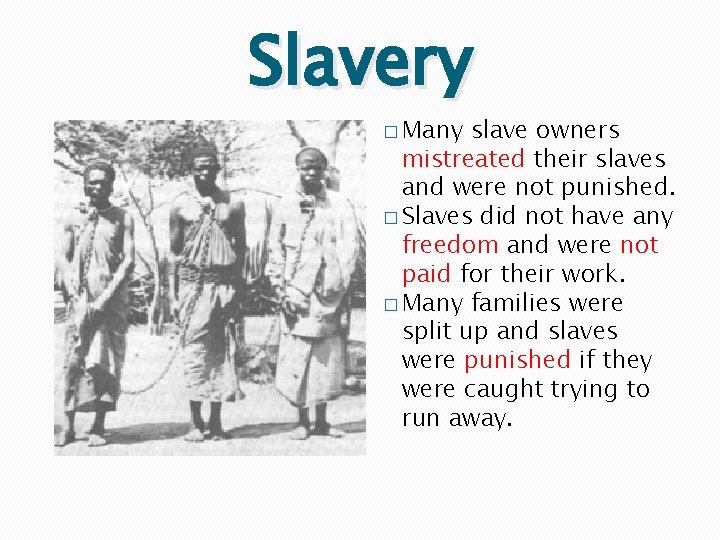
Slavery � Many slave owners mistreated their slaves and were not punished. � Slaves did not have any freedom and were not paid for their work. � Many families were split up and slaves were punished if they were caught trying to run away.
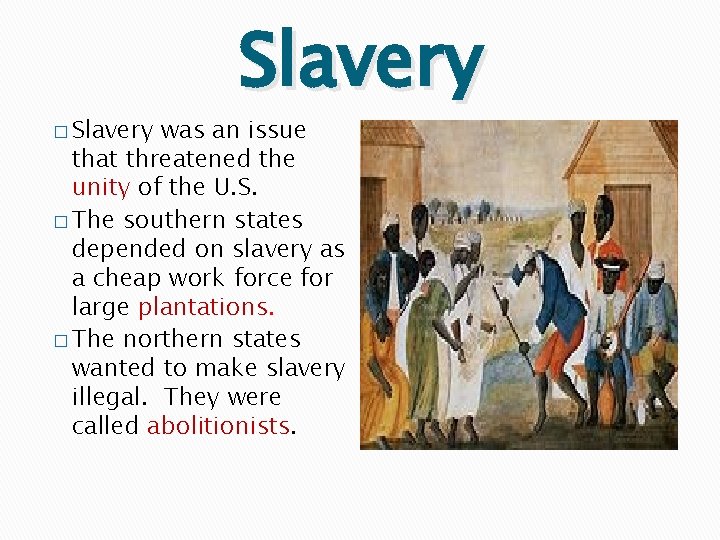
� Slavery was an issue that threatened the unity of the U. S. � The southern states depended on slavery as a cheap work force for large plantations. � The northern states wanted to make slavery illegal. They were called abolitionists.
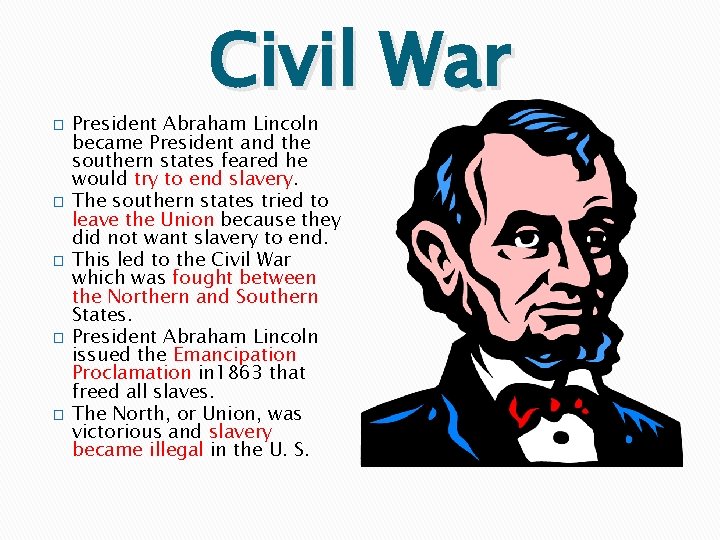
� � � Civil War President Abraham Lincoln became President and the southern states feared he would try to end slavery. The southern states tried to leave the Union because they did not want slavery to end. This led to the Civil War which was fought between the Northern and Southern States. President Abraham Lincoln issued the Emancipation Proclamation in 1863 that freed all slaves. The North, or Union, was victorious and slavery became illegal in the U. S.
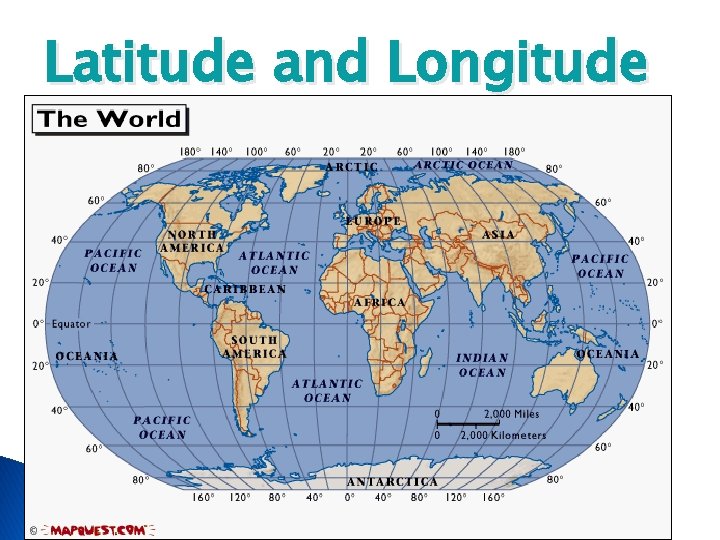
Latitude and Longitude
The End
- Slides: 52