
Social Studies Examples Classroom Example Middle School Teacher
- Slides: 22
Social Studies Examples
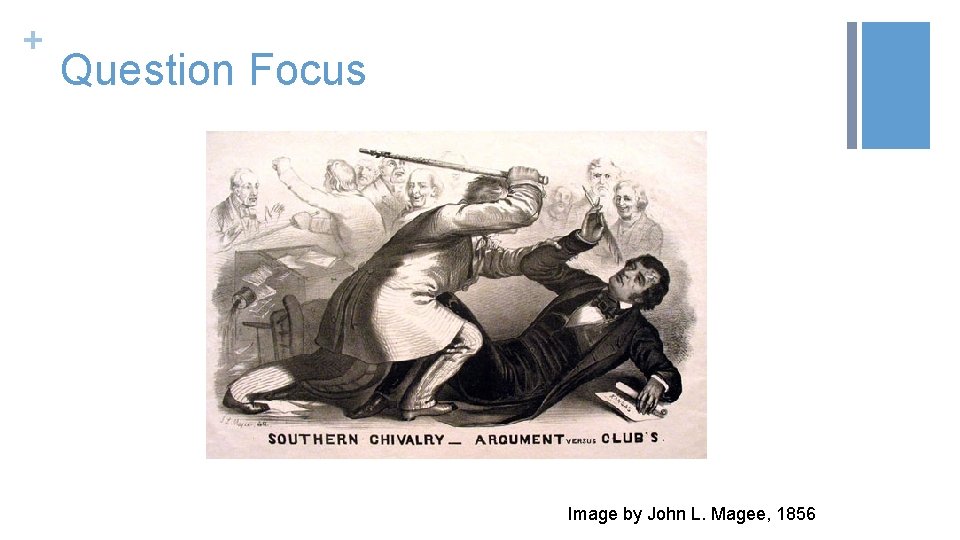
+ Classroom Example: Middle School Teacher: Megan Harvell, Boston, MA Topic: American History –The Civil War Purpose: Pre-reading activity to engage students in the unit and to build primary source reading & interpretation skills
+ Question Focus Image by John L. Magee, 1856
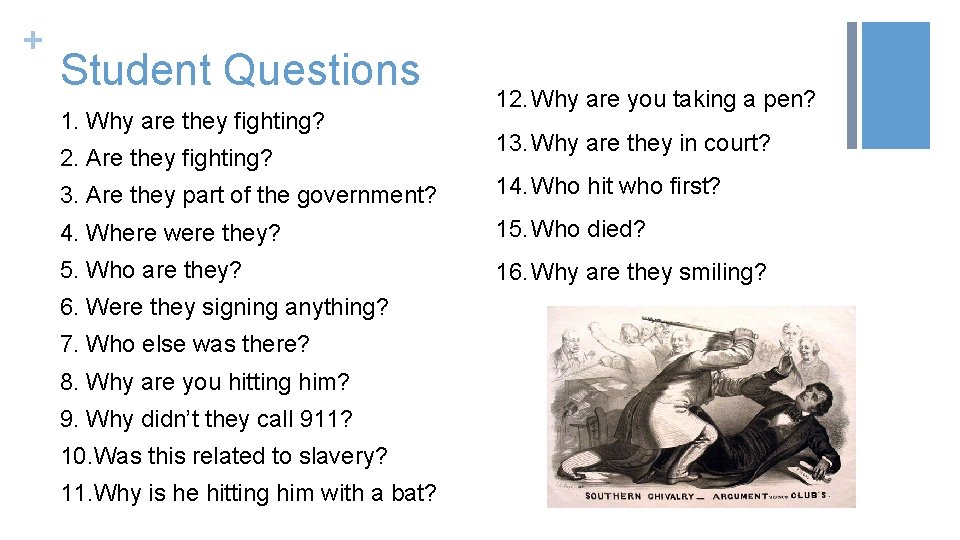
+ Student Questions 12. Why are you taking a pen? 1. Why are they fighting? 13. Why are they in court? 2. Are they fighting? 3. Are they part of the government? 14. Who hit who first? 4. Where were they? 15. Who died? 5. Who are they? 6. Were they signing anything? 7. Who else was there? 8. Why are you hitting him? 9. Why didn’t they call 911? 10. Was this related to slavery? 11. Why is he hitting him with a bat? 16. Why are they smiling?
+ Classroom Example: 8 th Grade Teacher: Joshua Beer, Lempster, NH Topic: American History, Imperialism unit Purpose: To conclude unit and use student questions to create a summative assessment
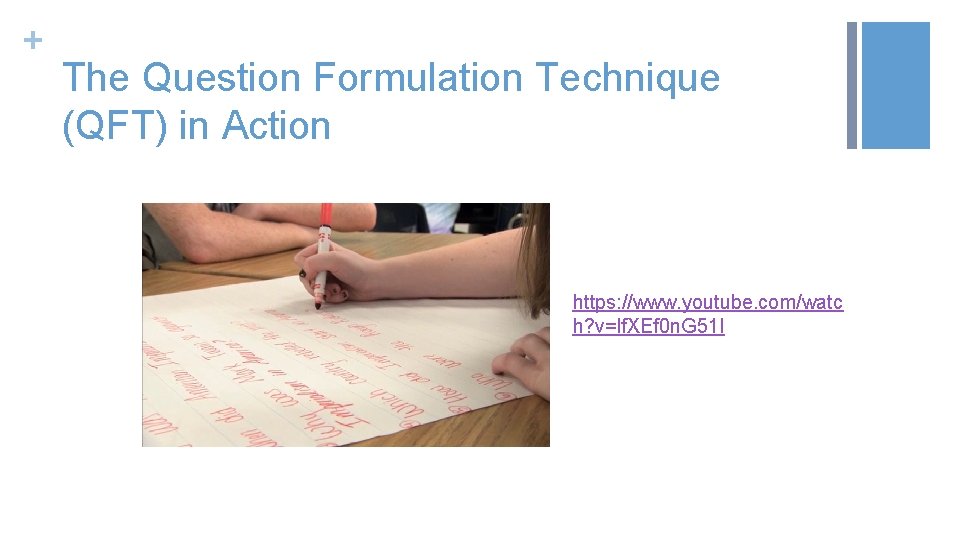
+ The Question Formulation Technique (QFT) in Action https: //www. youtube. com/watc h? v=lf. XEf 0 n. G 51 I
+ Question Focus: Questions that should be asked about American Imperialism at the turn of the 20 th century
+ Prioritization Instructions Choose 3 questions you think are most important for understanding American Imperialism at the turn of the 20 th century
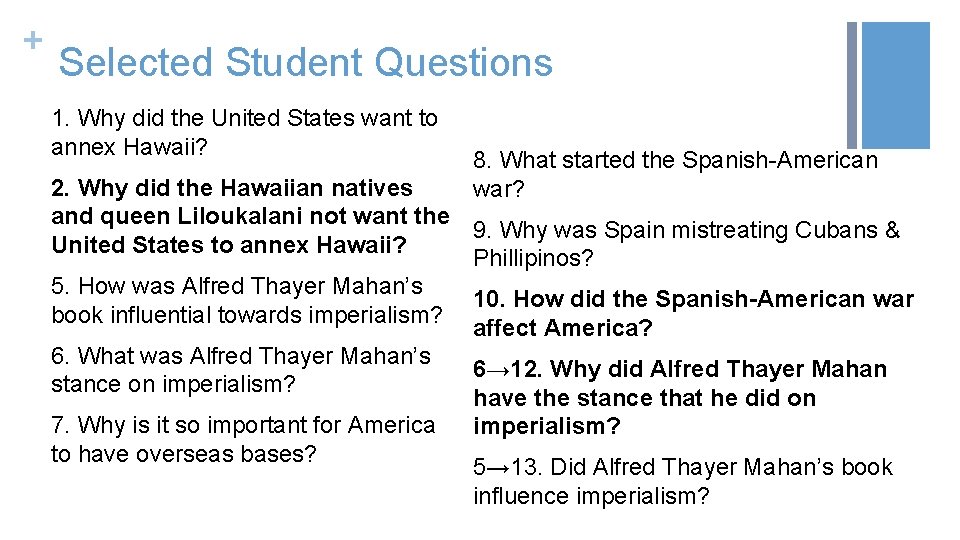
+ Selected Student Questions 1. Why did the United States want to annex Hawaii? 8. What started the Spanish-American war? 2. Why did the Hawaiian natives and queen Liloukalani not want the 9. Why was Spain mistreating Cubans & United States to annex Hawaii? Phillipinos? 5. How was Alfred Thayer Mahan’s 10. How did the Spanish-American war book influential towards imperialism? affect America? 6. What was Alfred Thayer Mahan’s 6→ 12. Why did Alfred Thayer Mahan stance on imperialism? have the stance that he did on 7. Why is it so important for America imperialism? to have overseas bases? 5→ 13. Did Alfred Thayer Mahan’s book influence imperialism?
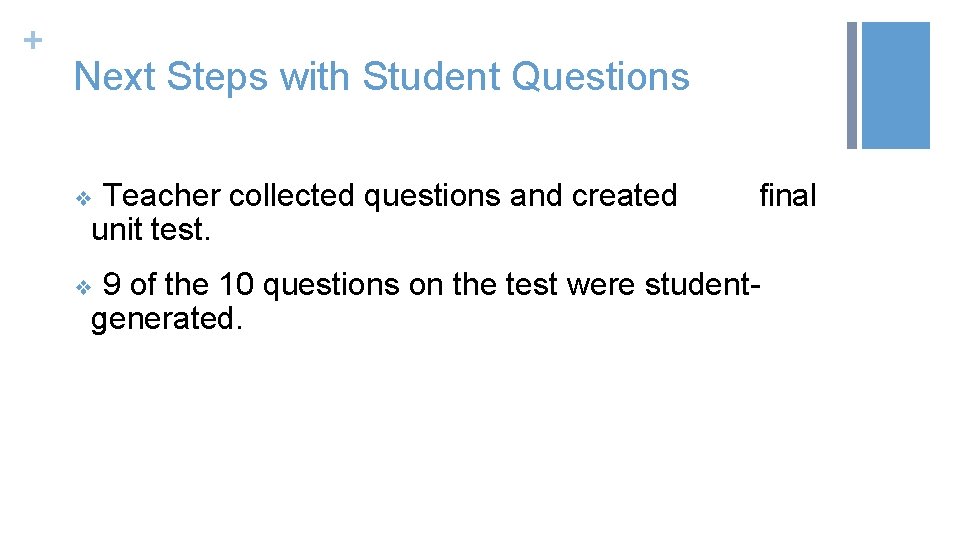
+ Next Steps with Student Questions ❖ Teacher collected questions and created final unit test. ❖ 9 of the 10 questions on the test were student- generated.
+ Classroom Example: High School Teacher: Connie Williams, Petaluma, CA Topic: Debate Team Purpose: To anticipate the information necessary to research before a debate
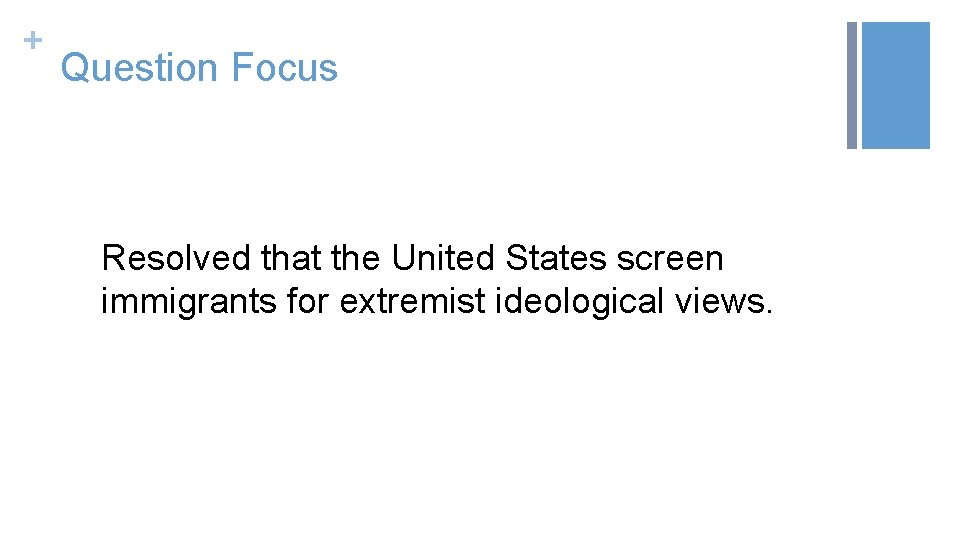
+ Question Focus Resolved that the United States screen immigrants for extremist ideological views.
+ Student Questions 1. What are extremist views? 2. How are we screening now? 6. What would happen if we didn’t let anyone in anymore? 3. What kinds of extremist views are 7. Don’t we already have a good system? there? 4. What about homegrown extremist 8. Why are we re-building something that isn’t broken? views? 5. How might we screen immigrants 9. How do we know if it’s broken or differently? not?
+ Next Steps with Student Questions: v Students created questions for the evaluation of the sources they were using: § Who wrote this? § For what purpose was this written? § How do they want me to feel? § How do they want me to act? § What are the sources of their numbers, charts, or other evidence? § Can we trace them back to their creator? … and then question the purpose and authority of those numbers also.
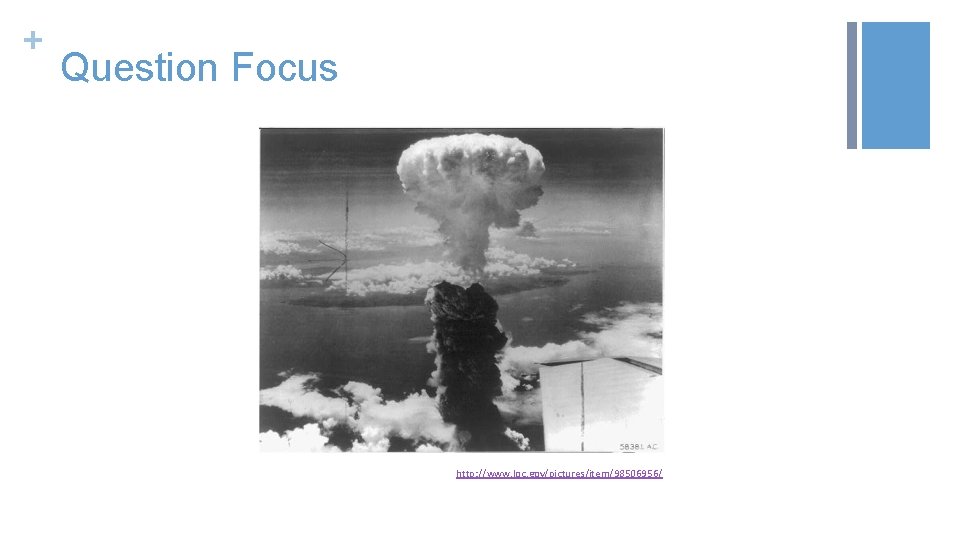
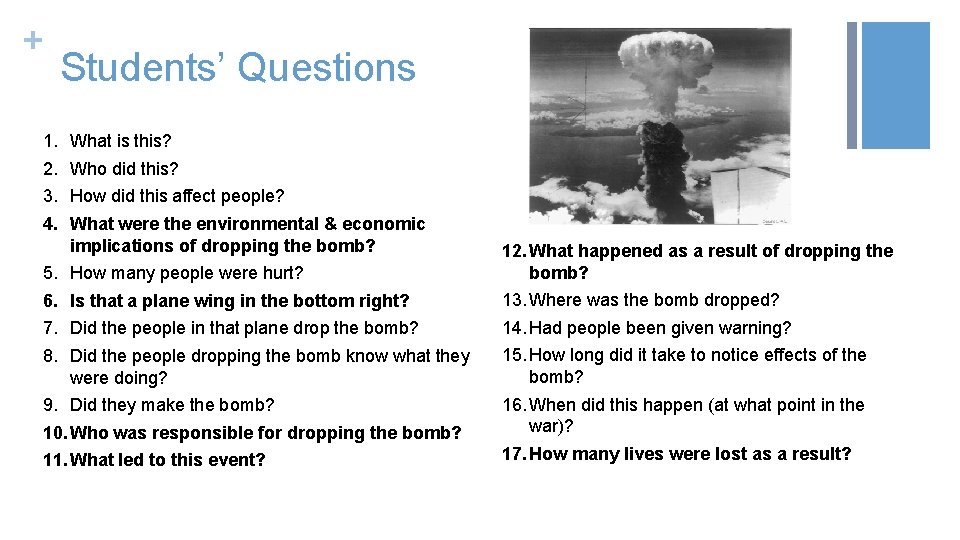
+ Classroom Example: 11 th Grade U. S. History Teacher: Kelly Grotrian, East Brunswick, NJ Topic: The End of World War II Purpose: To prepare for a debate about whether the United States was justified in dropping the atomic bomb.
+ Question Focus http: //www. loc. gov/pictures/item/98506956/
+ 1. 2. 3. 4. 5. 6. 7. 8. Students’ Questions What is this? Who did this? How did this affect people? What were the environmental & economic implications of dropping the bomb? How many people were hurt? Is that a plane wing in the bottom right? Did the people in that plane drop the bomb? Did the people dropping the bomb know what they were doing? 9. Did they make the bomb? 10. Who was responsible for dropping the bomb? 11. What led to this event? 12. What happened as a result of dropping the bomb? 13. Where was the bomb dropped? 14. Had people been given warning? 15. How long did it take to notice effects of the bomb? 16. When did this happen (at what point in the war)? 17. How many lives were lost as a result?
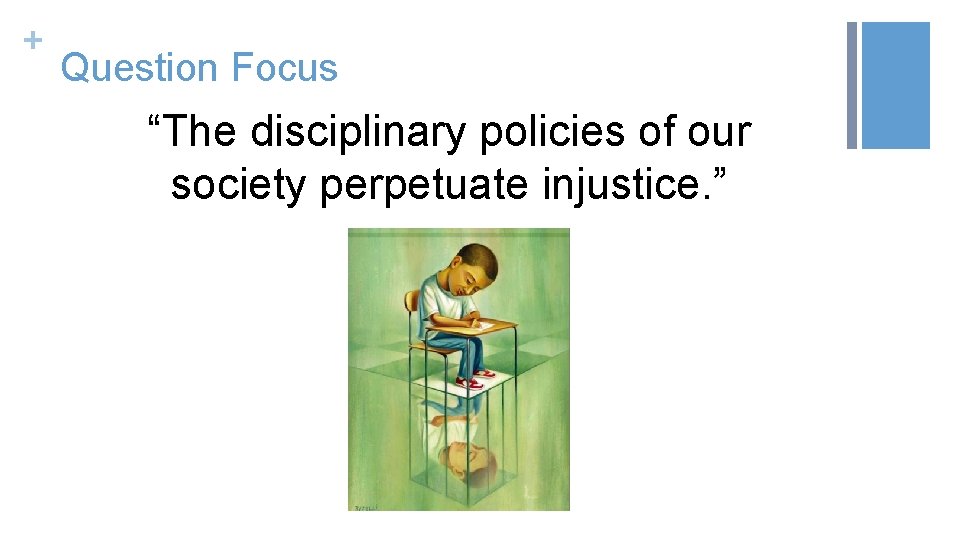
+ Classroom Example: High School Teacher: Isabel Morales, Los Angeles, CA Topic: Social Justice Purpose: Engage students in thinking about systemic injustice at the start of a multi-disciplinary unit
+ Question Focus “The disciplinary policies of our society perpetuate injustice. ”
+ Student Questions 1. Why are student of color targeted the most? 2. Do teachers nationwide take notice of these stats? 3. 4. 5. 6. 7. How can teachers develop better & effective disciplinary policies? through that’ll bring justice to classrooms? 11. Why is there a law? 12. Shouldn’t school police officers be trained like teachers? 13. What is considered a criminal offense in school? Why do people see the stats & data as a coincidence? 14. Isn’t it the teacher’s job to keep the students “in line”? What does a kid learn about the system once in jail? 15. How should disruption in class be What do people believe expulsion will teach the students? Does going to jury have a long-term effect on younger students about education? 8. When will it get better? 9. What are some ways to improve behavior? 10. What type of training will teachers go handled? 16. Shouldn’t school officers be punished as well? 17. What is the difference between a school officer and a regular police officer? 18. How come there aren’t any policies keeping students out of prison?
+ Student Reflections “Asking questions is important because it opens up discussions and debate about issues. ” - Leslie S. , 12 th grader “Asking questions is a step in creating change. ” - Jonathan S. , 11 th grader “Questions can help focus on a problem and think of solutions. ” - Jason S. , 11 th grader
Additional History Resources & Examples http: //rightquestion. org/blog/my-qft-journey-putting-studentsminds-into-motion-with-their-questions/ Texas social studies teacher, James Brewster, reflects on the large scale cultural changes in his classroom after a year with the QFT and offers several specific lessons, using political cartoons as QFocus prompts.