
SOCIAL STUDIES 11 MASS MEDIA CURRENT POSTTRUTH KEY

- Slides: 22
SOCIAL STUDIES 11 MASS MEDIA & CURRENT
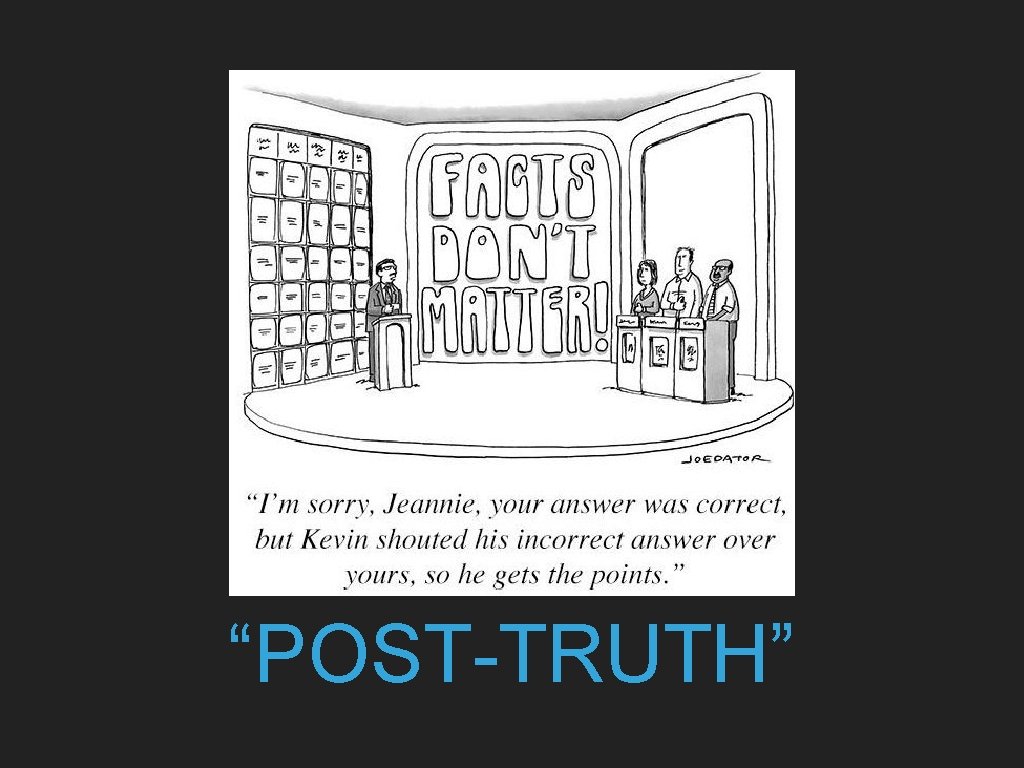
“POST-TRUTH”
KEY TERMS 1. mass media 2. media literacy 3. fake news 4. post-truth 5. citing 6. sources 7. right wing 8. left wing 9. bias 10. partisan 11. editorial 12. satire 13. authenticity 14. credibility 15. justifiability 16. confirmation bias 17. skepticism 18. cause 19. effect 20. trend 21. freedom of the press 22. freedom of expression 23. discrimination 24. hate speech
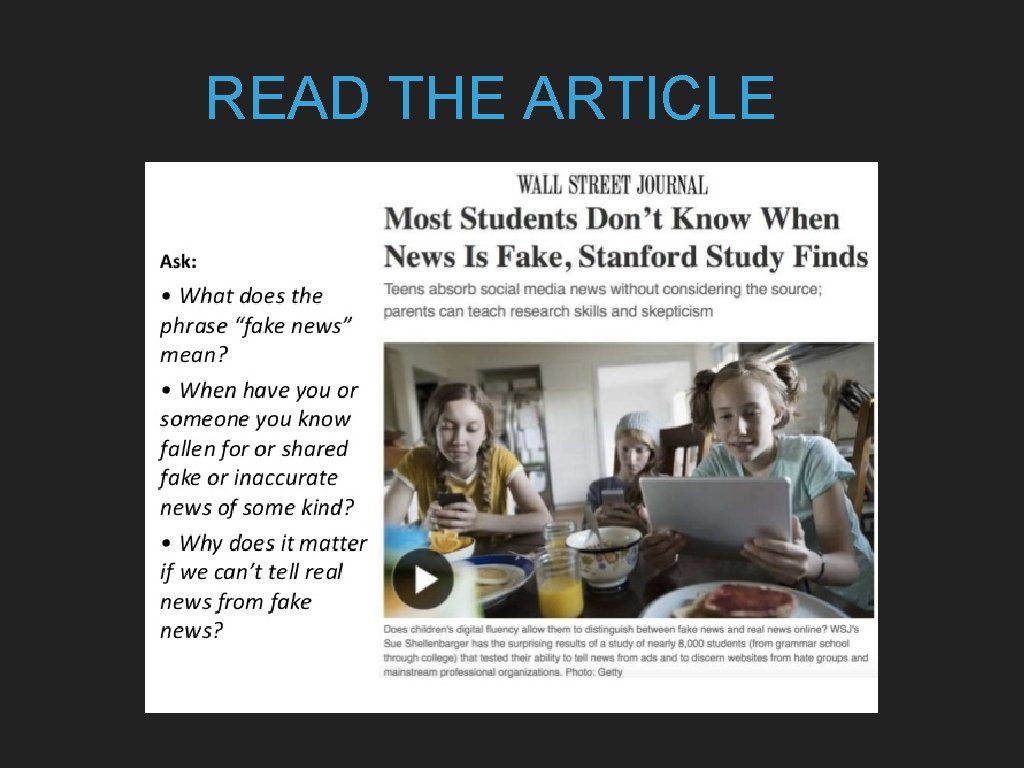
KEY QUESTIONS 1. What does the phrase “fake news” mean? 2. When have you or someone you know fallen for or shared fake or inaccurate news of some kind? 3. Why does it matter if we can’t tell real news from fake news?
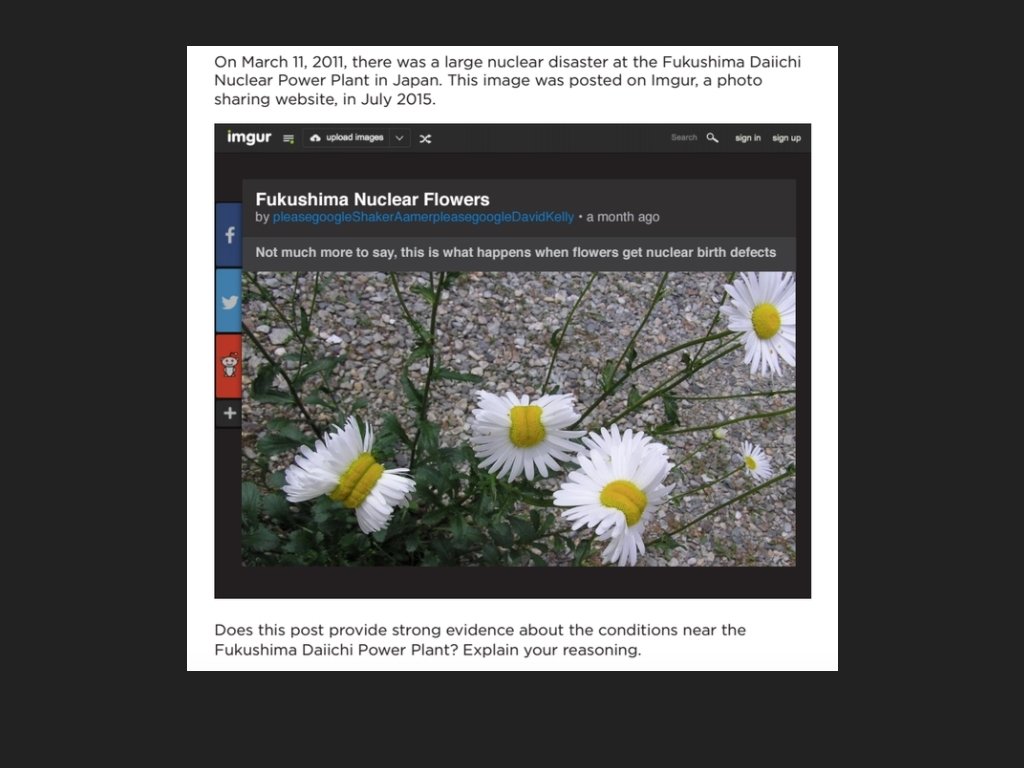
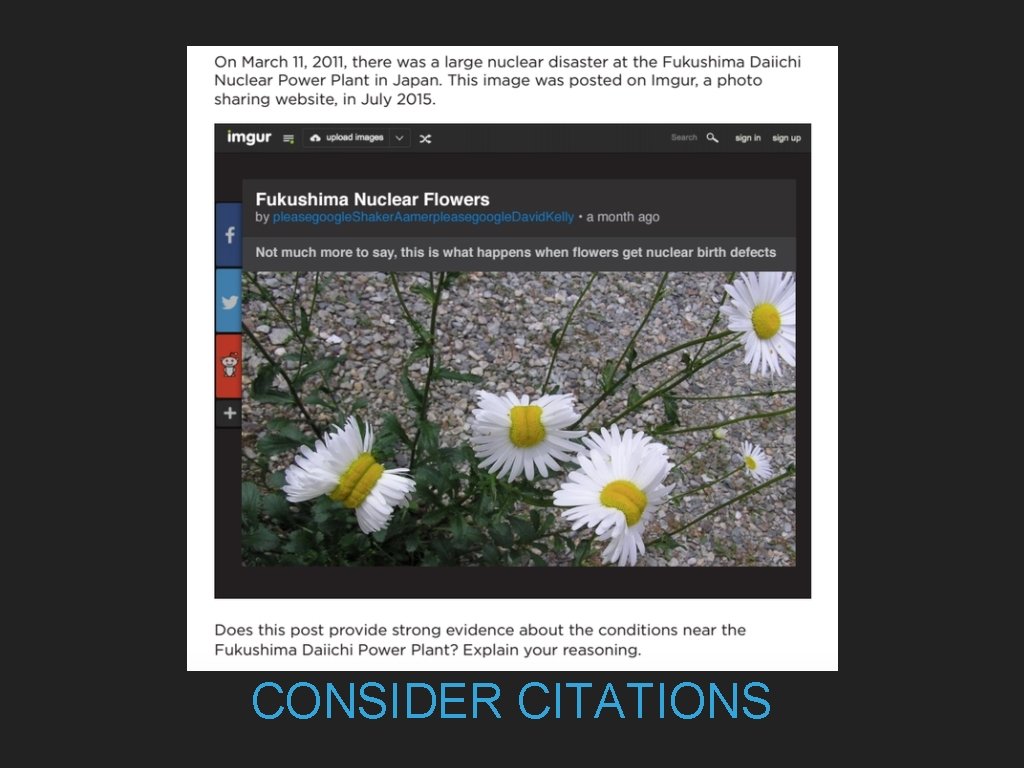
CONSIDER CITATIONS
READ THE ARTICLE
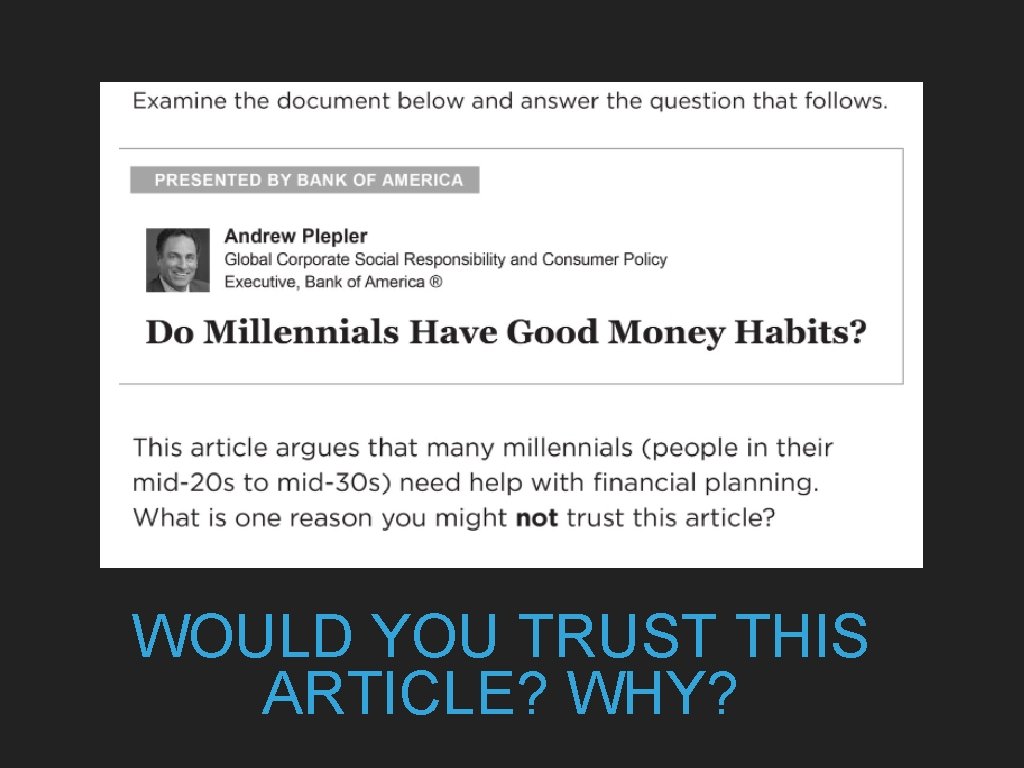
WOULD YOU TRUST THIS ARTICLE? WHY?
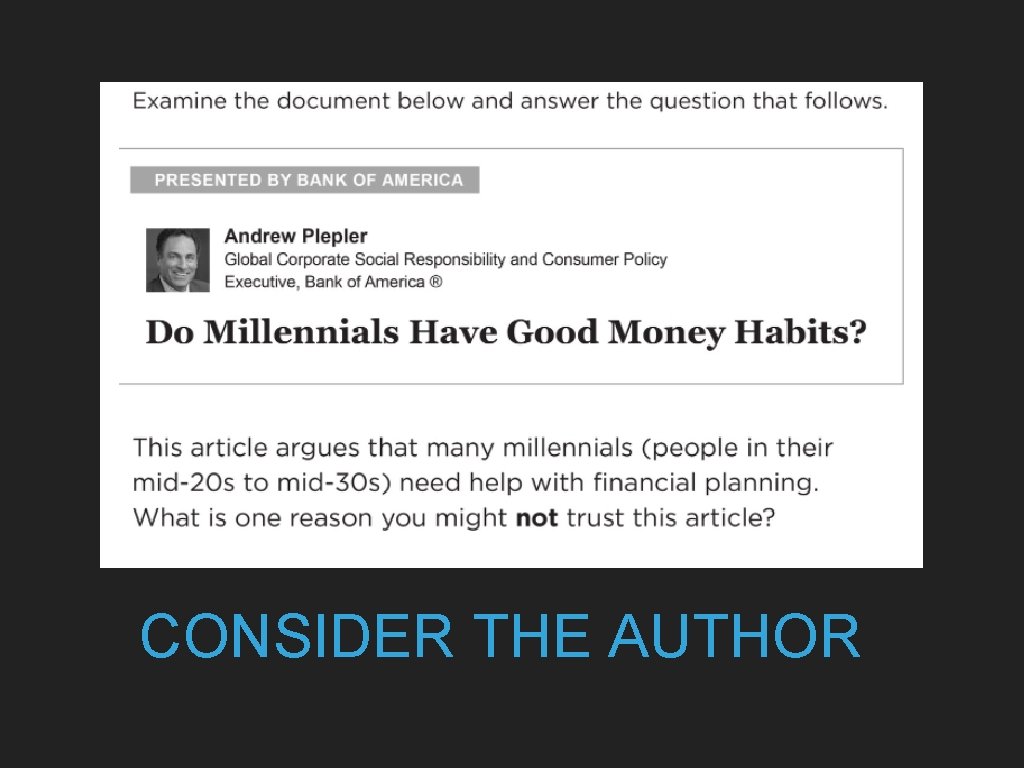
CONSIDER THE AUTHOR
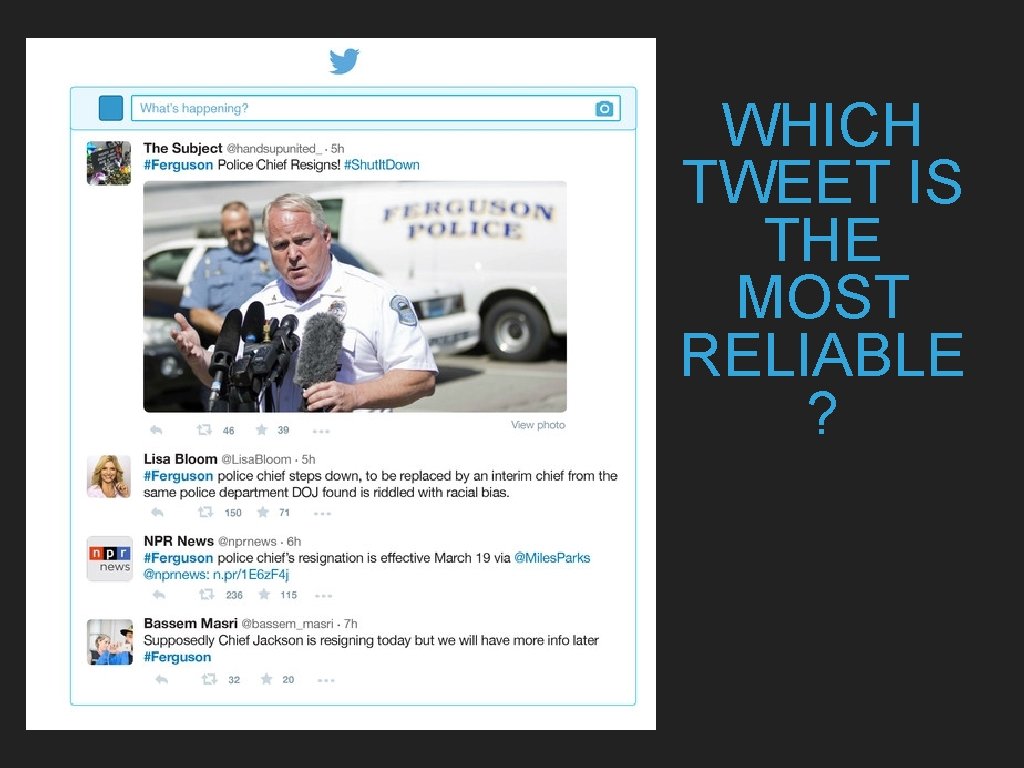
WHICH TWEET IS THE MOST RELIABLE ?
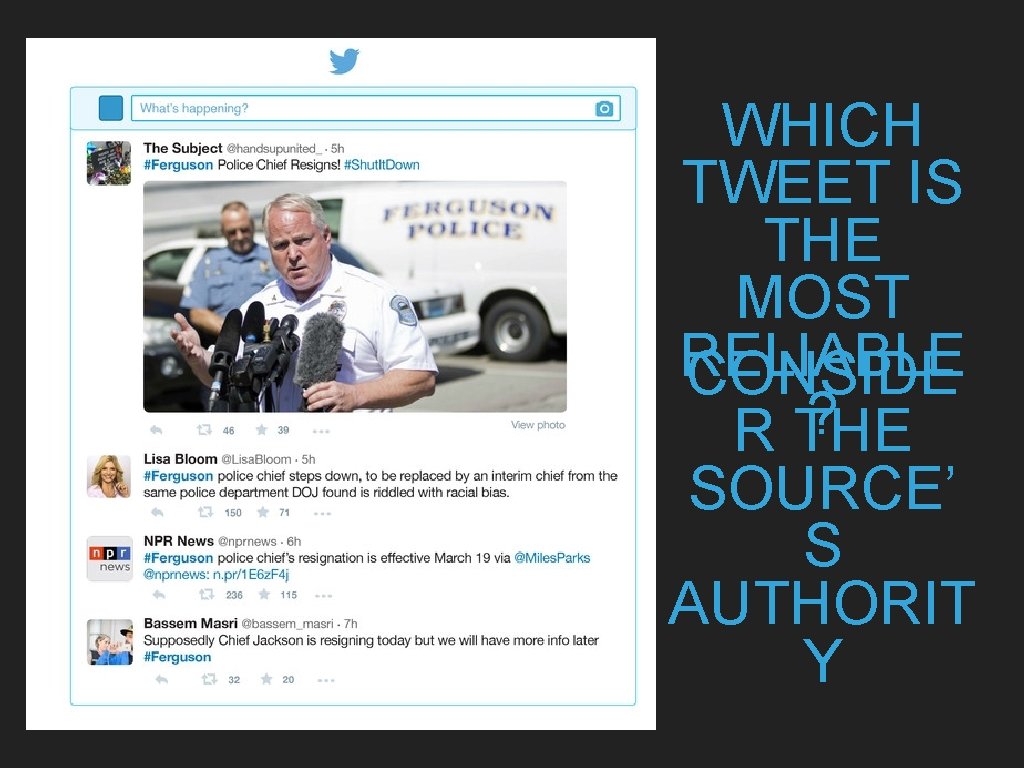
WHICH TWEET IS THE MOST RELIABLE CONSIDE ? R THE SOURCE’ S AUTHORIT Y
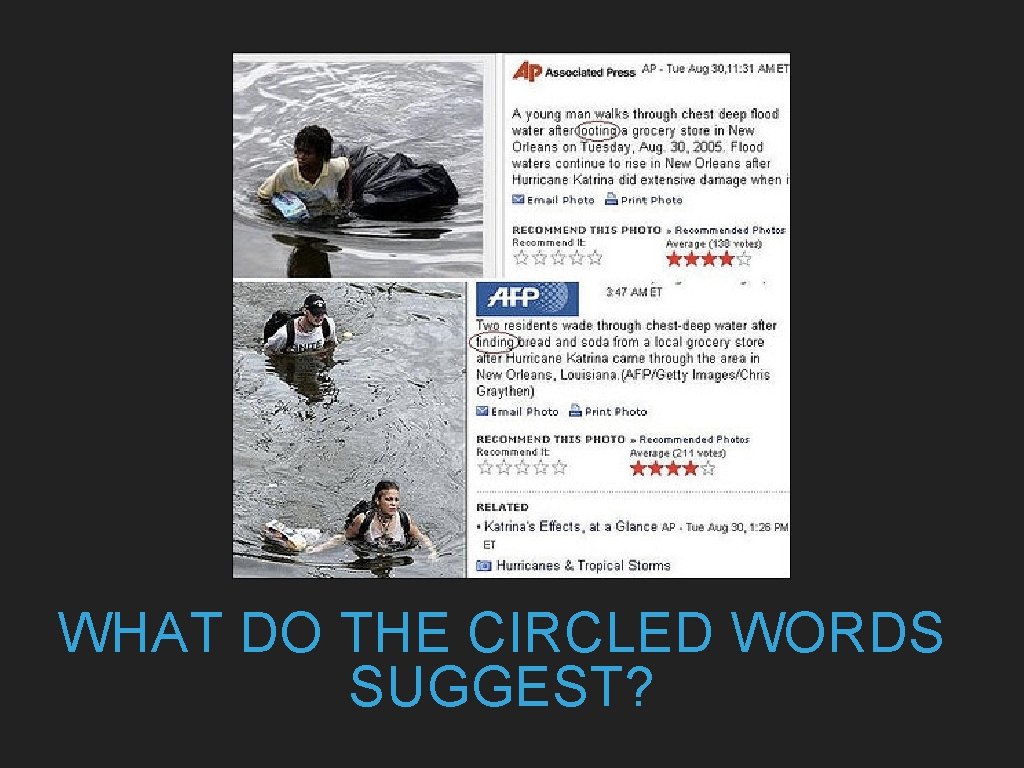
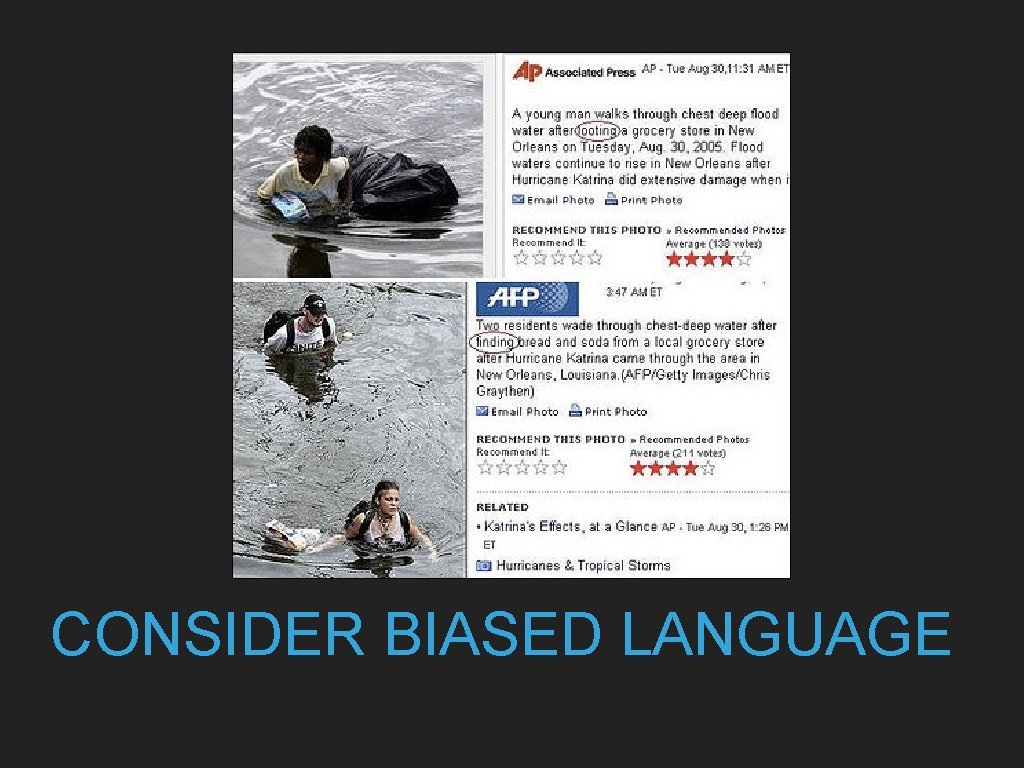
WHAT DO THE CIRCLED WORDS SUGGEST?
CONSIDER BIASED LANGUAGE
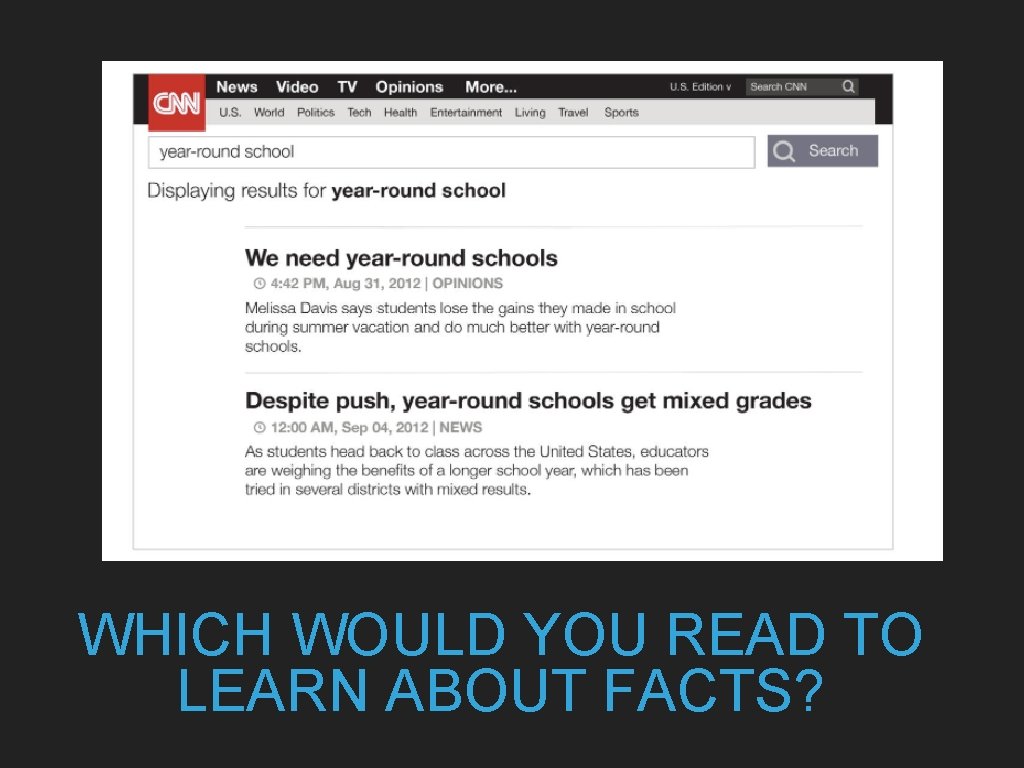
WHICH WOULD YOU READ TO LEARN ABOUT FACTS?
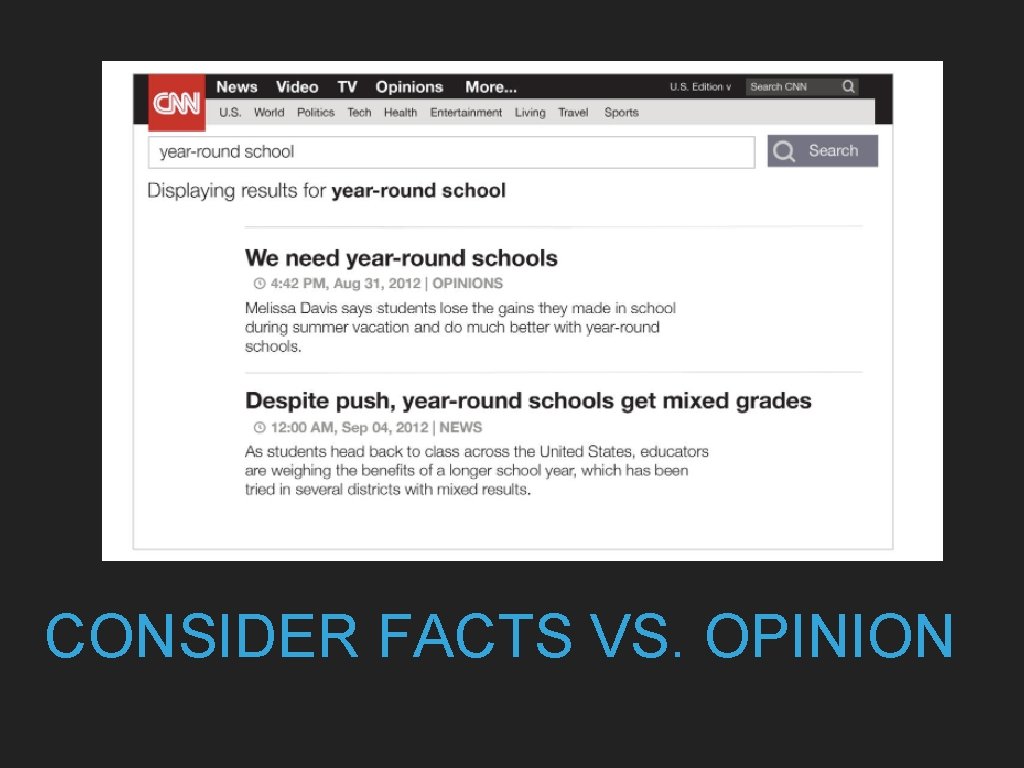
CONSIDER FACTS VS. OPINION
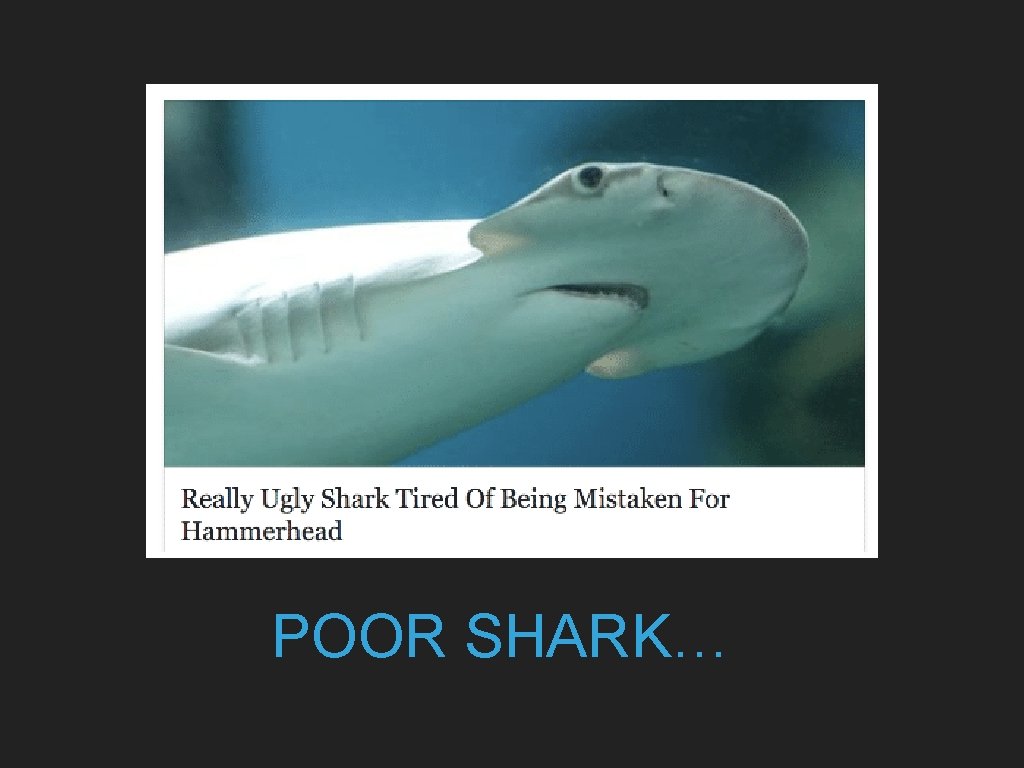
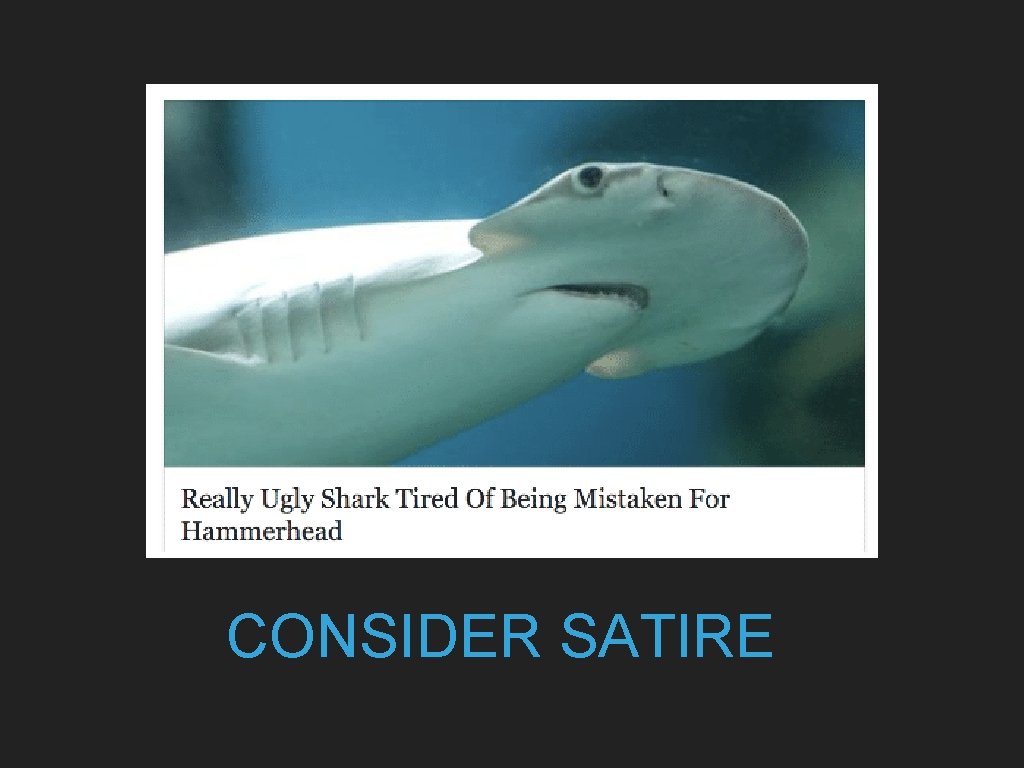
POOR SHARK…
CONSIDER SATIRE
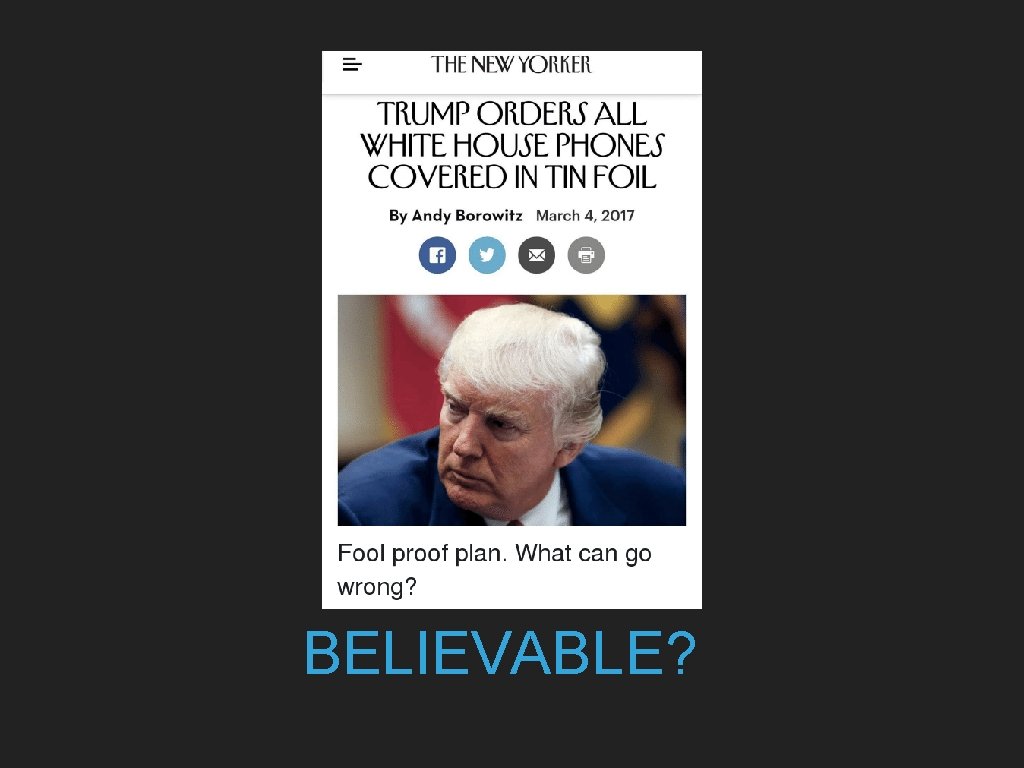
BELIEVABLE?
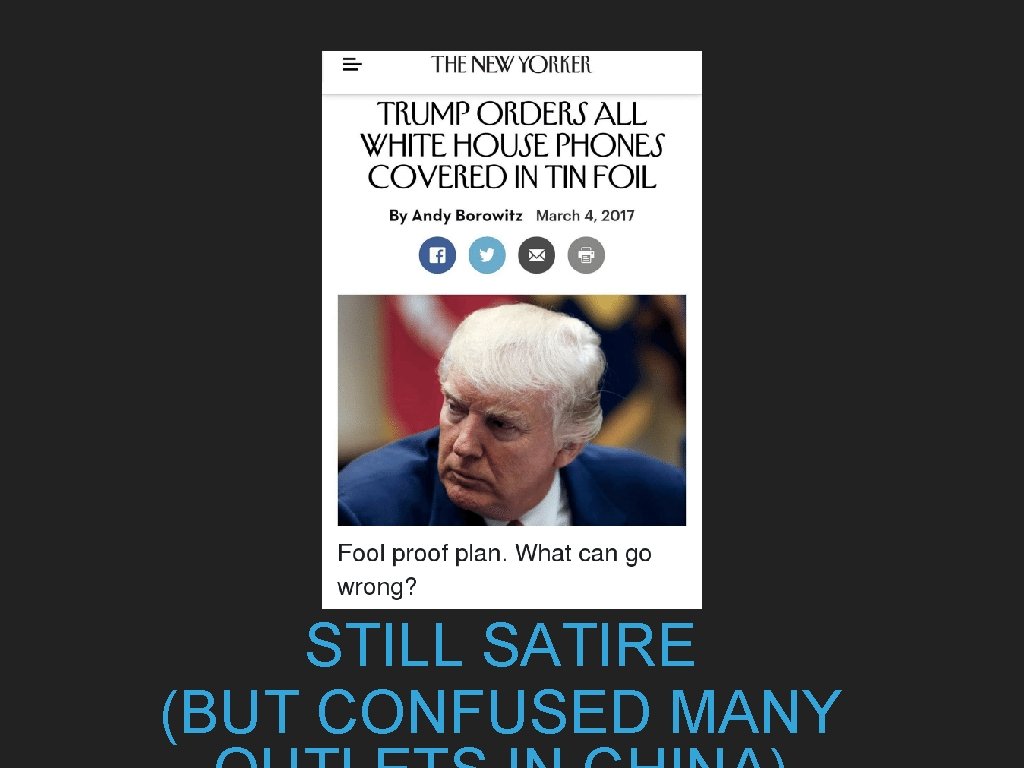
STILL SATIRE (BUT CONFUSED MANY
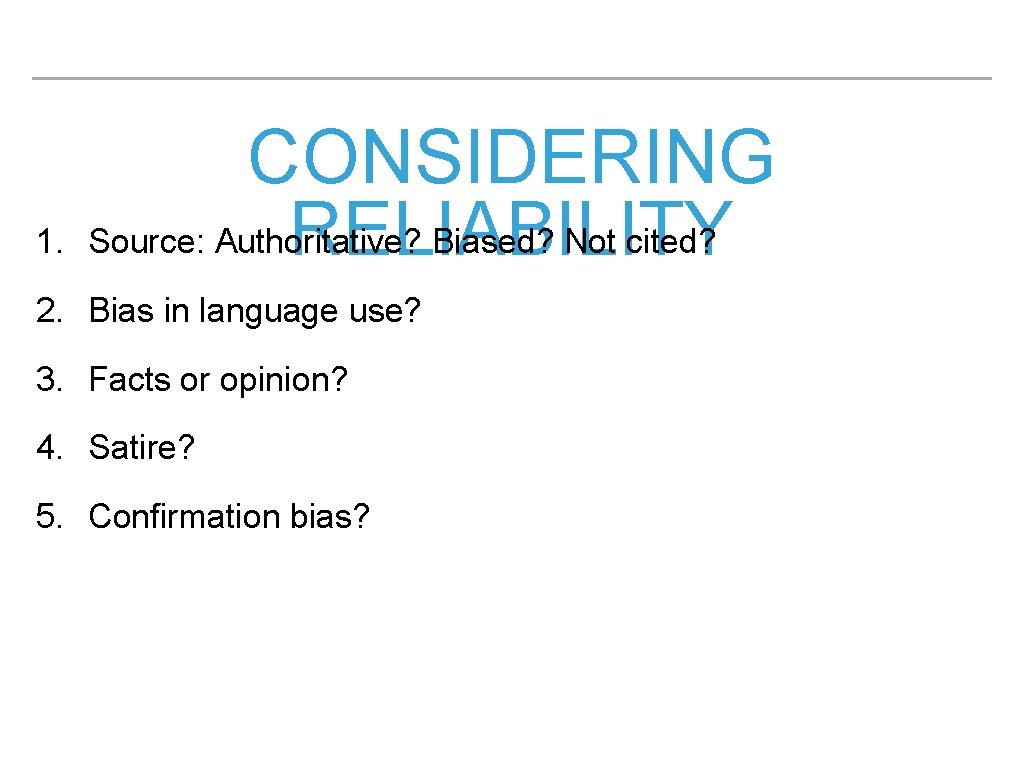
1. CONSIDERING Source: Authoritative? Biased? Not cited? RELIABILITY 2. Bias in language use? 3. Facts or opinion? 4. Satire? 5. Confirmation bias?
CLASS QUESTIONS 1. Where do you get most of your news? Are these sources trustworthy? How do you know? 2. How much do you care if an article claiming to be real actually is? Does it matter if we can’t tell real news from fake news? 3. Are you more careful with online sources when you are doing work for school than when you are surfing the web for fun? How do you decide what is a reliable source for your schoolwork?