
Social Stratification in Higher Education What It Means

- Slides: 25
Social Stratification in Higher Education: What It Means at the Micro. Level of Individual Academics Keynote Address SRHE International Conference on Research into Higher Education, 5 December 2018 Celtic Manor, UK Professor Marek Kwiek Director, Center for Public Policy Studies UNESCO Chair in Institutional Research and HE Policy, University of Poznan, Poland kwiekm@amu. edu. pl; www. cpp. amu. edu. pl
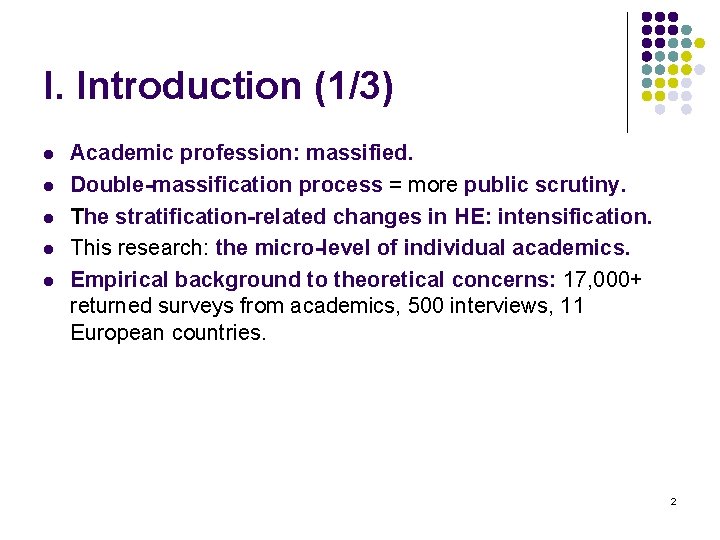
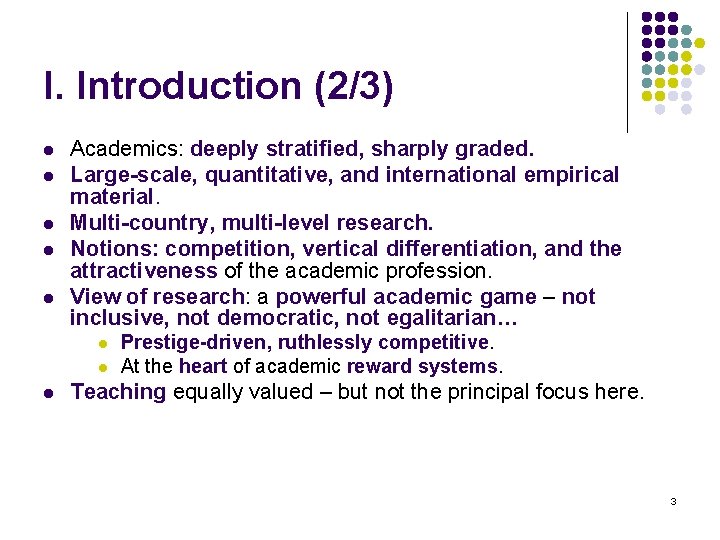
I. Introduction (1/3) l l l Academic profession: massified. Double-massification process = more public scrutiny. The stratification-related changes in HE: intensification. This research: the micro-level of individual academics. Empirical background to theoretical concerns: 17, 000+ returned surveys from academics, 500 interviews, 11 European countries. 2
I. Introduction (2/3) l l l Academics: deeply stratified, sharply graded. Large-scale, quantitative, and international empirical material. Multi-country, multi-level research. Notions: competition, vertical differentiation, and the attractiveness of the academic profession. View of research: a powerful academic game – not inclusive, not democratic, not egalitarian… l l l Prestige-driven, ruthlessly competitive. At the heart of academic reward systems. Teaching equally valued – but not the principal focus here. 3
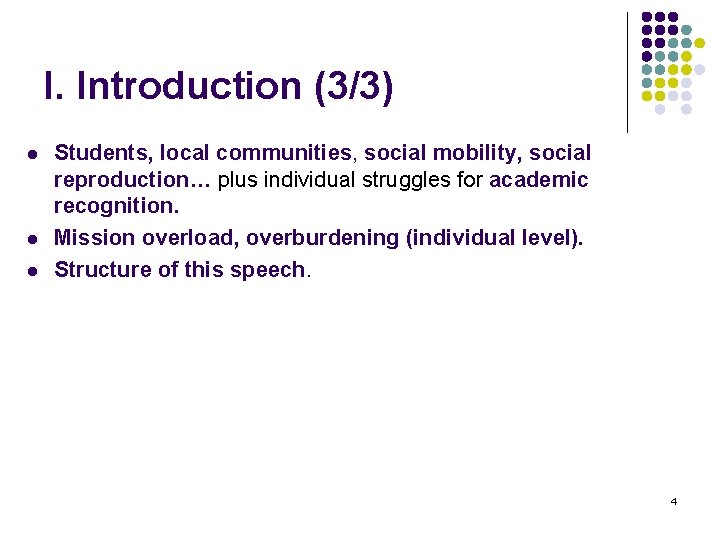
I. Introduction (3/3) l l l Students, local communities, social mobility, social reproduction… plus individual struggles for academic recognition. Mission overload, overburdening (individual level). Structure of this speech. 4
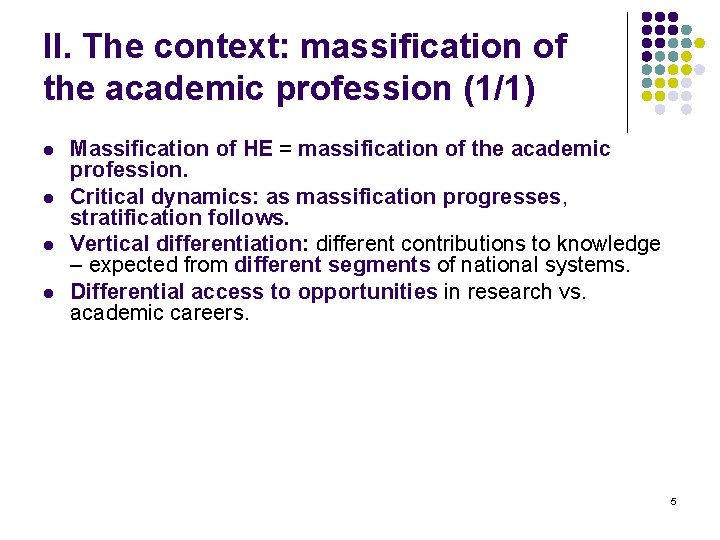
II. The context: massification of the academic profession (1/1) l l Massification of HE = massification of the academic profession. Critical dynamics: as massification progresses, stratification follows. Vertical differentiation: different contributions to knowledge – expected from different segments of national systems. Differential access to opportunities in research vs. academic careers. 5
III. Three types of social stratification in HE (1/1) l l l Three types explored: l Academic performance stratification (research output: high-low). l Academic salary stratification (income: high-low). l International research stratification (international collaboration: yes-no). Social stratification in HE refers directly to individual academics. Operationalized, rigorously measured and compared cross-nationally. 6
IV. Data and methods (1/2) l l l The data: the largest comparative research into academic scientists in Europe (CAP and Euro. AC projects). 11 European countries studied: l Austria, Finland, Germany, Ireland, Italy, the Netherlands, Norway, Poland, Portugal, Switzerland, and the UK (England). Cleaned, weighted and integrated into a single European dataset by the University of Kassel team (Ulrich Teichler). The total number of returned surveys: 17, 211 (400 variables). A micro-level (individual) approach – not systems. The individual academic as the unit of analysis. 7
IV. Data and methods (2/2) l l Sample: both teaching and research involved, from the university sector (only). The three (internationally) under-researched classes of academics: l Highly (research) productive academics. l Highly internationalized academics. l Highly paid academics. Who they are, how they work, what is their working time distribution, and their academic role orientation. International comparative academic profession studies. 8
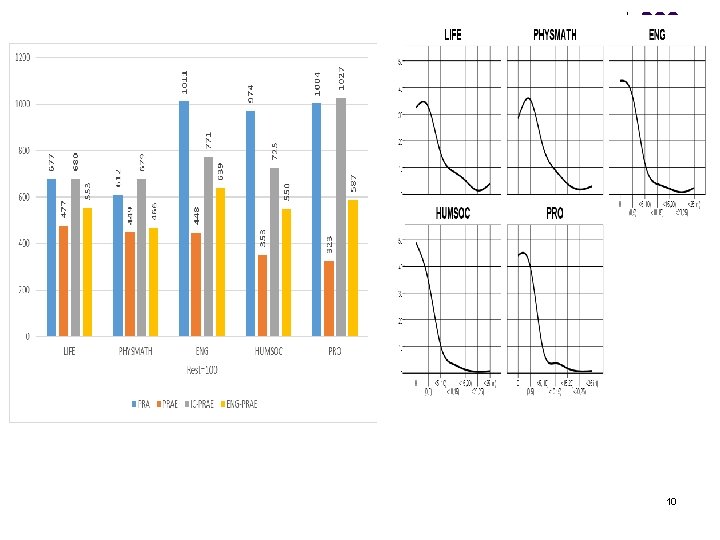
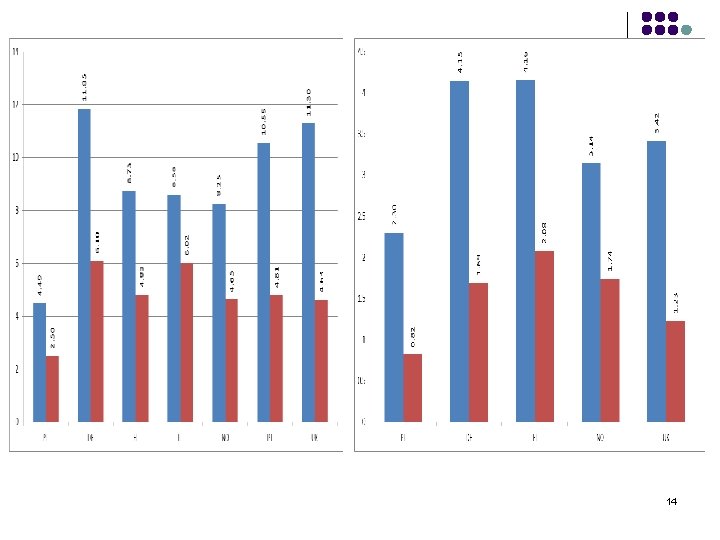
V. Academic performance stratification (1/3) l l l Inherent ‘undemocracy’ shown (as in Price 1963; Xie 2014). The distribution of research productivity: strongly skewed. Huge numbers of low publishers – small numbers of high publishers across Europe. Top performers (upper 10%) in the 11 countries : l 53. 4% of peer-reviewed articles. l 45. 6% of publications in English. l 50. 2% of internationally co-authored publications. The class of top performers – not explored in international comparative studies. 9
10
V. Academic performance stratification (2/3) l Common features of top performers found: l l l l male, middle-aged (mean age 47), full professors, international in scope or orientation, collaborate more often both nationally and internationally, publish abroad more often, basic and theoretical research. Longer total working hours, more time spent on research. But also: more time on teaching, service, and administration, in contrast to the expected teachingresearch trade-off (Fox 1992; Dillon and Marsh 1981). Much more research-oriented. Powerful implications for academic careers: what do do, what not to do. 11
V. Academic performance stratification (3/3) l l l Academic knowledge production (national, institutional) hinges on top performers. Highly homogeneous class (working pattern and role orientation). Similar cross-nationally and differ substantially from other academics intra-nationally. Systems of HE perceived as fair and meritocratic. Egalitarian ideology protects the stratified (steep internal hierarchy) scientific community against polarization. 12
VI. Academic salary stratification (1/2) l l A cross-national perspective: predictors for entry to the class of top earners. The 80 th percentile of gross academic income, 40+, experience 10 years +, five major academic clusters, each country. Top earners substantially more (80 -140%) productive (and publishing much more (100 -150%) internationally coauthored research). Perplexing: longer administrative and service hours – rather than longer research hours and shorter teaching hours. 13
14
VI. Academic salary stratification (2/2) l l Previous research: strong positive correlation between research hours and salary levels (Fairweather 2005). Our research (European sample) does not confirm these findings. Traditional links do not hold in Continental Europe. Top earners: l l more time on all academic activities except for teaching and research. more time on admininstrative and non-commercial service. 15
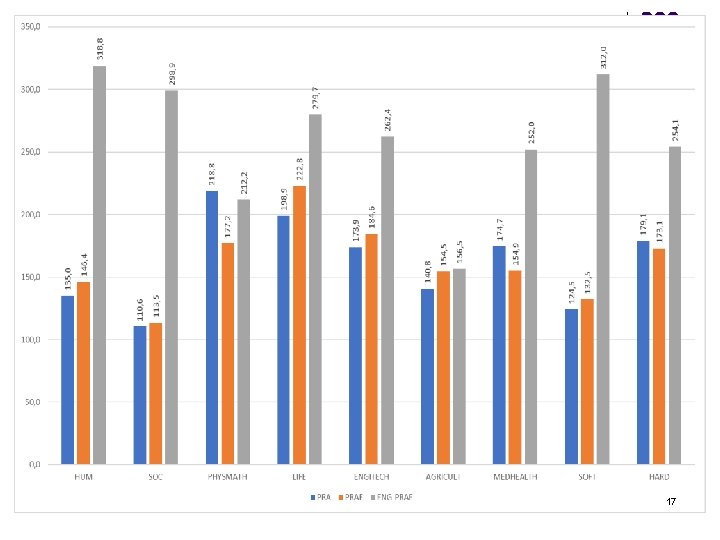
VII. International research stratification (1/2) l l l Academics powerfully stratified by international research collaboration. ‘Internationalists’ and ‘locals’ in research (”Are you collaborating with international colleagues in research? ” Yes/No): two prototypical figures. Some systems, institutions, academic clusters, and academics - more internationalized. International research (& publications) contribute to the increasing stratification of the academic profession. Reason: international collaboration positively correlated with higher publishing (and citation) rates. 16
17
VII. International research stratification (2/2) l l l Mean productivity consistently higher for internationalists. International publication co-authorship: strongly correlated with international collaboration. Internationalists across Europe: at least twice as many peer-reviewed article equivalents (PRAE) as locals, about three times more article equivalents in English (ENG-PRAE). European academics who do not collaborate internationally (=locals) may suffer increasing losses (both research resources and academic prestige). Academic performance stratification = linked to research funding stratification = linked to academic journal stratification (top journals). 18
VIII. Policy implications: performance stratification (1/1) l l l Implications different by job profile and institutional type. Especially important for young academics. Time investments of top performers: in research and in all other academic activities (teaching, service, administration). Research time vs. non-research time. Entry ticket to top performance: l l l long research hours, long total working hours, high research orientation, and high levels of international collaboration. Less (research) productive academics (50% of academics accounting for 8. 5% of all publications) – significant untapped research potential across Europe. Top performers tend to attract other top performers. 19
VIII. Policy implications: academic salary stratification (1/1) l l l Academics with a ‘taste for research’, remember – much time in Europe will be spent on non-research activities. The core distinction: research and non-research activities. European institutions offering more research time may be more attractive to research-oriented academics. Systems with merit-based pay may be more attractive to research-oriented academics, and specifically to top performers. The influence of salary stratification on the future of the academic profession (& its attractiveness). 20
VIII. Policy implications: International research stratification (1/2) l l l The competition for prestige (and research resources) hinges on internationalization in research. Single rule: ‘No international collaboration, no international co-authorship. ’ Local prestige & local publications vs. successful careers. Institutional success vs. individual research successes (prestige maximization model, Melguizo and Strober 2007). Scholarly publishing: more than an individual matter: l Determines institutional/departmental funding. l Defines resource-rich vs. resource poor units within institutions. Who generates research funding? 21
VIII. Policy implications: International research stratification (2/2) l l Internal implications of external research collaboration. Internationalists differ fundamentally in their academic attitudes and behaviors from locals. Both types constitute homogeneous groups across European systems. International visibility of national research hinges on prevailing patterns of: l l collaboration (international, none at all), and publication (international channels, none at all). 22
IX. Conclusions (1/3) l l l Research is the single most stratifying factor in the HE enterprise. The underpinning of the stratification system in HE is contribution to knowledge – through published research. Prestige & success inseparable from consequential, highquality publications. Our large-scale comparative data show increasing tensions in HE, extending to the individual academic. The tensions can be operationalized through the various stratification types. And measured – across national systems, academic disciplines, age cohorts, gender… 23
IX. Conclusions (2/3) l l Academics at the center of governance and funding and assessment changes. Research-focused vs. teaching-focused institutions: changes filter down into academics’ work and life. Academic job requirements mirror the increasing stratification of HE institutions (and individuals). The big-picture issues (e. g. institutional mission differentiation) are related to direct anxieties for individual academics. 24
IX. Conclusions (3/3) l l The three types of stratification studied refer predominantly to research. Other stratification types, not discussed: l l l l Empirical evidence shows that the academic profession is: l l Academic power stratification (divided by: academic positions). Academic age stratification (divided by: age cohorts). Academic role stratification (teaching, research, both). Gender stratification. Research funding stratification (divided by funding opportunities). Academic journal stratification (divided by journals)… heavily internally divided (as never before)… possibly because it is massified (as never before). Turbulent times – but our collective future is at stake… Thank you! 25