
SOCIAL STORIES REVISIT SOCIAL STORIES Why do we

- Slides: 6
SOCIAL STORIES
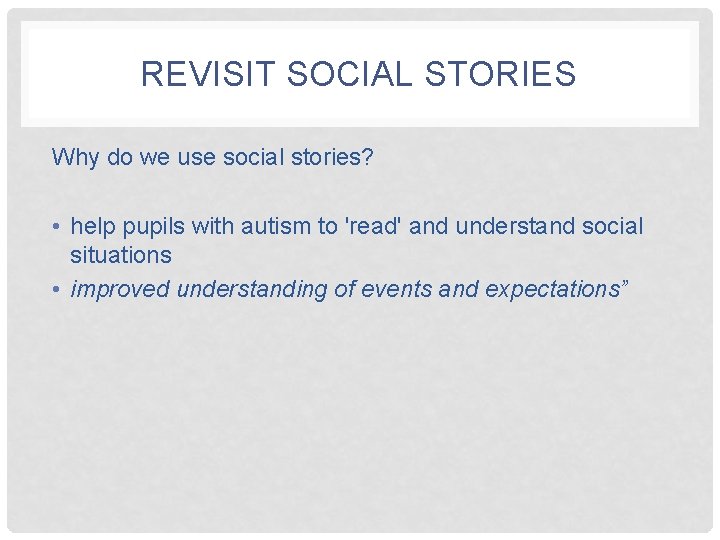
REVISIT SOCIAL STORIES Why do we use social stories? • help pupils with autism to 'read' and understand social situations • improved understanding of events and expectations”
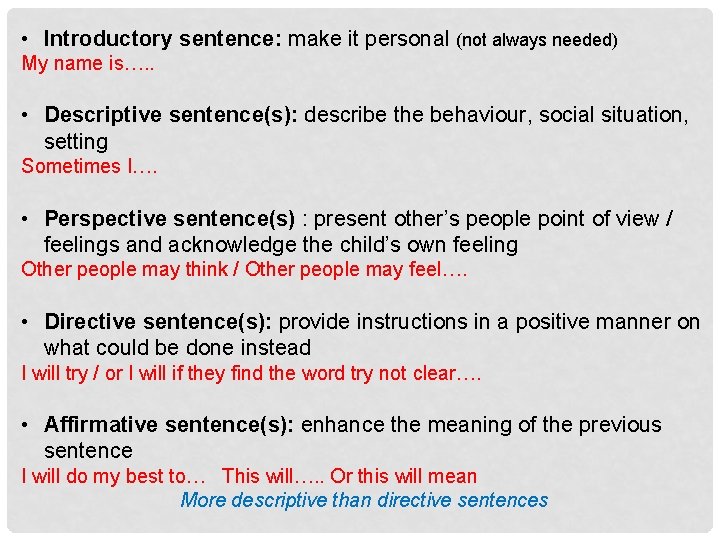
• Introductory sentence: make it personal (not always needed) My name is…. . • Descriptive sentence(s): describe the behaviour, social situation, setting Sometimes I…. • Perspective sentence(s) : present other’s people point of view / feelings and acknowledge the child’s own feeling Other people may think / Other people may feel…. • Directive sentence(s): provide instructions in a positive manner on what could be done instead I will try / or I will if they find the word try not clear…. • Affirmative sentence(s): enhance the meaning of the previous sentence I will do my best to… This will…. . Or this will mean More descriptive than directive sentences
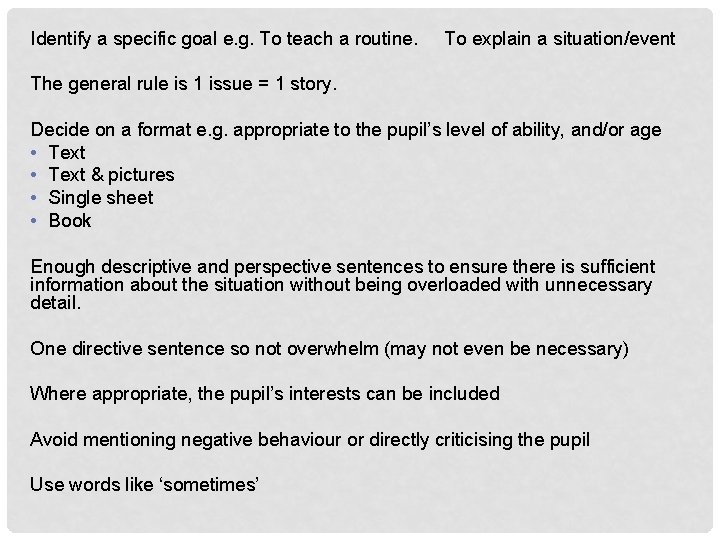
Identify a specific goal e. g. To teach a routine. To explain a situation/event The general rule is 1 issue = 1 story. Decide on a format e. g. appropriate to the pupil’s level of ability, and/or age • Text & pictures • Single sheet • Book Enough descriptive and perspective sentences to ensure there is sufficient information about the situation without being overloaded with unnecessary detail. One directive sentence so not overwhelm (may not even be necessary) Where appropriate, the pupil’s interests can be included Avoid mentioning negative behaviour or directly criticising the pupil Use words like ‘sometimes’
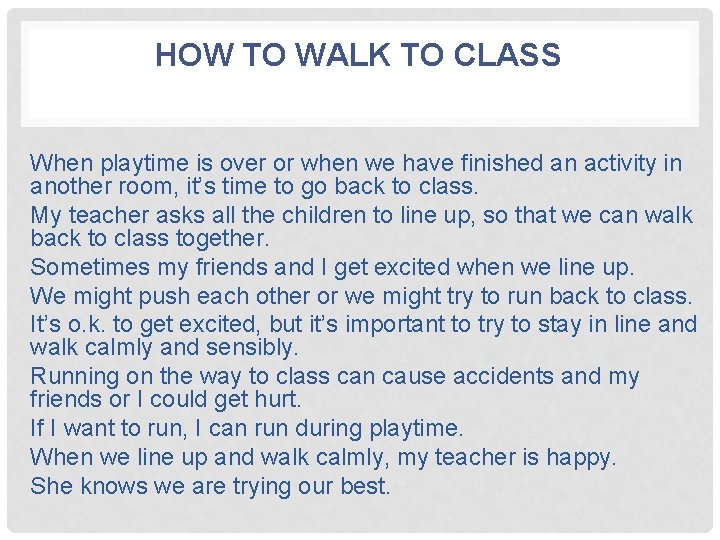
HOW TO WALK TO CLASS When playtime is over or when we have finished an activity in another room, it’s time to go back to class. My teacher asks all the children to line up, so that we can walk back to class together. Sometimes my friends and I get excited when we line up. We might push each other or we might try to run back to class. It’s o. k. to get excited, but it’s important to try to stay in line and walk calmly and sensibly. Running on the way to class can cause accidents and my friends or I could get hurt. If I want to run, I can run during playtime. When we line up and walk calmly, my teacher is happy. She knows we are trying our best.
SOCIAL STORIES What will we do next……. Email stories to be reviewed Upload stories onto the blog