
Social Research Methods Case Studies 1 What is


- Slides: 14
Social Research Methods Case Studies 1
What is a Case Study? l “A strategy for doing research which involves an empirical investigation of a particular contemporary phenomenon within its real life context using multiple sources of evidence” (Robson, 1993, p. 146) l A Case Study may be… l l Descriptive Exploratory Explanatory Focussed on l l Process - how was it done? Outcome - does it work? 2
Types of Case Study l Individual Case Study l l Set of individual case studies l l Outsiders - Becker on Marijuana smokers and musicians Studies of organizations and institutions l l Family and Kinship in East London, The Azande in the Sudan Social Group Studies l l Three general practice surgeries compared Community Studies l l Stanley, the ‘jack-roller’ - Shaw. Working for Ford - Benyon; National Front - Fielding Studies of events, roles and relationships l Housewife - Oakley; Cuban Missile Crisis 3
How to plan a case study Think about… l Conceptual Framework l Research Questions l Research Design l Sampling/replication strategy l Methods and Instruments l Analysis of Data 4
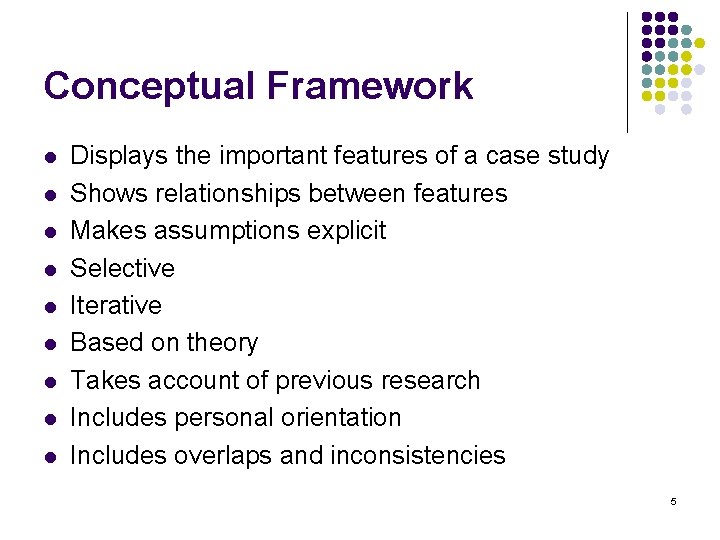
Conceptual Framework l l l l l Displays the important features of a case study Shows relationships between features Makes assumptions explicit Selective Iterative Based on theory Takes account of previous research Includes personal orientation Includes overlaps and inconsistencies 5
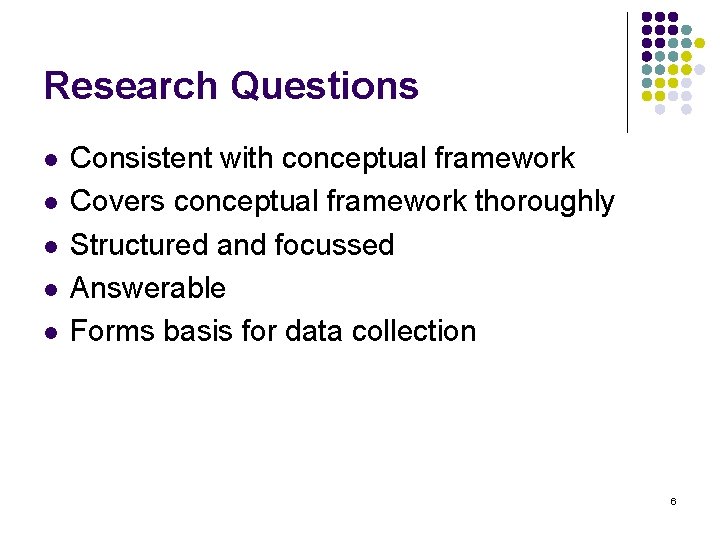
Research Questions l l l Consistent with conceptual framework Covers conceptual framework thoroughly Structured and focussed Answerable Forms basis for data collection 6
Basic Types of Case Study Design Cases One Several Many Spatial Variation Temporal Variation No Yes None 1 2 Single case study – diachronic Within case 3 Single case study – synchronic 4 Single case study – synchronic & diachronic Cross-case & withincase 5 Comparative Method 6 Comparative Historical Cross-case 7 Cross sectional 8 Time-series crosssectional Cross-case & withincase 9 Hierarchical 10 Hierarchical time-series Shaded cells are case study research designs From Gerring, John (2007) Case Study Research. Cambridge: Cambridge University Press. p. 28. 7
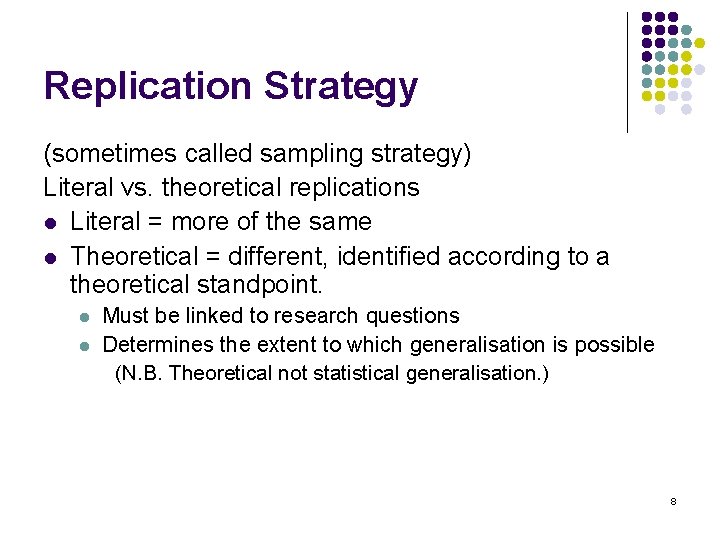
Replication Strategy (sometimes called sampling strategy) Literal vs. theoretical replications l Literal = more of the same l Theoretical = different, identified according to a theoretical standpoint. l l Must be linked to research questions Determines the extent to which generalisation is possible (N. B. Theoretical not statistical generalisation. ) 8
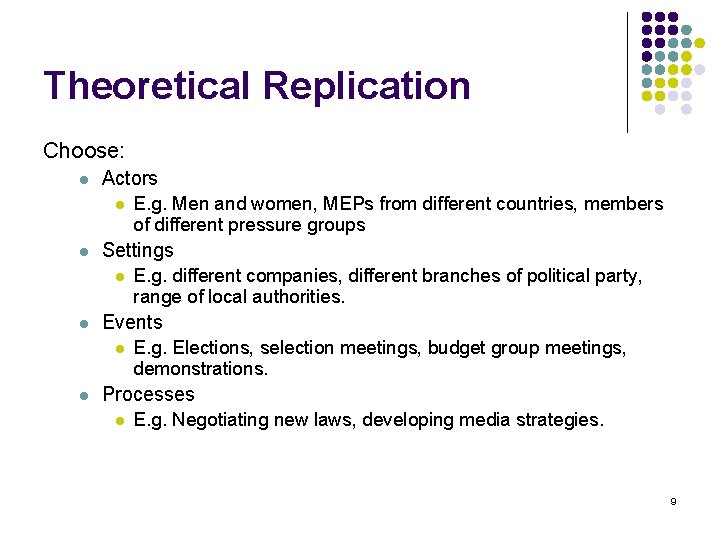
Theoretical Replication Choose: l Actors l l Settings l l E. g. different companies, different branches of political party, range of local authorities. Events l l E. g. Men and women, MEPs from different countries, members of different pressure groups E. g. Elections, selection meetings, budget group meetings, demonstrations. Processes l E. g. Negotiating new laws, developing media strategies. 9
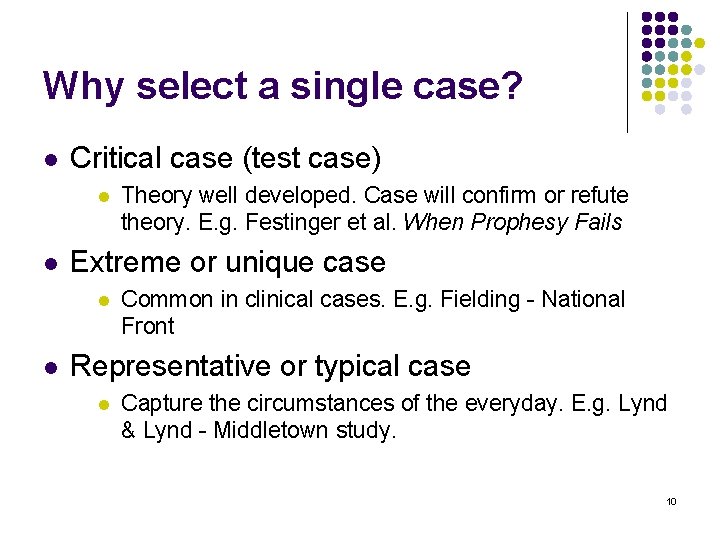
Why select a single case? l Critical case (test case) l l Extreme or unique case l l Theory well developed. Case will confirm or refute theory. E. g. Festinger et al. When Prophesy Fails Common in clinical cases. E. g. Fielding - National Front Representative or typical case l Capture the circumstances of the everyday. E. g. Lynd & Lynd - Middletown study. 10
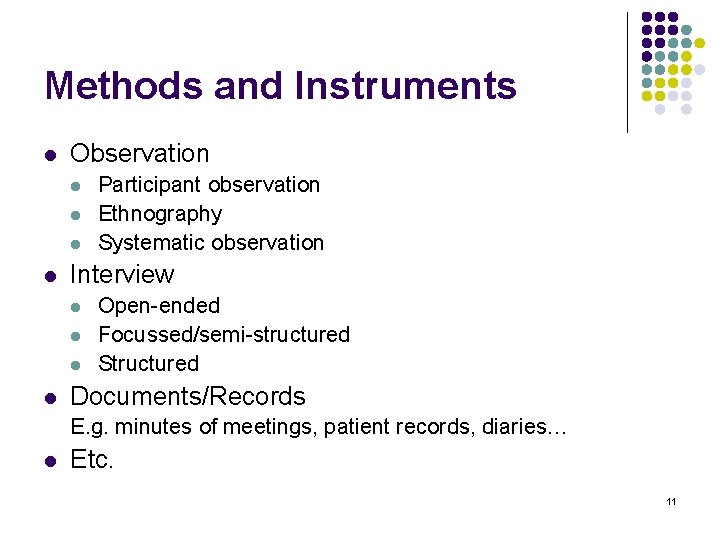
Methods and Instruments l Observation l l Interview l l Participant observation Ethnography Systematic observation Open-ended Focussed/semi-structured Structured Documents/Records E. g. minutes of meetings, patient records, diaries… l Etc. 11
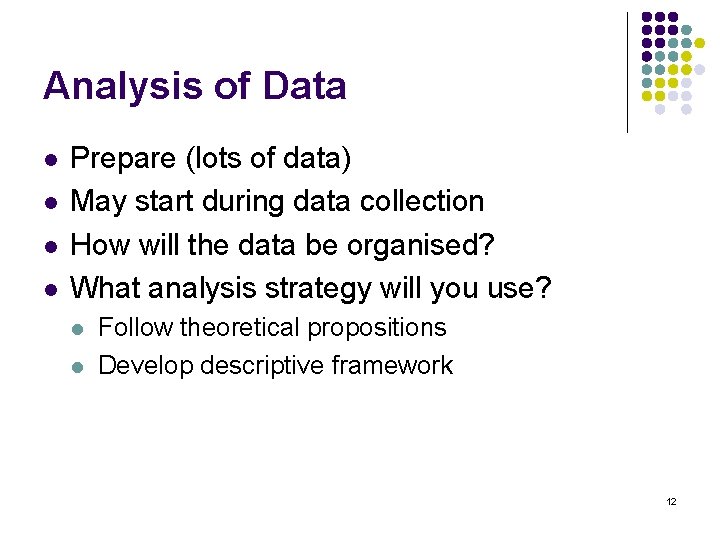
Analysis of Data l l Prepare (lots of data) May start during data collection How will the data be organised? What analysis strategy will you use? l l Follow theoretical propositions Develop descriptive framework 12
Problems for Validity l l Unreliable self-report data Unsubstantiated observations Post-hoc, unsystematic summaries Speculation and overgeneralization 13
Common pitfalls l l l Token literature review Premature theorizing Phase slippage 14