
Social Protection What and Why Sinta Satriana Social

- Slides: 15
Social Protection What and Why Sinta Satriana Social Protection Officer ILO Office for Pacific Island Countries
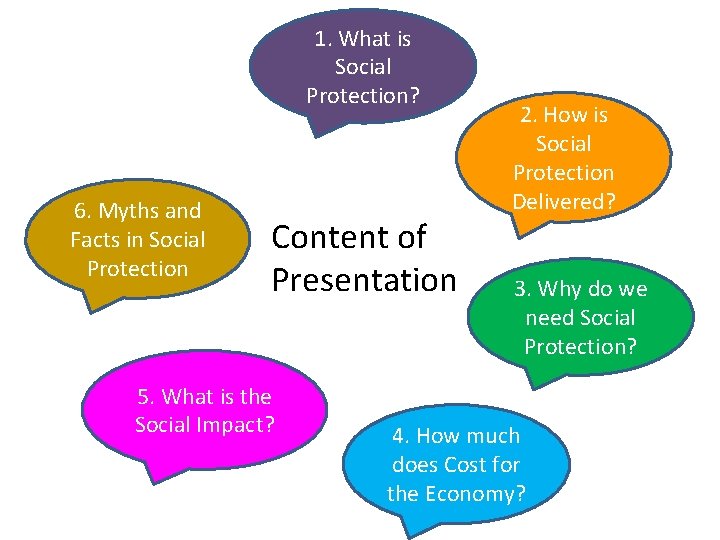
1. What is Social Protection? 6. Myths and Facts in Social Protection Content of Presentation 5. What is the Social Impact? 2. How is Social Protection Delivered? 3. Why do we need Social Protection? 4. How much does Cost for the Economy?
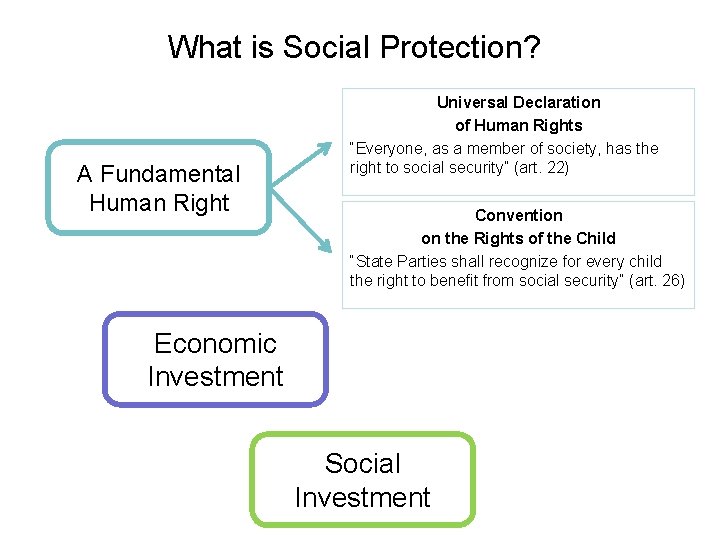
What is Social Protection? A Fundamental Human Right Universal Declaration of Human Rights “Everyone, as a member of society, has the right to social security” (art. 22) Convention on the Rights of the Child “State Parties shall recognize for every child the right to benefit from social security” (art. 26) Economic Investment Social Investment
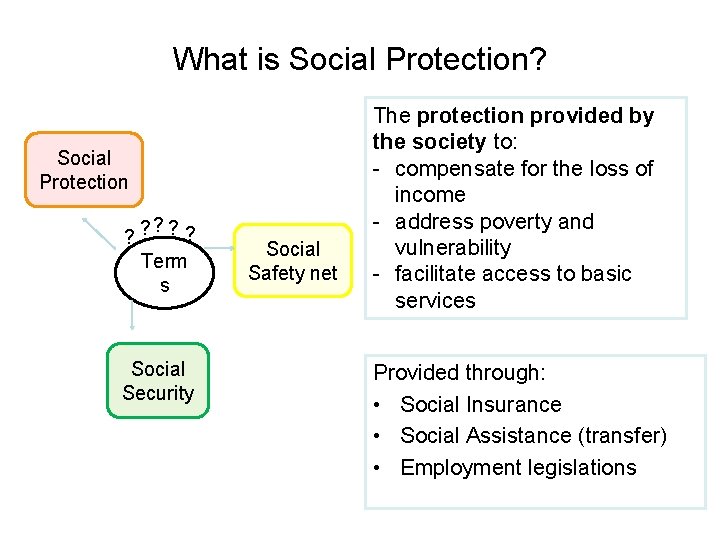
What is Social Protection? Social Protection ? ? ? Term s Social Security Social Safety net The protection provided by the society to: - compensate for the loss of income - address poverty and vulnerability - facilitate access to basic services Provided through: • Social Insurance • Social Assistance (transfer) • Employment legislations
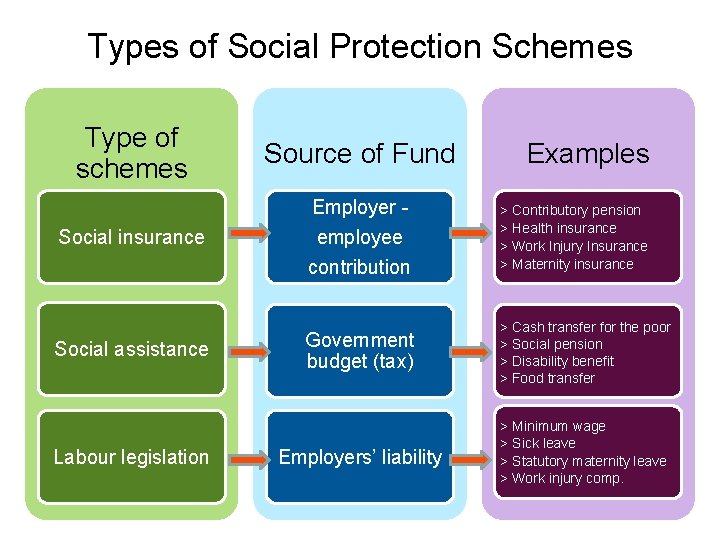
Types of Social Protection Schemes Type of schemes Social insurance Source of Fund Employer employee contribution Social assistance Labour legislation Examples > Contributory pension > Health insurance > Work Injury Insurance > Maternity insurance Government budget (tax) > Cash transfer for the poor > Social pension > Disability benefit > Food transfer Employers’ liability > Minimum wage > Sick leave > Statutory maternity leave > Work injury comp.
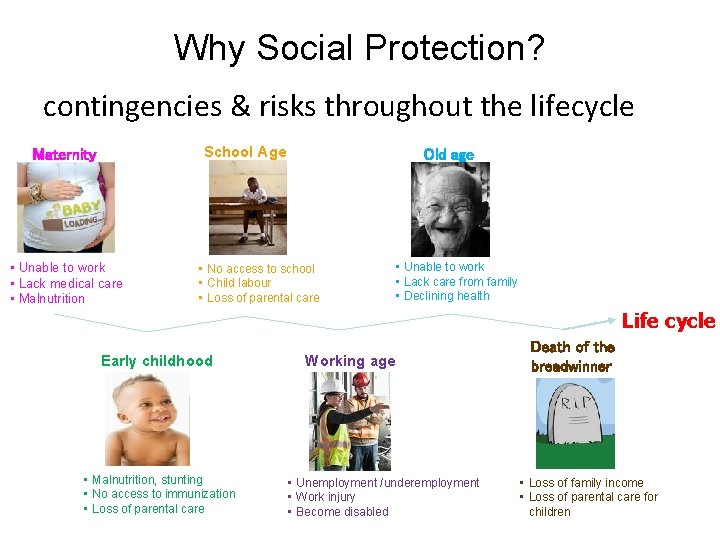
Why Social Protection? contingencies & risks throughout the lifecycle School Age Maternity • Unable to work • Lack medical care • Malnutrition Old age • No access to school • Child labour • Loss of parental care • Unable to work • Lack care from family • Declining health Life cycle Early childhood • Malnutrition, stunting • No access to immunization • Loss of parental care Working age • Unemployment /underemployment • Work injury • Become disabled Death of the breadwinner • Loss of family income • Loss of parental care for children
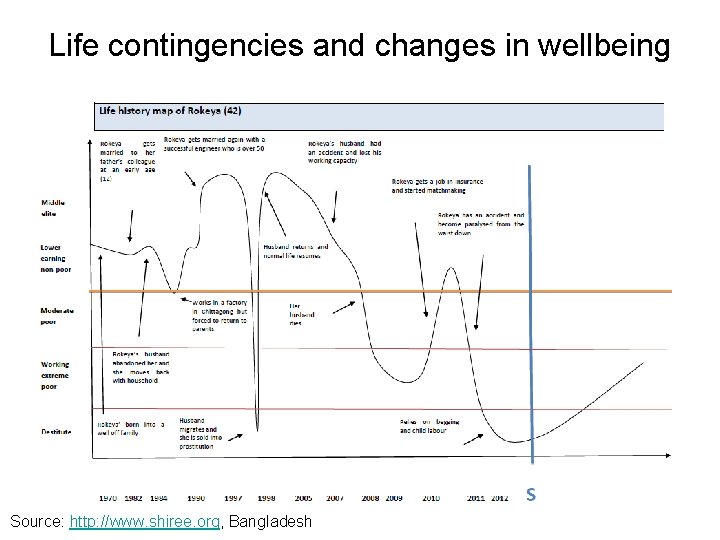
Life contingencies and changes in wellbeing Source: http: //www. shiree. org, Bangladesh
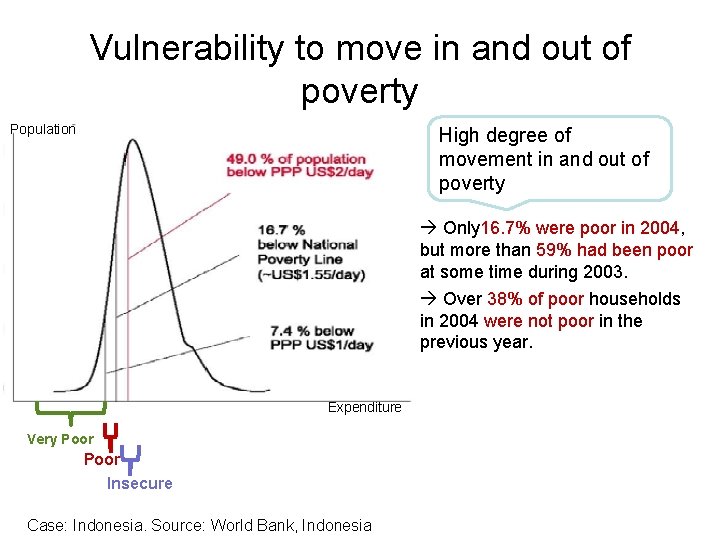
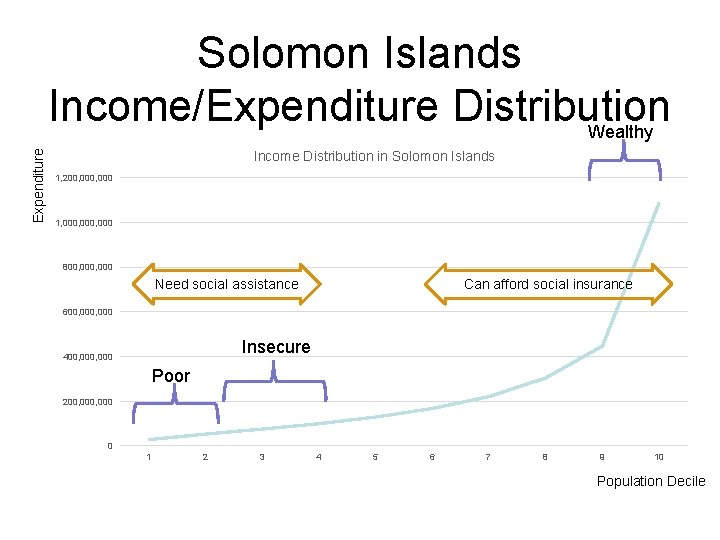
Vulnerability to move in and out of poverty Population High degree of movement in and out of poverty Only 16. 7% were poor in 2004, but more than 59% had been poor at some time during 2003. Over 38% of poor households in 2004 were not poor in the previous year. Expenditure Very Poor Insecure Case: Indonesia. Source: World Bank, Indonesia
Expenditure Solomon Islands Income/Expenditure Distribution Wealthy Income Distribution in Solomon Islands 1, 200, 000 1, 000, 000 800, 000 Need social assistance Can afford social insurance 600, 000 Insecure 400, 000 Poor 200, 000 0 1 2 3 4 5 6 7 8 9 10 Population Decile
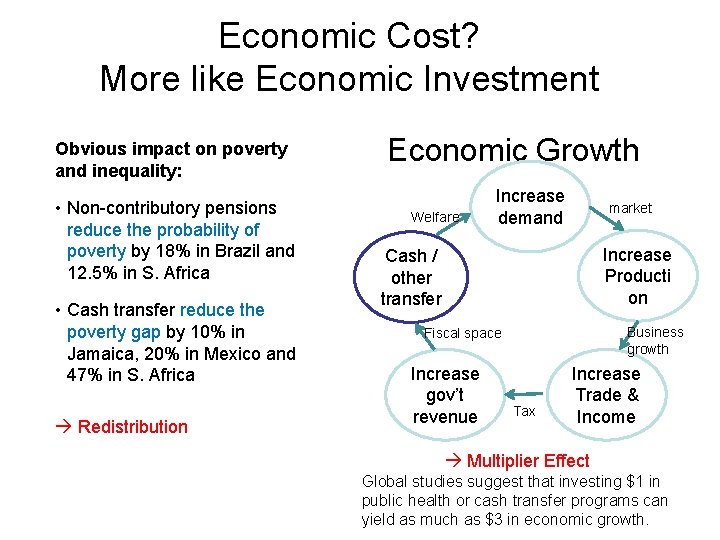
Economic Cost? More like Economic Investment Obvious impact on poverty and inequality: • Non-contributory pensions reduce the probability of poverty by 18% in Brazil and 12. 5% in S. Africa • Cash transfer reduce the poverty gap by 10% in Jamaica, 20% in Mexico and 47% in S. Africa Redistribution Economic Growth Welfare Increase demand market Increase Producti on Cash / other transfer Business growth Fiscal space Increase gov’t revenue Tax Increase Trade & Income Multiplier Effect Global studies suggest that investing $1 in public health or cash transfer programs can yield as much as $3 in economic growth.
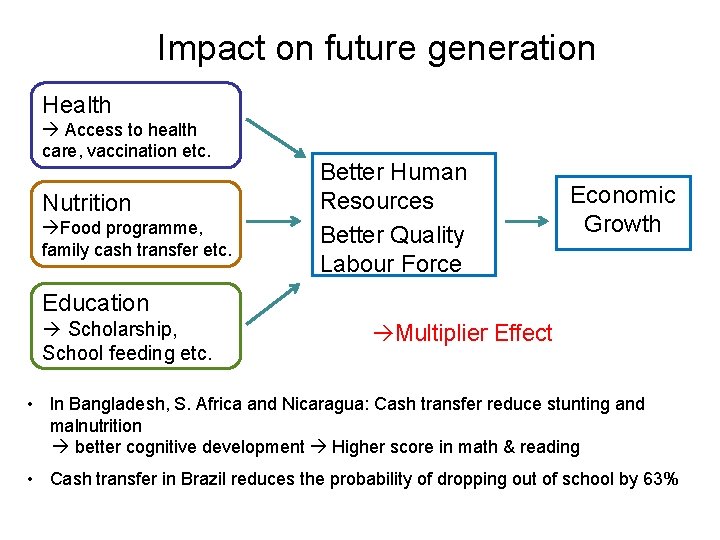
Impact on future generation Health Access to health care, vaccination etc. Nutrition Food programme, family cash transfer etc. Better Human Resources Better Quality Labour Force Economic Growth Education Scholarship, School feeding etc. Multiplier Effect • In Bangladesh, S. Africa and Nicaragua: Cash transfer reduce stunting and malnutrition better cognitive development Higher score in math & reading • Cash transfer in Brazil reduces the probability of dropping out of school by 63%
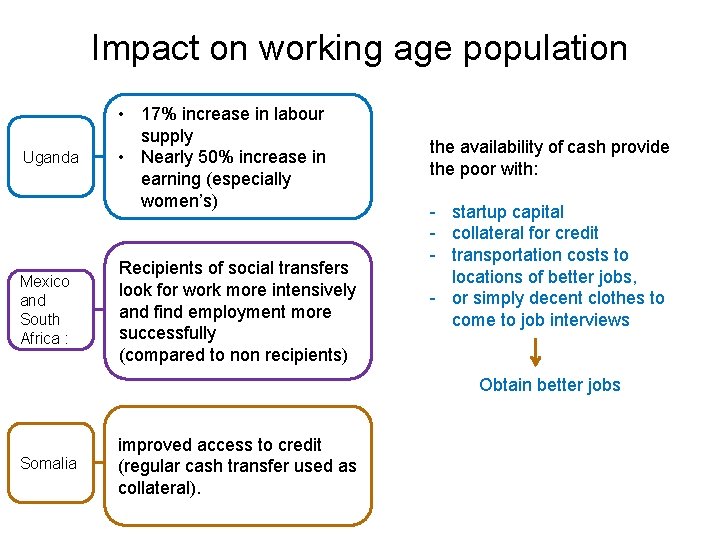
Impact on working age population Uganda Mexico and South Africa : • 17% increase in labour supply • Nearly 50% increase in earning (especially women’s) Recipients of social transfers look for work more intensively and find employment more successfully (compared to non recipients) the availability of cash provide the poor with: - startup capital - collateral for credit - transportation costs to locations of better jobs, - or simply decent clothes to come to job interviews Obtain better jobs Somalia improved access to credit (regular cash transfer used as collateral).
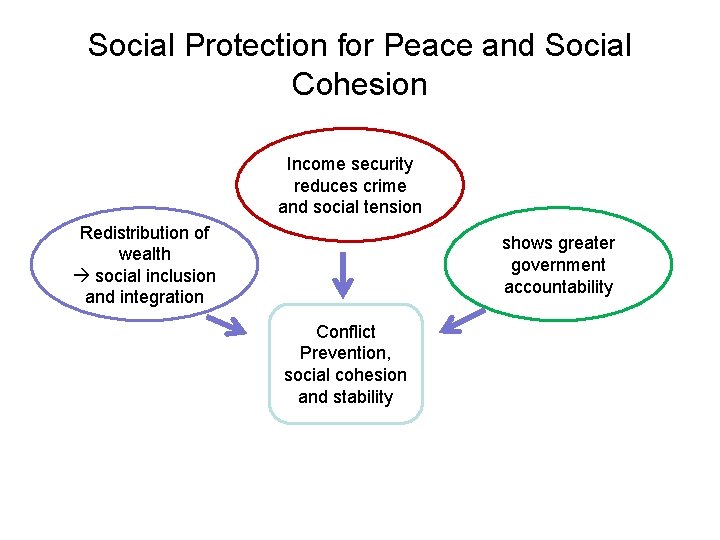
Social Protection for Peace and Social Cohesion Income security reduces crime and social tension Redistribution of wealth social inclusion and integration shows greater government accountability Conflict Prevention, social cohesion and stability
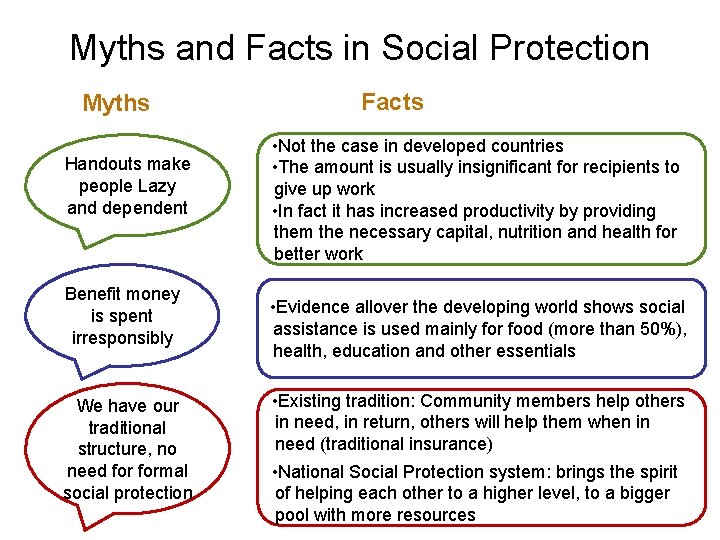
Myths and Facts in Social Protection Myths Handouts make people Lazy and dependent Benefit money is spent irresponsibly We have our traditional structure, no need formal social protection Facts • Not the case in developed countries • The amount is usually insignificant for recipients to give up work • In fact it has increased productivity by providing them the necessary capital, nutrition and health for better work • Evidence allover the developing world shows social assistance is used mainly for food (more than 50%), health, education and other essentials • Existing tradition: Community members help others in need, in return, others will help them when in need (traditional insurance) • National Social Protection system: brings the spirit of helping each other to a higher level, to a bigger pool with more resources
Thank you! Let’s Discuss!