
Social Privacy Bart van der Sloot Tilburg Institute
Social Privacy Bart van der Sloot Tilburg Institute for Law, Technology, and Society (TILT) Tilburg University, Netherlands www. bartvandersloot. com
Overview • • • (1) (2) (3) (4) (5) Short debate Big Data Break Short debate Social Privacy
(1) Short debate
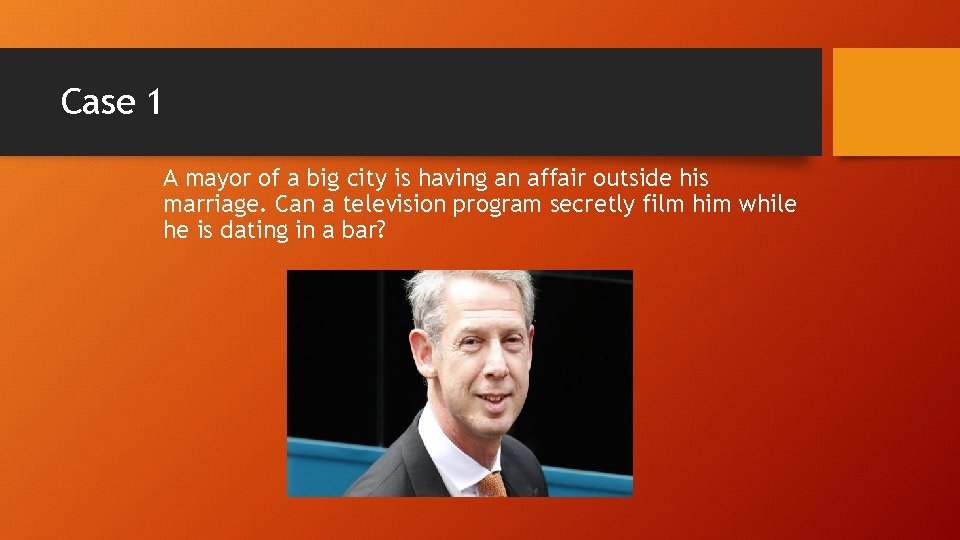
Case 1 A mayor of a big city is having an affair outside his marriage. Can a television program secretly film him while he is dating in a bar?
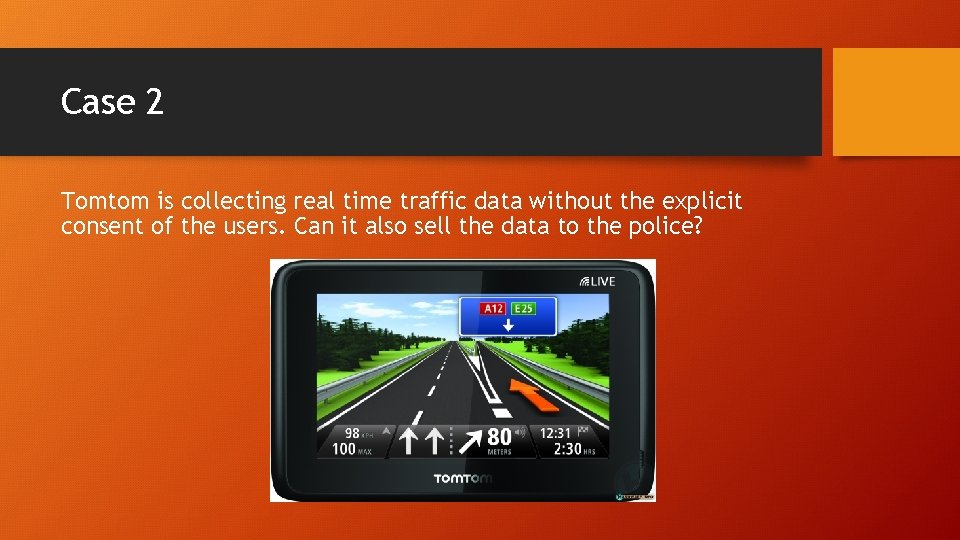
Case 2 Tomtom is collecting real time traffic data without the explicit consent of the users. Can it also sell the data to the police?

Privacy is dead, get over it
(2) Big Data
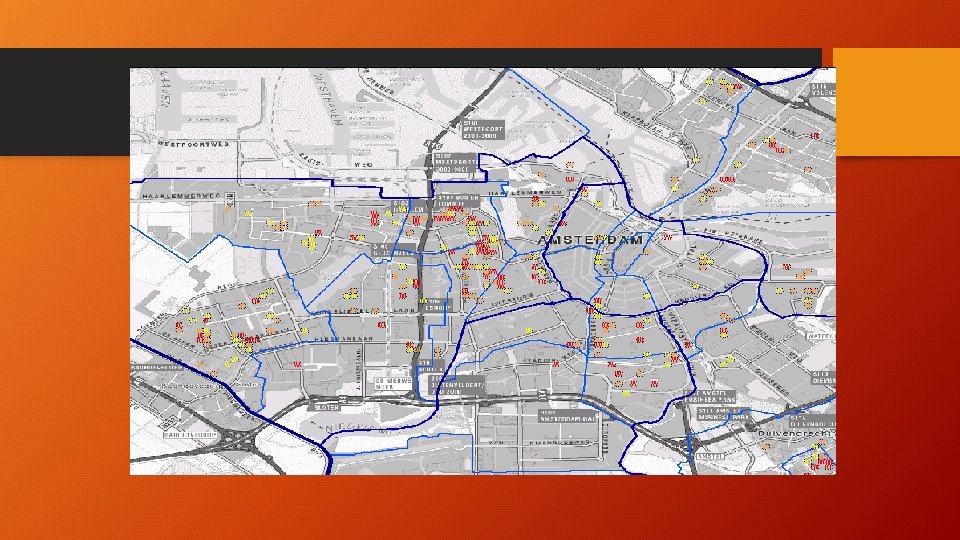
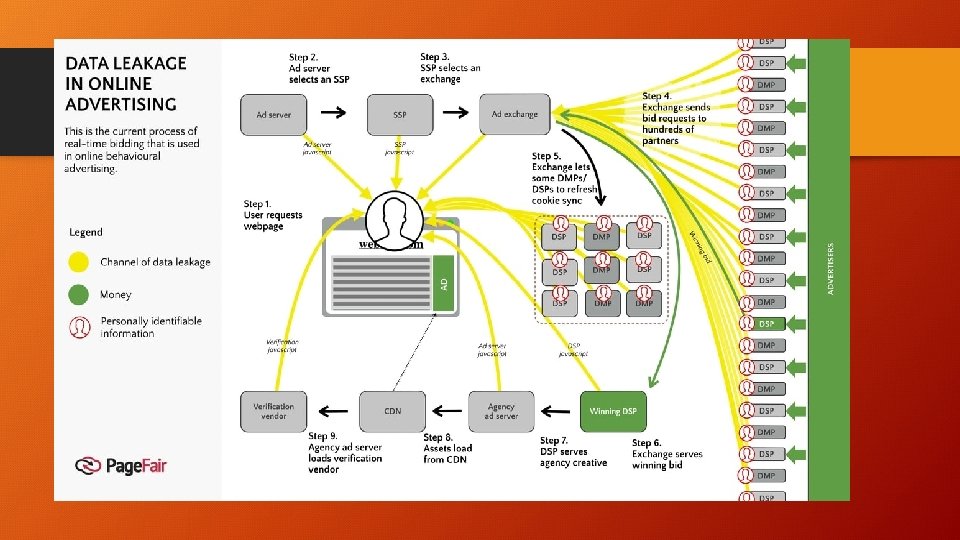
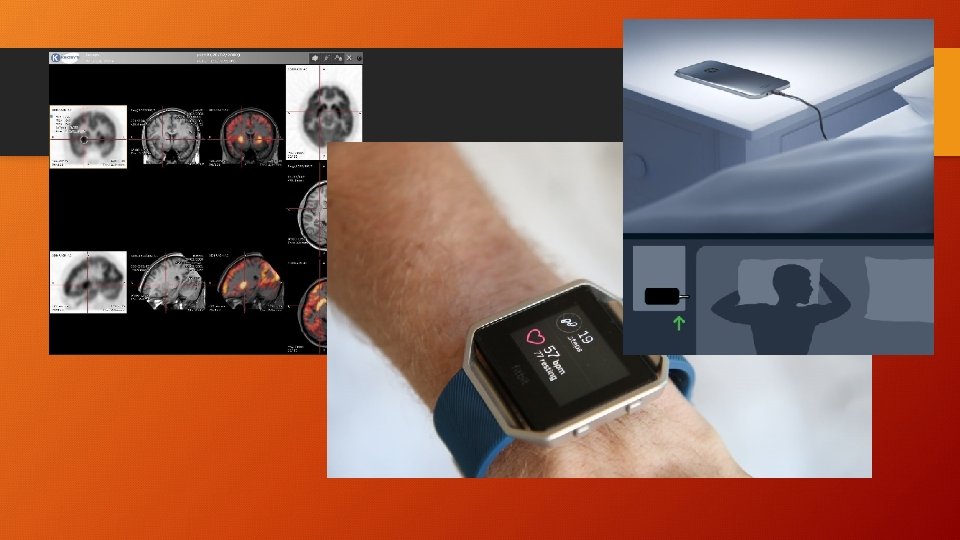

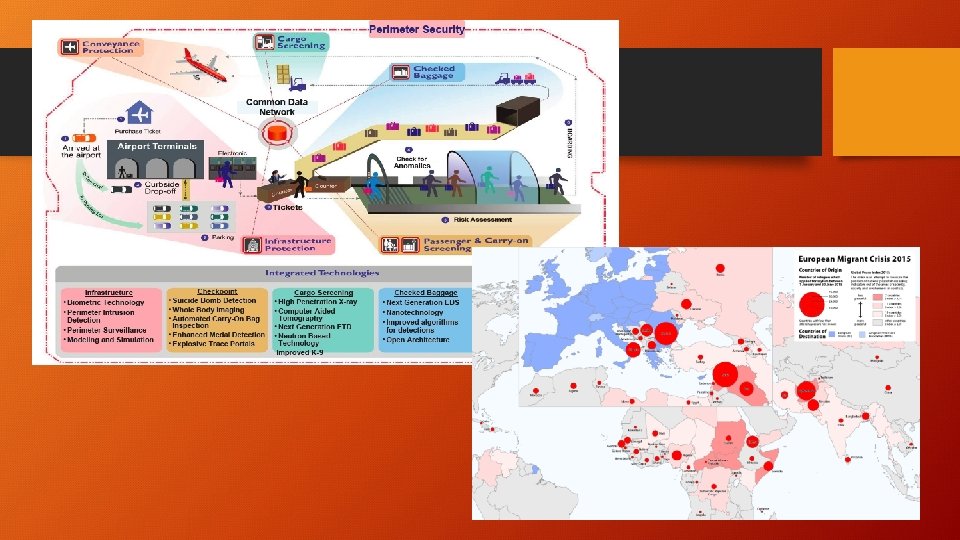
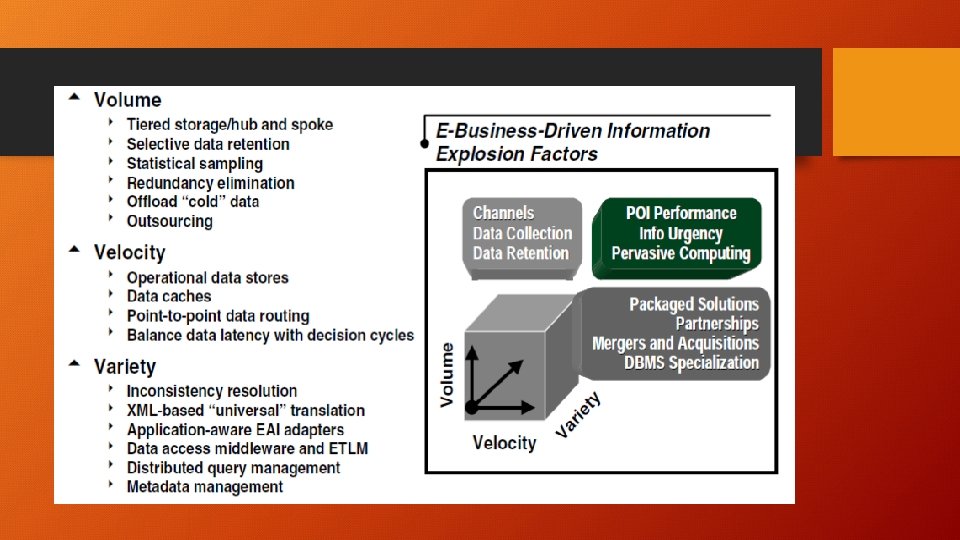
Big Data does not exist • ‘Big Data refers to the exponential growth both in the availability and in the automated use of information: it refers to gigantic digital datasets held by corporations, governments and other large organisations, which are then extensively analysed (hence the name: analytics 100) using computer algorithms. Big Data can be used to identify more general trends and correlations but it can also be processed in order to directly affect individuals. ’ • Article 29 Working Part • ‘Big Data is a term which refers to the enormous increase in access to and automated use of information. It refers to the gigantic amounts of digital data controlled by companies, authorities and other large organizations which are subjected to extensive analysis based on the use of algorithms. Big Data may be used to identify general trends and correlations, but it can also be used such that it affects individuals directly. ’ • International Working Group on Data Protection in Telecommunication • “Big Data means large amounts of different types of data produced at high speed from multiple sources, whose handling and analysis require new and more powerful processors and algorithms. Not all of these data are personal, but many players in the digital economy increasingly rely on the large scale collection of and trade in personal information. As well as benefits, these growing markets pose specific risks to individual’s rights to privacy and to data protection. ’ European Data Protection Supervisor • “There are many definitions of ‘Big Data’ which may differ depending on whether you are a computer scientist, a financial analyst, or an entrepreneur pitching an idea to a venture capitalist. Most definitions reflect the growing technological ability to capture, aggregate, and process an ever-greater volume, velocity, and variety of data. In other words, ‘data is now available faster, has greater coverage and scope, and includes new types of observations and measurements that previously were not available. ’ Podesta Report • “Big Data refers to datasets whose size is beyond the ability of typical database software tools to capture, store, manage and analyze. ” Het Mc. Kinsey Global Institute (2011: 1) http: //ec. europa. eu/justice/data-protection/article-29/documentation/opinion-recommendation/
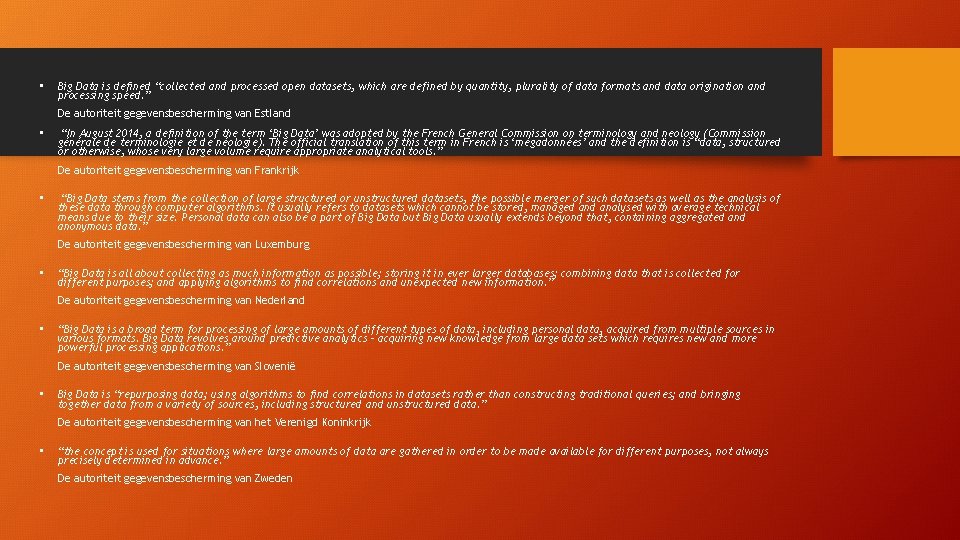
• Big Data is defined “collected and processed open datasets, which are defined by quantity, plurality of data formats and data origination and processing speed. ” De autoriteit gegevensbescherming van Estland • “In August 2014, a definition of the term ‘Big Data’ was adopted by the French General Commission on terminology and neology (Commission générale de terminologie et de néologie). The official translation of this term in French is ‘mégadonnées’ and the definition is “data, structured or otherwise, whose very large volume require appropriate analytical tools. ” De autoriteit gegevensbescherming van Frankrijk • “Big Data stems from the collection of large structured or unstructured datasets, the possible merger of such datasets as well as the analysis of these data through computer algorithms. It usually refers to datasets which cannot be stored, managed analysed with average technical means due to their size. Personal data can also be a part of Big Data but Big Data usually extends beyond that, containing aggregated anonymous data. ” De autoriteit gegevensbescherming van Luxemburg • “Big Data is all about collecting as much information as possible; storing it in ever larger databases; combining data that is collected for different purposes; and applying algorithms to find correlations and unexpected new information. ” De autoriteit gegevensbescherming van Nederland • “Big Data is a broad term for processing of large amounts of different types of data, including personal data, acquired from multiple sources in various formats. Big Data revolves around predictive analytics – acquiring new knowledge from large data sets which requires new and more powerful processing applications. ” De autoriteit gegevensbescherming van Slovenië • Big Data is “repurposing data; using algorithms to find correlations in datasets rather than constructing traditional queries; and bringing together data from a variety of sources, including structured and unstructured data. ” De autoriteit gegevensbescherming van het Verenigd Koninkrijk • “the concept is used for situations where large amounts of data are gathered in order to be made available for different purposes, not always precisely determined in advance. ” De autoriteit gegevensbescherming van Zweden
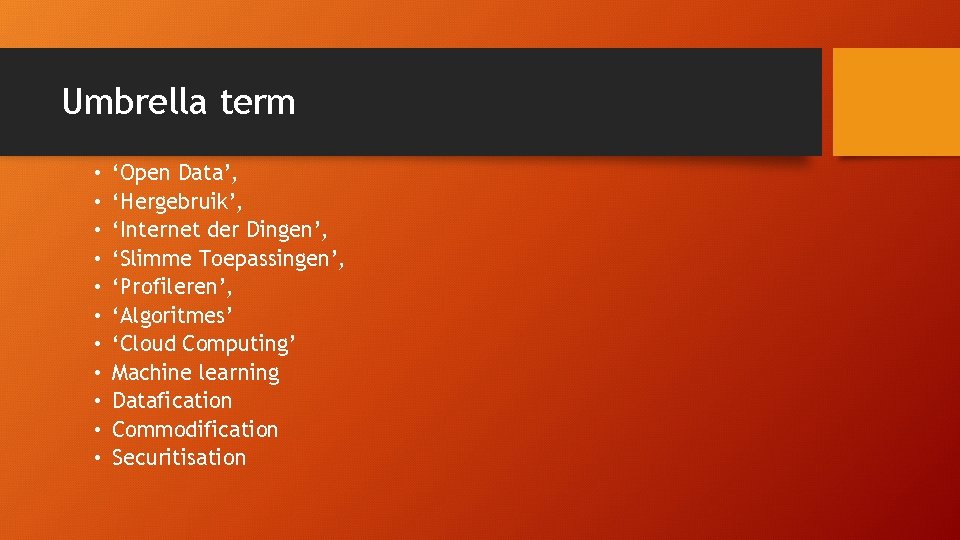
Umbrella term • • • ‘Open Data’, ‘Hergebruik’, ‘Internet der Dingen’, ‘Slimme Toepassingen’, ‘Profileren’, ‘Algoritmes’ ‘Cloud Computing’ Machine learning Datafication Commodification Securitisation
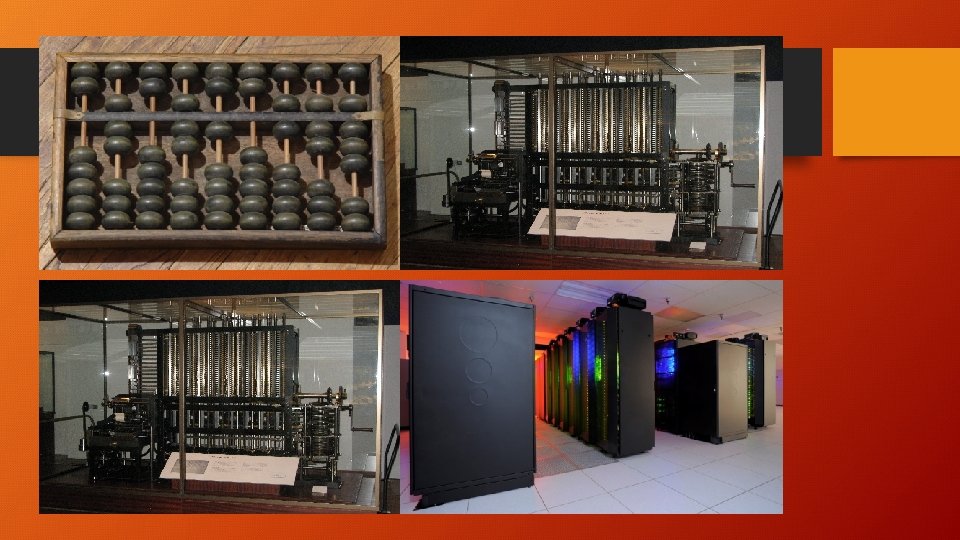
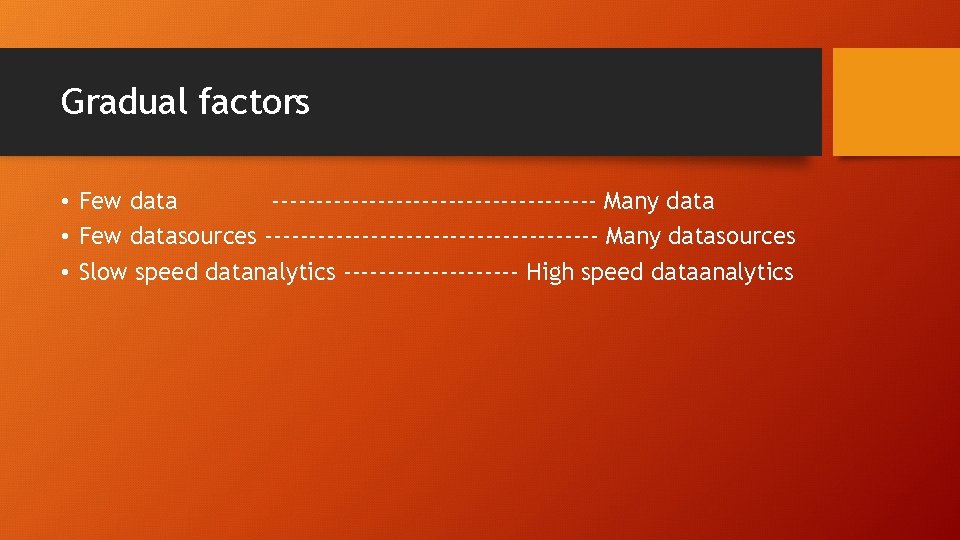
Gradual factors • Few data ------------------- Many data • Few datasources ------------------- Many datasources • Slow speed datanalytics ---------- High speed dataanalytics

Three phases • Gathering • Analysis • Use
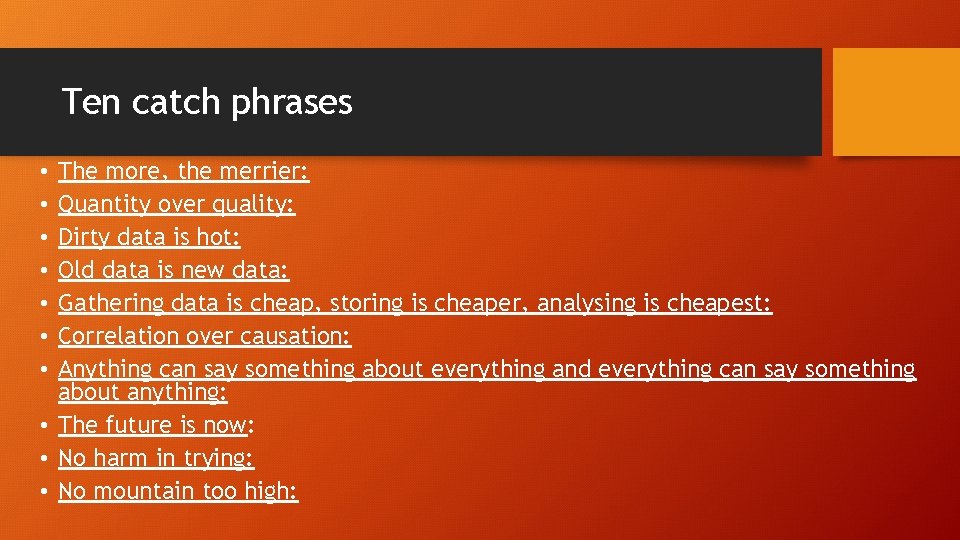
Ten catch phrases The more, the merrier: Quantity over quality: Dirty data is hot: Old data is new data: Gathering data is cheap, storing is cheaper, analysing is cheapest: Correlation over causation: Anything can say something about everything and everything can say something about anything: • The future is now: • No harm in trying: • No mountain too high: • •
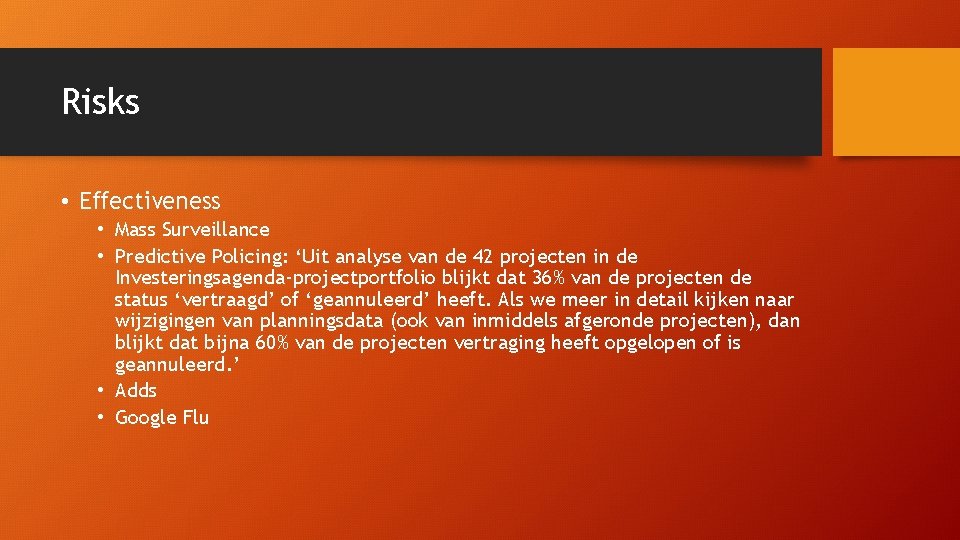
Risks • Effectiveness • Mass Surveillance • Predictive Policing: ‘Uit analyse van de 42 projecten in de Investeringsagenda-projectportfolio blijkt dat 36% van de projecten de status ‘vertraagd’ of ‘geannuleerd’ heeft. Als we meer in detail kijken naar wijzigingen van planningsdata (ook van inmiddels afgeronde projecten), dan blijkt dat bijna 60% van de projecten vertraging heeft opgelopen of is geannuleerd. ’ • Adds • Google Flu
Flawwed analytics • • • Representation Methodology Biased data sources Biased algorithms Updating datasets Lack of metadata Categorisation is non-neutral Statistical correlation is not causality No falsification
Predictions • Borges • Predictive • False positives • False negatives • Predictions are not facts





(3) Break

(4) Small debate
A mother suspects that her 15 year old son is smoking pot. Should she search his room, read his mails and place a tracking device on his telephone so as to keep track of his movements?

I have nothing to hide
Google is scanning the e-mails sent and received via Gmail. Can it use those data for personalised advertisements?

(4) Social Privacy
Modern Human Rights Documents • Universal Declaration of Human Rights (UDHR) 1948 • International Covenant on Civil and Political Rights 1966 • • • European Convention on Human Rights 1950 American Convention on Human Rights 1969 African Charter on Human and Peoples' Rights 1981 EU Charter of Fundamental Rights 2000 Association of Southeast Asian Nations (ASEAN) Human Rights Declaration 2012

Background • Atrocities of Second World War • Fascist and Communist regimes
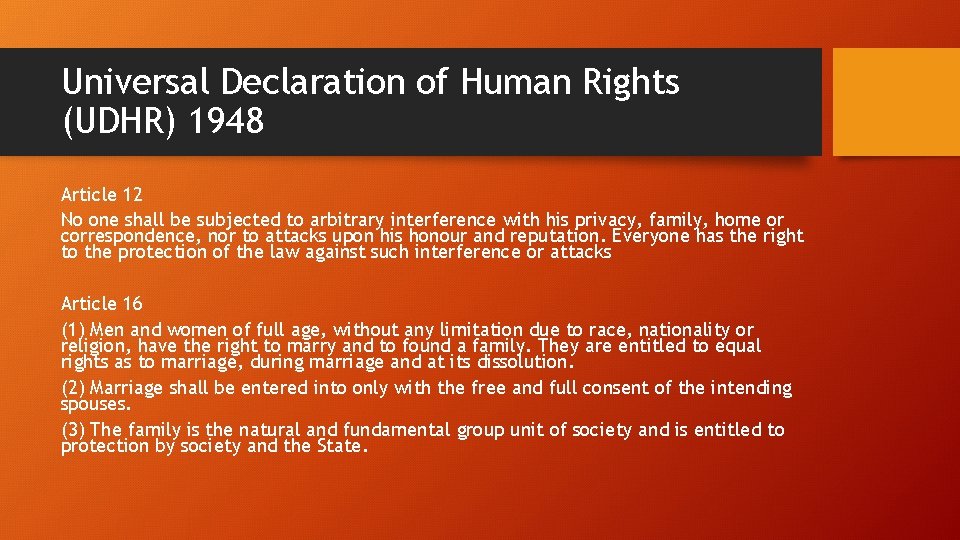
Universal Declaration of Human Rights (UDHR) 1948 Article 12 No one shall be subjected to arbitrary interference with his privacy, family, home or correspondence, nor to attacks upon his honour and reputation. Everyone has the right to the protection of the law against such interference or attacks Article 16 (1) Men and women of full age, without any limitation due to race, nationality or religion, have the right to marry and to found a family. They are entitled to equal rights as to marriage, during marriage and at its dissolution. (2) Marriage shall be entered into only with the free and full consent of the intending spouses. (3) The family is the natural and fundamental group unit of society and is entitled to protection by society and the State.
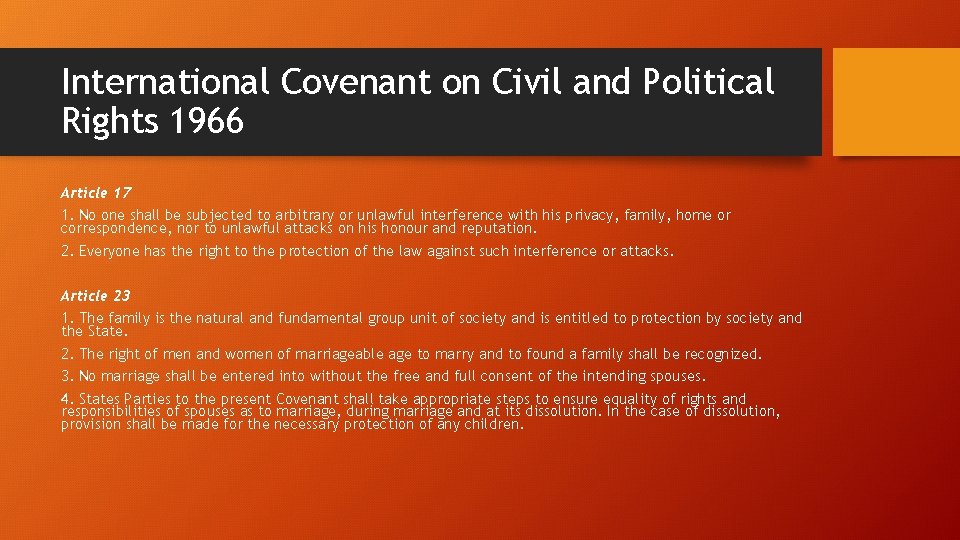
International Covenant on Civil and Political Rights 1966 Article 17 1. No one shall be subjected to arbitrary or unlawful interference with his privacy, family, home or correspondence, nor to unlawful attacks on his honour and reputation. 2. Everyone has the right to the protection of the law against such interference or attacks. Article 23 1. The family is the natural and fundamental group unit of society and is entitled to protection by society and the State. 2. The right of men and women of marriageable age to marry and to found a family shall be recognized. 3. No marriage shall be entered into without the free and full consent of the intending spouses. 4. States Parties to the present Covenant shall take appropriate steps to ensure equality of rights and responsibilities of spouses as to marriage, during marriage and at its dissolution. In the case of dissolution, provision shall be made for the necessary protection of any children.
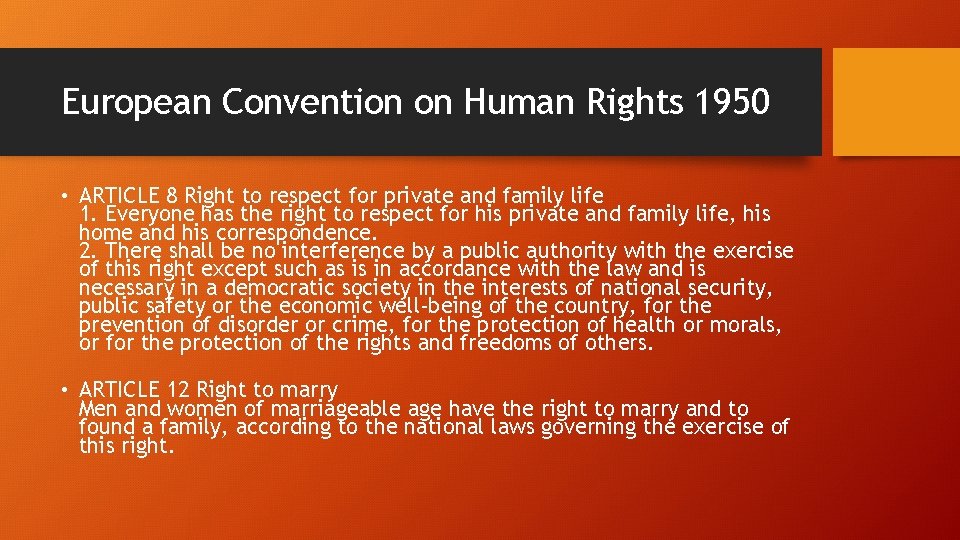
European Convention on Human Rights 1950 • ARTICLE 8 Right to respect for private and family life 1. Everyone has the right to respect for his private and family life, his home and his correspondence. 2. There shall be no interference by a public authority with the exercise of this right except such as is in accordance with the law and is necessary in a democratic society in the interests of national security, public safety or the economic well-being of the country, for the prevention of disorder or crime, for the protection of health or morals, or for the protection of the rights and freedoms of others. • ARTICLE 12 Right to marry Men and women of marriageable age have the right to marry and to found a family, according to the national laws governing the exercise of this right.
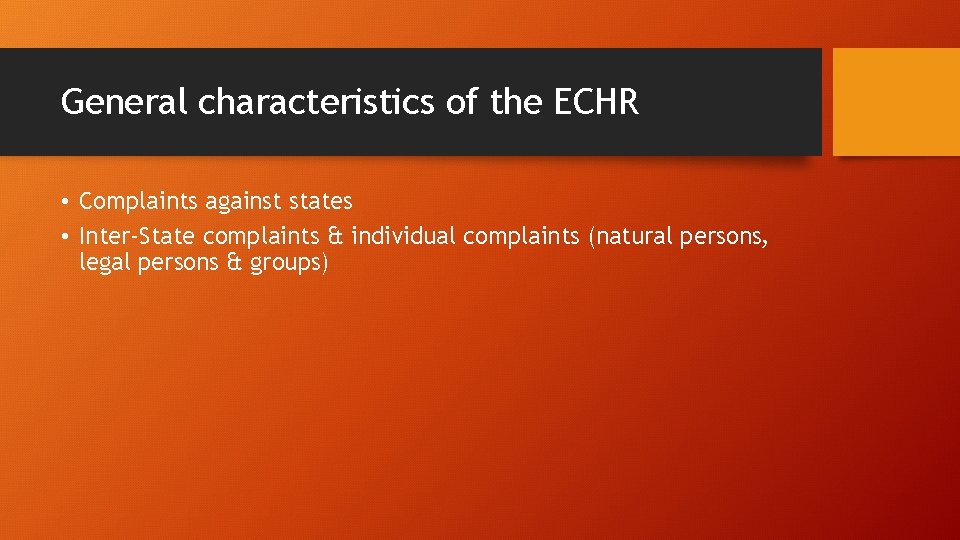
General characteristics of the ECHR • Complaints against states • Inter-State complaints & individual complaints (natural persons, legal persons & groups)
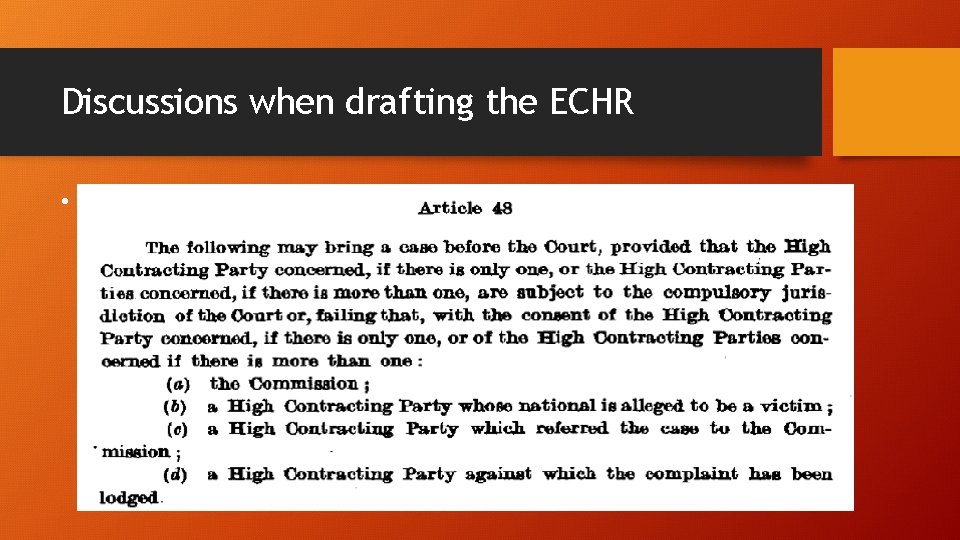
Discussions when drafting the ECHR • Individual complaints at all?
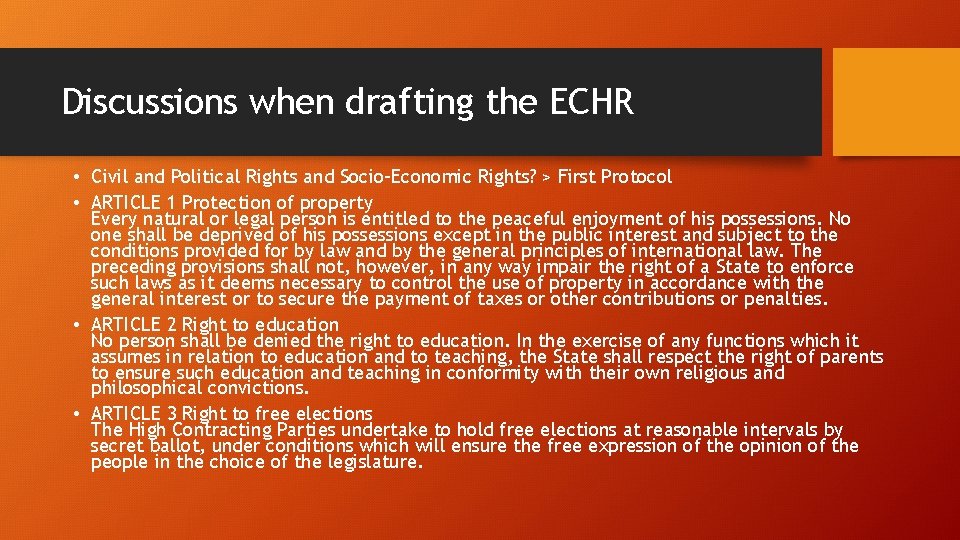
Discussions when drafting the ECHR • Civil and Political Rights and Socio-Economic Rights? > First Protocol • ARTICLE 1 Protection of property Every natural or legal person is entitled to the peaceful enjoyment of his possessions. No one shall be deprived of his possessions except in the public interest and subject to the conditions provided for by law and by the general principles of international law. The preceding provisions shall not, however, in any way impair the right of a State to enforce such laws as it deems necessary to control the use of property in accordance with the general interest or to secure the payment of taxes or other contributions or penalties. • ARTICLE 2 Right to education No person shall be denied the right to education. In the exercise of any functions which it assumes in relation to education and to teaching, the State shall respect the right of parents to ensure such education and teaching in conformity with their own religious and philosophical convictions. • ARTICLE 3 Right to free elections The High Contracting Parties undertake to hold free elections at reasonable intervals by secret ballot, under conditions which will ensure the free expression of the opinion of the people in the choice of the legislature.
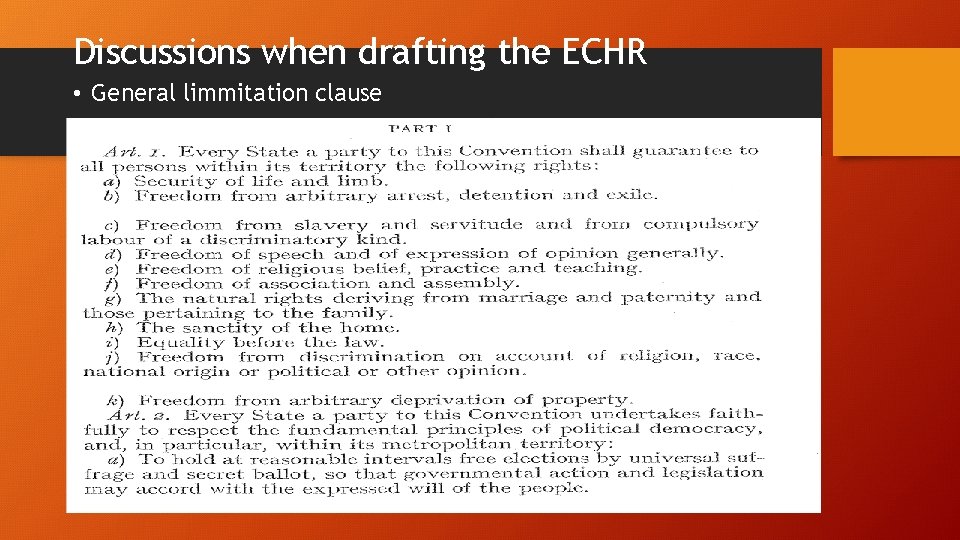
Discussions when drafting the ECHR • General limmitation clause
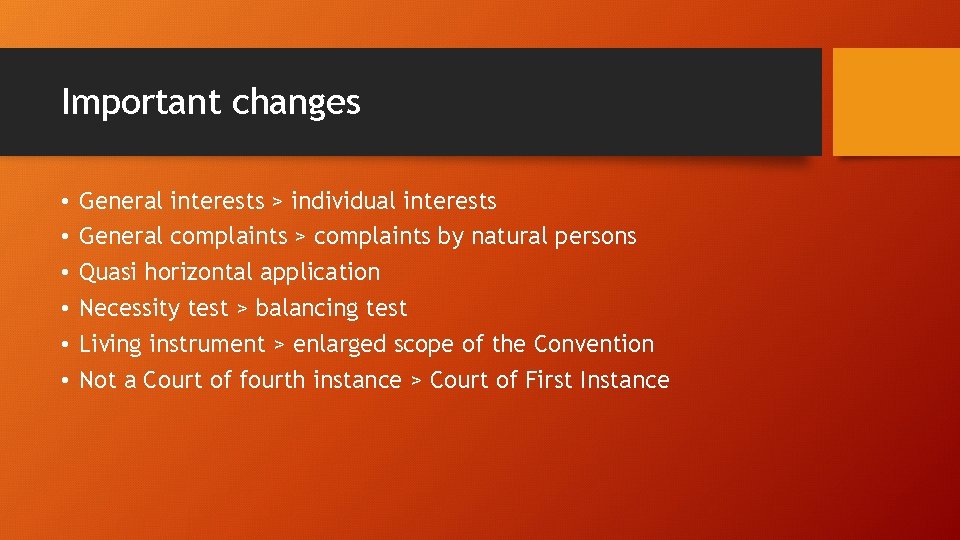
Important changes • • • General interests > individual interests General complaints > complaints by natural persons Quasi horizontal application Necessity test > balancing test Living instrument > enlarged scope of the Convention Not a Court of fourth instance > Court of First Instance
Important changes • Over time, however, the Convention has been revised on a number of points so that, inter alia, individual complainants (individuals, groups and legal persons) have direct access to the Court to complain about a violation of their privacy (the task of the Commission being reassigned to a separate chamber of the Court – the two-tiered system still exists). • The Court has also made some major steps to revise the meaning and interpretation of the right to privacy under the Convention. • Among other matters, it has accepted that Article 8 ECHR not only protects the negative freedom of citizens, but also the right to develop one’s personality to the fullest, • and has stressed that states may not only have a negative duty not to abuse its powers, but also a positive duty to use its powers to protect its citizens and to facilitate their quest for full personal development.
Important changes • Moreover, over time, the Court has strongly emphasized individual interests and personal harm when it assesses a case regarding a potential violation of Article 8 ECHR. This is linked to the doctrine of ratione personae, the question whether the claimant has individually and substantially suffered from a privacy violation, and in part to that of ratione materiae, the question whether the interest said to be interfered with falls under the protective scope of the right to privacy. This focus on individual harm and individual interests brings with it that certain types of complaints are declared inadmissible by the European Court of Human Rights, which means that the cases will not be dealt with in substance.
Important changes • So-called in abstracto claims are as a rule inadmissible. These are claims that regard the mere existence of a law or a policy, without them having any concrete or practical effect on the claimant. • A priori claims are rejected as well, as the Court will usually only receive complaints about injury which has already materialized. Claims about future damage will in principle not be considered. • Hypothetical claims regard damage which might have materialized, but about which the claimant is unsure. The Court usually rejects such claims because it is unwilling to provide a ruling on the basis of presumed facts. The applicant must be able to substantiate her claim with concrete facts, not with beliefs and suppositions. The ECt. HR will in principle also not receive an actio popularis, a case brought up by a claimant or a group of claimants, not to protect their own interests, but that of others or society as a whole.
Important changes • Then there is the material scope of the right to privacy, Article 8 ECHR. In principle, it only protects the private life, family life, correspondence and home of an applicant. However, the Court has been willing to give a broader interpretation. For example, it has held that it also protects the personal development of an individual, that it includes protection from environmental pollution and that it may extend to data protection issues. Still, what distinguishes the right to privacy, under the interpretation of the ECt. HR, from other rights under the Convention, such as the freedom of expression, is that it in principle only provides protection to individual interests. While the freedom of expression is linked to personal expression and development, it also connected to societal interests, such as the search for truth through the market place of ideas and the well-functioning of the press, a precondition for every liberal democracy. By contrast, Article 8 ECHR only protects individual interests such as autonomy, dignity and personal development. Cases that do not regard such matters are rejected by the Court.
Important changes • This focus on individual interests has also had an important effect on the types of applicants that are able to submit a complaint about the right to privacy. The Convention, in principle, allows natural persons, groups of persons and legal persons to complain about an interference with their rights under the Convention. However, because Article 8 ECHR only protects individual interests, the Court has said that in principle, only natural persons can invoke a right to privacy. • In similar fashion, the Court has rejected the capacity of groups to complain about a violation of human rights. • Inter-state complaints are seldom used
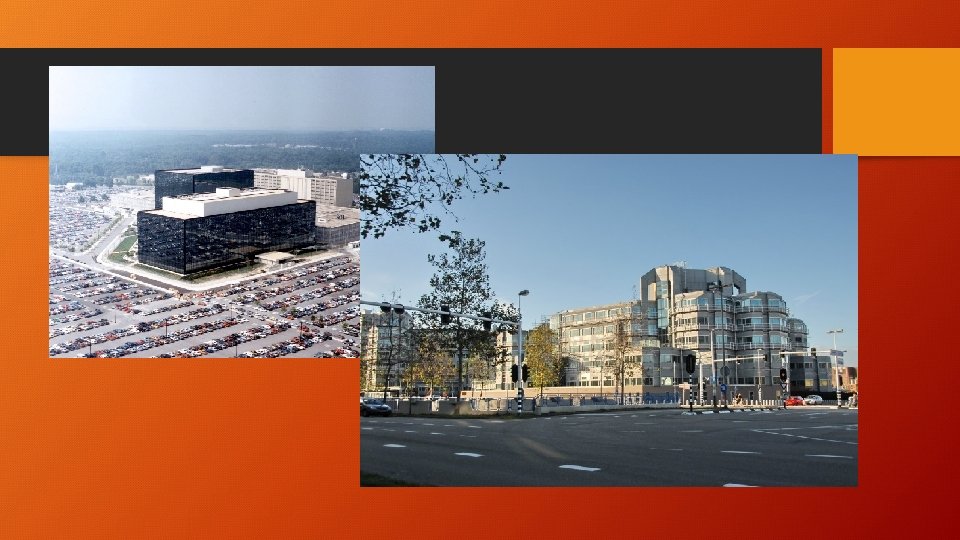
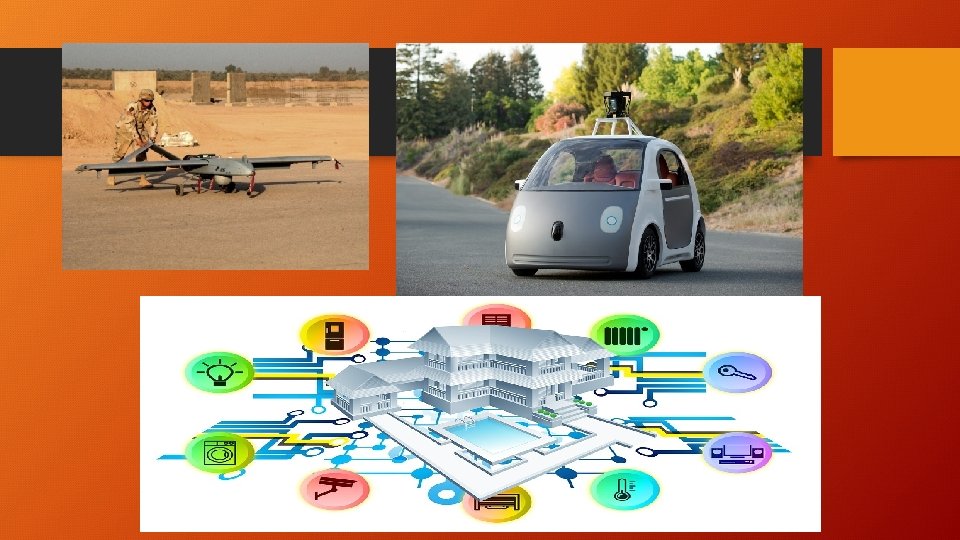
Challenges • Individual interests • NSA • CCTV camera’s • Smart cities
Challenges • Individual rights • Unaware • Too many • Unequal
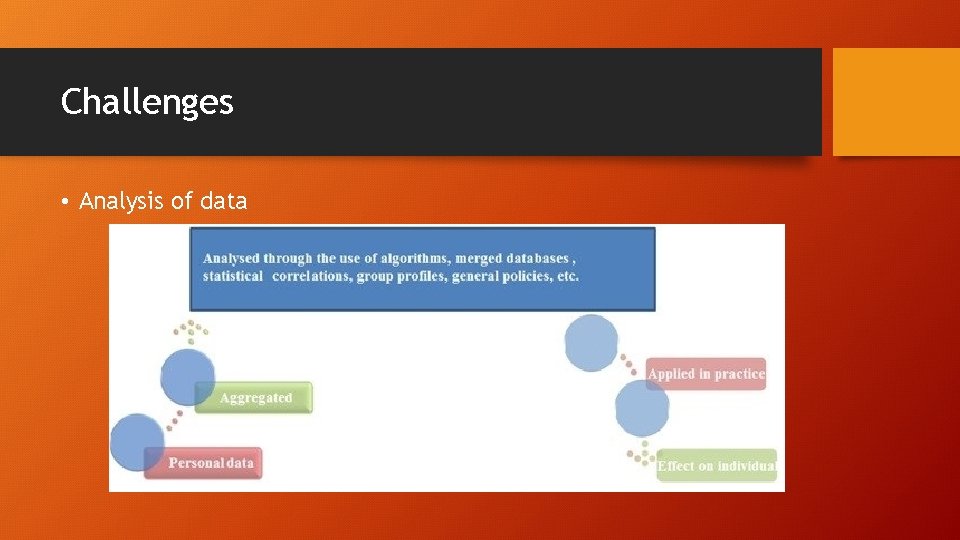
Challenges • Analysis of data
Challenges • Data • ‘personal data’ means any information relating to an identified or identifiable natural person (‘data subject’); an identifiable natural person is one who can be identified, directly or indirectly, in particular by reference to an identifier such as a name, an identification number, location data, an online identifier or to one or more factors specific to the physical, physiological, genetic, mental, economic, cultural or social identity of that natural person; • Proposal for a REGULATION OF THE EUROPEAN PARLIAMENT AND OF THE COUNCIL on a framework for the free flow of non-personal data in the European Union
Challenges • Social relations • Friends/family • Professions: ‘First, confidentiality encourages seeking medical care. Individuals will be more inclined to seek medical attention if they believe they can do so on a confidential basis. It is reassuring to believe others will not be told without permission that one is unwell or declining, has abused illegal drugs, been unfaithful to one’s partner, obtained an abortion, or enlarged one’s breasts. […] Second, confidentiality contributes to full and frank disclosures. Individuals seeking care will be more open and honest if they believe the facts and impressions reported to health providers will remain confidential. It may be easier to speak freely about embarrassing symptoms if one believes the content of what one says will not be broadcast to the world at large. ’ • Democracy: ‘In the absence of consensus concerning many limitations of liberty, and in view of the limits on our capacity to encourage tolerance and acceptance and to overcome prejudice, privacy must be part of our commitment to individual freedom and to a society that is committed to the protection of such freedom. Privacy is also essential to democratic government because it fosters and encourages the moral autonomy of the citizen, a central requirement of a democracy. ’
Questions
- Slides: 63