
Social Networks Dr Frank Mc Cown Intro to

- Slides: 53
Social Networks Dr. Frank Mc. Cown Intro to Web Science Harding University This work is licensed under a Creative Commons Attribution-Non. Commercial. Share. Alike 3. 0 Unported License
Slides based on Ch 2 and 3 of Networks, Crowds and Markets by Easley & Kleinberg (2010) http: //www. cs. cornell. edu/home/kleinber/networks-book/
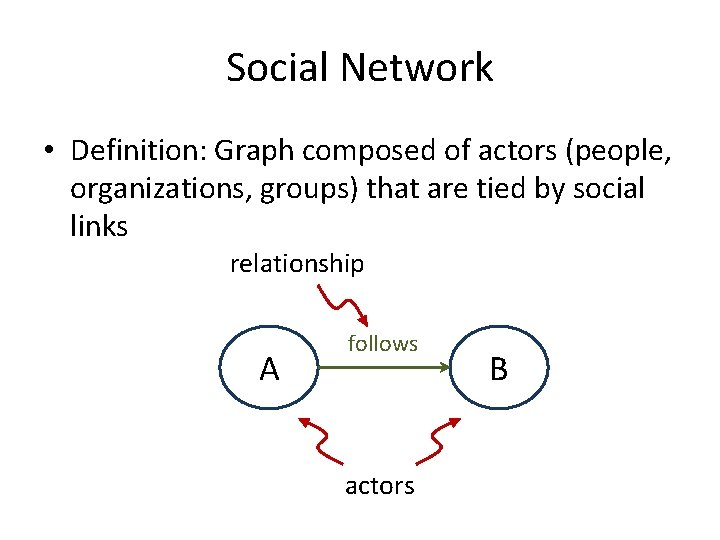
Social Network • Definition: Graph composed of actors (people, organizations, groups) that are tied by social links relationship A follows actors B
Online Social Networks (OSN) • Digital incarnation of a social network • Created by social network sites, social networking services • Web-based services that allows users to: 1 – construct (semi-)public profiles within the system – “connect” to other users – view and traverse lists of connections created by others 1 Boyd & Ellison (2007) - Social Network Sites: Definition, History, and Scholarship
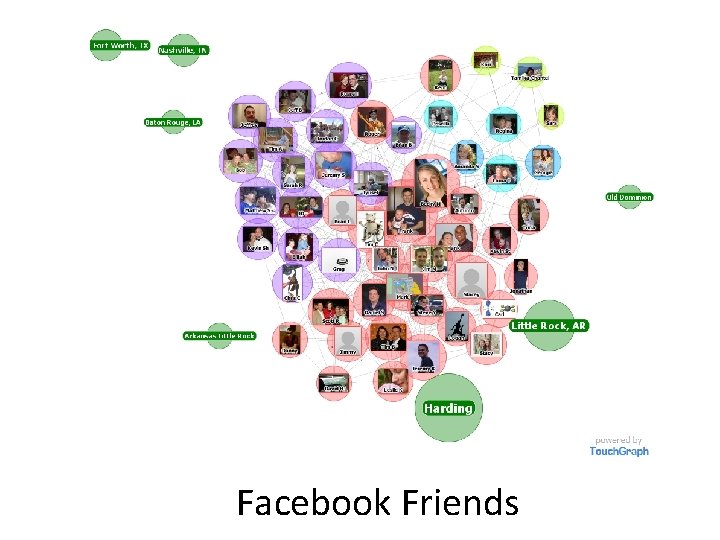
Facebook Friends
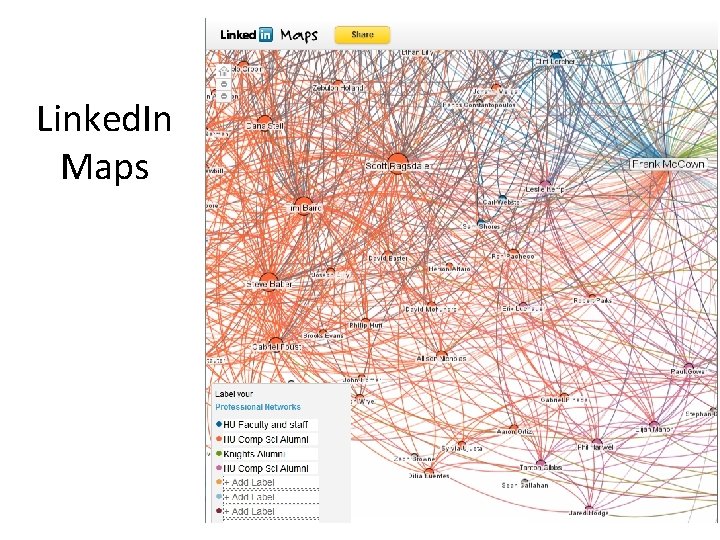
Linked. In Maps
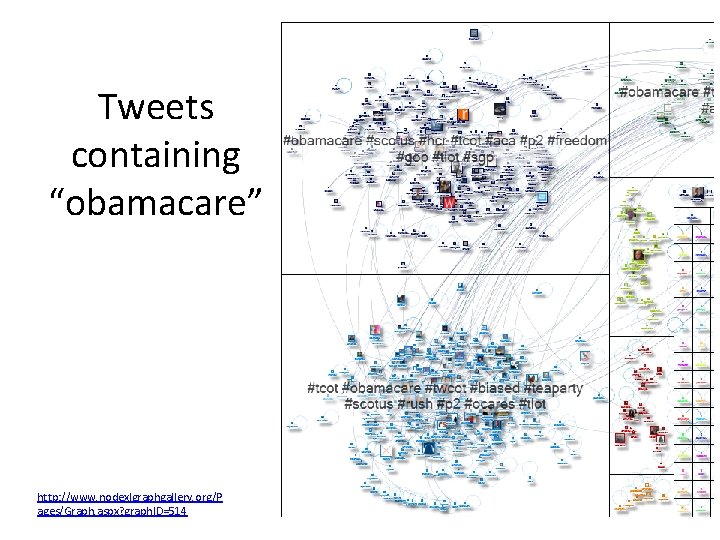
Tweets containing “obamacare” http: //www. nodexlgraphgallery. org/P ages/Graph. aspx? graph. ID=514
Why Study Social Networks? • Social scientists use social networks to study how people interact and develop theories of social behavior. OSNs offer opportunities to study social networks at larger scale • Understanding the structure of OSNs can lead to systems in the future that want to improve security, leverage trust, improve social interaction, etc.
Why Study Social Networks? • Search engines like Google are using OSNs to improve web search 1 • Search engines like Aardvark (now defunct) are being built on top of OSNs 2 • Information diffusion: How does (mis)information spread on social networks/Web? 3 1 http: //googleblogspot. com/2011/03/1 s-right-recommendations-right-when-you. html 2 http: //en. wikipedia. org/wiki/Aardvark_(search_engine) 3 http: //cnets. indiana. edu/groups/nan/truthy
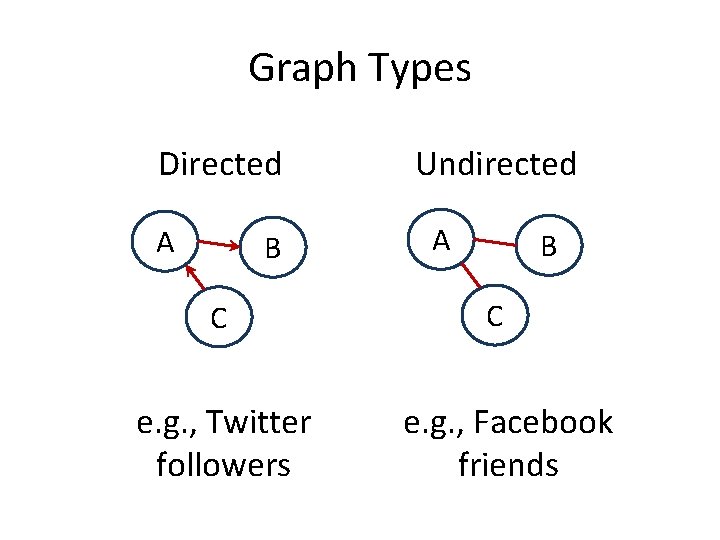
Graph Types Directed A B C e. g. , Twitter followers Undirected A B C e. g. , Facebook friends
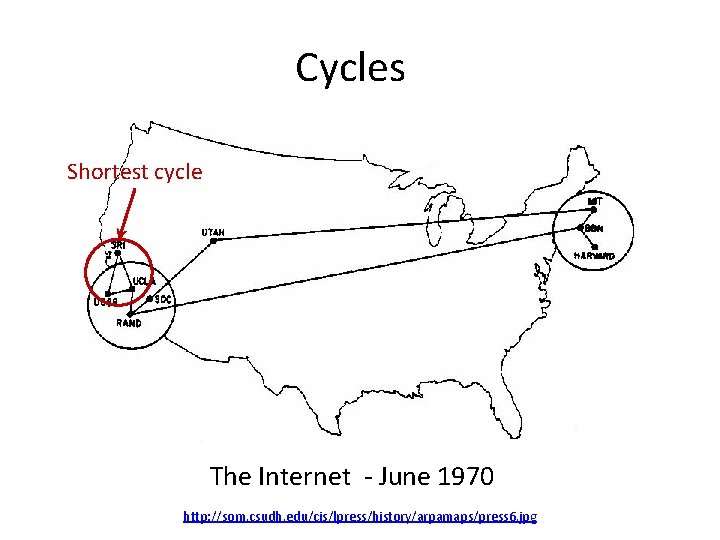
Cycles Shortest cycle The Internet - June 1970 http: //som. csudh. edu/cis/lpress/history/arpamaps/press 6. jpg
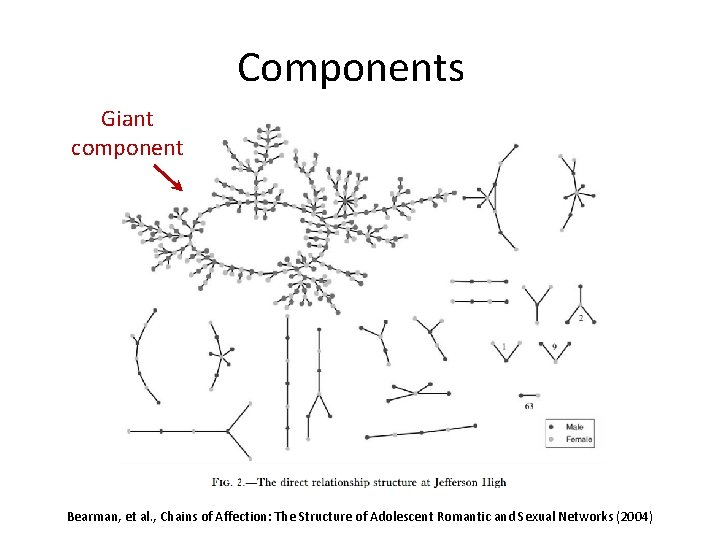
Components Giant component Bearman, et al. , Chains of Affection: The Structure of Adolescent Romantic and Sexual Networks (2004)
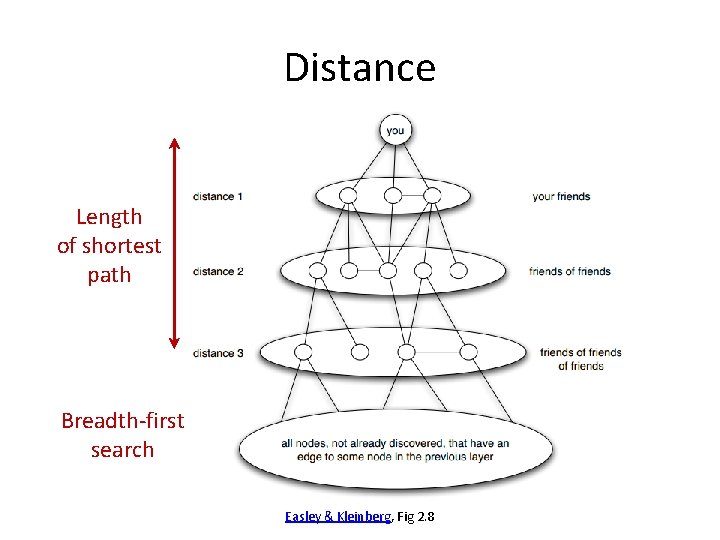
Distance Length of shortest path Breadth-first search Easley & Kleinberg, Fig 2. 8
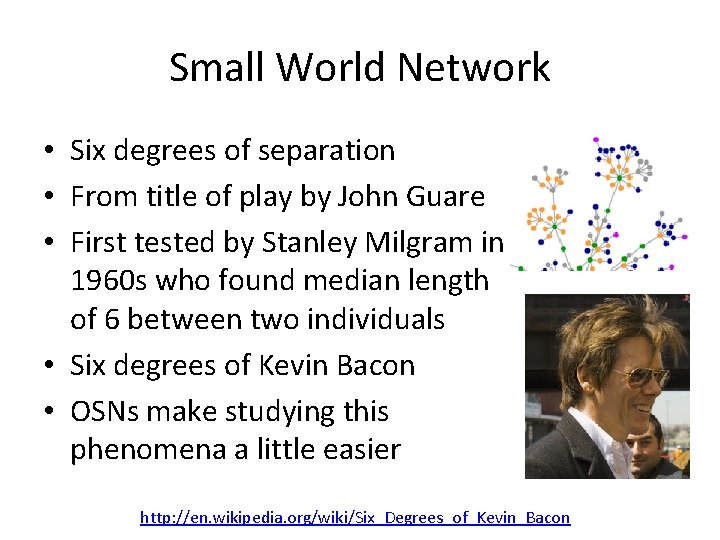
Small World Network • Six degrees of separation • From title of play by John Guare • First tested by Stanley Milgram in 1960 s who found median length of 6 between two individuals • Six degrees of Kevin Bacon • OSNs make studying this phenomena a little easier http: //en. wikipedia. org/wiki/Six_Degrees_of_Kevin_Bacon
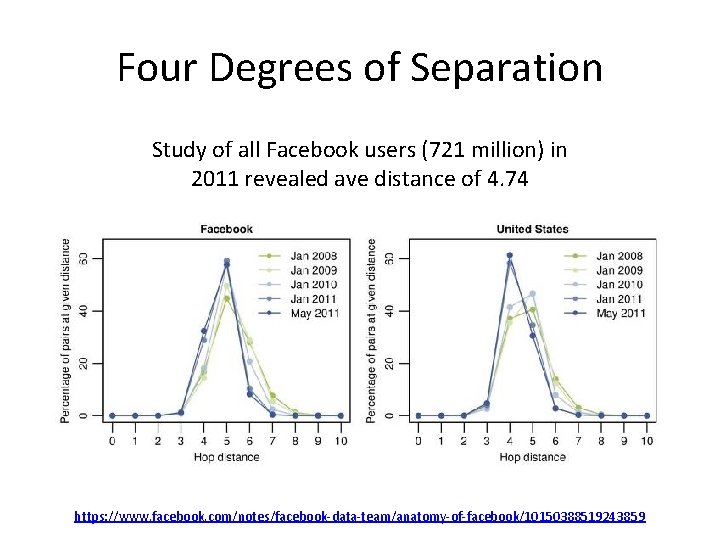
Four Degrees of Separation Study of all Facebook users (721 million) in 2011 revealed ave distance of 4. 74 https: //www. facebook. com/notes/facebook-data-team/anatomy-of-facebook/10150388519243859
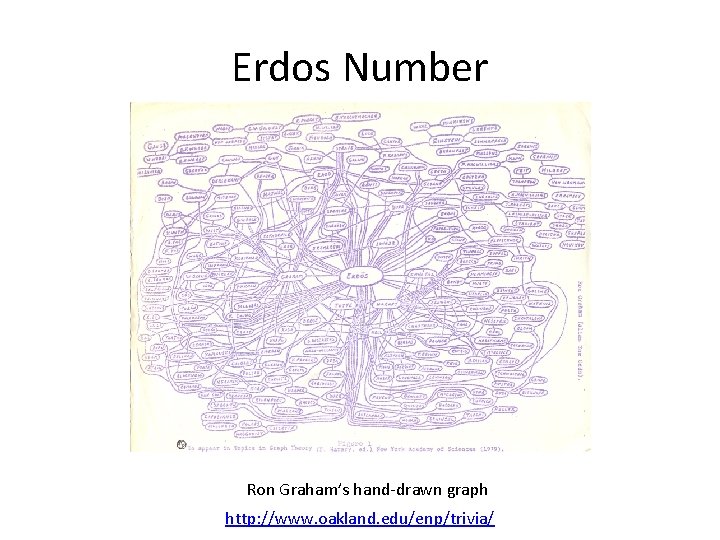
Erdos Number Ron Graham’s hand-drawn graph http: //www. oakland. edu/enp/trivia/
Network Evolution • Social networks tend to change over time • You make new friends, lose contact with others • You change schools, jobs, etc. • We’re often interested in examining multiple snapshots of the social graph through time
“If two people in a social network have a friend in common, then there is an increased likelihood that they will become friends themselves at home point in the future. ” - Anatole Rapoport (1953)
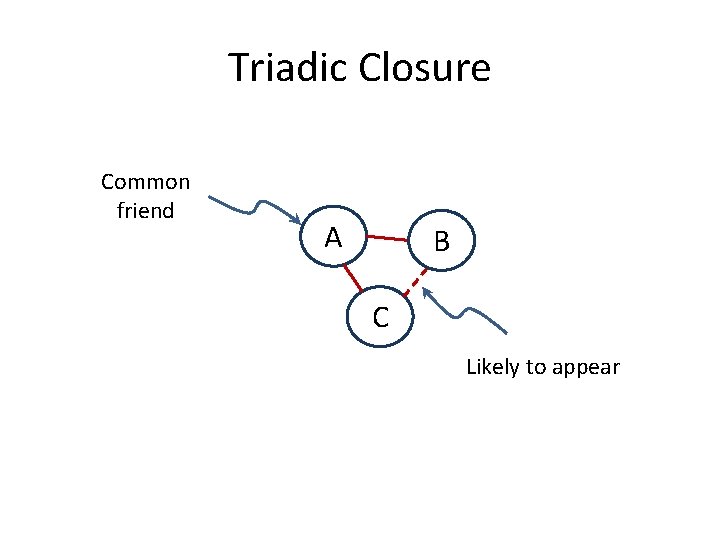
Triadic Closure Common friend A B C Likely to appear
Reasons for Triadic Closure • Opportunity – A spending time with B & C increases chance they will meet • Trust – Research shows that B & C are more likely to trust each other if they are aware of mutual friend A • Incentive – Research shows that latent stress occurs when mutual friends are not friends with each other
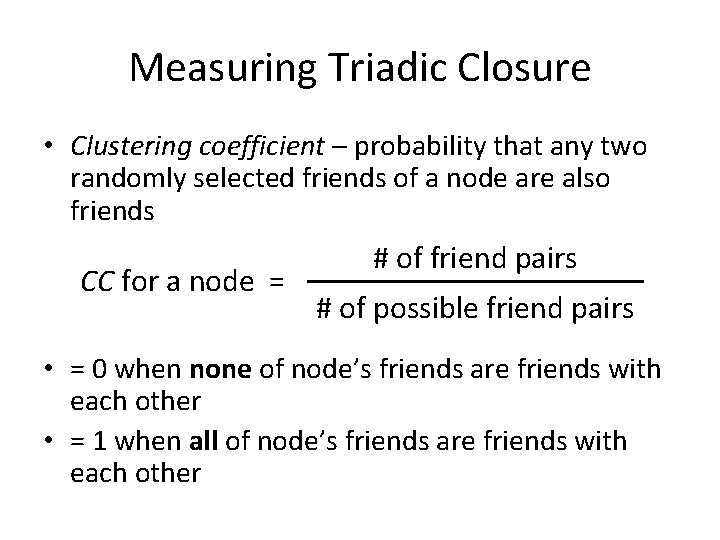
Measuring Triadic Closure • Clustering coefficient – probability that any two randomly selected friends of a node are also friends # of friend pairs CC for a node = # of possible friend pairs • = 0 when none of node’s friends are friends with each other • = 1 when all of node’s friends are friends with each other
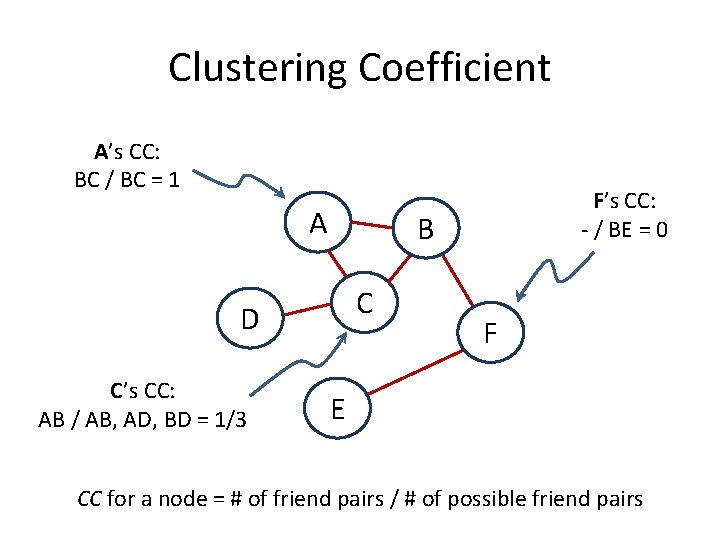
Clustering Coefficient A’s CC: BC / BC = 1 A B C D C’s CC: AB / AB, AD, BD = 1/3 F’s CC: - / BE = 0 F E CC for a node = # of friend pairs / # of possible friend pairs
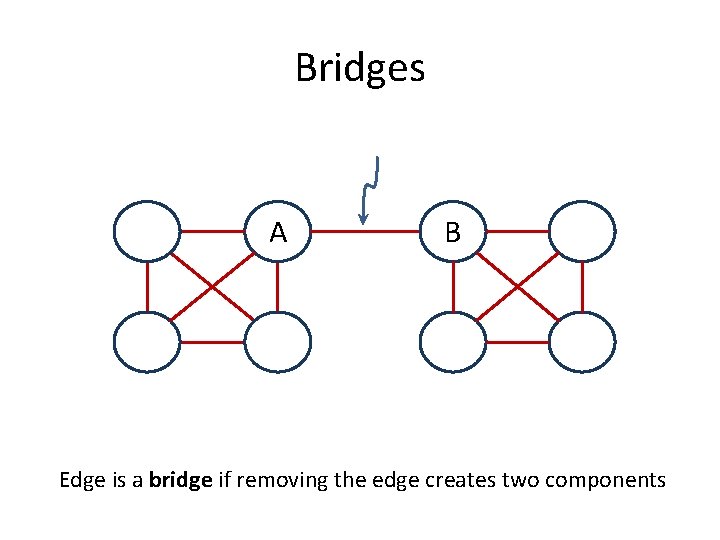
Bridges A B Edge is a bridge if removing the edge creates two components
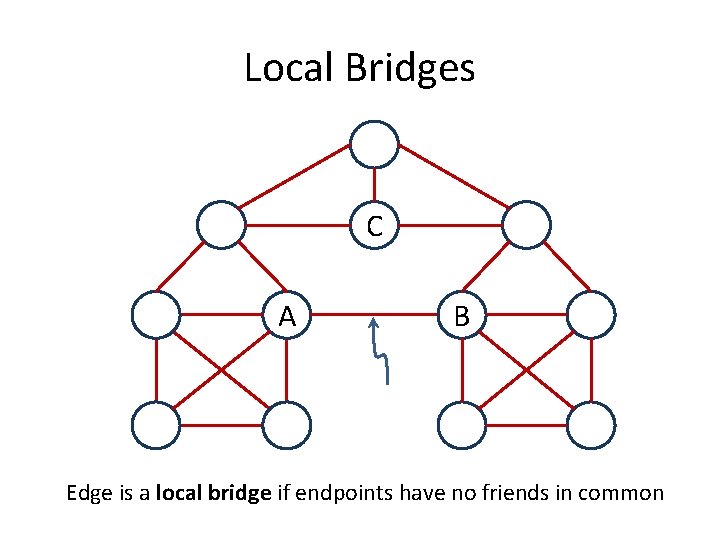
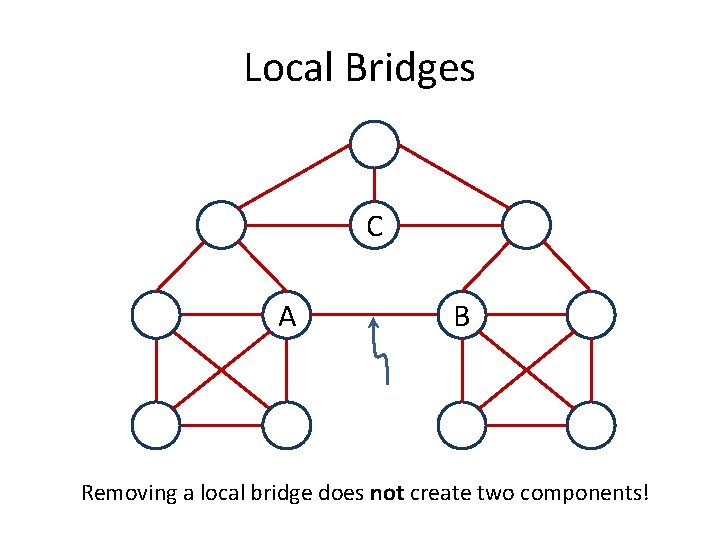
Local Bridges C A B Edge is a local bridge if endpoints have no friends in common
Local Bridges C A B Removing a local bridge does not create two components!
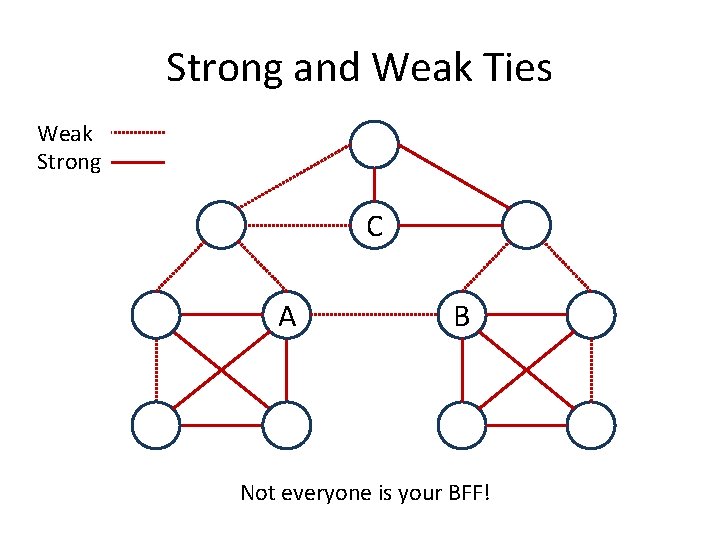
Strong and Weak Ties Weak Strong C A B Not everyone is your BFF!
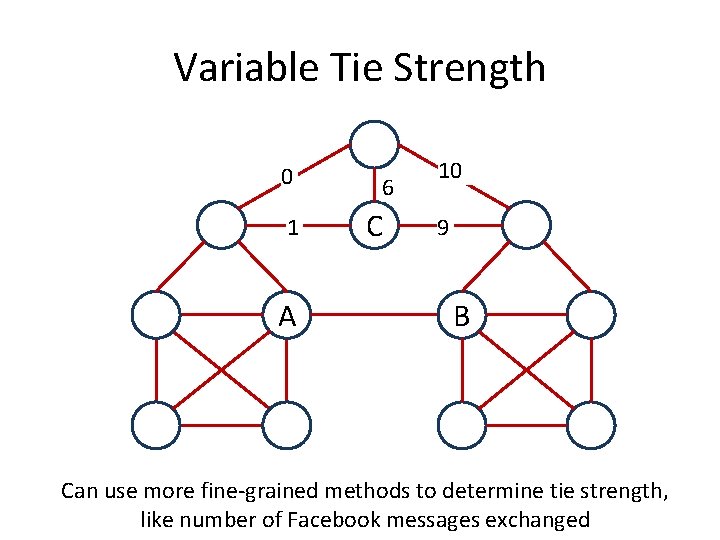
Variable Tie Strength 0 1 A 6 C 10 9 B Can use more fine-grained methods to determine tie strength, like number of Facebook messages exchanged
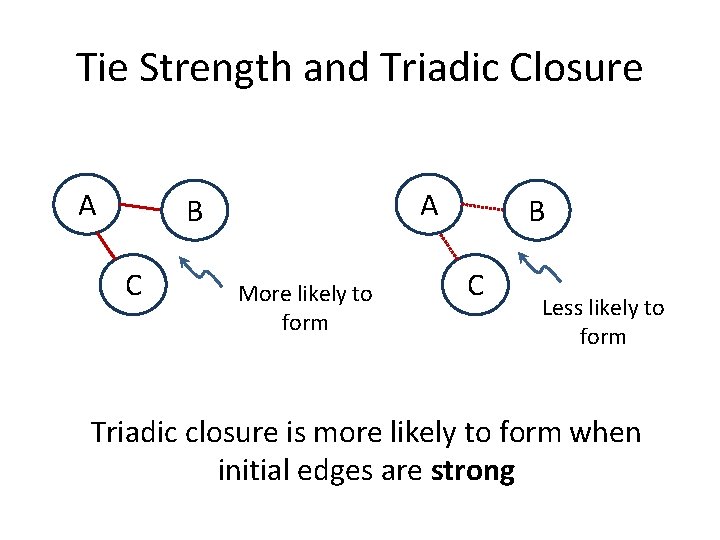
Tie Strength and Triadic Closure A A B C More likely to form B C Less likely to form Triadic closure is more likely to form when initial edges are strong
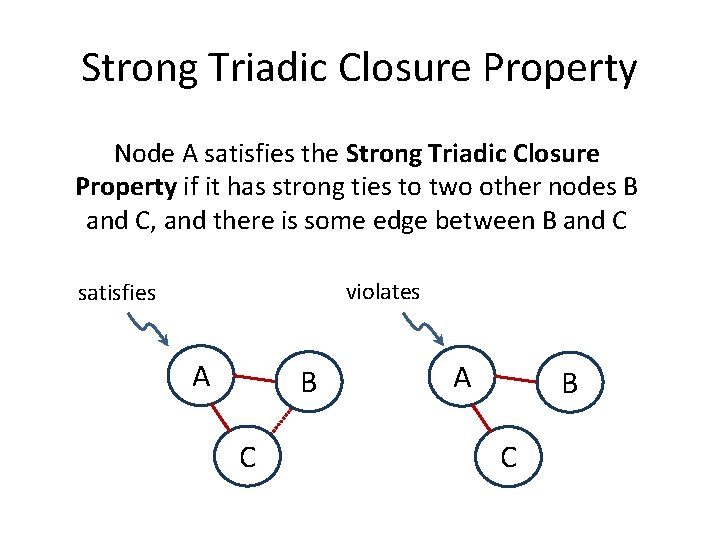
Strong Triadic Closure Property Node A satisfies the Strong Triadic Closure Property if it has strong ties to two other nodes B and C, and there is some edge between B and C violates satisfies A B C
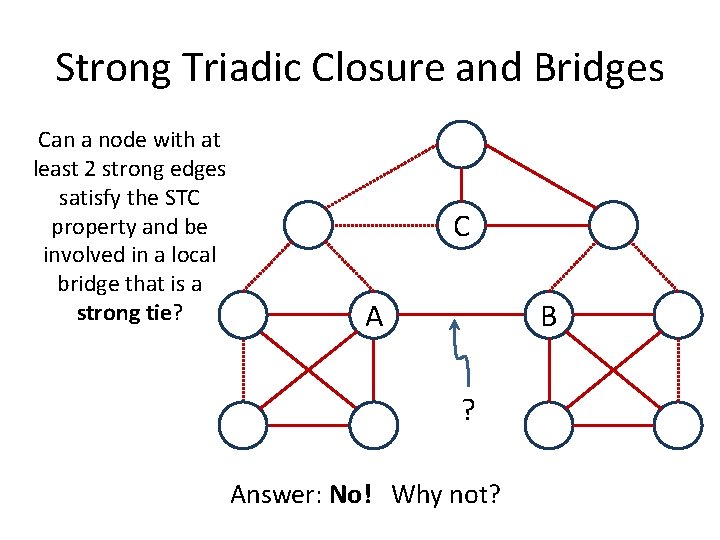
Strong Triadic Closure and Bridges Can a node with at least 2 strong edges satisfy the STC property and be involved in a local bridge that is a strong tie? C A B ? Answer: No! Why not?
Strong Triadic Closure and Bridges • STC property says edge must form when two strong edges emanate from the same node • Therefore a network that satisfies the STC property and has a sufficient number of string ties will likely have only weak local bridges • Does not always hold in real social networks, but useful theoretical framework in which to understand connections and test theories
Large-Scale Data Studies • Put new concepts to work by examining several large-scale studies • Examples: – Cell phone usage – Facebook – Twitter
Cell Phone Social Network • Onnela et al. , Structure and tie strengths in mobile communication networks (2007) • 18 weeks of cell phone data covering 20% of country’s population • Node = cell phone user • Edge = if two nodes called each other (both directions) • Tie strength = duration of calls
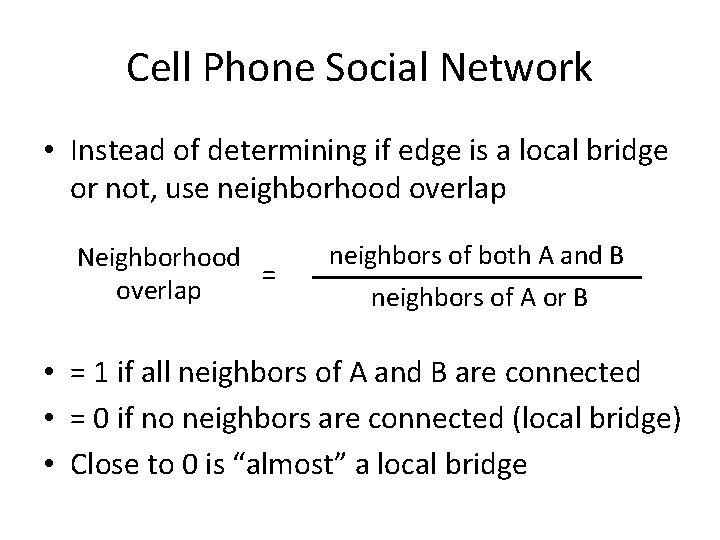
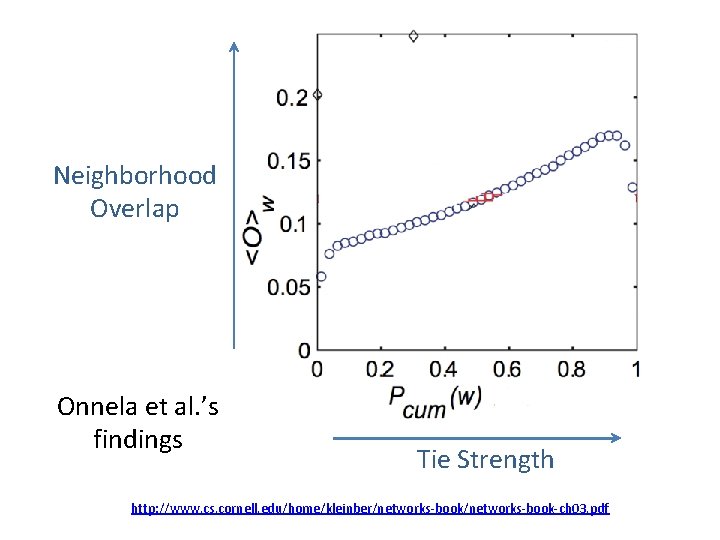
Cell Phone Social Network • Instead of determining if edge is a local bridge or not, use neighborhood overlap Neighborhood = overlap neighbors of both A and B neighbors of A or B • = 1 if all neighbors of A and B are connected • = 0 if no neighbors are connected (local bridge) • Close to 0 is “almost” a local bridge
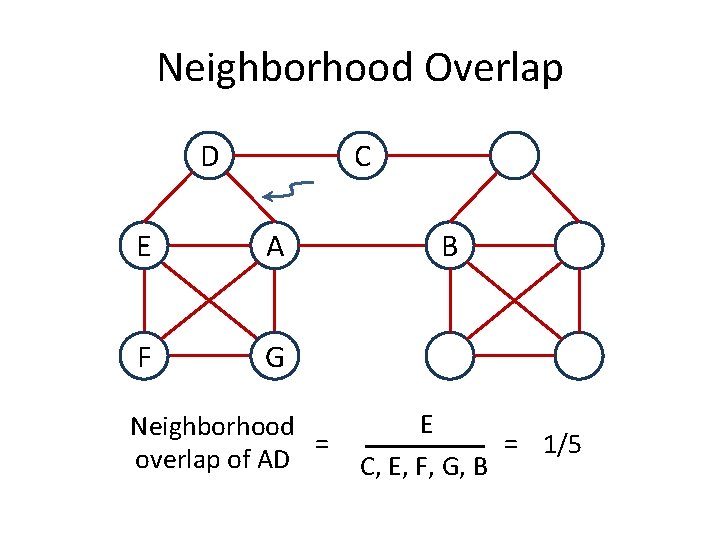
Neighborhood Overlap D C E A F G Neighborhood = overlap of AD B E = 1/5 C, E, F, G, B
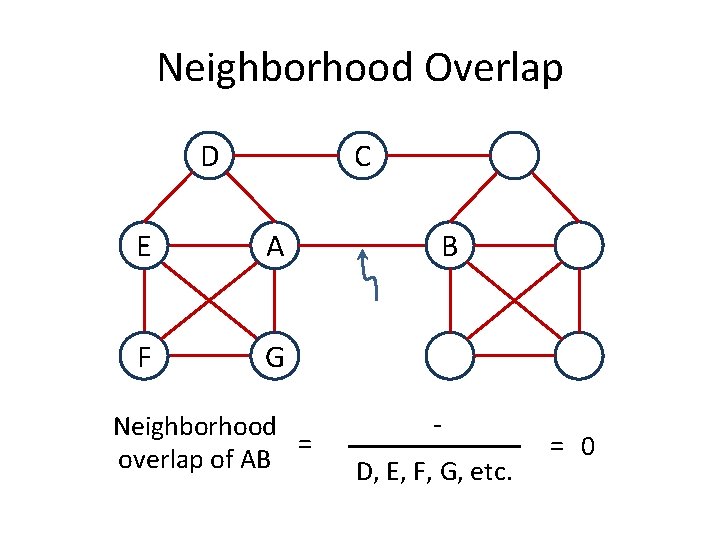
Neighborhood Overlap D C E A F G Neighborhood = overlap of AB B D, E, F, G, etc. = 0
Neighborhood Overlap Onnela et al. ’s findings Tie Strength http: //www. cs. cornell. edu/home/kleinber/networks-book-ch 03. pdf
Removing Ties • 84% of cell phone graph nodes lied in a single giant component • Do weak ties link strongly connected components? – Removed edges one at a time starting with strongest edges giant component slowly erodes – Removed edges starting with weakest edges giant component shrank quicker, remnants broke apart quickly once critical weak edges removed
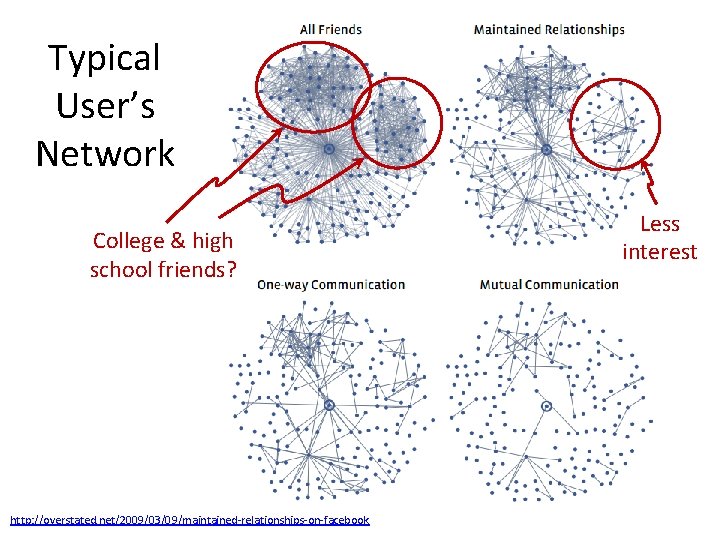
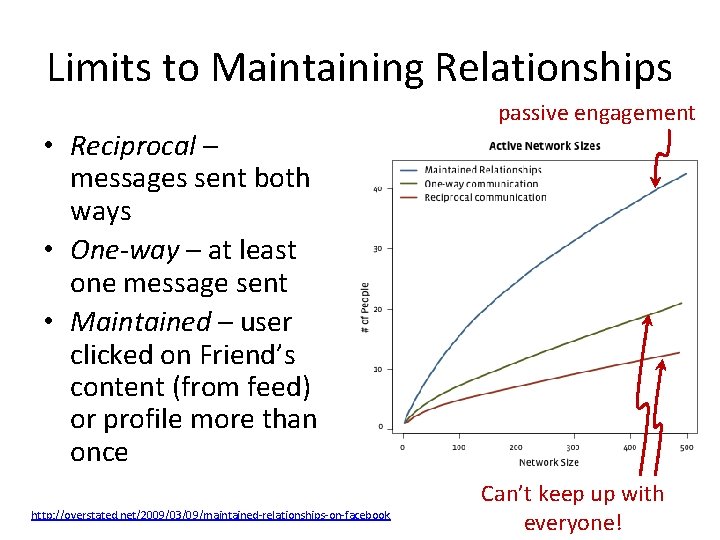
Tie Strength on Facebook • Marlow et al. , Maintained relationships on Facebook, 2009, http: //overstated. net/2009/03/09/maintained -relationships-on-facebook • Analyzed tie strength of Facebook users using one month of interactions
Three Categories of Links • Reciprocal/Mutual – messages sent both ways • One-way – at least one message sent (friend may or may not have reciprocated) • Maintained – user clicked on Friend’s content (from feed) or profile more than once
Typical User’s Network College & high school friends? http: //overstated. net/2009/03/09/maintained-relationships-on-facebook Less interest
Limits to Maintaining Relationships passive engagement • Reciprocal – messages sent both ways • One-way – at least one message sent • Maintained – user clicked on Friend’s content (from feed) or profile more than once http: //overstated. net/2009/03/09/maintained-relationships-on-facebook Can’t keep up with everyone!
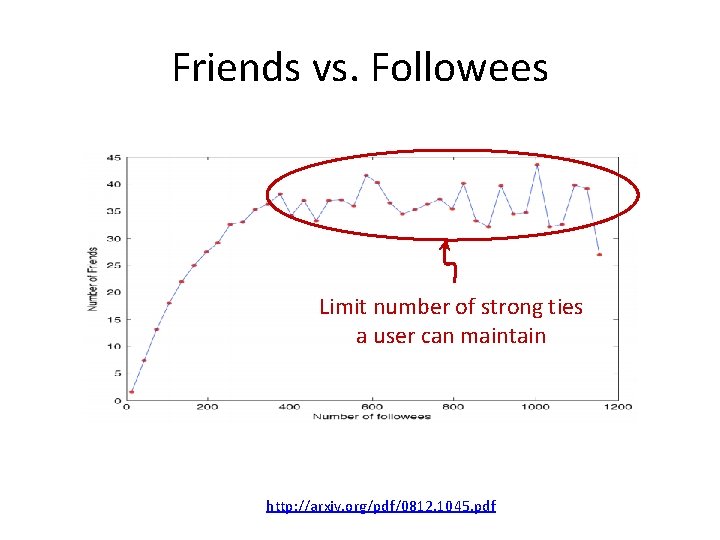
Tie Strength on Twitter • Huberman et al. , Social networks that matter: Twitter under the microscope, First Monday, Jan 2009 • Analyzed tie strength of 211, 024 active Twitter users during observation period • Followees – people being followed • Friend – person who user has directed at least two tweets to (strong ties)
Friends vs. Followees Limit number of strong ties a user can maintain http: //arxiv. org/pdf/0812. 1045. pdf
Now let’s shift the attention away from the edges and towards the nodes…
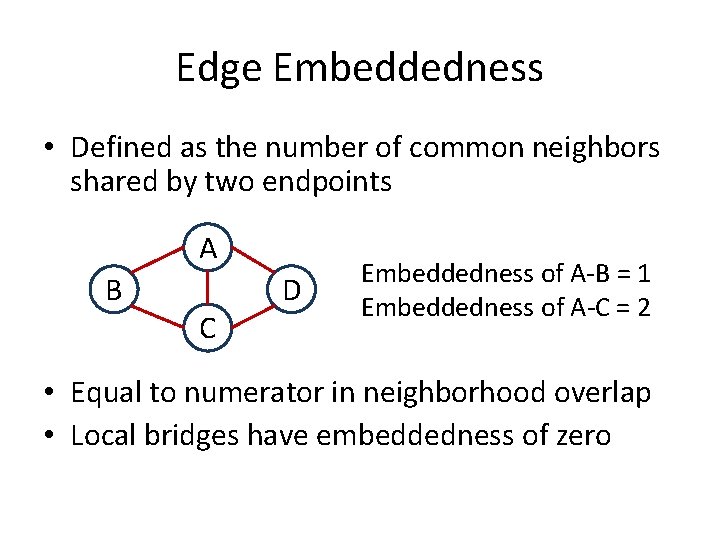
Edge Embeddedness • Defined as the number of common neighbors shared by two endpoints A B C D Embeddedness of A-B = 1 Embeddedness of A-C = 2 • Equal to numerator in neighborhood overlap • Local bridges have embeddedness of zero
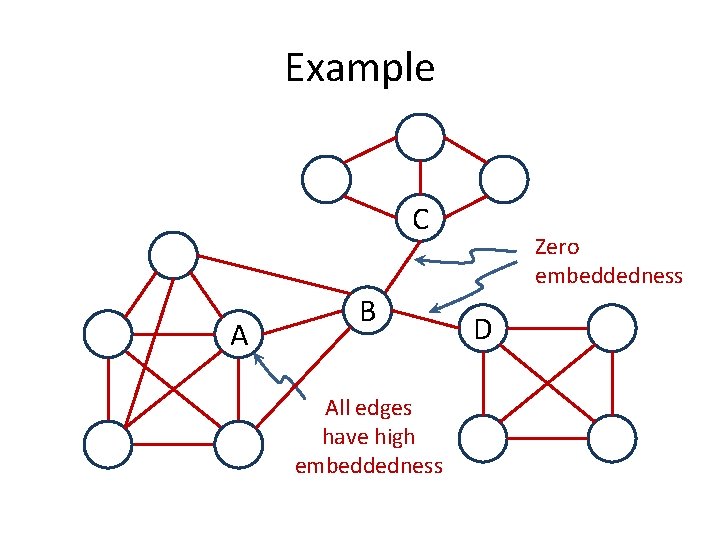
Example C A B All edges have high embeddedness Zero embeddedness D
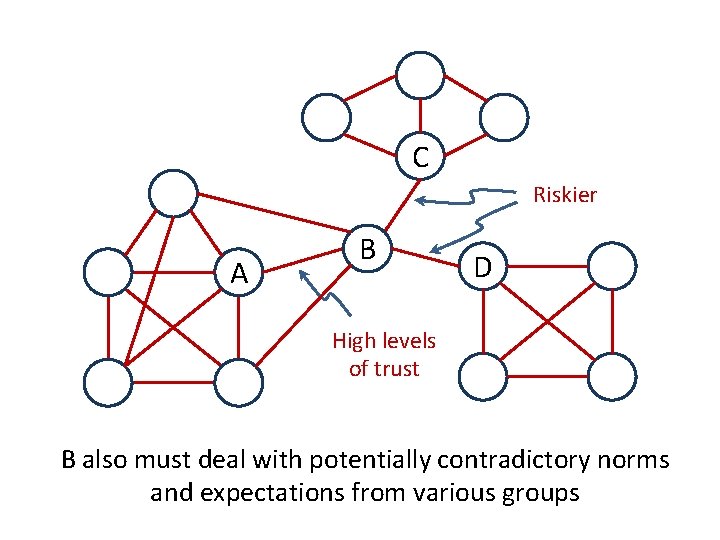
Embeddedness and Trust • Research shows that if you and I are connected by an embedded edge (we share a mutual friend), there is more trust and confidence in the integrity of the transactions (social, economic, etc. ) between us • If I cheat you, our mutual friends are likely to find out, and they are less likely to trust me in the future! • Threat is absent for edges of zero embeddedness; no mutual friends to punish me!
C Riskier A B D High levels of trust B also must deal with potentially contradictory norms and expectations from various groups
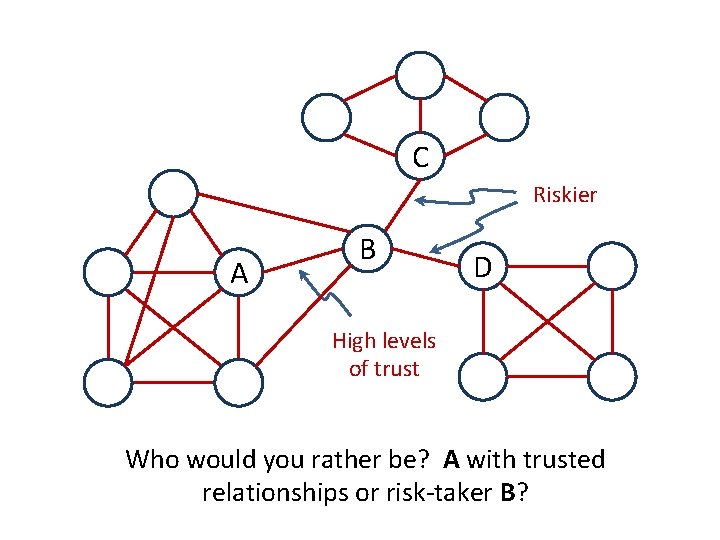
It’s Good to be B… • Node B is at the end of multiple local bridges • Node B spans a structural hole in the network – space between two components that do not interact closely • If network represents a company or organization, some advantages for B: – B has early access to info that originates in various components – Having access to this info can amplify B’s creativity by combining disparate info into novel ideas – B acts as “gatekeeper” and can control flow of information to various components
C Riskier A B D High levels of trust Who would you rather be? A with trusted relationships or risk-taker B?
Other Helpful Resources • Bibliography of Research on Social Network Sites http: //www. danah. org/research. Bibs/sns. php • Christakis and Fowler, Connected (2009) • Kadushin, Understanding Social Networks (2011)