
Social Needs Screening in Family Medicine Heather Bleacher
Social Needs Screening in Family Medicine Heather Bleacher, MD MPH AF Williams Family Medicine Center
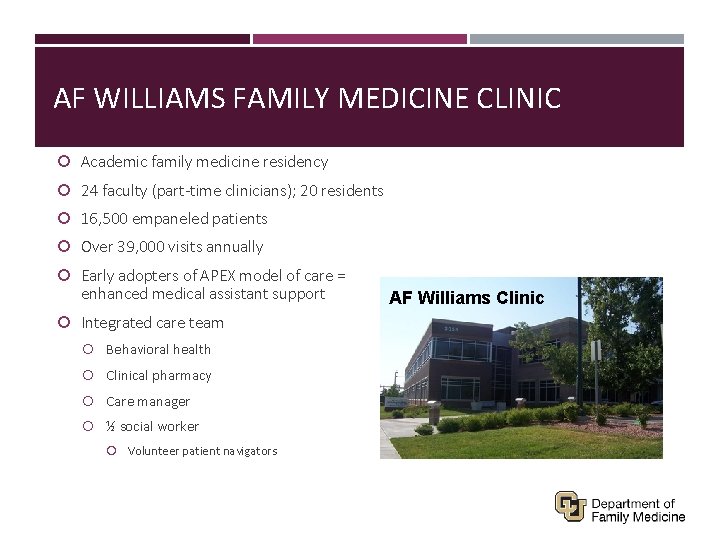
AF WILLIAMS FAMILY MEDICINE CLINIC Academic family medicine residency 24 faculty (part-time clinicians); 20 residents 16, 500 empaneled patients Over 39, 000 visits annually Early adopters of APEX model of care = enhanced medical assistant support Integrated care team Behavioral health Clinical pharmacy Care manager ½ social worker Volunteer patient navigators AF Williams Clinic
SCREENING PILOT AT A GLANCE Decided to screen for social needs in December 2015 Screening pilot November 2017 - July 2018 Screened 2018 patients 541 patients with > 1 social need 146 patients requested assistance Process evaluation: Rates of patients receiving screening Demographics of screened and eligible population Staff and provider surveys (pre-pilot, midpoint, post-pilot) Prevalence of needs reported Outcome evaluation Rates of social work referrals placed (couldn’t get the report) Rates at which needs were met (miserable response rate to postscreening patient survey)
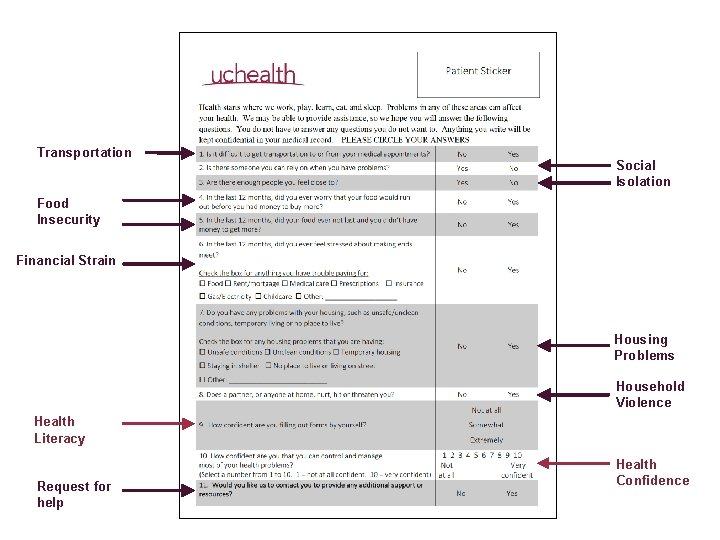
Transportation Social Isolation Food Insecurity Financial Strain Housing Problems Household Violence Health Literacy Request for help Health Confidence
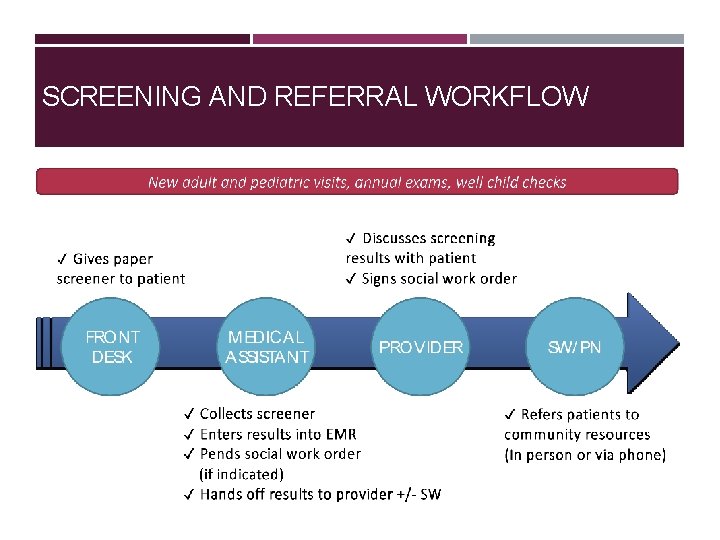
SCREENING AND REFERRAL WORKFLOW
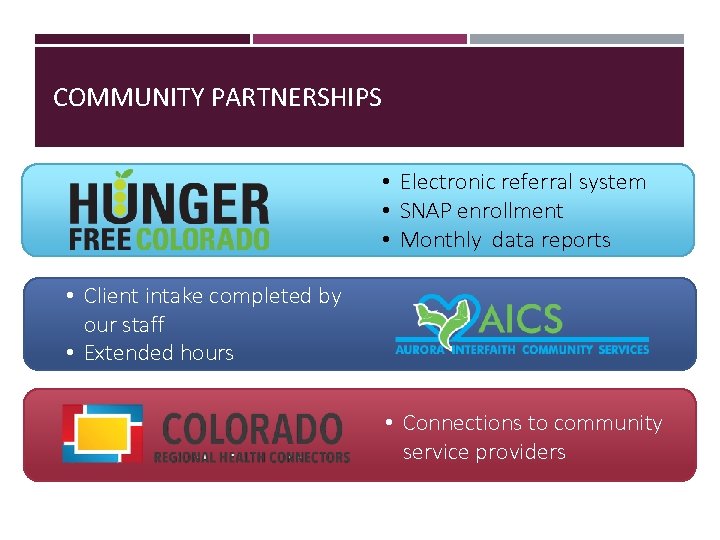
COMMUNITY PARTNERSHIPS • Electronic referral system • SNAP enrollment • Monthly data reports • Client intake completed by our staff • Extended hours • Connections to community service providers
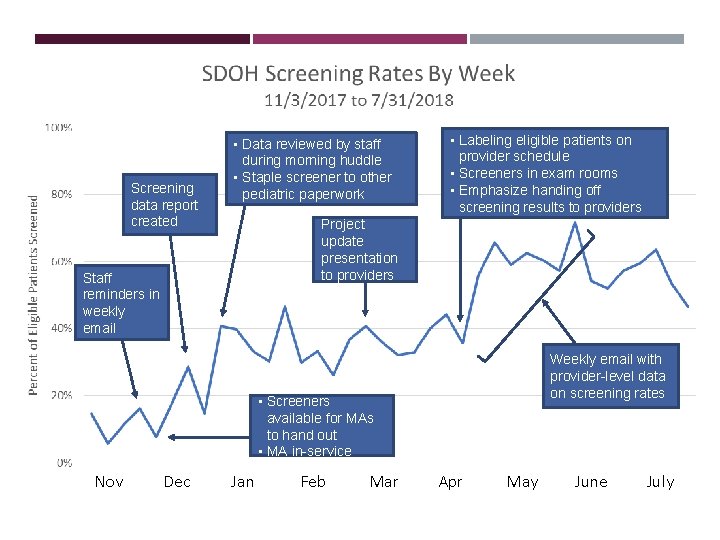
Screening data report created • Data reviewed by staff during morning huddle • Staple screener to other pediatric paperwork • Labeling eligible patients on provider schedule • Screeners in exam rooms • Emphasize handing off screening results to providers Project update presentation to providers Staff reminders in weekly email Weekly email with provider-level data on screening rates • Screeners available for MAs to hand out • MA in-service Nov Dec Jan Feb Mar Apr May June July
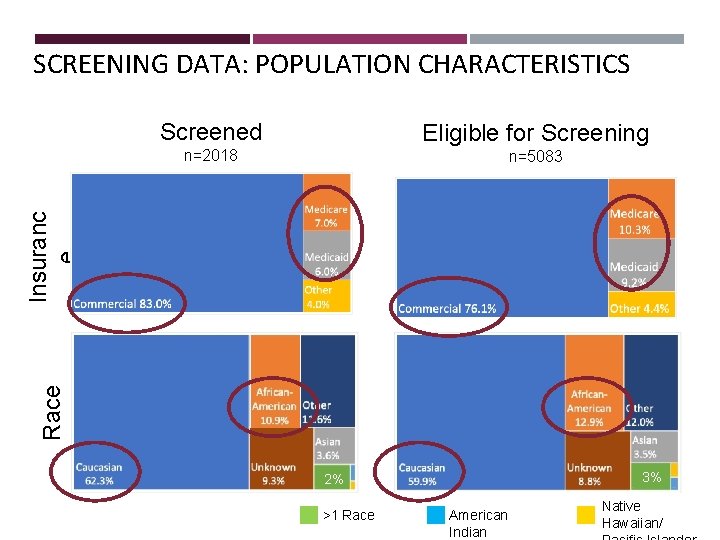
SCREENING DATA: POPULATION CHARACTERISTICS Eligible for Screening n=2018 n=5083 Race Insuranc e Screened 3% 2% >1 Race American Indian Native Hawaiian/
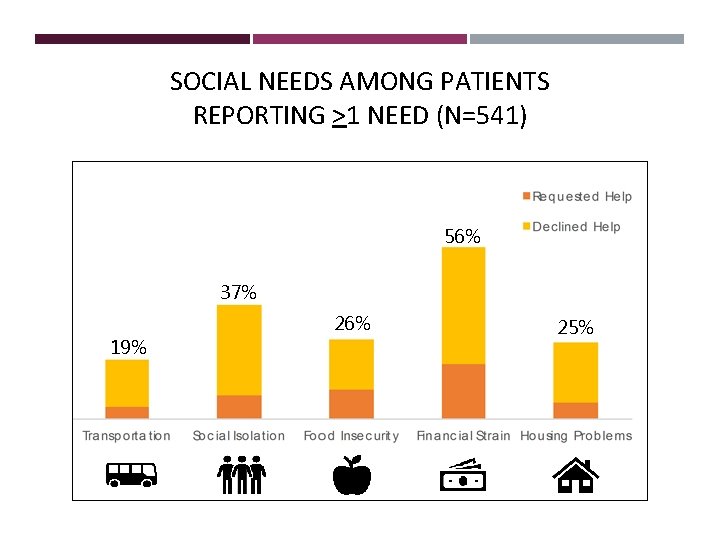
SOCIAL NEEDS AMONG PATIENTS REPORTING >1 NEED (N=541) 56% 37% 26% 19% 25%
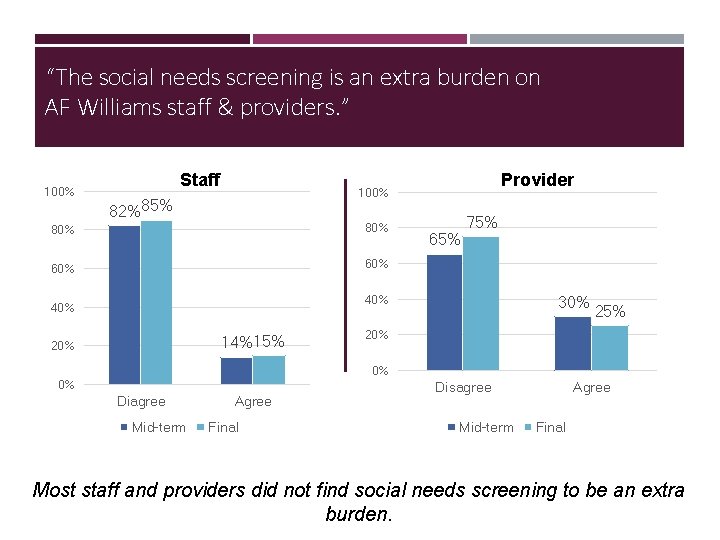
“The social needs screening is an extra burden on AF Williams staff & providers. ” 100% Staff Provider 100% 82%85% 80% 60% 65% 75% 40% 14%15% 20% 30% 25% 20% 0% 0% Diagree Mid-term Agree Final Disagree Mid-term Agree Final Most staff and providers did not find social needs screening to be an extra burden.
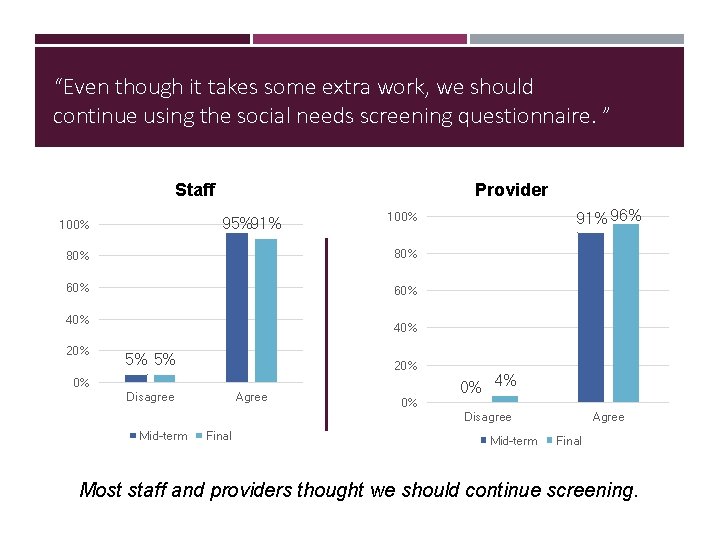
“Even though it takes some extra work, we should continue using the social needs screening questionnaire. ” Staff Provider 95%91% 100% 80% 60% 40% 20% 91% 96% 100% 40% 5% 5% 20% 0% Disagree Agree 0% 0% 4% Disagree Mid-term Final Mid-term Agree Final Most staff and providers thought we should continue screening.
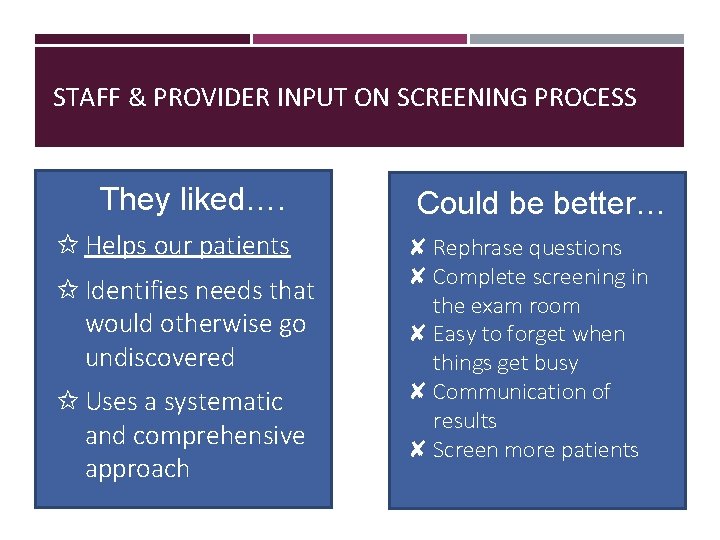
STAFF & PROVIDER INPUT ON SCREENING PROCESS They liked…. ✩ Helps our patients ✩ Identifies needs that would otherwise go undiscovered ✩ Uses a systematic and comprehensive approach Could be better… ✘ Rephrase questions ✘ Complete screening in the exam room ✘ Easy to forget when things get busy ✘ Communication of results ✘ Screen more patients
KEY LESSONS LEARNED It takes time to implement social needs screening! Screening strategy missed key groups Needs were prevalent, but patients frequently declined assistance Screening was acceptable to patients, staff and providers Room to improve teamwork and communication Anyone who has any role in screening needed to be represented during planning Needed to improve messaging to patients about the initiative
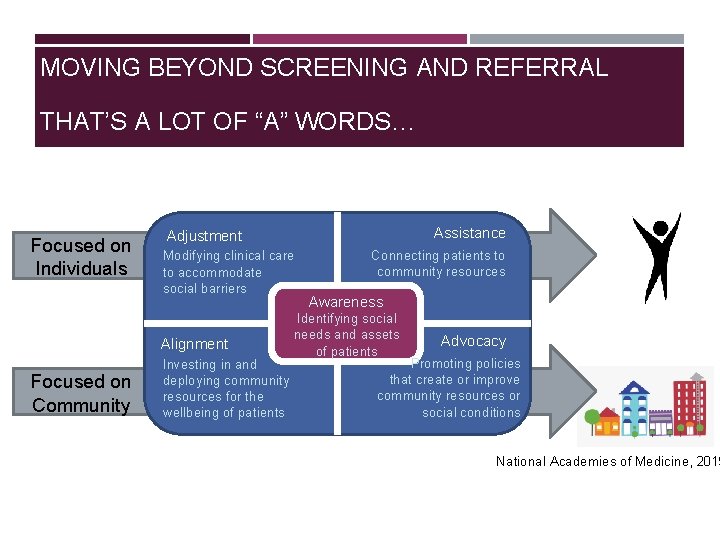
MOVING BEYOND SCREENING AND REFERRAL THAT’S A LOT OF “A” WORDS… Focused on Individuals Modifying clinical care to accommodate social barriers Alignment Focused on Community Assistance Adjustment Investing in and deploying community resources for the wellbeing of patients Connecting patients to community resources Awareness Identifying social needs and assets of patients Advocacy Promoting policies that create or improve community resources or social conditions National Academies of Medicine, 2019
ACKNOWLEDGEMENTS Many thanks to: Staff and providers at AFW CU Department of Family Medicine CU School of Medicine Clinical Effectiveness and Patient Safety Small Grants Program
- Slides: 16