
Social Movements Questions Examples of Social Movements Questions





- Slides: 13
Social Movements
Questions • Examples of Social Movements
Questions • Examples of Social Movements • Characteristics of Social Movements
Characteristics • • No specific size No membership criteria No formal structure Not hierarchically organized
Questions • Examples of Social Movements • Characteristics of Social Movements • Why do people join them?
Why do people join them? • • Personal advantage Principled commitment Group solidarity Desire to be part of a group
Is it rational to join a social movement? What motivates people to join? Is this any different than interest groups?
Questions • • Examples of Social Movements Characteristics of Social Movements Why do people join them? How do they try to get what they want?
Tactics • Emphasis on outsider strategies (but not exclusively) • Refer to a cultural repertoire of “routines of collective action”
Questions • • • Examples of Social Movements Characteristics of Social Movements Why do people join them? How do they try to get what they want? What gives rise to them?
What gives rise to a social movement? • Unaddressed oppression/grievances • Movement entrepreneurs • Changes in political opportunity structure
Questions • • • Examples of Social Movements Characteristics of Social Movements Why do people join them? How do they try to get what they want? What gives rise to them? What keeps them going?
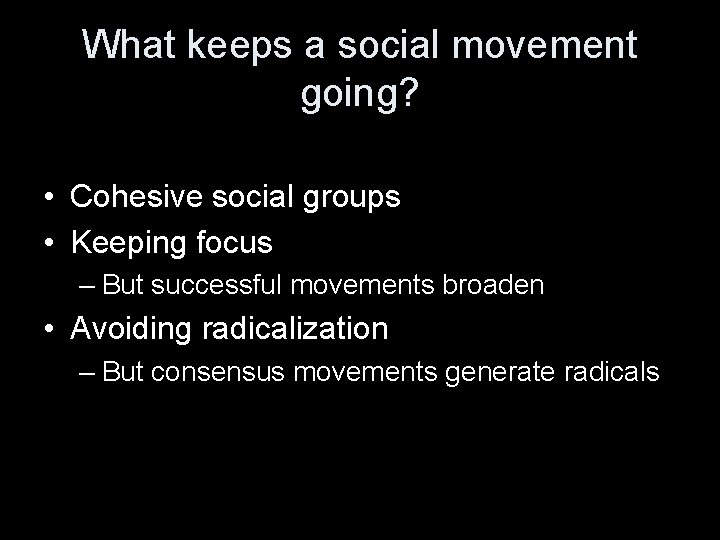
What keeps a social movement going? • Cohesive social groups • Keeping focus – But successful movements broaden • Avoiding radicalization – But consensus movements generate radicals