
Social Mobility and Child Poverty Commission Catriona Williams
Social Mobility and Child Poverty Commission Catriona Williams OBE SMCPC Commissioner & Chief Executive of Children in Wales
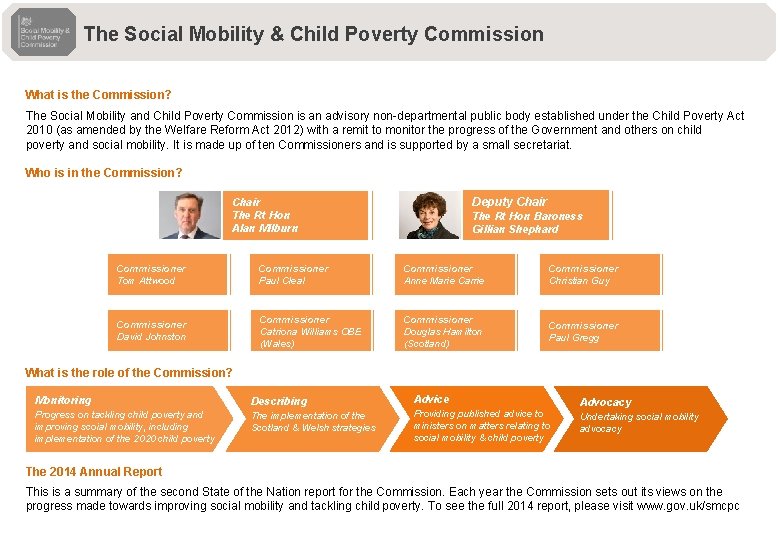
The Social Mobility & Child Poverty Commission What is the Commission? The Social Mobility and Child Poverty Commission is an advisory non-departmental public body established under the Child Poverty Act 2010 (as amended by the Welfare Reform Act 2012) with a remit to monitor the progress of the Government and others on child poverty and social mobility. It is made up of ten Commissioners and is supported by a small secretariat. Who is in the Commission? Deputy Chair The Rt Hon Alan Milburn The Rt Hon Baroness Gillian Shephard Commissioner Tom Attwood Commissioner Paul Cleal Commissioner Anne Marie Carrie Commissioner Christian Guy Commissioner David Johnston Commissioner Catriona Williams OBE (Wales) Commissioner Douglas Hamilton (Scotland) Commissioner Paul Gregg What is the role of the Commission? Monitoring Describing Advice Advocacy Progress on tackling child poverty and improving scoial mobility, including implementation of the 2020 child poverty The implementation of the Scotland & Welsh strategies Providing published advice to ministers on matters relating to social mobility & child poverty Undertaking social mobility advocacy The 2014 Annual Report This is a summary of the second State of the Nation report for the Commission. Each year the Commission sets out its views on the progress made towards improving social mobility and tackling child poverty. To see the full 2014 report, please visit www. gov. uk/smcpc
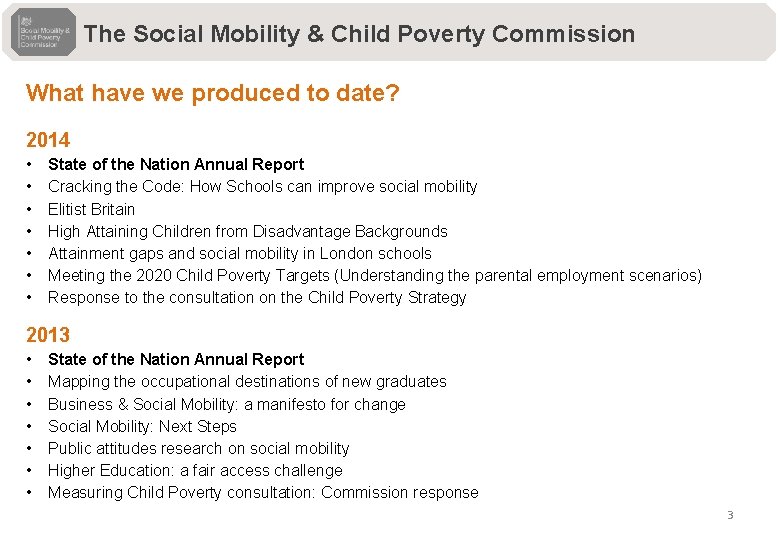
The Social Mobility & Child Poverty Commission What have we produced to date? 2014 • • State of the Nation Annual Report Cracking the Code: How Schools can improve social mobility Elitist Britain High Attaining Children from Disadvantage Backgrounds Attainment gaps and social mobility in London schools Meeting the 2020 Child Poverty Targets (Understanding the parental employment scenarios) Response to the consultation on the Child Poverty Strategy 2013 • • State of the Nation Annual Report Mapping the occupational destinations of new graduates Business & Social Mobility: a manifesto for change Social Mobility: Next Steps Public attitudes research on social mobility Higher Education: a fair access challenge Measuring Child Poverty consultation: Commission response 3
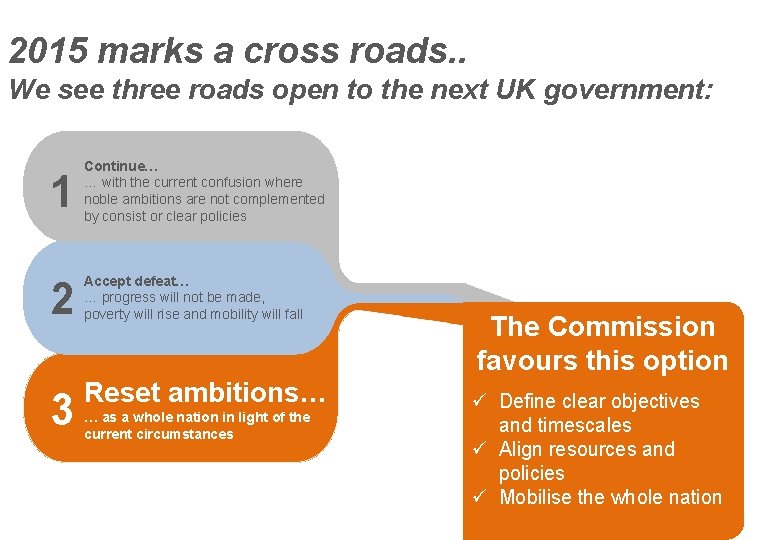
2015 marks a cross roads. . We see three roads open to the next UK government: 1 Continue… … with the current confusion where noble ambitions are not complemented by consist or clear policies 2 Accept defeat… … progress will not be made, poverty will rise and mobility will fall 3 Reset ambitions… … as a whole nation in light of the current circumstances The Commission favours this option ü Define clear objectives and timescales ü Align resources and policies ü Mobilise the whole nation
What is the 2020 challenge? “… to prevent Britain becoming a permanently divided society and ensure there is a social recovery alongside the economic recovery. . ”
The Commission makes 12 key recommendations… 1. Supplement the existing child poverty targets with new measures to give a more rounded picture of poverty and publish a new timescale for achieving them; 2. Ensure that welfare reforms and fiscal policies protect the working poor from the impact of austerity, including by empowering the Office for Budget Responsibility to report on each Budget’s impact on poverty and mobility; The Early Years 3. New focus in the early years on ensuring children are school ready at age five, with 85 per cent of children school ready by 2020 and all by 2025 4. A national parenting campaign to be launched to help more parents become excellent parents, funded by removing childcare tax breaks from families where at least one parent earns over £ 100, 000 per year The School Years 5. Higher pay to get the best teachers into the worst schools in deprived areas of the country through a new Teachers’ Pay Premium and new pay grades commissioned from the Teachers Pay Review Body 6. End illiteracy and innumeracy among primary school leavers by 2025 and a new focus on quality careers advice, character development & extra curricular activity in secondary 7. Closing the attainment gap between poorer and better-off children to be a priority for all schools so that by 2020 more than half of children entitled to free school meals are achieving five good GCSEs rising to two-thirds by 2025;
Moving into the World of Work 8. Long-term youth unemployment to be ended by 2020 through a package of measures including half of all larger workplaces providing apprenticeships and a new Day One support service to help unemployed young people straight back into work or education; Moving up the income ladder 9. Britain to become a Living Wage country by 2025 at the latest, underpinned by a new national pay progression strategy and an expanded role for the Low Pay Commission; 10. More shared ownership options for young people to get on the housing ladder and longerterm tenancies to become the norm for families with children in the private rented sector; Accessing the top universities and jobs 11. Universities to use the removal of the student numbers cap to significantly close the access gap so that by 2020 they are aiming to admit 5, 000 more students from a free schools meals background, with Russell Group universities aiming to admit 3, 000 more state school students who have the grades but currently do not get the places; 12. Unpaid internships to be ended – through legislation if necessary – by 2020. … to help the whole of society rise to the 2020 challenge…
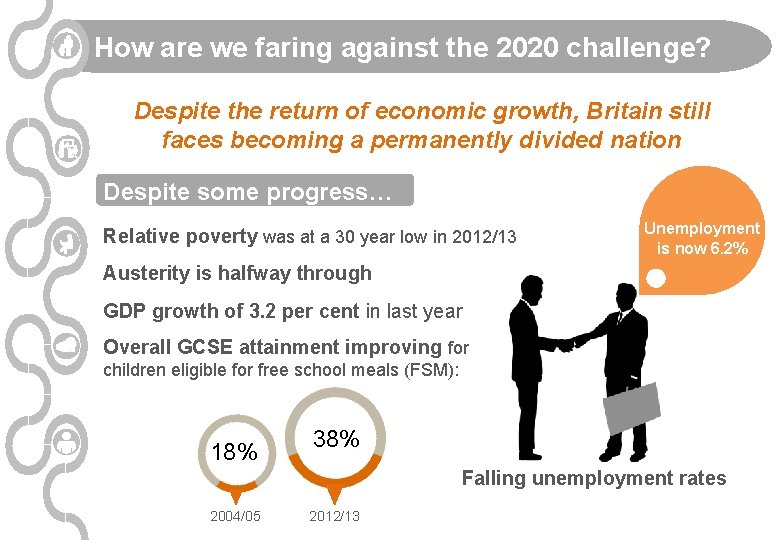
How are we faring against the 2020 challenge? Despite the return of economic growth, Britain still faces becoming a permanently divided nation Despite some progress… Relative poverty was at a 30 year low in 2012/13 Unemployment is now 6. 2% Austerity is halfway through GDP growth of 3. 2 per cent in last year Overall GCSE attainment improving for children eligible for free school meals (FSM): 18% 38% Falling unemployment rates 2004/05 2012/13
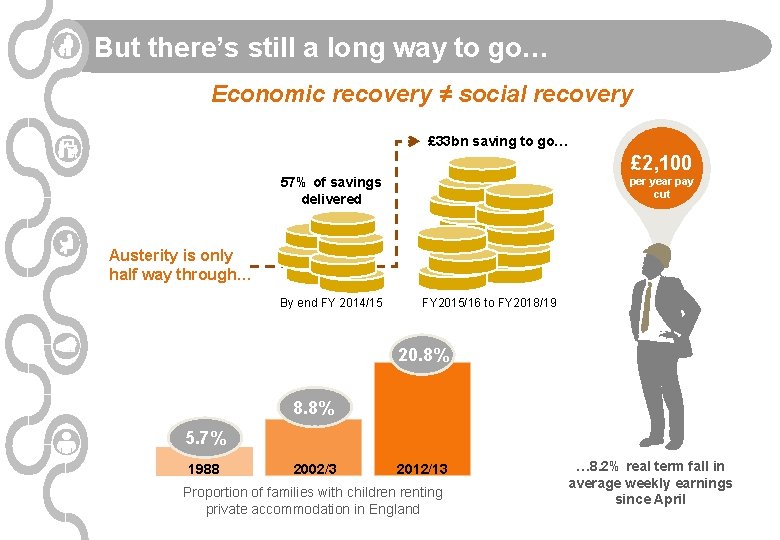
But there’s still a long way to go… Economic recovery ≠ social recovery £ 33 bn saving to go… £ 2, 100 per year pay cut 57% of savings delivered Austerity is only half way through… By end FY 2014/15 FY 2015/16 to FY 2018/19 20. 8% 8. 8% 5. 7% 1988 2014 2002/3 2012/13 Proportion of families with children renting private accommodation in England … 8. 2% real term fall in average weekly earnings since April
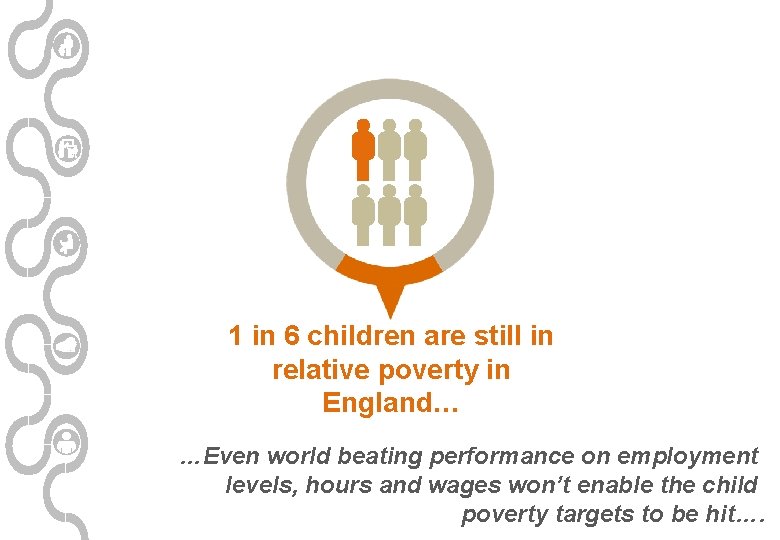
1 in 6 children are still in relative poverty in England… …Even world beating performance on employment levels, hours and wages won’t enable the child poverty targets to be hit….
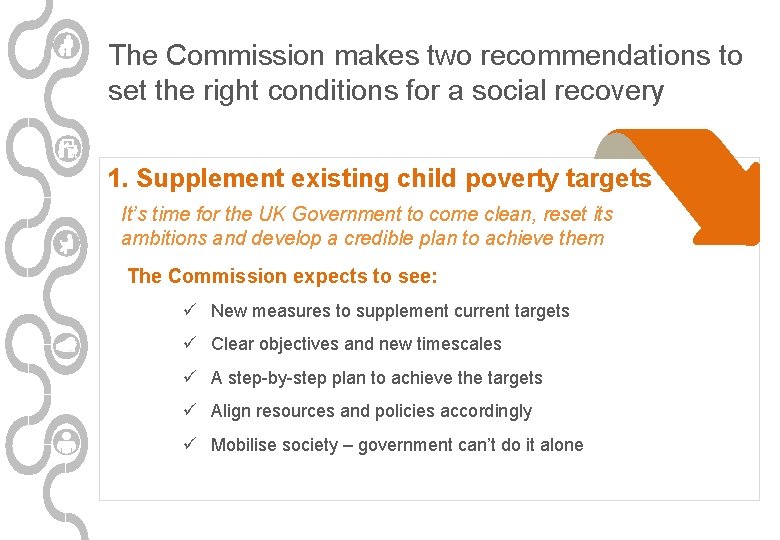
The Commission makes two recommendations to set the right conditions for a social recovery 1. Supplement existing child poverty targets It’s time for the UK Government to come clean, reset its ambitions and develop a credible plan to achieve them The Commission expects to see: ü New measures to supplement current targets ü Clear objectives and new timescales ü A step-by-step plan to achieve the targets ü Align resources and policies accordingly ü Mobilise society – government can’t do it alone
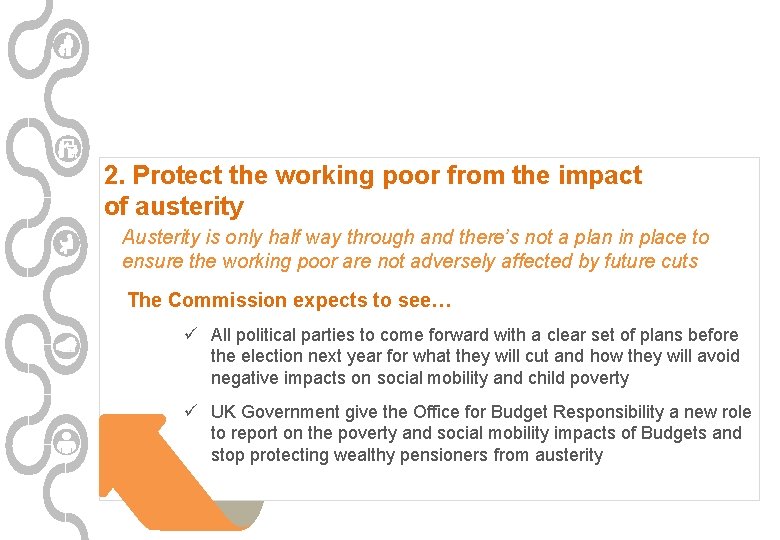
2. Protect the working poor from the impact of austerity Austerity is only half way through and there’s not a plan in place to ensure the working poor are not adversely affected by future cuts The Commission expects to see… ü All political parties to come forward with a clear set of plans before the election next year for what they will cut and how they will avoid negative impacts on social mobility and child poverty ü UK Government give the Office for Budget Responsibility a new role to report on the poverty and social mobility impacts of Budgets and stop protecting wealthy pensioners from austerity
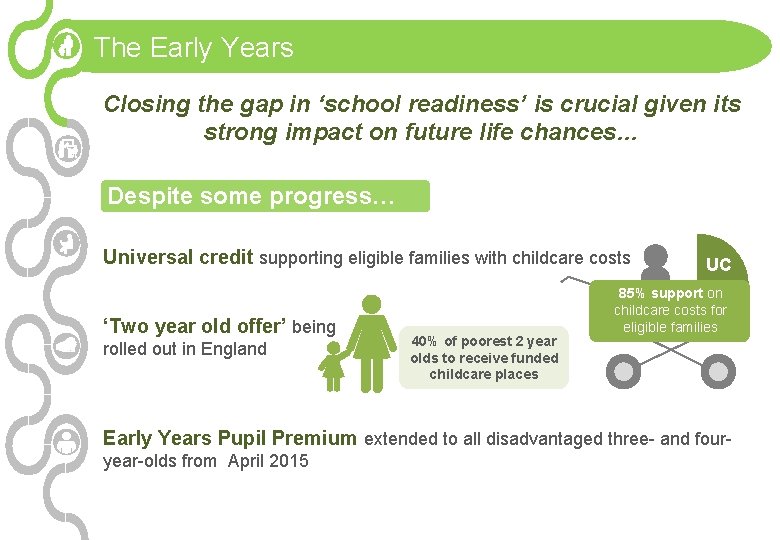
The Early Years Closing the gap in ‘school readiness’ is crucial given its strong impact on future life chances… Despite some progress… Universal credit supporting eligible families with childcare costs ‘Two year old offer’ being rolled out in England 40% of poorest 2 year olds to receive funded childcare places UC 85% support on childcare costs for eligible families Early Years Pupil Premium extended to all disadvantaged three- and fouryear-olds from April 2015
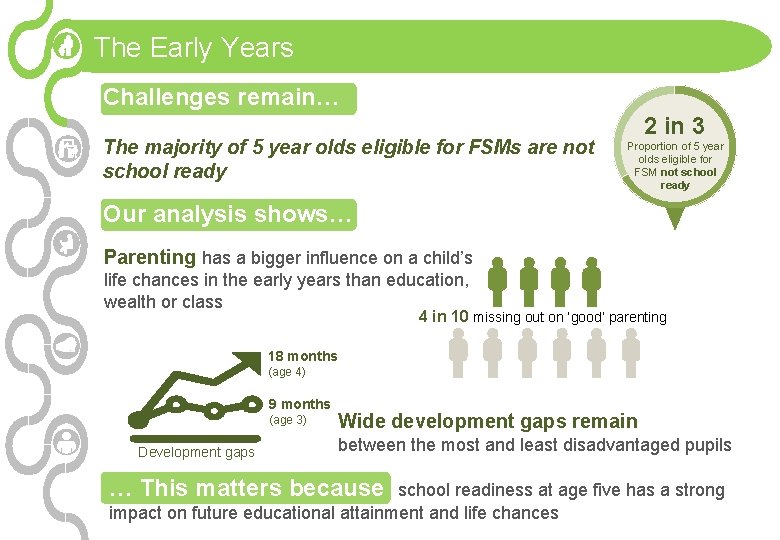
The Early Years Challenges remain… The majority of 5 year olds eligible for FSMs are not school ready 2 in 3 Proportion of 5 year olds eligible for FSM not school ready Our analysis shows… Parenting has a bigger influence on a child’s life chances in the early years than education, wealth or class 4 in 10 missing out on ‘good’ parenting 18 months (age 4) 9 months (age 3) Development gaps Wide development gaps remain between the most and least disadvantaged pupils … This matters because school readiness at age five has a strong impact on future educational attainment and life chances
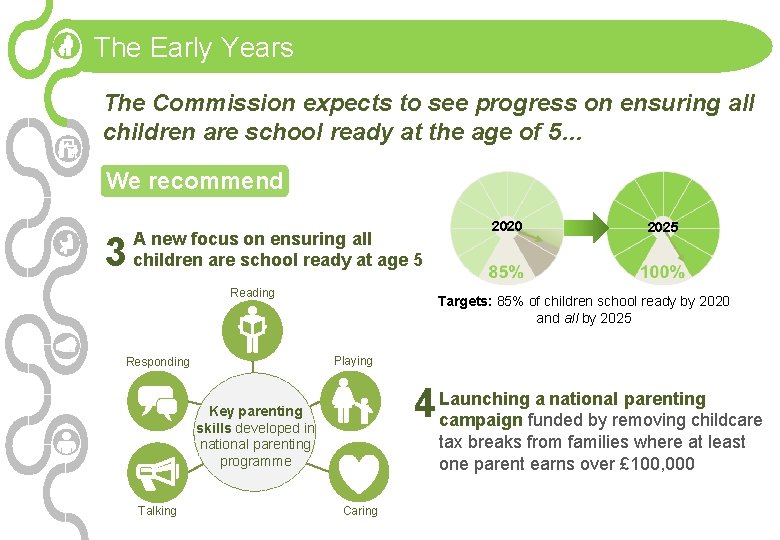
The Early Years The Commission expects to see progress on ensuring all children are school ready at the age of 5… We recommend 3 A new focus on ensuring all children are school ready at age 5 Reading 2025 Targets: 85% of children school ready by 2020 and all by 2025 Playing Responding a national parenting 4 Launching campaign funded by removing childcare Key parenting skills developed in national parenting programme Talking 2020 tax breaks from families where at least one parent earns over £ 100, 000 Caring
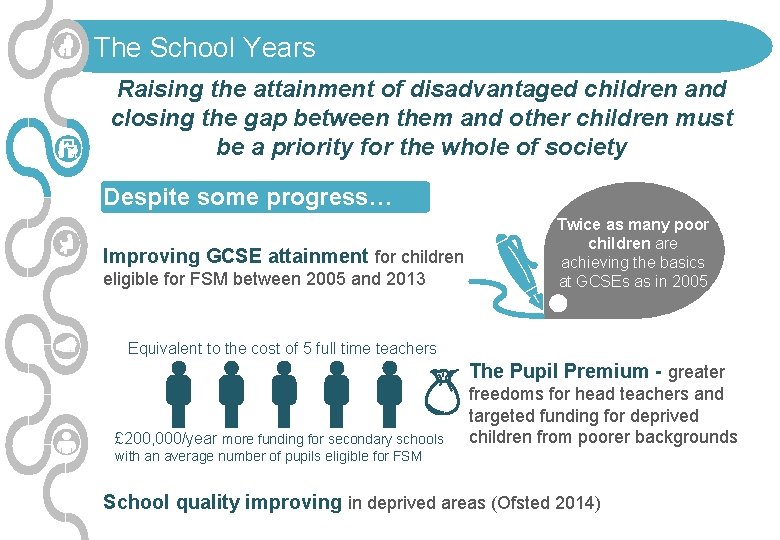
The School Years Raising the attainment of disadvantaged children and closing the gap between them and other children must be a priority for the whole of society Despite some progress… Improving GCSE attainment for children eligible for FSM between 2005 and 2013 Twice as many poor children are achieving the basics at GCSEs as in 2005 Equivalent to the cost of 5 full time teachers The Pupil Premium - greater £ 200, 000/year more funding for secondary schools freedoms for head teachers and targeted funding for deprived children from poorer backgrounds with an average number of pupils eligible for FSM School quality improving in deprived areas (Ofsted 2014)
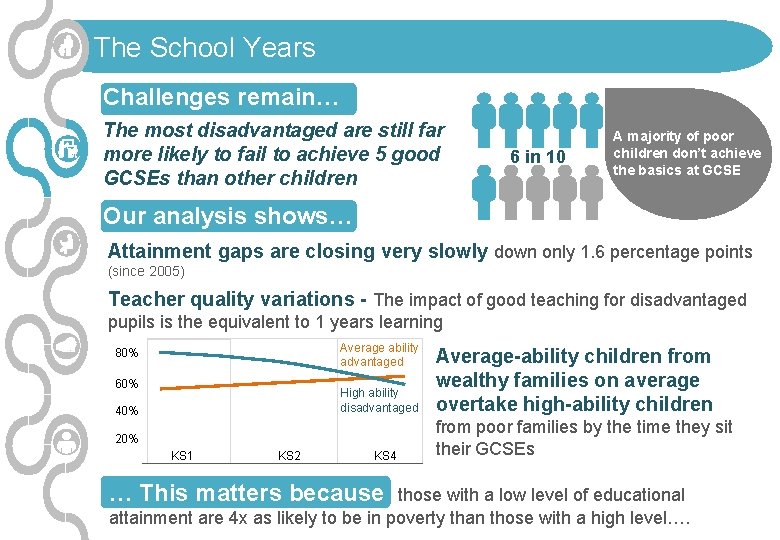
The School Years Challenges remain… The most disadvantaged are still far more likely to fail to achieve 5 good GCSEs than other children 6 in 10 A majority of poor children don’t achieve the basics at GCSE Our analysis shows… Attainment gaps are closing very slowly down only 1. 6 percentage points (since 2005) Teacher quality variations - The impact of good teaching for disadvantaged pupils is the equivalent to 1 years learning Average ability advantaged 80% 60% High ability disadvantaged 40% 20% KS 1 KS 2 KS 4 … This matters because Average-ability children from wealthy families on average overtake high-ability children from poor families by the time they sit their GCSEs those with a low level of educational attainment are 4 x as likely to be in poverty than those with a high level….
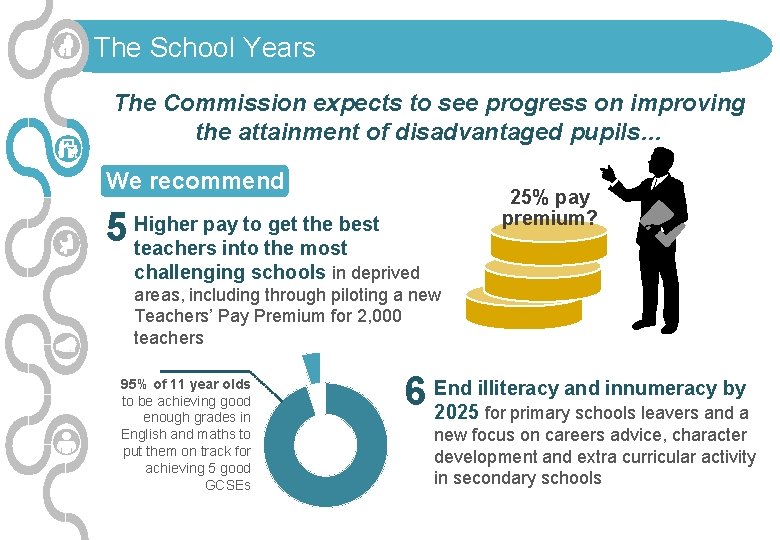
The School Years The Commission expects to see progress on improving the attainment of disadvantaged pupils… We recommend 25% pay premium? pay to get the best 5 Higher teachers into the most challenging schools in deprived areas, including through piloting a new Teachers’ Pay Premium for 2, 000 teachers 95% of 11 year olds to be achieving good enough grades in English and maths to put them on track for achieving 5 good GCSEs illiteracy and innumeracy by 6 End 2025 for primary schools leavers and a new focus on careers advice, character development and extra curricular activity in secondary schools
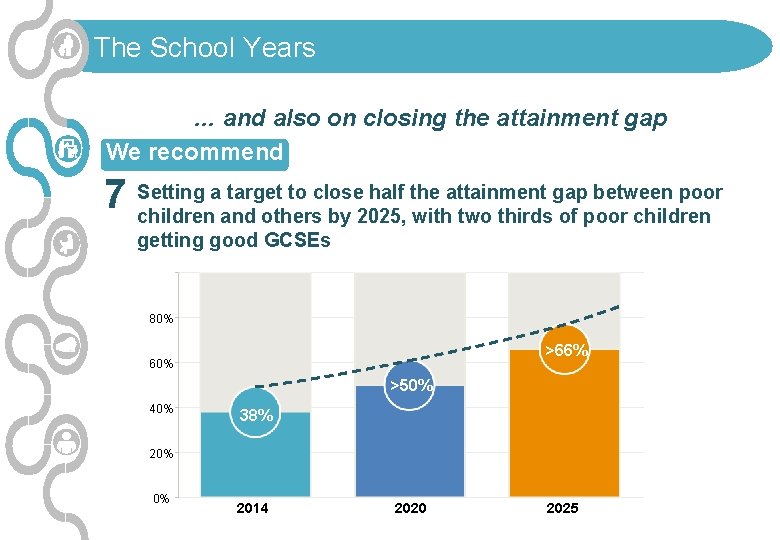
The School Years … and also on closing the attainment gap We recommend a target to close half the attainment gap between poor 7 Setting children and others by 2025, with two thirds of poor children getting good GCSEs 80% >66% 60% >50% 40% 38% 20% 0% 2014 2020 2025
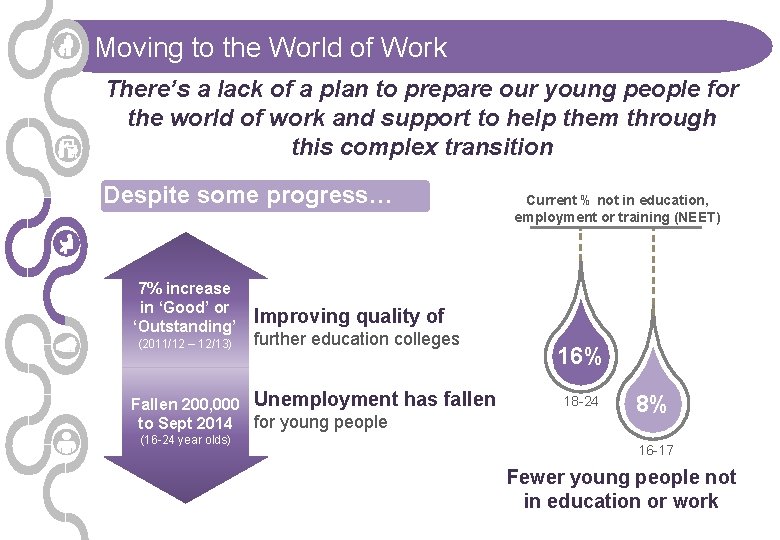
Moving to the World of Work There’s a lack of a plan to prepare our young people for the world of work and support to help them through this complex transition Despite some progress… 7% increase in ‘Good’ or ‘Outstanding’ (2011/12 – 12/13) Improving quality of further education colleges Fallen 200, 000 Unemployment to Sept 2014 for young people (16 -24 year olds) Current % not in education, employment or training (NEET) has fallen 16% 18 -24 8% 16 -17 Fewer young people not in education or work
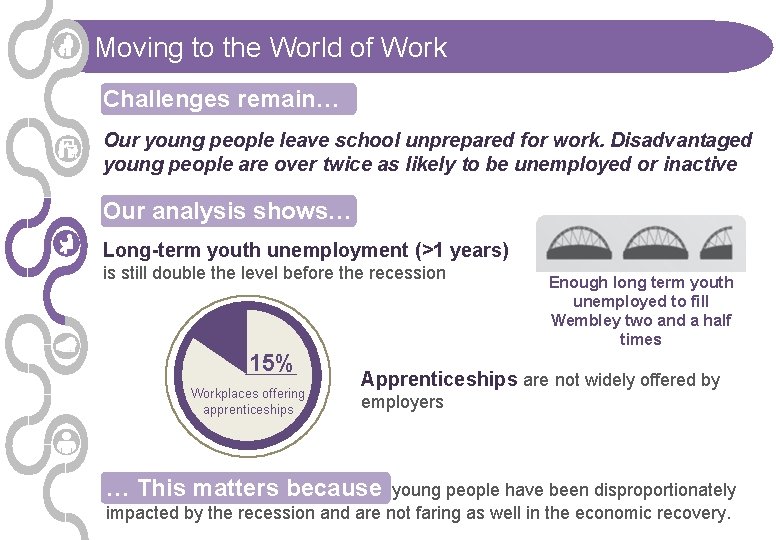
Moving to the World of Work Challenges remain… Our young people leave school unprepared for work. Disadvantaged young people are over twice as likely to be unemployed or inactive Our analysis shows… Long-term youth unemployment (>1 years) is still double the level before the recession 15% Workplaces offering apprenticeships Enough long term youth unemployed to fill Wembley two and a half times Apprenticeships are not widely offered by employers … This matters because young people have been disproportionately impacted by the recession and are not faring as well in the economic recovery.
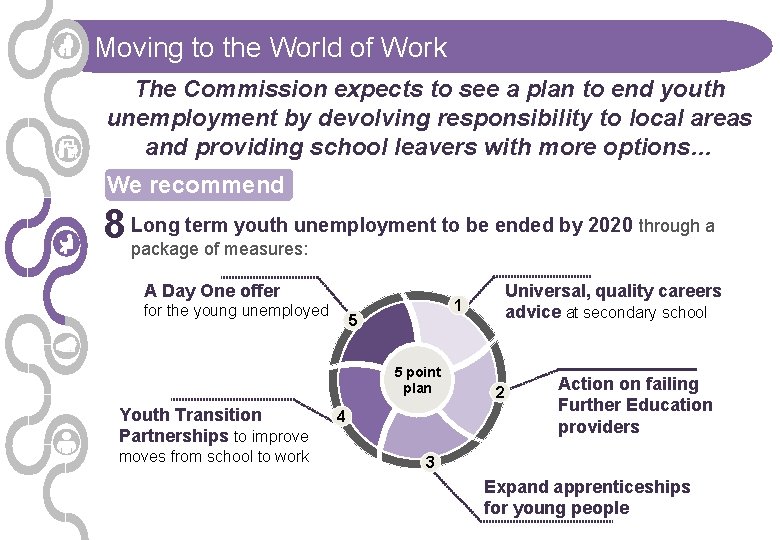
Moving to the World of Work The Commission expects to see a plan to end youth unemployment by devolving responsibility to local areas and providing school leavers with more options… We recommend term youth unemployment to be ended by 2020 through a 8 Long package of measures: A Day One offer for the young unemployed 1 5 5 point plan Youth Transition Partnerships to improve moves from school to work 4 Universal, quality careers advice at secondary school 2 Action on failing Further Education providers 3 Expand apprenticeships for young people
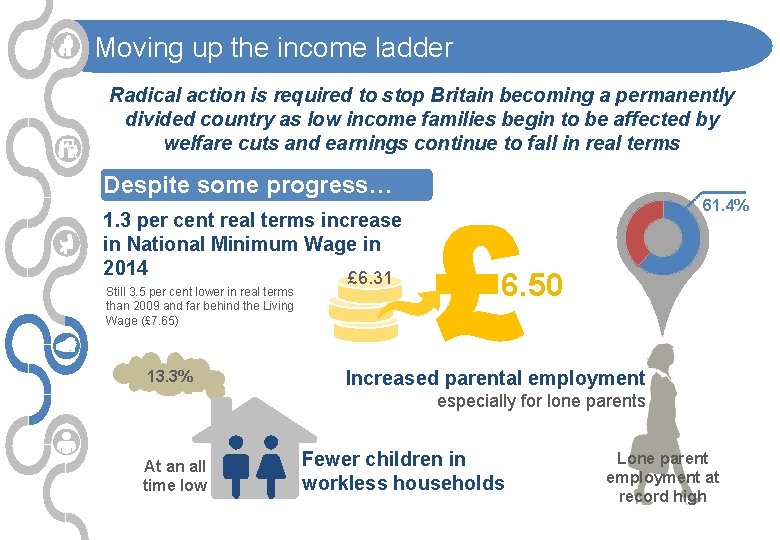
Moving up the income ladder Radical action is required to stop Britain becoming a permanently divided country as low income families begin to be affected by welfare cuts and earnings continue to fall in real terms Despite some progress… 1. 3 per cent real terms increase in National Minimum Wage in 2014 £ 6. 31 Still 3. 5 per cent lower in real terms than 2009 and far behind the Living Wage (£ 7. 65) 13. 3% 61. 4% 6. 50 Increased parental employment especially for lone parents At an all time low Fewer children in workless households Lone parent employment at record high
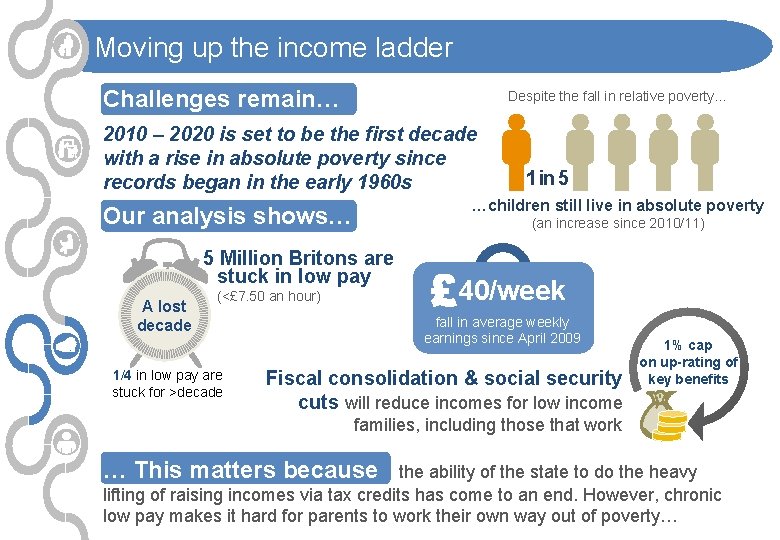
Moving up the income ladder Challenges remain… Despite the fall in relative poverty… 2010 – 2020 is set to be the first decade with a rise in absolute poverty since records began in the early 1960 s …children still live in absolute poverty Our analysis shows… (an increase since 2010/11) 5 Million Britons are stuck in low pay A lost decade (<£ 7. 50 an hour) 1/4 in low pay are stuck for >decade 1 in 5 40/week fall in average weekly earnings since April 2009 Fiscal consolidation & social security cuts will reduce incomes for low income 1% cap on up-rating of key benefits families, including those that work … This matters because the ability of the state to do the heavy lifting of raising incomes via tax credits has come to an end. However, chronic low pay makes it hard for parents to work their own way out of poverty…
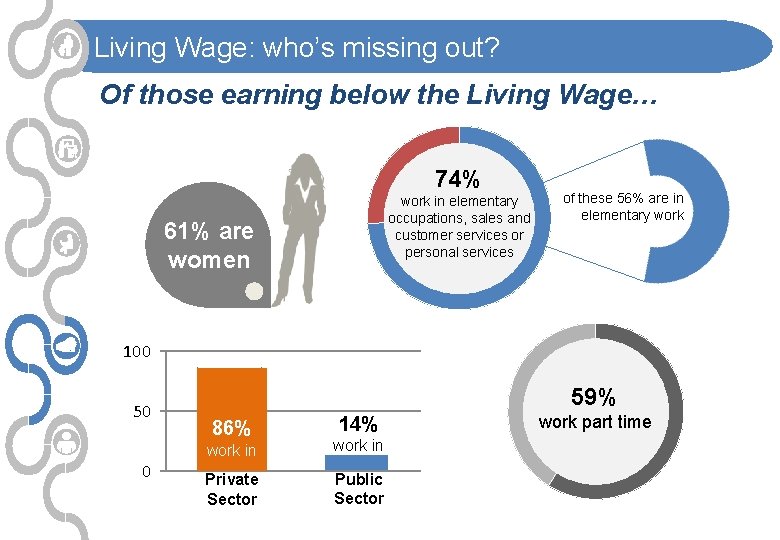
Living Wage: who’s missing out? Of those earning below the Living Wage… 74% work in elementary Payments occupations, sales and customer services or personal services 61% are women of these 56% are in elementary work 100 50 0 59% 86% 14% work in Private Sector Public Sector work part time
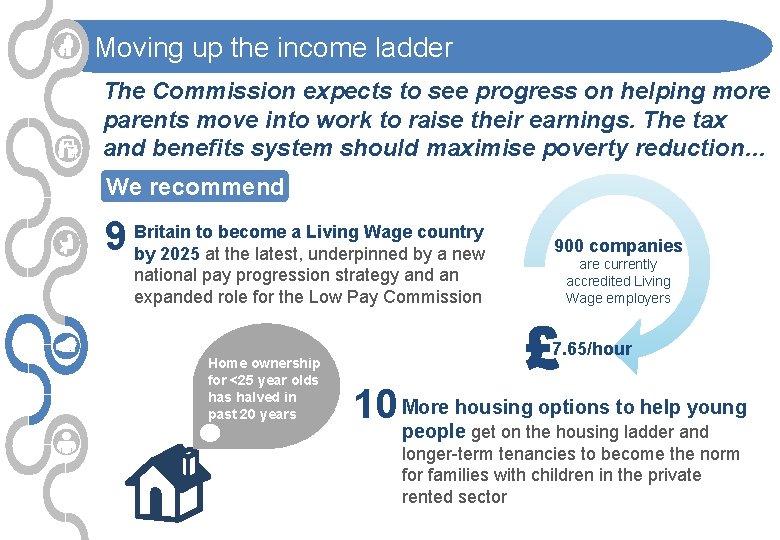
Moving up the income ladder The Commission expects to see progress on helping more parents move into work to raise their earnings. The tax and benefits system should maximise poverty reduction… We recommend to become a Living Wage country 9 Britain by 2025 at the latest, underpinned by a new national pay progression strategy and an expanded role for the Low Pay Commission Home ownership for <25 year olds halved in past 20 years 900 companies are currently accredited Living Wage employers 7. 65/hour housing options to help young 10 More people get on the housing ladder and longer-term tenancies to become the norm for families with children in the private rented sector
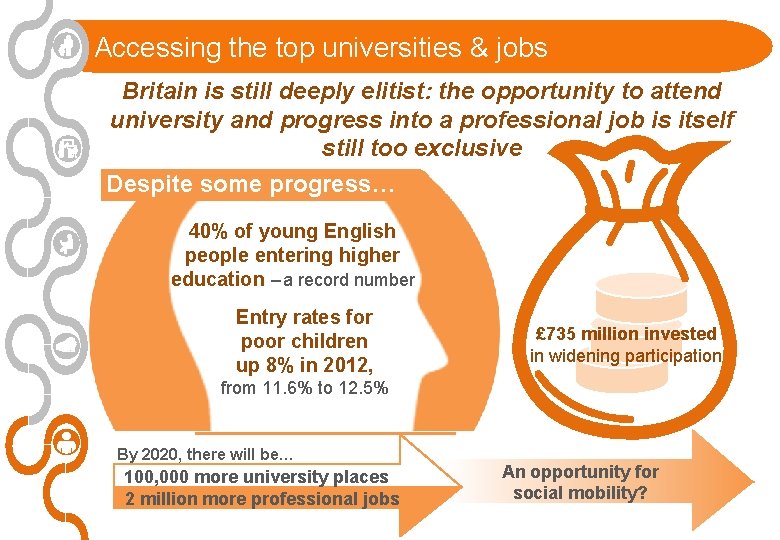
Accessing the top universities & jobs Britain is still deeply elitist: the opportunity to attend university and progress into a professional job is itself still too exclusive Despite some progress… 40% of young English people entering higher education – a record number Entry rates for poor children up 8% in 2012, £ 735 million invested in widening participation from 11. 6% to 12. 5% By 2020, there will be… 100, 000 more university places 2 million more professional jobs An opportunity for social mobility?
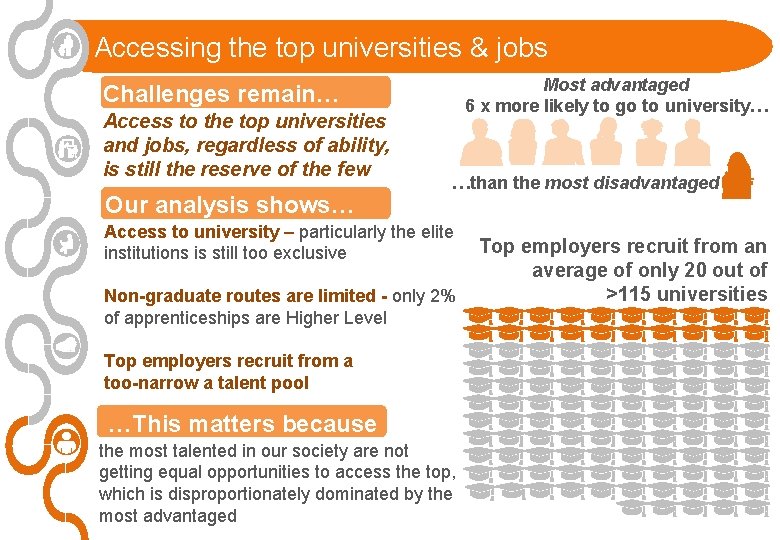
Accessing the top universities & jobs Most advantaged 6 x more likely to go to university… Challenges remain… Access to the top universities and jobs, regardless of ability, is still the reserve of the few Our analysis shows… …than the most disadvantaged Access to university – particularly the elite institutions is still too exclusive Non-graduate routes are limited - only 2% of apprenticeships are Higher Level Top employers recruit from a too-narrow a talent pool …This matters because the most talented in our society are not getting equal opportunities to access the top, which is disproportionately dominated by the most advantaged Top employers recruit from an average of only 20 out of >115 universities
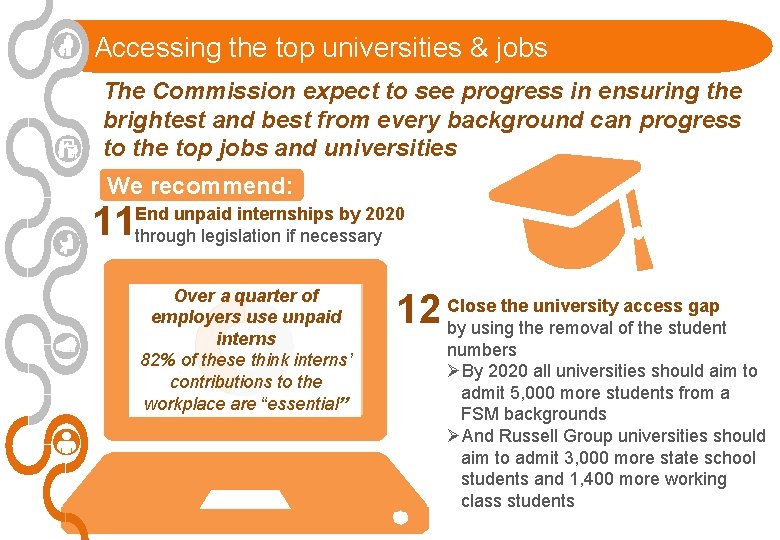
Accessing the top universities & jobs The Commission expect to see progress in ensuring the brightest and best from every background can progress to the top jobs and universities We recommend: unpaid internships by 2020 11 End through legislation if necessary Over a quarter of employers use unpaid interns 82% of these think interns’ contributions to the workplace are “essential” the university access gap 12 Close by using the removal of the student numbers ØBy 2020 all universities should aim to admit 5, 000 more students from a FSM backgrounds ØAnd Russell Group universities should aim to admit 3, 000 more state school students and 1, 400 more working class students
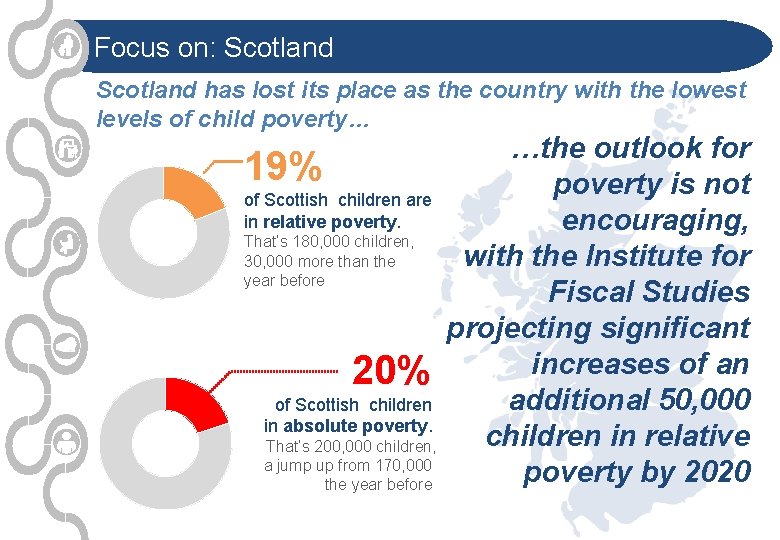
Focus on: Scotland has lost its place as the country with the lowest levels of child poverty… …the outlook for 19% poverty is not of Scottish children are in relative poverty. encouraging, That’s 180, 000 children, with the Institute for 30, 000 more than the year before Fiscal Studies projecting significant increases of an 20% additional 50, 000 of Scottish children in absolute poverty. children in relative That’s 200, 000 children, a jump up from 170, 000 poverty by 2020 the year before
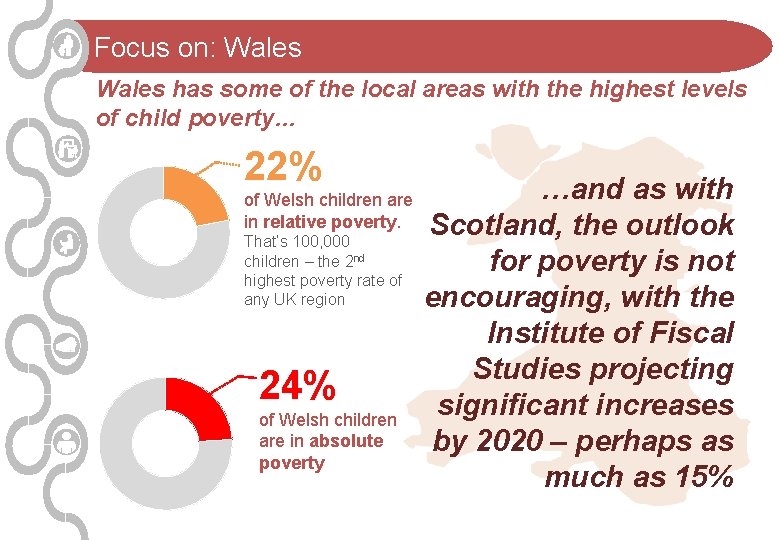
Focus on: Wales has some of the local areas with the highest levels of child poverty… 22% of Welsh children are in relative poverty. That’s 100, 000 children – the 2 nd highest poverty rate of any UK region 24% of Welsh children are in absolute poverty …and as with Scotland, the outlook for poverty is not encouraging, with the Institute of Fiscal Studies projecting significant increases by 2020 – perhaps as much as 15%
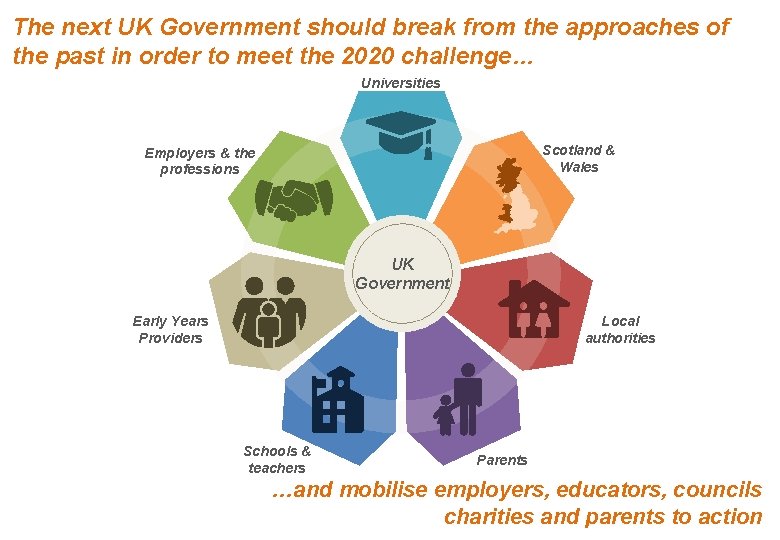
The next UK Government should break from the approaches of the past in order to meet the 2020 challenge… Universities Scotland & Wales Employers & the professions UK Government Early Years Providers Local authorities Schools & teachers Parents …and mobilise employers, educators, councils charities and parents to action

October 2014 contact@smcpcommission. gsi. gov. uk
- Slides: 33