
Social Media Marketing Management Marketing Theories 1002 SMMM

- Slides: 53
Social Media Marketing Management 社會媒體行銷管理 行銷理論 (Marketing Theories) 1002 SMMM 06 TLMXJ 1 A Tue 12, 13, 14 (19: 20 -22: 10) D 325 Min-Yuh Day 戴敏育 Assistant Professor 專任助理教授 Dept. of Information Management, Tamkang University 淡江大學 資訊管理學系 http: //mail. tku. edu. tw/myday/ 2013 -03 -26 1
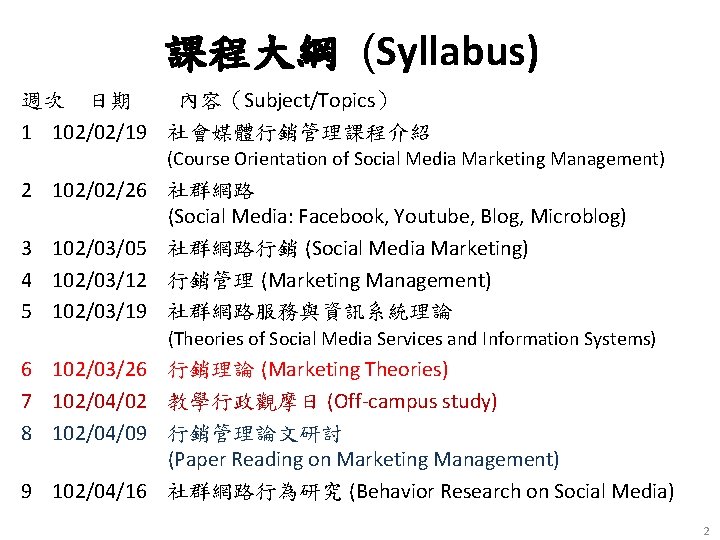
課程大綱 (Syllabus) 週次 日期 內容(Subject/Topics) 1 102/02/19 社會媒體行銷管理課程介紹 (Course Orientation of Social Media Marketing Management) 2 102/02/26 社群網路 (Social Media: Facebook, Youtube, Blog, Microblog) 3 102/03/05 社群網路行銷 (Social Media Marketing) 4 102/03/12 行銷管理 (Marketing Management) 5 102/03/19 社群網路服務與資訊系統理論 (Theories of Social Media Services and Information Systems) 6 102/03/26 行銷理論 (Marketing Theories) 7 102/04/02 教學行政觀摩日 (Off-campus study) 8 102/04/09 行銷管理論文研討 (Paper Reading on Marketing Management) 9 102/04/16 社群網路行為研究 (Behavior Research on Social Media) 2
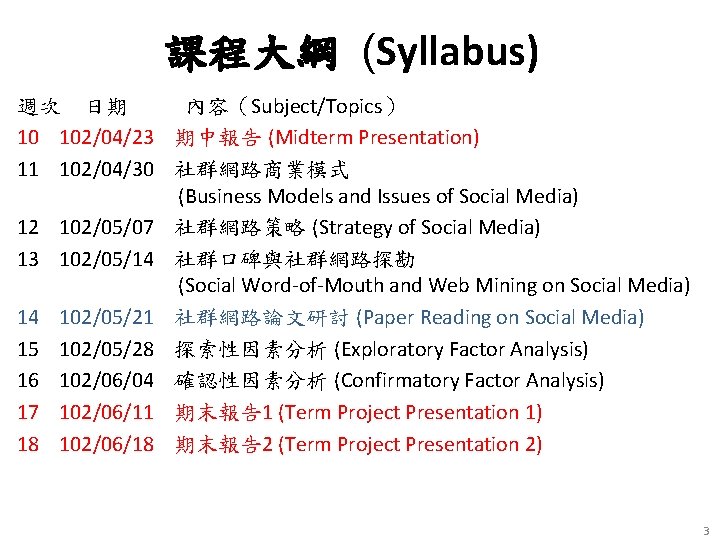
課程大綱 (Syllabus) 週次 日期 內容(Subject/Topics) 10 102/04/23 期中報告 (Midterm Presentation) 11 102/04/30 社群網路商業模式 (Business Models and Issues of Social Media) 12 102/05/07 社群網路策略 (Strategy of Social Media) 13 102/05/14 社群口碑與社群網路探勘 (Social Word-of-Mouth and Web Mining on Social Media) 14 102/05/21 社群網路論文研討 (Paper Reading on Social Media) 15 102/05/28 探索性因素分析 (Exploratory Factor Analysis) 16 102/06/04 確認性因素分析 (Confirmatory Factor Analysis) 17 102/06/11 期末報告1 (Term Project Presentation 1) 18 102/06/18 期末報告2 (Term Project Presentation 2) 3
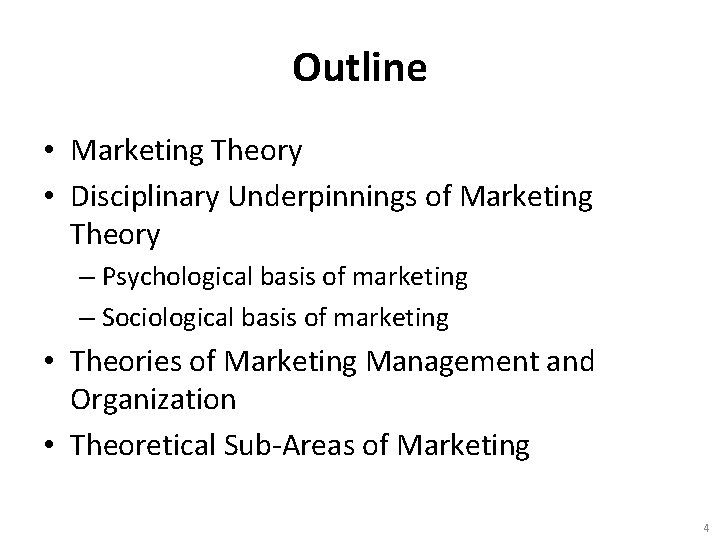
Outline • Marketing Theory • Disciplinary Underpinnings of Marketing Theory – Psychological basis of marketing – Sociological basis of marketing • Theories of Marketing Management and Organization • Theoretical Sub-Areas of Marketing 4
Nothing is so practical as a good theory Source: Backer & Saren (2009), Marketing Theory: A Student Text, 2 nd Edition, Sage 5
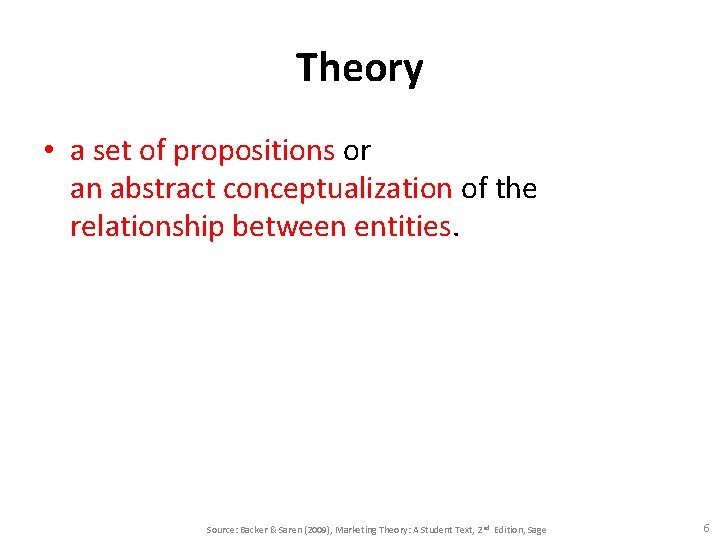
Theory • a set of propositions or an abstract conceptualization of the relationship between entities. Source: Backer & Saren (2009), Marketing Theory: A Student Text, 2 nd Edition, Sage 6
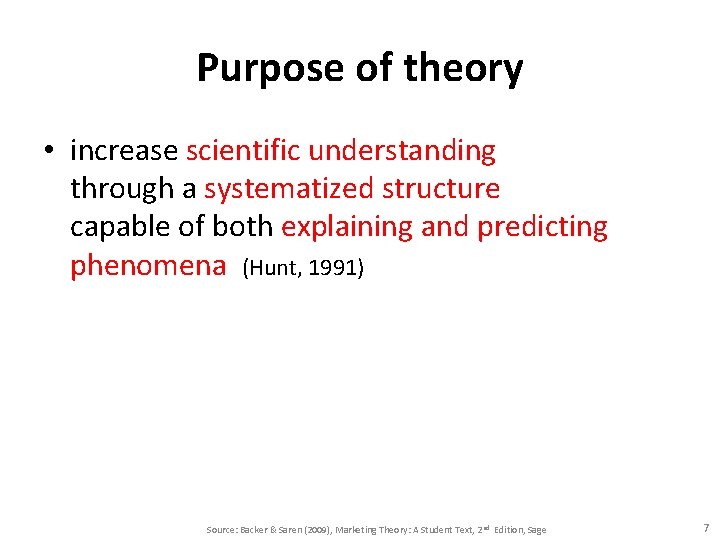
Purpose of theory • increase scientific understanding through a systematized structure capable of both explaining and predicting phenomena (Hunt, 1991) Source: Backer & Saren (2009), Marketing Theory: A Student Text, 2 nd Edition, Sage 7
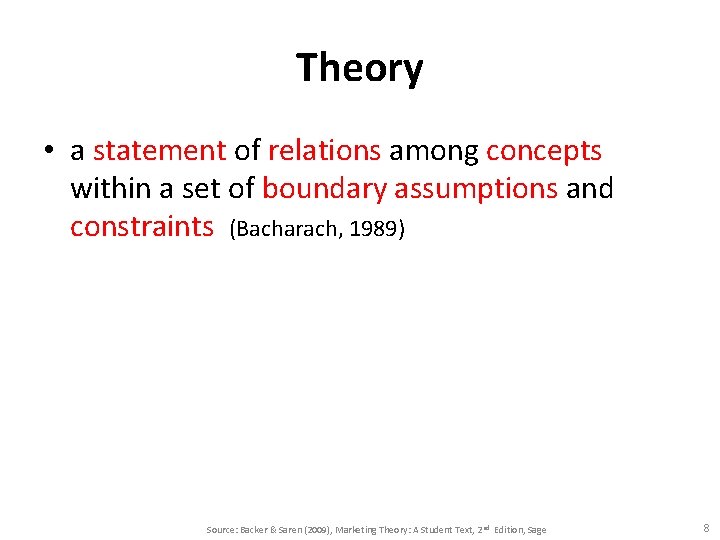
Theory • a statement of relations among concepts within a set of boundary assumptions and constraints (Bacharach, 1989) Source: Backer & Saren (2009), Marketing Theory: A Student Text, 2 nd Edition, Sage 8
Marketing Exchange and economic growth Source: Backer & Saren (2009), Marketing Theory: A Student Text, 2 nd Edition, Sage 9
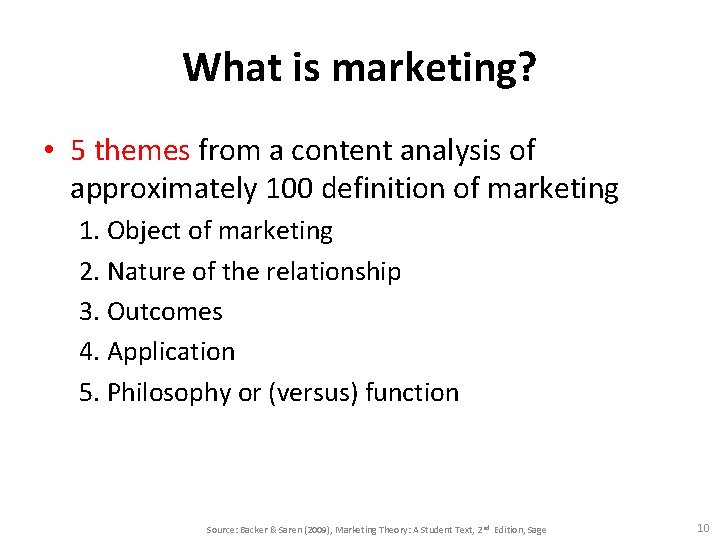
What is marketing? • 5 themes from a content analysis of approximately 100 definition of marketing 1. Object of marketing 2. Nature of the relationship 3. Outcomes 4. Application 5. Philosophy or (versus) function Source: Backer & Saren (2009), Marketing Theory: A Student Text, 2 nd Edition, Sage 10
Marketing Identifying and meeting human and social needs Source: Kotler and Keller (2011) 11
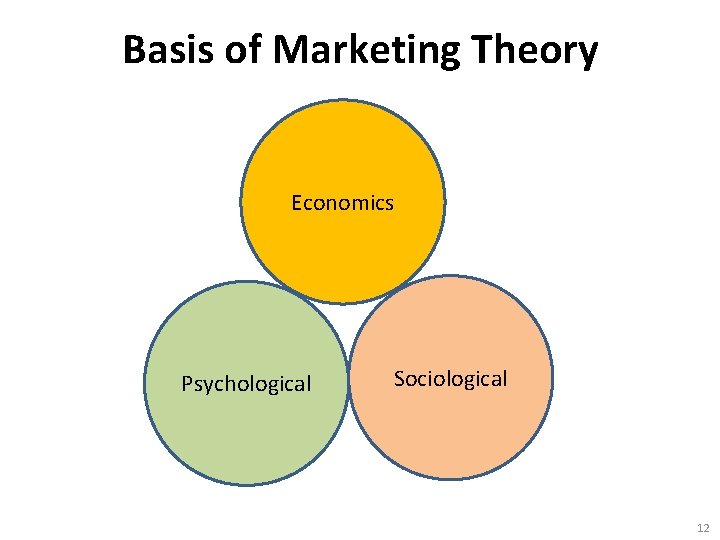
Basis of Marketing Theory Economics Psychological Sociological 12
Disciplinary Underpinnings of Marketing Theory • • The economics basis of marketing The psychological basis of marketing The sociological basis of marketing Cultural aspects of marketing Source: Backer & Saren (2009), Marketing Theory: A Student Text, 2 nd Edition, Sage 13
Psychological foundations of marketing • • • Motivation Perception Decision making Attitudes Persuasion Source: Backer & Saren (2009), Marketing Theory: A Student Text, 2 nd Edition, Sage 14
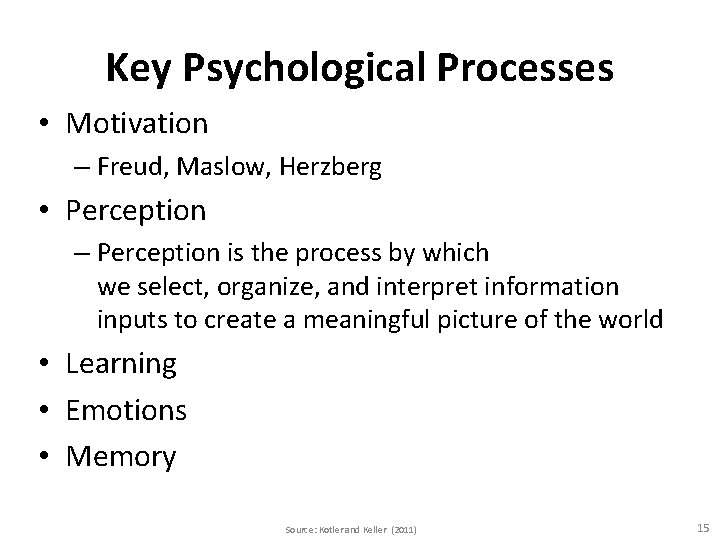
Key Psychological Processes • Motivation – Freud, Maslow, Herzberg • Perception – Perception is the process by which we select, organize, and interpret information inputs to create a meaningful picture of the world • Learning • Emotions • Memory Source: Kotler and Keller (2011) 15
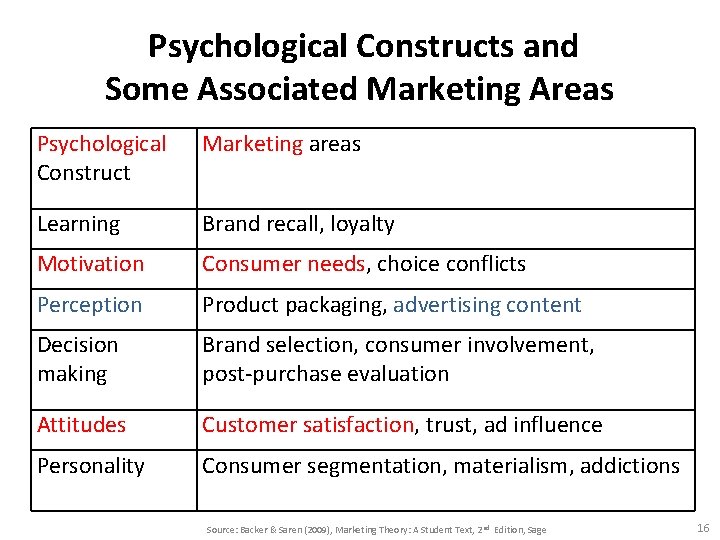
Psychological Constructs and Some Associated Marketing Areas Psychological Construct Marketing areas Learning Brand recall, loyalty Motivation Consumer needs, choice conflicts Perception Product packaging, advertising content Decision making Brand selection, consumer involvement, post-purchase evaluation Attitudes Customer satisfaction, trust, ad influence Personality Consumer segmentation, materialism, addictions Source: Backer & Saren (2009), Marketing Theory: A Student Text, 2 nd Edition, Sage 16
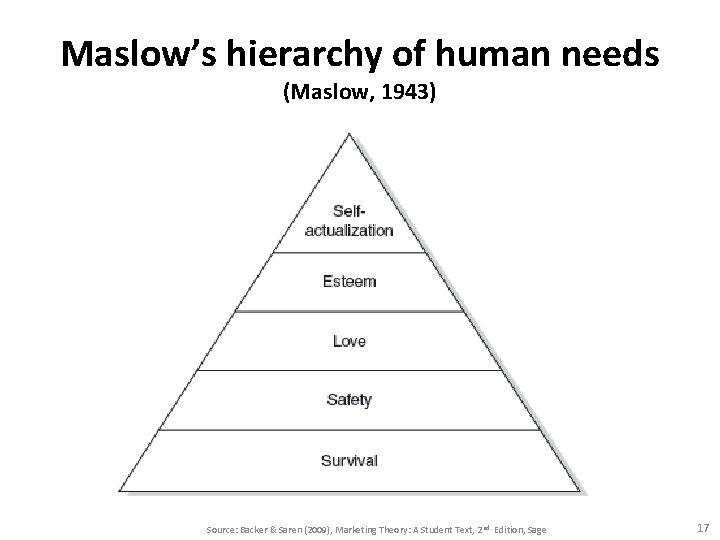
Maslow’s hierarchy of human needs (Maslow, 1943) Source: Backer & Saren (2009), Marketing Theory: A Student Text, 2 nd Edition, Sage 17
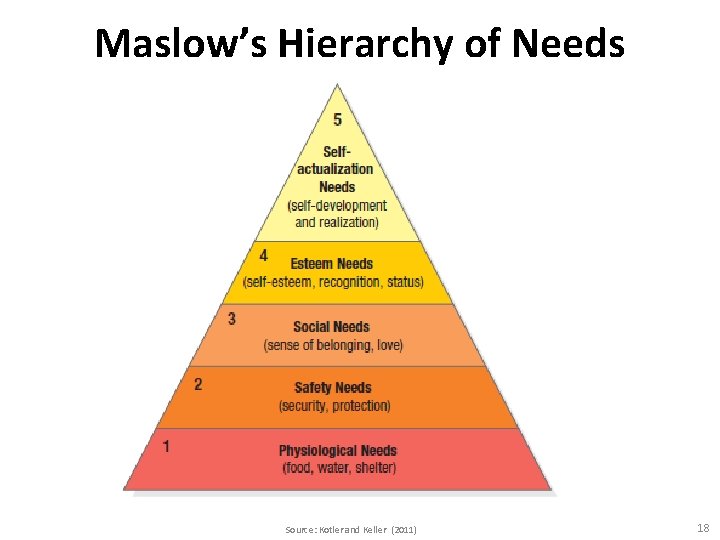
Maslow’s Hierarchy of Needs Source: Kotler and Keller (2011) 18
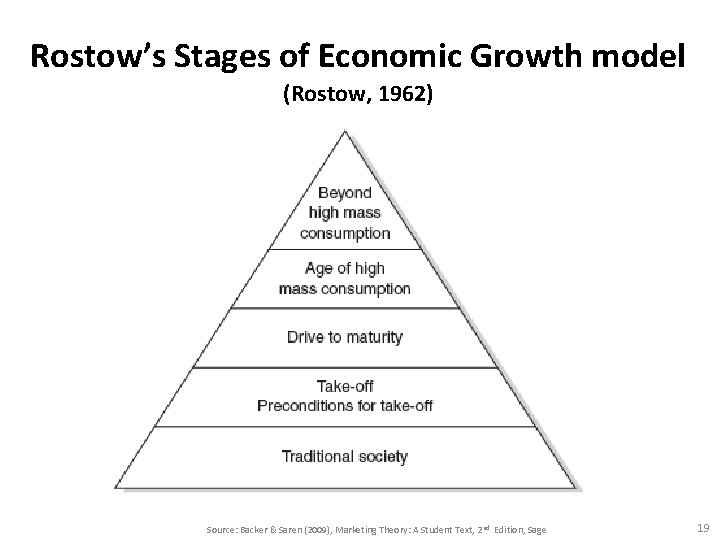
Rostow’s Stages of Economic Growth model (Rostow, 1962) Source: Backer & Saren (2009), Marketing Theory: A Student Text, 2 nd Edition, Sage 19
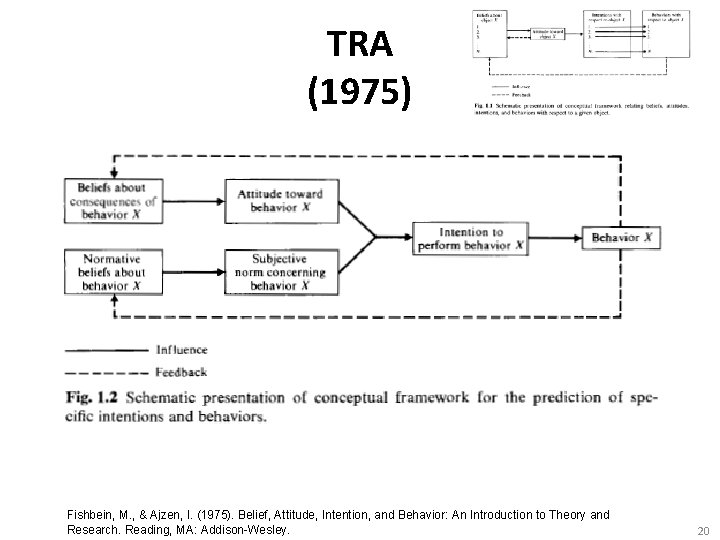
TRA (1975) Fishbein, M. , & Ajzen, I. (1975). Belief, Attitude, Intention, and Behavior: An Introduction to Theory and Research. Reading, MA: Addison-Wesley. 20
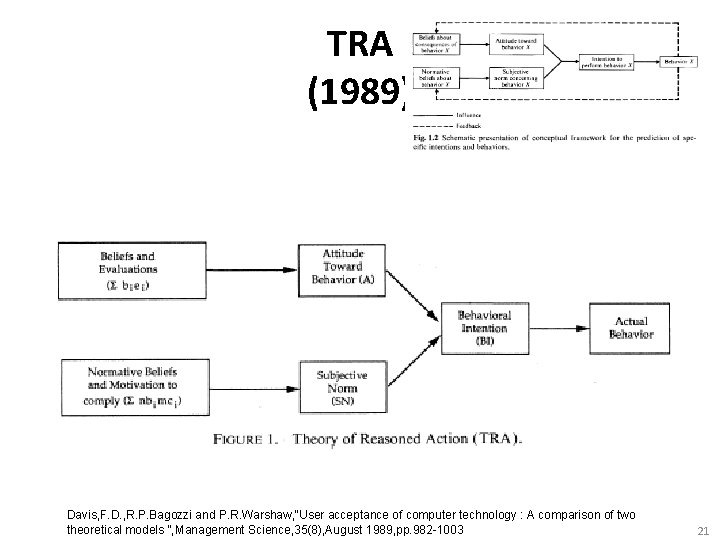
TRA (1989) Davis, F. D. , R. P. Bagozzi and P. R. Warshaw, “User acceptance of computer technology : A comparison of two theoretical models ”, Management Science, 35(8), August 1989, pp. 982 -1003 21
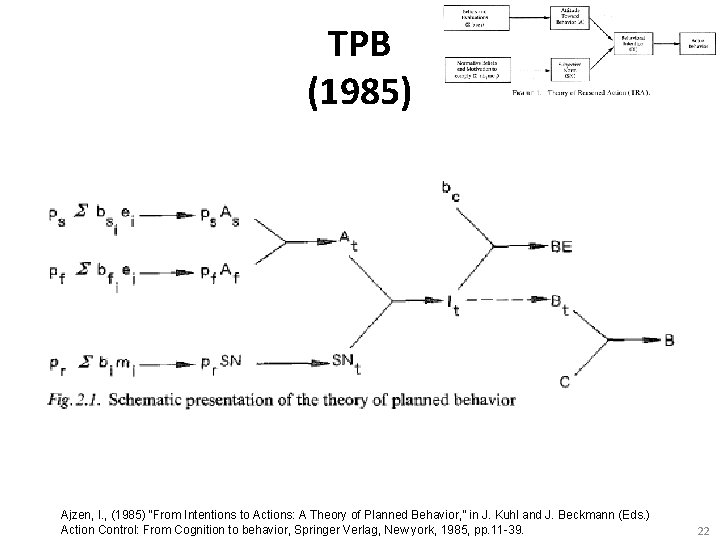
TPB (1985) Ajzen, I. , (1985) “From Intentions to Actions: A Theory of Planned Behavior, ” in J. Kuhl and J. Beckmann (Eds. ) Action Control: From Cognition to behavior, Springer Verlag, New york, 1985, pp. 11 -39. 22
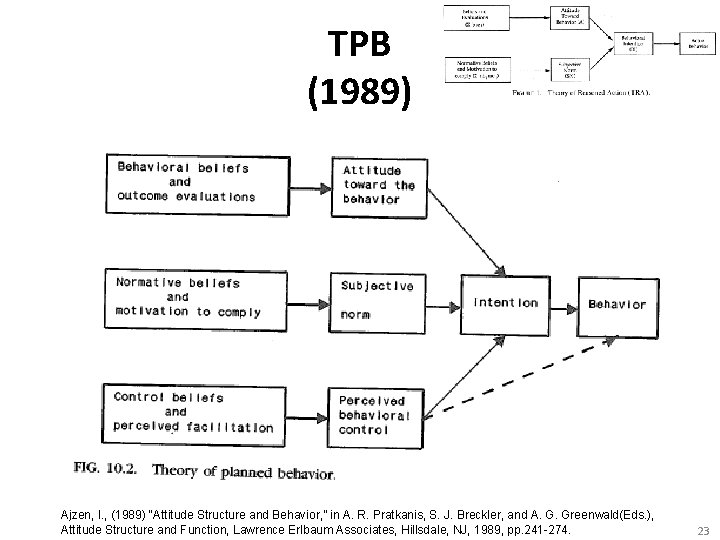
TPB (1989) Ajzen, I. , (1989) “Attitude Structure and Behavior, ” in A. R. Pratkanis, S. J. Breckler, and A. G. Greenwald(Eds. ), Attitude Structure and Function, Lawrence Erlbaum Associates, Hillsdale, NJ, 1989, pp. 241 -274. 23
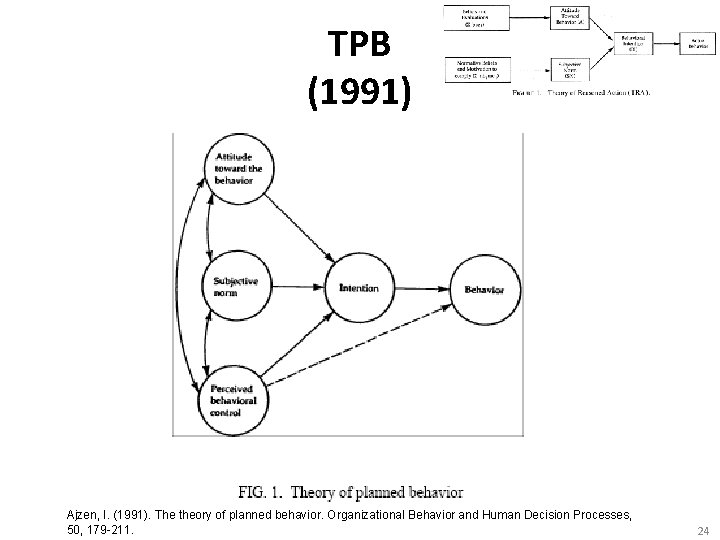
TPB (1991) Ajzen, I. (1991). The theory of planned behavior. Organizational Behavior and Human Decision Processes, 50, 179 -211. 24
Motivation • both physiological needs (e. g. hunger, thirst, pain avoidance, security, maintenance of body temperature) and psychogenic needs (e. g. achievement, affiliation, status, approval, power) motivate consumer behaviour Source: Backer & Saren (2009), Marketing Theory: A Student Text, 2 nd Edition, Sage 25
Motivation and Psychological Needs • the waste of money and/or resources by people to display a higher status than others’ is clearly linked to the psychological egorelated needs for status, approval and selfconfidence, although it may be influenced in part by extrinsic factors, such as social norms and cultural values Source: Backer & Saren (2009), Marketing Theory: A Student Text, 2 nd Edition, Sage 26
Perception • • Selective attention Selective distortion Selective retention Subliminal perception Source: Kotler and Keller (2011) 27
Sociology and Marketing • marketing (science) is the behavioural science which seeks to explain exchange relationships Source: Backer & Saren (2009), Marketing Theory: A Student Text, 2 nd Edition, Sage 28
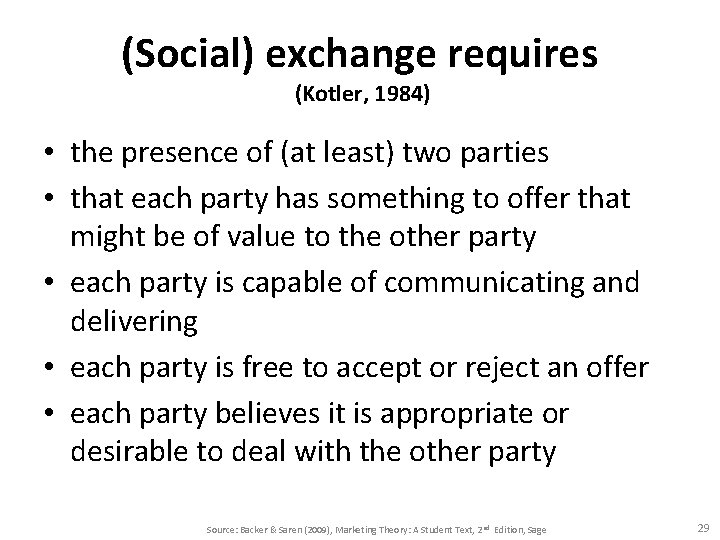
(Social) exchange requires (Kotler, 1984) • the presence of (at least) two parties • that each party has something to offer that might be of value to the other party • each party is capable of communicating and delivering • each party is free to accept or reject an offer • each party believes it is appropriate or desirable to deal with the other party Source: Backer & Saren (2009), Marketing Theory: A Student Text, 2 nd Edition, Sage 29
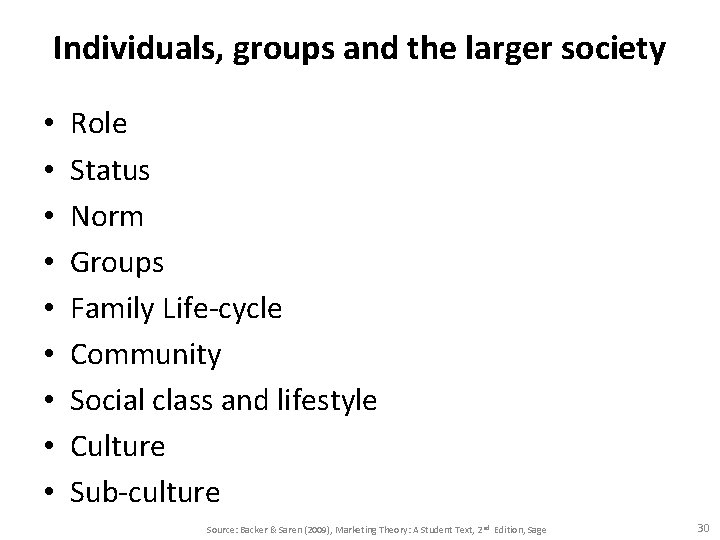
Individuals, groups and the larger society • • • Role Status Norm Groups Family Life-cycle Community Social class and lifestyle Culture Sub-culture Source: Backer & Saren (2009), Marketing Theory: A Student Text, 2 nd Edition, Sage 30
Relationship, power, and conflict • • Relationships Network Conflict and cooperation Power Source: Backer & Saren (2009), Marketing Theory: A Student Text, 2 nd Edition, Sage 31
Learning and change • Socialization • Social change Source: Backer & Saren (2009), Marketing Theory: A Student Text, 2 nd Edition, Sage 32
Theories of Marketing Management and Organization • The Marketing mix • Marketing strategy • Target segment strategy Source: Backer & Saren (2009), Marketing Theory: A Student Text, 2 nd Edition, Sage 33
The Four P Components of the Marketing Mix Source: Kotler and Keller (2011) 34
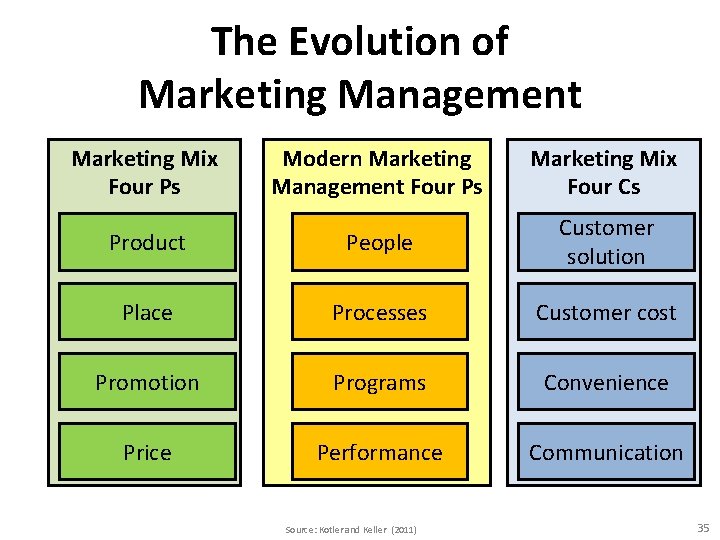
The Evolution of Marketing Management Marketing Mix Four Ps Modern Marketing Management Four Ps Marketing Mix Four Cs Product People Customer solution Place Processes Customer cost Promotion Programs Convenience Price Performance Communication Source: Kotler and Keller (2011) 35
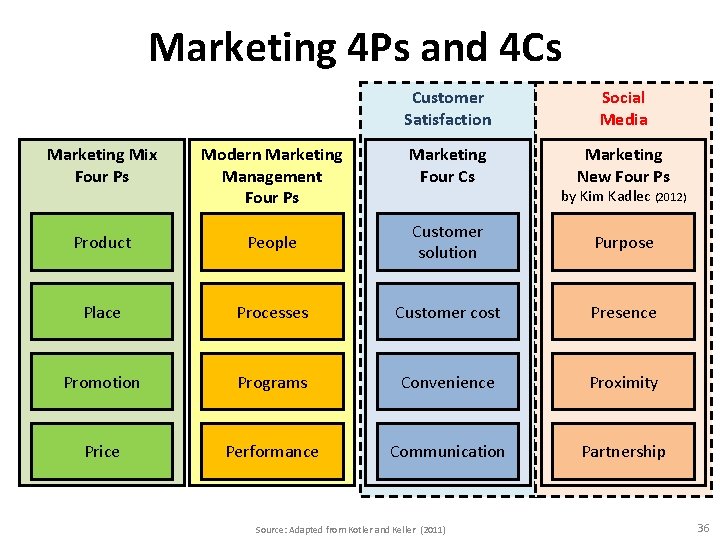
Marketing 4 Ps and 4 Cs Customer Satisfaction Social Media Marketing Four Cs Marketing New Four Ps Marketing Mix Four Ps Modern Marketing Management Four Ps Product People Customer solution Purpose Place Processes Customer cost Presence Promotion Programs Convenience Proximity Price Performance Communication Partnership Source: Adapted from Kotler and Keller (2011) by Kim Kadlec (2012) 36
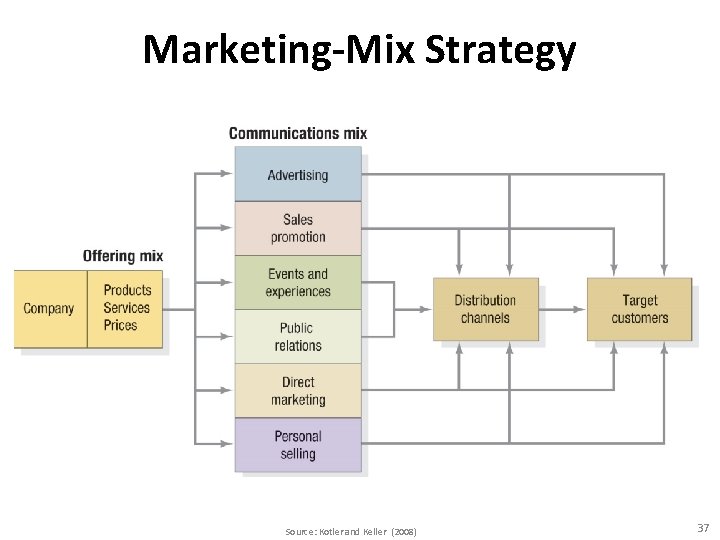
Marketing-Mix Strategy Source: Kotler and Keller (2008) 37
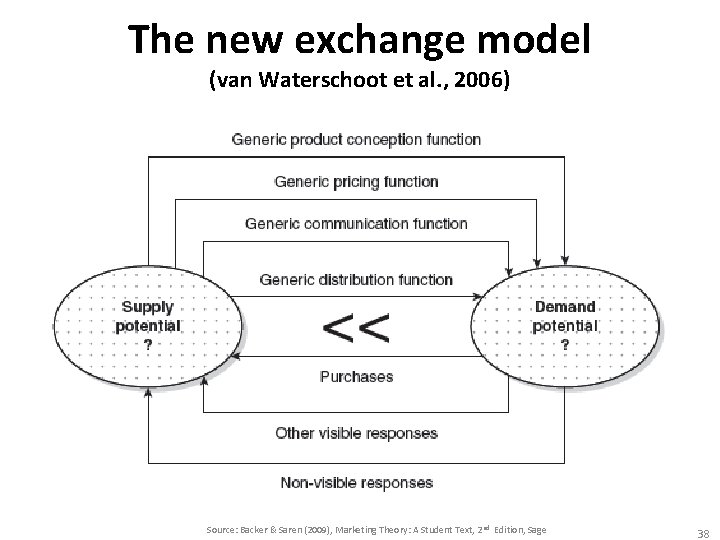
The new exchange model (van Waterschoot et al. , 2006) Source: Backer & Saren (2009), Marketing Theory: A Student Text, 2 nd Edition, Sage 38
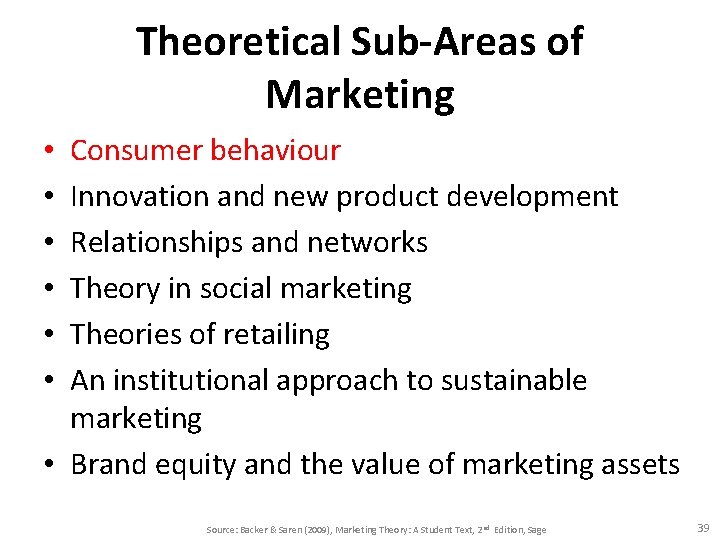
Theoretical Sub-Areas of Marketing Consumer behaviour Innovation and new product development Relationships and networks Theory in social marketing Theories of retailing An institutional approach to sustainable marketing • Brand equity and the value of marketing assets • • • Source: Backer & Saren (2009), Marketing Theory: A Student Text, 2 nd Edition, Sage 39
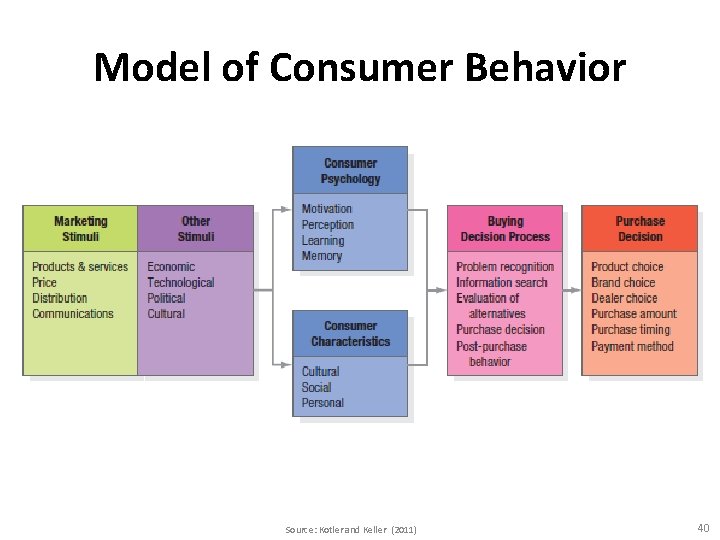
Model of Consumer Behavior Source: Kotler and Keller (2011) 40
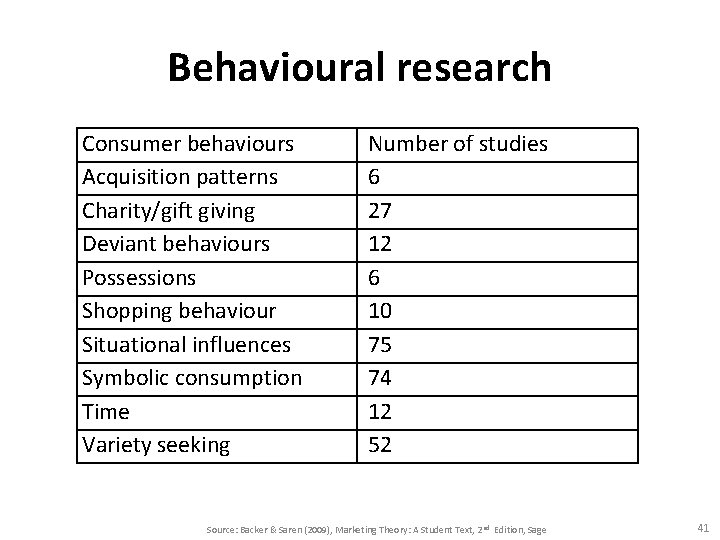
Behavioural research Consumer behaviours Acquisition patterns Charity/gift giving Deviant behaviours Possessions Shopping behaviour Situational influences Symbolic consumption Time Variety seeking Number of studies 6 27 12 6 10 75 74 12 52 Source: Backer & Saren (2009), Marketing Theory: A Student Text, 2 nd Edition, Sage 41
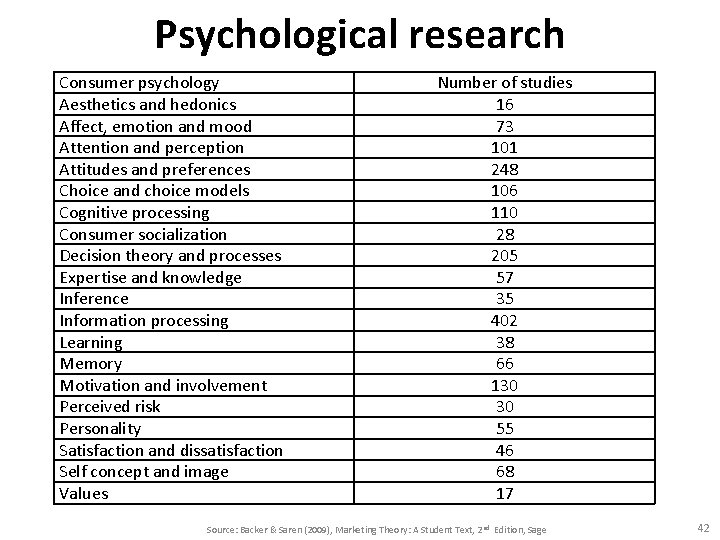
Psychological research Consumer psychology Aesthetics and hedonics Affect, emotion and mood Attention and perception Attitudes and preferences Choice and choice models Cognitive processing Consumer socialization Decision theory and processes Expertise and knowledge Inference Information processing Learning Memory Motivation and involvement Perceived risk Personality Satisfaction and dissatisfaction Self concept and image Values Number of studies 16 73 101 248 106 110 28 205 57 35 402 38 66 130 30 55 46 68 17 Source: Backer & Saren (2009), Marketing Theory: A Student Text, 2 nd Edition, Sage 42
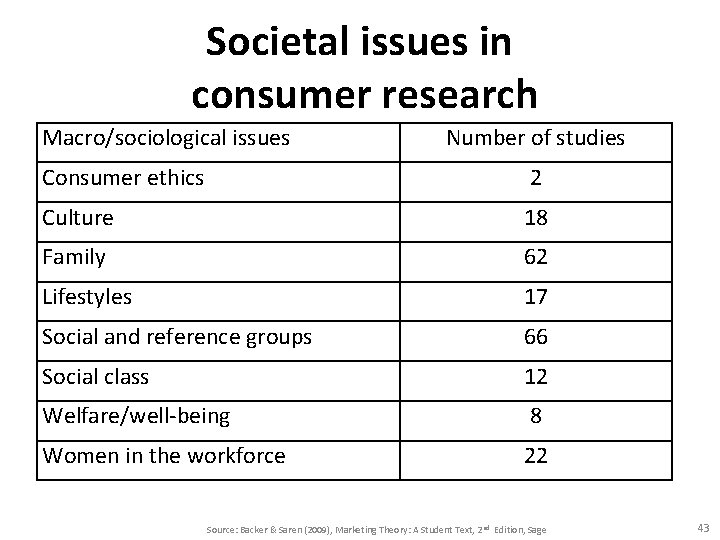
Societal issues in consumer research Macro/sociological issues Number of studies Consumer ethics 2 Culture 18 Family 62 Lifestyles 17 Social and reference groups 66 Social class 12 Welfare/well-being 8 Women in the workforce 22 Source: Backer & Saren (2009), Marketing Theory: A Student Text, 2 nd Edition, Sage 43
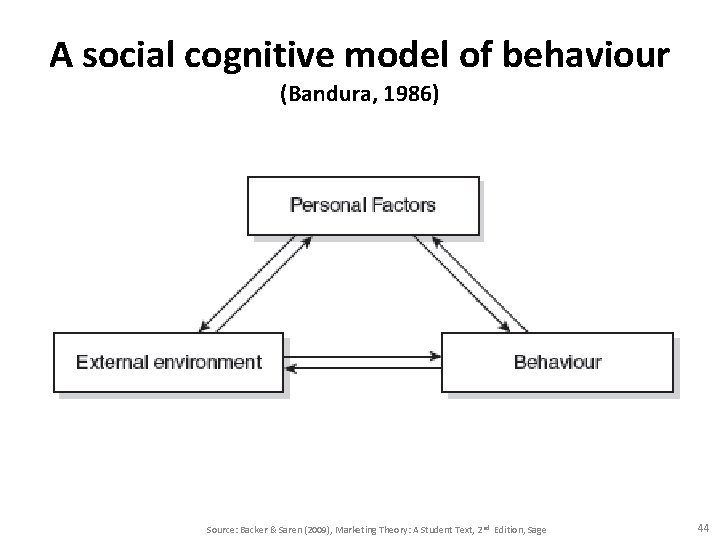
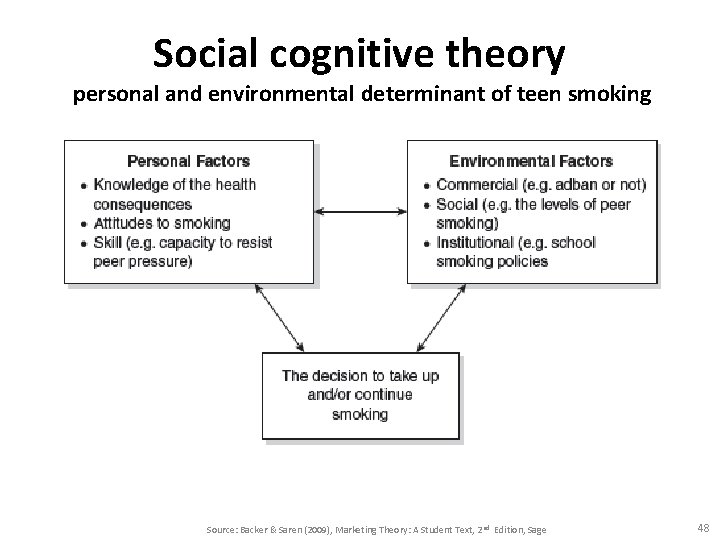
A social cognitive model of behaviour (Bandura, 1986) Source: Backer & Saren (2009), Marketing Theory: A Student Text, 2 nd Edition, Sage 44
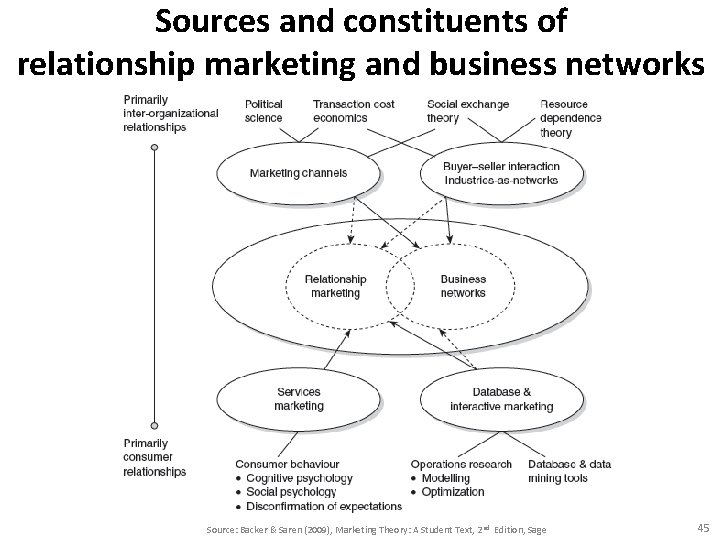
Sources and constituents of relationship marketing and business networks Source: Backer & Saren (2009), Marketing Theory: A Student Text, 2 nd Edition, Sage 45
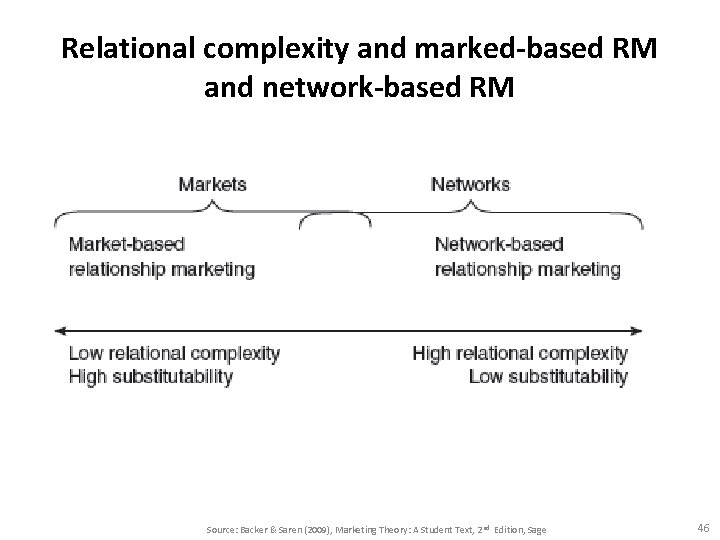
Relational complexity and marked-based RM and network-based RM Source: Backer & Saren (2009), Marketing Theory: A Student Text, 2 nd Edition, Sage 46
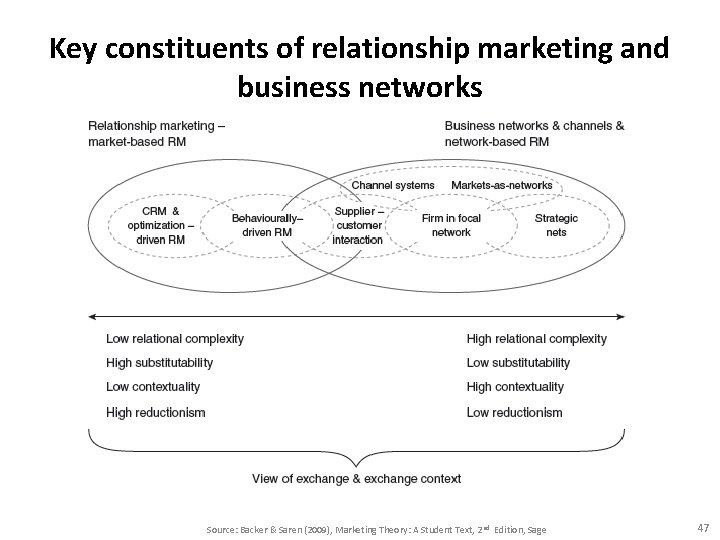
Key constituents of relationship marketing and business networks Source: Backer & Saren (2009), Marketing Theory: A Student Text, 2 nd Edition, Sage 47
Social cognitive theory personal and environmental determinant of teen smoking Source: Backer & Saren (2009), Marketing Theory: A Student Text, 2 nd Edition, Sage 48
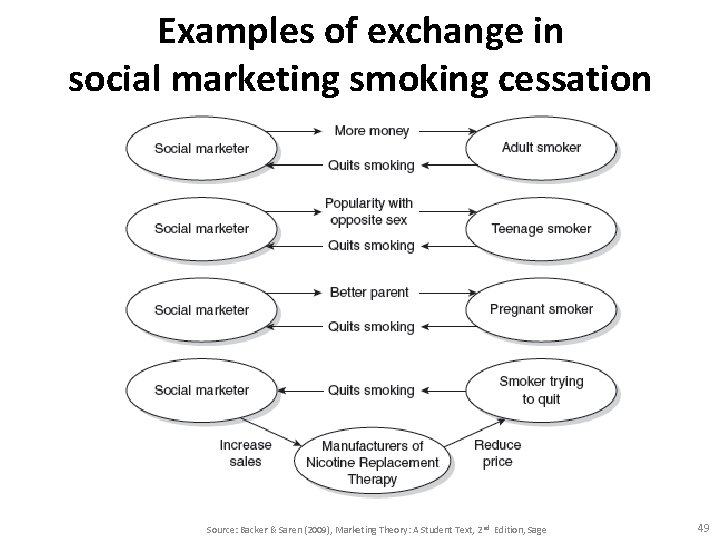
Examples of exchange in social marketing smoking cessation Source: Backer & Saren (2009), Marketing Theory: A Student Text, 2 nd Edition, Sage 49
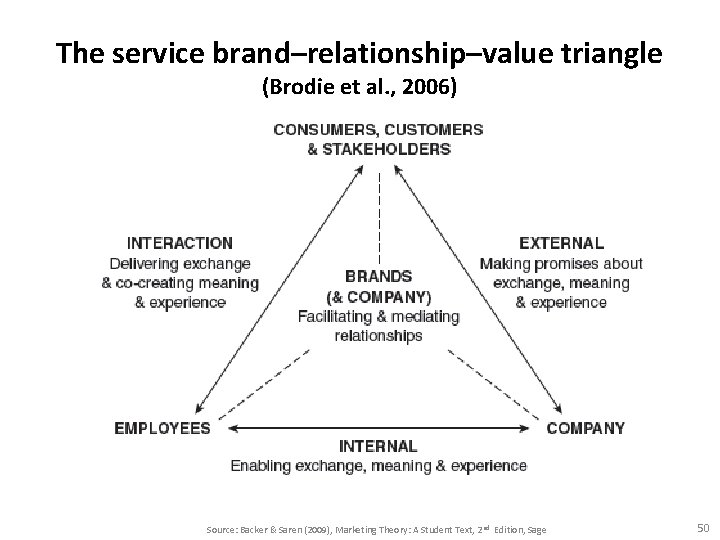
The service brand–relationship–value triangle (Brodie et al. , 2006) Source: Backer & Saren (2009), Marketing Theory: A Student Text, 2 nd Edition, Sage 50
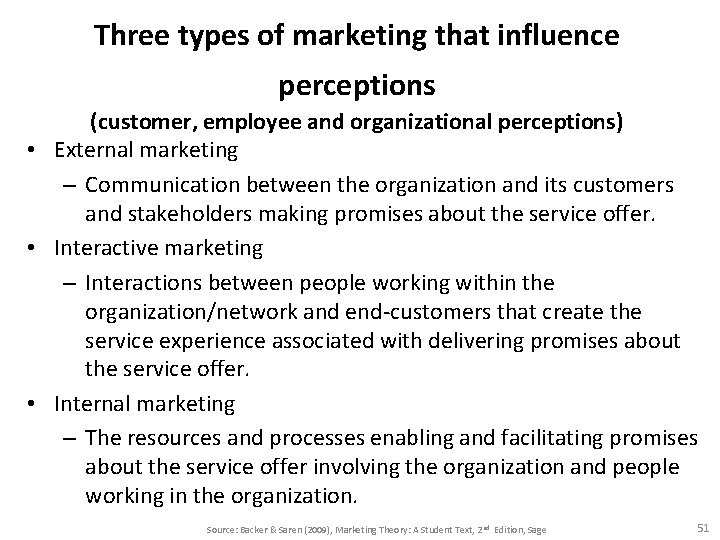
Three types of marketing that influence perceptions (customer, employee and organizational perceptions) • External marketing – Communication between the organization and its customers and stakeholders making promises about the service offer. • Interactive marketing – Interactions between people working within the organization/network and end-customers that create the service experience associated with delivering promises about the service offer. • Internal marketing – The resources and processes enabling and facilitating promises about the service offer involving the organization and people working in the organization. Source: Backer & Saren (2009), Marketing Theory: A Student Text, 2 nd Edition, Sage 51
Summary • Marketing Theory • Disciplinary Underpinnings of Marketing Theory – Psychological basis of marketing – Sociological basis of marketing • Theories of Marketing Management and Organization • Theoretical Sub-Areas of Marketing 52
References • Michael Baker and Michael Saren, Marketing Theory: A Student Text, 2 nd Edition, Sage, 2009 • Philip Kotler and Kevin Keller, Marketing Management, 14 th Edition, Prentice Hall, 2011 53