
SOCIAL INEQUALITIES Gender and Other Forms Refresher Stereotype



- Slides: 21
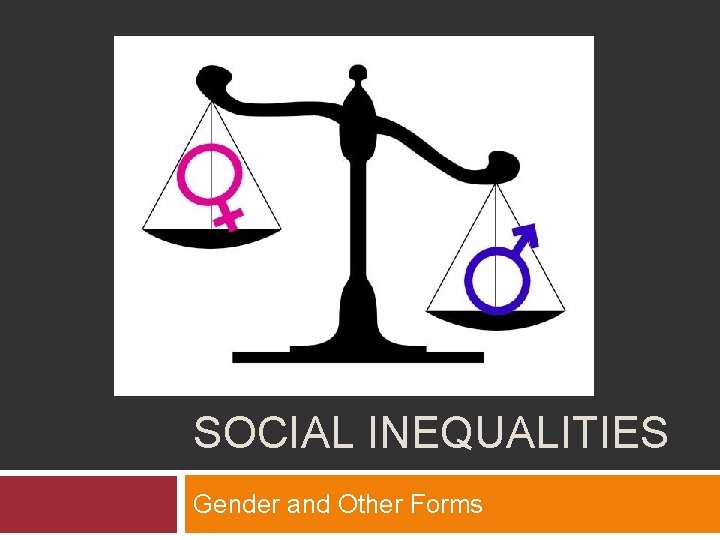
SOCIAL INEQUALITIES Gender and Other Forms
Refresher… Stereotype - beliefs about attributes that are thought to be characteristic of members of particular groups � BELIEF Prejudice - a negative attitude or affective response toward a certain group and its individual members � BELIEF Discrimination - unfair treatment of members of a particular group based on their membership in that group � ACTION
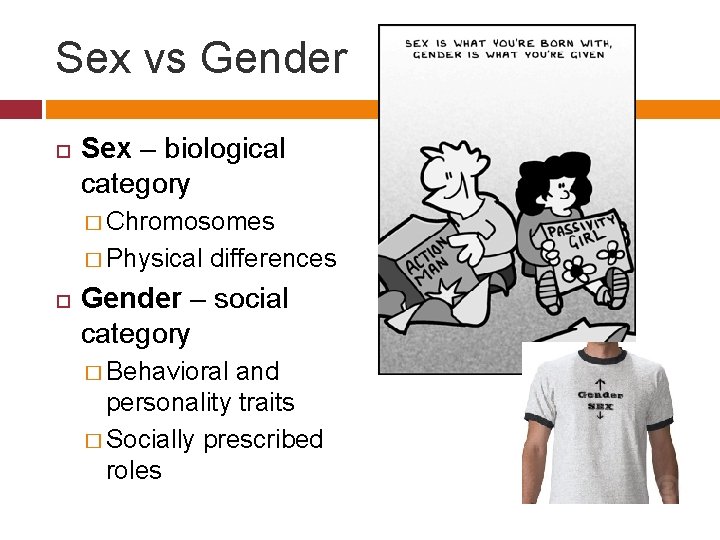
Sex vs Gender Sex – biological category � Chromosomes � Physical differences Gender – social category � Behavioral and personality traits � Socially prescribed roles
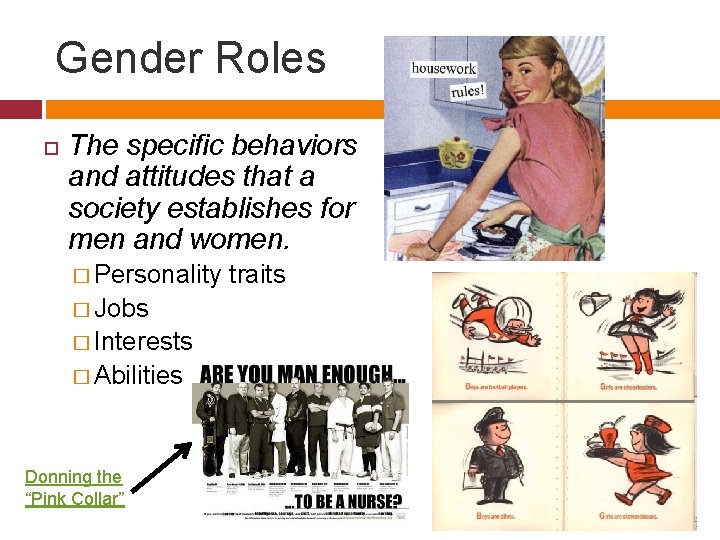
Gender Roles The specific behaviors and attitudes that a society establishes for men and women. � Personality � Jobs � Interests � Abilities Donning the “Pink Collar” traits
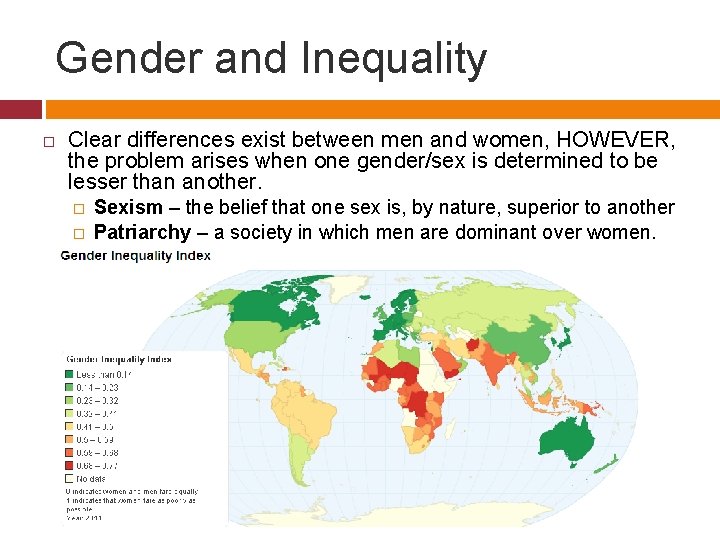
Gender and Inequality Clear differences exist between men and women, HOWEVER, the problem arises when one gender/sex is determined to be lesser than another. � � Sexism – the belief that one sex is, by nature, superior to another Patriarchy – a society in which men are dominant over women.
Gender and Inequality Functionali st Conflict Symbolic Interactioni st • Gender roles are appropriate for certain sexes • Societies are more stable when certain tasks are fulfilled by the appropriate sex • Men have historically had access to most of society’s material resources and privileges • It is in the men’s interest to maintain their dominant position • Gender is socially constructed and reinforced/maintained through language, behaviors, and interactions between people.
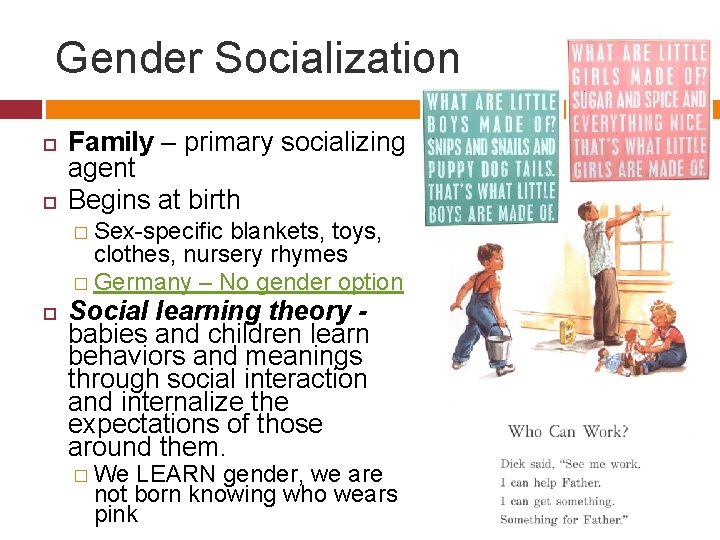
Gender Socialization Family – primary socializing agent Begins at birth � Sex-specific blankets, toys, clothes, nursery rhymes � Germany – No gender option Social learning theory babies and children learn behaviors and meanings through social interaction and internalize the expectations of those around them. � We LEARN gender, we are not born knowing who wears pink
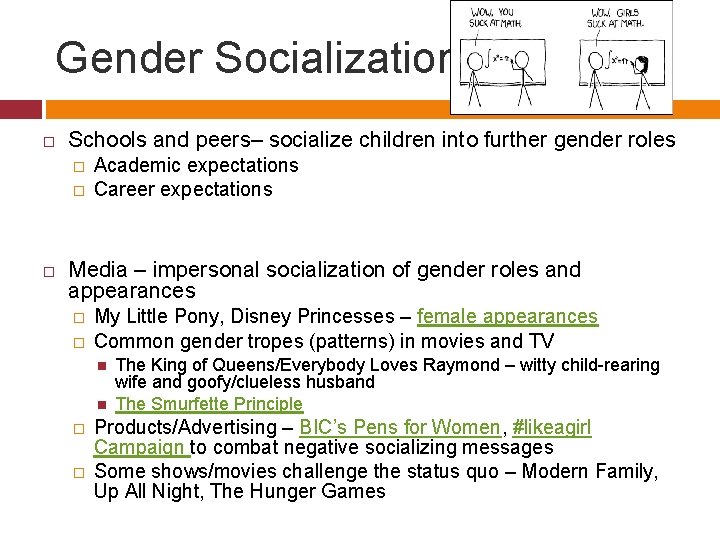
Gender Socialization Schools and peers– socialize children into further gender roles � � Academic expectations Career expectations Media – impersonal socialization of gender roles and appearances � � My Little Pony, Disney Princesses – female appearances Common gender tropes (patterns) in movies and TV � � The King of Queens/Everybody Loves Raymond – witty child-rearing wife and goofy/clueless husband The Smurfette Principle Products/Advertising – BIC’s Pens for Women, #likeagirl Campaign to combat negative socializing messages Some shows/movies challenge the status quo – Modern Family, Up All Night, The Hunger Games
Gender Inequality in Education 50% of college educated population = women; however, degrees differ affects income � � Men – engineering, physical science, architecture Women – education, the humanities, library science Women are more likely to pursue a graduate degree, while men are more likely to pursue a doctoral degree. In less industrialized countries, girls receive fewer educational opportunities than boys. Malala Yousafzai – assassination attempt by Taliban in 2012 for speaking out about education/gender inequalities
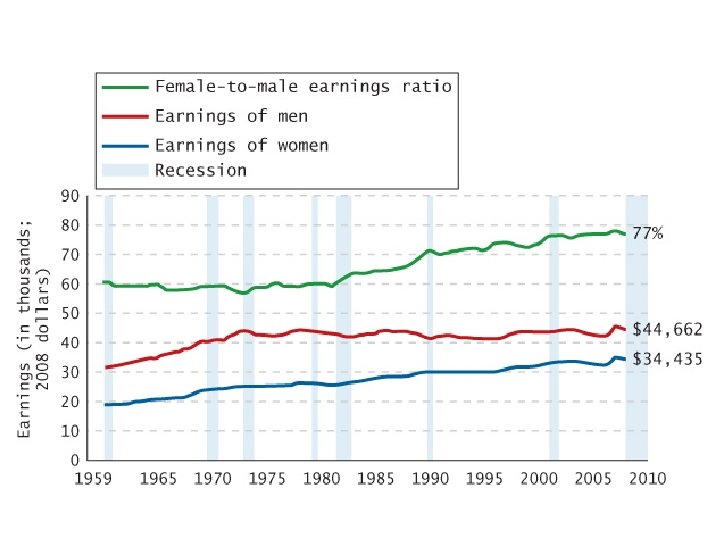
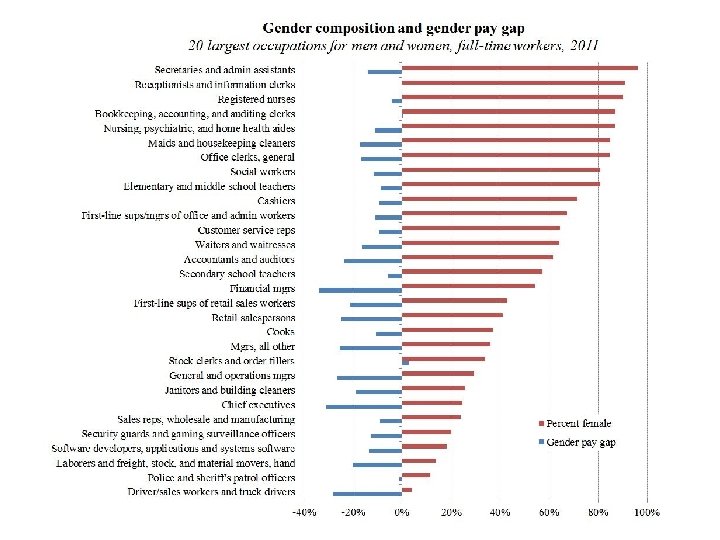
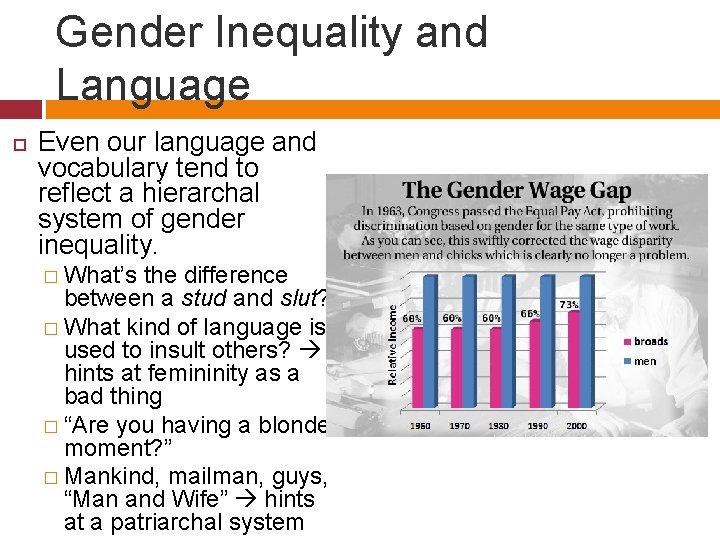
Gender Inequality in the Workplace Wage gap – the average difference between men’s and women’s hourly earnings � 2010 – women received 77 cents to the men’s dollar MANY reasons, not all discrimination though
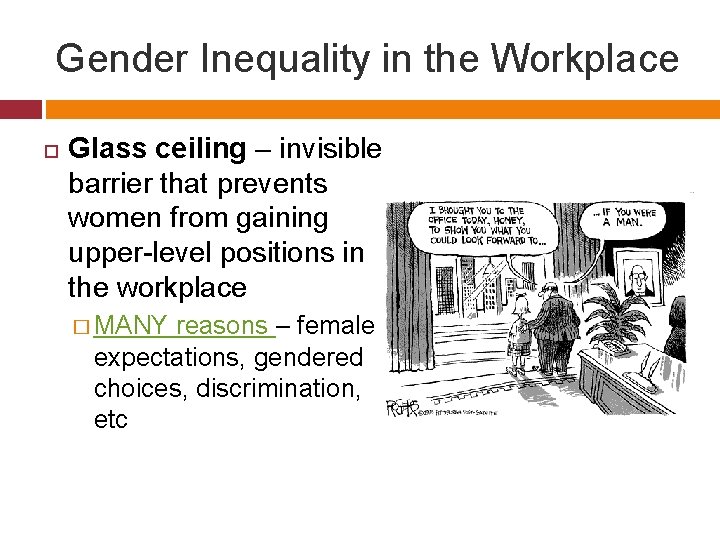
Gender Inequality in the Workplace Glass ceiling – invisible barrier that prevents women from gaining upper-level positions in the workplace � MANY reasons – female expectations, gendered choices, discrimination, etc
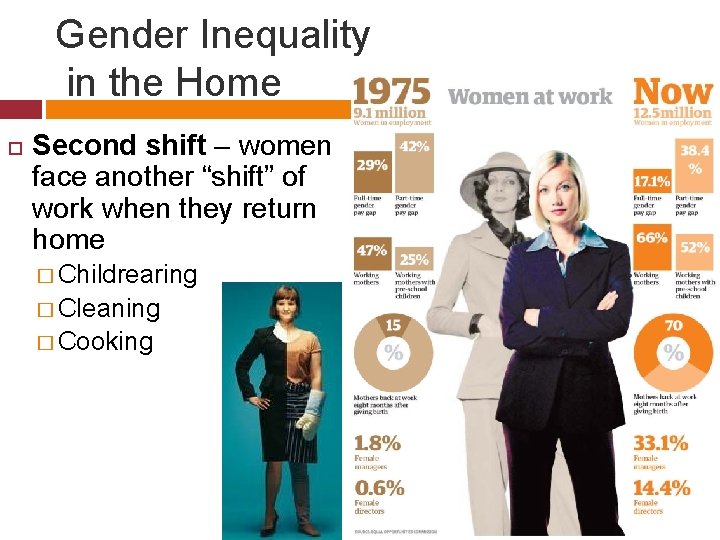
Gender Inequality in the Home Second shift – women face another “shift” of work when they return home � Childrearing � Cleaning � Cooking
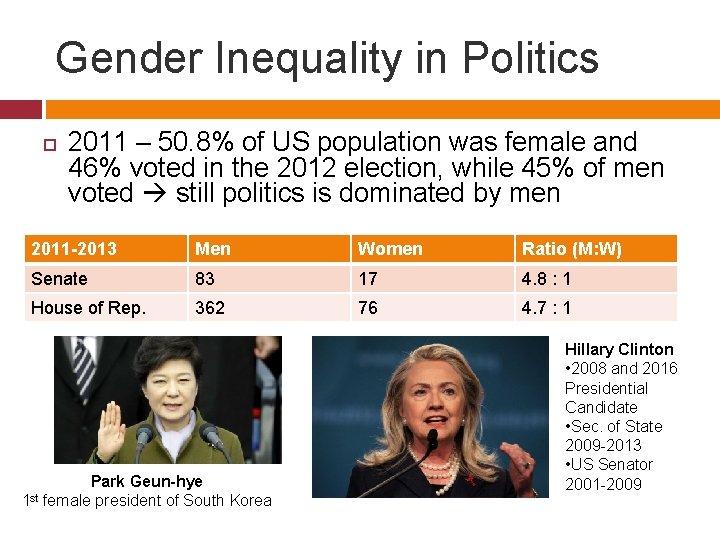
Gender Inequality in Politics 2011 – 50. 8% of US population was female and 46% voted in the 2012 election, while 45% of men voted still politics is dominated by men 2011 -2013 Men Women Ratio (M: W) Senate 83 17 4. 8 : 1 House of Rep. 362 76 4. 7 : 1 Park Geun-hye 1 st female president of South Korea Hillary Clinton • 2008 and 2016 Presidential Candidate • Sec. of State 2009 -2013 • US Senator 2001 -2009
Gender Inequality and Language Even our language and vocabulary tend to reflect a hierarchal system of gender inequality. � What’s the difference between a stud and slut? � What kind of language is used to insult others? hints at femininity as a bad thing � “Are you having a blonde moment? ” � Mankind, mailman, guys, “Man and Wife” hints at a patriarchal system
Other Types of Inequalities
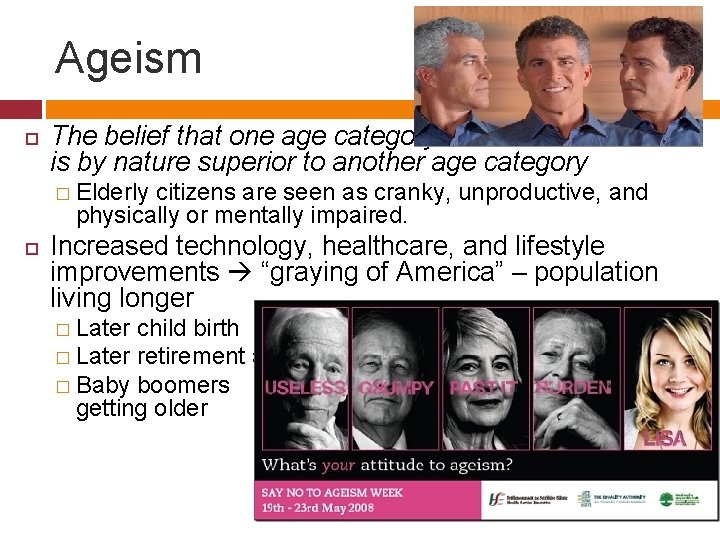
Ageism The belief that one age category is by nature superior to another age category � Elderly citizens are seen as cranky, unproductive, and physically or mentally impaired. Increased technology, healthcare, and lifestyle improvements “graying of America” – population living longer � Later child birth � Later retirement age � Baby boomers getting older
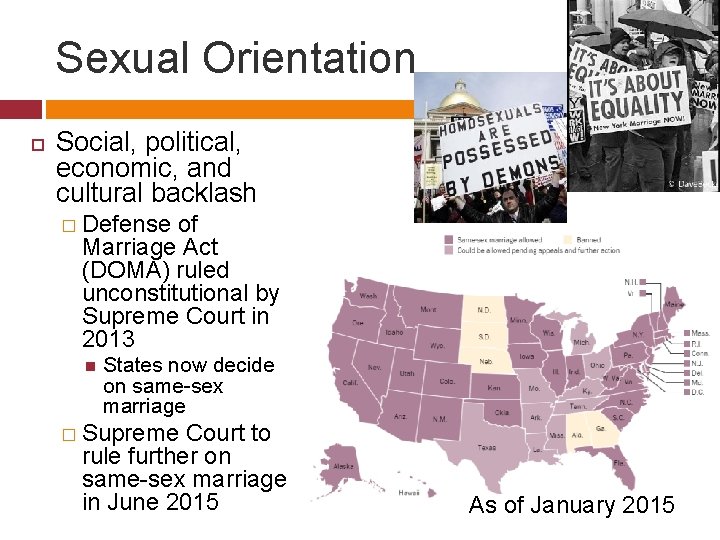
Sexual Orientation Social, political, economic, and cultural backlash � Defense of Marriage Act (DOMA) ruled unconstitutional by Supreme Court in 2013 States now decide on same-sex marriage Court to rule further on same-sex marriage in June 2015 As of November 2013 � Supreme As of January 2015
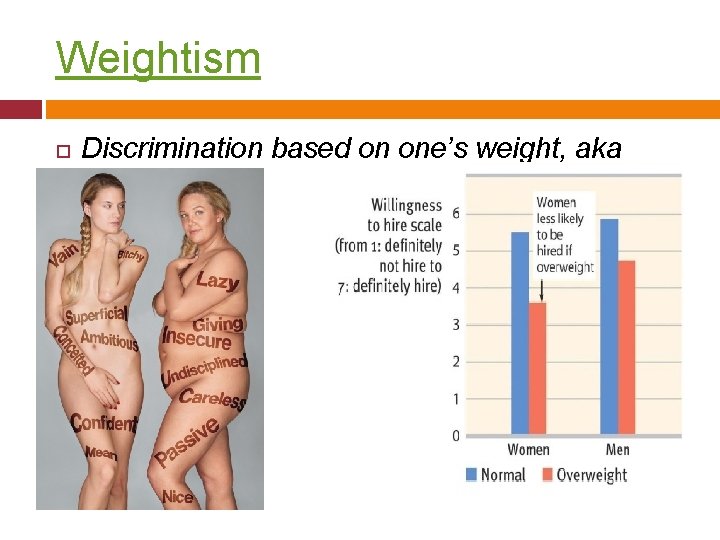
Weightism Discrimination based on one’s weight, aka weight bias