
SOCIAL IMPACT THEORY Bibb Latane 1981 we are
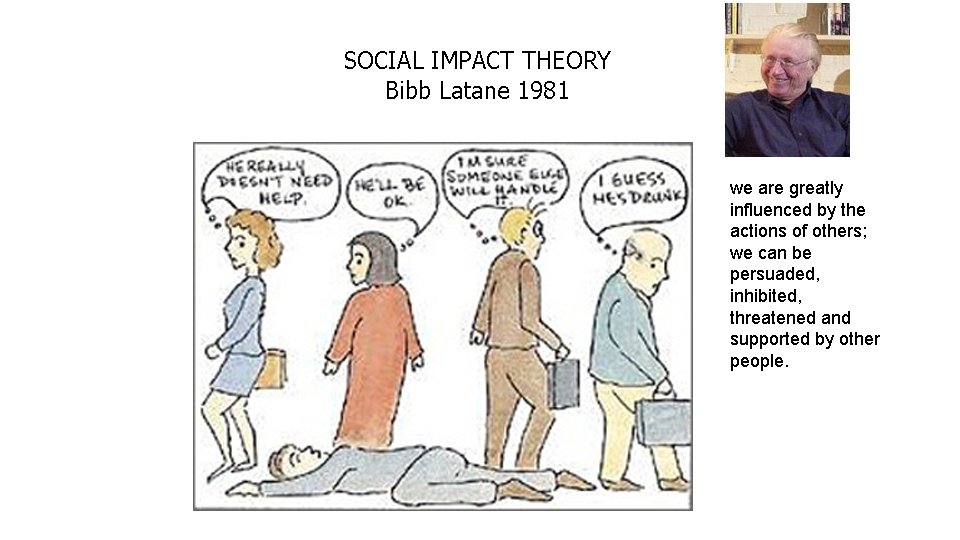
SOCIAL IMPACT THEORY Bibb Latane 1981 we are greatly influenced by the actions of others; we can be persuaded, inhibited, threatened and supported by other people.
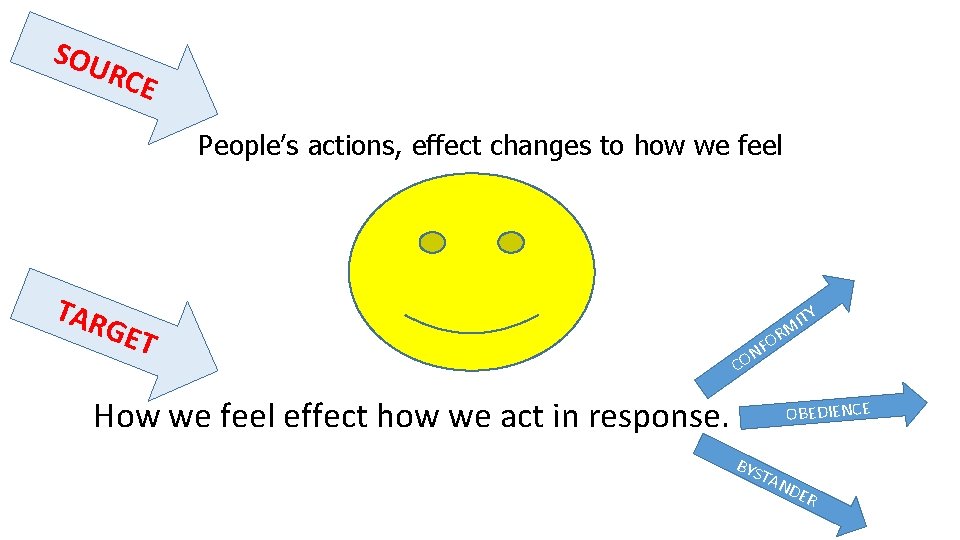
SOU R CE People’s actions, effect changes to how we feel TAR GET How we feel effect how we act in response. TY I M R O NF CO OBEDIENCE BYS TAN DER
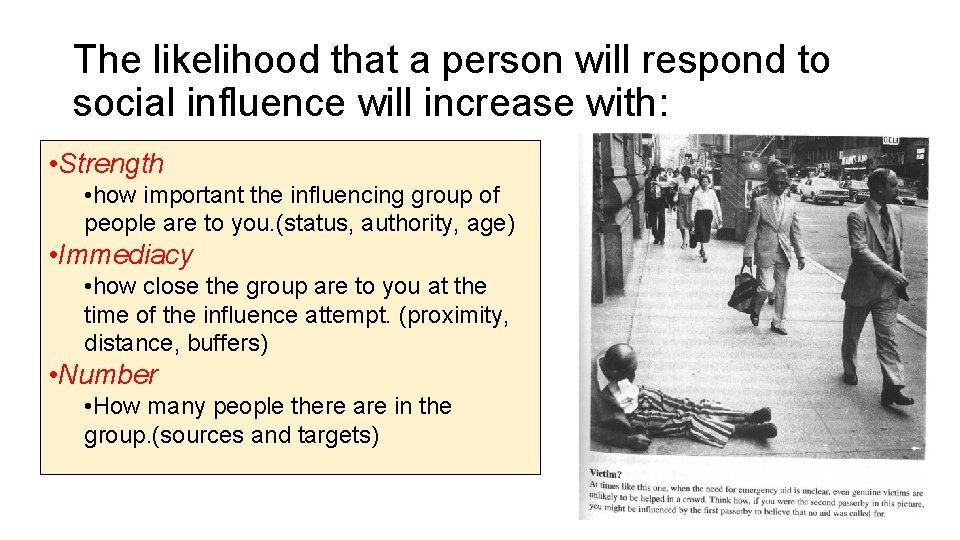
The likelihood that a person will respond to social influence will increase with: • Strength • how important the influencing group of people are to you. (status, authority, age) • Immediacy • how close the group are to you at the time of the influence attempt. (proximity, distance, buffers) • Number • How many people there are in the group. (sources and targets)
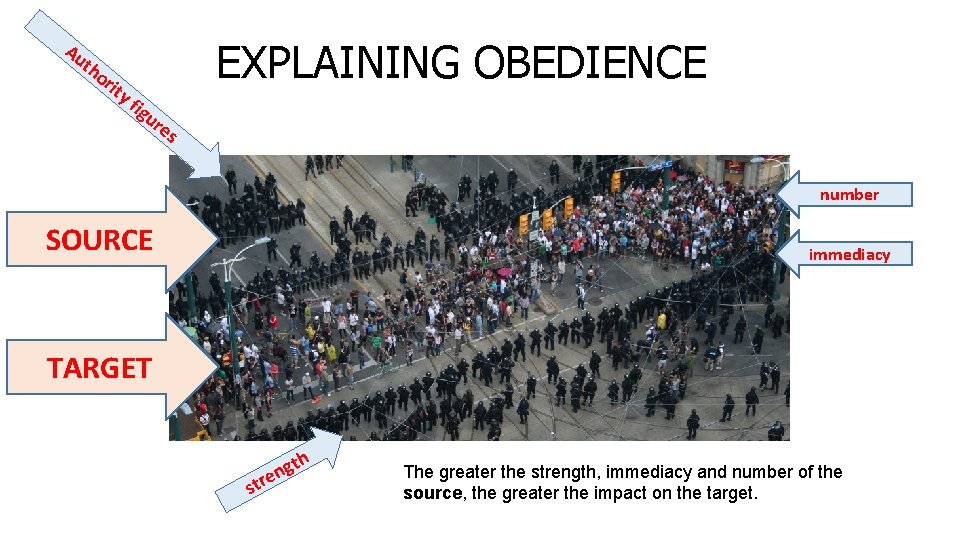
Au EXPLAINING OBEDIENCE th or ity f igu re s number SOURCE immediacy TARGET th g n e str The greater the strength, immediacy and number of the source, the greater the impact on the target.
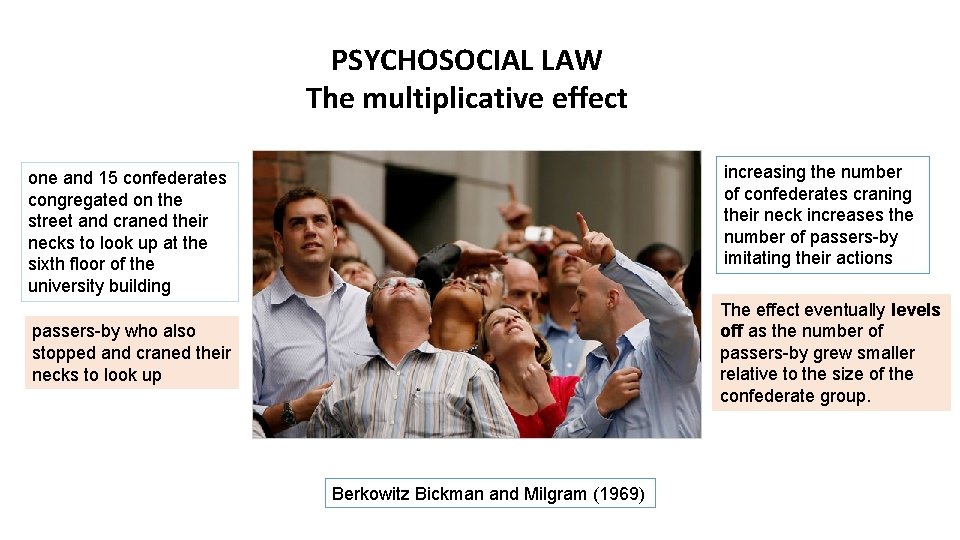
PSYCHOSOCIAL LAW The multiplicative effect increasing the number of confederates craning their neck increases the number of passers-by imitating their actions one and 15 confederates congregated on the street and craned their necks to look up at the sixth floor of the university building The effect eventually levels off as the number of passers-by grew smaller relative to the size of the confederate group. passers-by who also stopped and craned their necks to look up Berkowitz Bickman and Milgram (1969)
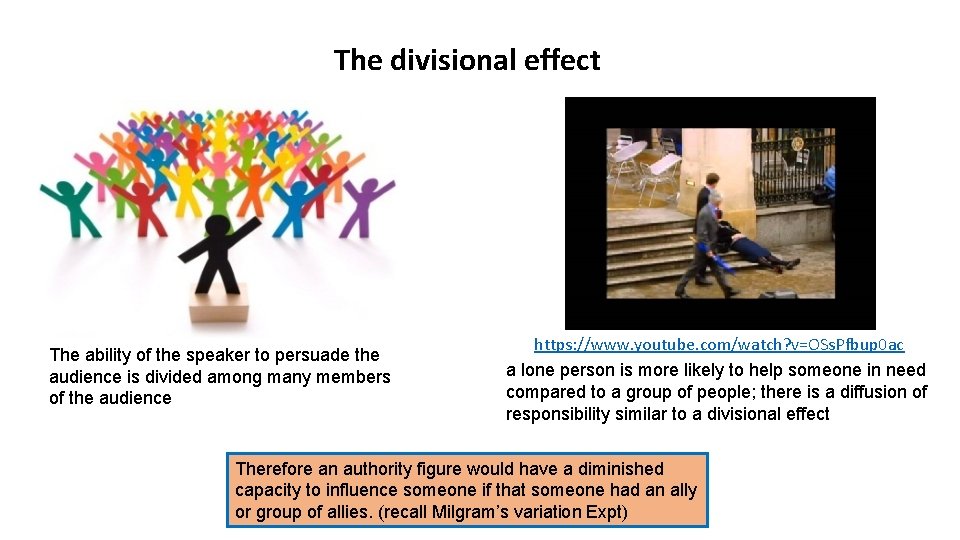
The divisional effect The ability of the speaker to persuade the audience is divided among many members of the audience https: //www. youtube. com/watch? v=OSs. Pfbup 0 ac a lone person is more likely to help someone in need compared to a group of people; there is a diffusion of responsibility similar to a divisional effect Therefore an authority figure would have a diminished capacity to influence someone if that someone had an ally or group of allies. (recall Milgram’s variation Expt)
EVALUATION • Individuals are passive receivers of other’s behaviours • Mainly ignores individual differences • Predicting behaviour in unusual circumstances is useful • Application of principles can be observed in everyday behaviour • Cannot predict what will happen if two equal groups impact on one another (who is the source/target in football matches? ) • Target and source interactions cannot be explained
HOMEWORK • Create a précis of theory (include strengths and weakness) • Watch this bullying video and use your knowledge of Social impact theory to explain why the ‘targets’ behaved they way they did https: //www. youtube. com/watch? v=Eis. ZTB 4 ZQx. Y 5 min
- Slides: 8