
Social Impact of the Industrial Revolution EQ How

- Slides: 10
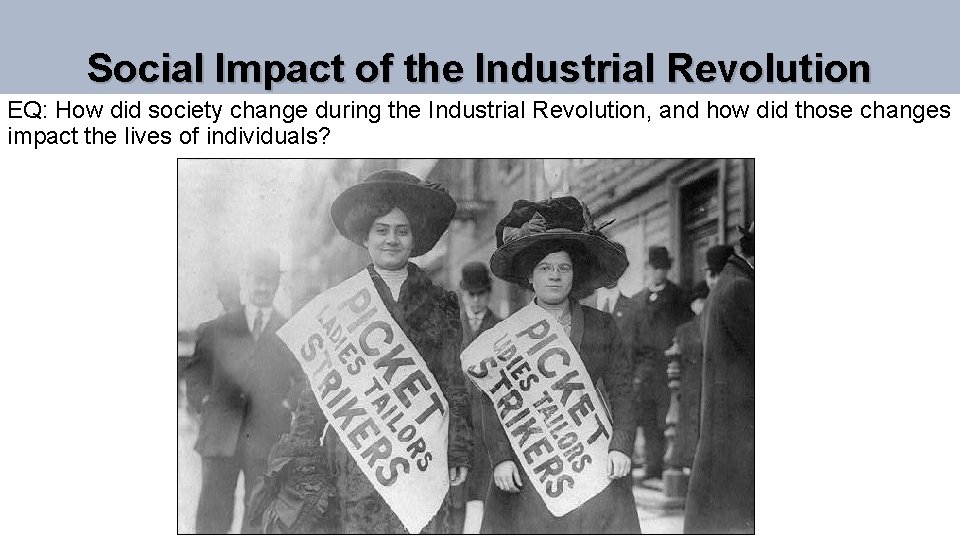
Social Impact of the Industrial Revolution EQ: How did society change during the Industrial Revolution, and how did those changes impact the lives of individuals?
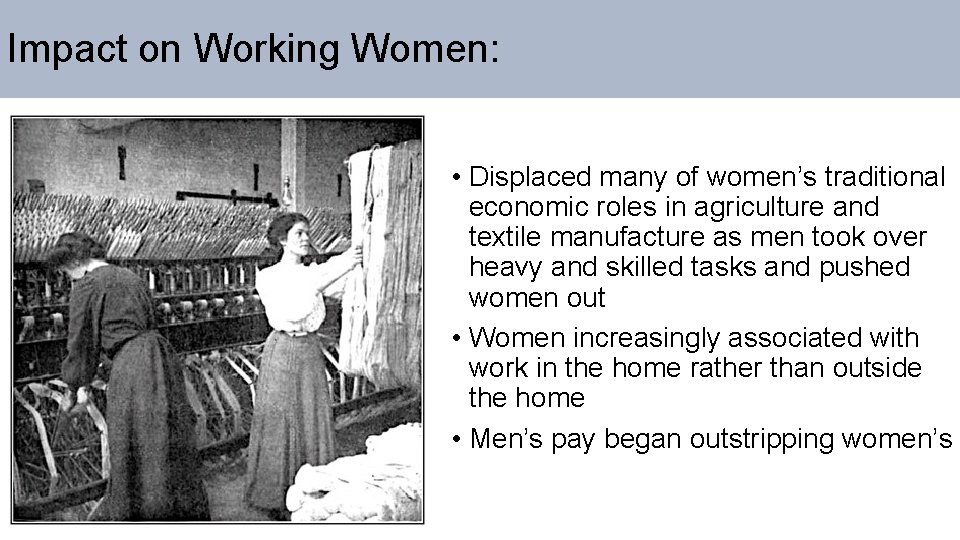
Impact on Working Women: • Displaced many of women’s traditional economic roles in agriculture and textile manufacture as men took over heavy and skilled tasks and pushed women out • Women increasingly associated with work in the home rather than outside the home • Men’s pay began outstripping women’s
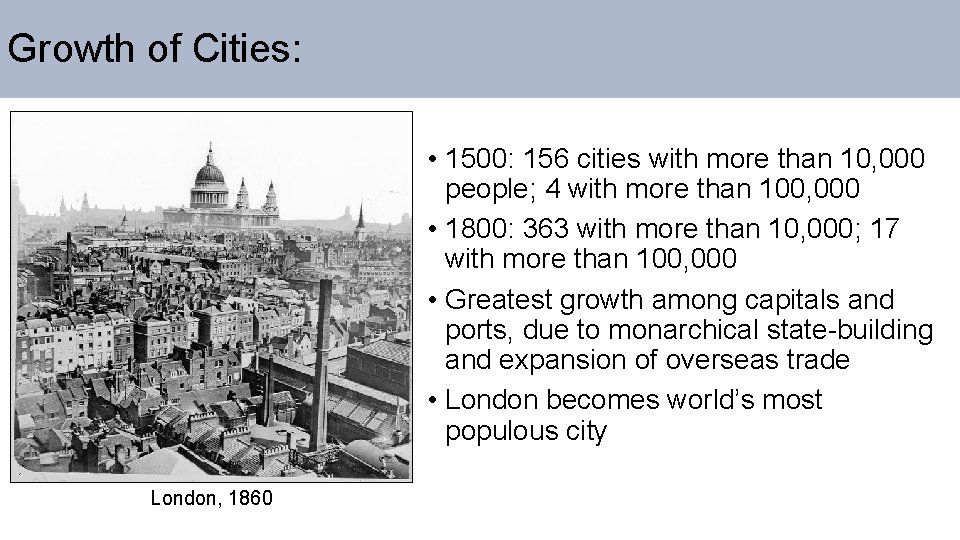
Growth of Cities: • 1500: 156 cities with more than 10, 000 people; 4 with more than 100, 000 • 1800: 363 with more than 10, 000; 17 with more than 100, 000 • Greatest growth among capitals and ports, due to monarchical state-building and expansion of overseas trade • London becomes world’s most populous city London, 1860
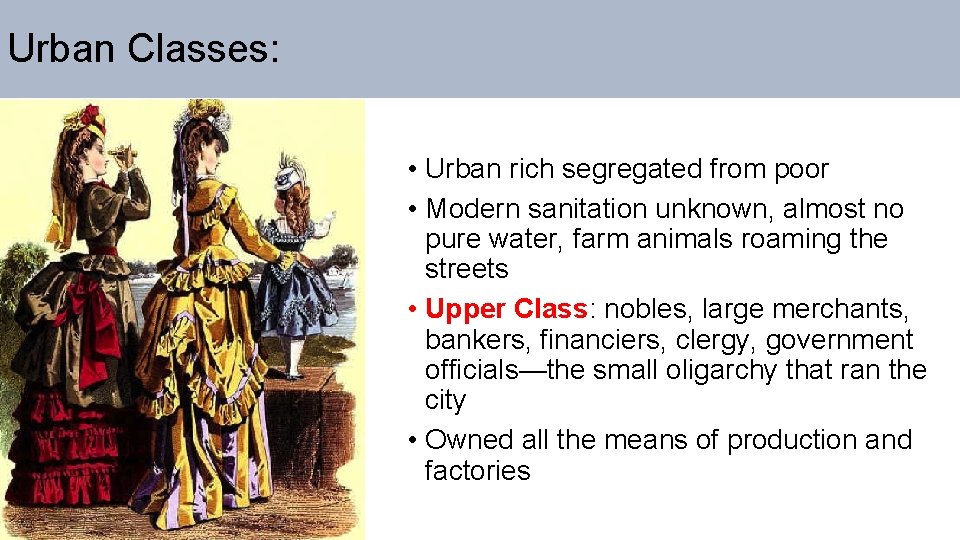
Urban Classes: • Urban rich segregated from poor • Modern sanitation unknown, almost no pure water, farm animals roaming the streets • Upper Class: nobles, large merchants, bankers, financiers, clergy, government officials—the small oligarchy that ran the city • Owned all the means of production and factories
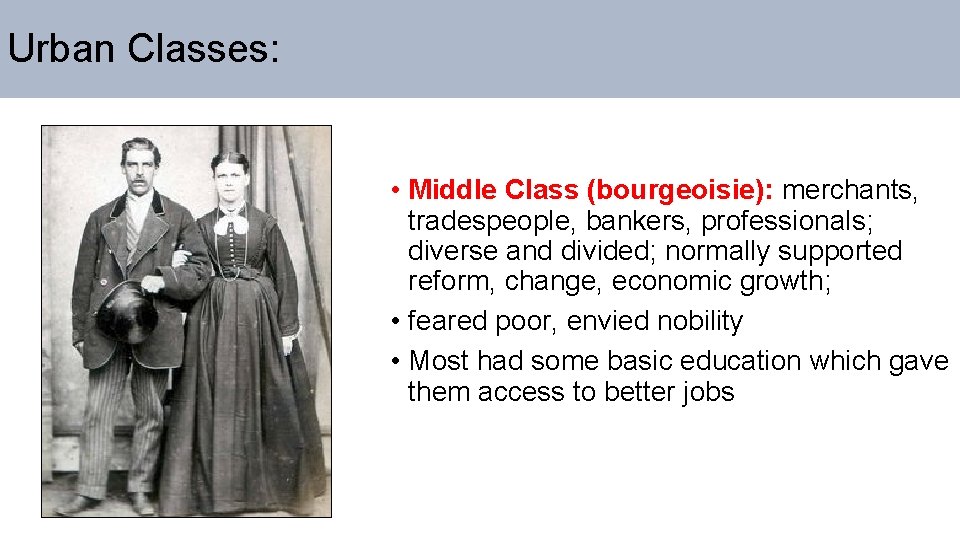
Urban Classes: • Middle Class (bourgeoisie): merchants, tradespeople, bankers, professionals; diverse and divided; normally supported reform, change, economic growth; • feared poor, envied nobility • Most had some basic education which gave them access to better jobs
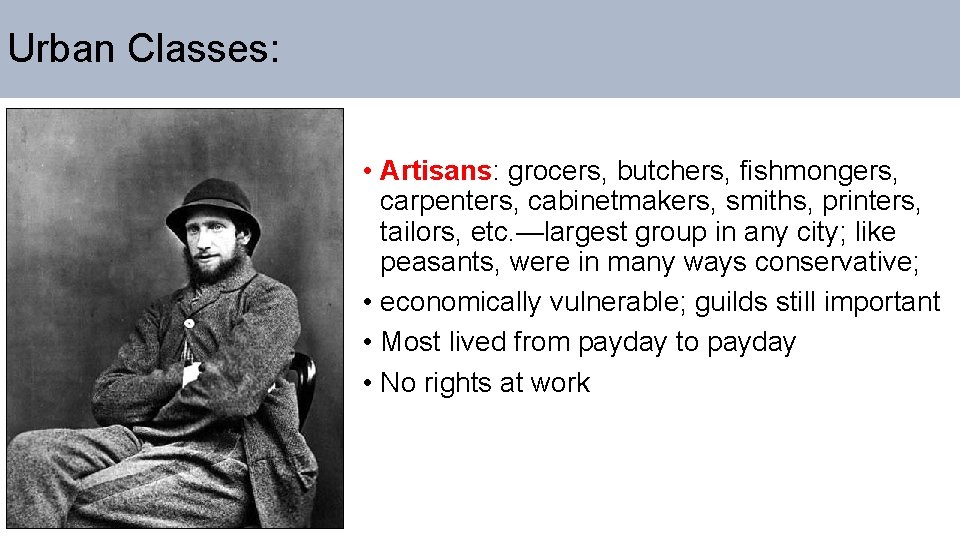
Urban Classes: • Artisans: grocers, butchers, fishmongers, carpenters, cabinetmakers, smiths, printers, tailors, etc. —largest group in any city; like peasants, were in many ways conservative; • economically vulnerable; guilds still important • Most lived from payday to payday • No rights at work
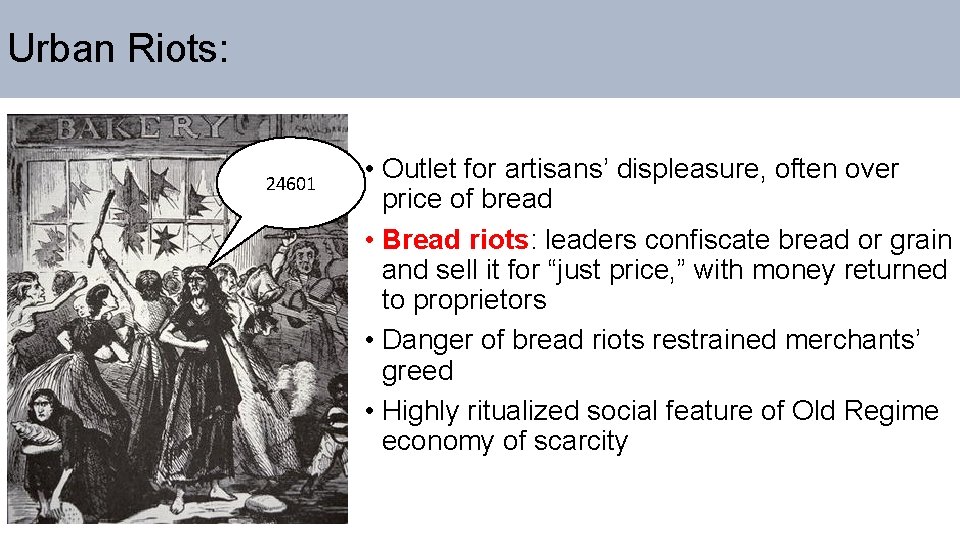
Urban Riots: 24601 • Outlet for artisans’ displeasure, often over price of bread • Bread riots: leaders confiscate bread or grain and sell it for “just price, ” with money returned to proprietors • Danger of bread riots restrained merchants’ greed • Highly ritualized social feature of Old Regime economy of scarcity
Urban Riots (cont. ): • Other riots: religious • Riots became increasingly political toward end of 18 th c. ; often became a tool of upper classes— use “the crowd” against the monarchy, or against minorities • For better working conditions
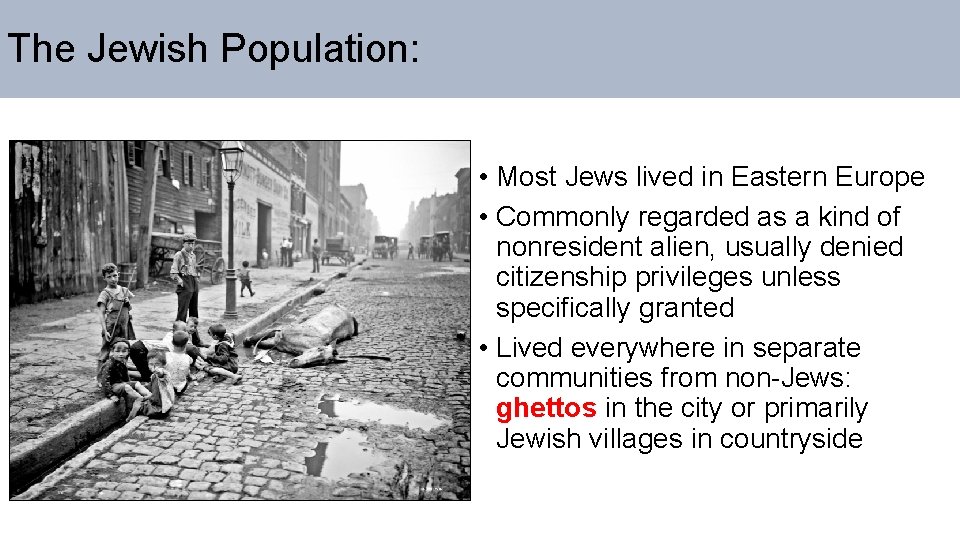
The Jewish Population: • Most Jews lived in Eastern Europe • Commonly regarded as a kind of nonresident alien, usually denied citizenship privileges unless specifically granted • Lived everywhere in separate communities from non-Jews: ghettos in the city or primarily Jewish villages in countryside
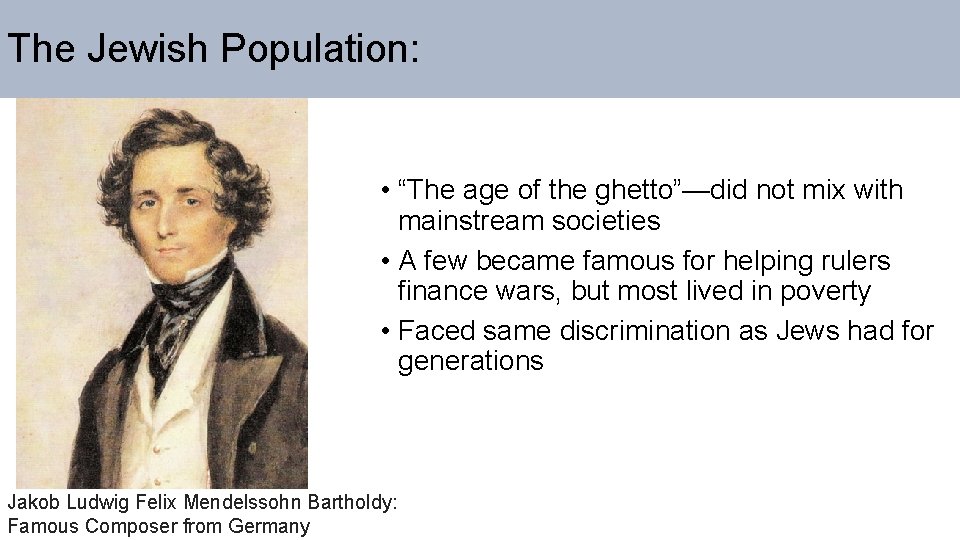
The Jewish Population: • “The age of the ghetto”—did not mix with mainstream societies • A few became famous for helping rulers finance wars, but most lived in poverty • Faced same discrimination as Jews had for generations Jakob Ludwig Felix Mendelssohn Bartholdy: Famous Composer from Germany