
Social enterprise business organisations Cooperatives microfinance providers publicprivate
Social enterprise business organisations Cooperatives, micro-finance providers & public-private partnerships (PPPs)
Cooperatives • Owned by members (usually customers or employees). • Set up and managed in the interest of their members. • Aim to cover all costs. Any surpluses are distributed to members as a dividend.
Consumer cooperatives • Purchase supplies in bulk, obtaining a discount. • Sell these supplies to customers (including members) at low prices. • Dividends are paid to members if a surplus has been made. • Main purpose = Lower prices for members.
Worker cooperatives • Owned by the people who work in the coop. • All workers have a say in how the coop is run. • Any surpluses are passed on the workers as a dividend. • Main purpose is to look after the welfare of the employees (eg by providing good working conditions and fair pay).

Microfinance providers • Set up to lend money to people and small businesses that are unable to obtain it from traditional sources (eg family or a bank). • Usually lend small amounts. • Interest rates tend to be higher than bank loans (due to admin charges and increased risk of non-payment). • Main purpose is to help poorer people escape from poverty.
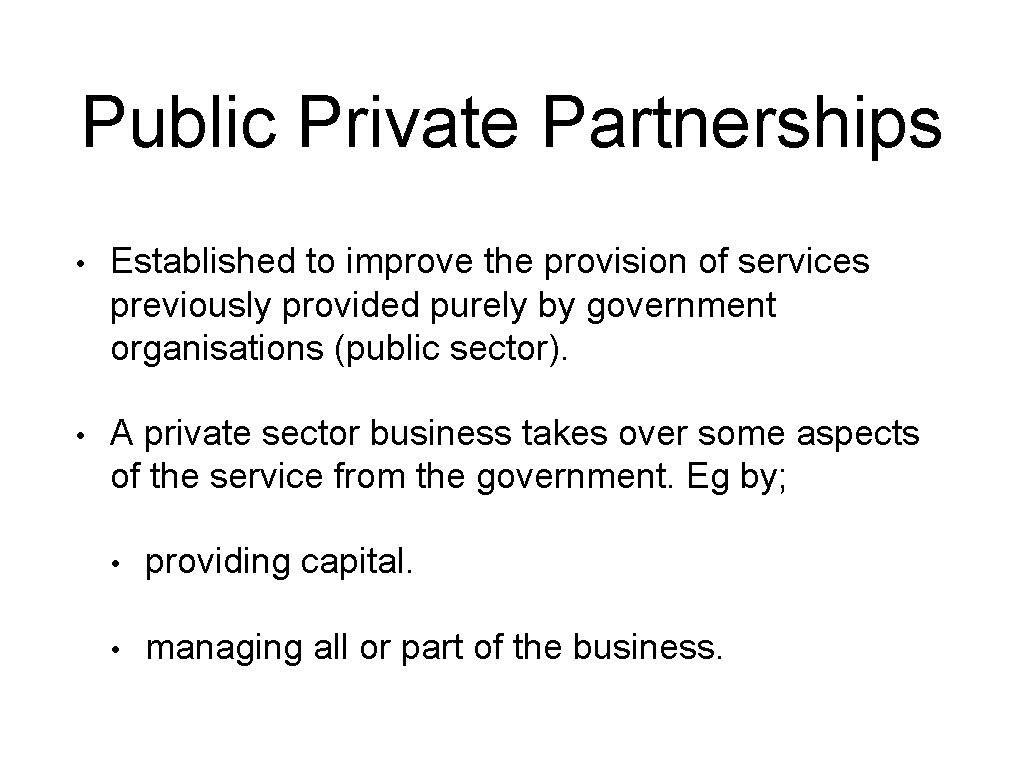
Public Private Partnerships • Established to improve the provision of services previously provided purely by government organisations (public sector). • A private sector business takes over some aspects of the service from the government. Eg by; • providing capital. • managing all or part of the business.
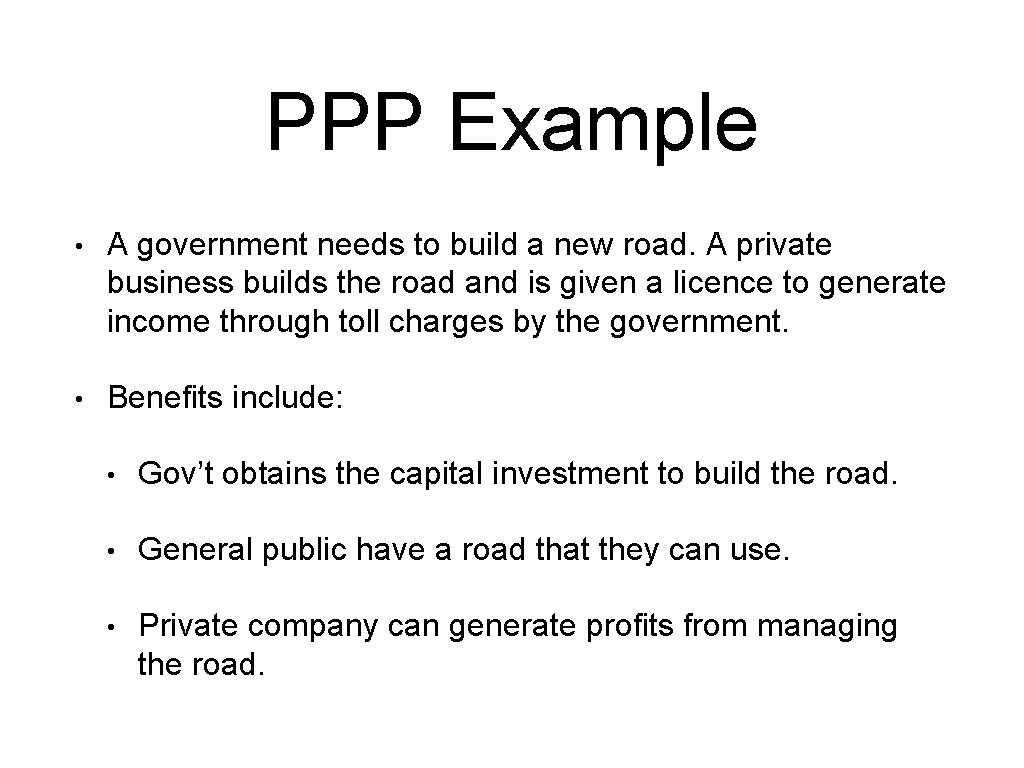
PPP Example • A government needs to build a new road. A private business builds the road and is given a licence to generate income through toll charges by the government. • Benefits include: • Gov’t obtains the capital investment to build the road. • General public have a road that they can use. • Private company can generate profits from managing the road.
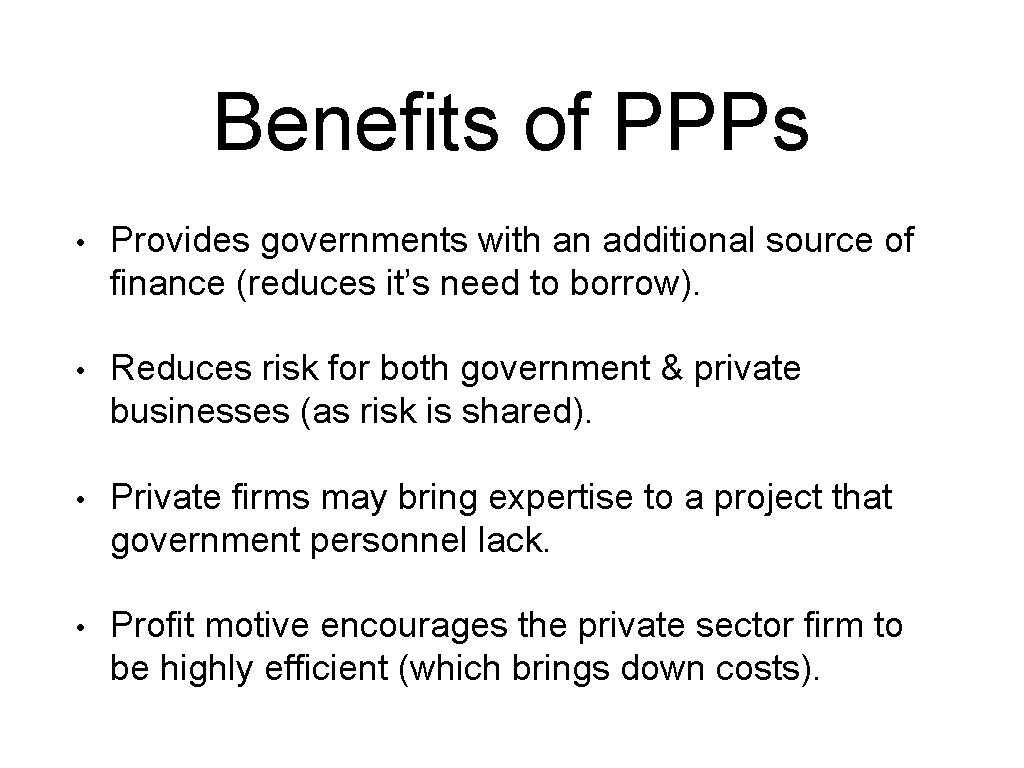
Benefits of PPPs • Provides governments with an additional source of finance (reduces it’s need to borrow). • Reduces risk for both government & private businesses (as risk is shared). • Private firms may bring expertise to a project that government personnel lack. • Profit motive encourages the private sector firm to be highly efficient (which brings down costs).
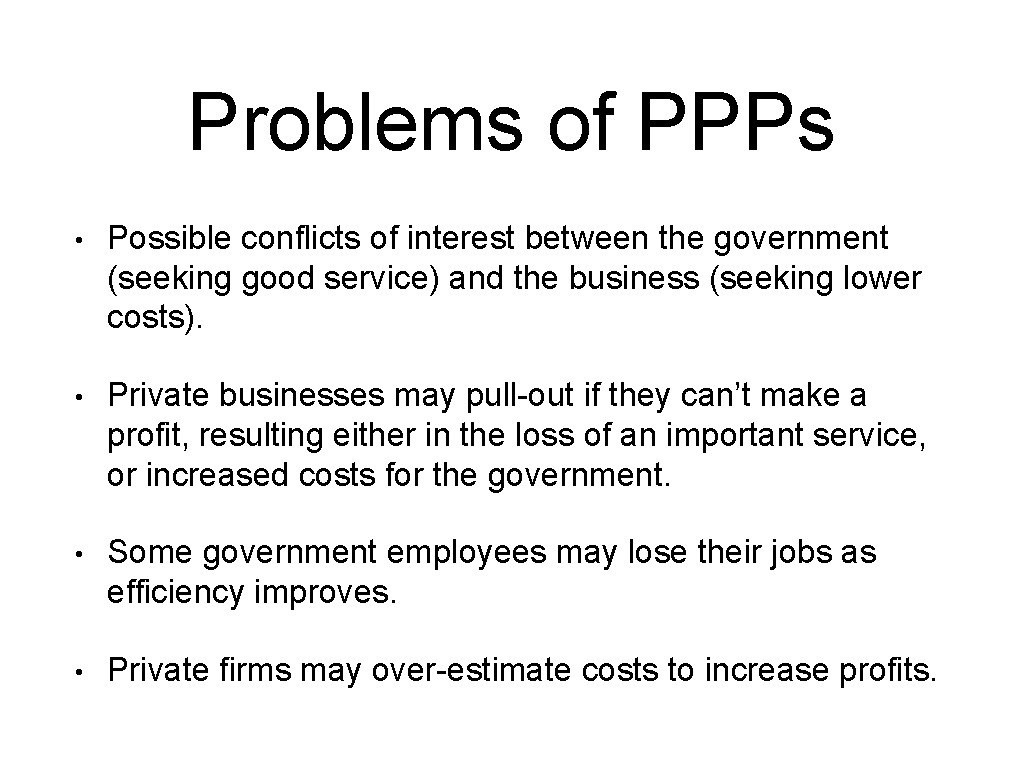
Problems of PPPs • Possible conflicts of interest between the government (seeking good service) and the business (seeking lower costs). • Private businesses may pull-out if they can’t make a profit, resulting either in the loss of an important service, or increased costs for the government. • Some government employees may lose their jobs as efficiency improves. • Private firms may over-estimate costs to increase profits.
- Slides: 9