
Social emotional competence of children Family and child
- Slides: 6
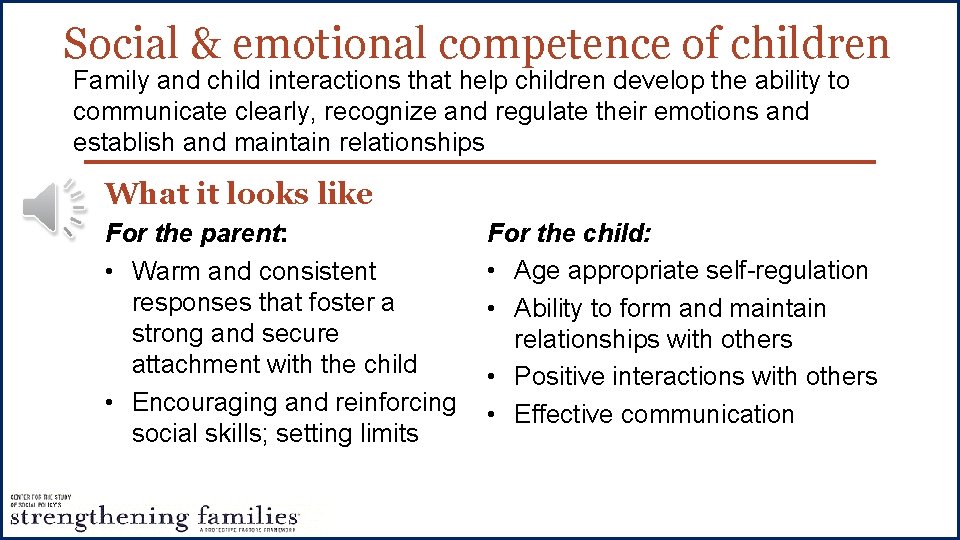
Social & emotional competence of children Family and child interactions that help children develop the ability to communicate clearly, recognize and regulate their emotions and establish and maintain relationships What it looks like For the parent: • Warm and consistent responses that foster a strong and secure attachment with the child • Encouraging and reinforcing social skills; setting limits For the child: • Age appropriate self-regulation • Ability to form and maintain relationships with others • Positive interactions with others • Effective communication
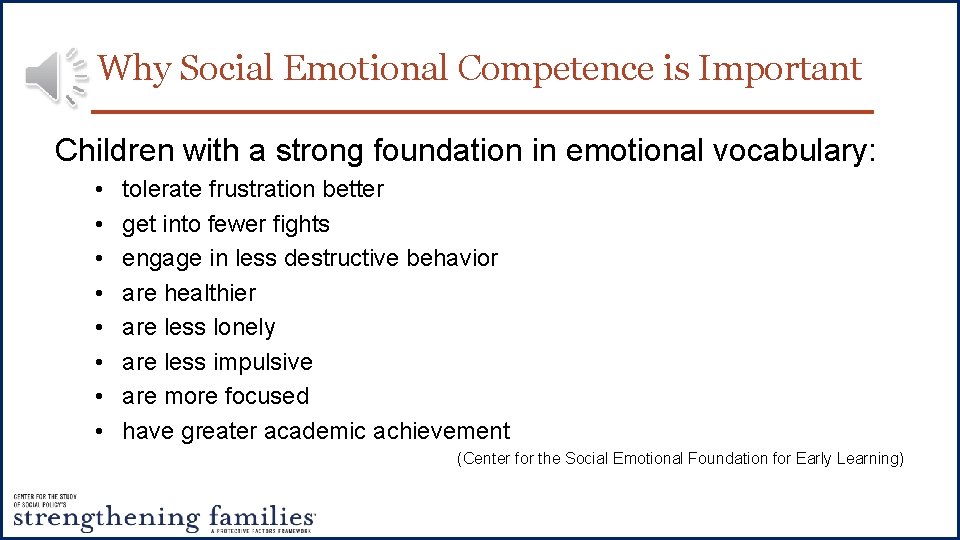
Why Social Emotional Competence is Important Children with a strong foundation in emotional vocabulary: • • tolerate frustration better get into fewer fights engage in less destructive behavior are healthier are less lonely are less impulsive are more focused have greater academic achievement (Center for the Social Emotional Foundation for Early Learning)
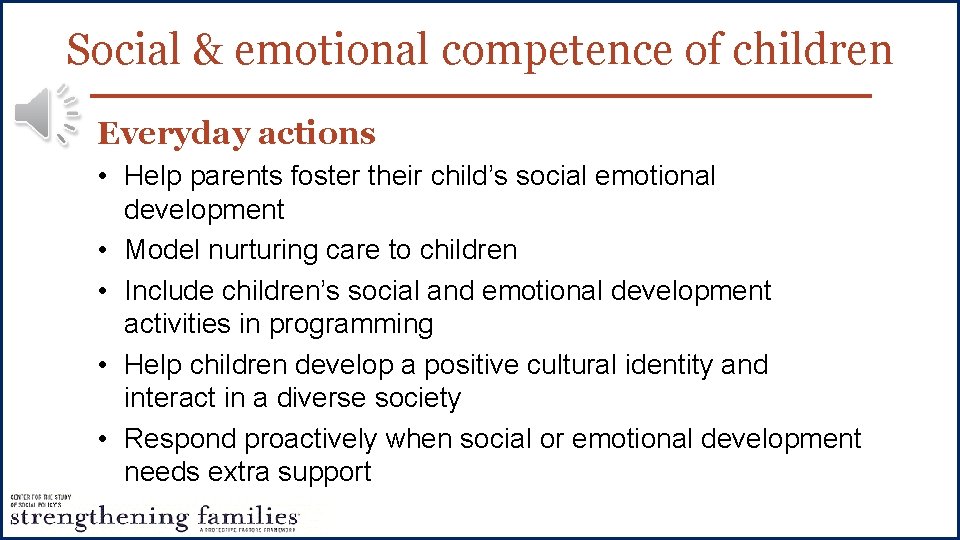
Social & emotional competence of children Everyday actions • Help parents foster their child’s social emotional development • Model nurturing care to children • Include children’s social and emotional development activities in programming • Help children develop a positive cultural identity and interact in a diverse society • Respond proactively when social or emotional development needs extra support
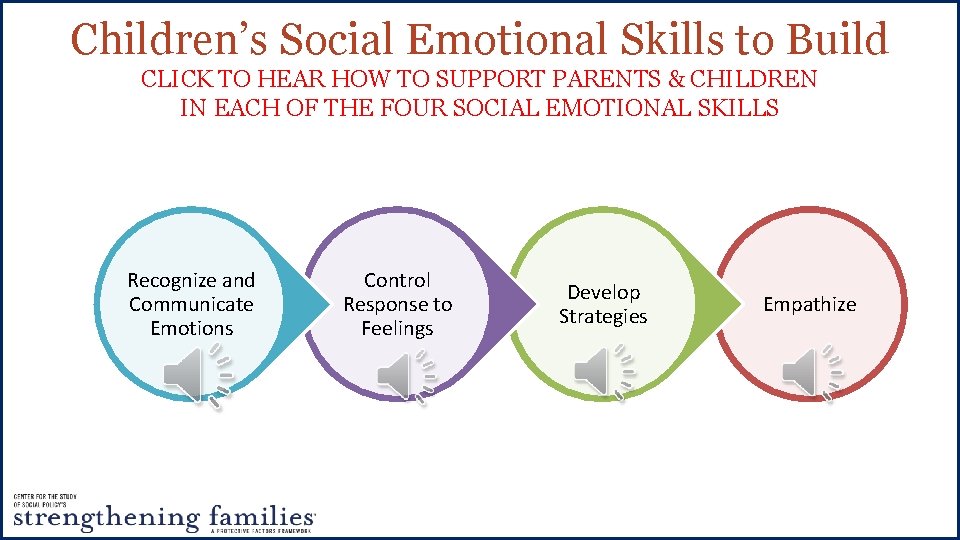
Children’s Social Emotional Skills to Build CLICK TO HEAR HOW TO SUPPORT PARENTS & CHILDREN IN EACH OF THE FOUR SOCIAL EMOTIONAL SKILLS Recognize and Communicate Emotions Control Response to Feelings Develop Strategies Empathize
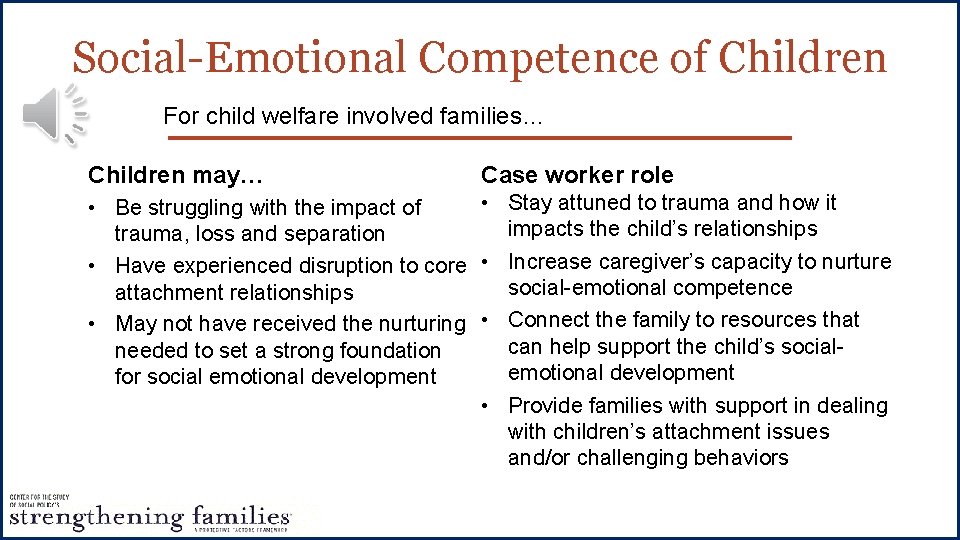
Social-Emotional Competence of Children For child welfare involved families… Children may… Case worker role • Stay attuned to trauma and how it • Be struggling with the impact of impacts the child’s relationships trauma, loss and separation • Have experienced disruption to core • Increase caregiver’s capacity to nurture social-emotional competence attachment relationships • May not have received the nurturing • Connect the family to resources that can help support the child’s socialneeded to set a strong foundation emotional development for social emotional development • Provide families with support in dealing with children’s attachment issues and/or challenging behaviors
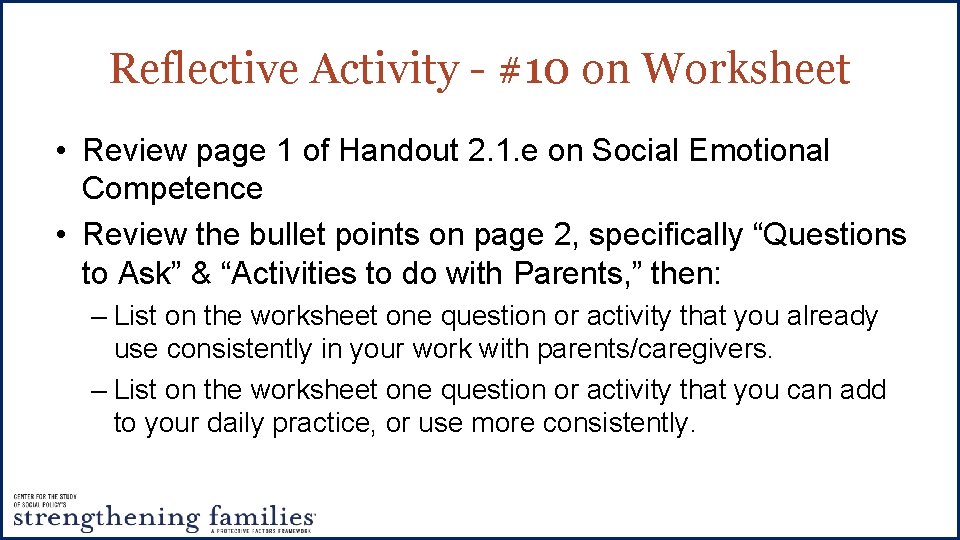
Reflective Activity - #10 on Worksheet • Review page 1 of Handout 2. 1. e on Social Emotional Competence • Review the bullet points on page 2, specifically “Questions to Ask” & “Activities to do with Parents, ” then: – List on the worksheet one question or activity that you already use consistently in your work with parents/caregivers. – List on the worksheet one question or activity that you can add to your daily practice, or use more consistently.