
Social differences in 16 th century Britain 1
Social differences in 16 th century Britain
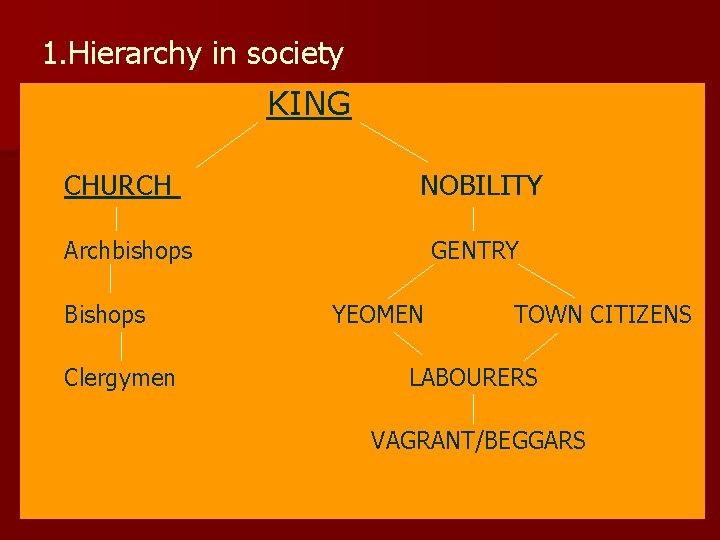
1. Hierarchy in society KING CHURCH NOBILITY Archbishops Bishops Clergymen GENTRY YEOMEN TOWN CITIZENS LABOURERS VAGRANT/BEGGARS
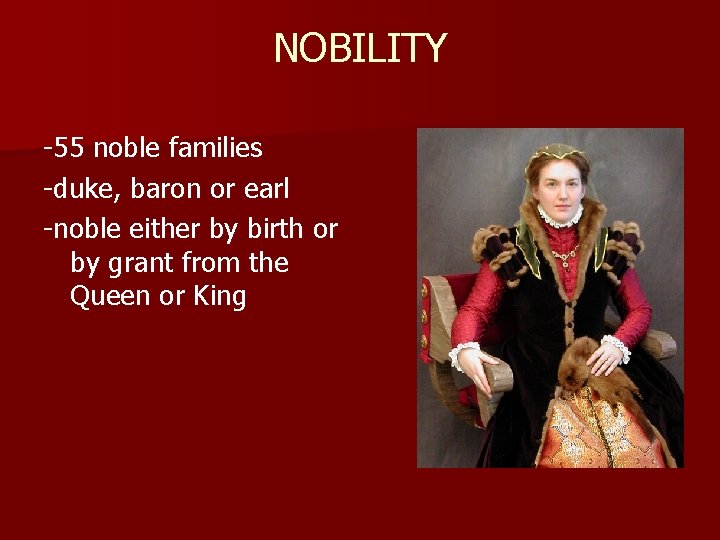
NOBILITY -55 noble families -duke, baron or earl -noble either by birth or by grant from the Queen or King
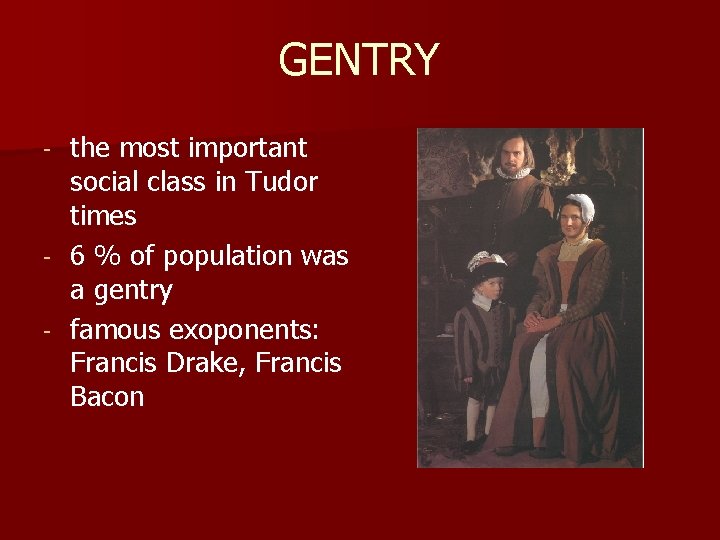
GENTRY the most important social class in Tudor times - 6 % of population was a gentry - famous exoponents: Francis Drake, Francis Bacon -
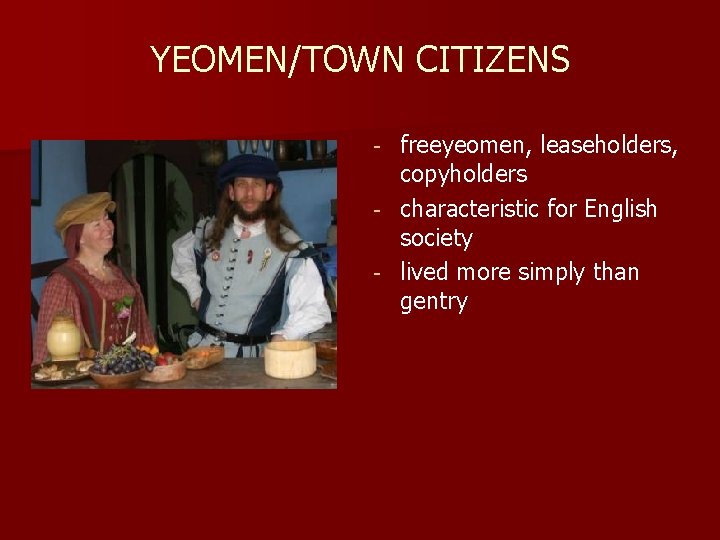
YEOMEN/TOWN CITIZENS freeyeomen, leaseholders, copyholders - characteristic for English society - lived more simply than gentry -
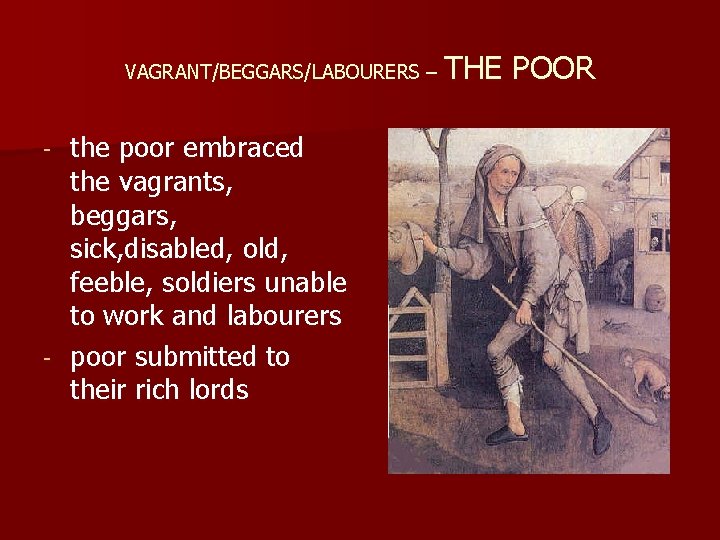
VAGRANT/BEGGARS/LABOURERS – the poor embraced the vagrants, beggars, sick, disabled, old, feeble, soldiers unable to work and labourers - poor submitted to their rich lords - THE POOR
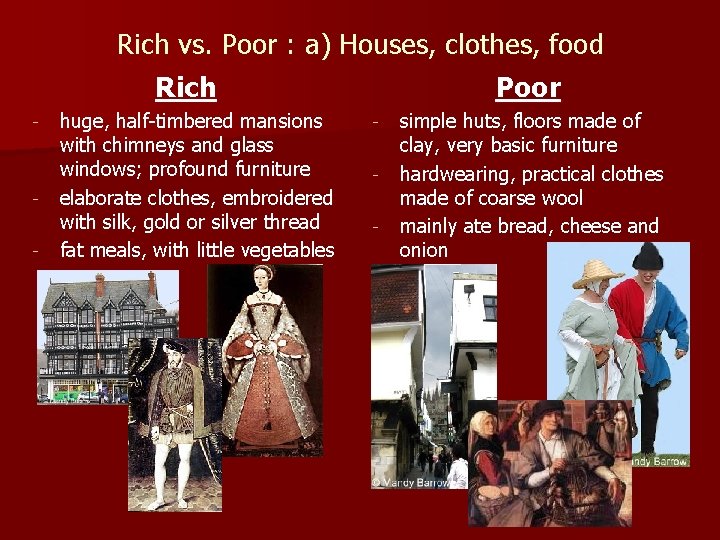
Rich vs. Poor : a) Houses, clothes, food Rich - - huge, half-timbered mansions with chimneys and glass windows; profound furniture elaborate clothes, embroidered with silk, gold or silver thread fat meals, with little vegetables Poor - simple huts, floors made of clay, very basic furniture hardwearing, practical clothes made of coarse wool mainly ate bread, cheese and onion
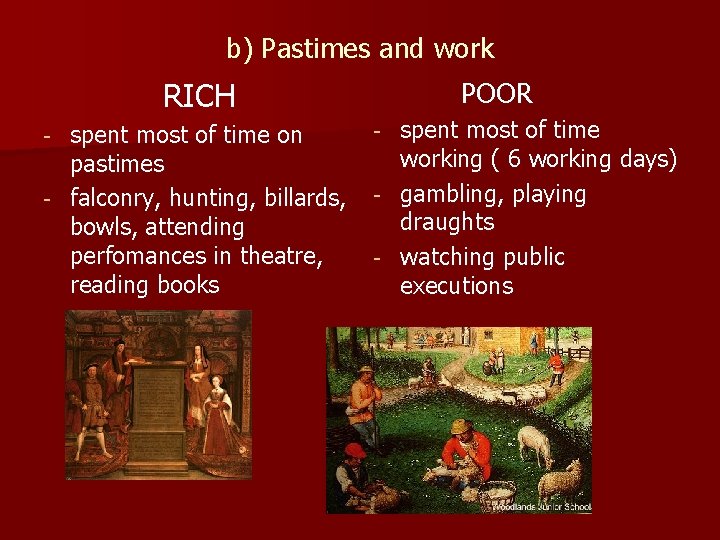
b) Pastimes and work RICH spent most of time on pastimes - falconry, hunting, billards, bowls, attending perfomances in theatre, reading books - POOR spent most of time working ( 6 working days) - gambling, playing draughts - watching public executions -
c) Education and language RICH wide access to the education ( grammar schools, universities) n „correct“ London pronunciation – educated person n POOR learning a trade, or expected to work n Continuation of using the local dialect n In the beginning of the Tudor period English was spoken in a number of ways as remiders of Saxon, Angle, Jute and Viking invasion After Chaucer London English becomes ‘correct’ English
d) Enclosures, Poor Law, Laws against Poverty - Enclosures – resulting in massive unemployment and poverty among labourers Dissolution of the Monasteries – the church institutions lose their significance „Pilgrimage of Grace“ ( 1536 ) as a protest against dissolution of the monasteries Poor Law ( 1601) – introduced by Queen Elisabeth I to cope with the poverty and unemployment. First governmentsponsored welfare program. Three goals of Poor Law: a) to put those unable to care for themselves in hospitals and orphanages b) to find the work for able-bodied in the workhouses established in the towns c) to punish permanently unemployed in order to discourage them from commiting the crimes
Town and country Towns having 3, 000 people – London 60, 000 by 1500 n Prices increase between 1500 – 1600 n Growth of population from 2, 2 million to 4 million n 1536 London n 7, 000 thieves hanged by Henry VIII n Efforts made in 1547 n In 1601 Parlaiment passed the ‘Poor Law’ n Végh István 11
Conclusion - during Tudor times England became a more peaceful and richer place to live - increase of the prices of goods, fall of wages by half - increasing population ( from 2, 2 to 4 million) - England as the most comfortable place to live in Europe in 16 th century
- Slides: 12