
Social Determinants of Postpartum Depression A Mixed Method
- Slides: 45
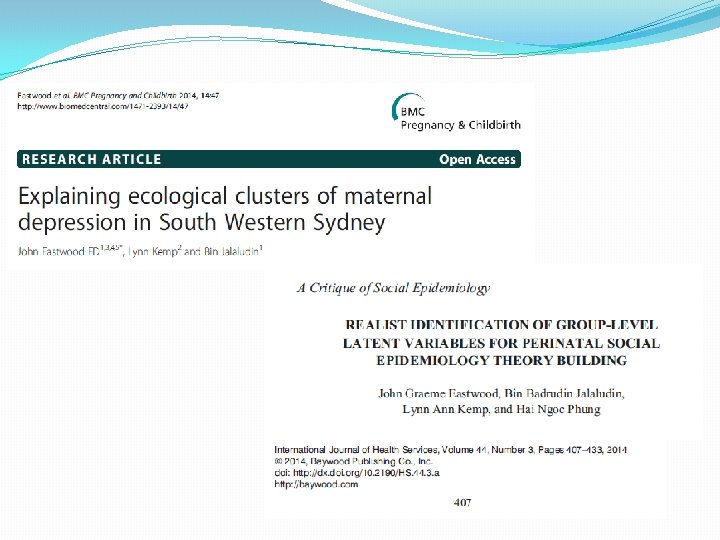
Social Determinants of Postpartum Depression A Mixed Method Multilevel Theory Building Study
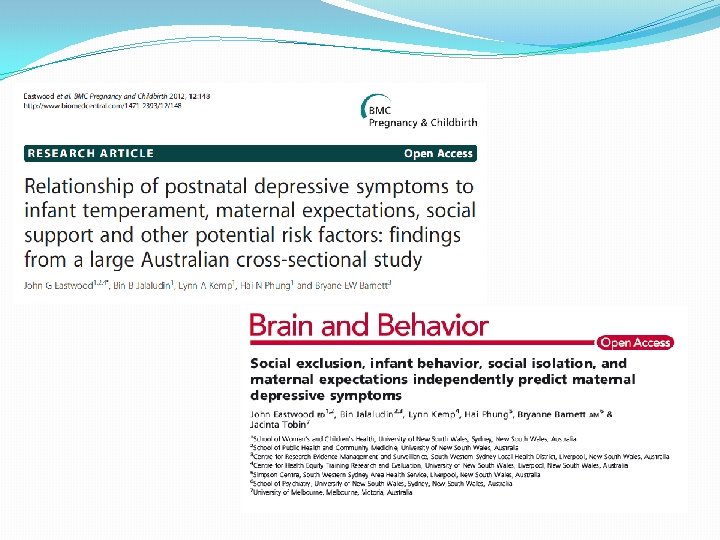
Background and Aims �It is increasingly recognised that major adult public health issues, related to development, behaviour and lifestyle have their origins during pregnancy, infancy and early childhood. �The aim of this study is to utilise mixed methodology to build a conceptual framework, theory and model describing the mechanisms by which multilevel factors influence the developmental and life course outcomes with a focus on perinatal depression.
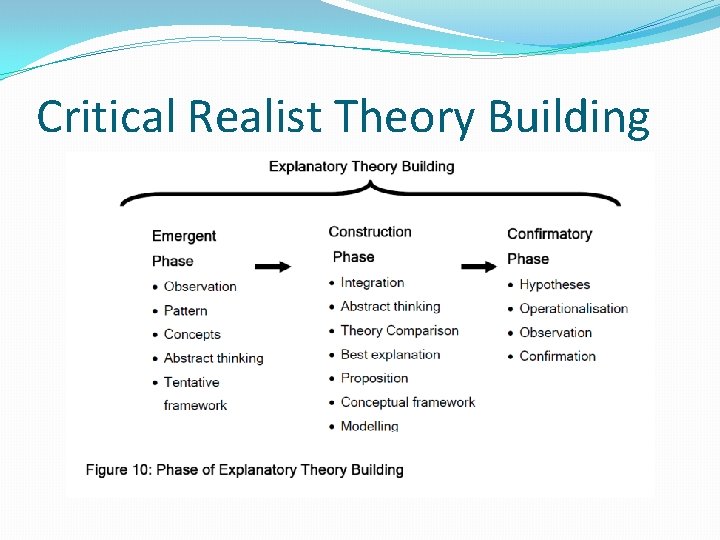
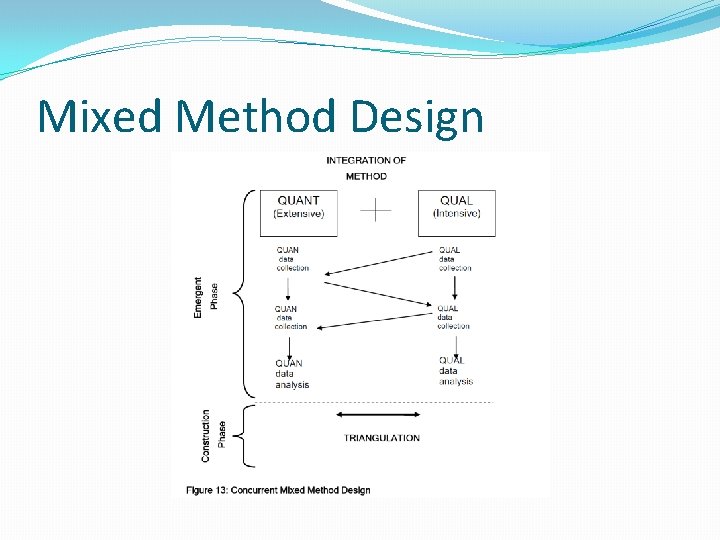
Methodology and Methods �We used a critical realist approach to social epidemiology theory building. �Emergent methods included: key informant interviews, focus groups, thematic analysis, conceptual mapping, situational analysis, factor analysis, logistic, linear, and Bayesian spatial and multilevel regression studies. �Explanatory theory building utilised abductive Inference to the Best Explanation.
Critical Realist Theory Building
Mixed Method Design
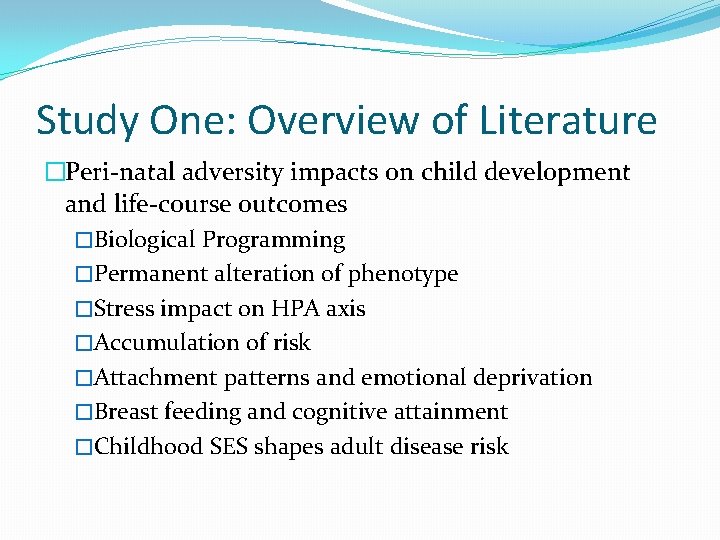
Study One: Overview of Literature �Peri-natal adversity impacts on child development and life-course outcomes �Biological Programming �Permanent alteration of phenotype �Stress impact on HPA axis �Accumulation of risk �Attachment patterns and emotional deprivation �Breast feeding and cognitive attainment �Childhood SES shapes adult disease risk
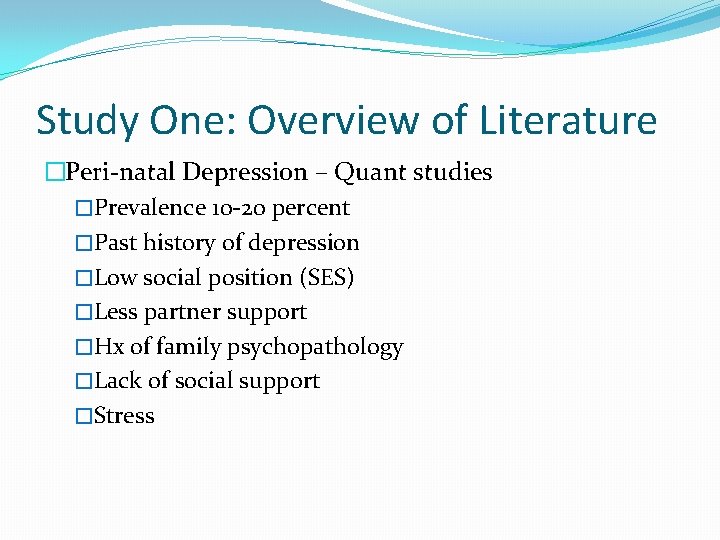
Study One: Overview of Literature �Peri-natal Depression – Quant studies �Prevalence 10 -20 percent �Past history of depression �Low social position (SES) �Less partner support �Hx of family psychopathology �Lack of social support �Stress
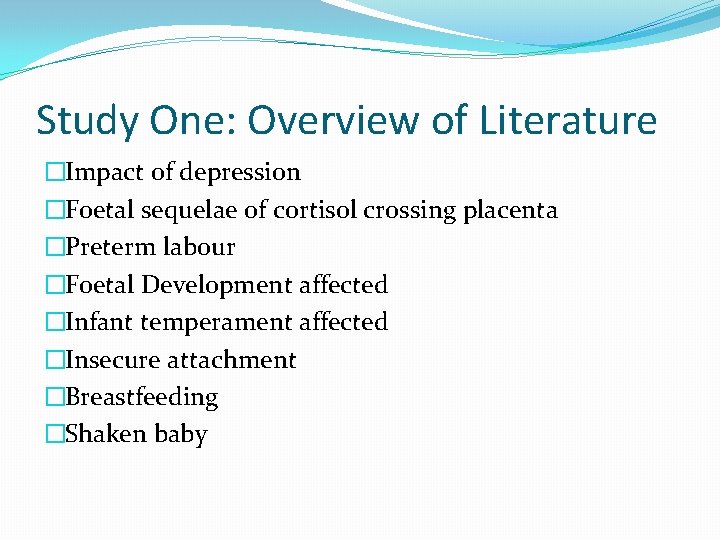
Study One: Overview of Literature �Impact of depression �Foetal sequelae of cortisol crossing placenta �Preterm labour �Foetal Development affected �Infant temperament affected �Insecure attachment �Breastfeeding �Shaken baby
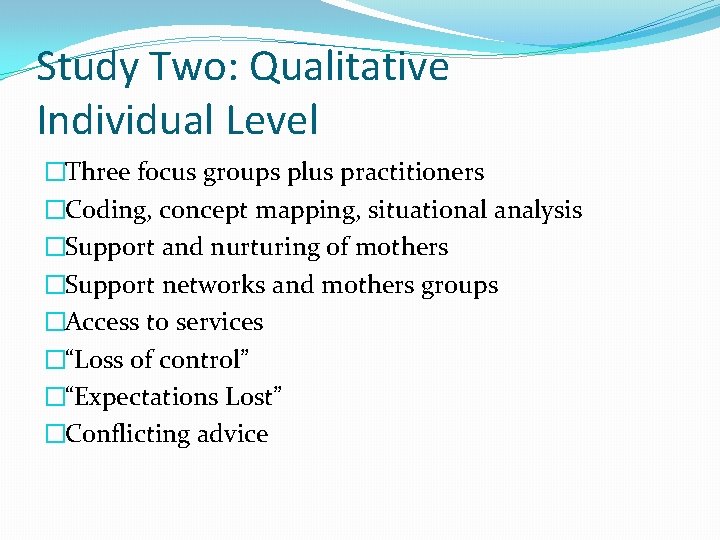
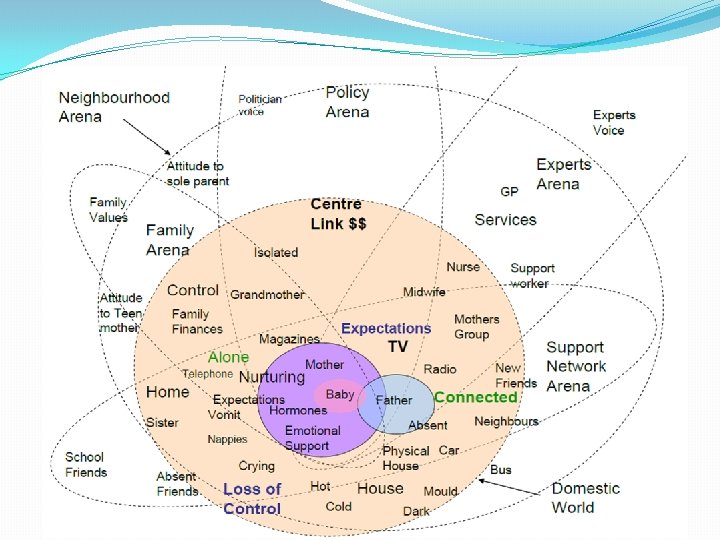
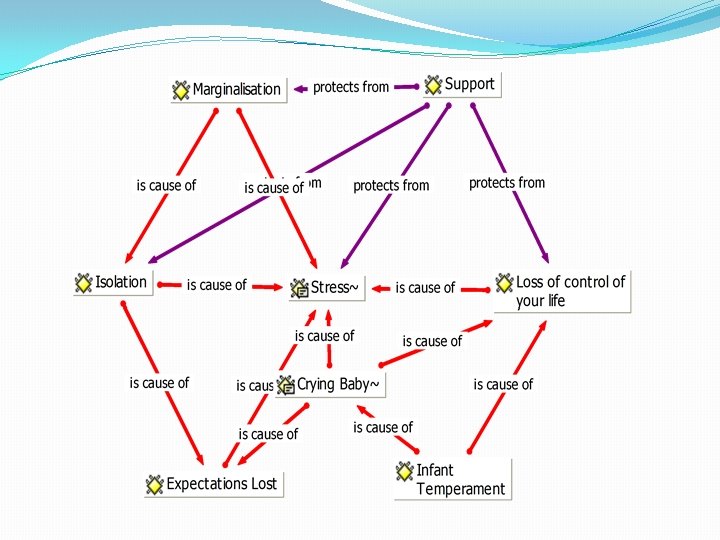
Study Two: Qualitative Individual Level �Three focus groups plus practitioners �Coding, concept mapping, situational analysis �Support and nurturing of mothers �Support networks and mothers groups �Access to services �“Loss of control” �“Expectations Lost” �Conflicting advice
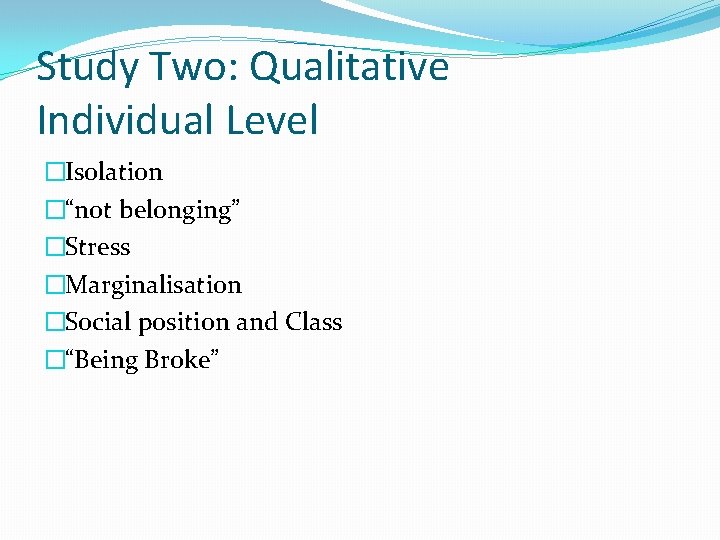
Study Two: Qualitative Individual Level �Isolation �“not belonging” �Stress �Marginalisation �Social position and Class �“Being Broke”
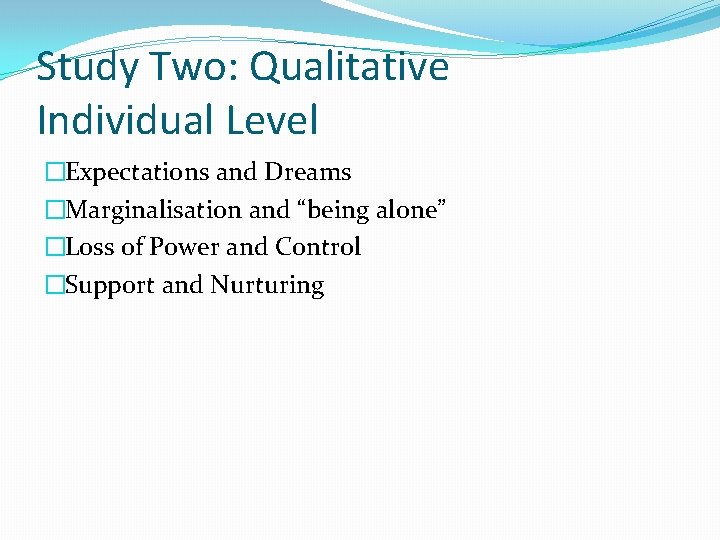
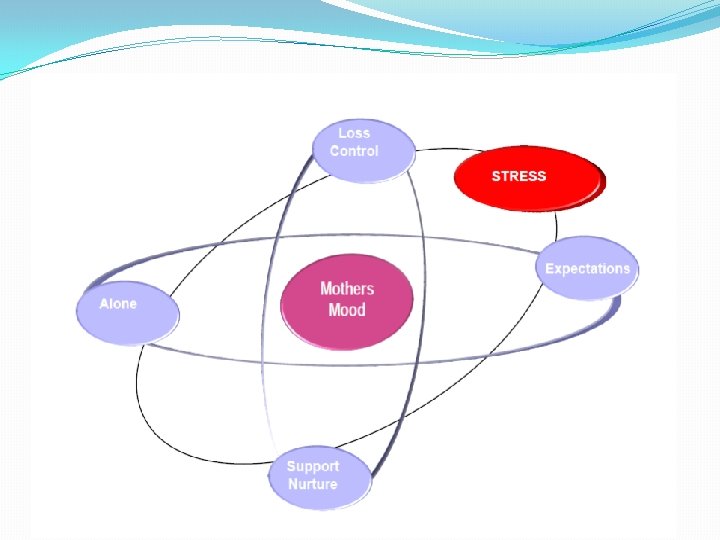
Study Two: Qualitative Individual Level �Expectations and Dreams �Marginalisation and “being alone” �Loss of Power and Control �Support and Nurturing
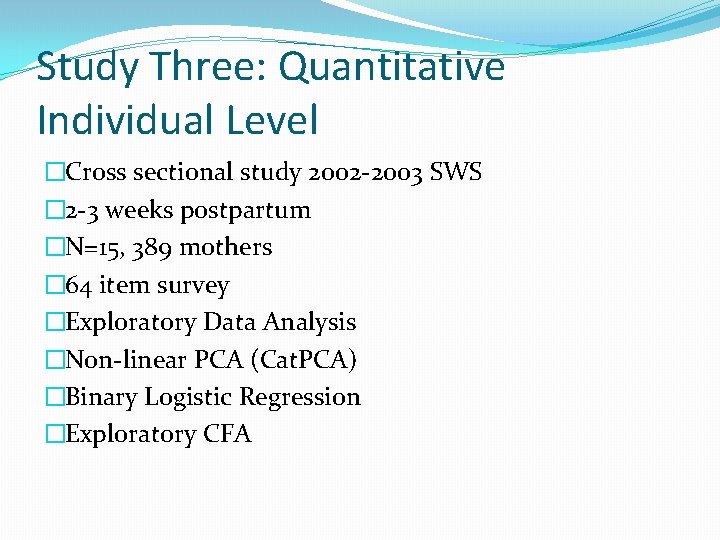
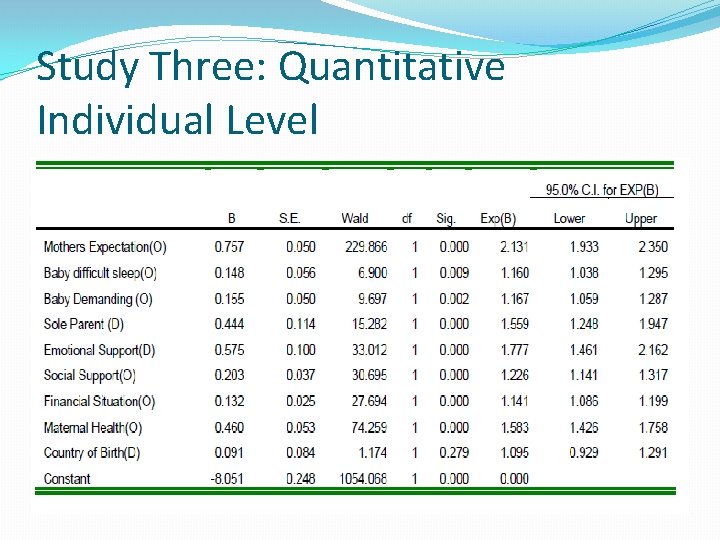
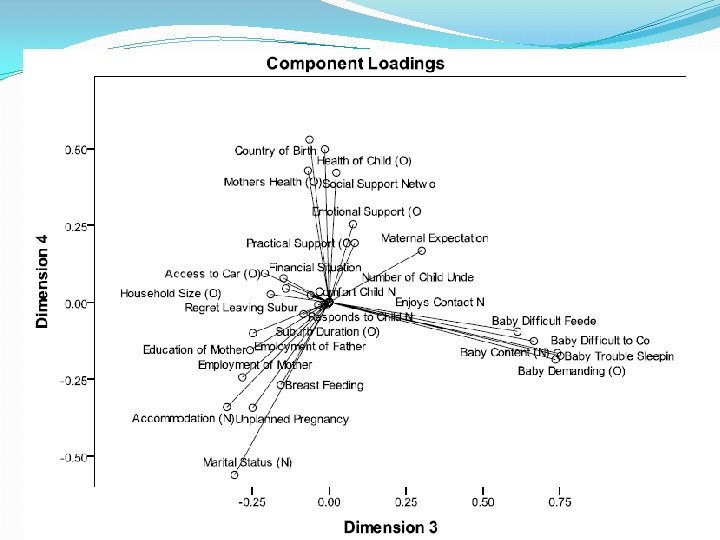
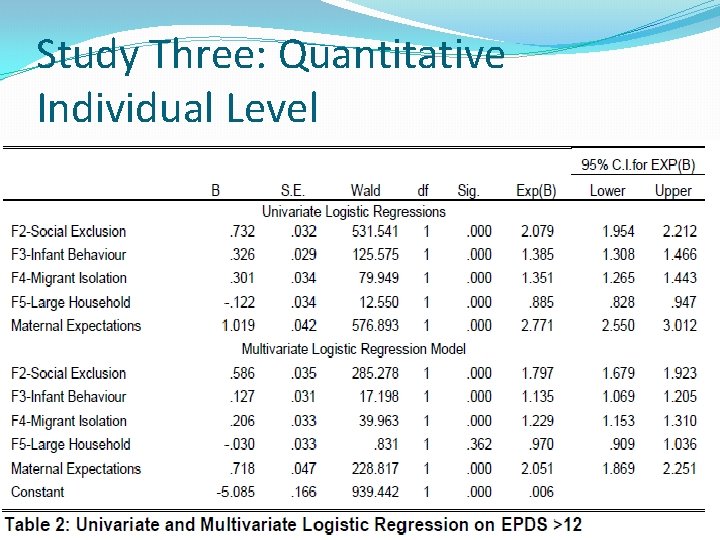
Study Three: Quantitative Individual Level �Cross sectional study 2002 -2003 SWS � 2 -3 weeks postpartum �N=15, 389 mothers � 64 item survey �Exploratory Data Analysis �Non-linear PCA (Cat. PCA) �Binary Logistic Regression �Exploratory CFA
Study Three: Quantitative Individual Level
Study Three: Quantitative Individual Level
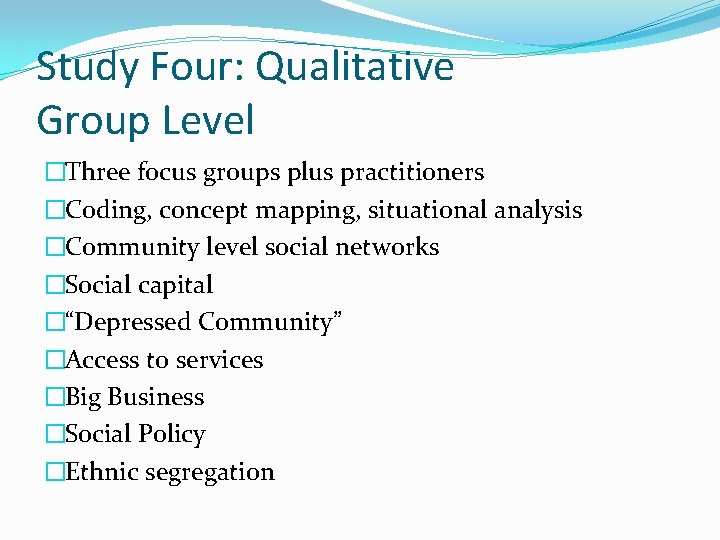
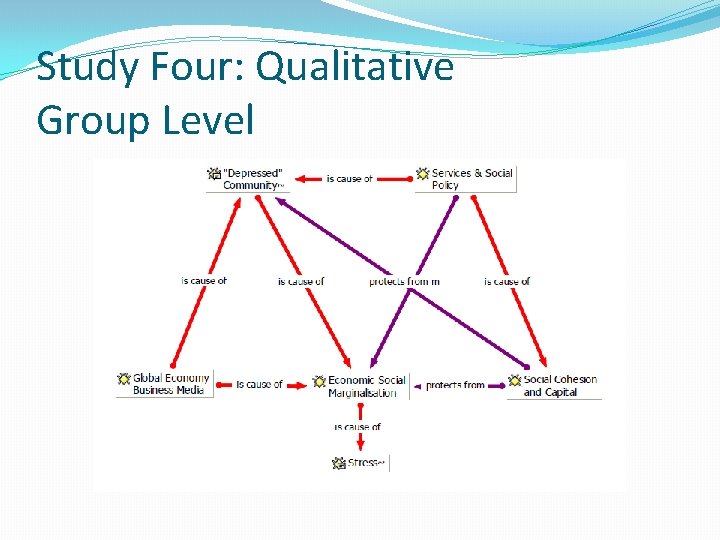
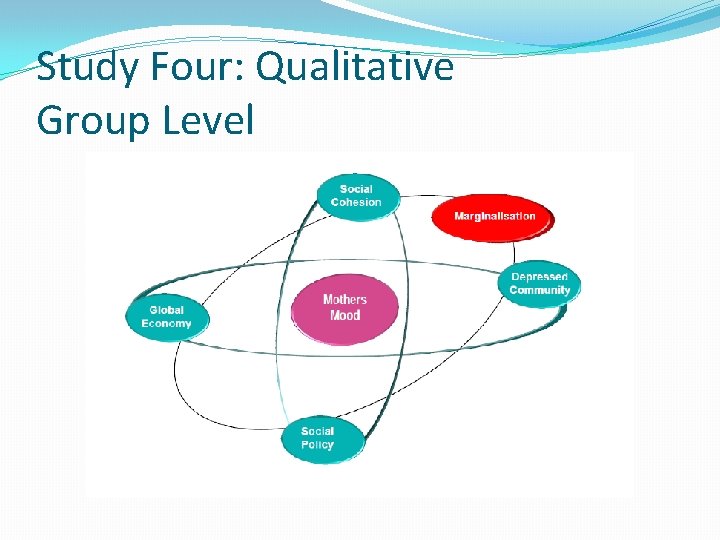
Study Four: Qualitative Group Level �Three focus groups plus practitioners �Coding, concept mapping, situational analysis �Community level social networks �Social capital �“Depressed Community” �Access to services �Big Business �Social Policy �Ethnic segregation
Study Four: Qualitative Group Level
Study Four: Qualitative Group Level
Study Five: Quantitative Group Level � 101 suburbs � 46 ecological variables � 26 selected after EDA and EFA �Six latent variables identified in EFA �Ecological linear regression �Spatial Bayesian Multilevel Logistic Regression
Study Five: Quantitative Group Level �Six latent variables were called: �Disadvantaged Communities �Social Cohesion �Health Behaviours �Housing Quality �Access to Services �Support Networks – Social Capital
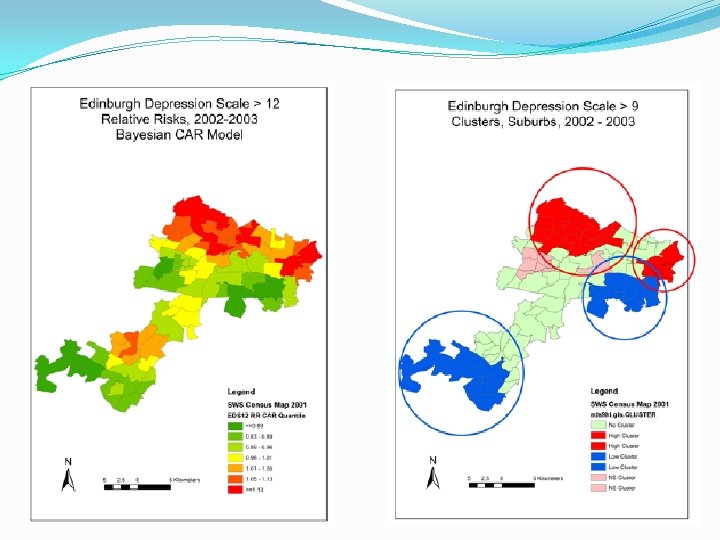
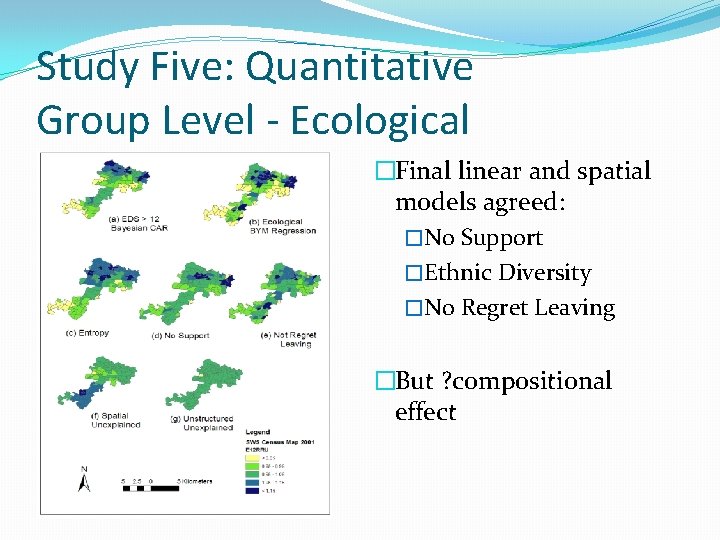
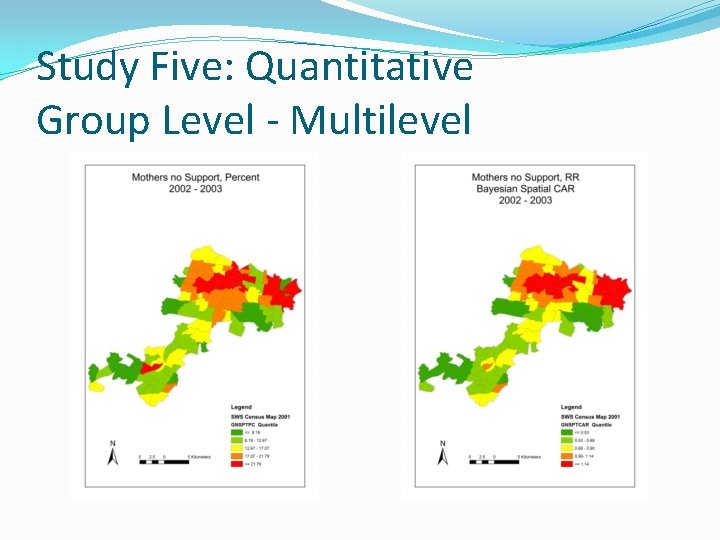
Study Five: Quantitative Group Level - Ecological �Final linear and spatial models agreed: �No Support �Ethnic Diversity �No Regret Leaving �But ? compositional effect
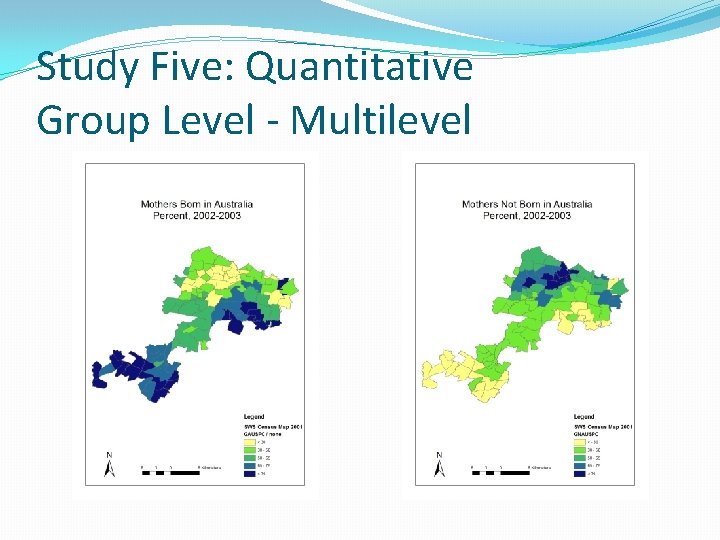
Study Five: Quantitative Group Level - Multilevel
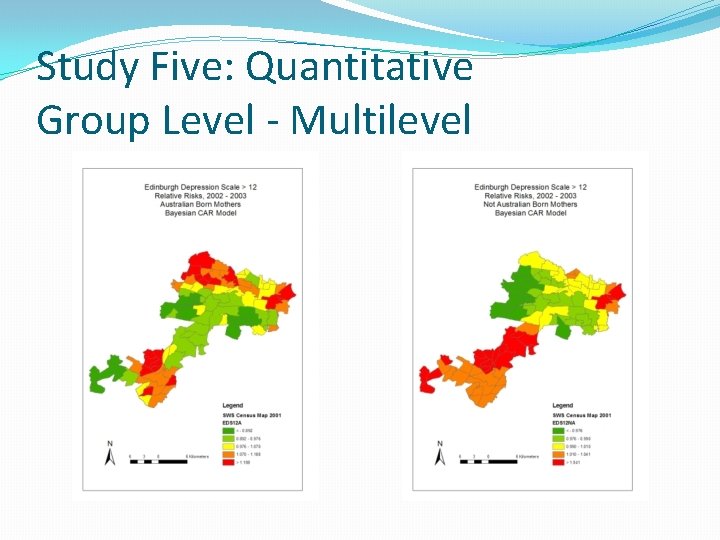
Study Five: Quantitative Group Level - Multilevel
Study Five: Quantitative Group Level - Multilevel
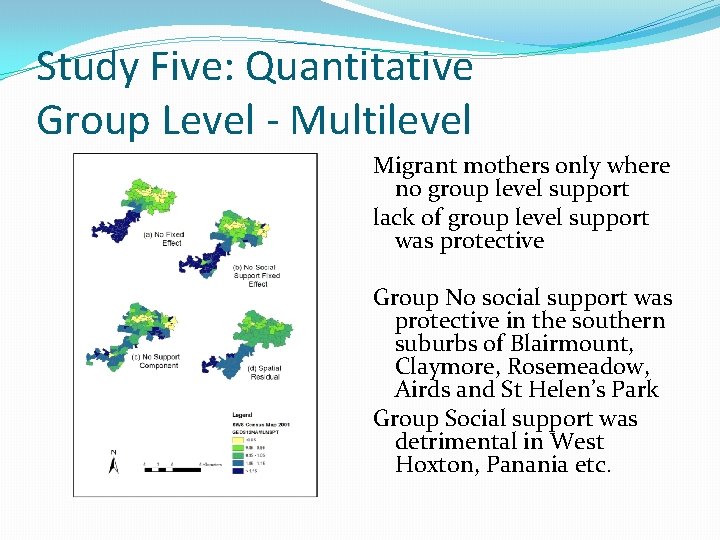
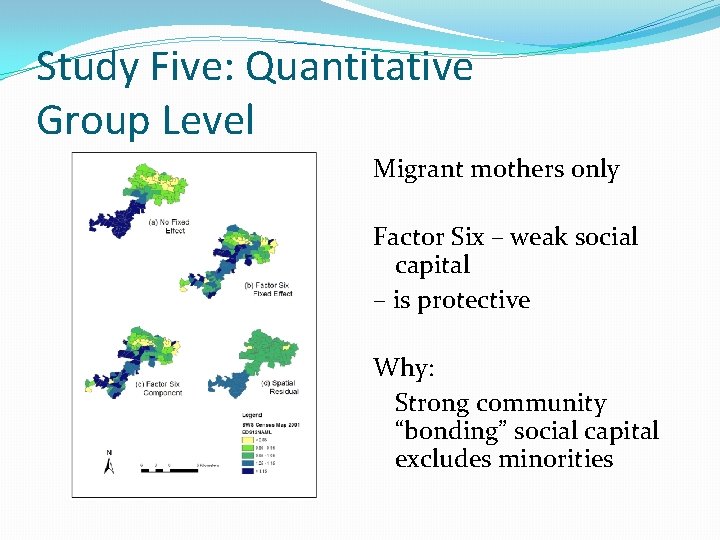
Study Five: Quantitative Group Level - Multilevel Migrant mothers only where no group level support lack of group level support was protective Group No social support was protective in the southern suburbs of Blairmount, Claymore, Rosemeadow, Airds and St Helen’s Park Group Social support was detrimental in West Hoxton, Panania etc.
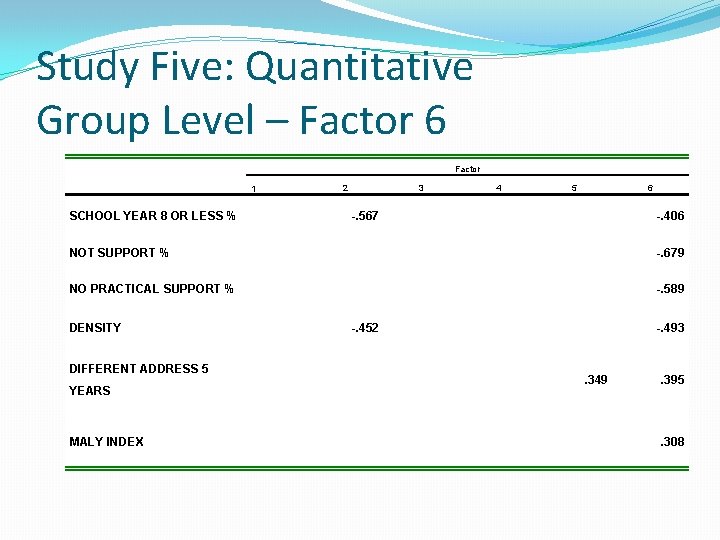
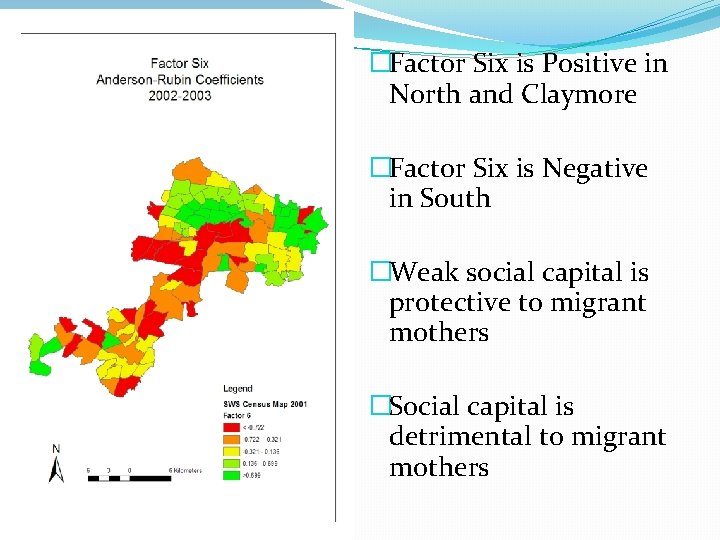
Study Five: Quantitative Group Level – Factor 6 Factor 1 SCHOOL YEAR 8 OR LESS % 2 3 4 5 6 -. 567 -. 406 NOT SUPPORT % -. 679 NO PRACTICAL SUPPORT % -. 589 DENSITY DIFFERENT ADDRESS 5 YEARS MALY INDEX -. 452 -. 493 . 349 . 395 . 308
Study Five: Quantitative Group Level – Factor 6 �poor schooling �no support �no practical support �density �-ve different address �-ve Maly index (low diversity) �? Weak Social Capital �Opposite is Strong Social Capital
�Factor Six is Positive in North and Claymore �Factor Six is Negative in South �Weak social capital is protective to migrant mothers �Social capital is detrimental to migrant mothers
Study Five: Quantitative Group Level Migrant mothers only Factor Six – weak social capital – is protective Why: Strong community “bonding” social capital excludes minorities
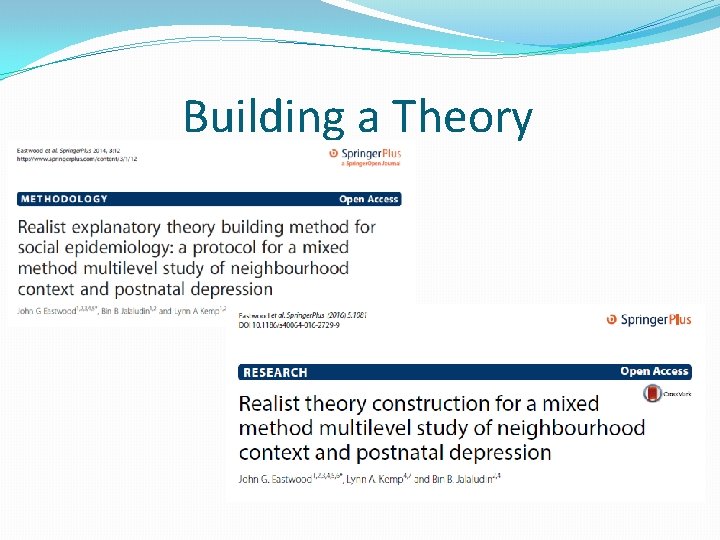
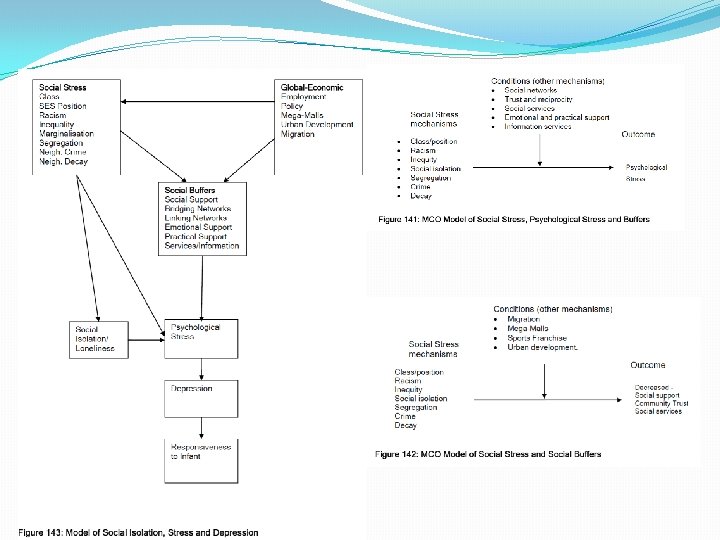
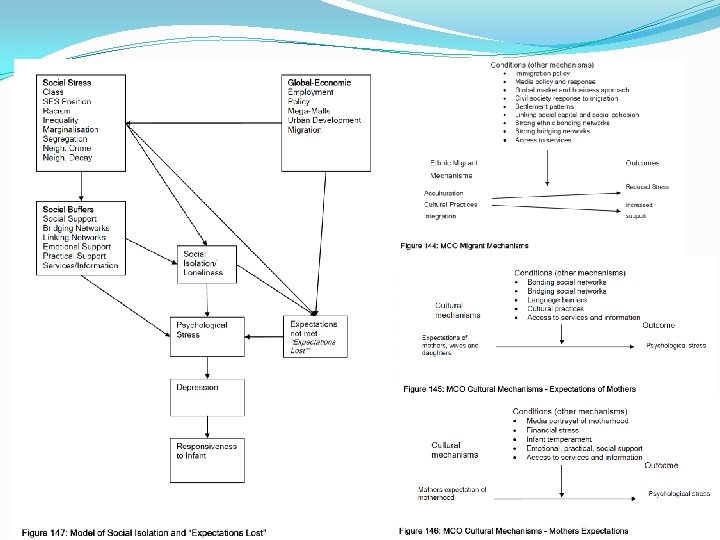
Building a Theory
Conclusion �Drawing on the call for theory building approaches to social epidemiology I have utilised critical realism and a mixed method design to construct an explanatory theory of maternal depression and context. �The study will contribute to the increasing role that both realism and mixed methods are playing in explaining the social distribution and social determinants of health.
Conclusion �The study found accumulating evidence that maternal stress, during and after pregnancy, is a cause of maternal depression and altered developmental trajectory of her infant. The focus of this study has been on the social context that initiates or conditions maternal stress. �Global, economic, social and cultural mechanisms were identified that explain maternal stress and depression within family and neighbourhood contexts. There is a complex intertwining of historical, spatial, cultural, material and relational elements that contribute to the experiences of loss and nurturing.
Conclusion �Emerging is the centrality of expectation lost as a possible trigger of stress and depression not only for mothers but also others who have their dreams shattered during life’s transitions. In these situations social and cultural context can either nurture and support or marginalise and isolate. �The challenge for policy and practice is to support mothers and their partners during the transition to parenthood within a challenging global-economic context.