
Social Cognitive Career Theory SCCT Robert W Lent
Social Cognitive Career Theory (SCCT) Robert W. Lent Steven D. Brown Gail Hackett

- SCCT Stresses self-referent thinking in Motivation and in Behavior Predicts: Interests Choices Performance
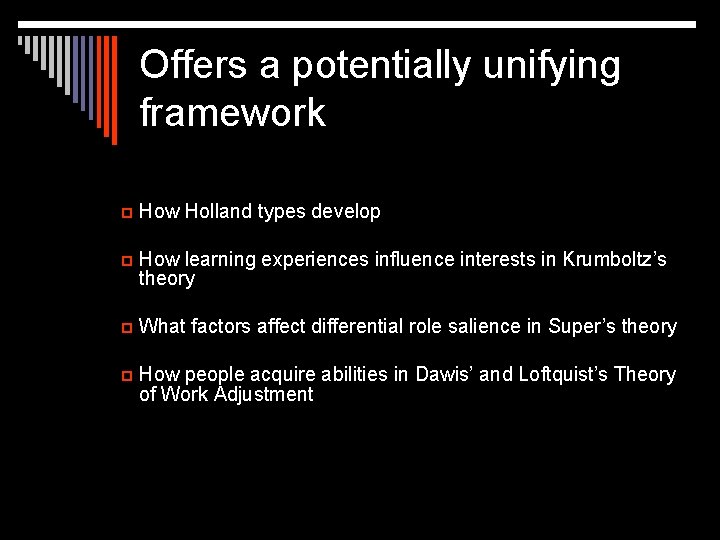
Offers a potentially unifying framework p How Holland types develop p How learning experiences influence interests in Krumboltz’s theory p What factors affect differential role salience in Super’s theory p How people acquire abilities in Dawis’ and Loftquist’s Theory of Work Adjustment
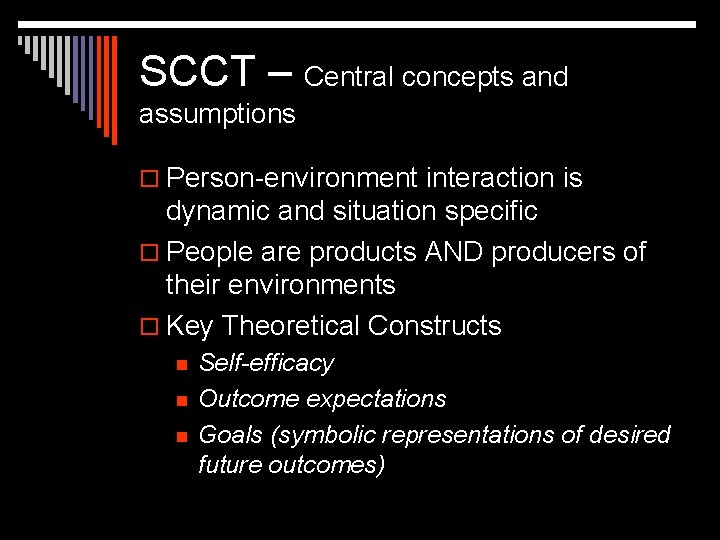
SCCT – Central concepts and assumptions o Person-environment interaction is dynamic and situation specific o People are products AND producers of their environments o Key Theoretical Constructs n n n Self-efficacy Outcome expectations Goals (symbolic representations of desired future outcomes)

Development of Basic Career Interests over Time (Lent, Brown, & Hackett, 1994) Perceived Abilities Self-Efficacy Sources of Self-Efficacy and Outcome Expectations Interest Intentions/ Goals for Activity Involvement Outcome Expectations Values Activity Selection and Practice Performance Attainments (e. g. , goal fulfillment, skill development
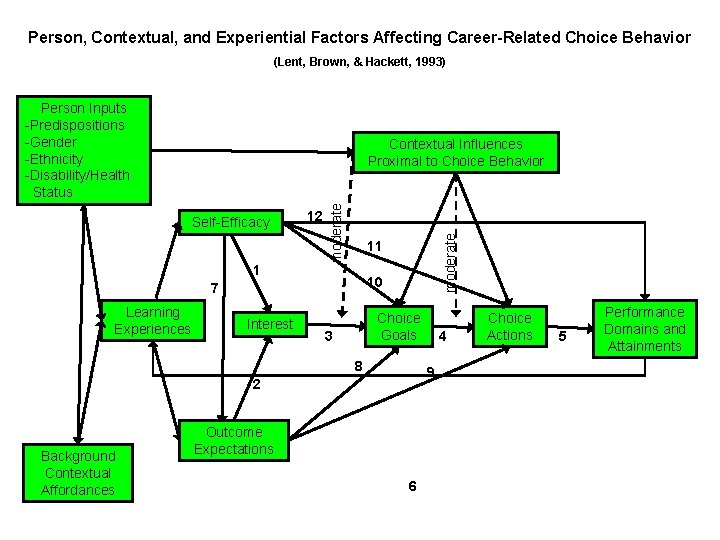
Person, Contextual, and Experiential Factors Affecting Career-Related Choice Behavior (Lent, Brown, & Hackett, 1993) Person Inputs -Predispositions -Gender -Ethnicity -Disability/Health Status 1 12 11 10 7 Learning Experiences Interest moderate Self-Efficacy moderate Contextual Influences Proximal to Choice Behavior Choice Goals 3 8 9 2 Background Contextual Affordances 4 Outcome Expectations 6 Choice Actions 5 Performance Domains and Attainments
SCCT – Intervention Implications o Expand interests and facilitate choice n Revisit Foreclosed options o Overcome barriers to choice and success n Highlight Supports o Develop and modify self-efficacy and outcome expectations
- Slides: 7