
Social Beliefs Judgments Dualistic nature of cognition n
Social Beliefs & Judgments
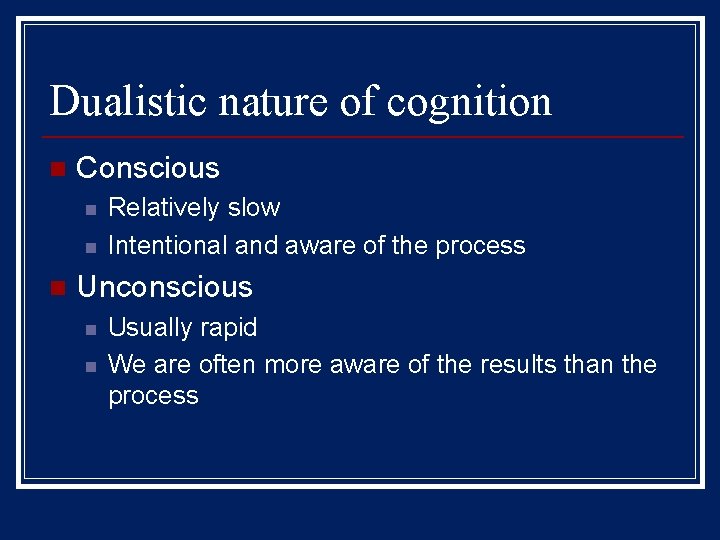
Dualistic nature of cognition n Conscious n n n Relatively slow Intentional and aware of the process Unconscious n n Usually rapid We are often more aware of the results than the process
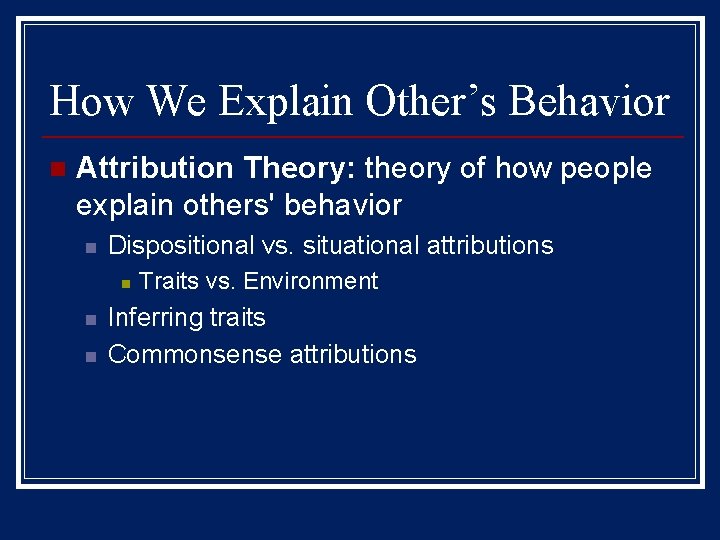
How We Explain Other’s Behavior n Attribution Theory: theory of how people explain others' behavior n Dispositional vs. situational attributions n n n Traits vs. Environment Inferring traits Commonsense attributions
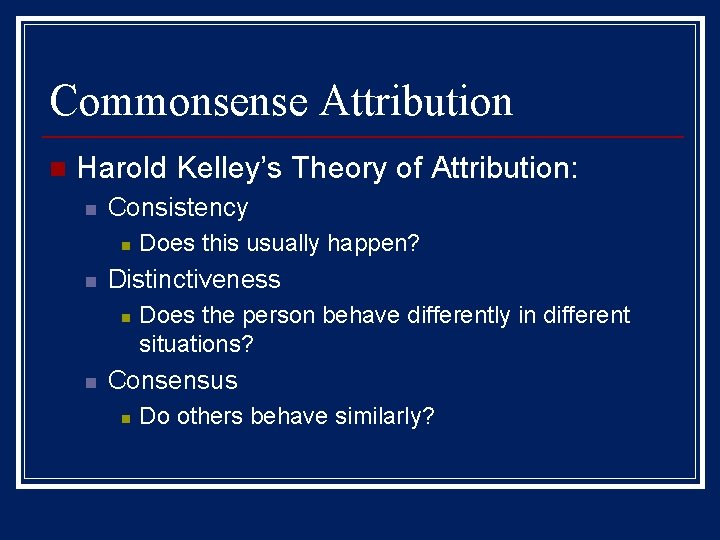
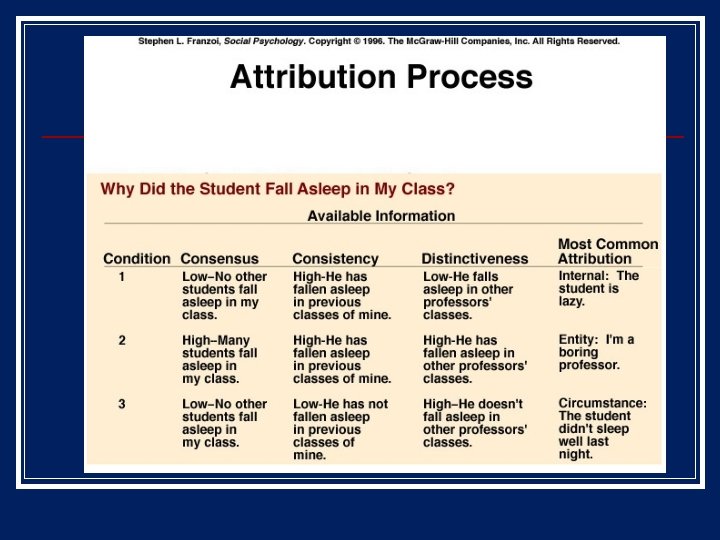
Commonsense Attribution n Harold Kelley’s Theory of Attribution: n Consistency n n Distinctiveness n n Does this usually happen? Does the person behave differently in different situations? Consensus n Do others behave similarly?
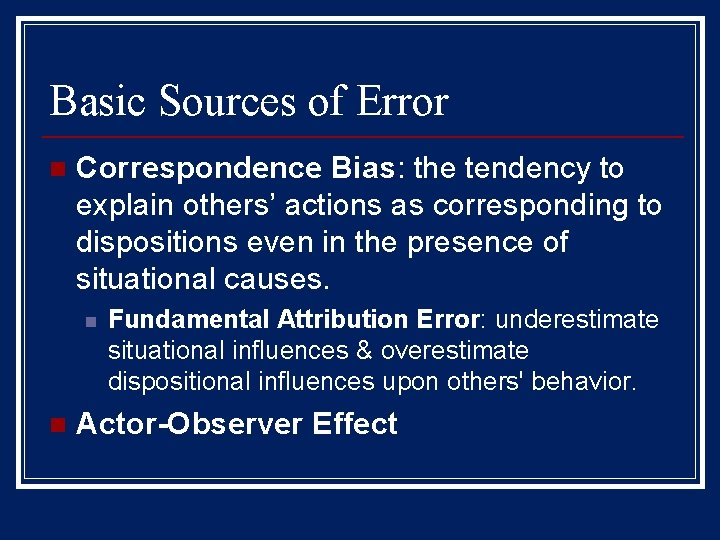
Basic Sources of Error n Correspondence Bias: the tendency to explain others’ actions as corresponding to dispositions even in the presence of situational causes. n n Fundamental Attribution Error: underestimate situational influences & overestimate dispositional influences upon others' behavior. Actor-Observer Effect
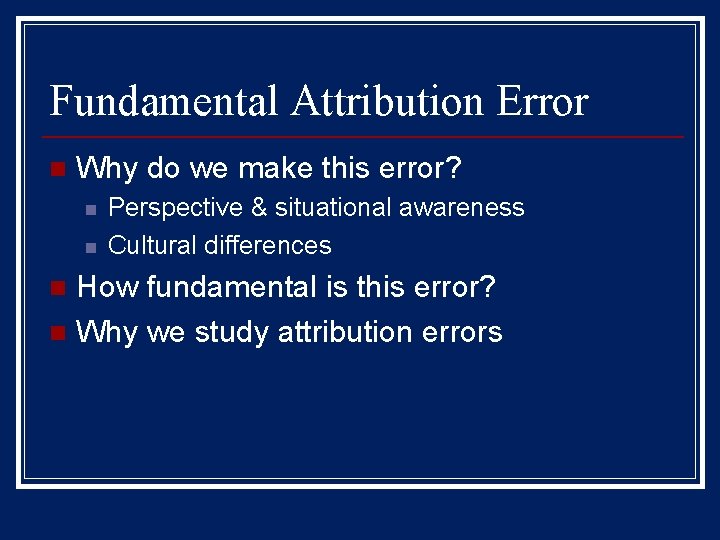
Fundamental Attribution Error n Why do we make this error? n n Perspective & situational awareness Cultural differences How fundamental is this error? n Why we study attribution errors n
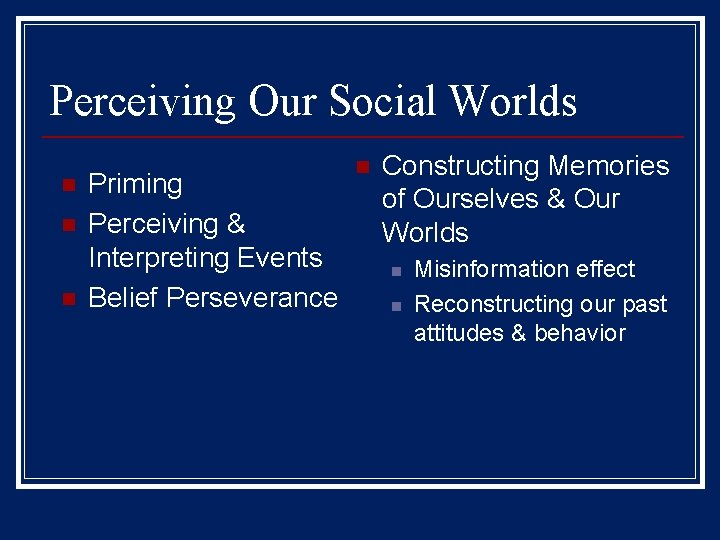
Perceiving Our Social Worlds n n n Priming Perceiving & Interpreting Events Belief Perseverance n Constructing Memories of Ourselves & Our Worlds n n Misinformation effect Reconstructing our past attitudes & behavior
Judging Our Social World n Intuitive Judgments n n n Powers of intuition Limits of intuition Overconfidence n n n Overconfidence phenomenon Confirmation bias Remedies
Judging Others Thinking without awareness n Judgmental overconfidence n Heuristics (Mental Shortcuts) n n n Representative heuristic The availability heuristic
Representative Heuristic n Snap judgments of whether someone or something fits a category. n May lead to discounting other important information. n Judging by resemblance n Workplace mix-ups
Availability Heuristic n Quick judgments of likelihood of events (how available in memory). n Overweighting valid instances, leading to fearing wrong things. n What comes to mind first n Violence & School shootings
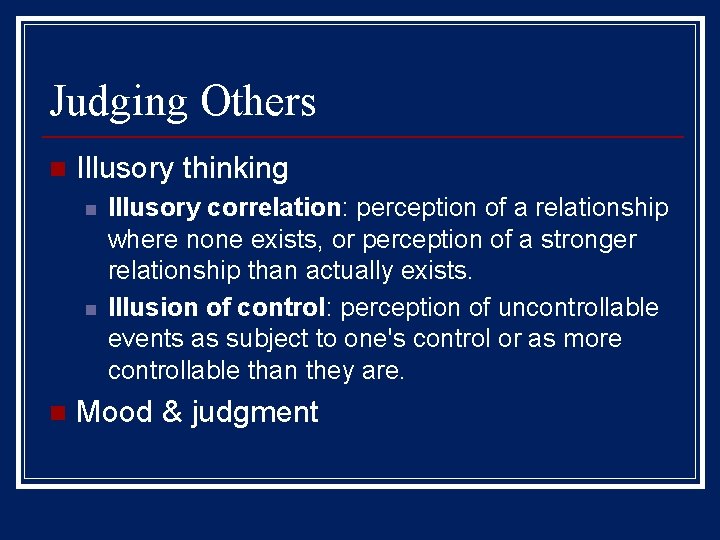
Judging Others n Illusory thinking n n n Illusory correlation: perception of a relationship where none exists, or perception of a stronger relationship than actually exists. Illusion of control: perception of uncontrollable events as subject to one's control or as more controllable than they are. Mood & judgment

Self-Fulfilling Beliefs Teacher expectations & student performance n Getting from others what we expect n A belief that leads to its own fulfillment. n
- Slides: 14