
Social aspects of Information literacy learning process experience
- Slides: 25
Social aspects of Information literacy: learning process, experience, users needs, training and barriers of library professionals MOMENA KHATUN Vrijwilliger Department of Information Management Felix. Archief, Antwerp E-mail: momenakhatun@gmail. com 10 December 2014 1
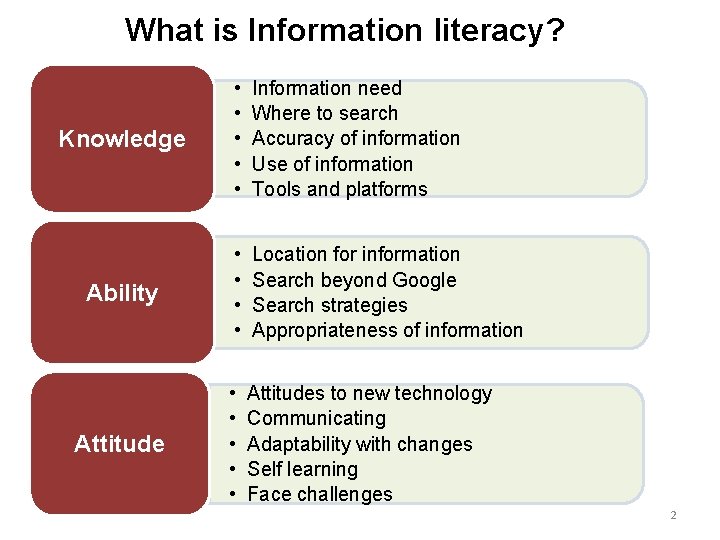
What is Information literacy? Knowledge • • • Information need Where to search Accuracy of information Use of information Tools and platforms Ability • • Location for information Search beyond Google Search strategies Appropriateness of information Attitude • • • Attitudes to new technology Communicating Adaptability with changes Self learning Face challenges 2
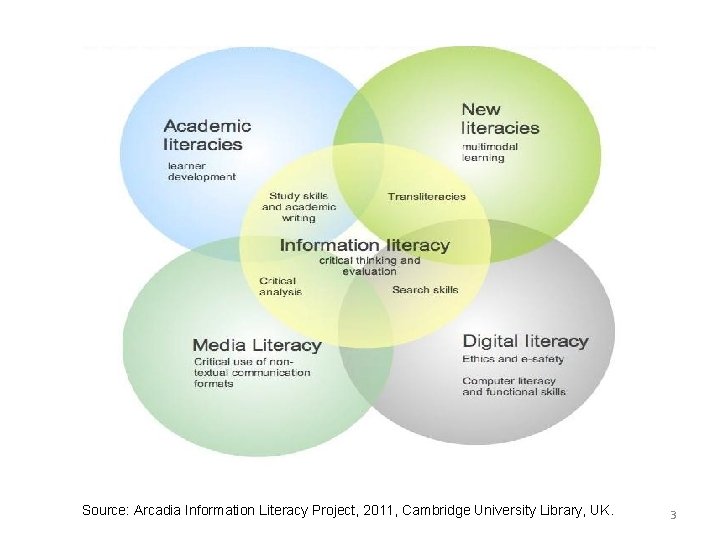
Source: Arcadia Information Literacy Project, 2011, Cambridge University Library, UK. 3
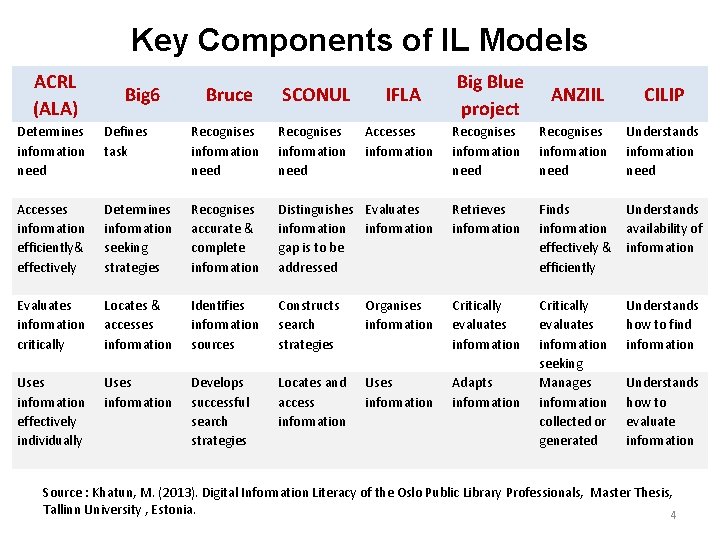
Key Components of IL Models ACRL (ALA) Big 6 Bruce SCONUL IFLA Big Blue project ANZIIL CILIP Determines information need Defines task Recognises information need Accesses information Recognises information need Understands information need Accesses information efficiently& effectively Determines information seeking strategies Recognises accurate & complete information Distinguishes Evaluates information gap is to be addressed Retrieves information Finds information effectively & efficiently Understands availability of information Evaluates information critically Locates & accesses information Identifies information sources Constructs search strategies Organises information Critically evaluates information Understands how to find information Uses information effectively individually Uses information Develops successful search strategies Locates and access information Uses information Adapts information Critically evaluates information seeking Manages information collected or generated Understands how to evaluate information Source : Khatun, M. (2013). Digital Information Literacy of the Oslo Public Library Professionals, Master Thesis, Tallinn University , Estonia. 4
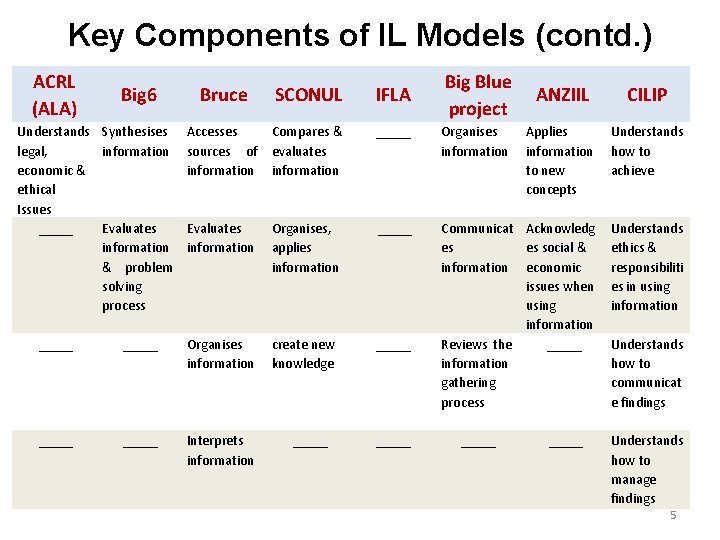
Key Components of IL Models (contd. ) ACRL (ALA) Big 6 Understands Synthesises legal, information economic & ethical Issues _____ Evaluates information & problem solving process Bruce Big Blue project SCONUL IFLA Accesses Compares & sources of evaluates information _____ Organises information Evaluates information Organises, applies information _____ create new knowledge _____ Organises information _____ Interprets information _____ ANZIIL CILIP Applies information to new concepts Understands how to achieve Communicat Acknowledg es es social & information economic issues when using information Reviews the _____ information gathering process Understands ethics & responsibiliti es in using information _____ Understands how to communicat e findings Understands how to manage findings 5
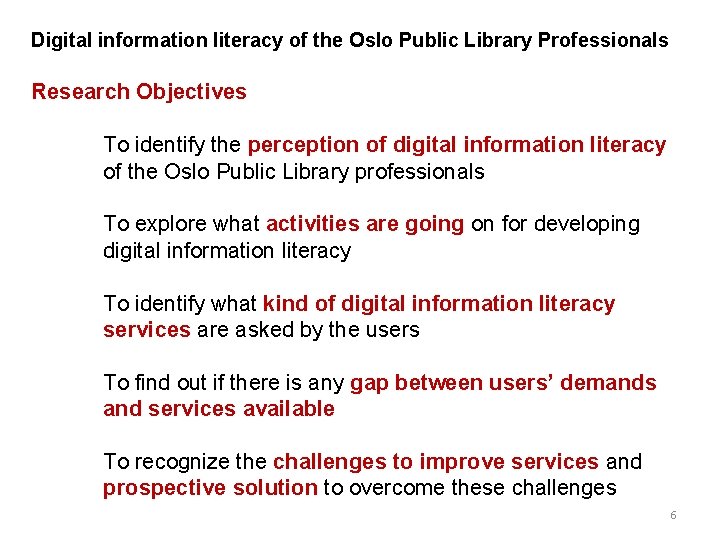
Digital information literacy of the Oslo Public Library Professionals Research Objectives To identify the perception of digital information literacy of the Oslo Public Library professionals To explore what activities are going on for developing digital information literacy To identify what kind of digital information literacy services are asked by the users To find out if there is any gap between users’ demands and services available To recognize the challenges to improve services and prospective solution to overcome these challenges 6
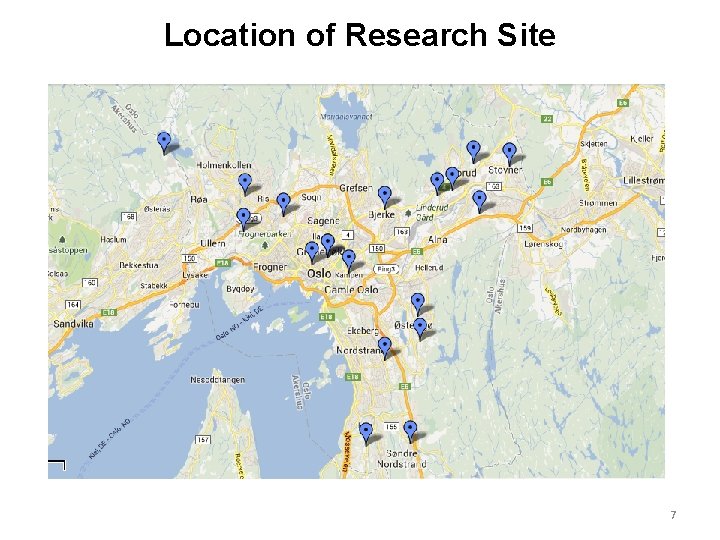
Location of Research Site 7
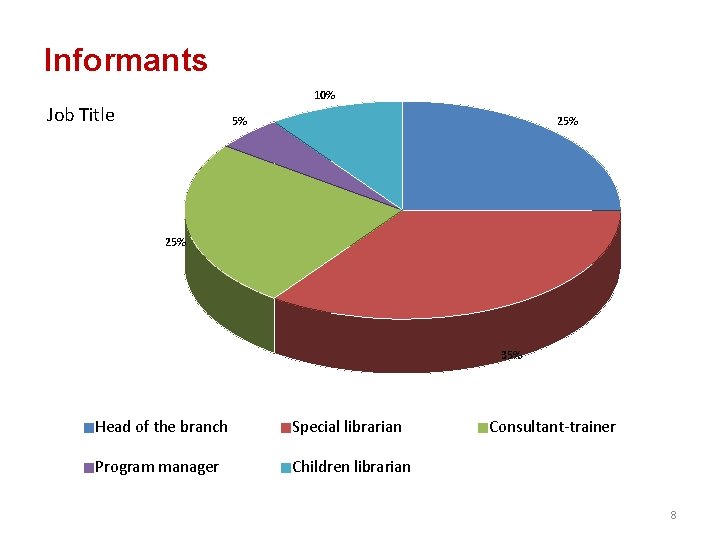
Informants 10% Job Title 5% 25% 35% Head of the branch Special librarian Program manager Children librarian Consultant-trainer 8
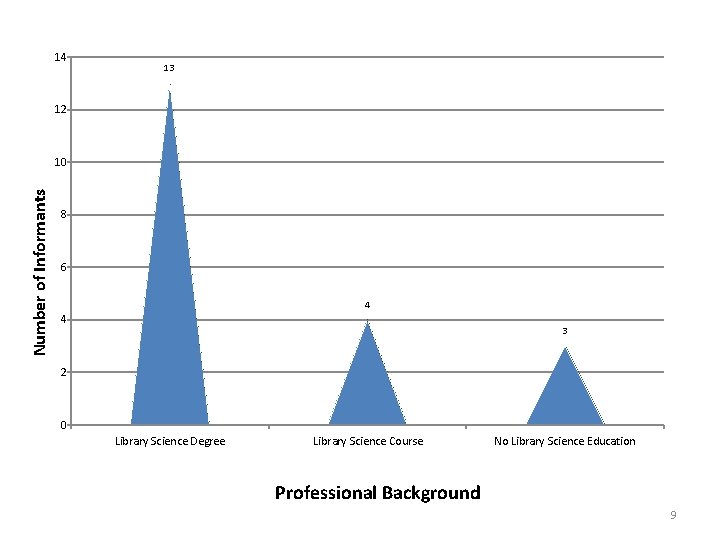
14 13 12 Number of Informants 10 8 6 4 4 3 2 0 Library Science Degree Library Science Course No Library Science Education Professional Background 9
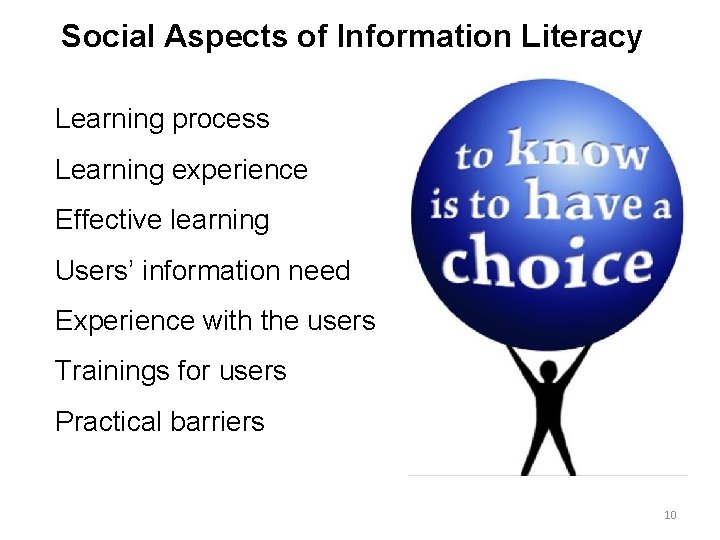
Social Aspects of Information Literacy Learning process Learning experience Effective learning Users’ information need Experience with the users Trainings for users Practical barriers 10
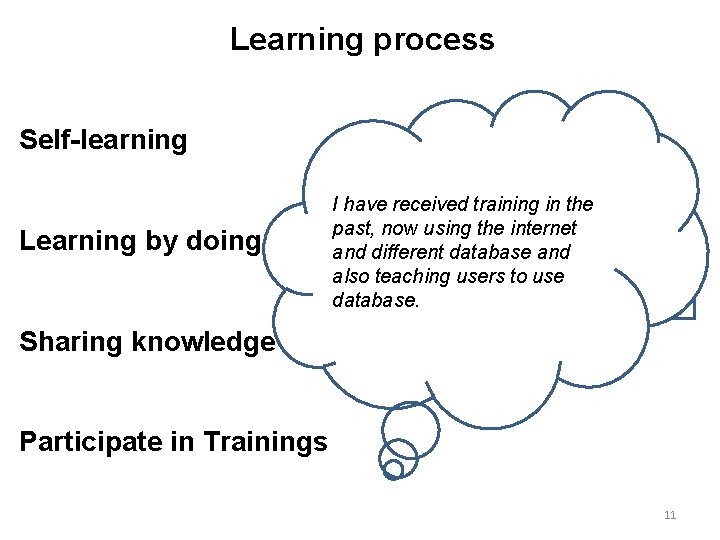
Learning process Self-learning Learning by doing I have received training in the We to learn how to use I try take initiative and try tothe findeach out We also use strategy of helping past, now using the internet databases in our work… We things and doing things, trylearn by it other…We can learn a lotand from colleague and different database myself instead of each waiting along all way. So, it is notforlike we sit as well justthe talking to other helping also teaching users to use down someone and today weit. are going to learn. each other. database. to do Sharing knowledge Participate in Trainings 11
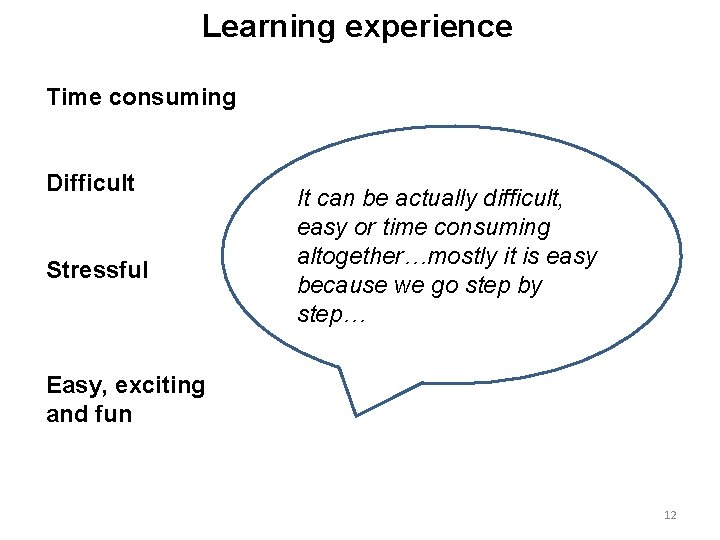
Learning experience Time consuming Difficult Stressful It can be actually difficult, Difficult, Itwhen weconsuming. learn something new is time I do not easy or time consuming Ityou was stressful …we were thrown into also have. I to build on that think have enough time to altogether…mostly it isineasy using the search engine and you want to information, we have to use it practice learn all the things. provide a good we service for theby customers because go step a lot. step… Easy, exciting and fun 12
Effective learning Formal course and Practice In-house training To be able to help the staff each Taking that information other on daily basis is may be It should be formal training because and there learning are probablyand fields that the…most effective way as Iadolot notteaching know and there should have at others here of very specific things someone to introduce to mehappens. branch everythe day… Helping each other 13
Users’ information need General information need Query about particular government laws Stamps on paper for notarization How to book a hotels, tickets How to fill a job applications Filling up visa forms Reading online newspaper Internet banking & Bill payment Searching for accommodation Tax file submission 14
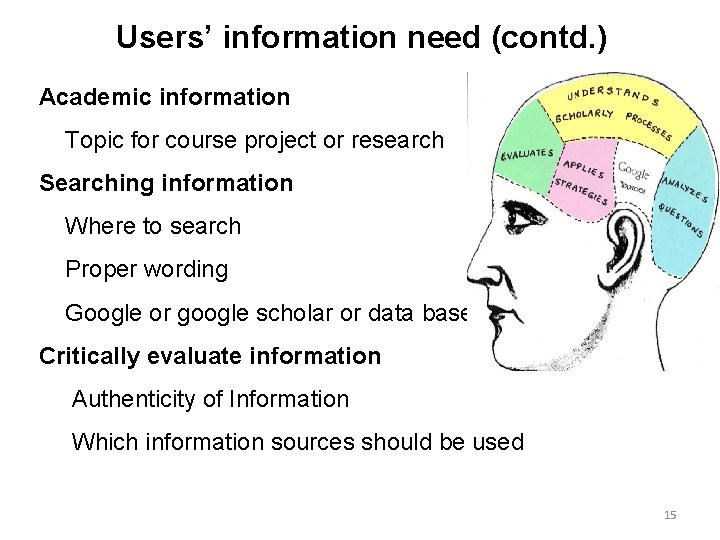
Users’ information need (contd. ) Academic information Topic for course project or research Searching information Where to search Proper wording Google or google scholar or data base Critically evaluate information Authenticity of Information Which information sources should be used 15
Users’ information need (contd. ) Synthesize the information Use the information Create new knowledge Ethical use of information Need for prior permission Citation Where to publish Journal evaluation 16
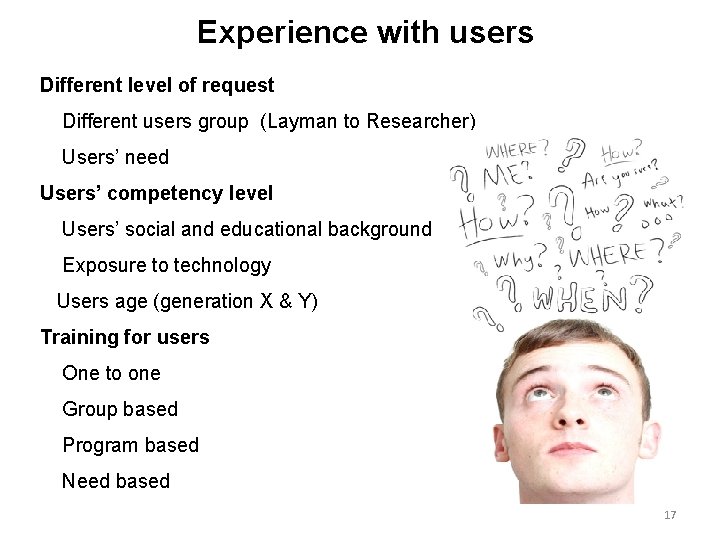
Experience with users Different level of request Different users group (Layman to Researcher) Users’ need Users’ competency level Users’ social and educational background Exposure to technology Users age (generation X & Y) Training for users One to one Group based Program based Need based 17
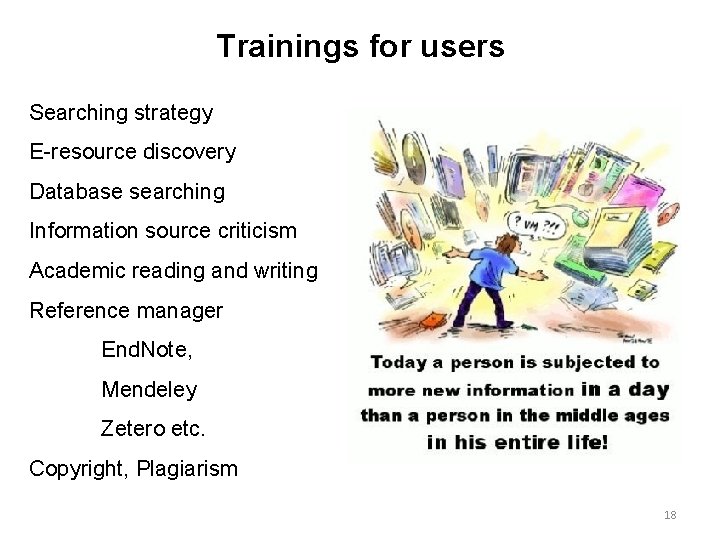
Trainings for users Searching strategy E-resource discovery Database searching Information source criticism Academic reading and writing Reference manager End. Note, Mendeley Zetero etc. Copyright, Plagiarism 18
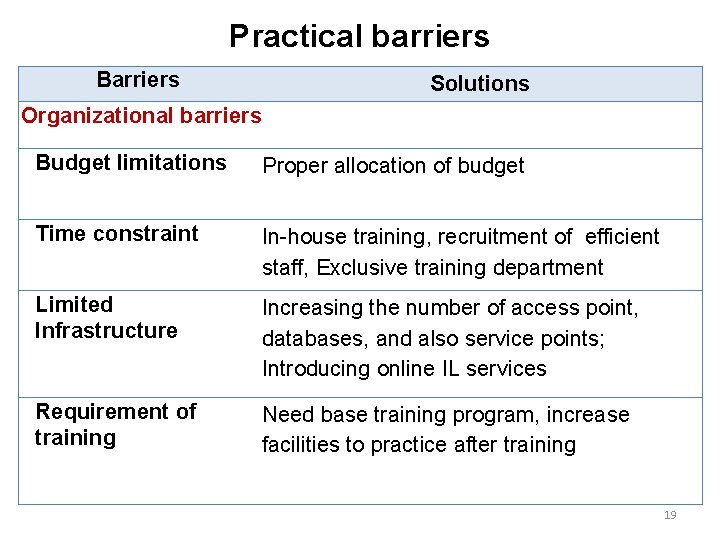
Practical barriers Barriers Solutions Organizational barriers Budget limitations Proper allocation of budget Time constraint In-house training, recruitment of efficient staff, Exclusive training department Limited Infrastructure Increasing the number of access point, databases, and also service points; Introducing online IL services Requirement of training Need base training program, increase facilities to practice after training 19
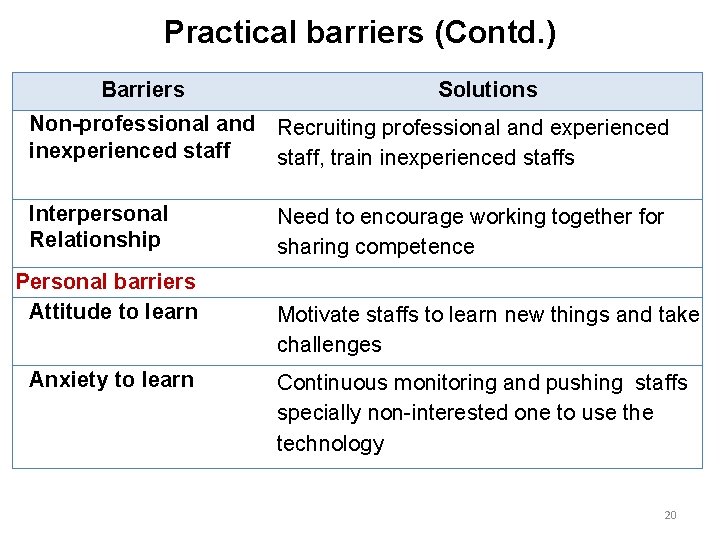
Practical barriers (Contd. ) Barriers Solutions Non-professional and Recruiting professional and experienced inexperienced staff, train inexperienced staffs Interpersonal Relationship Personal barriers Attitude to learn Anxiety to learn Need to encourage working together for sharing competence Motivate staffs to learn new things and take challenges Continuous monitoring and pushing staffs specially non-interested one to use the technology 20
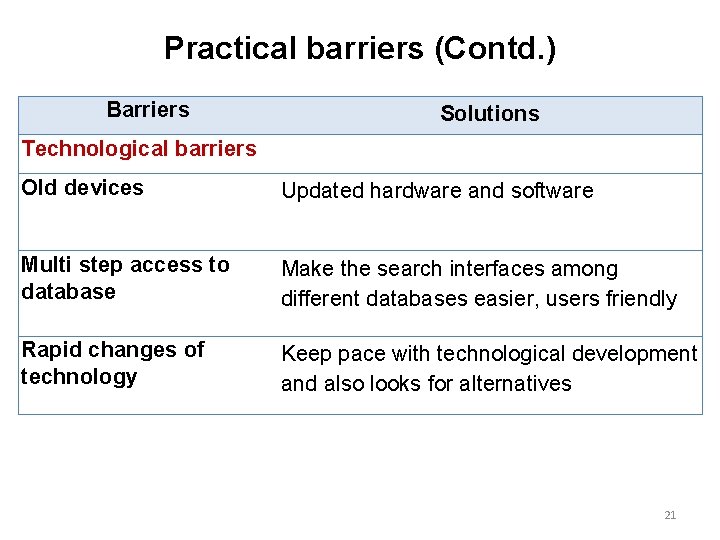
Practical barriers (Contd. ) Barriers Solutions Technological barriers Old devices Updated hardware and software Multi step access to database Make the search interfaces among different databases easier, users friendly Rapid changes of technology Keep pace with technological development and also looks for alternatives 21
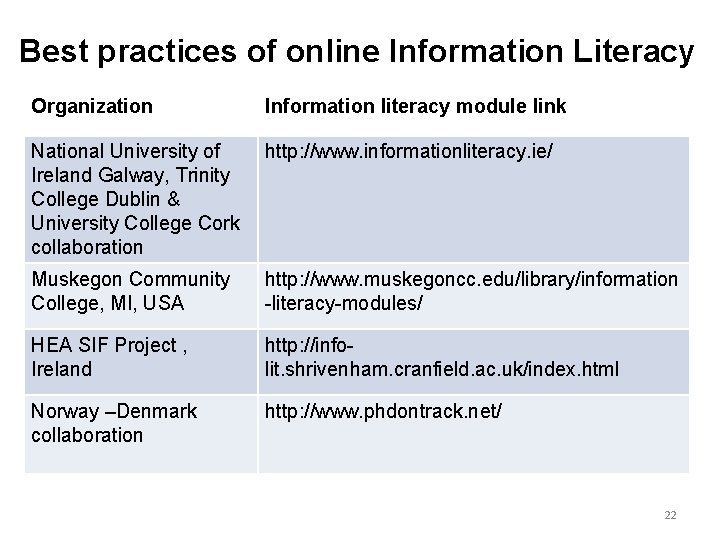
Best practices of online Information Literacy Organization Information literacy module link National University of Ireland Galway, Trinity College Dublin & University College Cork collaboration http: //www. informationliteracy. ie/ Muskegon Community College, MI, USA http: //www. muskegoncc. edu/library/information -literacy-modules/ HEA SIF Project , Ireland http: //infolit. shrivenham. cranfield. ac. uk/index. html Norway –Denmark collaboration http: //www. phdontrack. net/ 22
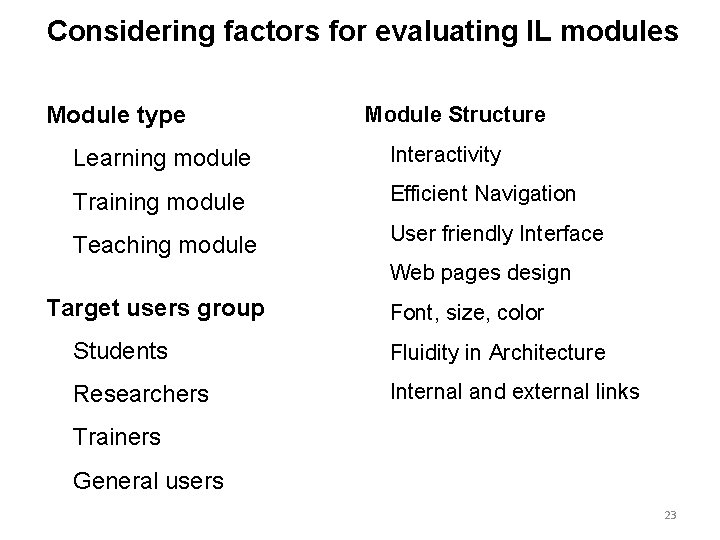
Considering factors for evaluating IL modules Module type Module Structure Learning module Interactivity Training module Efficient Navigation Teaching module User friendly Interface Web pages design Target users group Font, size, color Students Fluidity in Architecture Researchers Internal and external links Trainers General users 23
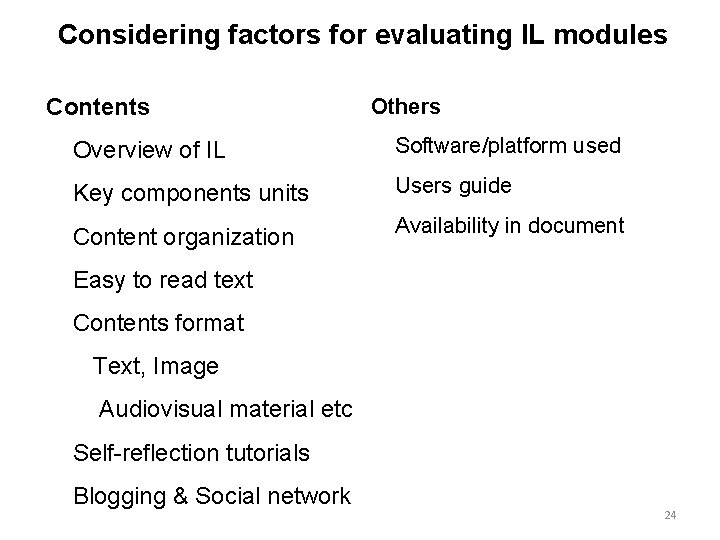
Considering factors for evaluating IL modules Contents Others Overview of IL Software/platform used Key components units Users guide Content organization Availability in document Easy to read text Contents format Text, Image Audiovisual material etc Self-reflection tutorials Blogging & Social network 24
Social aspects of Information literacy: learning process, experience, users needs, training, and barriers of library professionals 25