
Social Accountability Enhancing citizen voice and client focus
Social Accountability Enhancing citizen voice and client focus in governance and service delivery Reiner Forster, SDV January 25 th, 2005 1 Note: This interactive learning module, designed by Social Impact, was commissioned by the World Bank’s PREM Poverty Group and developed in collaboration with SDV, WBI and the PREM Public Sector Group. Supported by a concept paper, it is a generic introductory-level module which may be adapted to suit different target audiences and time frames.
What is Accountability? 2 • Accountability is the obligation of power-holders to account for or take responsibility for their actions. • Power-holders: holding political, financial or other forms of power, e. g. public officials, private employers, donors, service providers, traditional leaders, NGOs. • Key area: government or public accountability – builds on the implicit ‘social contract‘ between citizens and public officials. – obligation of public officials and the right/ entitlement of citizens
What are public officials responsible for? • Their conduct—they must obey the law, rules, procedures and not abuse their powers. • Their performance—they must serve the public interest in an efficient, effective and fair manner. • All states have some form of 3 mechanisms to promote or ensure accountability of public actors.
How can accountability be ensured ? 1. Rules and Regulations – administrative procedures, audits, code of conduct… 2. Bring in Market Principles – privatization or contracting out to private sector and NGOs 3. Independent Agencies – ombudsman, vigilance committees … 4. “Social Accountability” 4 There has been varying success with these. What has been learnt is that success often depends on direct participation of the people
What is Social Accountability? SAc is an approach towards building accountability – that relies on civic engagement, – where ordinary citizens and/or their organizations participate directly or indirectly in exacting accountability SAc mechanisms can be initiated and supported by the state, citizens or both, but very often they are demand-driven and operate from the bottom up. 5 SAc mechanisms include many actions and tools that citizens, NGOs and media can use to hold public authorities accountable.
Social Accountability Mechanisms include. . . 6 n Social audits n Independent budget analysis by CSOs/ Think Tanks n Public budget hearings n Citizen juries n Civil society monitoring of performance of public agencies n Investigative journalism n Right to information movements n Election Watch
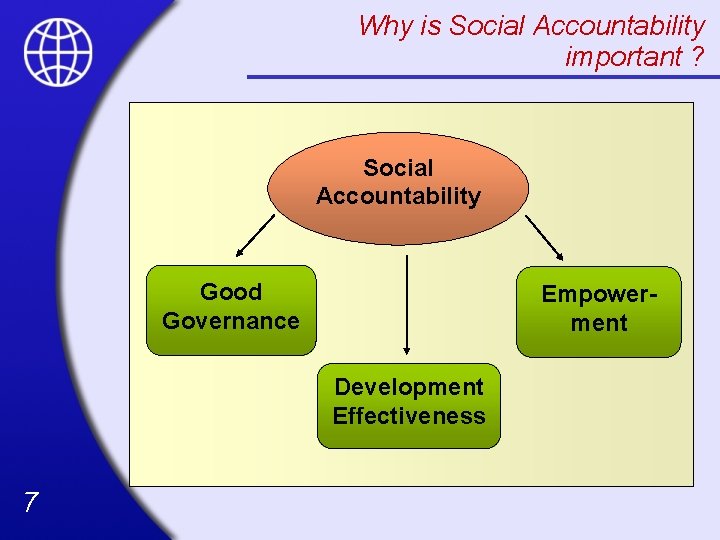
Why is Social Accountability important ? Social Accountability Good Governance Empowerment Development Effectiveness 7
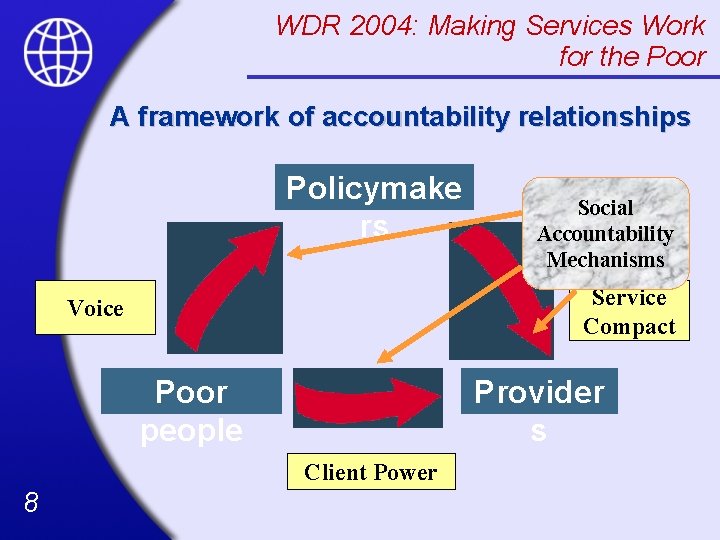
WDR 2004: Making Services Work for the Poor A framework of accountability relationships Policymake rs Service Compact Voice Poor people Provider s Client Power 8 Social Accountability Mechanisms
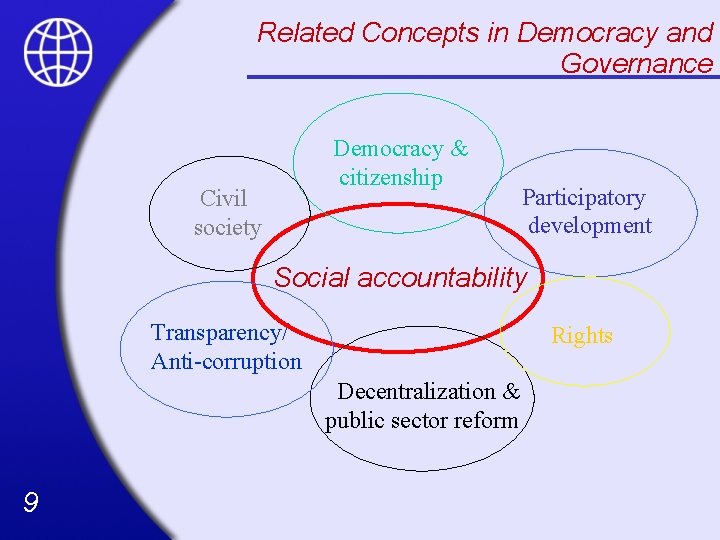
Related Concepts in Democracy and Governance Democracy & citizenship Civil society Participatory development Social accountability Transparency/ Anti-corruption Rights Decentralization & public sector reform 9
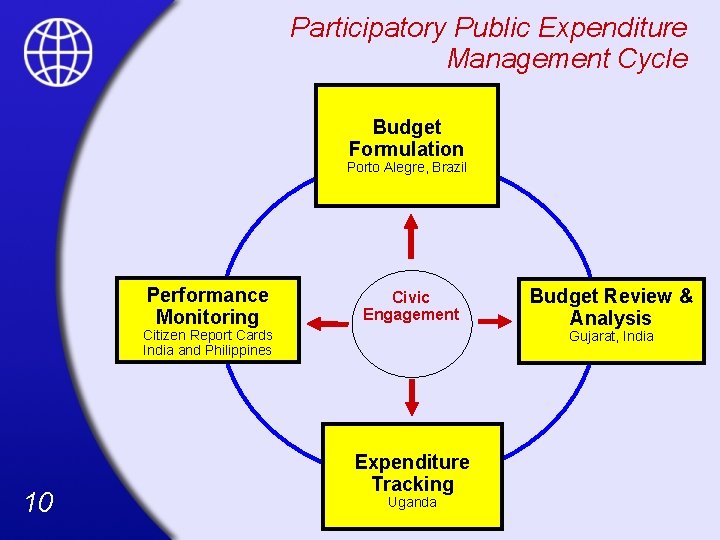
Participatory Public Expenditure Management Cycle Budget Formulation Porto Alegre, Brazil Performance Monitoring Civic Engagement Citizen Report Cards India and Philippines 10 Budget Review & Analysis Gujarat, India Expenditure Tracking Uganda
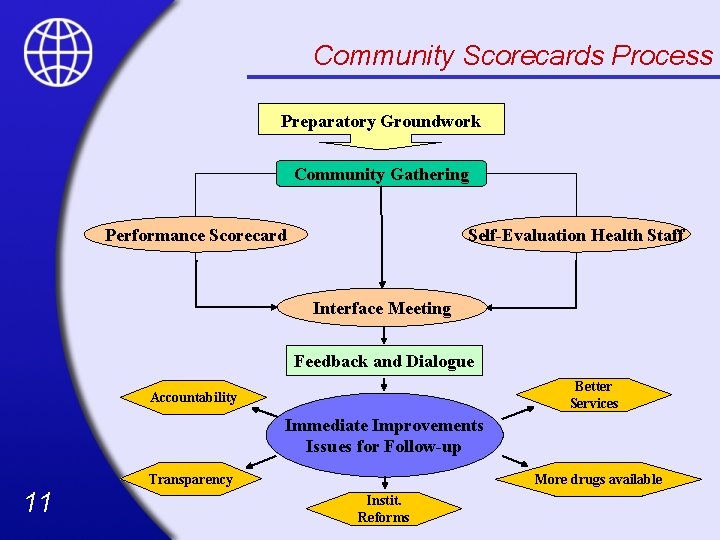
Community Scorecards Process Preparatory Groundwork Community Gathering Self-Evaluation Health Staff Performance Scorecard Interface Meeting Feedback and Dialogue Better Services Accountability Immediate Improvements Issues for Follow-up 11 Transparency More drugs available Instit. Reforms
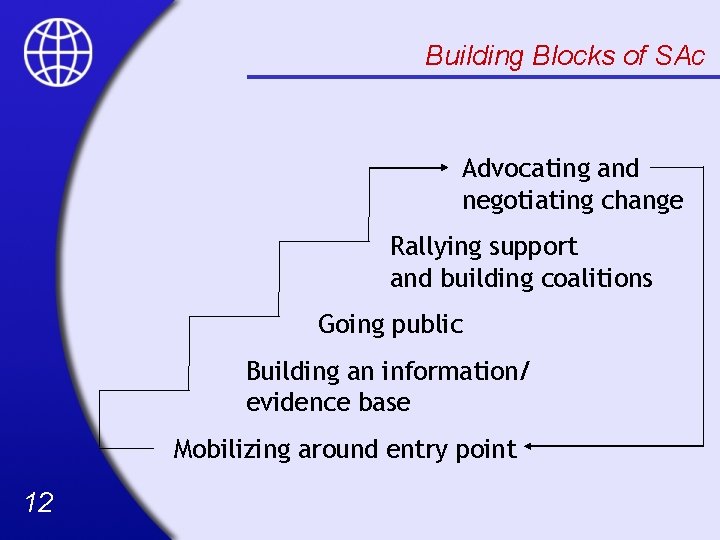
Building Blocks of SAc Advocating and negotiating change Rallying support and building coalitions Going public Building an information/ evidence base Mobilizing around entry point 12
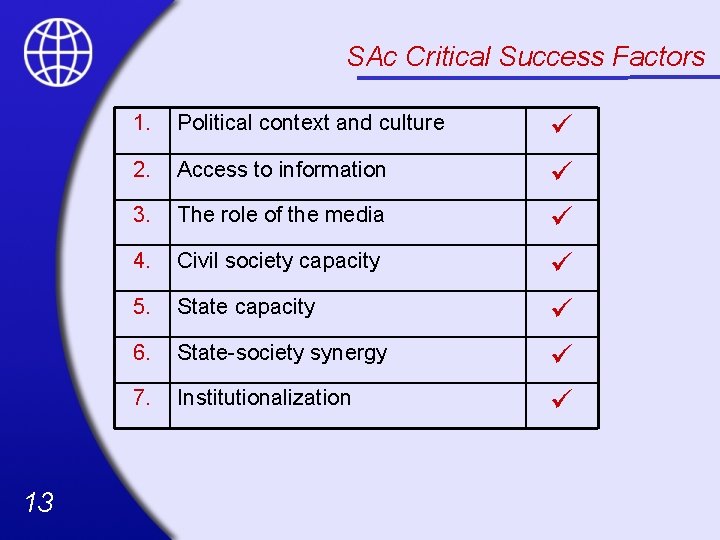
SAc Critical Success Factors 13 1. Political context and culture 2. Access to information 3. The role of the media 4. Civil society capacity 5. State capacity 6. State-society synergy 7. Institutionalization
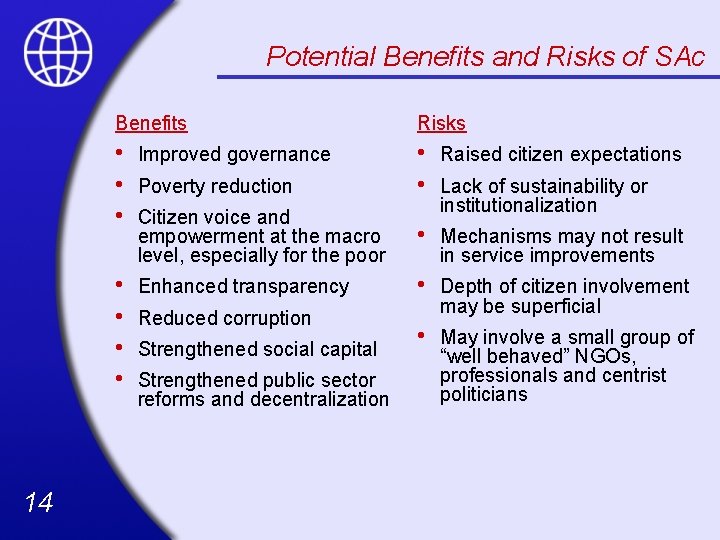
Potential Benefits and Risks of SAc 14 Benefits Risks • • • Improved governance • • Raised citizen expectations Citizen voice and empowerment at the macro level, especially for the poor • Mechanisms may not result in service improvements • • Enhanced transparency • Depth of citizen involvement may be superficial • May involve a small group of “well behaved” NGOs, professionals and centrist politicians Poverty reduction Reduced corruption Strengthened social capital Strengthened public sector reforms and decentralization Lack of sustainability or institutionalization
Final Thoughts 15 1. Social accountability has potential to improve the responsiveness of governments and other power holders to the needs of local people – especially those with ‘less voice’. 2. There is a wide range of social accountability mechanisms arising from specific needs, power relations and a desire for improving services. All sectors/regions have some relevant experience. 3. Each social accountability mechanism has a specific social, political and economic context with attendant benefits and risks. The success of one mechanism in a local context in no way guarantees success in another.
- Slides: 15