
SOC 571 Introduction to Cultural Sociology B Nadya
SOC 571 Introduction to Cultural Sociology B. Nadya Jaworsky Room 3. 59 Consultation Hours: Thursdays 10. 00 – 11. 00 or by appointment

Research Essay Timeline • December 14, 2016 - A short (1 -3 pp. ) preliminary summary of your work, including a research question, is due in the HOMEWORK VAULT. • December 15, 2016 - A short presentation in class about your progress (5 minutes maximum) • January 22, 2017 - FINAL ESSAY IS DUE in the HOMEWORK VAULT by 23: 59.
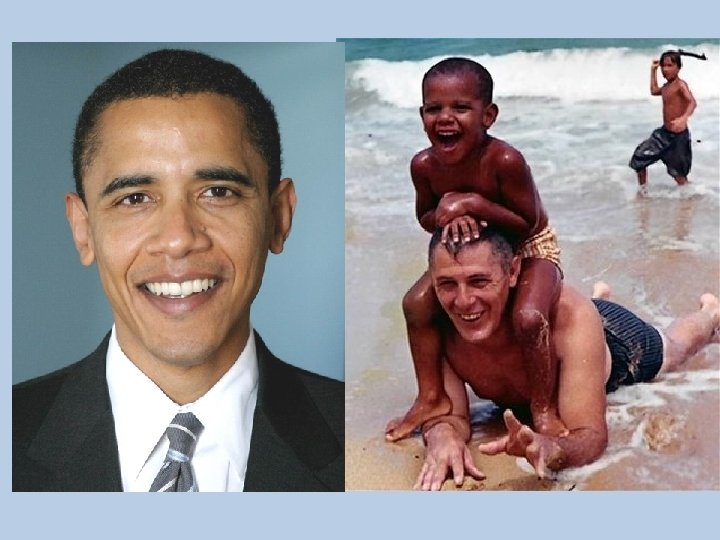
Alford A. Young (2010) • Making a cultural turn implies looking at race differently. • People of color experience and look at social reality in ways different from whites or whites in dominant positions. • Both racial boundaries and racial categories are porous and flexible. You have to look at how people make sense of themselves not just put them into categories. (Not all “blacks” think of being “black” in the same way. )
Eduardo Bonilla-Silva on colorblindness (2003) • Abstract liberalism (everyone is equal) • Naturalization (people of the same race simply love to be together) • Cultural racism (some adapt better than others to dominant mainstream) • Minimization of racism (discrimination/ prejudice are the result of something else)
Patricia Hill Collins (1986) • Standpoint theorist • Uses Simmel’s concept of the Stranger, whose experience brings a knowledge perspective freer of local prejudices and structural limitations, allowing him or her to understanding the workings of culture better than insiders. • African American women are today’s “strangers”; they have the perspective of the “outsider within. ”
Elijah Anderson (1998) • Mainstreams institutions, like police and the courts, can’t help African American in inner city to maintain social order • So you have a “code of the streets” • Looking for instances of challenge or disrespect • Flashy clothes; jewelry • “code-switching”
Racial Formation (Omi & Winant) • The sociohistorical process by which racial categories are created, inhabited, transformed, and destroyed 1. It is a process of historically situated projects in which human bodies and social structures are represented and organized. 2. It is linked to the evolution of hegemony, the way in which society is organized and ruled. 3. Race is a matter of BOTH social structure and cultural representations.
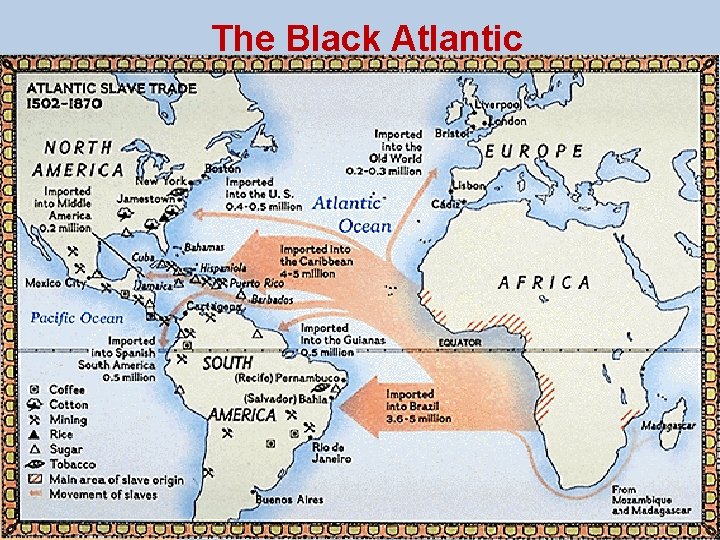
The Black Atlantic
Paul Gilroy • Diaspora - two identical seeds, if cultivated in different places will ultimately develop into different kinds of plants because of differences in weather and soil. So it is with people. • Postcolonial melancholia - Like the Germans, who didn’t know how to move on in terms of identity after WWII, contemporary Britons are unable to move beyond a cultural depression over the loss of the mythical power of their former Empire and its racial simplifications to a positive affirmation of the real multiculturalism already present in much of British society.
Dorothy Smith (1990; 2005) • Standpoint theorist that comes from the tradition of ethnomethodology and discourse analysis • Texts produce facts. And because of their facticity, texts can be problematic because they are gendered and male; they contribute to relations of ruling. • Female knowledge is not simply different, but inherently more experiential, materially rooted and ultimately more accurate than male knowledge • Institutional Ethnography - goal is to demonstrate the invisible material factors that allow texts of institutional authority to be produced
Donna Haraway (1989; 2004) • Challenging the “god trick” (the idea that science is the view from nowhere – objective and neutral) • Situated knowledges – partial perspectives that have to account for their location and then can be webbed together into a more holistic account of what is really going on (in contrast to traditional science). • Book called “Primate Visions”; showed how knowledge is produced differently by men and women; this accounts for much of the considerable knowledge about basic notions about division of nature/culture, human/animal, male/female • Cyborg - a metaphor for discussing the socially constructed nature of category distinctions such as culture/nature, male/female and human/animal. All such oppositions have as a part of their functioning the Othering of one of the paired terms and the relations of domination between the two.
Judith Butler • Sex (male/female), as such, has little to do with nature and much to do with discourse about nature. • Relies heavily on Foucault in arguing that distinguishing the actual physical body from the body as a perceived object seen by subjects immersed in cultural ideas about bodies is far more difficult than we might like to think • Bodies in fact only come into existence for us as a result of our process of signifying their meanings and marking them with gender. • Believes that scientists fall back on cultural notions of gender in order to describe seemingly natural processes; male DNA cells are “active” and females ones “passive”
Weaknesses of Standpoint Theories of Race and Gender • They can be read as attempting to generalize ideal types such as the “black woman’s perspective” that ultimately come undone when closely examined • They sometimes get bogged down in fruitless attempts to find “the most disadvantaged perspective” from which to theorize, and wind up appearing self-refuting as a result (Smith’s rejection of all texts would reject her own academic theorizing!) • They have a tendency to rely on the political rather than purely intellectual criteria for criticizing other theories (e. g. focus on whiteness can minimize work by black and other minority scholars)
Weaknesses of poststructural / postmodernist theories of race and gender • They can sometimes elide the distinction between theoretical argument and political claim • Theories of diaspora and hybridity are sometimes criticized as offering ammunition for conservative ideological visions of a “race-free” society in which inequalities are ignored or accepted. • Relativism and the “real world” (deconstructing problematic categories may not be the answer)
Why sociology has come to pay attention to the body (Chris Schilling 1993) • The focus on the body of second-wave feminism in the 1960 s • The general aging of the populations of Western societies and the accompanying rise in public concern for providing for the health of all those aging bodies • The shift (noted especially by postmodernists) from productivist to consumerist societies (as well as the general cultural privileging of youth and youth culture) • An increasing lack of certainty as to the definition of the body, attached to technological advancements that have made it possible to alter bodies in more and more ways.
The Regulation of Bodies by Society (Bryan Turner 1996) • Bodies must be reproduced to populate society over time • Bodies must be regulated in public spaces to prevent disorders such as crime • Bodies must be trained to exercise internal restraint against unhealthy desires • Bodies must be represented externally in such a way as to facilitate orderly interaction
Control over our Bodies (Chris Schilling 2003) • Body Projects (diet; exercise) • Body Options (plastic surgery) • Body Regimes (preparing for a grueling sporting competition)

Corporeal Realism (Schilling 2003) • Corporealism entails a recognition that both society and the body exist as real things, not simply as ideas or discourses, but also that they are emergent phenomena – generative and changing phenomena that have to be examined in relation to one another and to history. • We need a theory that understands the body as a multi-dimensional medium for the constitution of society.
Components of Corporeal Realism (Schilling 2003) • Marx – the body as the site of economic relations and the object that bears the brunt of capitalism’s destructive force • Durkheim – the body as the bearer of marks of collective symbolism and moral community • Simmel – the body as the source of sociability, which is the primordial desire to playfully interact free of any greater purpose than the interaction itself • Elias –the body as the site for the broad cultural shifts that make up the civilizing process
READINGS FOR WEEK 11 • Meanings of Social Life. “The Discourse of American Civil Society, ” Chapter 5, pp. 121 -154 (33 pp). • Zerubavel, Eviatar. “The Fine Line: Making Distinctions in Everyday Life, ” Chapter 21 in Spillman. (10 pp. )
David Inglis • The body can be seen as a cultural phenomenon in everyday life. • Culture works to tame natural human instincts bringing them into line with the needs of particular forms of social organization • Cultural forces shape the ways in which our bodies move and act. • Shame/embarrasment from breaking our moral sense of right/wrong keeps us in line.

Marcel Mauss (nephew of Durkheim) • There is absolutely no natural way to carry or use our bodies – whether walking, running, sitting or standing. • We learn to do these things. • And each generation passes on “body techniques” as Mauss calls them, which are the forms of bodily movement and action that are expressive of the cultural life of the group.
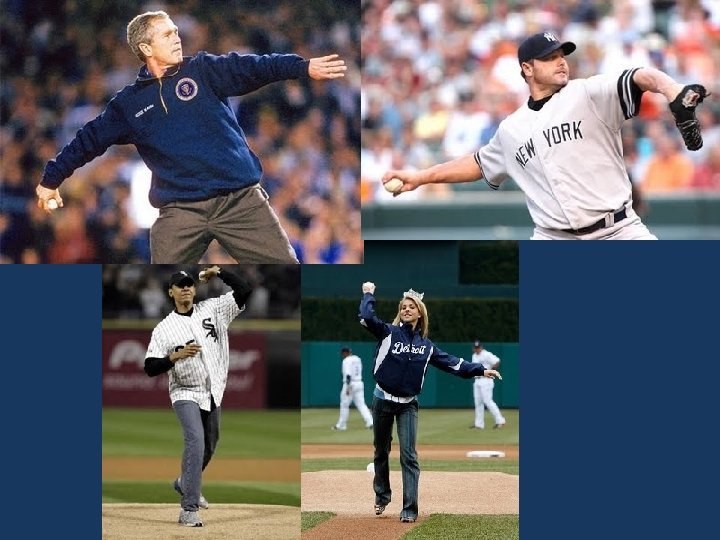
Gamson & Grindstaff (2010) • “Inside-gender performances” tend to clarify rather than complicate traditional constructions of gender (beauty pageants). • “Outside-gender performances” are about subverting, transforming or highlighting the traditional constructions (drag shows).
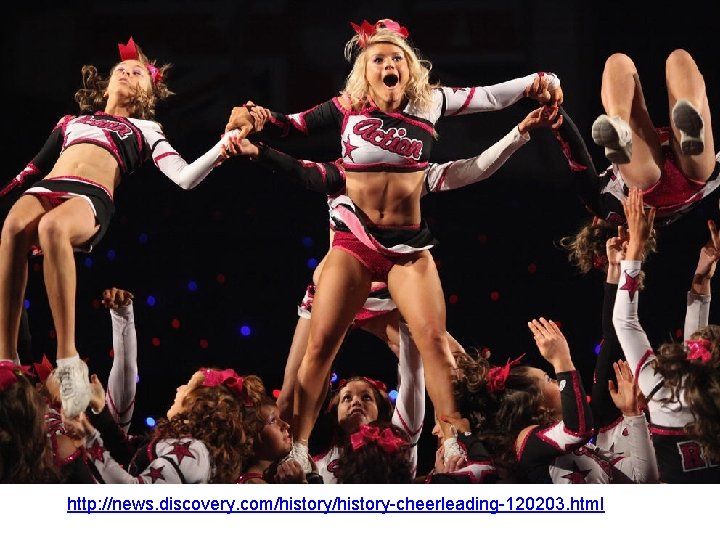
http: //news. discovery. com/history-cheerleading-120203. html
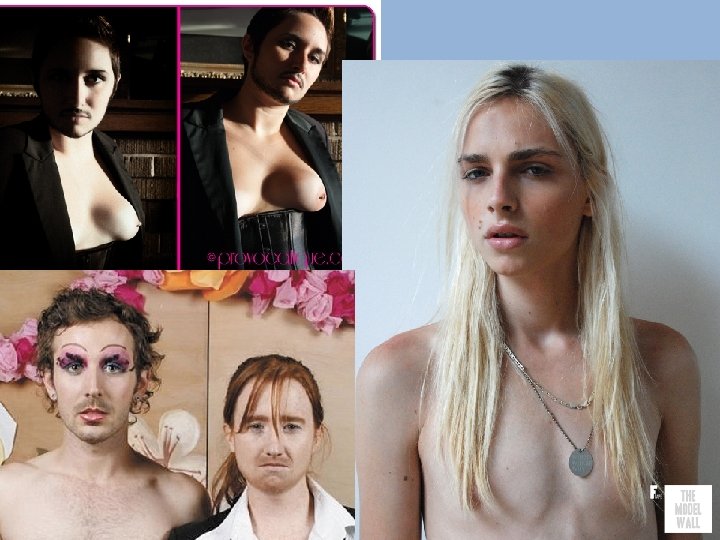
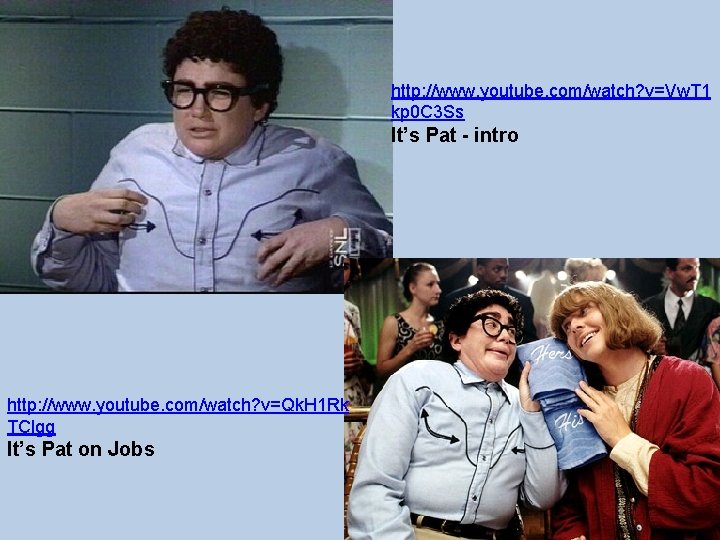
http: //www. youtube. com/watch? v=Vw. T 1 kp 0 C 3 Ss It’s Pat - intro http: //www. youtube. com/watch? v=Qk. H 1 Rk TClgg It’s Pat on Jobs
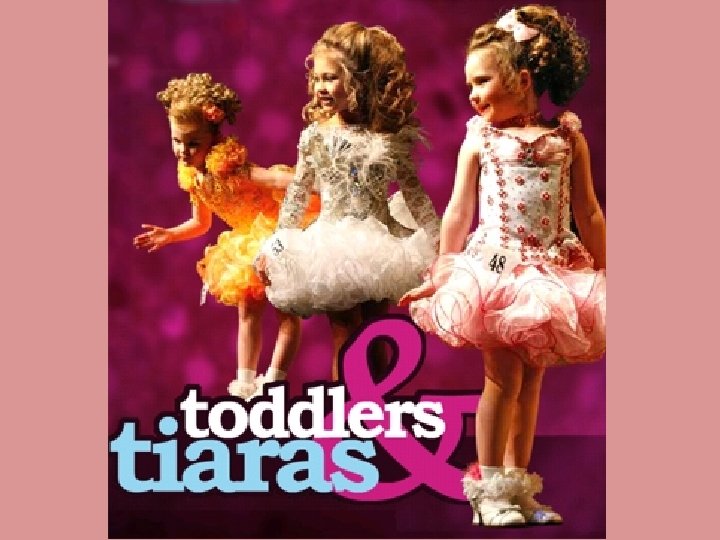


http: //www. youtube. com/watch? v=Ux 5 AXm. DK 8 gk http: //www. youtube. com/watch? v=Cld 3 TEKeei 4 www. youtube. com/watch? v=VXNv. Z 12 Cig&feature=fvwrel
- Slides: 35