
So you want to begin exercising Section on
So you want to begin exercising…. Section on Geriatrics American Physical Therapy Association
Please choose one answer: n Do you exercise regularly to increase physical fitness 3 or more times/week for 20 or more minutes/session at a level that increases your breathing rate and causes you to break a sweat? 1. No, and I do not intend to begin exercising regularly in the next 6 months 2. No, but I intend to begin exercising regularly in the next 6 months 3. No, but I intend to begin exercising regularly in the next 30 days 4. Yes, I have been, but for less than 6 months 5. Yes, I have been for more than 6 months
Write down your reasons for starting to exercise Be specific…. if you are doing it for health benefits – state which ones
Common Pros n n n I would have more energy for my family and friends I would feel less stressed if I exercised regularly Exercising puts me in a better mood for the rest of the day I would feel more comfortable with my body if I exercised regularly Regular exercise would help me have a more positive look on life
Benefits of exercise Reduces the risk of dying prematurely. n Reduces the risk of dying from heart disease. n Reduces the risk of developing diabetes. n Reduces the risk of developing high blood pressure. n
Benefits of exercise Helps reduce blood pressure in people who already have high blood pressure. n Reduces the risk of developing colon cancer. n Reduces feelings of depression and anxiety. n
Benefits of Exercise n Helps control weight. – Just 30 minutes of day of exercise prevents gain and promotes loss while increasing muscle mass (Slenze, 2004) Helps build and maintain healthy bones, muscles, and joints. n Helps older adults become stronger and better able to move about without falling. n Promotes psychological well-being. n
Other Benefits Reduces the risk of having a second heart attack in people who have already had one heart attack n Lowers both total blood cholesterol and triglycerides and increases high-density lipoproteins (HDL or the "good" cholesterol) n Helps lower blood pressure in people who already have hypertension n Helps improve balance and reduce falls n
n A physically inactive lifestyle is a primary cause of frailty in later years, especially for people living into their 80 s and 90 s – You’ve used all the reserve you had, unless you have continued to add to the “bank” of fitness n Over 1/3 of nursing home admissions are primarily caused by mobility-related problems
n Linear reduction in mortality occurs as fitness level increases – For each 1 MET in exercise capacity achieved, a 12% improvement in survival occurs. (Meyers et al, NEJM, 2002) n A program of regular exercise can improve fitness by 15 -30% within 3 -6 months (ACSM, 1998)
How Should I Begin? n Should I seek my doctor’s permission? – If you have chest pain, uncontrolled hypertension, or have had heart disease, then YES! Otherwise…. n Complete the Par-Q
Am I ready to begin exercising? When in doubt, talk with your physical therapist n But it is probably ok if you start slow with a simple activity like walking or basic strengthening and gradually increase the intensity without pain n
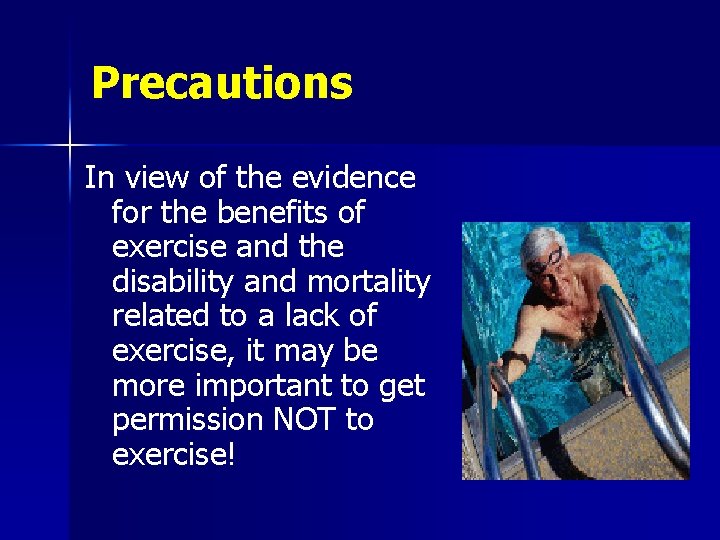
Precautions In view of the evidence for the benefits of exercise and the disability and mortality related to a lack of exercise, it may be more important to get permission NOT to exercise!
How to start Consider the need to improve physical activity n Technology induced inactivity n – Push-buttons to do nearly everything! – Wheels to move most things – Automated car wash – Snow blowers
A healthy start n Increase physical activity 30 minutes or more per day – Take the stairs instead of the elevator or walk up the escalator – Park in the back of the parking lot – Return cart to the store – Stand up and sit down 10 times each commercial break – Decrease sitting time!
A healthy start Set goals n Choose an exercise you enjoy n Start with 10 minutes every day and slowly increase time until you are exercising 30 minutes 3 -5 x/week n Include some strengthening exercises n Include some flexibility exercises n
Exercise Guidelines (these are GOALS!) n Strengthening/resistance exercise 23 x/week Endurance (aerobic) exercise 3 -5 x/week n Recreational (physical activity) 7 x/week n Flexibility 2 -3 x/week n
Let’s talk specifics n Warm-up (5 -10 minutes) – Reduces susceptibility to injury – Examples: slow walking or stretching n Should I stretch before I exercise? – Not necessarily – Muscles stretch better if they are warm, like after your workout
Strengthening n Strengthening – Requires overload – Can use bands, balls, weights, or machines – 1 set of 8 -12 reps at an intensity that you can’t do more than 12 repetitions – Examples: chair sit to stand or squats, lunges, heel raises, modified push-ups
Strengthening should be the first place to start n Why? n – It is less taxing on your heart – Builds muscle mass to support joints n Especially important if you have arthritis – Reduces fat n Especially important if you have diabetes
Benefits of Strength Training Decreases the pain and stiffness of arthritis n Increases muscle mass that improves function and fun n Reduces the need for insulin in diabetes n Increases bone mass in osteoporosis n Reduces obesity n Decreases back pain n Improves depression and sleep habits n
Some Guidelines for Strengthening Intensity n Good form comes first – Spend 2 weeks getting the form correct n Move to an intensity that you can do 810 repetitions with good form n 1 set is all that is necessary for beginners n As soon as you can do 12 repetitions, increase the weight and drop back to 8
Some Guidelines for Strengthening Intensity n Always work within 8 -12 repetitions (vigorous workout) or 12 -15 (moderate workout) n You get more benefits the harder the workout
Endurance n Types – Uses large muscle groups like walking, swimming, or biking n How long? – 20 -60 minutes – The lower the intensity, the longer you need to do it! n How often? – 3 -5 x/week
Recreational Activity n Fun kinds of things – Golf, gardening, tennis, hiking, dancing n Physical activity throughout the day – Parking in the back of the parking lot – Taking the stairs instead of the elevator – Getting rid of the remote etc n How often? OFTEN!!!!!!!
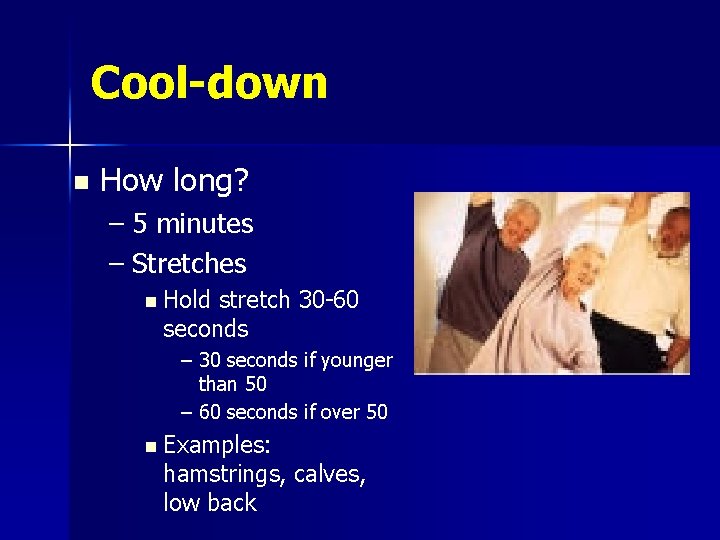
Cool-down n How long? – 5 minutes – Stretches n Hold stretch 30 -60 seconds – 30 seconds if younger than 50 – 60 seconds if over 50 n Examples: hamstrings, calves, low back
INTENSITY HOW MUCH IS GOOD ENOUGH?
Borg Scale of Perceived Exertion (RPE) Perceived exertion is how hard you feel like your body is working. n It is based on the physical sensations a person experiences during physical activity, including n – increased heart rate, – increased respiration or breathing rate, – increased sweating, and – muscle fatigue or feelings of tiredness
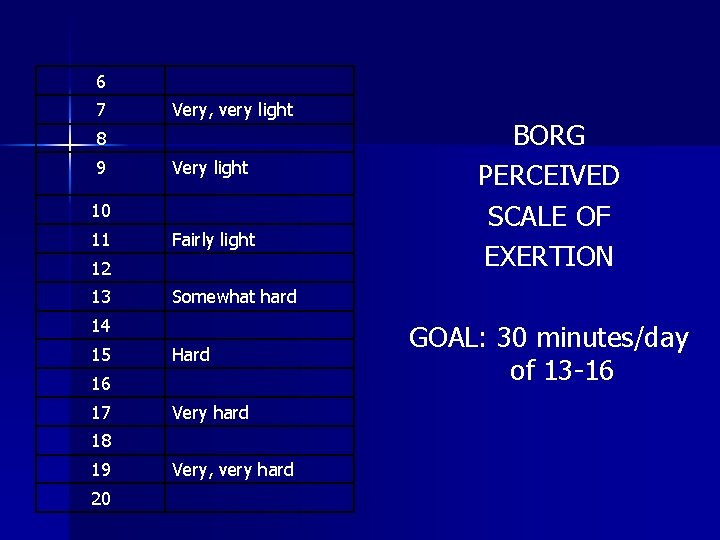
6 7 Very, very light 8 9 Very light 10 11 Fairly light 12 13 Somewhat hard 14 15 Hard 16 17 Very hard 18 19 20 BORG PERCEIVED SCALE OF EXERTION Very, very hard GOAL: 30 minutes/day of 13 -16
Talk Test n n n A person who is active at a light intensity level should be able to sing while doing the activity. One who is active at a moderate intensity level should be able to carry on a conversation comfortably while engaging in the activity. If a person becomes winded or too out of breath to carry on a conversation, the activity can be considered vigorous
Walking and Biking Program Start low, go slow n Start with 10 minutes, build to 30 minutes over 4 weeks n Once you have 30 minutes, start riding/walking faster n Watch your perceived exertion scale (RPE) n
Intensity: The Bottom Line Arguably the most important factor n The more intense, the less time you need to spend n Light-moderate activity and exercise does not build strength n – Remember the principle of overload?
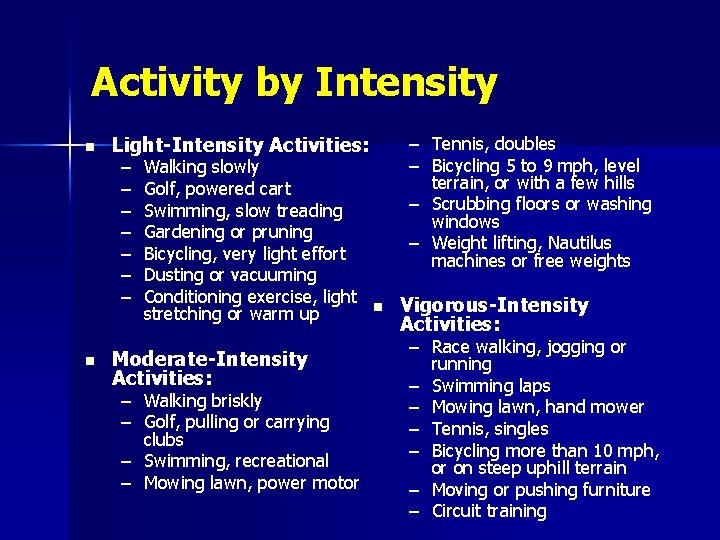
Activity by Intensity n Light-Intensity Activities: – – – – Tennis, doubles – Bicycling 5 to 9 mph, level terrain, or with a few hills – Scrubbing floors or washing windows – Weight lifting, Nautilus machines or free weights Walking slowly Golf, powered cart Swimming, slow treading Gardening or pruning Bicycling, very light effort Dusting or vacuuming Conditioning exercise, light n Vigorous-Intensity stretching or warm up Activities: n Moderate-Intensity Activities: – Walking briskly – Golf, pulling or carrying clubs – Swimming, recreational – Mowing lawn, power motor – Race walking, jogging or running – Swimming laps – Mowing lawn, hand mower – Tennis, singles – Bicycling more than 10 mph, or on steep uphill terrain – Moving or pushing furniture – Circuit training
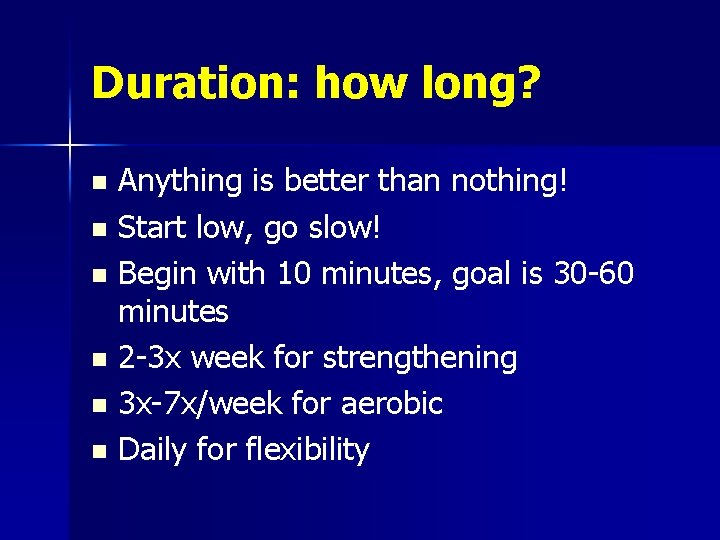
Duration: how long? Anything is better than nothing! n Start low, go slow! n Begin with 10 minutes, goal is 30 -60 minutes n 2 -3 x week for strengthening n 3 x-7 x/week for aerobic n Daily for flexibility n
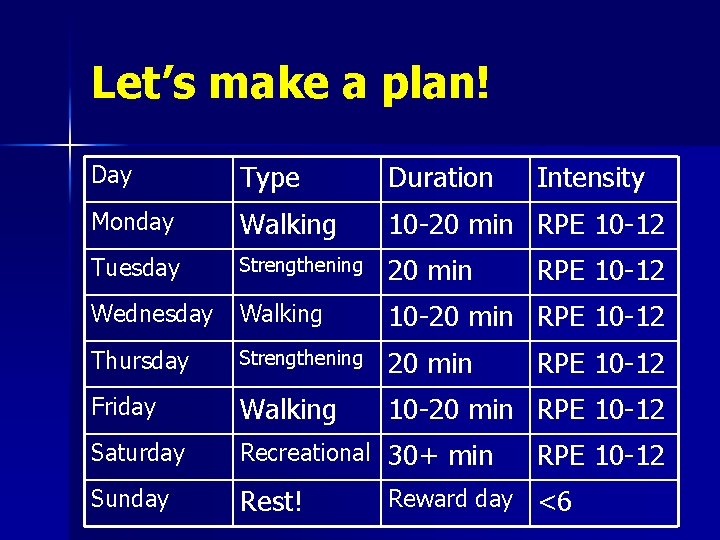
Let’s make a plan! Day Type Duration Intensity Monday Walking 10 -20 min RPE 10 -12 Tuesday Strengthening 20 min Wednesday Walking 10 -20 min RPE 10 -12 Thursday Strengthening 20 min Friday Walking 10 -20 min RPE 10 -12 Saturday Recreational 30+ min Sunday Rest! RPE 10 -12 Reward day <6
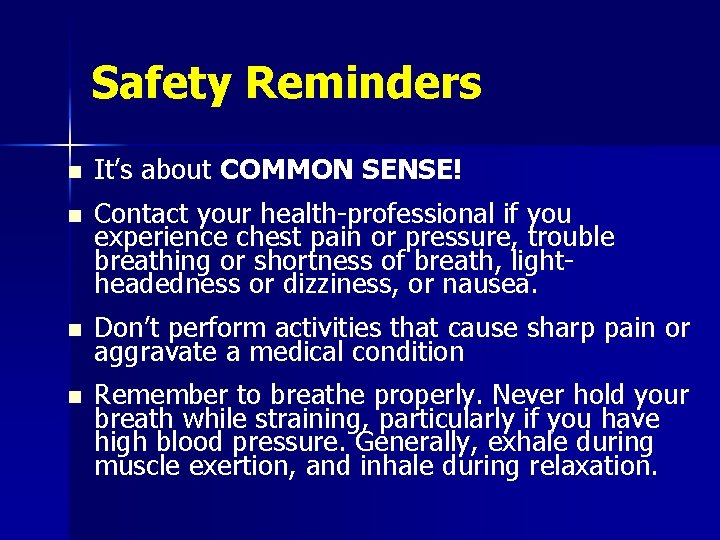
Safety Reminders n It’s about COMMON SENSE! n Contact your health-professional if you experience chest pain or pressure, trouble breathing or shortness of breath, lightheadedness or dizziness, or nausea. n Don’t perform activities that cause sharp pain or aggravate a medical condition n Remember to breathe properly. Never hold your breath while straining, particularly if you have high blood pressure. Generally, exhale during muscle exertion, and inhale during relaxation.
Let’s be safe… n Soreness is to be expected in the muscles with any new exercise program. Use soreness as a guide for intensity. If you are very sore the day after exercising, exercise at a lower intensity next time. If the pain persists more than 2 days, contact your doctor. – So how much soreness is ok? DOMS n Joint pain should be avoided. The saying “no pain, no gain” is not true for older adults
Avoiding Injury Discomfort vs. Pain n When should I seek a medical opinion? n – My knees hurt, so I can’t walk…. . – My shoulder hurts, so I can’t lift…. – My back hurts, so I can’t do anything!. .
Exercise Essentials n n n n n Good shoes Fun or appropriate music- books on tape Free weights A positive attitude Comfortable clothing Lots of water A supportive sports bra Safe, well-made equipment (e. g. , cardio machines, heart-rate monitors Enough time A workout partner
Sticking with it! Studies show that the more confident you are in sticking with your exercise program, the more likely you will! n Make a commitment to someone that matters n Don’t get discouraged! n – If you miss a day – it’s ok!
Contact:
Examples of strengthening exercises Chair Squats n Wall push ups – progress to counter pushups, then floor pushups n Toe stands – start with both legs, then progress to one leg n Step ups n Hip kicks – progress to using elastic bands n
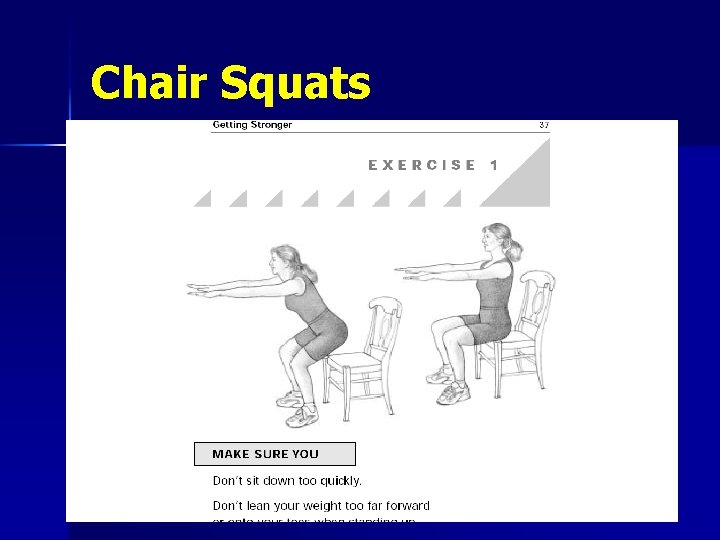
Chair Squats
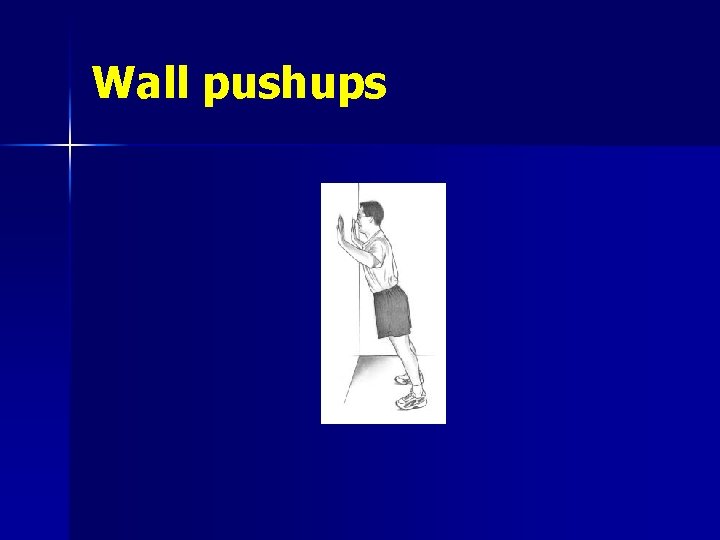
Wall pushups
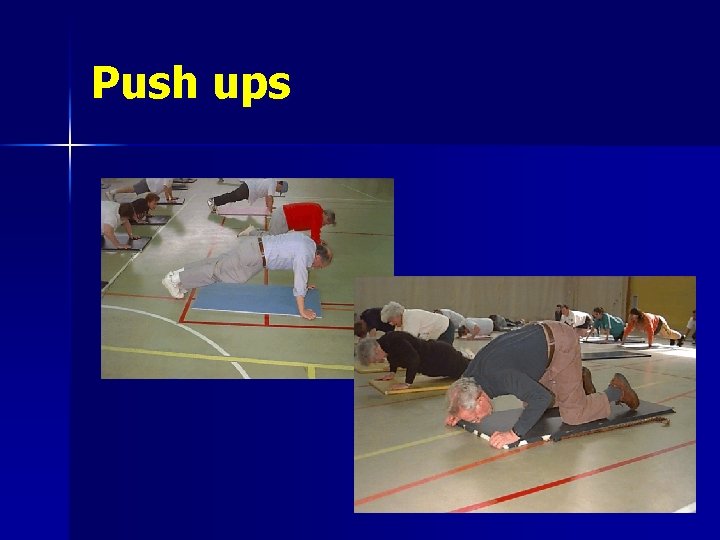
Push ups
Heel Raises
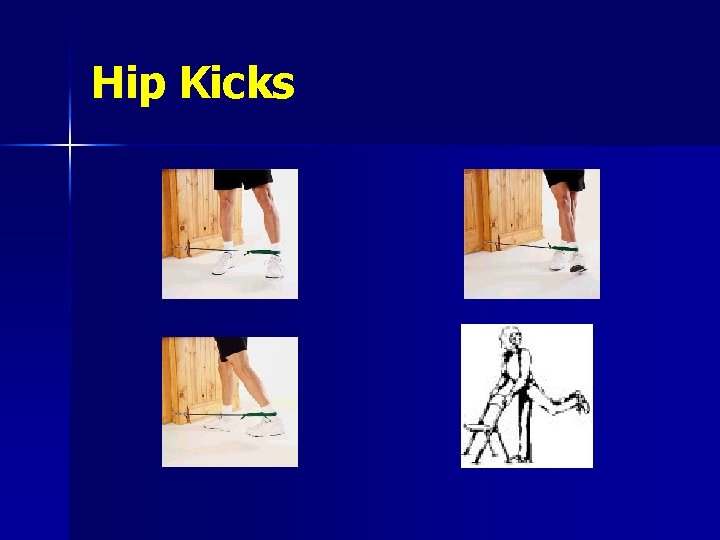
Hip Kicks
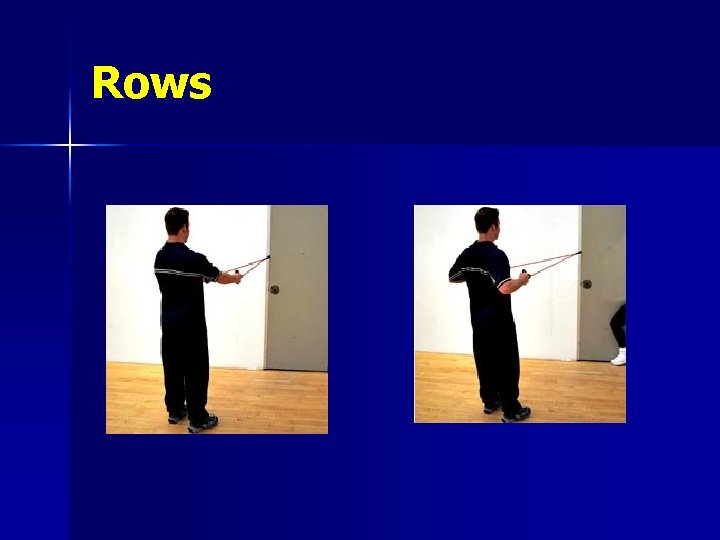
Rows
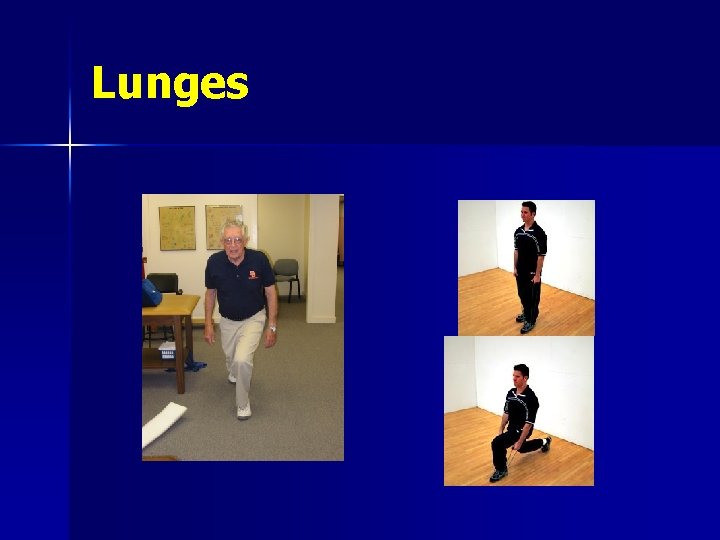
Lunges
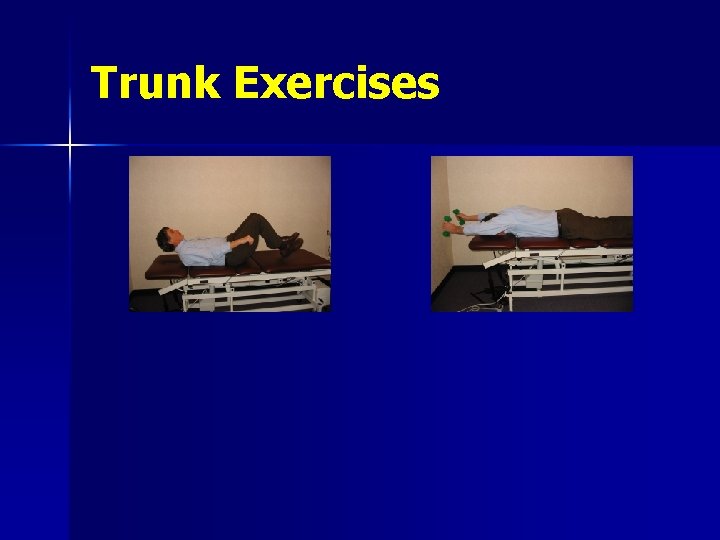
Trunk Exercises
- Slides: 51