
So what about SEPSIS Dr Vida Hamilton National

So what about SEPSIS? Dr. Vida Hamilton National Clinical Lead Sepsis www. hse. ie/sepsis
Sepsis • ‘Final common pathway for death from infection’ • National Awareness Survey 2016 • 25% Doctors & 29% Nurses interviewed • didn’t think you needed infection to develop sepsis

Content Validity Face validity
Epidemiology 2016 • 14000 cases o 19% Hospital mortality • 70 -80% arise in the Community (CDC) • Increasing in incidence 10 % annually pre 2016 o 67% over past 12 months • Factors that are associated with increasing incidence & high mortality rate?
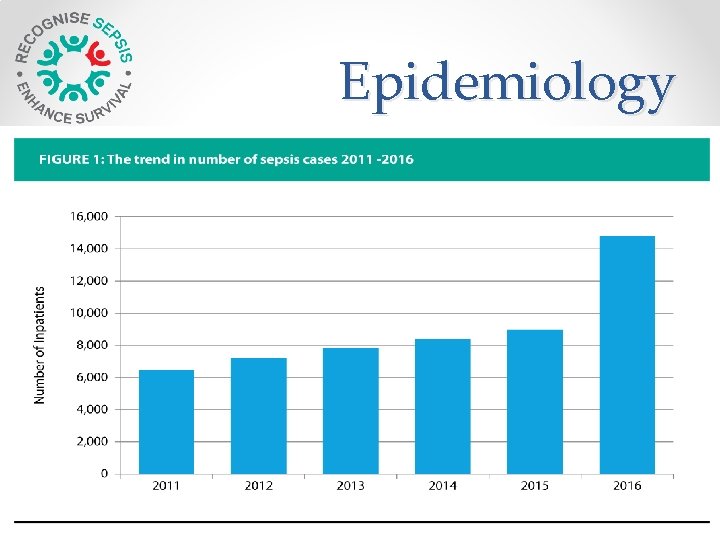
Epidemiology
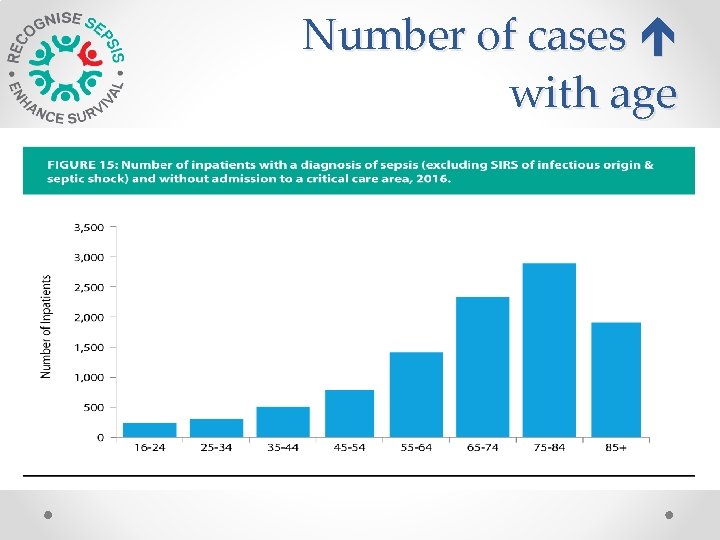
Number of cases with age
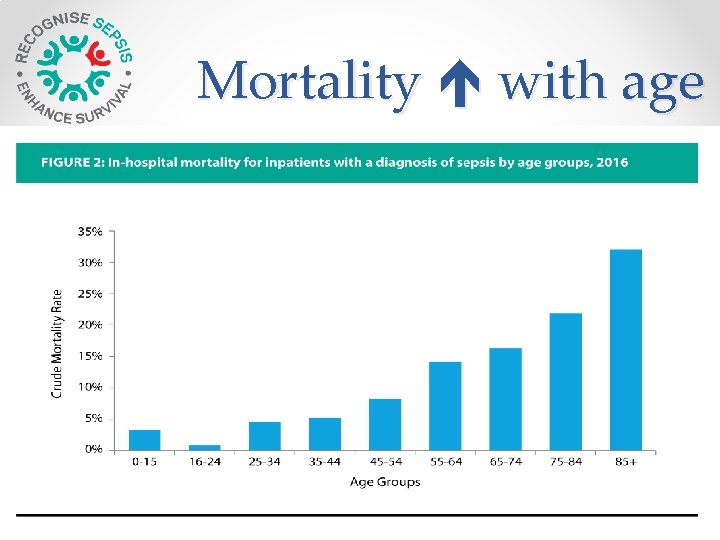
Mortality with age
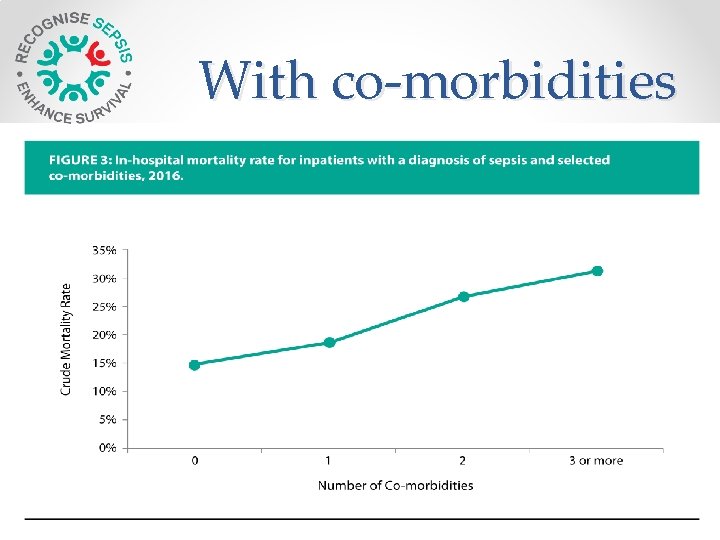
With co-morbidities
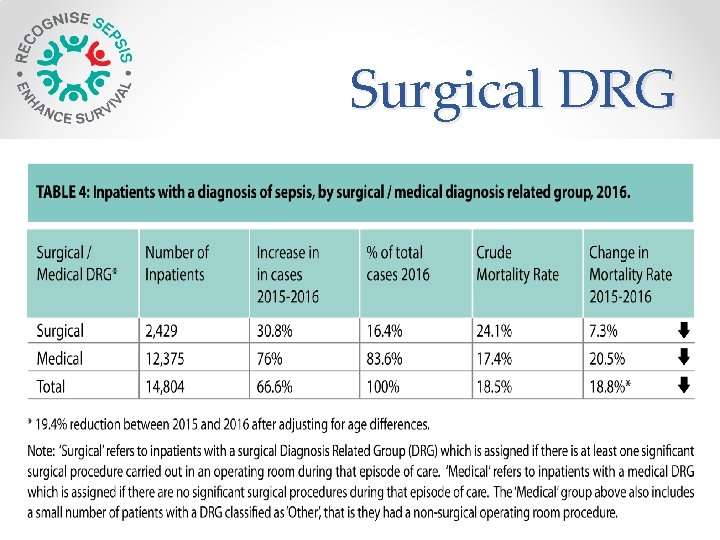
Surgical DRG
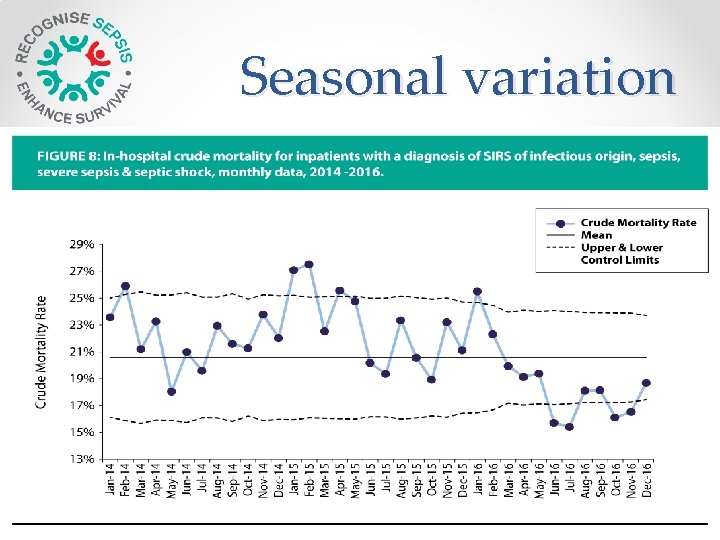
Seasonal variation
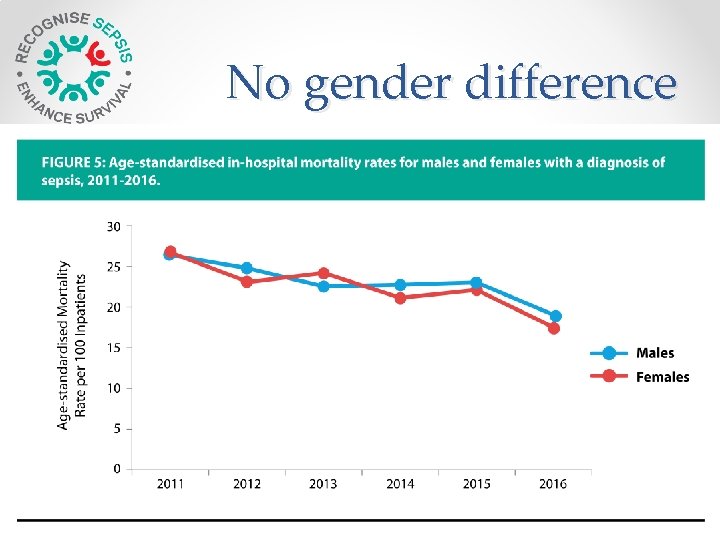
No gender difference
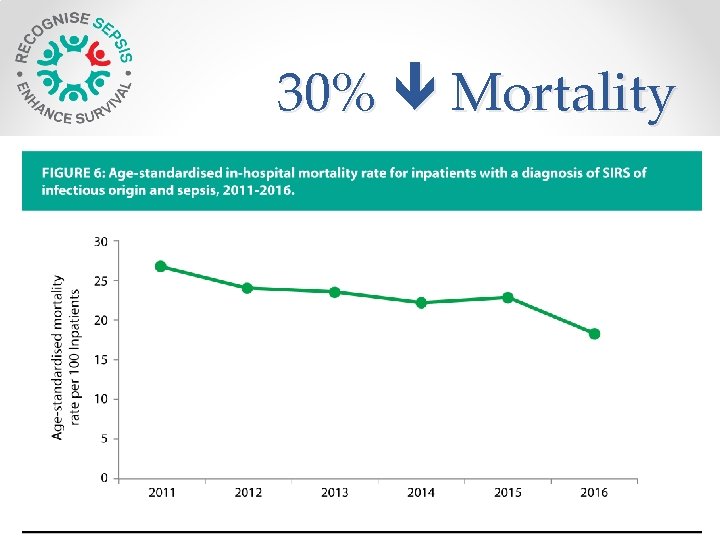
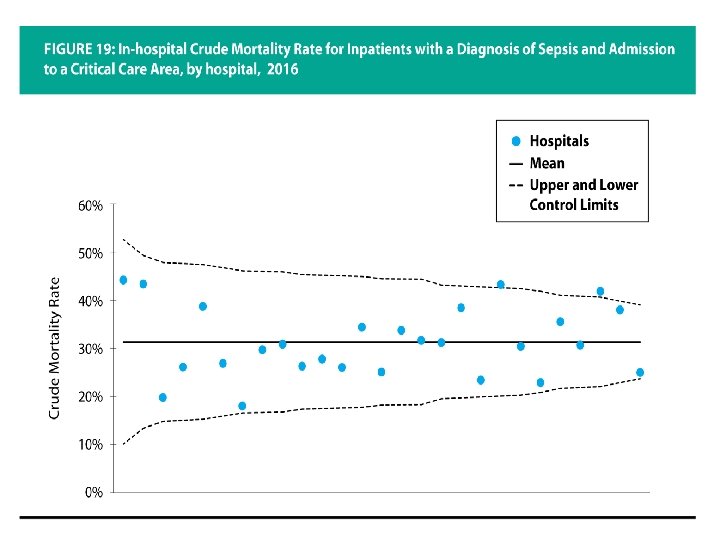
30% Mortality

Risk stratification
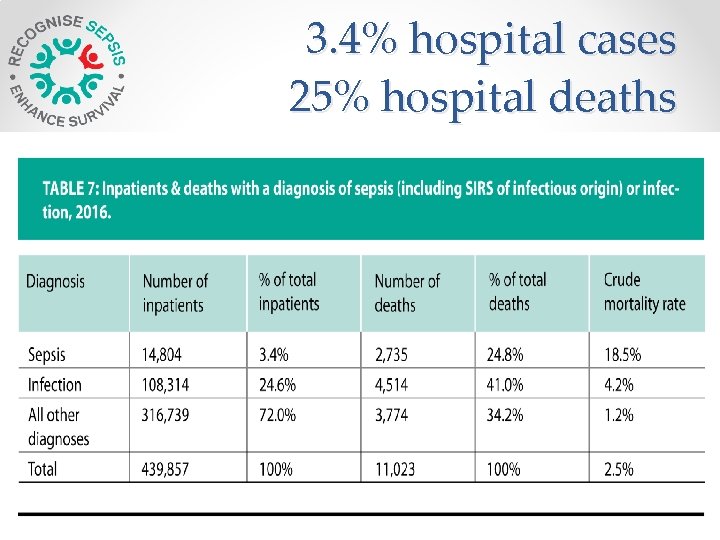
3. 4% hospital cases 25% hospital deaths
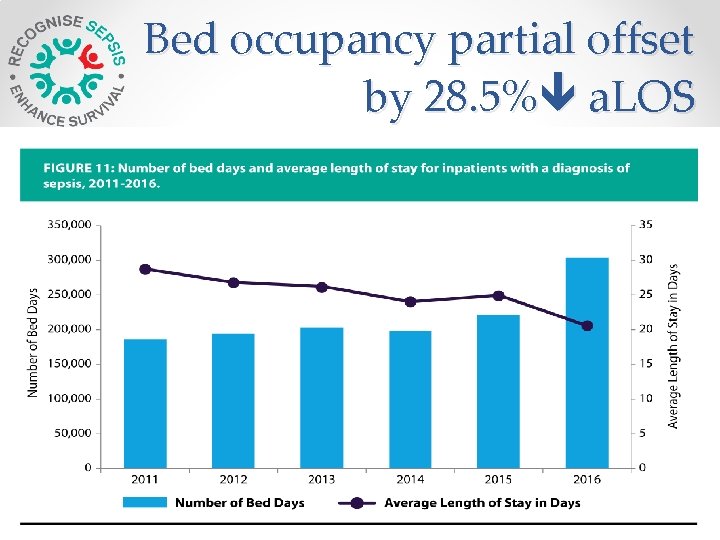
Bed occupancy partial offset by 28. 5% a. LOS
What is sepsis? • Infection • Triggering an host response • Leads to organ dysfunction & death
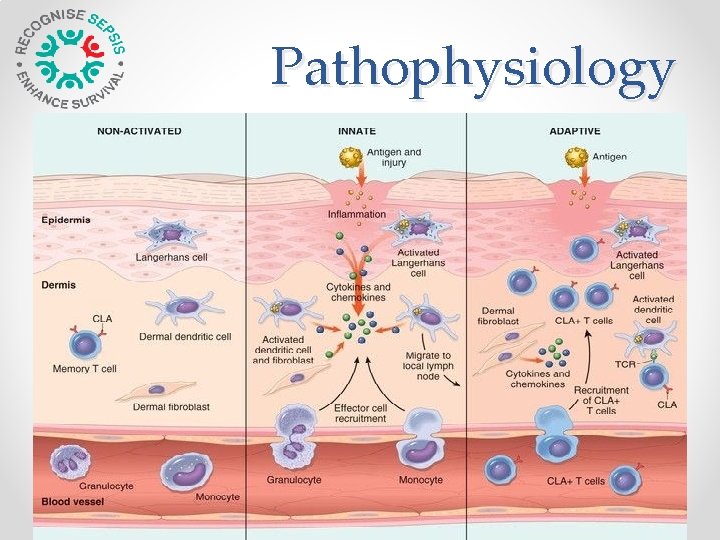
Pathophysiology
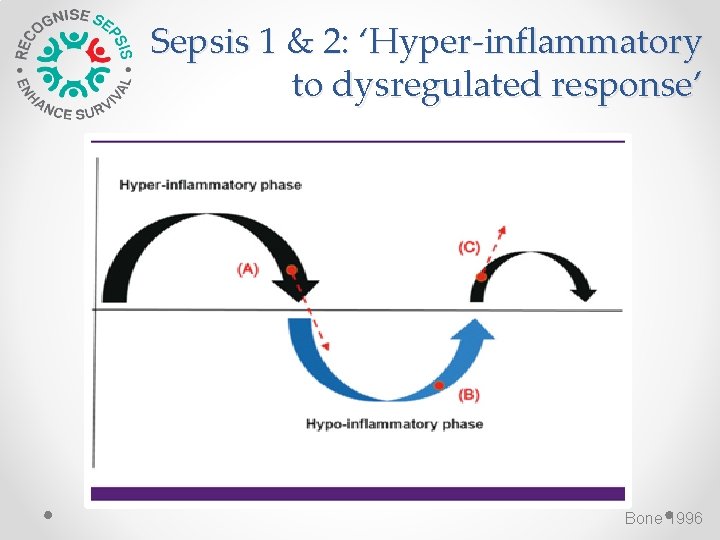
Sepsis 1 & 2: ‘Hyper-inflammatory to dysregulated response’ Bone 1996
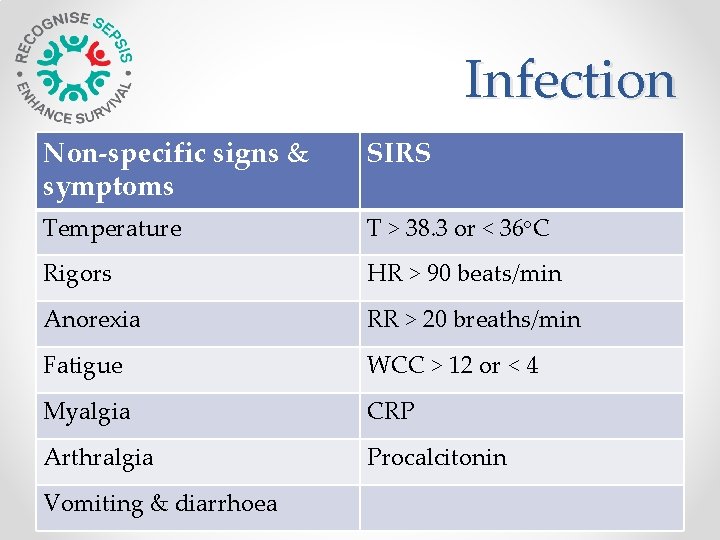
Infection Non-specific signs & symptoms SIRS Temperature T > 38. 3 or < 36 o. C Rigors HR > 90 beats/min Anorexia RR > 20 breaths/min Fatigue WCC > 12 or < 4 Myalgia CRP Arthralgia Procalcitonin Vomiting & diarrhoea
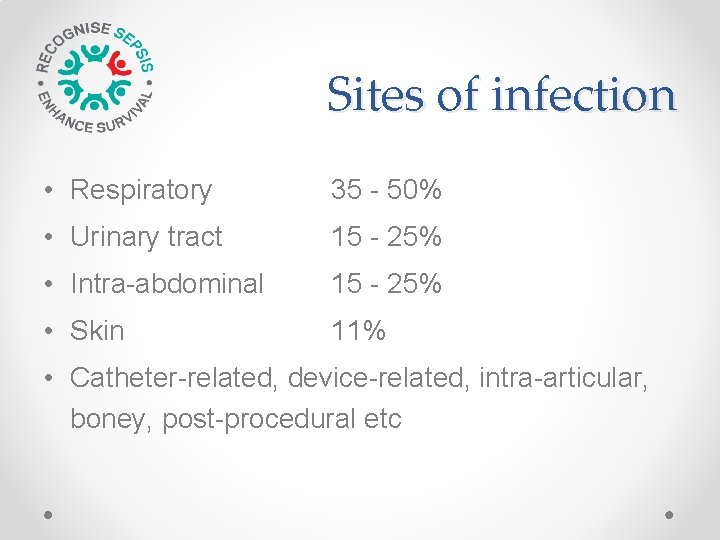
Sites of infection • Respiratory 35 - 50% • Urinary tract 15 - 25% • Intra-abdominal 15 - 25% • Skin 11% • Catheter-related, device-related, intra-articular, boney, post-procedural etc
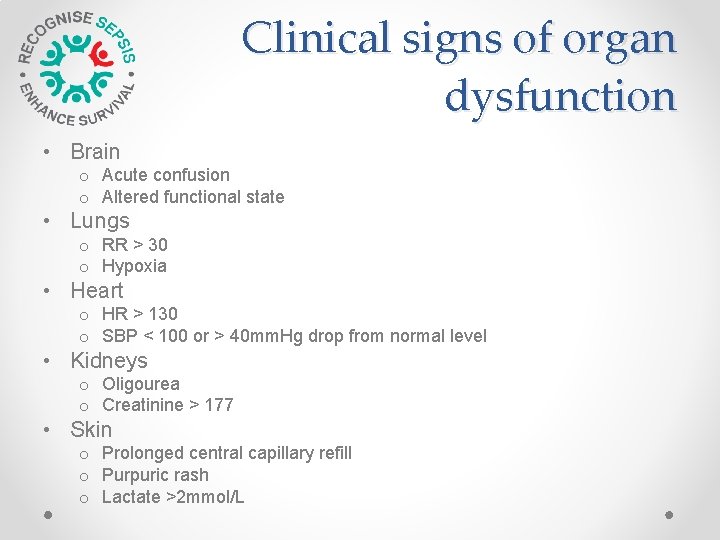
Clinical signs of organ dysfunction • Brain o Acute confusion o Altered functional state • Lungs o RR > 30 o Hypoxia • Heart o HR > 130 o SBP < 100 or > 40 mm. Hg drop from normal level • Kidneys o Oligourea o Creatinine > 177 • Skin o Prolonged central capillary refill o Purpuric rash o Lactate >2 mmol/L
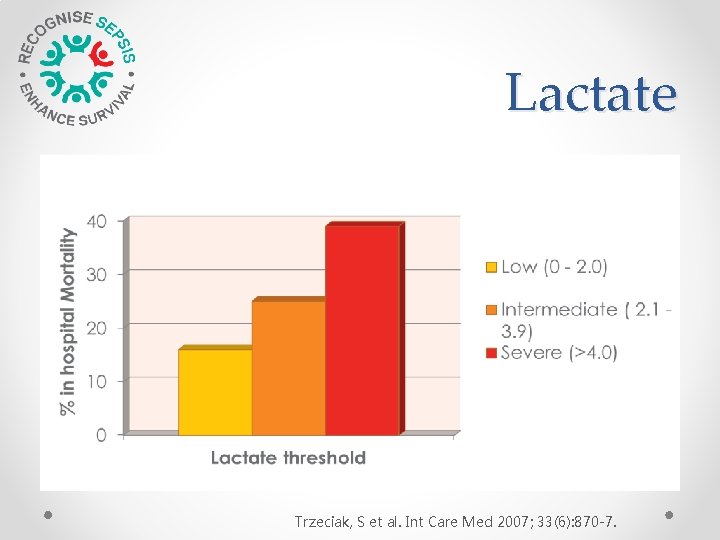
Lactate Trzeciak, S et al. Int Care Med 2007; 33(6): 870 -7.
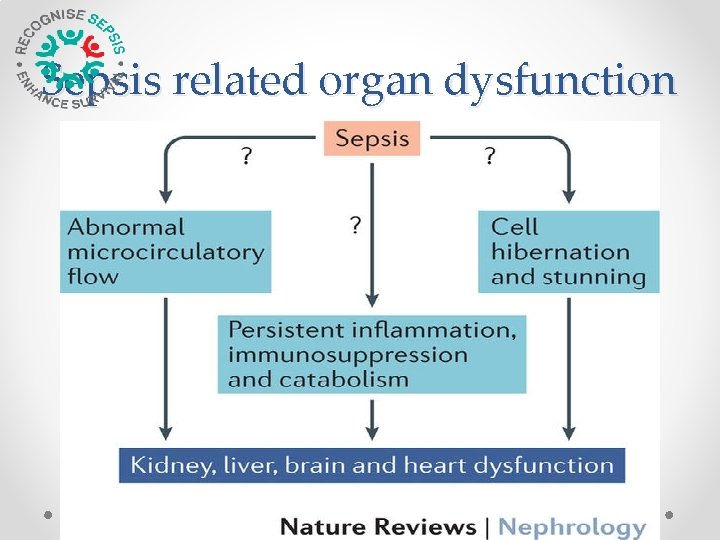
Sepsis related organ dysfunction
Clinical presentation • Micro-organism o Virulence o Innoculation dose o Multi-drug resistance • Host o Genetic polymorphisms o Co-morbidities • Age • Chronic health status • Immuno-modulatory medications
Sepsis-3 • ‘A life-threatening organ dysfunction caused by a dysregulated host response to infection’ • Advantage: o ‘Now that’s sepsis!’ • Disadvantage: o Move from ‘bedside diagnosis’ definition with SIRS o Looking at higher mortality risk condition, ‘badness’, to an ‘outcome’ based definition o Risk of time delay to diagnosis
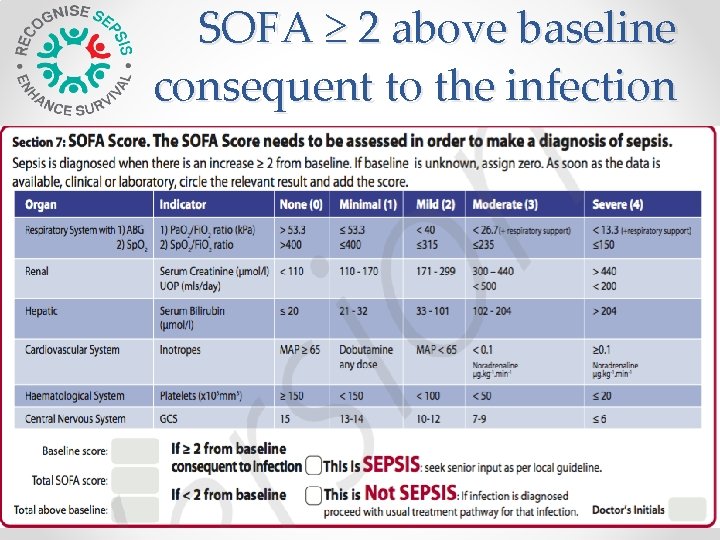
SOFA ≥ 2 above baseline consequent to the infection
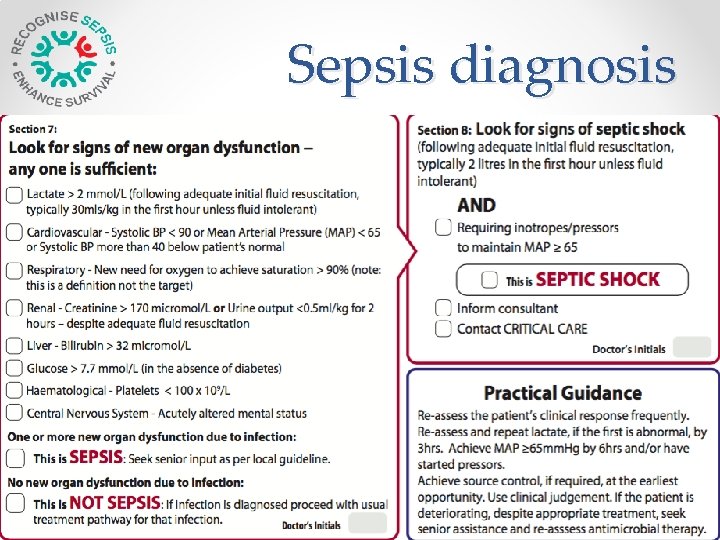
Sepsis diagnosis
Criteria validity How can the patients who may benefit from early treatment be identified?
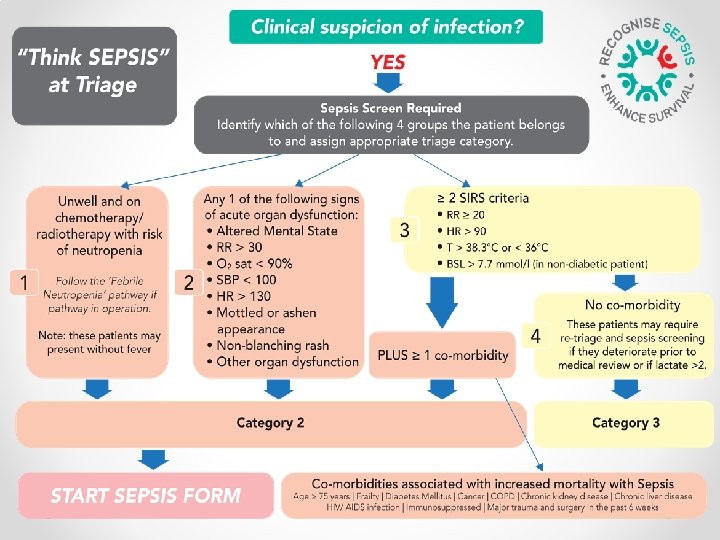
Why don’t we just use q. SOFA? • q. SOFA positive if > 1 present o RR > 22, SBP < 100, Altered mental status • Prognostic indicator • Not a diagnostic tool • Not a ‘trigger to treat’ tool • Not validated in undifferentiated patients o Developed in patients already on antimicrobial therapy • NEWS consistently outperforms q. SOFA
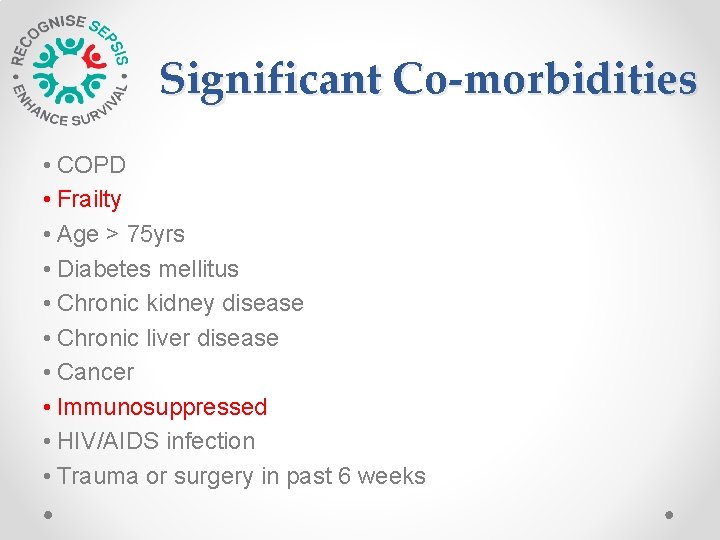
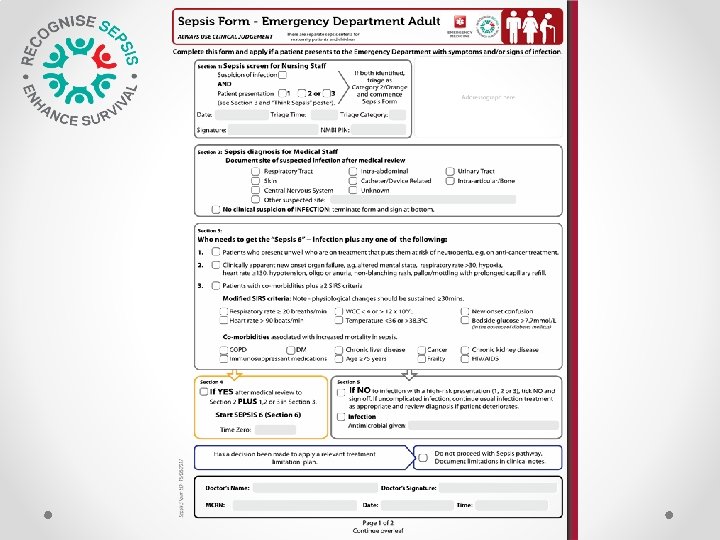
Significant Co-morbidities • COPD • Frailty • Age > 75 yrs • Diabetes mellitus • Chronic kidney disease • Chronic liver disease • Cancer • Immunosuppressed • HIV/AIDS infection • Trauma or surgery in past 6 weeks
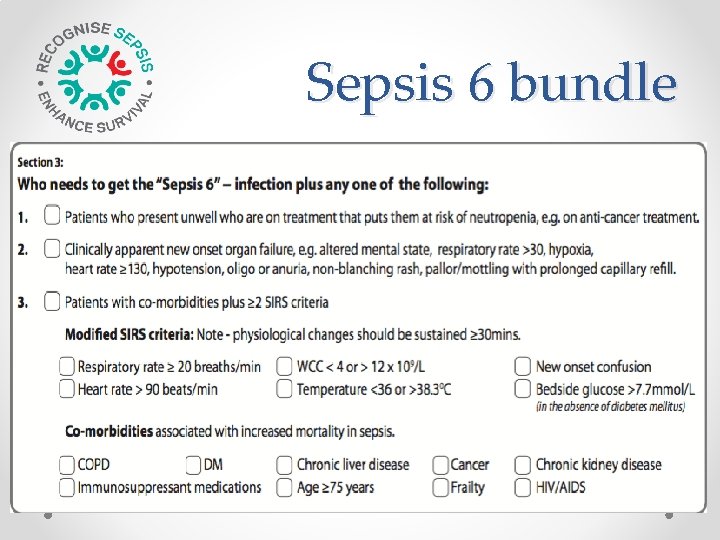
Sepsis 6 bundle
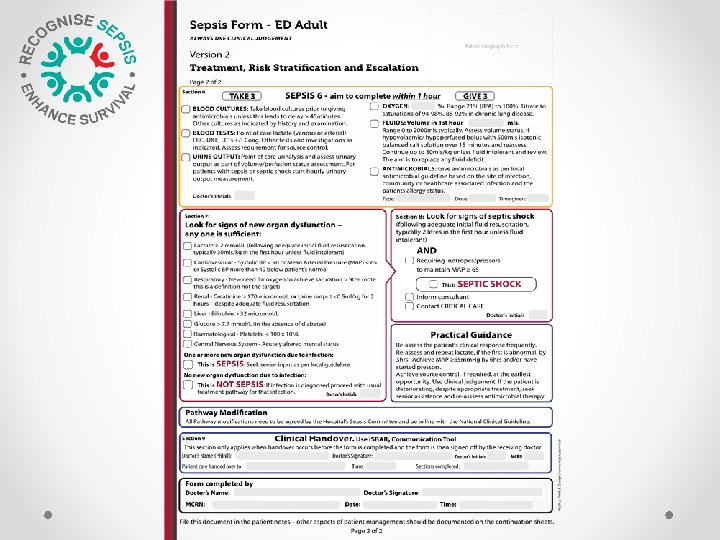

Give 3 Take 3 1. OXYGEN: Titrate O 2 to saturations 1. CULTURES: Take blood cultures of 94 -98% or 88 -92% in chronic lung before giving antimicrobials (if no disease. significant delay i. e. >45 minutes) and consider source control. 2. FLUIDS: Start IV fluid resuscitation if evidence of hypovolaemia. 500 ml bolus of isotonic crystalloid over 15 mins & give up to 30 ml/kg, reassessing for signs of hypovolaemia, euvolaemia, or fluid overload. 2. BLOODS: Check point of care lactate, FBC, U&E, LFTS, +/- Coag. 3. ANTIMICROBIALS: Give IV antimicrobials according to local antimicrobial guidelines. 3. URINE OUTPUT: Assess urine output and consider urinary catheterisation for accurate measurement in patients with severe sepsis/septic shock. Other tests and investigations as per history and examination.
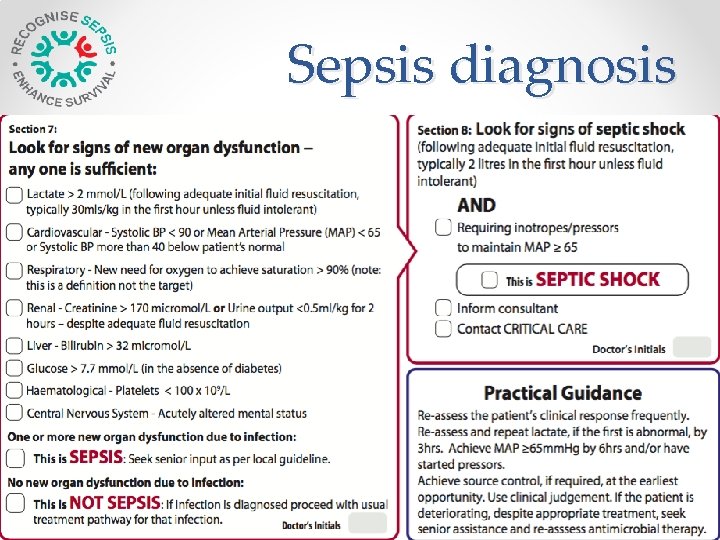
Sepsis diagnosis

Context validity Translating research into clinical practice Or Generalisability
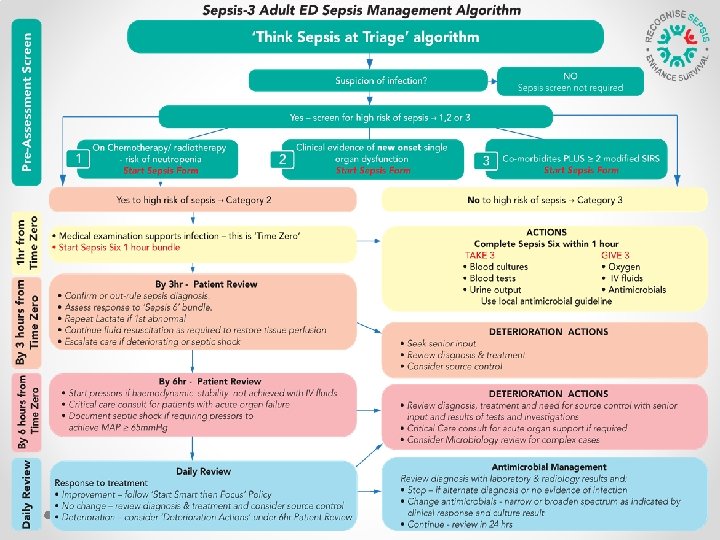
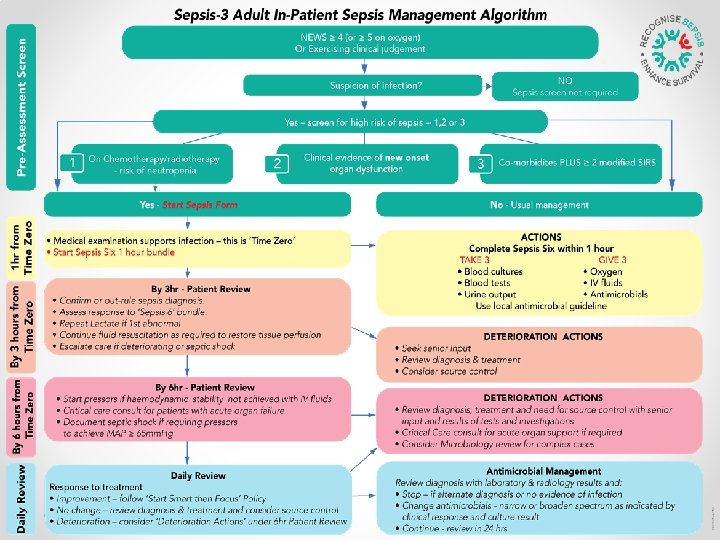
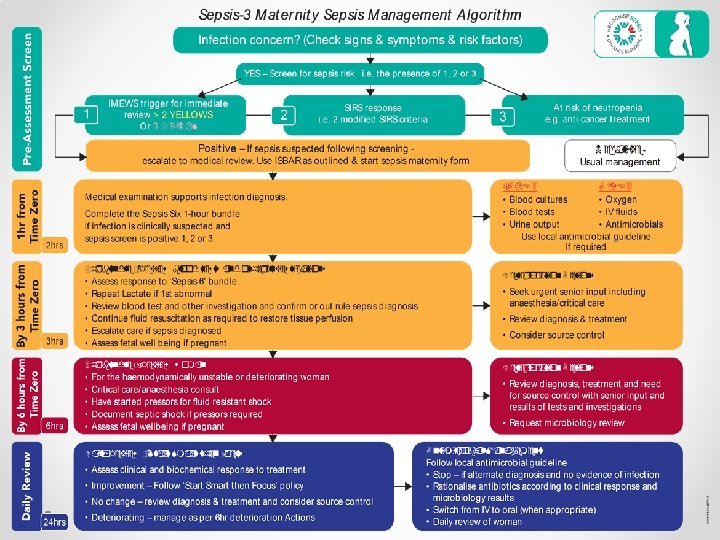
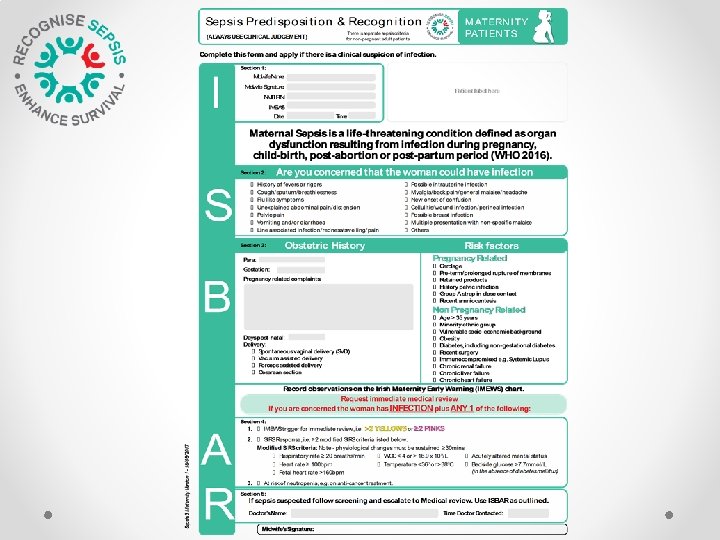
Reliabilty Inter-user, across place and across time
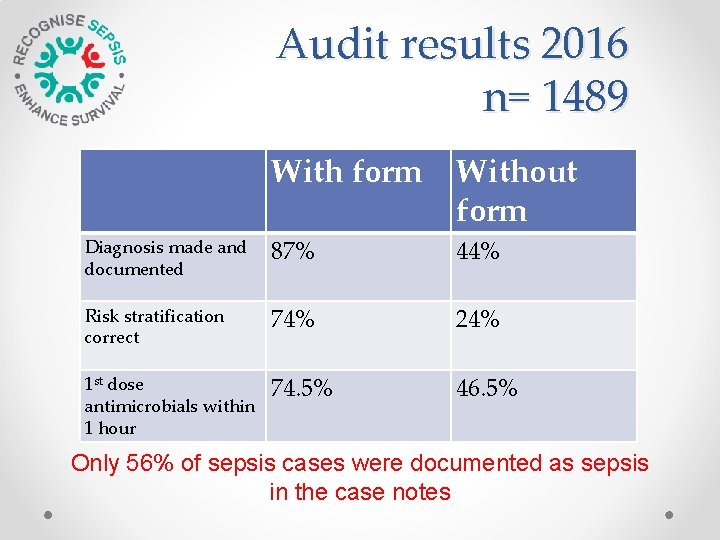
Audit results 2016 n= 1489 With form Without form Diagnosis made and documented 87% 44% Risk stratification correct 74% 24% 1 st dose antimicrobials within 1 hour 74. 5% 46. 5% Only 56% of sepsis cases were documented as sepsis in the case notes
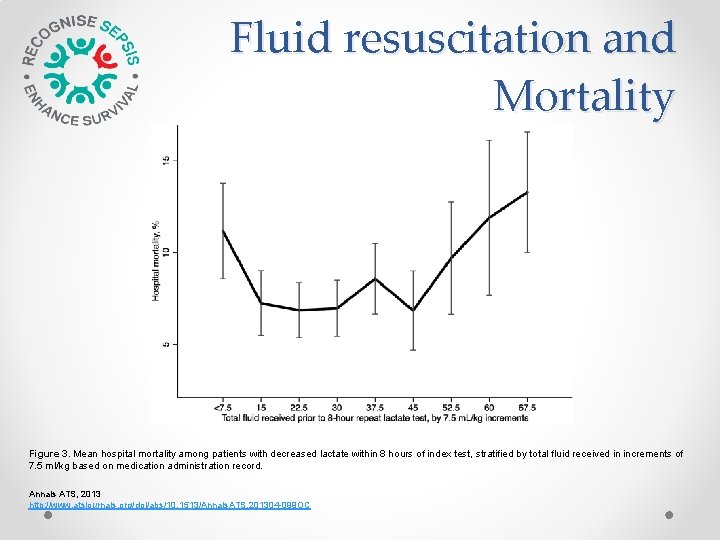
Fluid resuscitation and Mortality Figure 3. Mean hospital mortality among patients with decreased lactate within 8 hours of index test, stratified by total fluid received in increments of 7. 5 ml/kg based on medication administration record. Annals ATS, 2013 http: //www. atsjournals. org/doi/abs/10. 1513/Annals. ATS. 201304 -099 OC
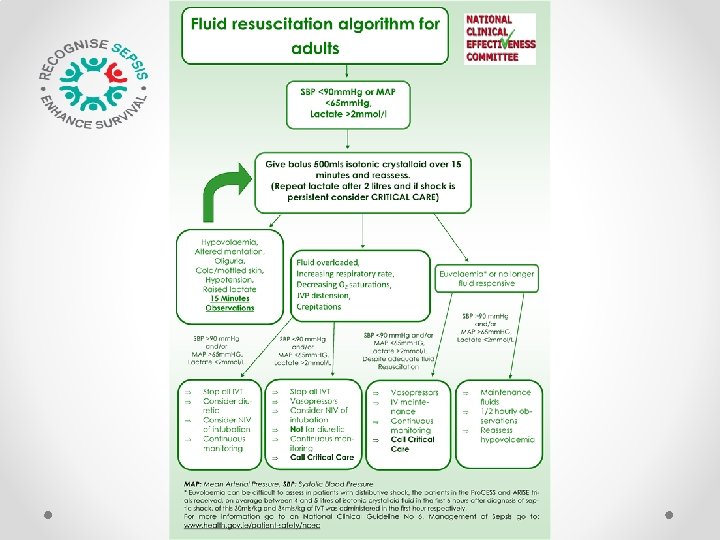

Timeliness
Operationalisation • An important feature of our pilot studies • Is the CDST useable within the clinical context • Triage screen important but a potential added burden o ECG in chest pain • Does it add or reduce work o Benefit needs to out way any burden

Measurement If you don’t measure it you can’t change it
Compliance with Sepsis 6 2017 Process audit National Compliance Sepsis documented correctly 60% Antibiotics within the 1 st hour 72% Antibiotic as per guideline 64% Blood cultures before antibiotic 80% Lactate taken 75% Repeat lactate (when indicated) 71% Fluid bolus 42%
OECD Health Care Quality Indicators Healthcare Quality Reporting System, Ireland, 2015 Number per annum Mortality Change in Mortality 2004 - 2013 AMI 6, 125 6. 4% H. Stroke 1, 456 26% I. Stroke 4, 485 10% 13. 6% Sepsis 14, 000 19% 30% (2011) 40%

Thank you www. hse. ie/sepsis
- Slides: 52