
SNOMED Bound to Information Model Putting terminology to
SNOMED Bound to (Information) Model Putting terminology to work… HL 7 NZ Workshop, 24 Jul 2015 Koray Atalag MD, Ph. D, FACHI k. atalag@auckland. ac. nz Senior Research Fellow (NIHI & ABI) open. EHR Management Board Member Vice Chair HL 7 New Zealand Member HISO / SAG
Information Models • Definitely NOT reference information models; – as in HL 7 v 3 RIM, open. EHR/ISO 13606 or FHIR resource ontology! • Define how to capture/represent health information, not the actual concepts (that’s epistemology/ontology!) – e. g. FHIR Patient resource is concerned with how to capture patient information, not define what patient means per se! • Use terminology to define clinical meaning or bind valuesets • They may employ a number of formats and methods; inc. – Spreadsheets, data dictionaries, mindmaps, UML, XSD, Archetypes, v 3 & FHIR and even programming languages • Examples: FHIR (HL 7), Archetypes (open. EHR), Detailed Clinical Models (DCM), Clinical Element Models (CEM-Intermountain)
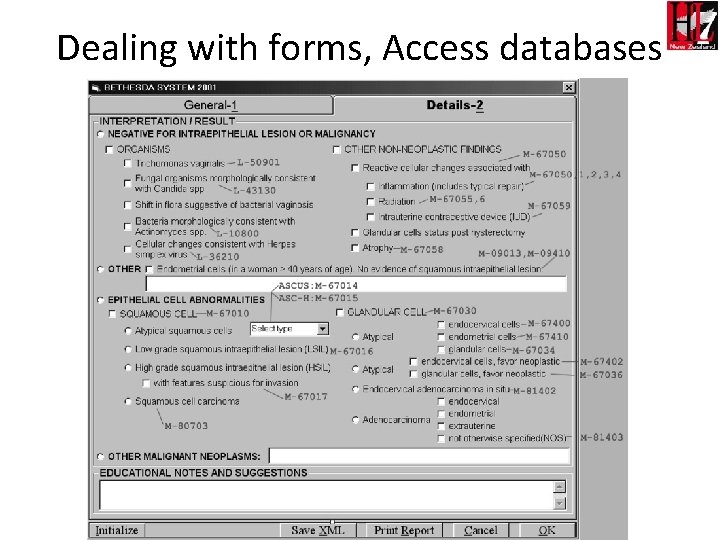
Dealing with forms, Access databases
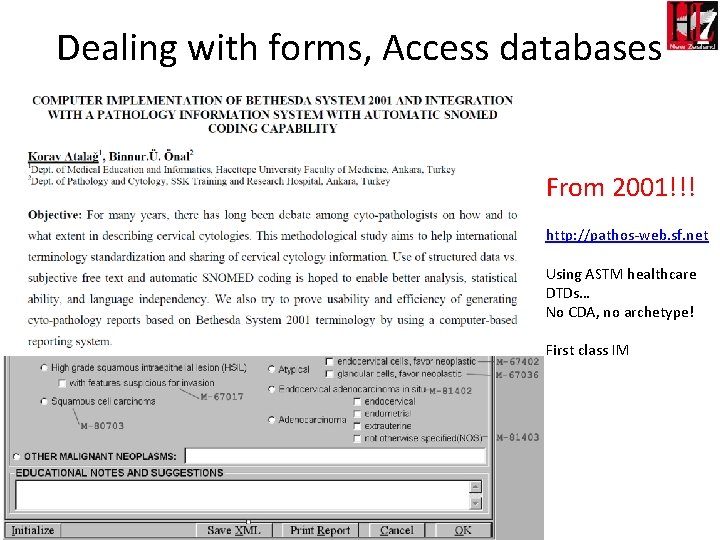
Dealing with forms, Access databases From 2001!!! http: //pathos-web. sf. net Using ASTM healthcare DTDs… No CDA, no archetype! First class IM
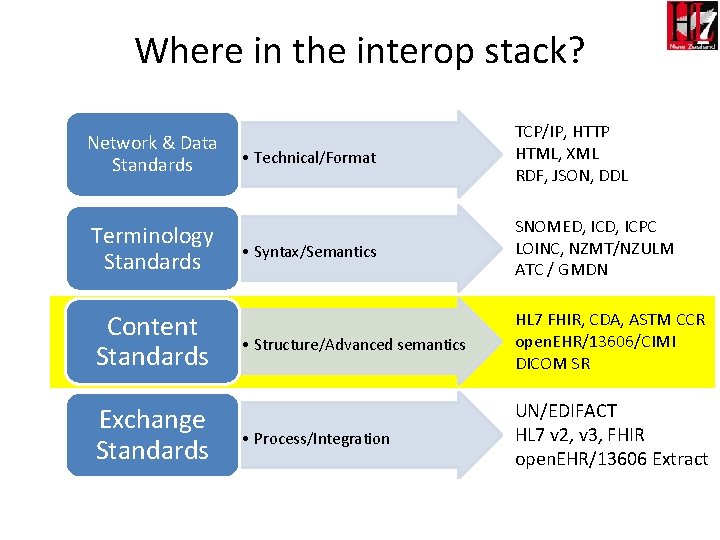
Where in the interop stack? Network & Data Standards Terminology Standards Content Standards Exchange Standards • Technical/Format TCP/IP, HTTP HTML, XML RDF, JSON, DDL • Syntax/Semantics SNOMED, ICPC LOINC, NZMT/NZULM ATC / GMDN • Structure/Advanced semantics HL 7 FHIR, CDA, ASTM CCR open. EHR/13606/CIMI DICOM SR • Process/Integration UN/EDIFACT HL 7 v 2, v 3, FHIR open. EHR/13606 Extract
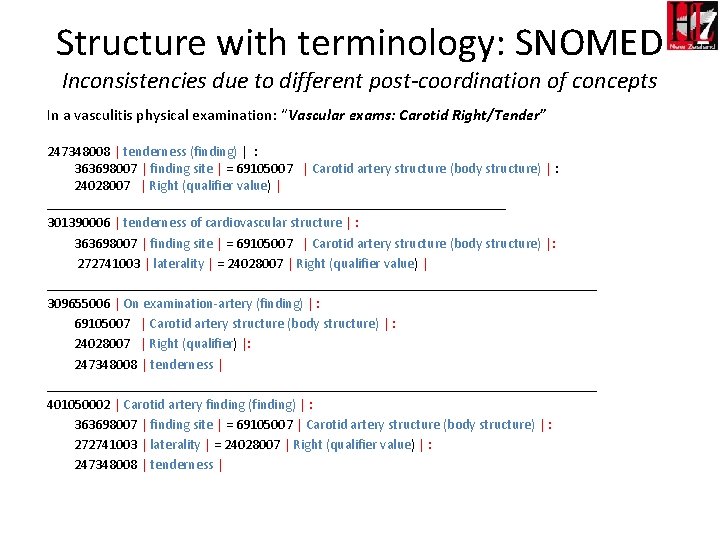
Structure with terminology: SNOMED Inconsistencies due to different post-coordination of concepts In a vasculitis physical examination: “Vascular exams: Carotid Right/Tender” 247348008 | tenderness (finding) | : 363698007 | finding site | = 69105007 | Carotid artery structure (body structure) | : 24028007 | Right (qualifier value) | _______________________________________ 301390006 | tenderness of cardiovascular structure | : 363698007 | finding site | = 69105007 | Carotid artery structure (body structure) |: 272741003 | laterality | = 24028007 | Right (qualifier value) | ________________________________________ 309655006 | On examination-artery (finding) | : 69105007 | Carotid artery structure (body structure) | : 24028007 | Right (qualifier) |: 247348008 | tenderness | ________________________________________ 401050002 | Carotid artery finding (finding) | : 363698007 | finding site | = 69105007 | Carotid artery structure (body structure) | : 272741003 | laterality | = 24028007 | Right (qualifier value) | : 247348008 | tenderness |
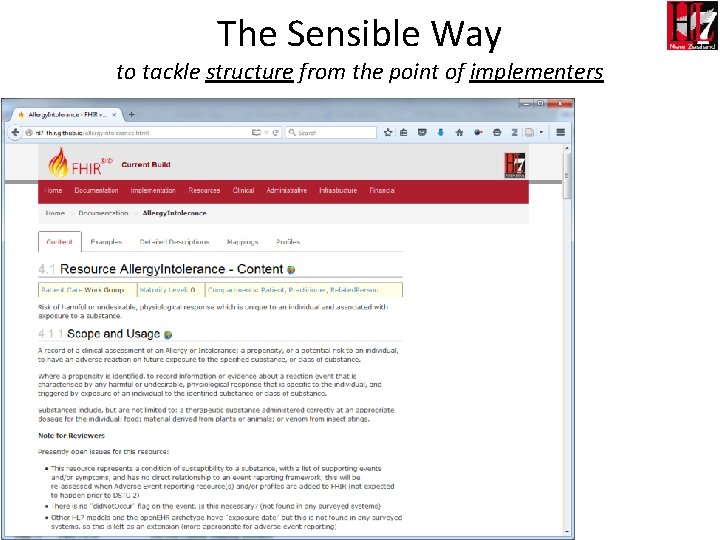
The Sensible Way to tackle structure from the point of implementers
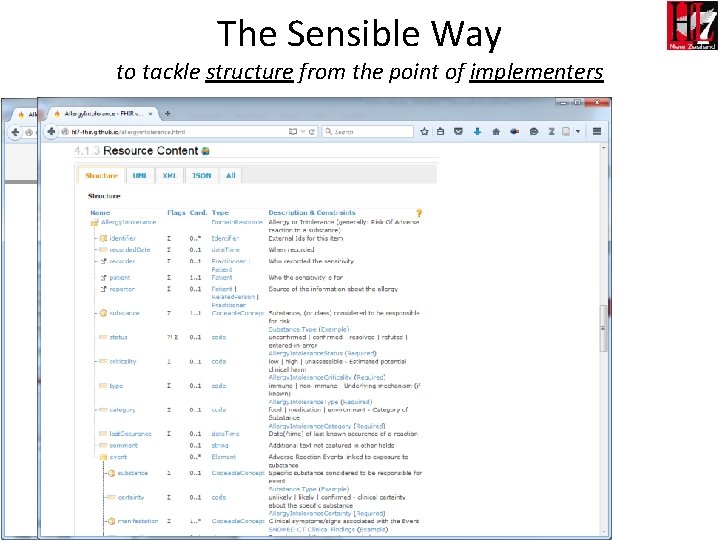
The Sensible Way to tackle structure from the point of implementers
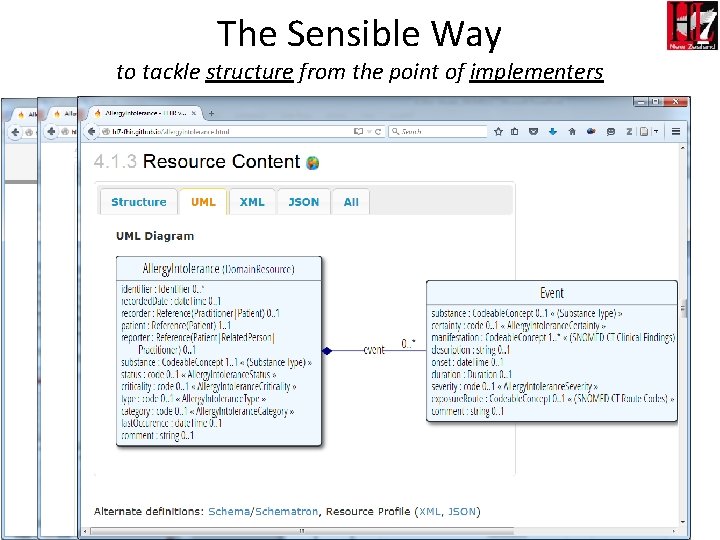
The Sensible Way to tackle structure from the point of implementers
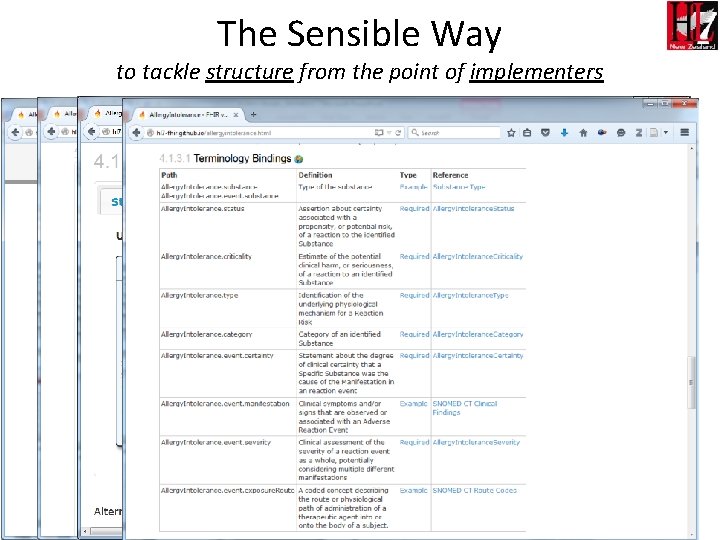
The Sensible Way to tackle structure from the point of implementers
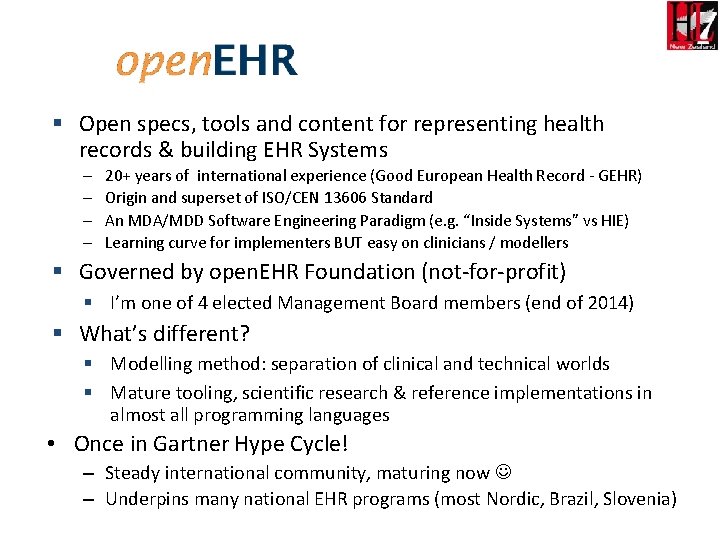
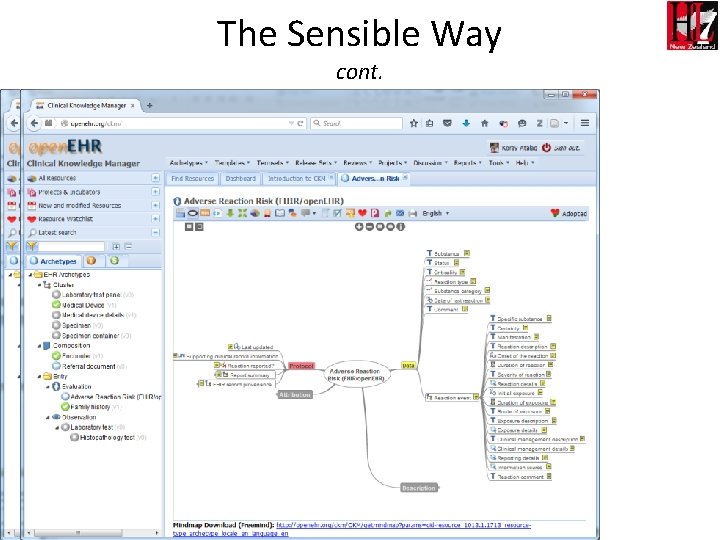
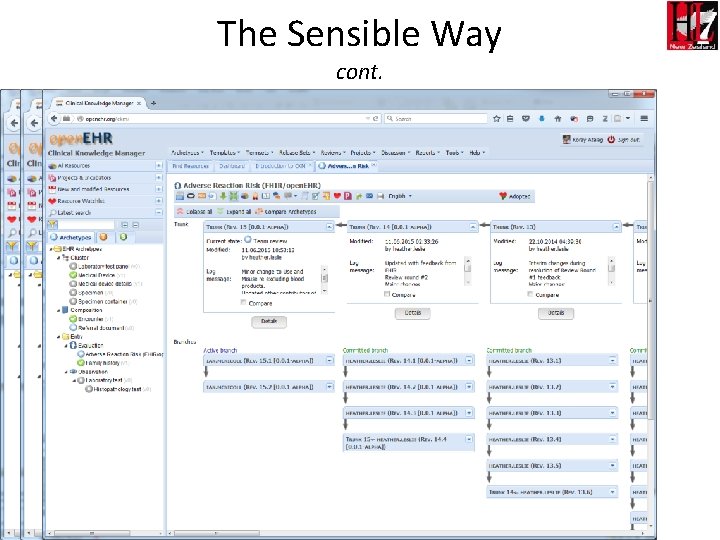
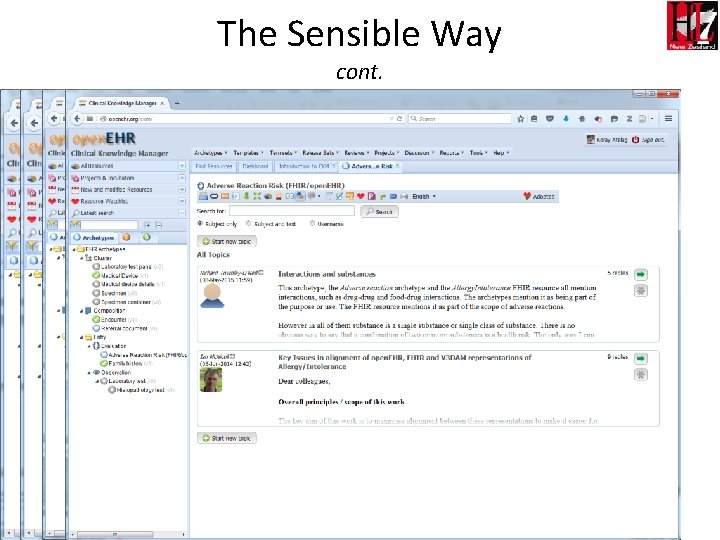
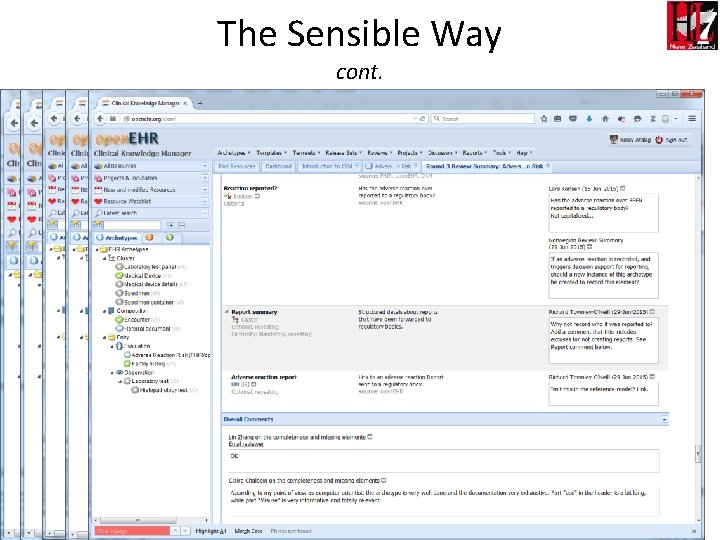
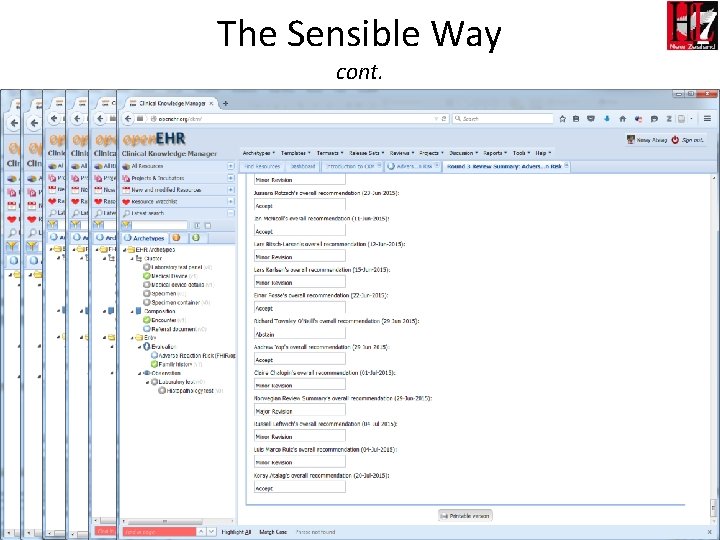
Open specs, tools and content for representing health records & building EHR Systems – – 20+ years of international experience (Good European Health Record - GEHR) Origin and superset of ISO/CEN 13606 Standard An MDA/MDD Software Engineering Paradigm (e. g. “Inside Systems” vs HIE) Learning curve for implementers BUT easy on clinicians / modellers Governed by open. EHR Foundation (not-for-profit) I’m one of 4 elected Management Board members (end of 2014) What’s different? Modelling method: separation of clinical and technical worlds Mature tooling, scientific research & reference implementations in almost all programming languages • Once in Gartner Hype Cycle! – Steady international community, maturing now – Underpins many national EHR programs (most Nordic, Brazil, Slovenia)
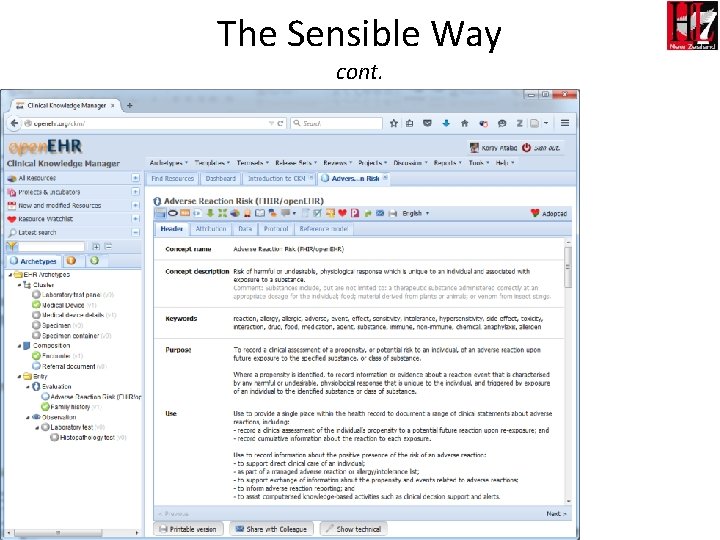
The Sensible Way cont.
The Sensible Way cont.
The Sensible Way cont.
The Sensible Way cont.
The Sensible Way cont.
The Sensible Way cont.
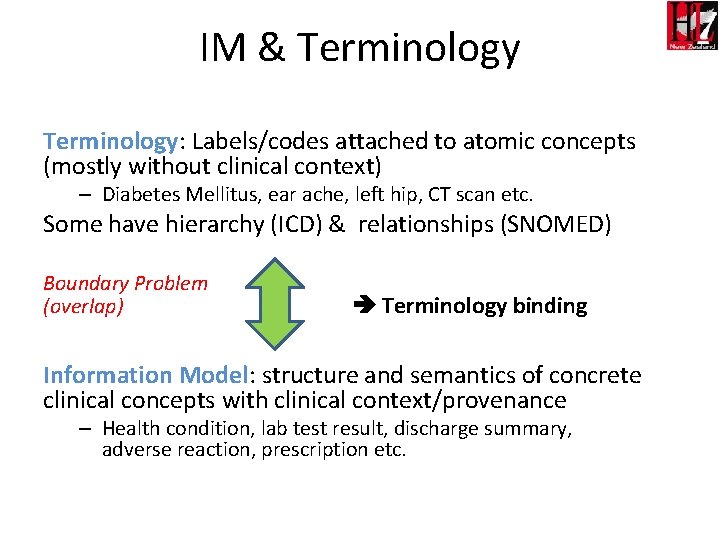
IM & Terminology: Labels/codes attached to atomic concepts (mostly without clinical context) – Diabetes Mellitus, ear ache, left hip, CT scan etc. Some have hierarchy (ICD) & relationships (SNOMED) Boundary Problem (overlap) Terminology binding Information Model: structure and semantics of concrete clinical concepts with clinical context/provenance – Health condition, lab test result, discharge summary, adverse reaction, prescription etc.
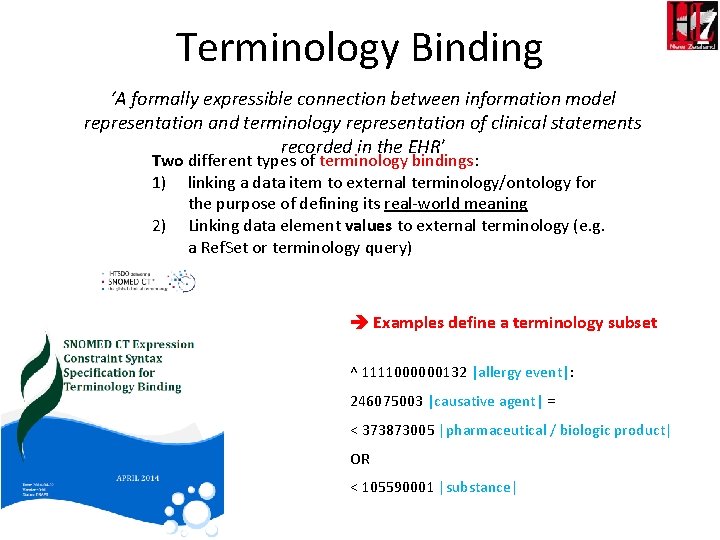
Terminology Binding ‘A formally expressible connection between information model representation and terminology representation of clinical statements recorded in the EHR’ Two different types of terminology bindings: 1) linking a data item to external terminology/ontology for the purpose of defining its real-world meaning 2) Linking data element values to external terminology (e. g. a Ref. Set or terminology query) Examples define a terminology subset ^ 1111000000132 |allergy event|: 246075003 |causative agent| = < 373873005 |pharmaceutical / biologic product| OR < 105590001 |substance|
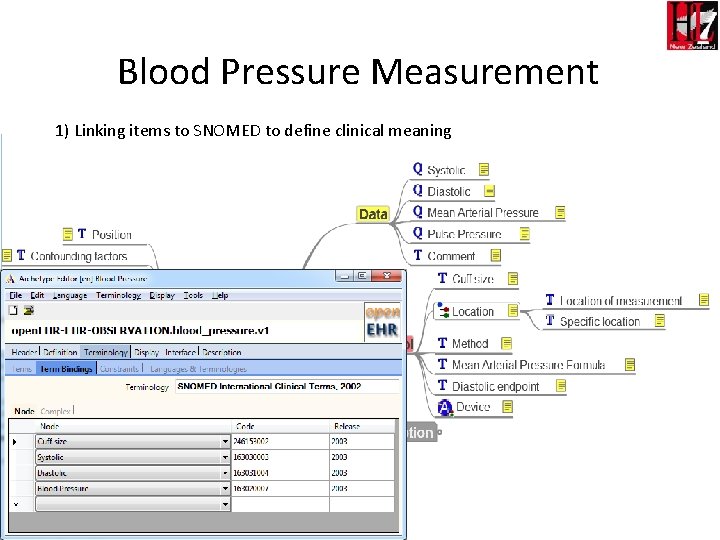
Blood Pressure Measurement 1) Linking items to SNOMED to define clinical meaning mindmap representation of open. EHR Archetype
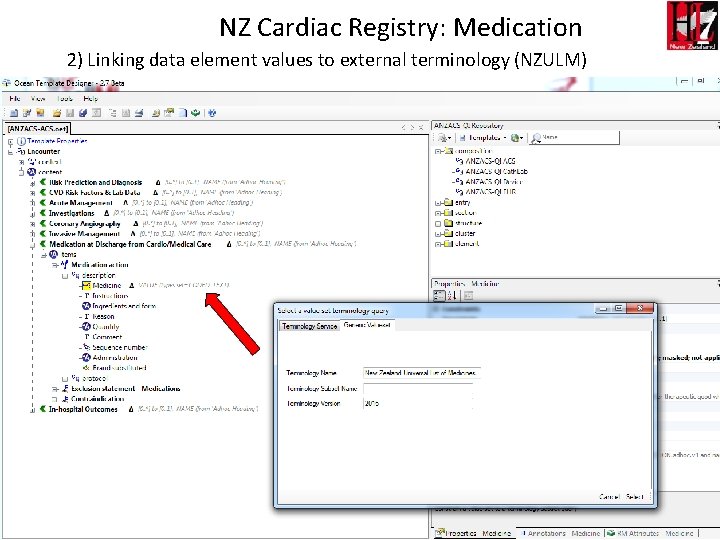
NZ Cardiac Registry: Medication 2) Linking data element values to external terminology (NZULM)
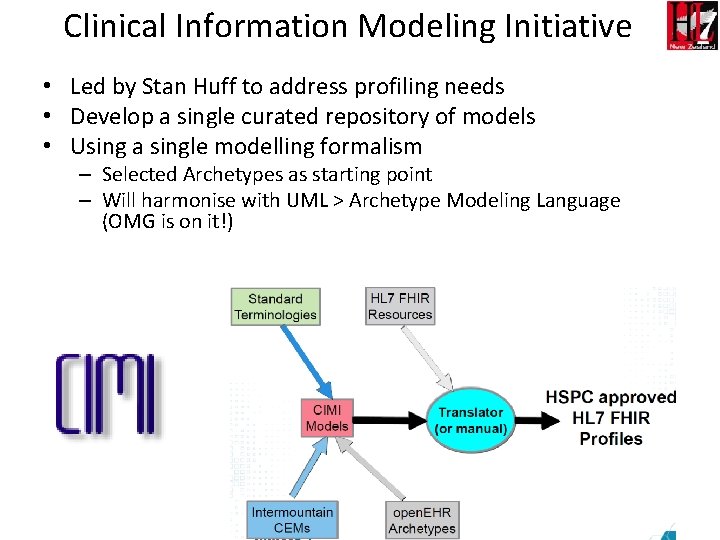
Clinical Information Modeling Initiative • Led by Stan Huff to address profiling needs • Develop a single curated repository of models • Using a single modelling formalism – Selected Archetypes as starting point – Will harmonise with UML > Archetype Modeling Language (OMG is on it!)
& • FHIR resources and Archetypes are closely related – should avoid reinvention at all costs! – Also FHIR extensions/profiles <> open. EHR Templates • Archetype FHIR resource conversion is expected to be seamless – Archetypes are usually more detailed; as opposed to • FHIR resources include most commonly used items (80/20 rule) with an option to extend as needed • An opportunity exists for FHIR to leverage open. EHR content, tooling and expertise – FHIRman says base resources are not enough! • Oh did I just forget SNOMED? – Not really, both FHIR and open. EHR allow for terminology bindings (for data items which make sense to encode)
Conclusions • Information Models key for putting SNOMED to work – Package structure, syntax and semantics in one go – Easy to transform and consume for implementers • There’s no point coding every data element! – But SNOMED (and other terminology) play key role in: • Advanced decision support (using ontology-like features/inferencing) • Analytics, research and reporting • It requires effort, tools and training • Good news is (for implementers) – They don’t have to be concerned (terminologists and modellers’ job!) – FHIR (inc. SNOMED bindings) sufficient for HIE
Questions? www. taniwha. org. nz k. atalag@auckland. ac. nz
- Slides: 25