
SNCC Greensboro and Nashville Lunch Counter Sit Ins

SNCC, Greensboro and Nashville Lunch Counter Sit -Ins By: Annalise Haines, Camille Lisonbee, Kyle Bramble, Jack Schweitzer, Jay Yip
SNCC Organization was formed in April 1960
The Organization ● Student Nonviolent Coordinating Committee(SNCC) ● Formed to give younger blacks more voice in the civil rights movement ● Members used direct nonviolent action in the South ● Goal was to desegregate buses, voting, and empower blacks ● Students were trained in civil disobedience (the nonviolent refusal to obey a law that the protester considers to be unjust)
Perspective ● The organization gained white northerners to the cause ● The Northern blacks until this point didn’t know horrible it was ● Whites thought this would lead to overwhelming black power ● African Americans just wanted to voice their opinions and be equal
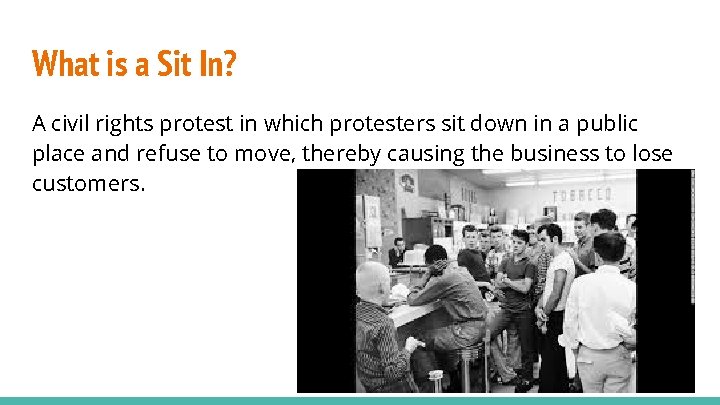
What is a Sit In? A civil rights protest in which protesters sit down in a public place and refuse to move, thereby causing the business to lose customers.

Greensboro Sit-in Feb 1 -25 1960
Background ● Ezell Blair Jr. , David Richmond, Franklin Mc. Cain, and Joseph Mc. Neil were four young black students from the North Carolina Agricultural and Technical College ● These men were known as The Greensboro Four (TGF) ● TGF believed in nonviolent protest techniques, Freedom Rides by Congress for Racial Equality (CORE) in 1947 --which interracial activists rode across the South in buses to test Supreme Court decisions to ban segregation in buses
Who Participated in this Event? ● In 1960, a group of African American students staged a sit-in at the segregated Woolworth’s lunch counter in Greensboro, North Carolina ● The students refused to leave after being denied service
What happened In this event ● On February 1, 1960, the Greensboro Four staged a sit-in at Woolworth’s general merchandise store and refused to leave after being denied service ● The four purchased a few small items and kept the receipts as proof, they went to the lunch counter to order and remained seated until they got their food; the servers refused to give them food because the counter is “White only”, blacks are to stand on the other side ● The four men wouldn’t leave until they got their food ● What started as only 4 students turned into 27 the 2 nd day then 63 by the 3 rd day
Nashville Sit-In Feb 13 -May 10 1960
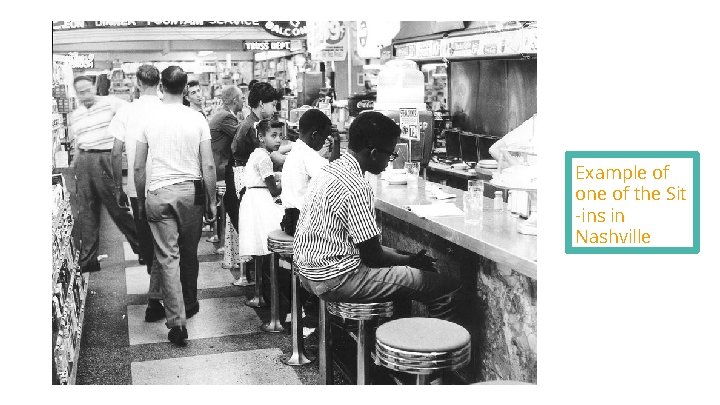
Example of one of the Sit -ins in Nashville
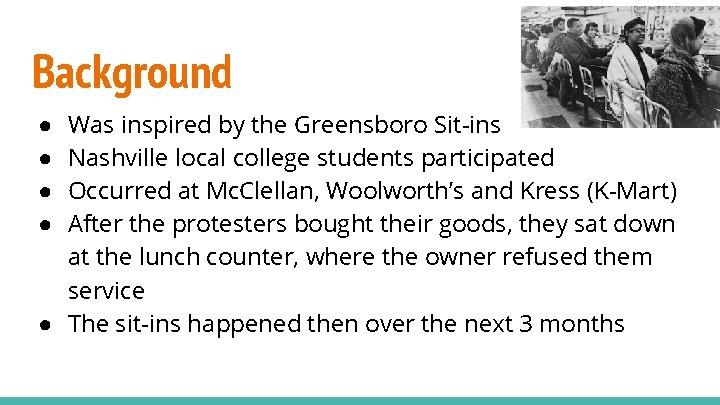
Background Was inspired by the Greensboro Sit-ins Nashville local college students participated Occurred at Mc. Clellan, Woolworth’s and Kress (K-Mart) After the protesters bought their goods, they sat down at the lunch counter, where the owner refused them service ● The sit-ins happened then over the next 3 months ● ●
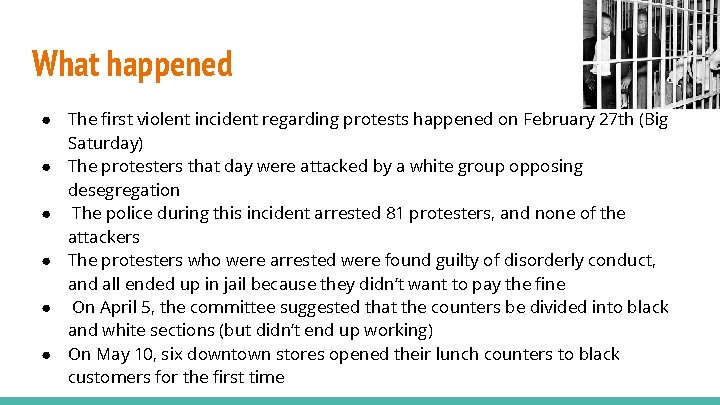
What happened ● The first violent incident regarding protests happened on February 27 th (Big Saturday) ● The protesters that day were attacked by a white group opposing desegregation ● The police during this incident arrested 81 protesters, and none of the attackers ● The protesters who were arrested were found guilty of disorderly conduct, and all ended up in jail because they didn’t want to pay the fine ● On April 5, the committee suggested that the counters be divided into black and white sections (but didn’t end up working) ● On May 10, six downtown stores opened their lunch counters to black customers for the first time
Perspective ● For the African Americans living in Nashville, it was unfair because they got discriminated against and store owners wouldn’t let them in, so they protest by staying in the stores even though the white people didn’t want them there ● For the white people they didn’t want black people at the stores they were at because they were so used to just being around white people ● White people didn’t want change
Significance of the Sit-Ins ● A result of the Greensboro Sit-In, 70 other southern cities were inspired to have sit-ins of their own ● Sit-ins showed the world the Black resistance to segregation grabbing the attention of the media ● It also showed the Black youth that they had power to change segregation ● Civil disobedience would paint the police as harsh and the women and children as non-threatening
Works Cited ● https: //snccdigital. org/events/sit-ins-greensboro/ ● https: //www. history. com/topics/black-history/sncc ● https: //kinginstitute. stanford. edu/encyclopedia/student-nonviolent-coordinating-committeesncc ● https: //www. history. com/topics/black-history/the-greensboro-sit-in ● https: //www. smithsonianmag. com/smart-news/new-nashville-restaurant-recreates-civil-rightssit-site-180962489/ ● https: //www. blackpast. org/african-american-history/nashville-sit-ins-1960/ ● https: //www. britannica. com/event/Greensboro-sit-in
- Slides: 16