
SNC 2 D n To discuss and appreciate
- Slides: 19
SNC 2 D n To discuss and appreciate the intricacies of the musculoskeletal system!
The Musculoskeletal System It will really move you!
What do you think a human skeleton looks like? n Using the template provided, draw / sketch the major bones of the human skeleton.
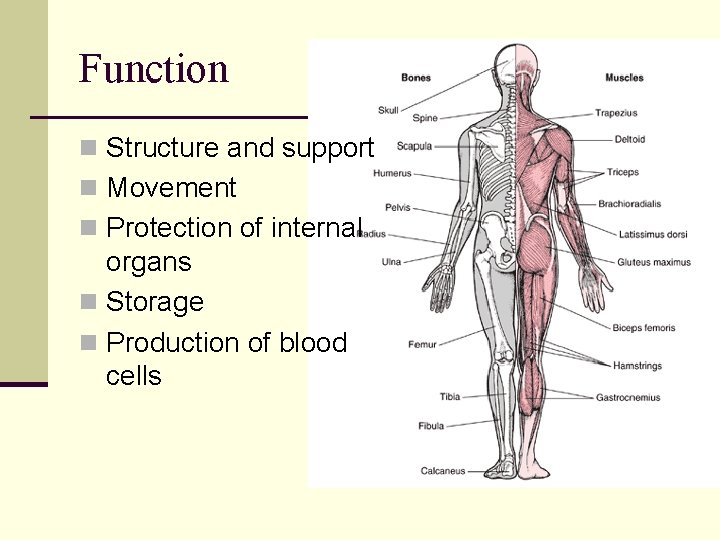
Function n Structure and support n Movement n Protection of internal organs n Storage n Production of blood cells
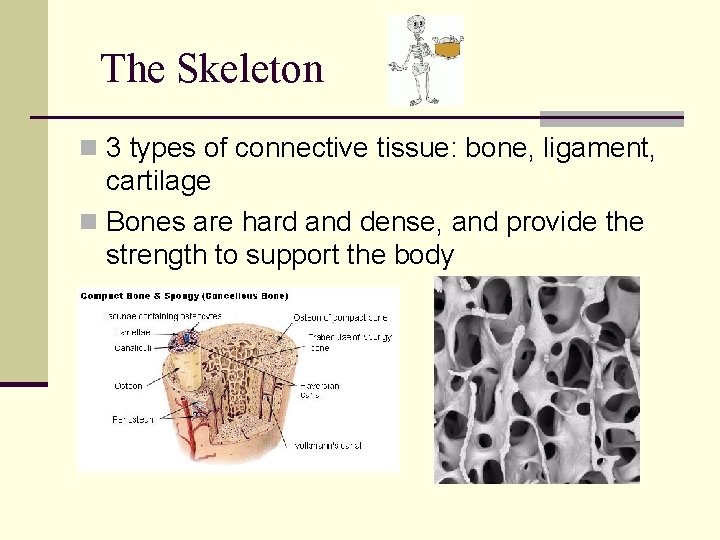
The Skeleton n 3 types of connective tissue: bone, ligament, cartilage n Bones are hard and dense, and provide the strength to support the body
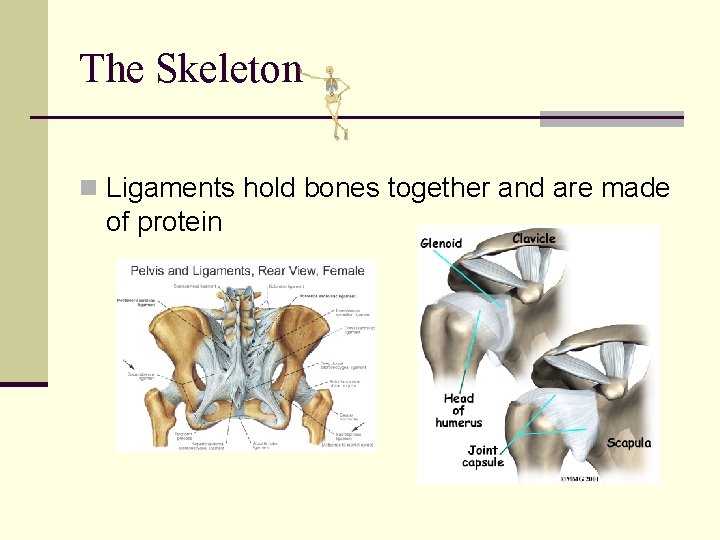
The Skeleton n Ligaments hold bones together and are made of protein
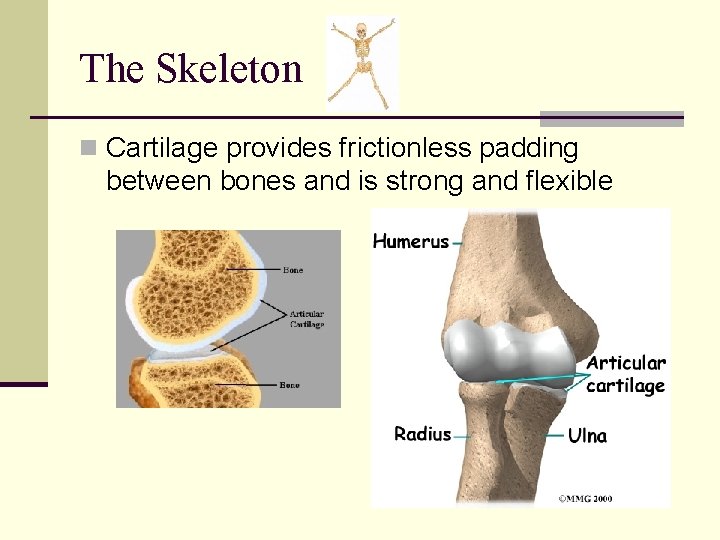
The Skeleton n Cartilage provides frictionless padding between bones and is strong and flexible
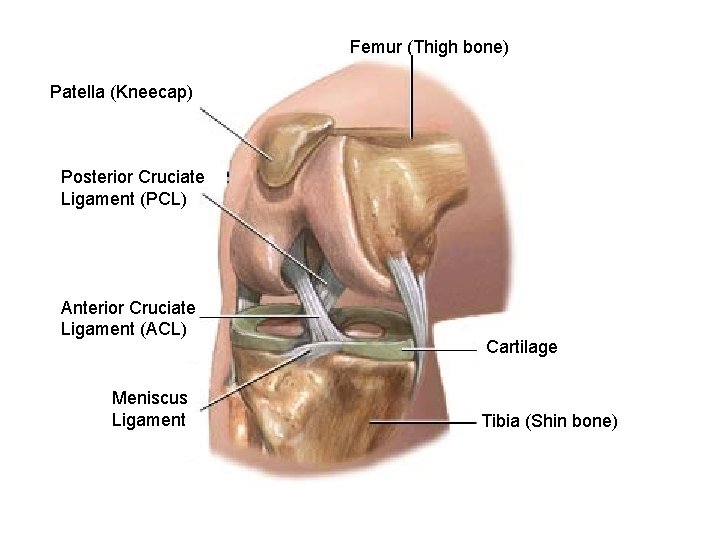
Femur (Thigh bone) Patella (Kneecap) Posterior Cruciate Ligament (PCL) Anterior Cruciate Ligament (ACL) Meniscus Ligament Cartilage Tibia (Shin bone)
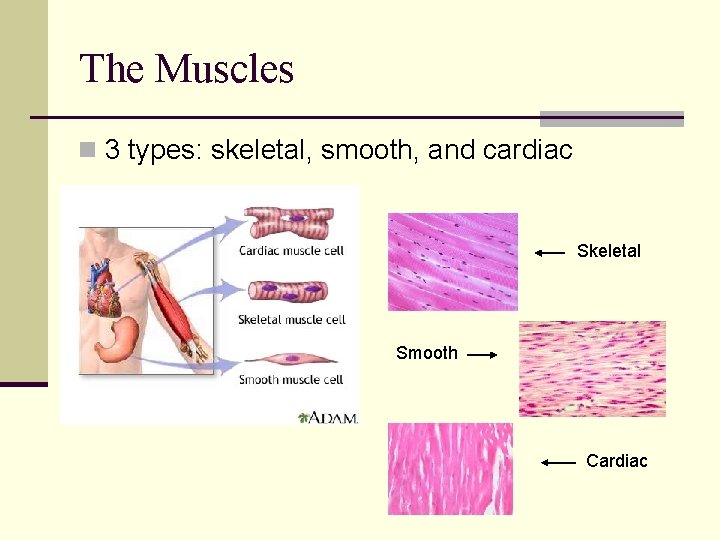
The Muscles n 3 types: skeletal, smooth, and cardiac Skeletal Smooth Cardiac
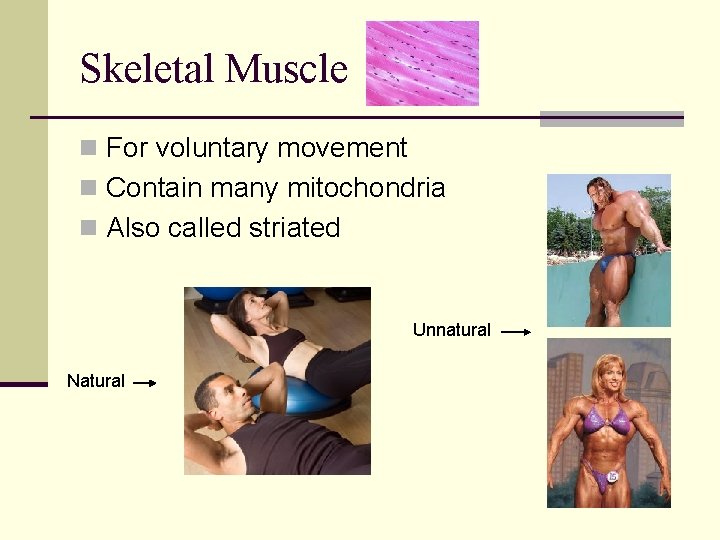
Skeletal Muscle n For voluntary movement n Contain many mitochondria n Also called striated Unnatural Natural
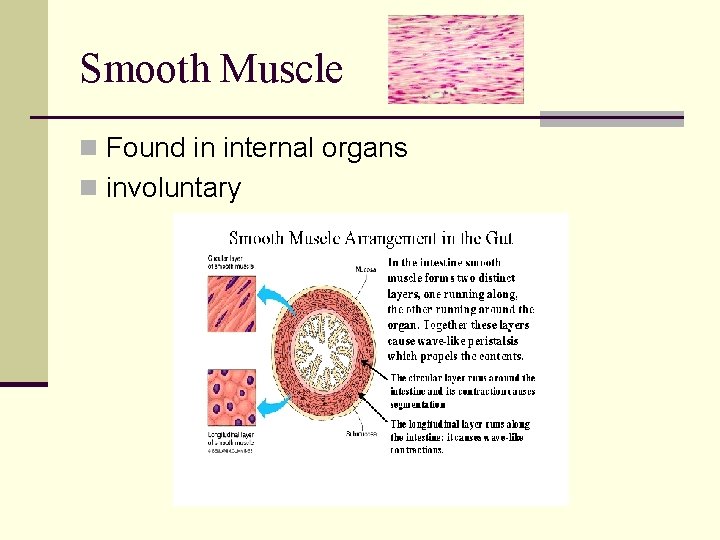
Smooth Muscle n Found in internal organs n involuntary
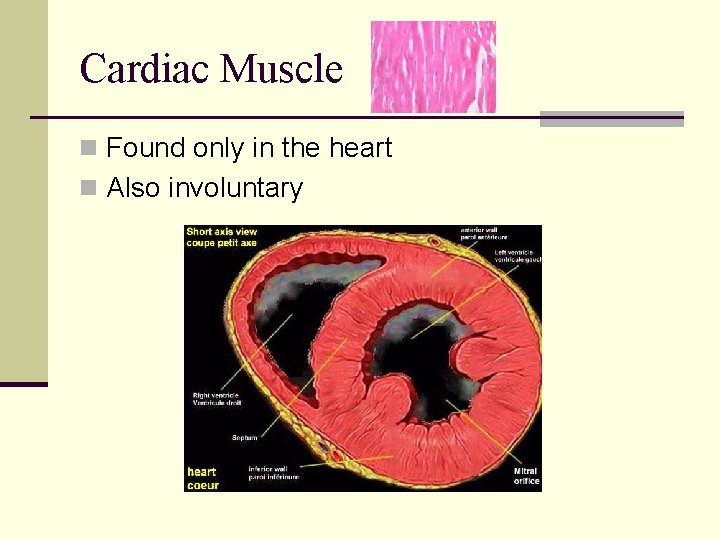
Cardiac Muscle n Found only in the heart n Also involuntary
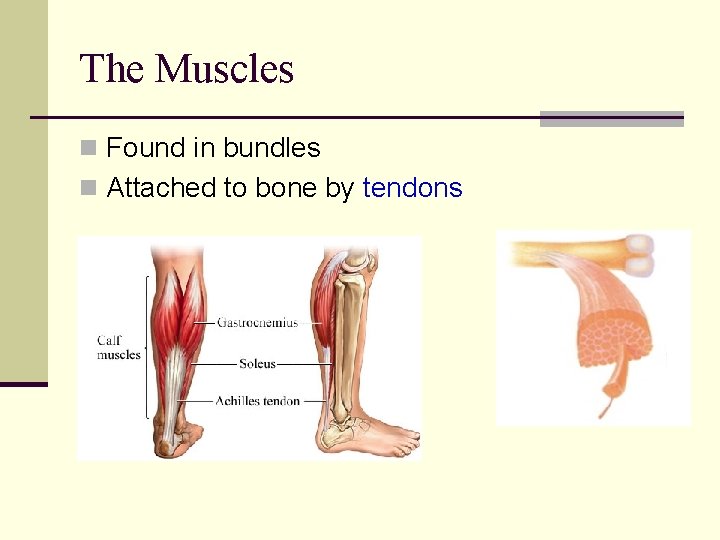
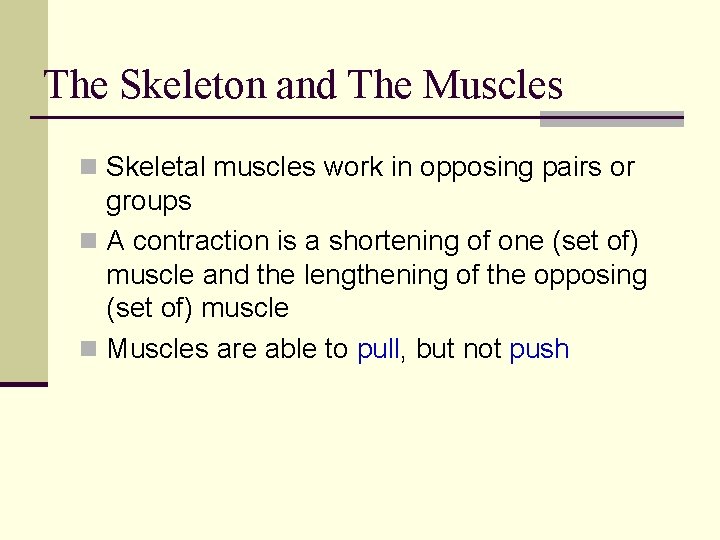
The Muscles n Found in bundles n Attached to bone by tendons
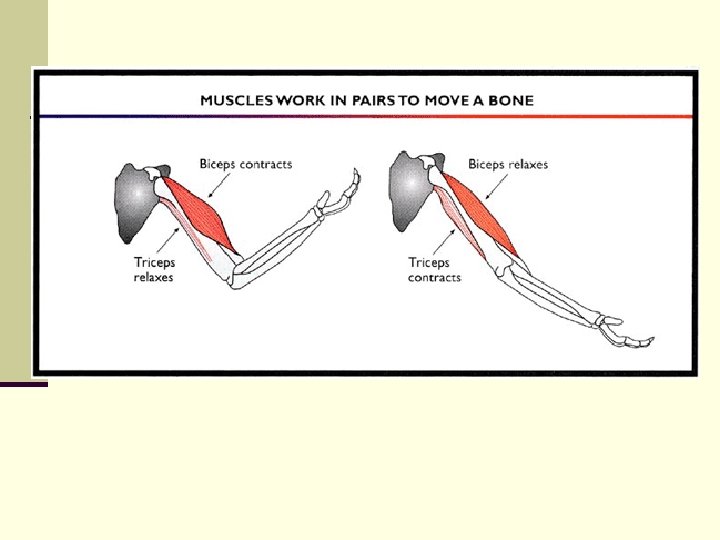
The Skeleton and The Muscles n Skeletal muscles work in opposing pairs or groups n A contraction is a shortening of one (set of) muscle and the lengthening of the opposing (set of) muscle n Muscles are able to pull, but not push
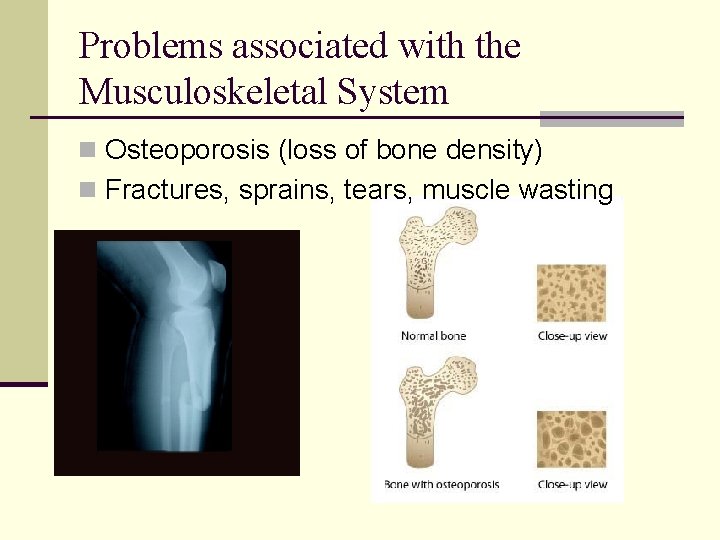
Problems associated with the Musculoskeletal System n Osteoporosis (loss of bone density) n Fractures, sprains, tears, muscle wasting
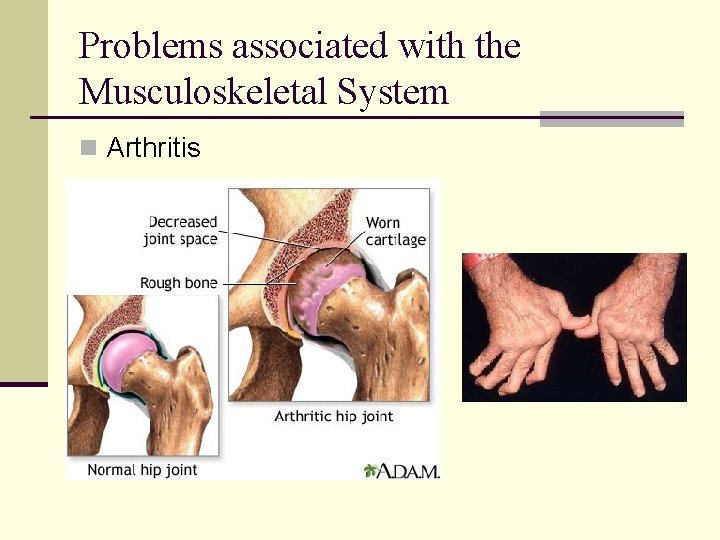
Problems associated with the Musculoskeletal System n Arthritis
Muscle Fatigue Activities n 5 Stations n 1. Get a grip (popsicle stick / paperclip n 2. Clothespin calesthenics n 3. To beat or Not to beat (tennis ball) n 4. Too tired to sit (wall sit) n 5. Weight lifting (textbook)
To do: n Page 101 # 1 – 6 n Unit Test Chapter 2 & 3 Next week!