
SN 10 STATES OF MATTER Moving Particles Make


- Slides: 18
SN# 10 STATES OF MATTER
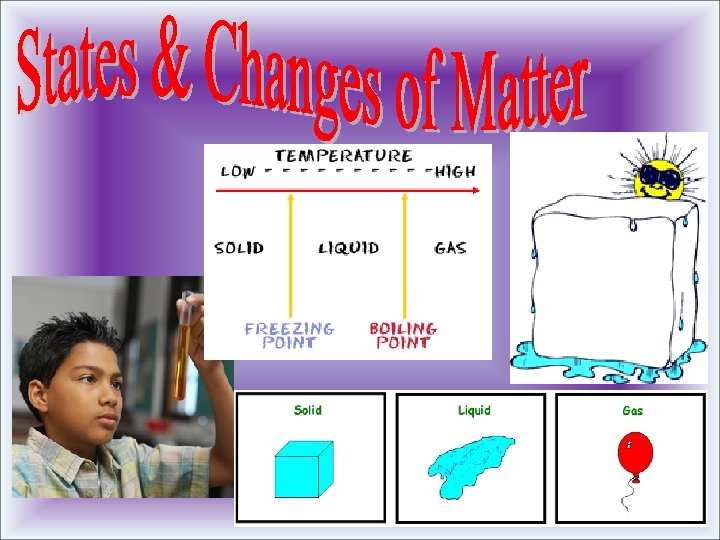
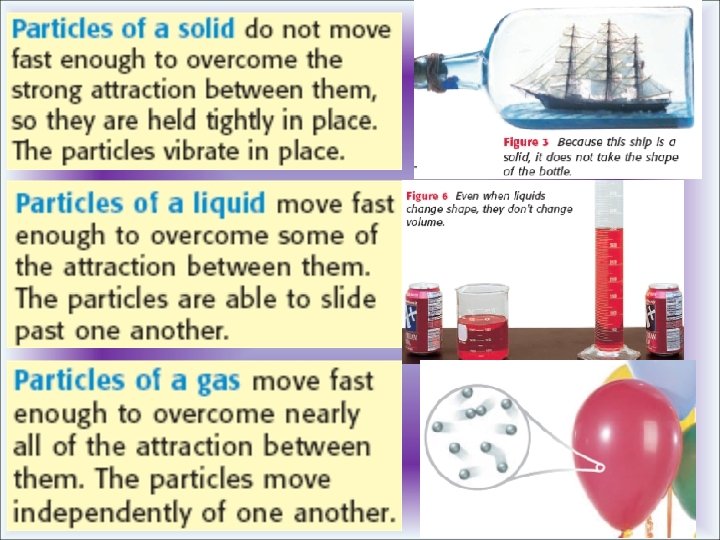
Moving Particles Make Up All Matter • Matter is made up of tiny particles called atoms and molecules • There are 4 states of matter – solid, liquid, gas, & plasma • The state of matter of a substance determines how fast particles move, and how strongly they are attracted to one another.
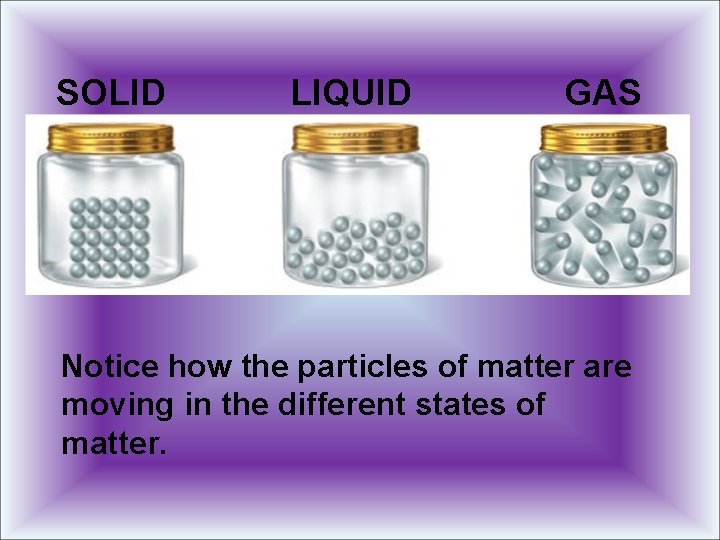
SOLID LIQUID GAS Notice how the particles of matter are moving in the different states of matter.
Liquids, Solids, Gasses… • Solids have a definite shape and volume – The particles that make up a solid are in constant motion, but are held in place by the other particles around them • Liquids take the shape of their container (do not have a definite shape), but do have a definite volume – The particles of liquids move fast enough to overcome the attractions between them
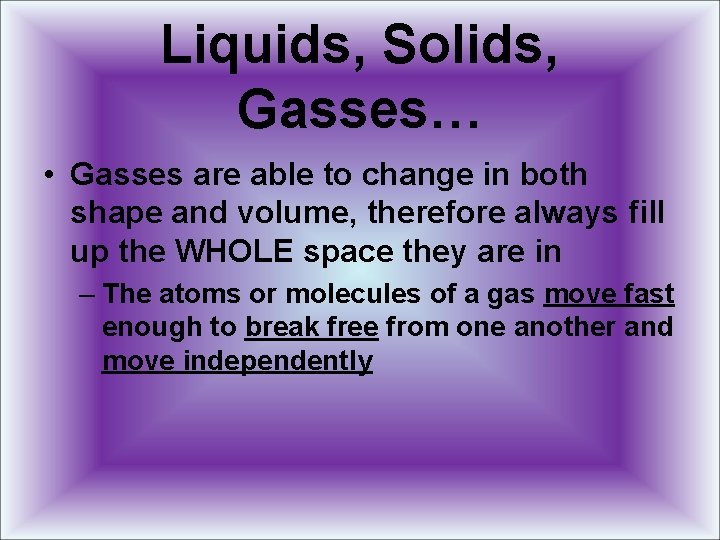
Liquids, Solids, Gasses… • Gasses are able to change in both shape and volume, therefore always fill up the WHOLE space they are in – The atoms or molecules of a gas move fast enough to break free from one another and move independently
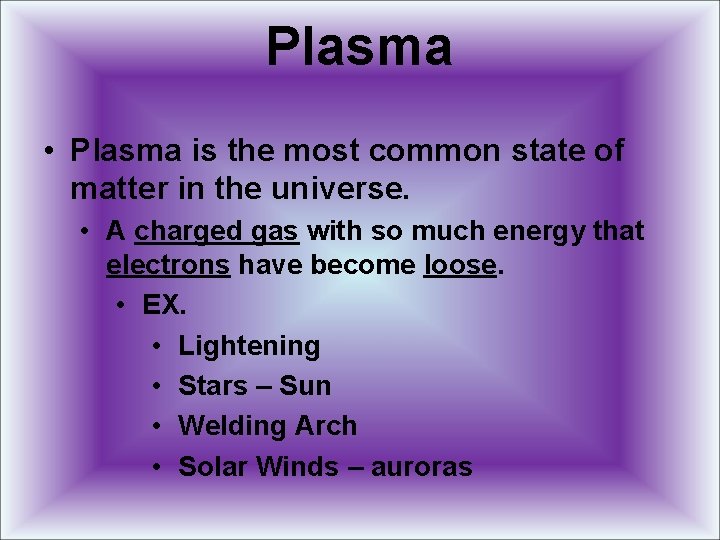
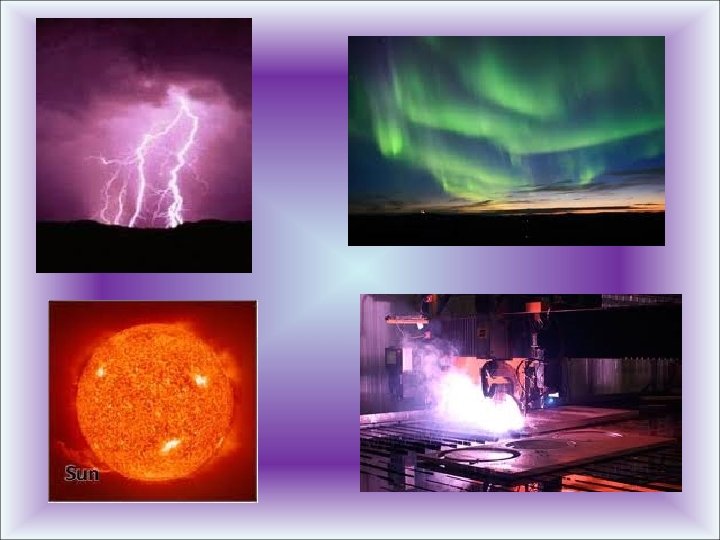
Plasma • Plasma is the most common state of matter in the universe. • A charged gas with so much energy that electrons have become loose. • EX. • Lightening • Stars – Sun • Welding Arch • Solar Winds – auroras
SN# 11 Changes In States Of Matter
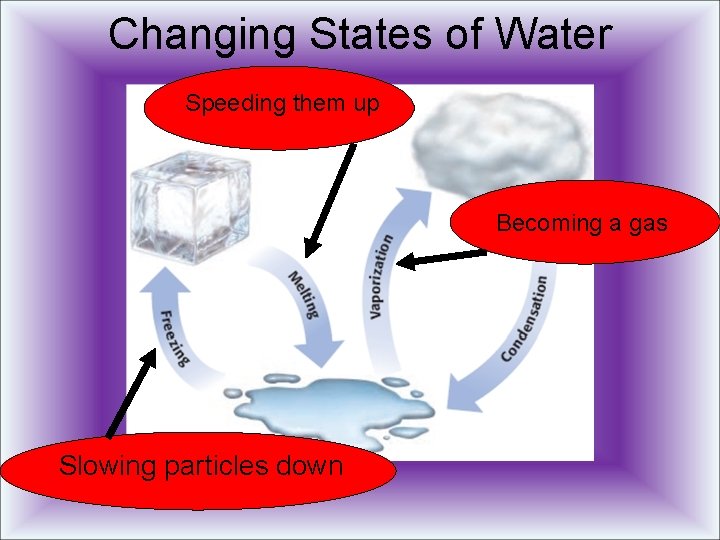
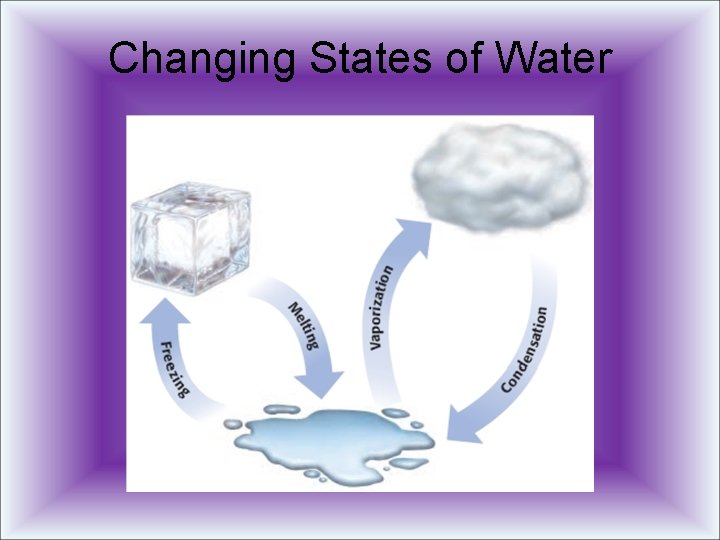
• Particles of matter are always in motion • Adding heat to matter will speed up the particles of matter • Cooling down matter will slow down the particles of matter • If you add enough heat to a substance, it may change physical states – Water can change from a solid (ice), to a liquid (water), to a gas (steam) – simply by adding heat – What if you had steam and reduced the heat? ? ?
Changes of State… • A change of state is the conversion of a substance from one physical form to another – Changes of state are PHYSICAL changes – The make-up of the substance is still the same even though it changes form
Changing States of Water Speeding them up Becoming a gas Slowing particles down
Changing States of Water
What has more energy? No Notes - Review • The energy of a substance is related to the movement of its particles. – Why does liquid water have more energy than ice? • Add energy = particles move faster • Reduce energy = particles move slower
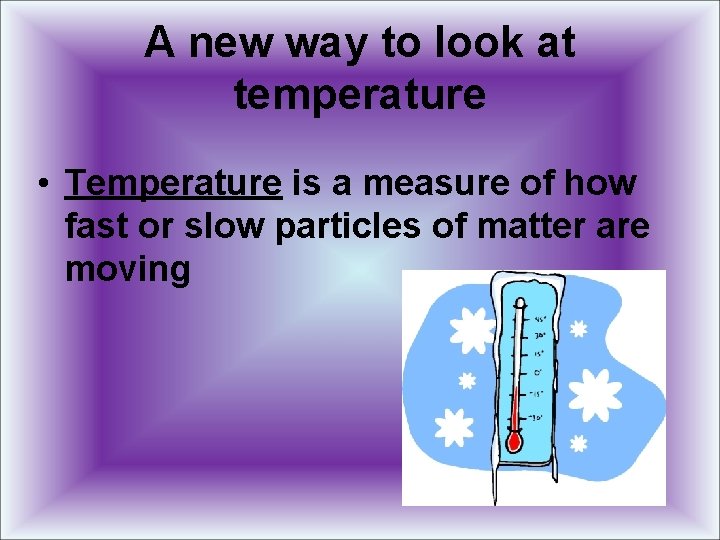
A new way to look at temperature • Temperature is a measure of how fast or slow particles of matter are moving
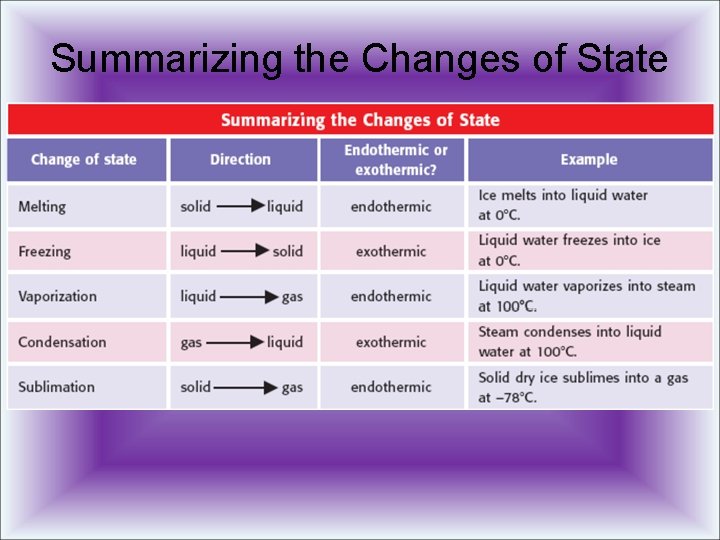
Endothermic Exothermic • There are two ways to describe how a substance undergoes a change of state: • An endothermic change means that energy has been added • An exothermic change means that energy is removed, or lost
Summarizing the Changes of State