
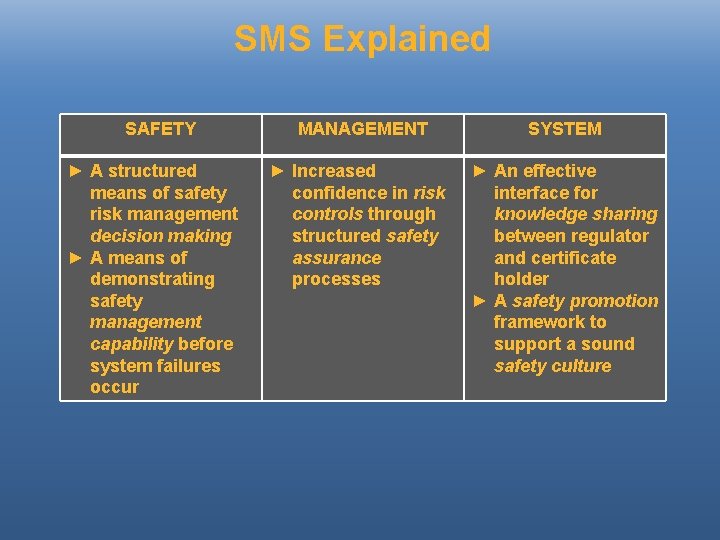
SMS Explained SAFETY A structured means of safety

- Slides: 10
SMS Explained SAFETY ► A structured means of safety risk management decision making ► A means of demonstrating safety management capability before system failures occur MANAGEMENT ► Increased confidence in risk controls through structured safety assurance processes SYSTEM ► An effective interface for knowledge sharing between regulator and certificate holder ► A safety promotion framework to support a sound safety culture
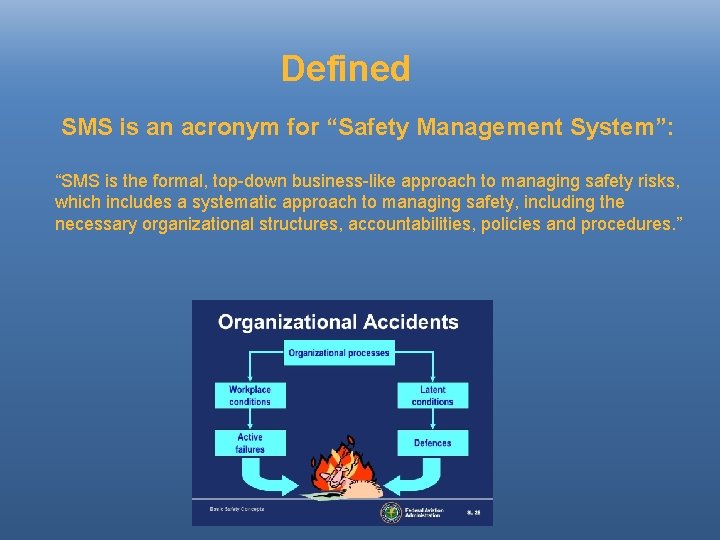
Defined SMS is an acronym for “Safety Management System”: “SMS is the formal, top-down business-like approach to managing safety risks, which includes a systematic approach to managing safety, including the necessary organizational structures, accountabilities, policies and procedures. ”
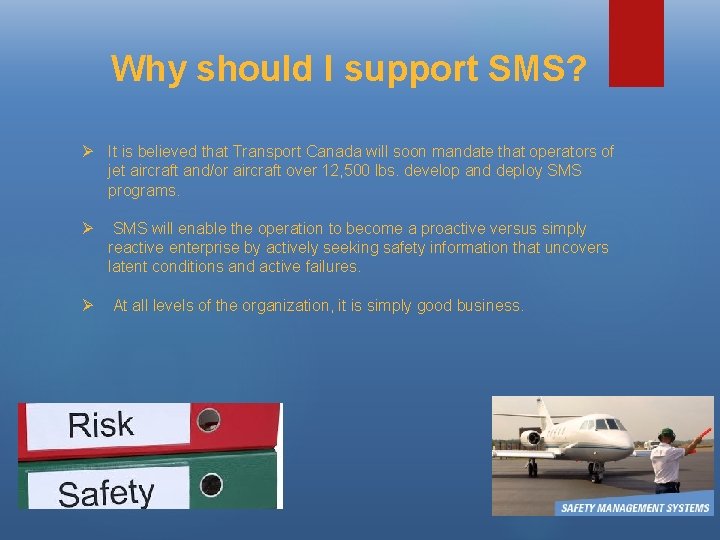
Why should I support SMS? Ø It is believed that Transport Canada will soon mandate that operators of jet aircraft and/or aircraft over 12, 500 lbs. develop and deploy SMS programs. Ø SMS will enable the operation to become a proactive versus simply reactive enterprise by actively seeking safety information that uncovers latent conditions and active failures. Ø At all levels of the organization, it is simply good business.
Why do we need SMS? Ø Common cause accidents are diminishing in number. Ø Many accidents that occur are due to the unique aspects of the operating environments of individual operators of narrow segments of the aviation community. Ø The casual factors of these accidents aren’t common to everyone, they must be found addressed with methods that are sensitive to the nuances of the individual operator’s situation. Ø One of the defining characteristics of a SMS is its emphasis on risk management [within the individual operators environment and situation] – it’s a gap filler between the common cause risk factors that are addressed by traditional regulations and those that are more elusive.
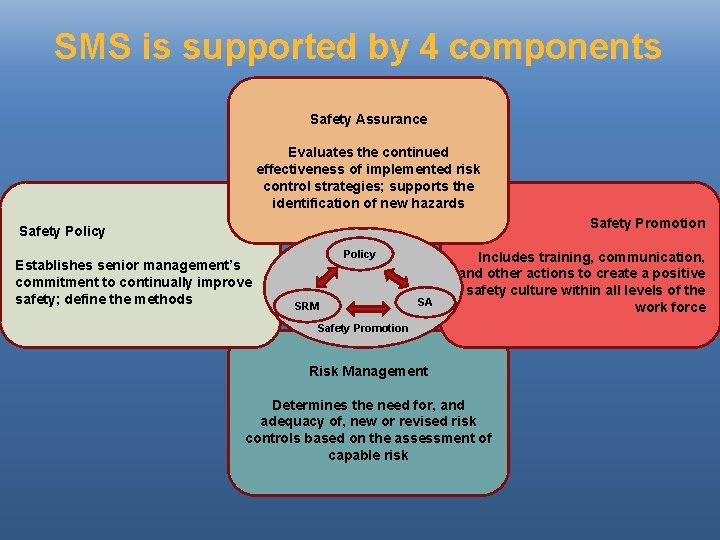
SMS is supported by 4 components Safety Assurance Evaluates the continued effectiveness of implemented risk control strategies; supports the identification of new hazards Safety Promotion Safety Policy Establishes senior management’s commitment to continually improve safety; define the methods Policy SRM SA Includes training, communication, and other actions to create a positive safety culture within all levels of the work force Safety Promotion Risk Management Determines the need for, and adequacy of, new or revised risk controls based on the assessment of capable risk
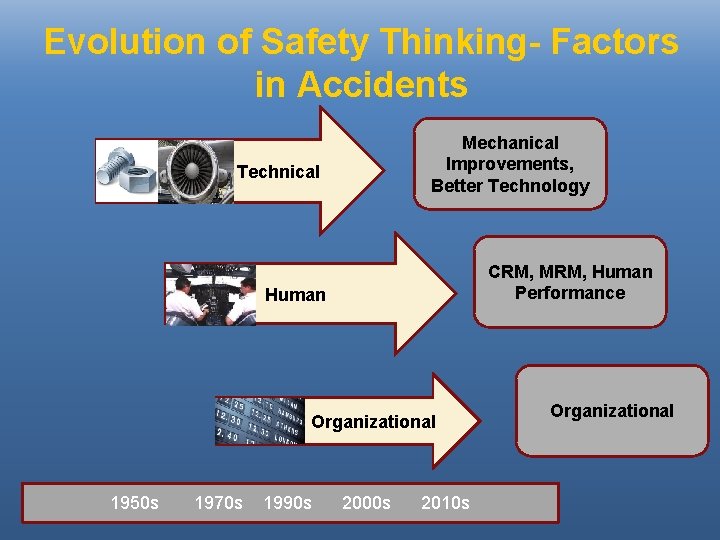
Evolution of Safety Thinking- Factors in Accidents Mechanical Improvements, Better Technology Technical CRM, MRM, Human Performance Human Organizational 1950 s 1970 s 1990 s 2000 s 2010 s Organizational
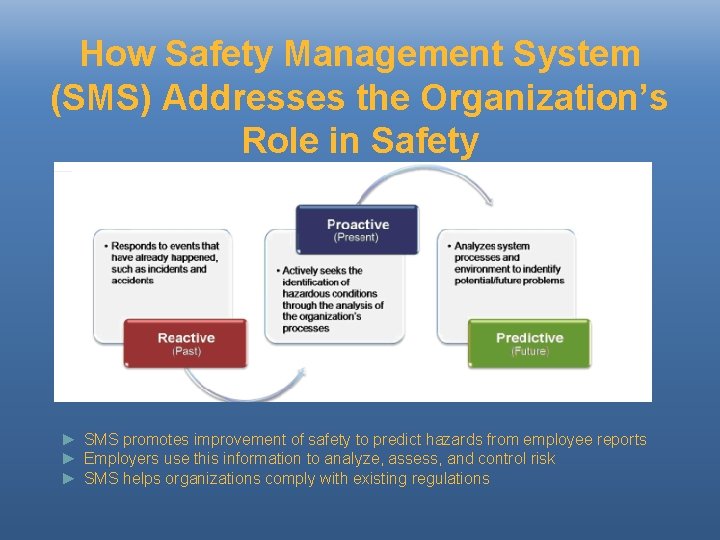
How Safety Management System (SMS) Addresses the Organization’s Role in Safety ► SMS promotes improvement of safety to predict hazards from employee reports ► Employers use this information to analyze, assess, and control risk ► SMS helps organizations comply with existing regulations
SMS Objectives SMS applies system safety concepts and adds formal system safety management concepts. SMS creates an avenue for more effective interface between product/service providers and their oversight organizations. It is the next logical step in system safety evolution
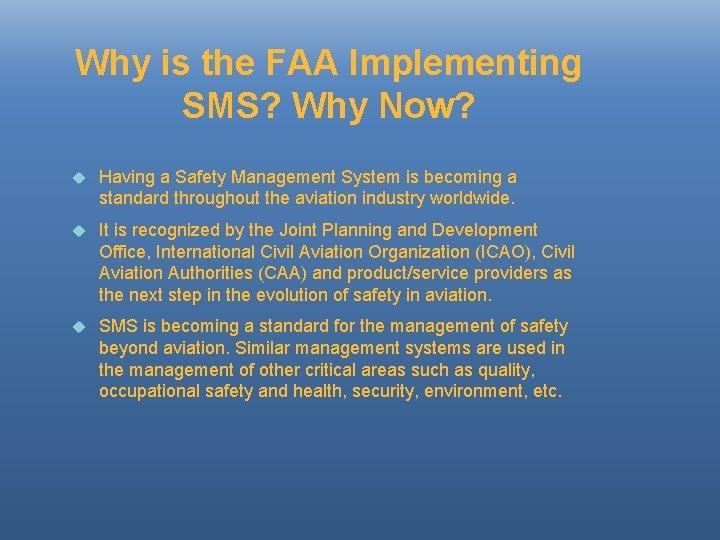
Why is the FAA Implementing SMS? Why Now? Having a Safety Management System is becoming a standard throughout the aviation industry worldwide. It is recognized by the Joint Planning and Development Office, International Civil Aviation Organization (ICAO), Civil Aviation Authorities (CAA) and product/service providers as the next step in the evolution of safety in aviation. SMS is becoming a standard for the management of safety beyond aviation. Similar management systems are used in the management of other critical areas such as quality, occupational safety and health, security, environment, etc.
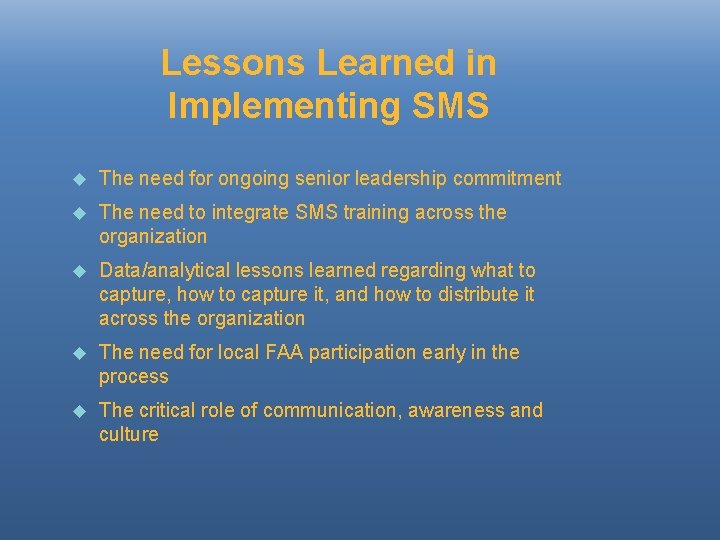
Lessons Learned in Implementing SMS The need for ongoing senior leadership commitment The need to integrate SMS training across the organization Data/analytical lessons learned regarding what to capture, how to capture it, and how to distribute it across the organization The need for local FAA participation early in the process The critical role of communication, awareness and culture