
Smokeless Tobacco ST Cessation Kamran Siddiqi Professor in
Smokeless Tobacco (ST) Cessation Kamran Siddiqi Professor in public health University of York
WHY DO ST USERS NEED HELP WITH QUITTING? 3
Cotinine levels among tobacco users • Smokeless tobacco only (mean 11. 7 dips per day) - 200 users Bangladesh • Cigarettes only (mean 10. 7 per day) - 207 users in Europe • mean FTND-ST = 4. 7 • mean cotinine = 361 ng/ml • mean FTND = 1. 7 • median cotinine = 113 ng/ml (Huque et al 2016) (Etter J-F et al 2000) 4
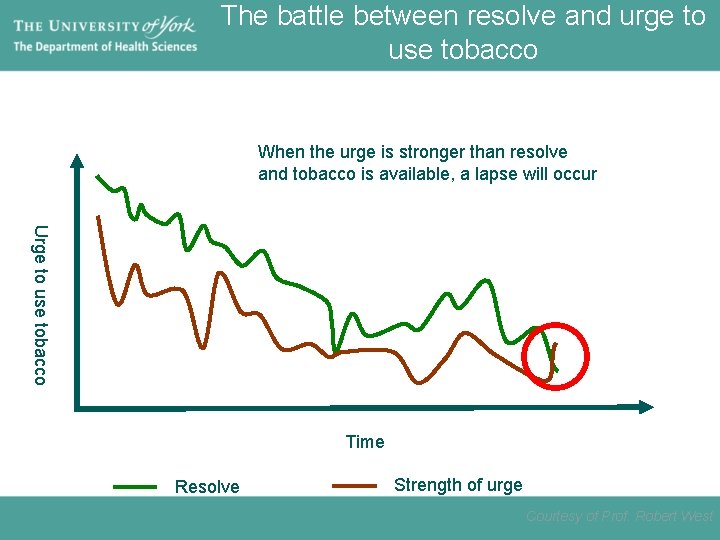
The battle between resolve and urge to use tobacco When the urge is stronger than resolve and tobacco is available, a lapse will occur Urge to use tobacco Time Resolve Strength of urge Courtesy of Prof. Robert West
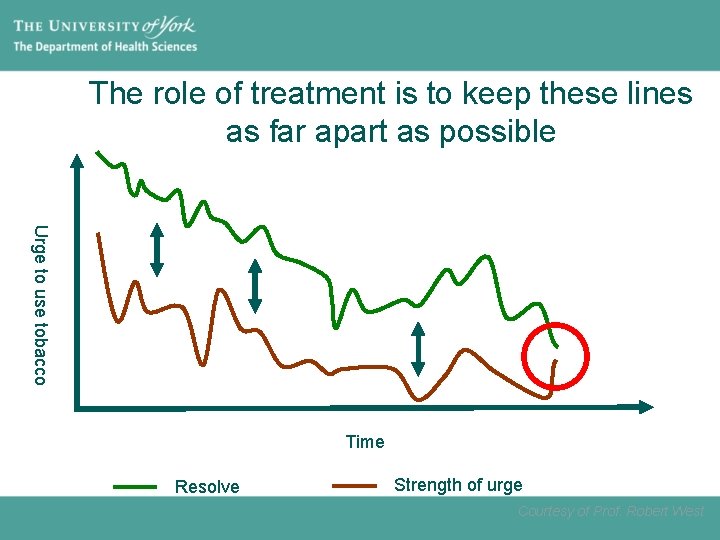
The role of treatment is to keep these lines as far apart as possible Urge to use tobacco Time Resolve Strength of urge Courtesy of Prof. Robert West
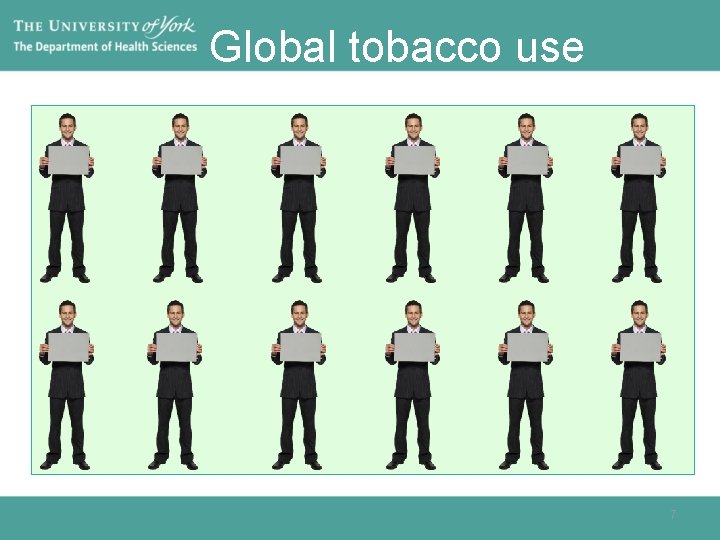
Global tobacco use 7
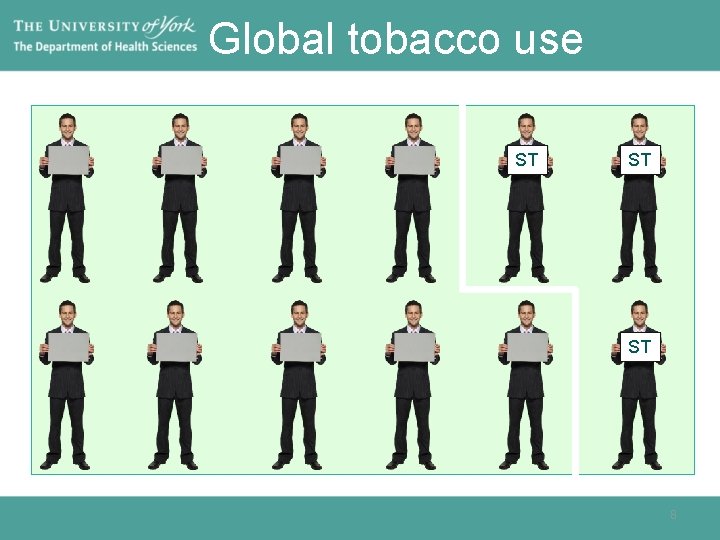
Global tobacco use ST ST ST 8
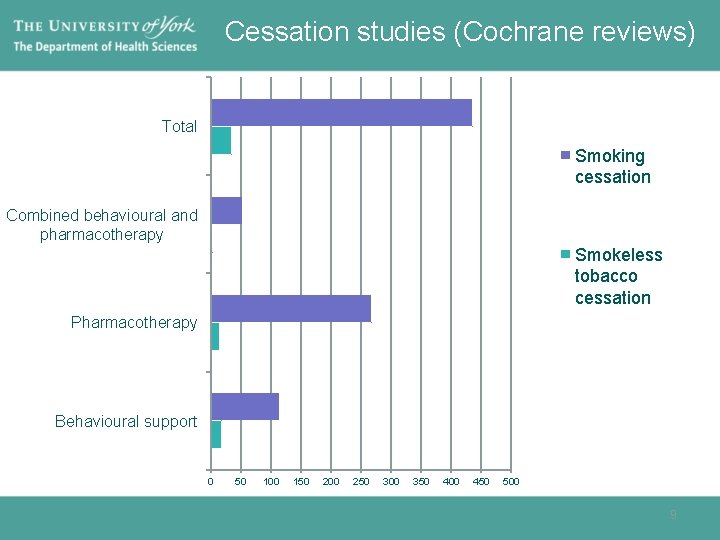
Cessation studies (Cochrane reviews) Total Smoking cessation Combined behavioural and pharmacotherapy Smokeless tobacco cessation Pharmacotherapy Behavioural support 0 50 100 150 200 250 300 350 400 450 500 9
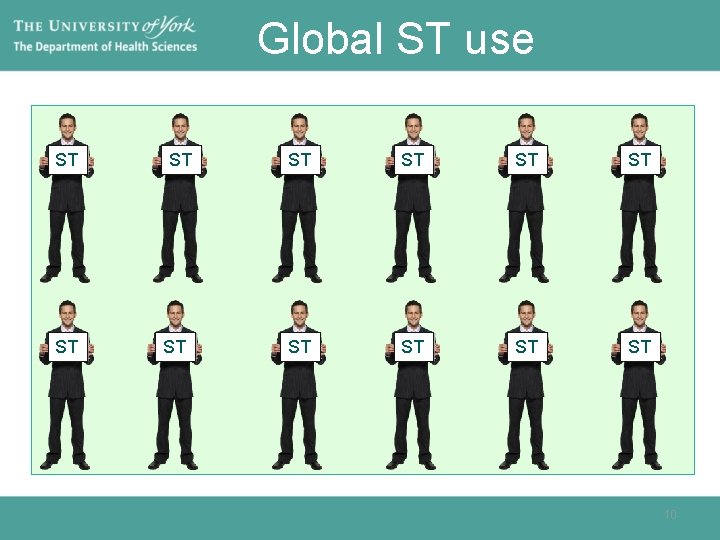
Global ST use ST ST ST 10
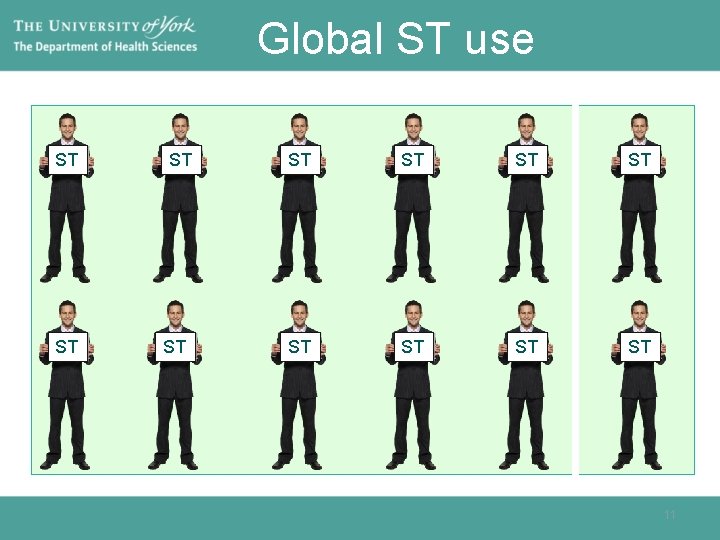
Global ST use ST ST ST 11
Why ST cessation studies? South Asia • ST product profile, user characteristics and behavioural determinants are different from the US • ST products can be highly alkaline, enhancing nicotine absorption and addictiveness • A strong socio-cultural dimension to ST use 12
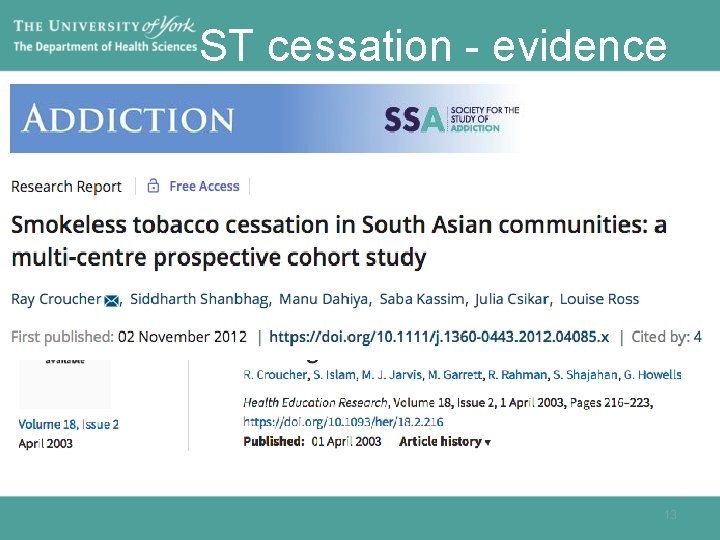
ST cessation - evidence 13
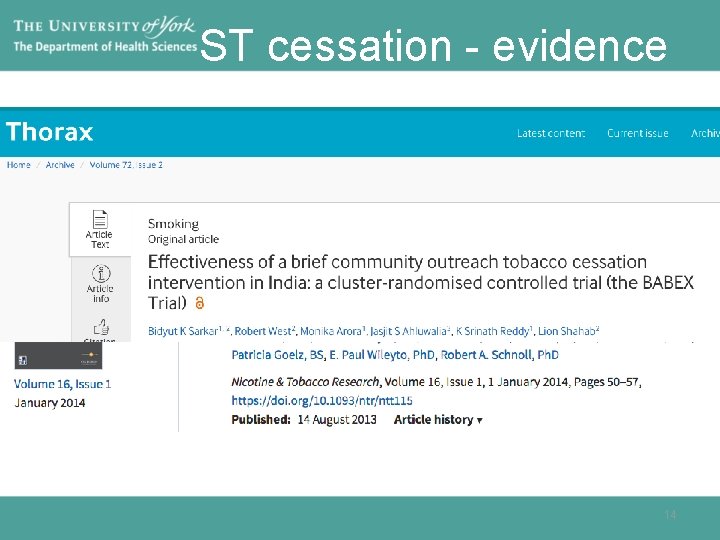
ST cessation - evidence 14
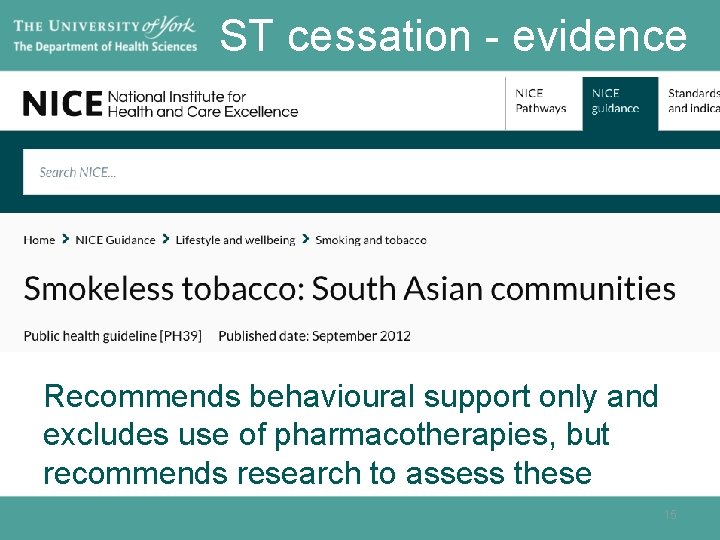
ST cessation - evidence Recommends behavioural support only and excludes use of pharmacotherapies, but recommends research to assess these 15
Behavioural support Intervention for Smokeless tobacco Cessation in south Asians (BISCA)
• Collaborators – Aga Khan University/ National Alliance Tobacco Control – Local NHS sites in the UK • Co-authors – Omara Dogar, Rukhsana Rashid, Cath Jackson, Ian Kellar, Nancy O’Neill, Maryam Hassan, Furqan Ahmed, Mohammad Irfan, and Javaid Khan • Funding – MRC Scheme 17
Study aim • Development of a bespoke Behavioural Change Intervention (BCI) to help south Asians in quitting ST and its evaluation in Pakistan and the UK 18
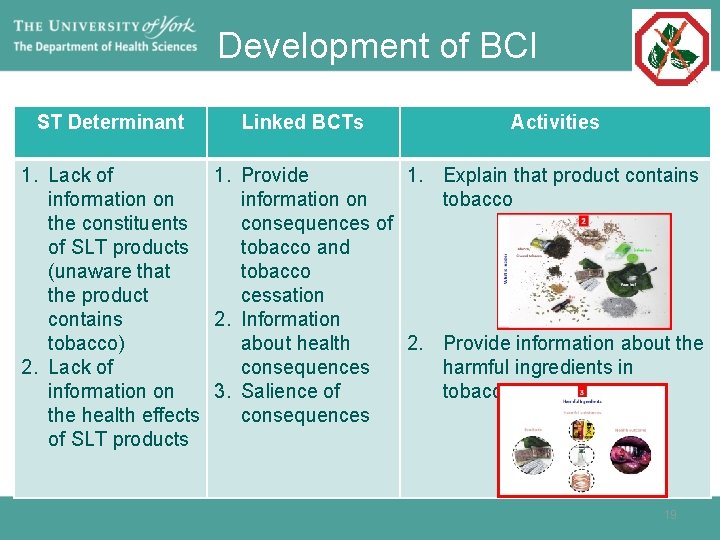
Development of BCI ST Determinant Linked BCTs Activities 1. Identification and selection of ST determinants 1. Lack of 1. Provide 1. Explain that product contains and relevant behaviour techniques information on change tobacco the(BCTs) constituents consequences of of SLT products tobacco and – Literature review (unaware that tobacco the – product cessation Expert consensus-Nominal Group Technique (NGT) contains 2. Information 2. Generation ofabout culturally activitiesabout the tobacco) health appropriate 2. Provide information 2. Lack of consequences harmful ingredients in – Expert consensus information on 3. Salience of tobacco the. Post-hoc health effects consequences 3. refinement of the resource of SLT products – Expert consensus (2 further meetings) 19
Study settings/participants • • Sites Intervention (pre-quit, quit , post-quit) Participants (32 clients, 9 advisors) Cotinine testing- baseline and 6 months 20
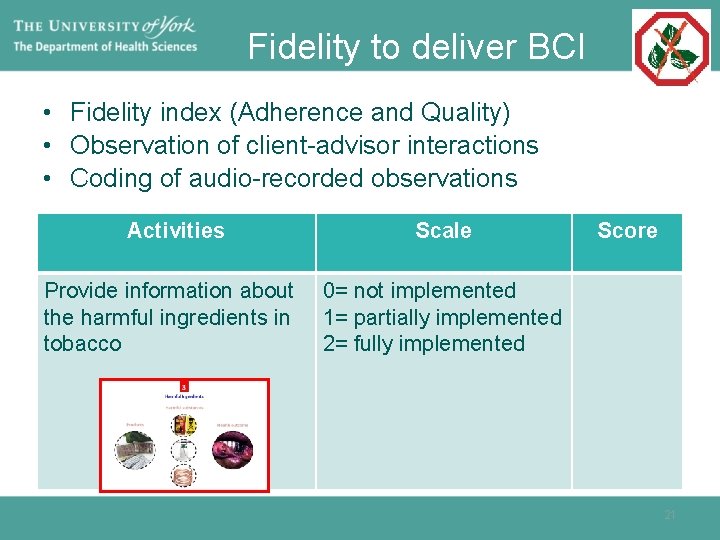
Fidelity to deliver BCI • Fidelity index (Adherence and Quality) • Observation of client-advisor interactions • Coding of audio-recorded observations Activities Provide information about the harmful ingredients in tobacco Scale Score 0= not implemented 1= partially implemented 2= fully implemented 21
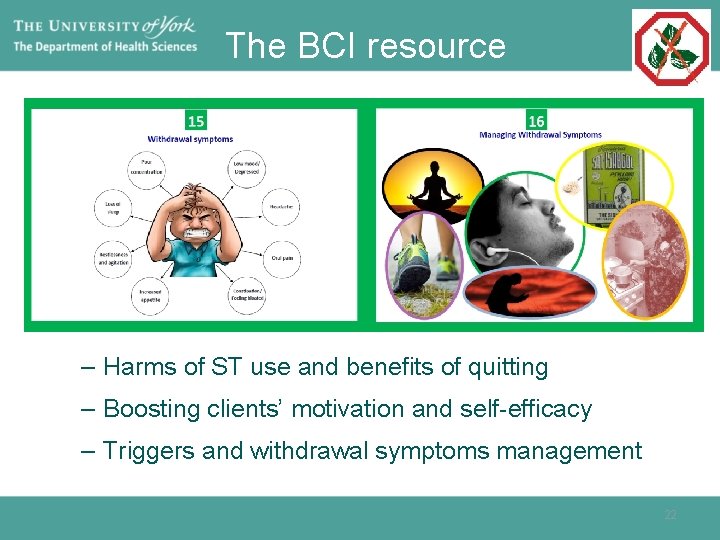
The BCI resource • Structure – Flipbook – Client booklet and calendar • Content – Harms of ST use and benefits of quitting – Boosting clients’ motivation and self-efficacy – Triggers and withdrawal symptoms management 22
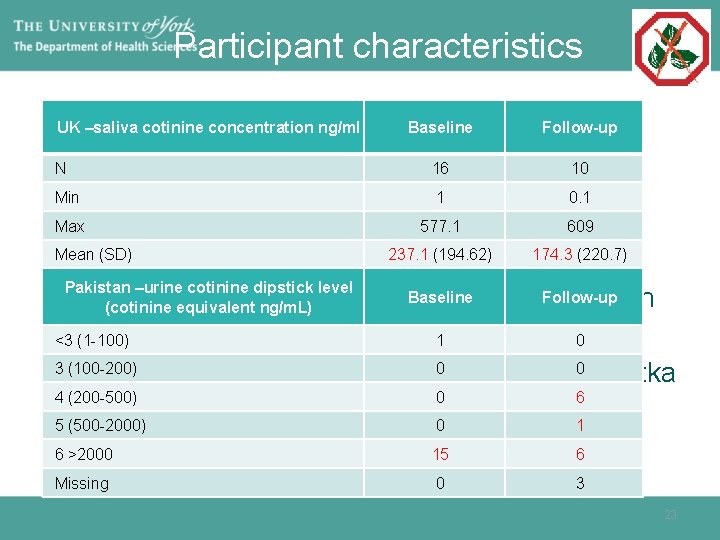
Participant characteristics UK –saliva cotinine concentration ng/ml Baseline Follow-up N 16 10 6 >2000 15 6 Missing 0 3 • Min. Baseline data (100%) and 6 -month follow-up 1 0. 1 (64%) Max 577. 1 609 (SD) participants used ST 237. 1 174. 3 (220. 7) • Mean 30/32 on(194. 62) daily basis –urine cotinine dipstick level Baseline Follow-up • Pakistan Quantity used/addiction higher in Pakistan than (cotinine equivalent ng/m. L) <3 UK (1 -100) 1 0 0 0 Gutka • 3 (100 -200) Most common forms used- Betel Quid and 4 (200 -500) 0 6 • 5 (500 -2000) Cotinine levels were higher in 0 Pakistan 1 23
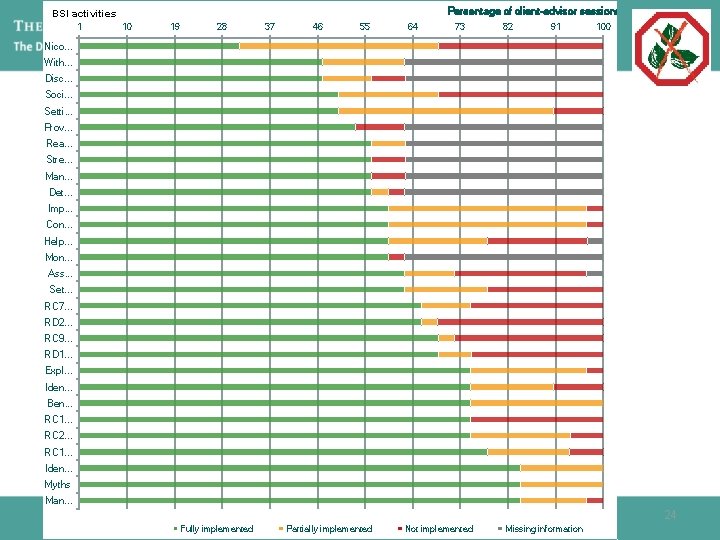
Percentage of client-advisor sessions BSI activities 1 10 Nico. . . 19 28 37 46 55 64 73 82 91 100 Fidelity to deliver BCI With. . . Disc. . . Soci. . . Setti. . . Prov. . . Rea. . . Fidelity index scores Stre. . . Man. . . Det. . . Imp. . . N* Adherence Index Quality Index 1 5 23. 8 (8. 4) 11. 6 (5. 4) 2 5 11. 2 (2. 1) 1. 4 (0. 9) 3 2 29. 0 (16. 9) 10. 0 (5. 7) 4 4 14. 8 (3. 2) 6. 8 (3. 8) 5 16 42. 6 (1. 9) 14 (0) Con. . . Help. . . Mon. . . Ass. . . Set. . . RC 7. . . RD 2. . . RC 9. . . RD 1. . . Expl. . . Iden. . . Ben. . . RC 1. . . Mean (SD**) Site ID RC 2. . . * N is the number of participants with data available **SD is the standard deviation of the mean RC 1. . . Iden. . . Myths Man. . . 24 Fully implemented Partially implemented Not implemented Missing information
Feasibility and acceptability of delivering BCI • Triggers management helped build self-efficacy • Negative images found to be motivating • Self-reward and challenging social norms- not effective • Abrupt cessation versus reduction to quit approach • Need family and social support 25
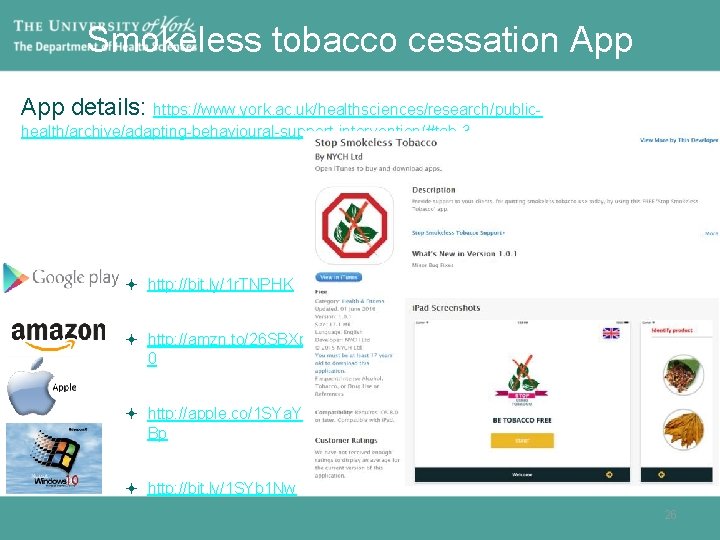
Smokeless tobacco cessation App details: https: //www. york. ac. uk/healthsciences/research/publichealth/archive/adapting-behavioural-support-intervention/#tab-3 http: //bit. ly/1 r. TNPHK http: //amzn. to/26 SBXp 0 http: //apple. co/1 SYa. Y Bp http: //bit. ly/1 SYb 1 Nw 26
§ Thank you! 29
- Slides: 29