
SmokeFree Spaces How to protect loved ones from

- Slides: 34
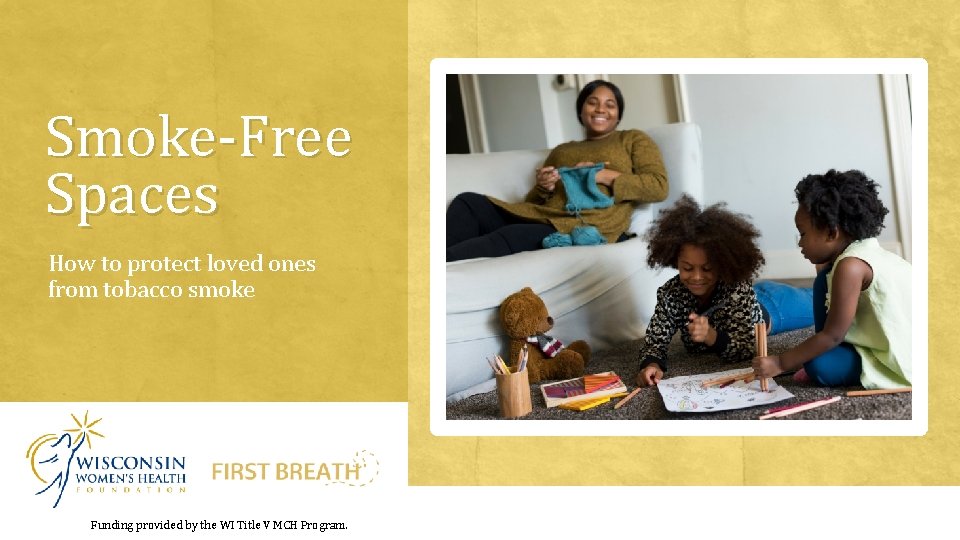
Smoke-Free Spaces How to protect loved ones from tobacco smoke Funding provided by the WI Title V MCH Program.
Wisconsin Women’s Health Foundation Nonprofit organization that provides health services and education for women and their families Mission: Innovate, impact, and improve women’s health
Wisconsin Well Woman Program Provides preventive health screenings for women who can’t afford them • Mammograms • Pap tests • Multiple sclerosis testing
Goals for Today’s Presentation 1. Be able to name and define the different kinds of environmental tobacco smoke. 2. Understand how environmental tobacco smoke impacts health. 3. Understand how to create smoke-free spaces.
Environmental Tobacco Smoke
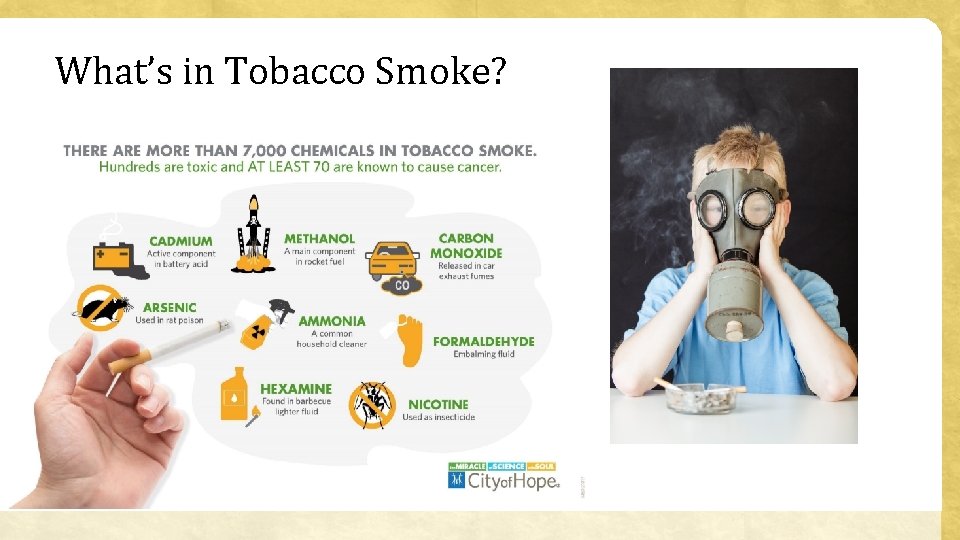
What’s in Tobacco Smoke?
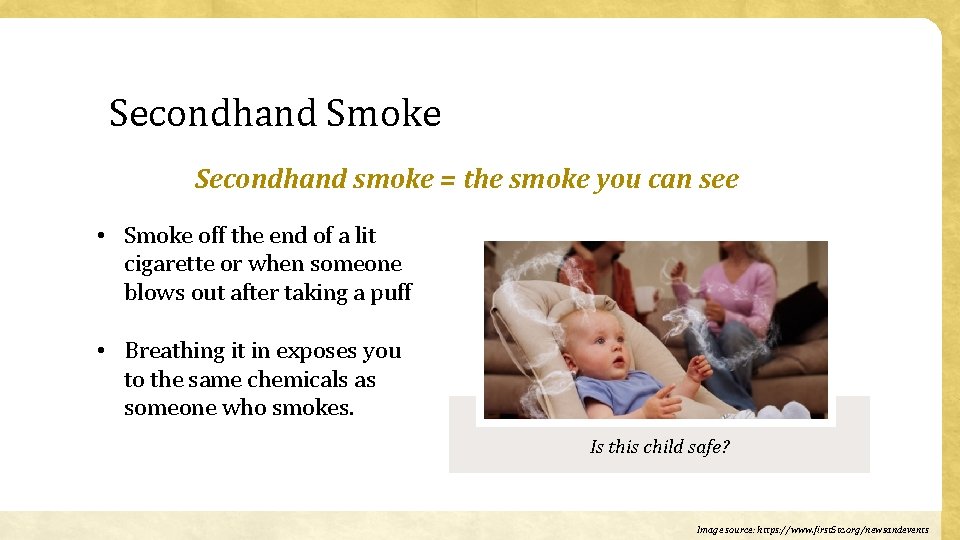
Secondhand Smoke Secondhand smoke = the smoke you can see • Smoke off the end of a lit cigarette or when someone blows out after taking a puff • Breathing it in exposes you to the same chemicals as someone who smokes. Is this child safe? Image source: https: //www. first 5 tc. org/newsandevents
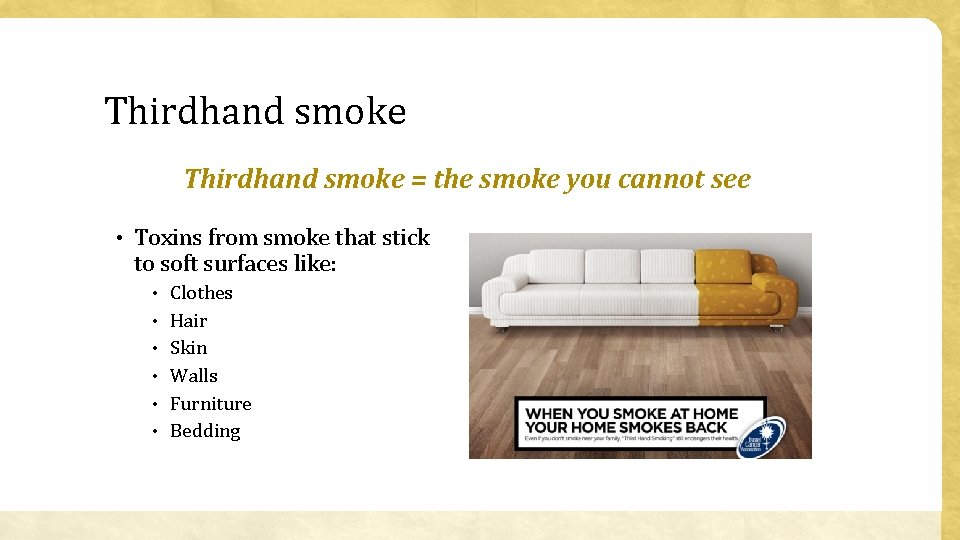
Thirdhand smoke = the smoke you cannot see • Toxins from smoke that stick to soft surfaces like: • • • Clothes Hair Skin Walls Furniture Bedding
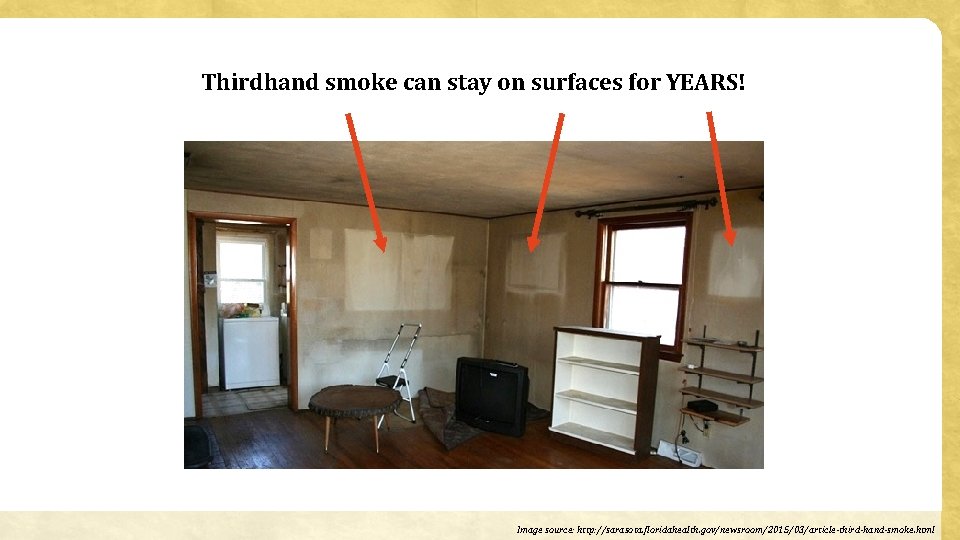
Thirdhand smoke can stay on surfaces for YEARS! Image source: http: //sarasota. floridahealth. gov/newsroom/2015/03/article-third-hand-smoke. html
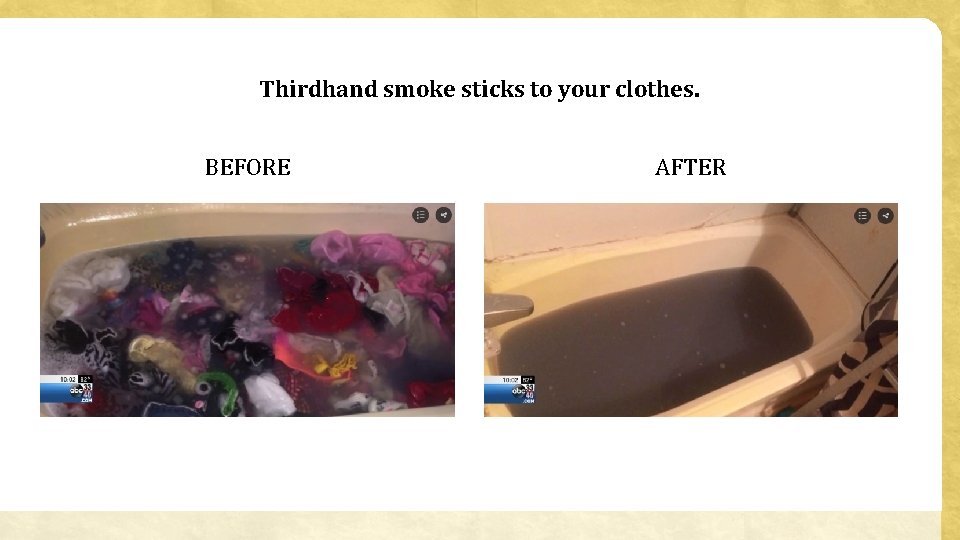
Thirdhand smoke sticks to your clothes. BEFORE AFTER
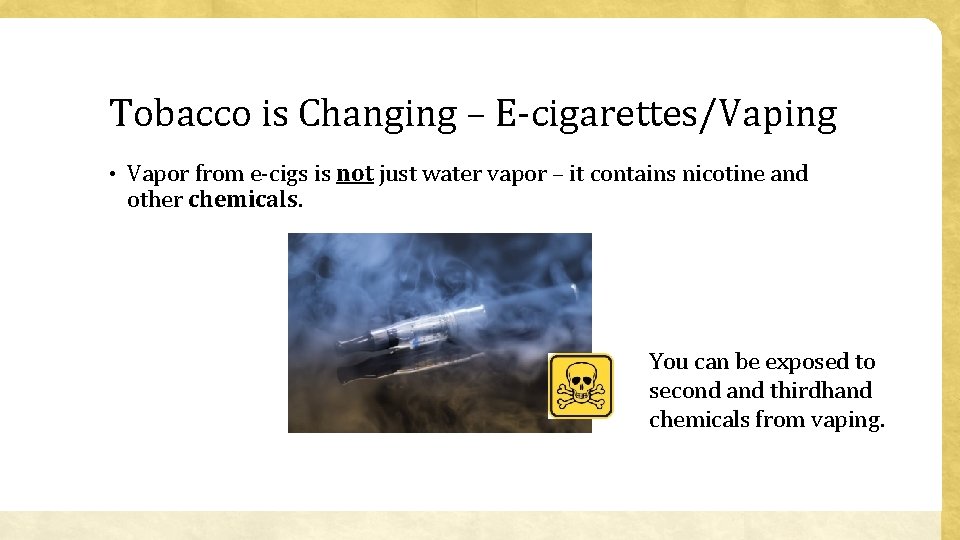
Tobacco is Changing – E-cigarettes/Vaping • Vapor from e-cigs is not just water vapor – it contains nicotine and other chemicals. You can be exposed to second and thirdhand chemicals from vaping.
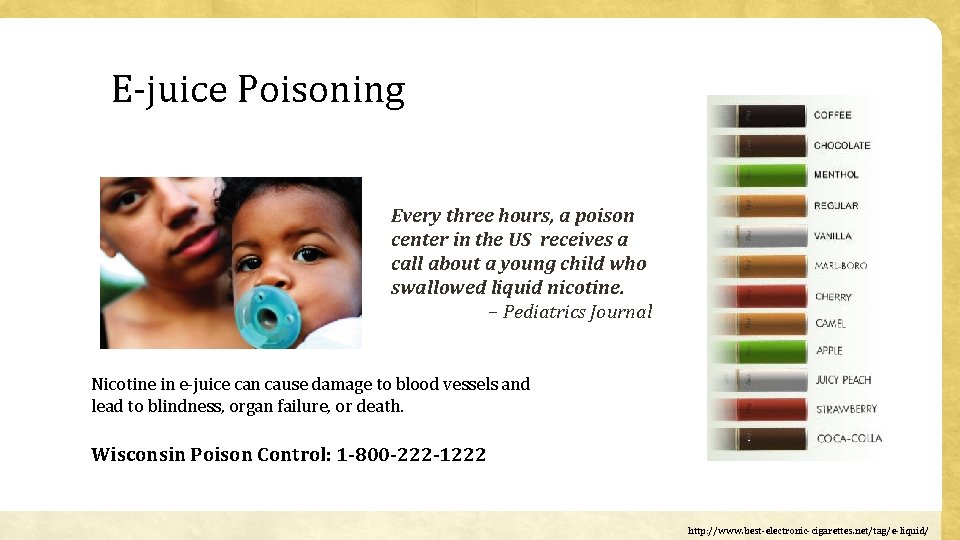
E-juice Poisoning Every three hours, a poison center in the US receives a call about a young child who swallowed liquid nicotine. – Pediatrics Journal Nicotine in e-juice can cause damage to blood vessels and lead to blindness, organ failure, or death. Wisconsin Poison Control: 1 -800 -222 -1222 http: //www. best-electronic-cigarettes. net/tag/e-liquid/
Health Impact
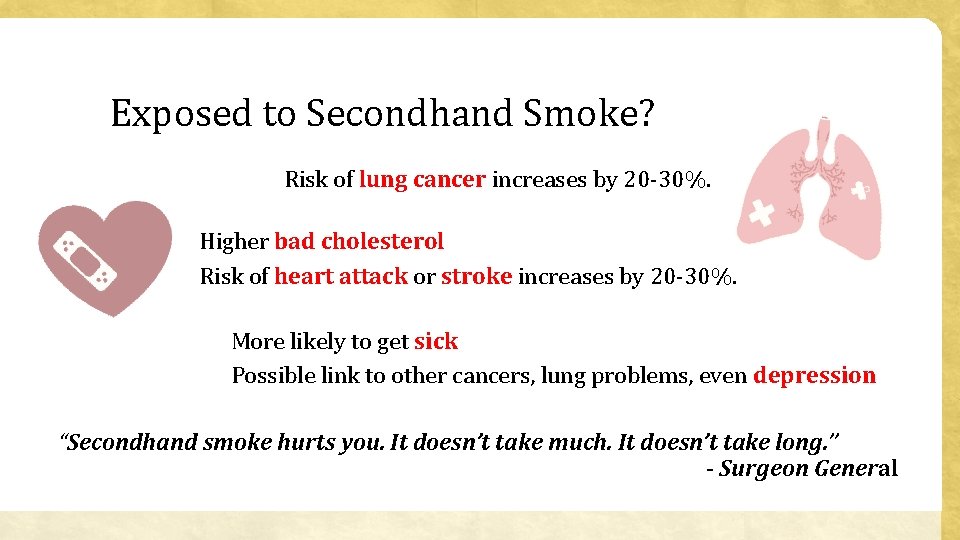
Exposed to Secondhand Smoke? Risk of lung cancer increases by 20 -30%. Higher bad cholesterol Risk of heart attack or stroke increases by 20 -30%. More likely to get sick Possible link to other cancers, lung problems, even depression “Secondhand smoke hurts you. It doesn’t take much. It doesn’t take long. ” - Surgeon General
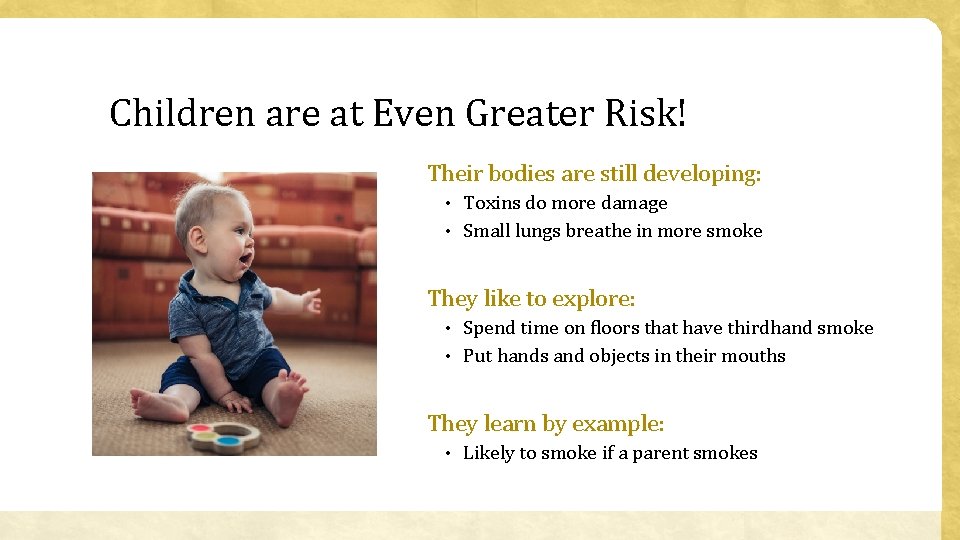
Children are at Even Greater Risk! Their bodies are still developing: • Toxins do more damage • Small lungs breathe in more smoke They like to explore: • Spend time on floors that have thirdhand smoke • Put hands and objects in their mouths They learn by example: • Likely to smoke if a parent smokes
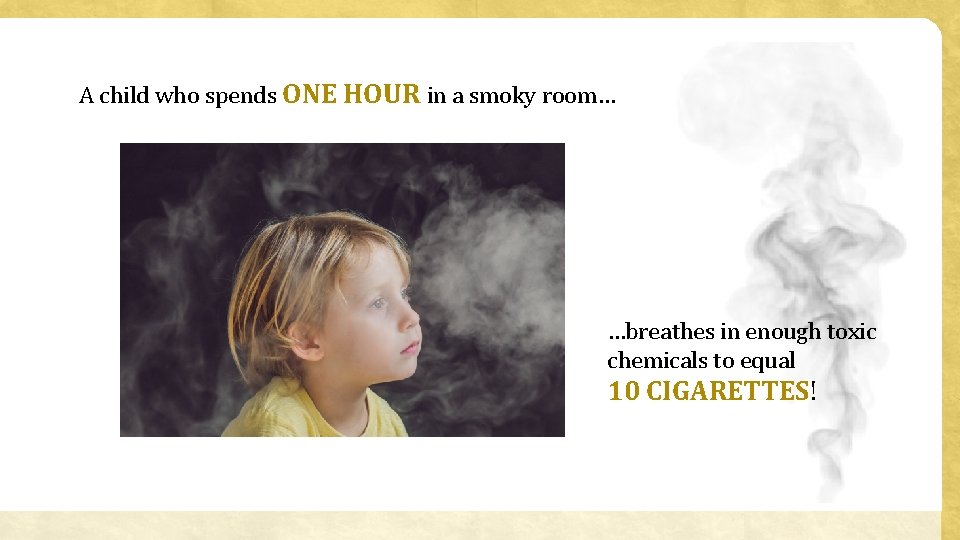
A child who spends ONE HOUR in a smoky room… …breathes in enough toxic chemicals to equal 10 CIGARETTES!
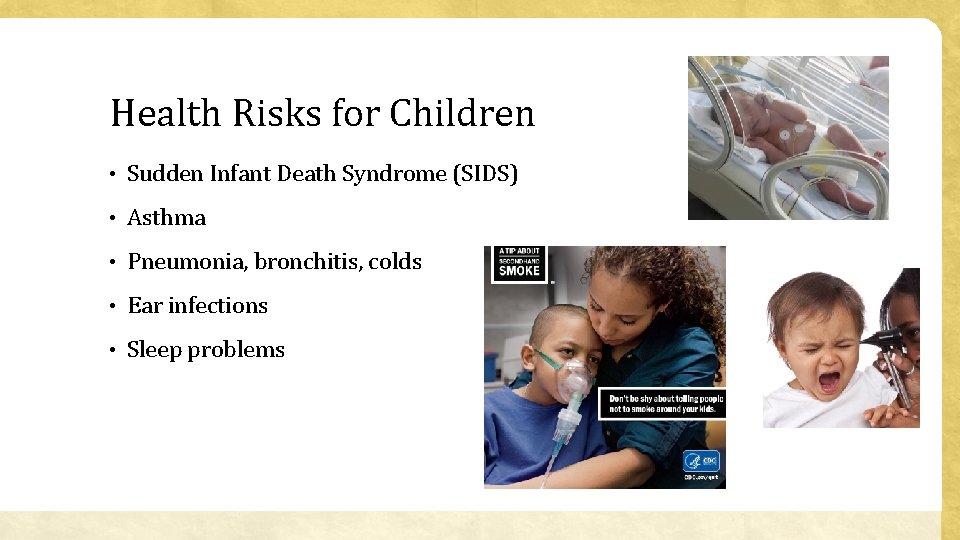
Health Risks for Children • Sudden Infant Death Syndrome (SIDS) • Asthma • Pneumonia, bronchitis, colds • Ear infections • Sleep problems
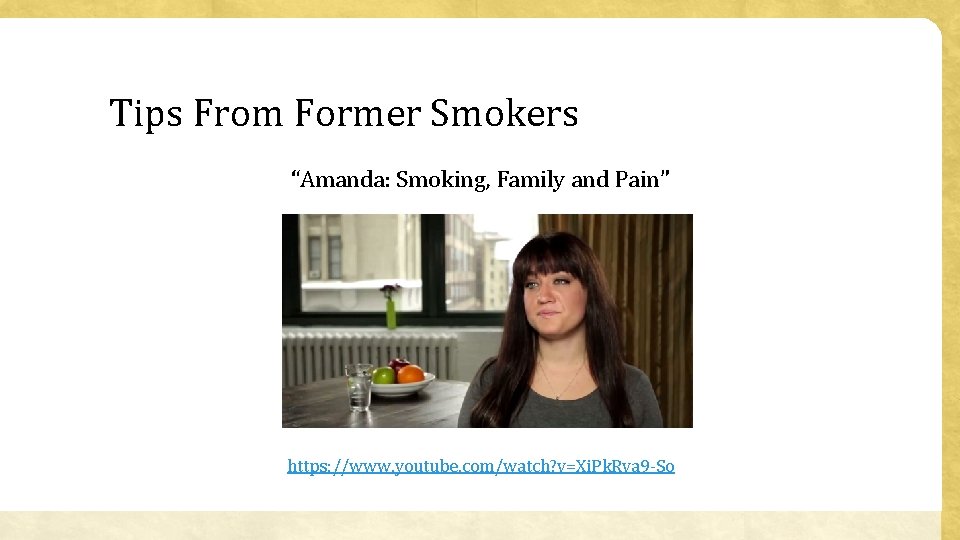
Tips From Former Smokers “Amanda: Smoking, Family and Pain” https: //www. youtube. com/watch? v=Xi. Pk. Rva 9 -So
Creating Smoke-Free Spaces
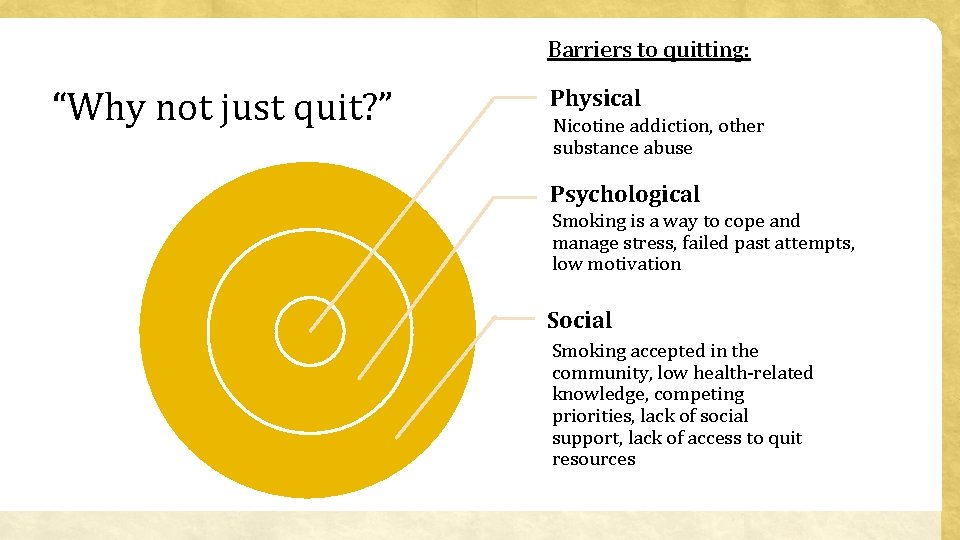
Barriers to quitting: “Why not just quit? ” Physical Nicotine addiction, other substance abuse Psychological Smoking is a way to cope and manage stress, failed past attempts, low motivation Social Smoking accepted in the community, low health-related knowledge, competing priorities, lack of social support, lack of access to quit resources
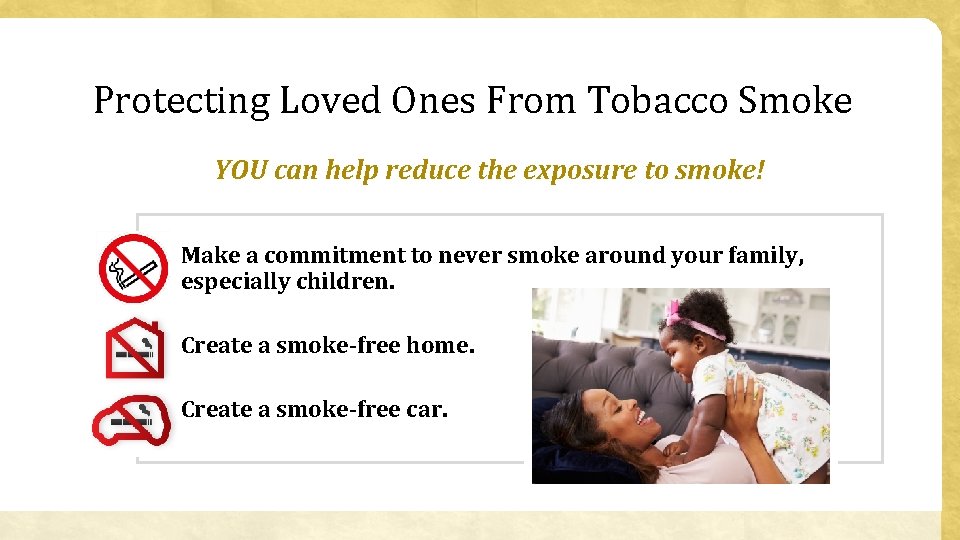
Protecting Loved Ones From Tobacco Smoke YOU can help reduce the exposure to smoke! Make a commitment to never smoke around your family, especially children. Create a smoke-free home. Create a smoke-free car.
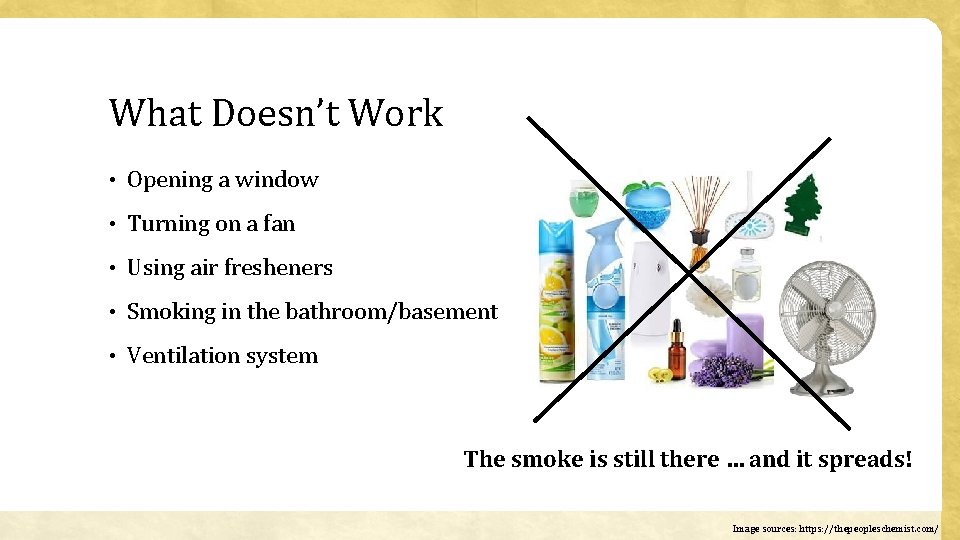
What Doesn’t Work • Opening a window • Turning on a fan • Using air fresheners • Smoking in the bathroom/basement • Ventilation system The smoke is still there … and it spreads! Image sources: https: //thepeopleschemist. com/
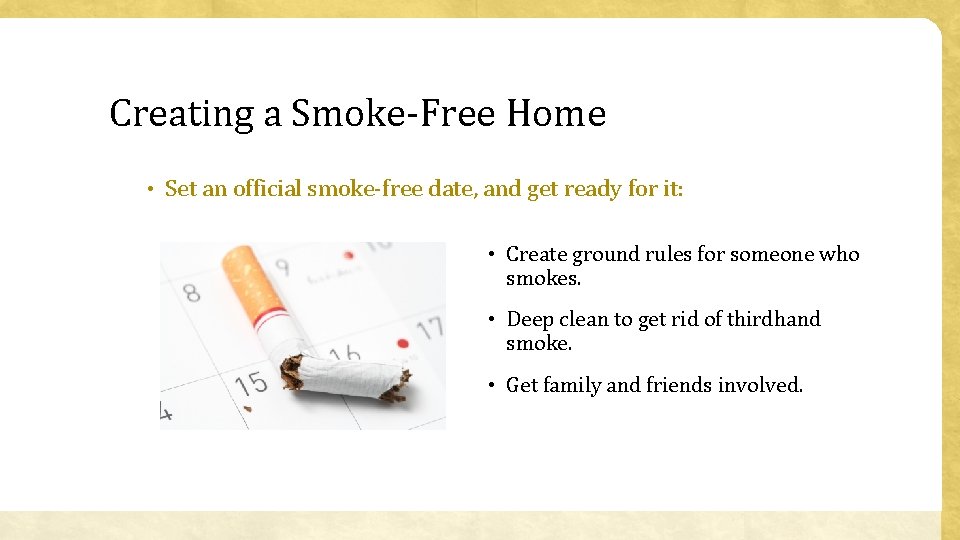
Creating a Smoke-Free Home • Set an official smoke-free date, and get ready for it: • Create ground rules for someone who smokes. • Deep clean to get rid of thirdhand smoke. • Get family and friends involved.
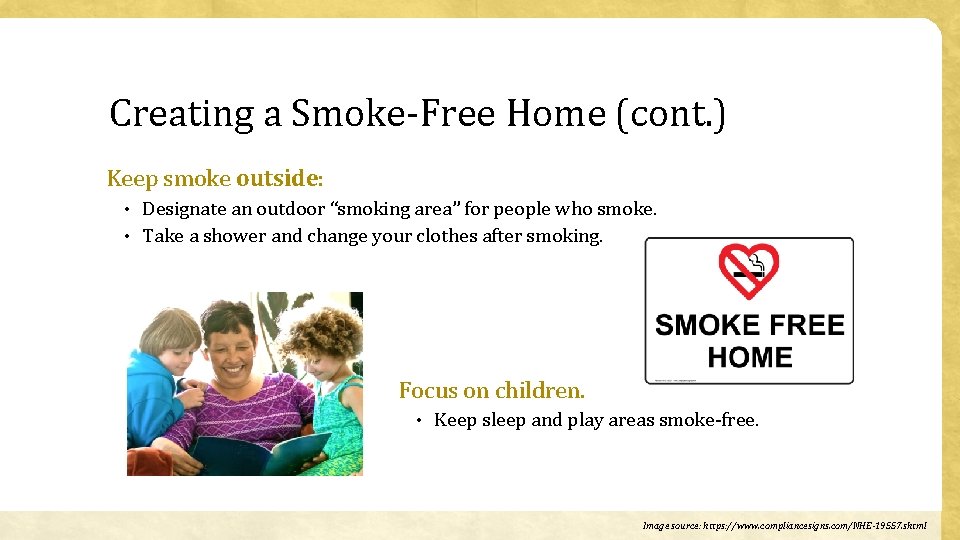
Creating a Smoke-Free Home (cont. ) Keep smoke outside: • Designate an outdoor “smoking area” for people who smoke. • Take a shower and change your clothes after smoking. Focus on children. • Keep sleep and play areas smoke-free. Image source: https: //www. compliancesigns. com/NHE-19557. shtml
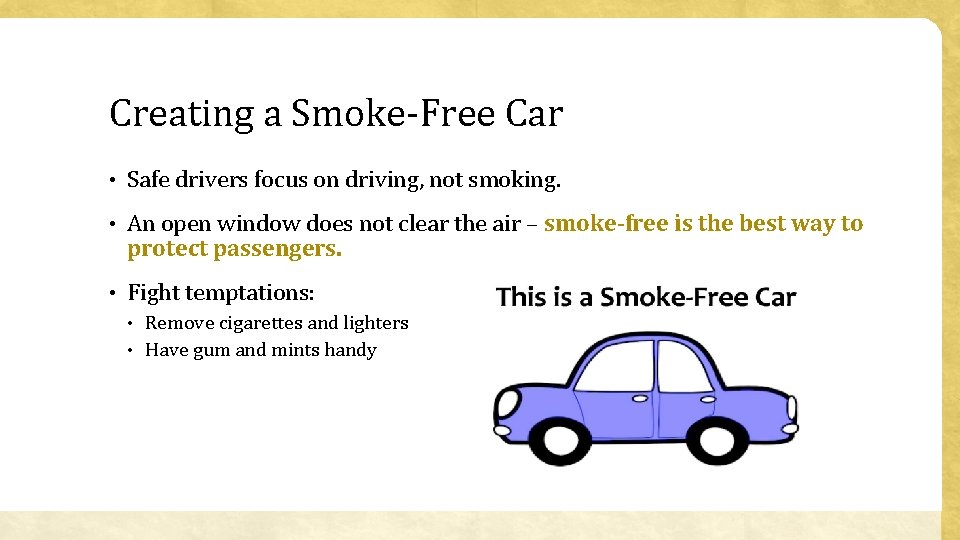
Creating a Smoke-Free Car • Safe drivers focus on driving, not smoking. • An open window does not clear the air – smoke-free is the best way to protect passengers. • Fight temptations: • Remove cigarettes and lighters • Have gum and mints handy
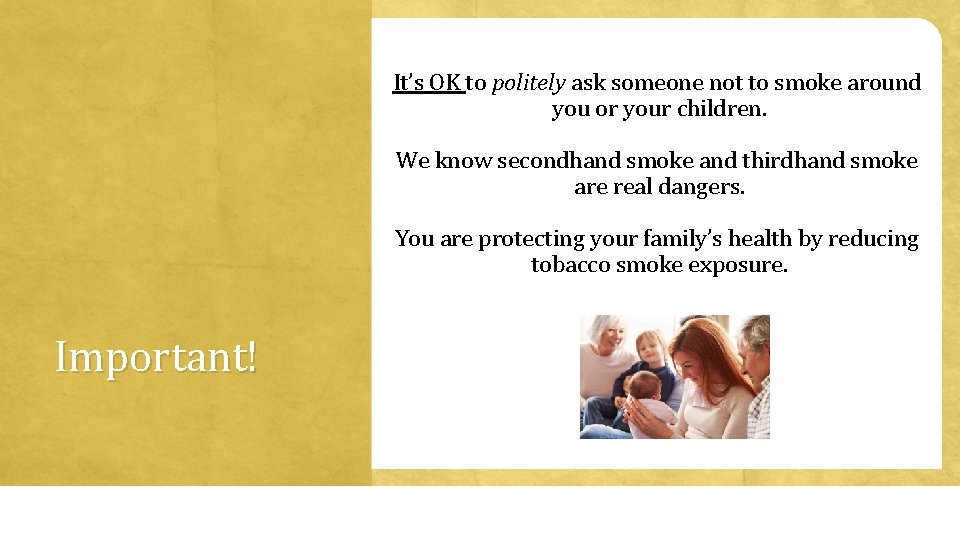
It’s OK to politely ask someone not to smoke around you or your children. We know secondhand smoke and thirdhand smoke are real dangers. You are protecting your family’s health by reducing tobacco smoke exposure. Important!
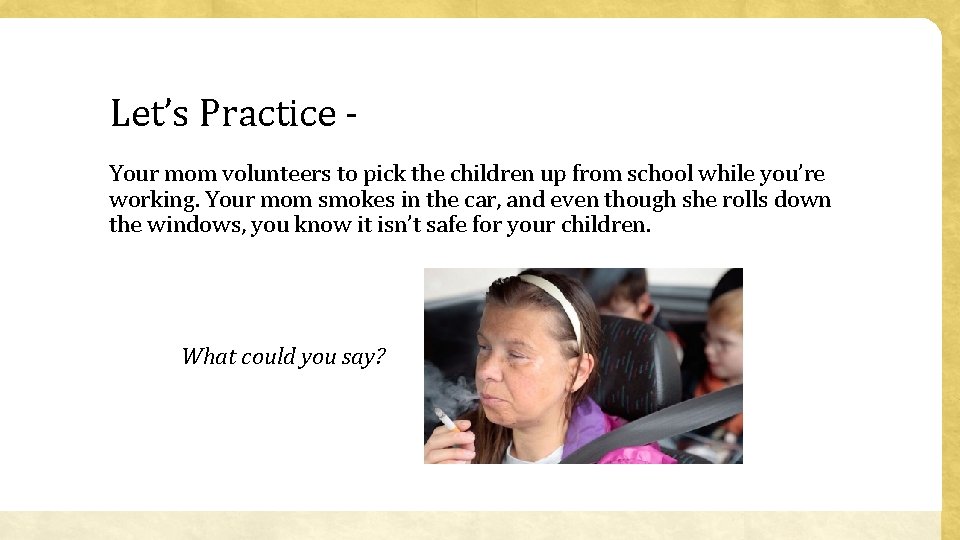
Let’s Practice Your mom volunteers to pick the children up from school while you’re working. Your mom smokes in the car, and even though she rolls down the windows, you know it isn’t safe for your children. What could you say?
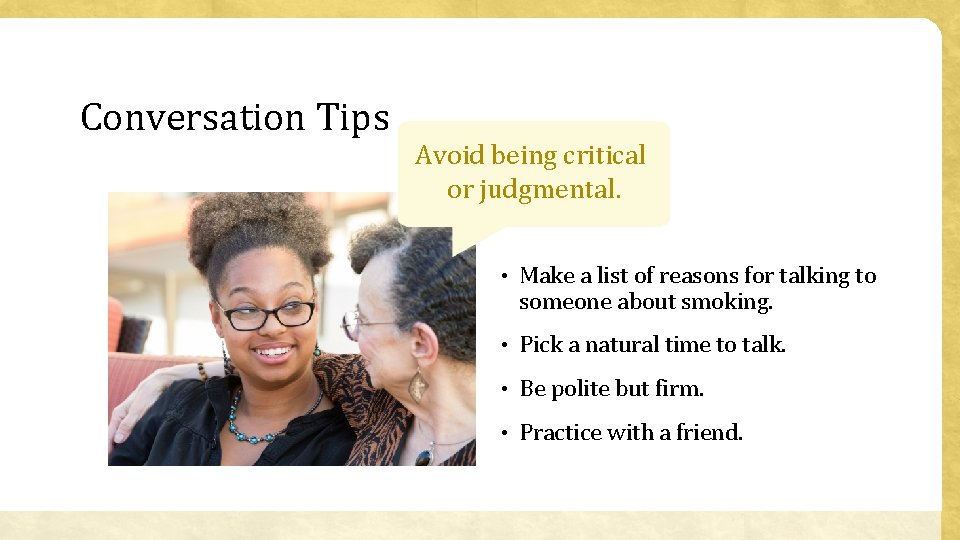
Conversation Tips Avoid being critical or judgmental. • Make a list of reasons for talking to someone about smoking. • Pick a natural time to talk. • Be polite but firm. • Practice with a friend.
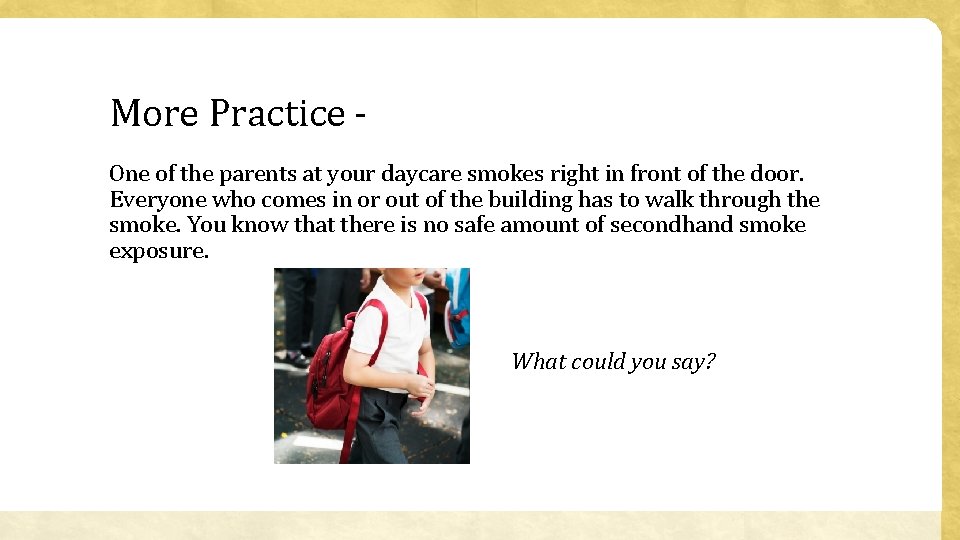
More Practice One of the parents at your daycare smokes right in front of the door. Everyone who comes in or out of the building has to walk through the smoke. You know that there is no safe amount of secondhand smoke exposure. What could you say?
Supporting Someone Who is Ready to Quit Smoking: • Let them know you care • Listen • Point them to resources Tobacco Quit Line 1 -800 -784 -8669 Wisconsin Women’s Health Foundation http: //www. wwhf. org/first-breath/
What Have We Learned? 1. Be able to name and define the different kinds of environmental tobacco smoke. 2. Understand how environmental tobacco smoke impacts health. 3. Understand how to create smoke-free spaces.
Thank you! Please complete your survey!