
Smog Smoke and fog London Smog Industrial smog
- Slides: 24
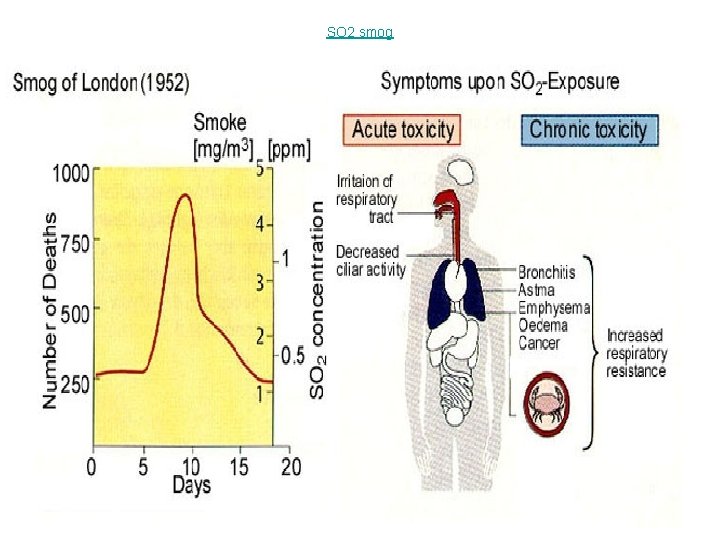
Smog • Smoke and fog • London Smog / Industrial smog / reducing smog • Caused by the combustion of sulfur containing coal • Water droplets, SO 2, SO 3, soot, fly ash and sulfuric acid
Reducing Smog • Chicago, Beijing • Cold, wet winters • Thermal inversion traps cold air close to earth surface • Decline in reducing smog • Use of SNG, alkaline scrubber
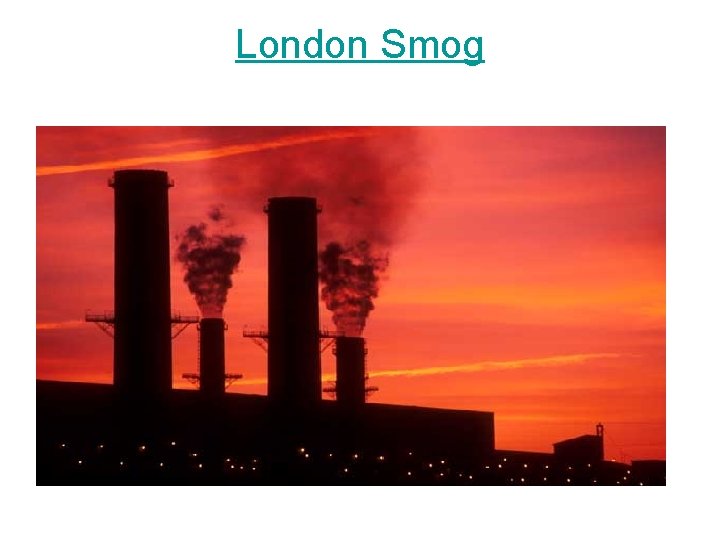
London Smog
London Smog : SO 2 • water droplets in the air condenses on smoke particles produced by the burning of coal, forming tiny smog droplets. -sulfur dioxide -Sulfur dioxide is a gas that attacks the lungs and makes breathing difficult
SO 2 smog
Photochemical smog Oxidizing smog
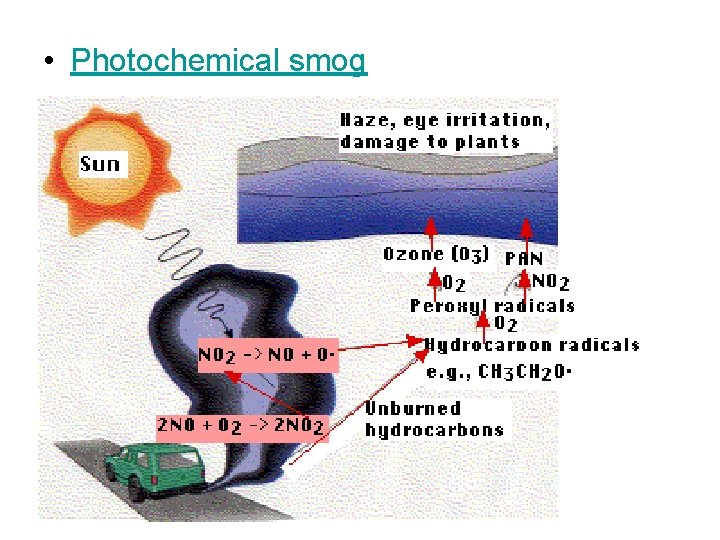
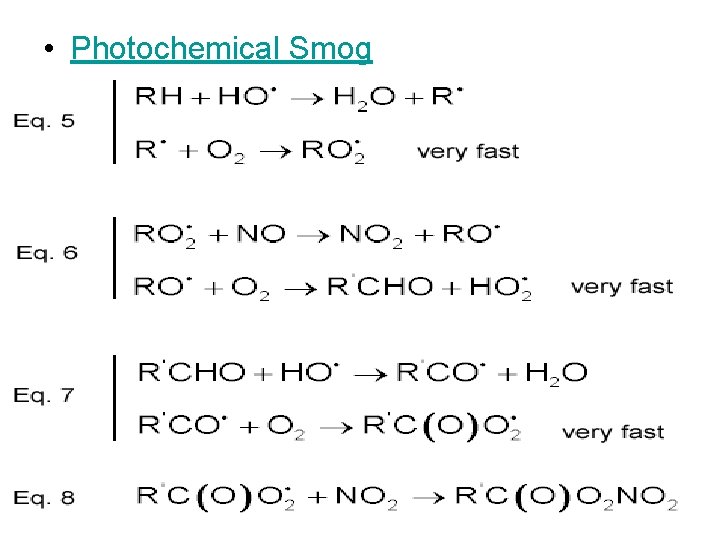
• Photochemical smog
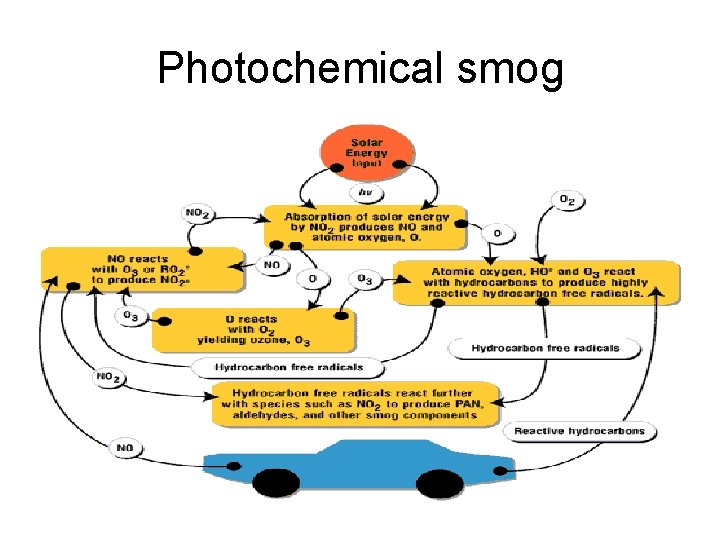
Photochemical smog
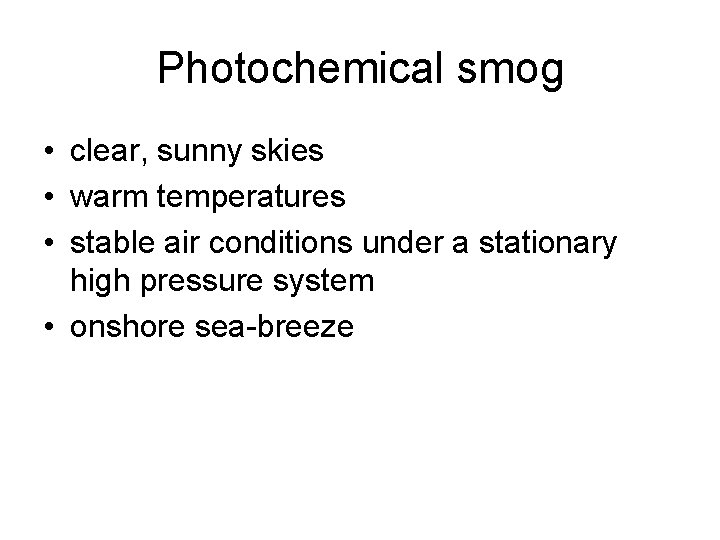
Photochemical smog • clear, sunny skies • warm temperatures • stable air conditions under a stationary high pressure system • onshore sea-breeze
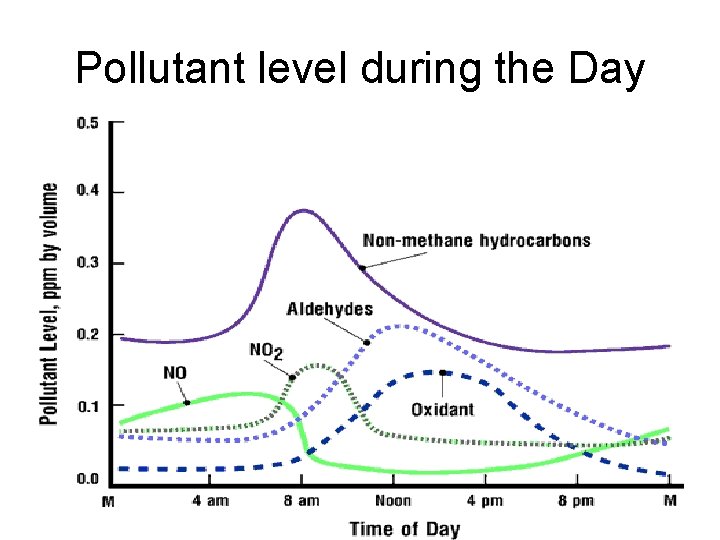
Pollutant level during the Day
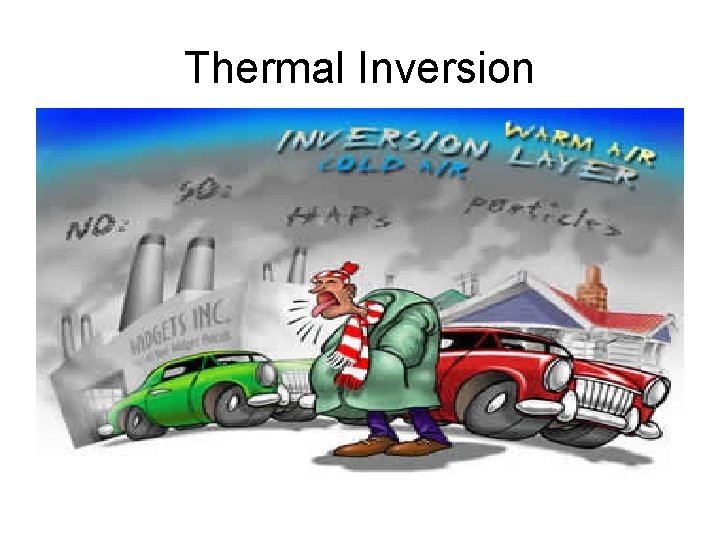
Thermal Inversion
E 10 Thermal Inversion Effects on Air Quality
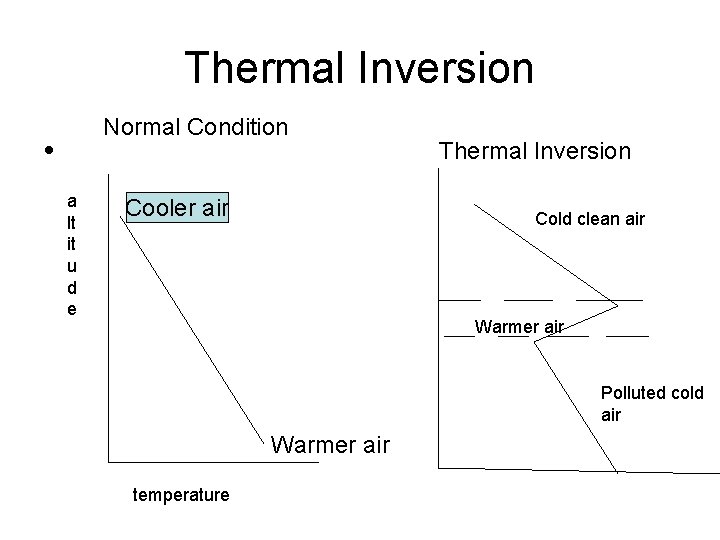
Thermal Inversion • Gradual decrease in temperature as the altitude increases • Warmer, denser air near the earth surface • Pollutants produced near the surface of the earth move with warm air to the upper atmosphere • Cooler air takes the place of rising warm air near the earth surface
Thermal Inversion • Air currents allow the pollutants to be dispersed • Abnormal temperature arrangement of air masses where a layer of warmer air is trapped between the two layers of cold air • Wind gives horizontal movement of air • Mountains hinders the dispersion • Flow of cold air creates cool layer
Thermal Inversion • No wind, cold temperatures, , mountains • Warmer air acts as lid
Thermal Inversion • a lt it u d e Normal Condition Cooler air Thermal Inversion Cold clean air Warmer air Polluted cold air Warmer air temperature
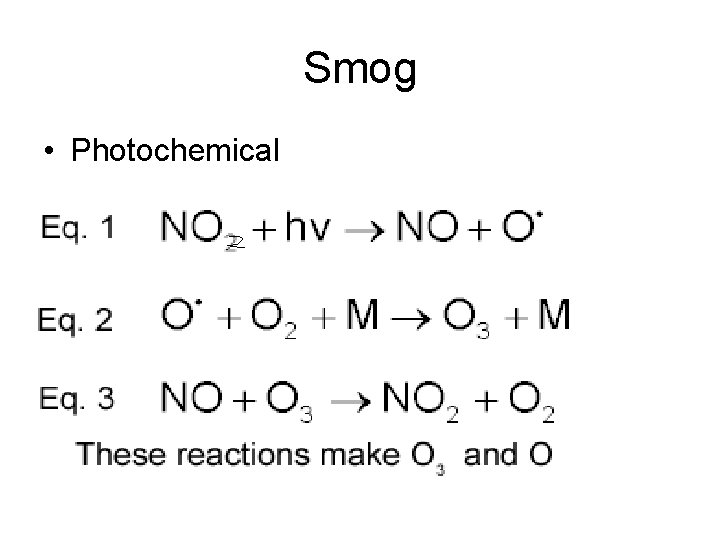
Smog • Photochemical
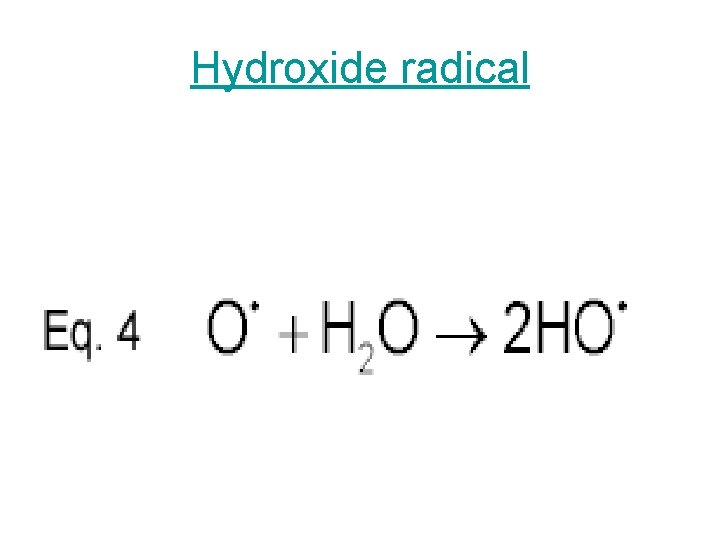
Hydroxide radical
• Photochemical Smog
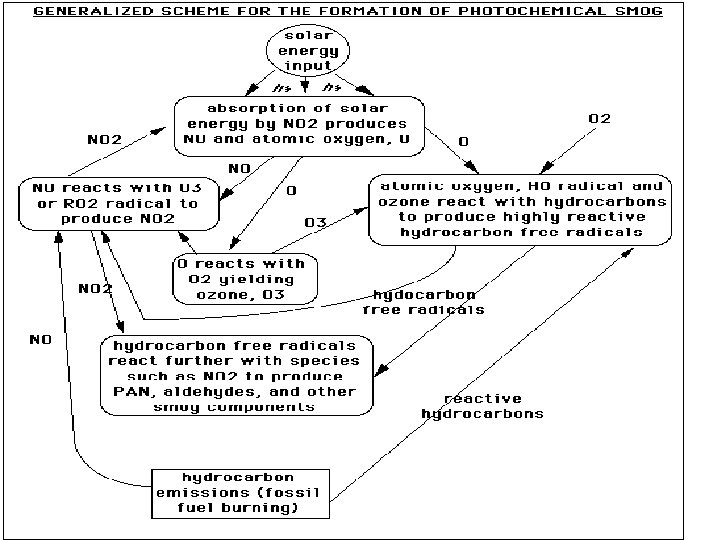
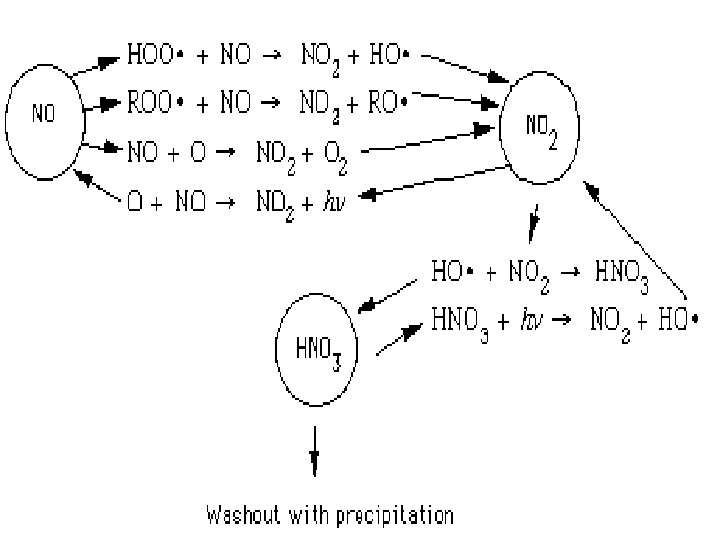
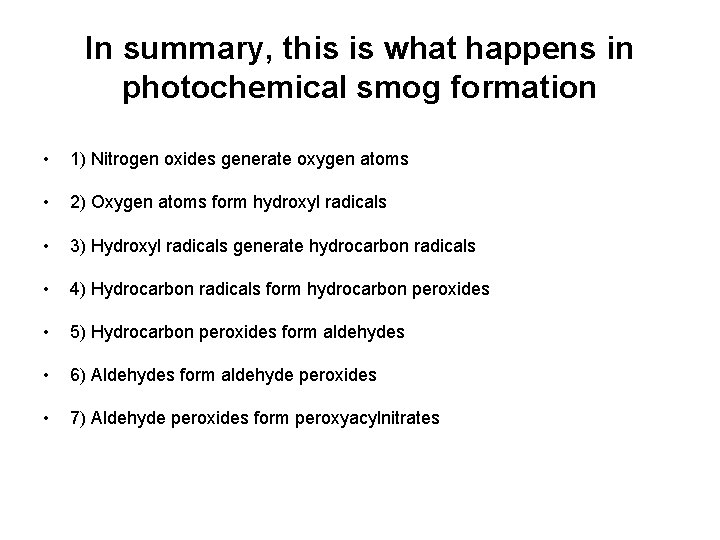
In summary, this is what happens in photochemical smog formation • 1) Nitrogen oxides generate oxygen atoms • 2) Oxygen atoms form hydroxyl radicals • 3) Hydroxyl radicals generate hydrocarbon radicals • 4) Hydrocarbon radicals form hydrocarbon peroxides • 5) Hydrocarbon peroxides form aldehydes • 6) Aldehydes form aldehyde peroxides • 7) Aldehyde peroxides form peroxyacylnitrates
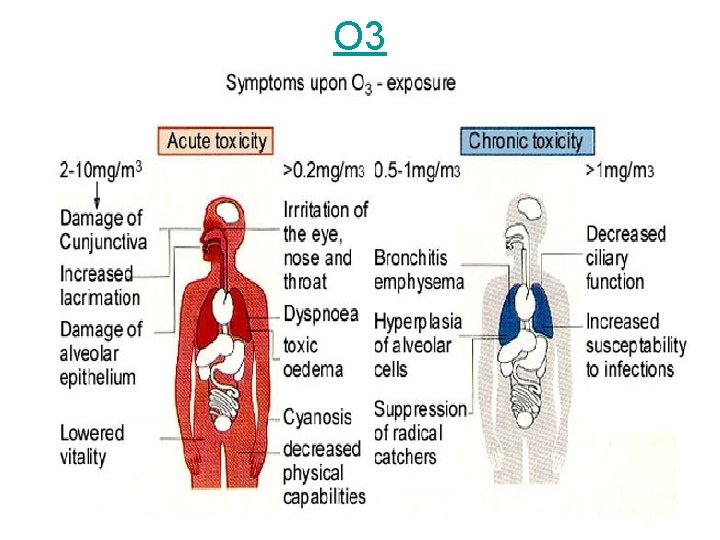
O 3
Ethanol