
Smart TeachB 2 Topic 4 Proteins Enzymes and
Smart Teach-B 2 Topic 4 Proteins, Enzymes and Mutations Digestive System
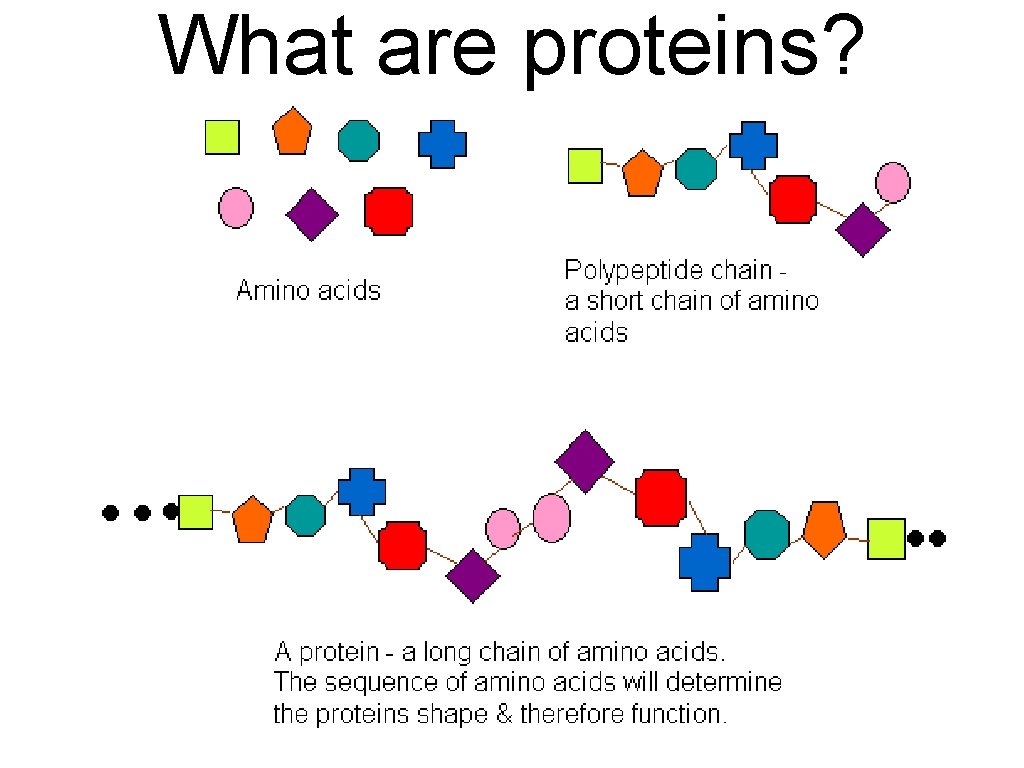
What are proteins?
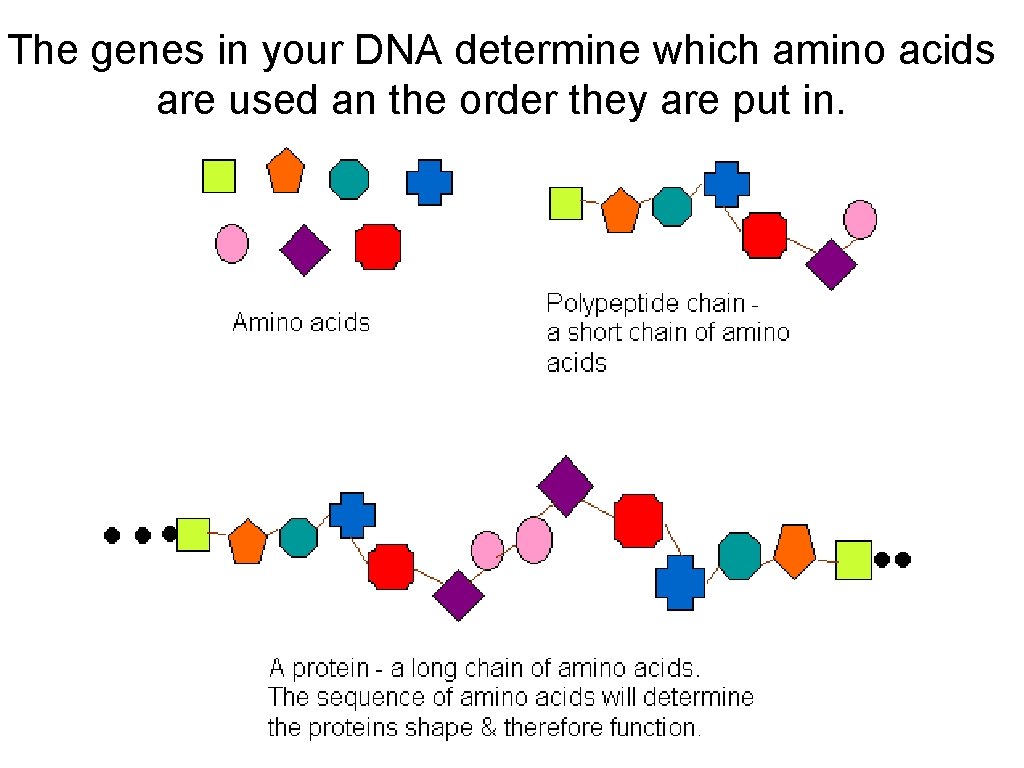
The genes in your DNA determine which amino acids are used an the order they are put in.
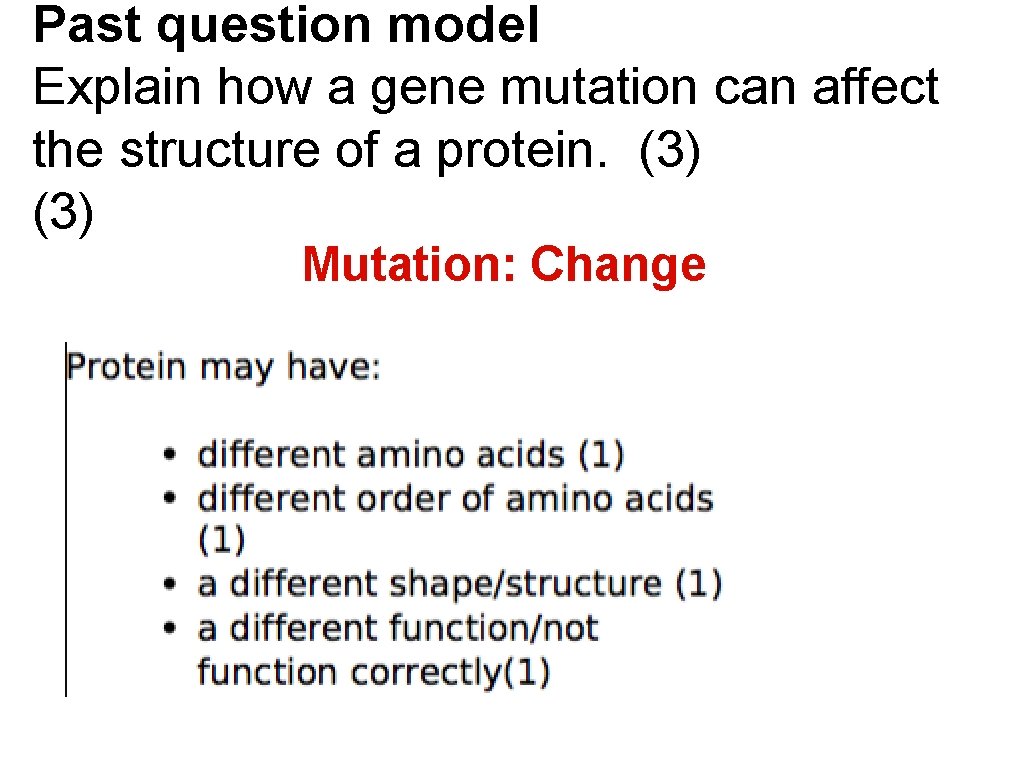
Past question model Explain how a gene mutation can affect the structure of a protein. (3) Mutation: Change
Example of how this question can be changed Q. Some proteins are not the correct shape. Suggest what may have happened to the DNA to cause a protein to form the wrong shape. DNA has MUTATED- Changed the order of the amino acids

Enzymes are a type of protein They are BIOLOGICAL CATALYSTS (they speed up chemical reactions)
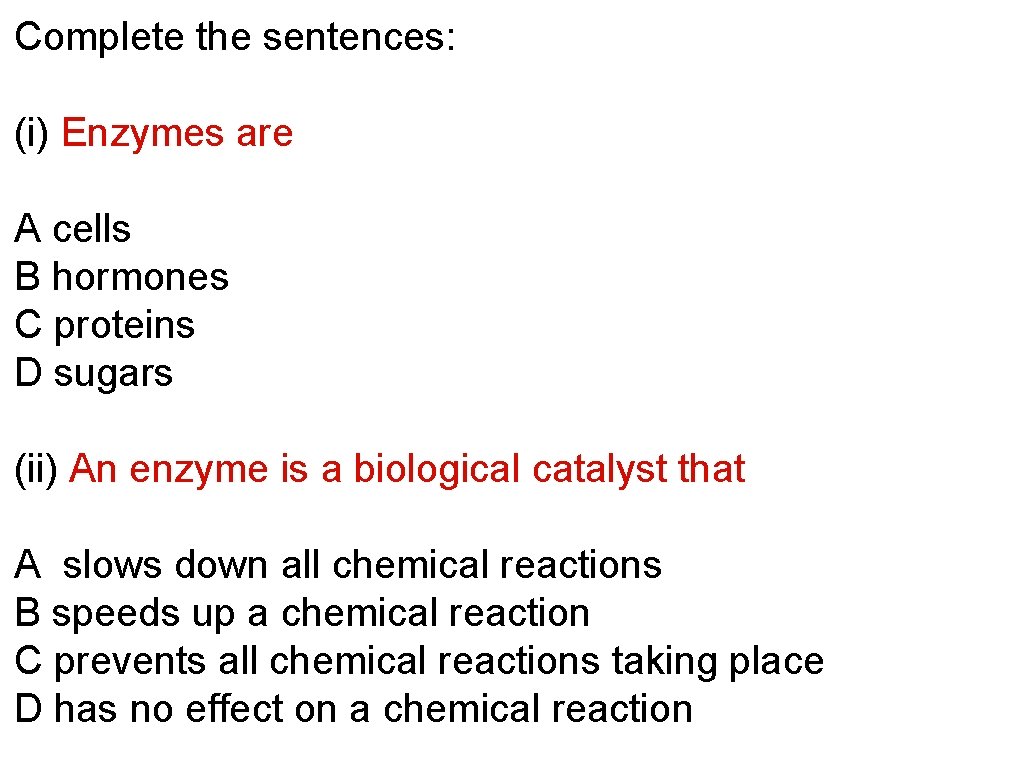
Complete the sentences: (i) Enzymes are A cells B hormones C proteins D sugars (ii) An enzyme is a biological catalyst that A slows down all chemical reactions B speeds up a chemical reaction C prevents all chemical reactions taking place D has no effect on a chemical reaction
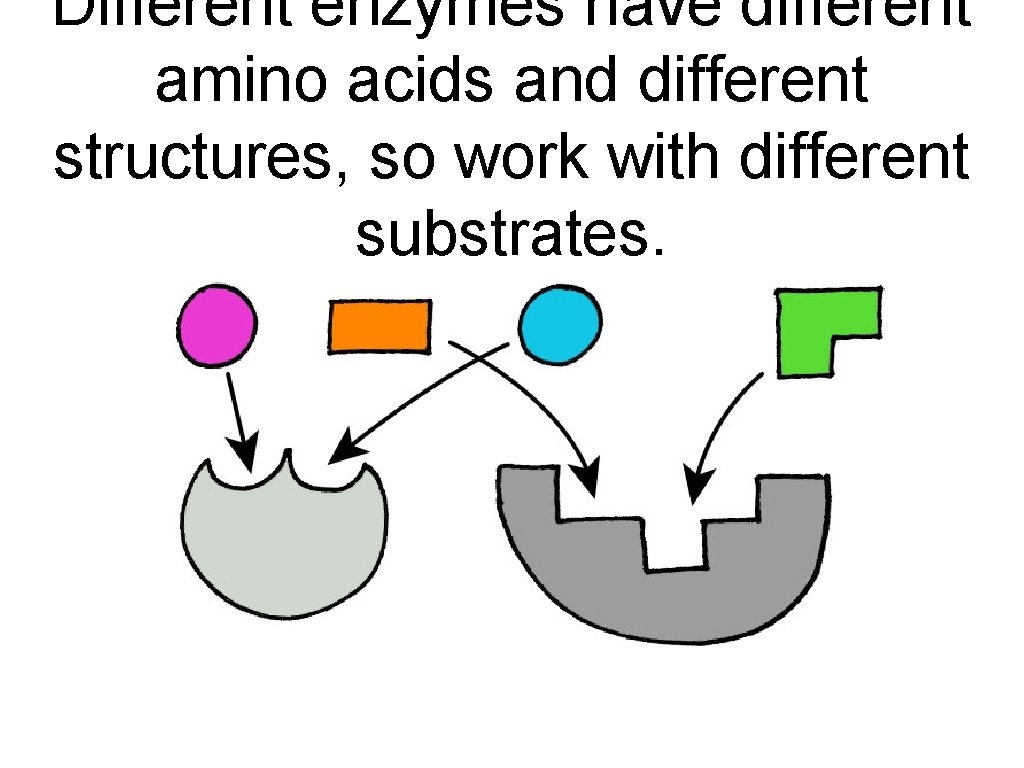
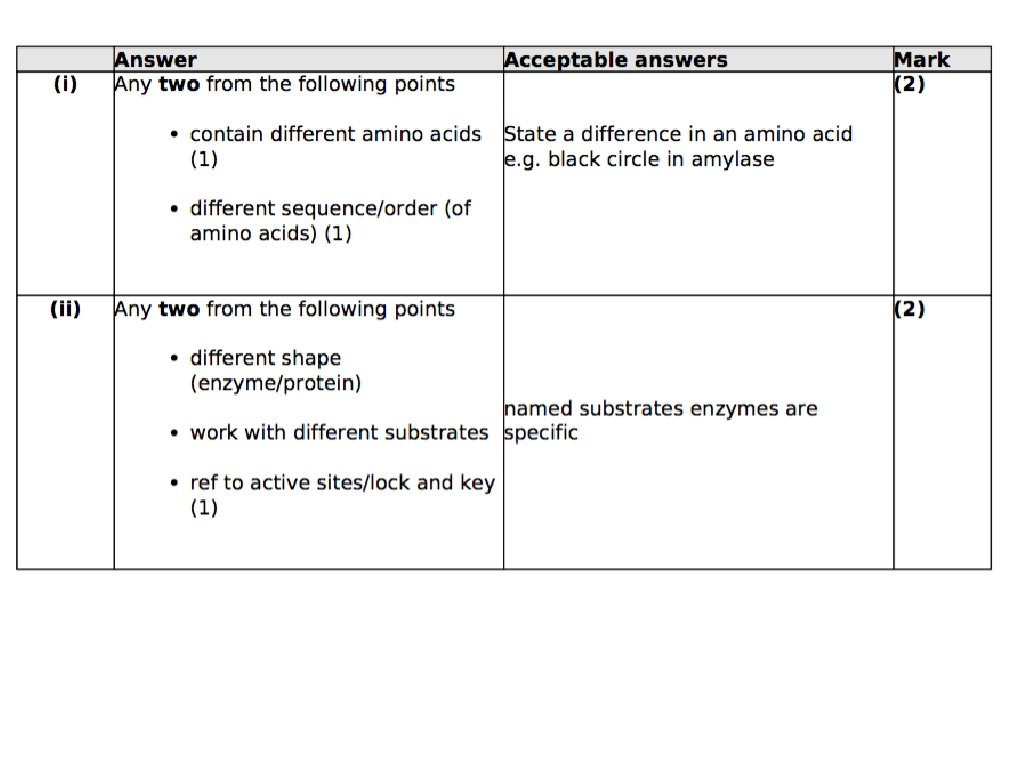
Different enzymes have different amino acids and different structures, so work with different substrates.
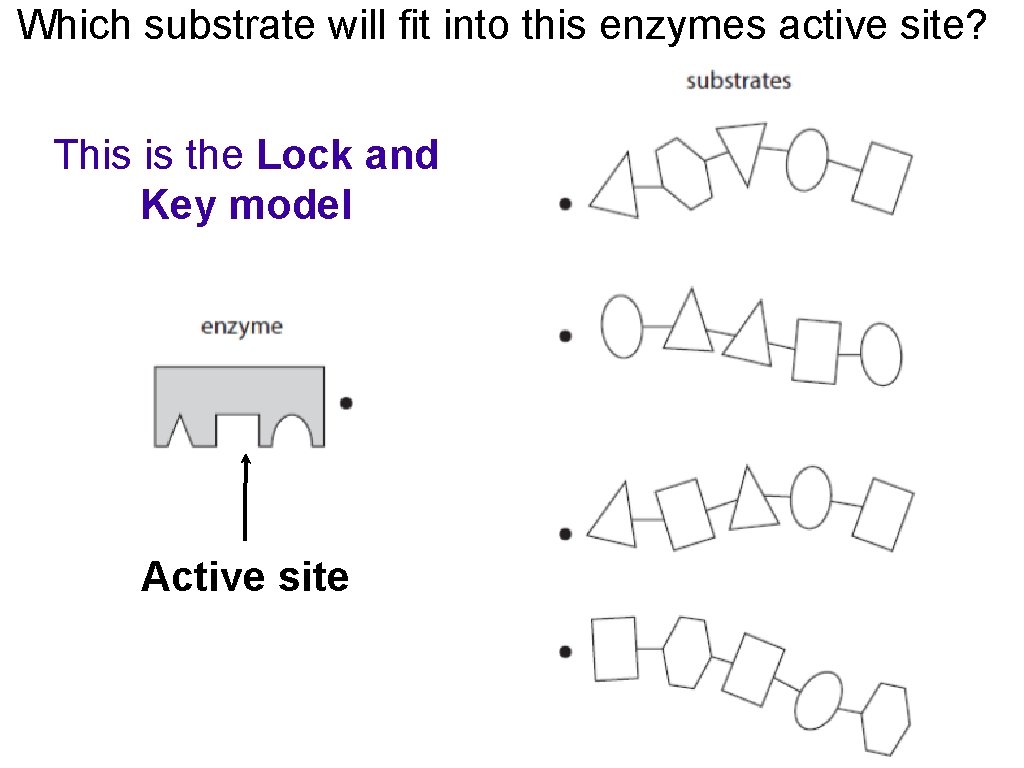
Which substrate will fit into this enzymes active site? This is the Lock and Key model Active site
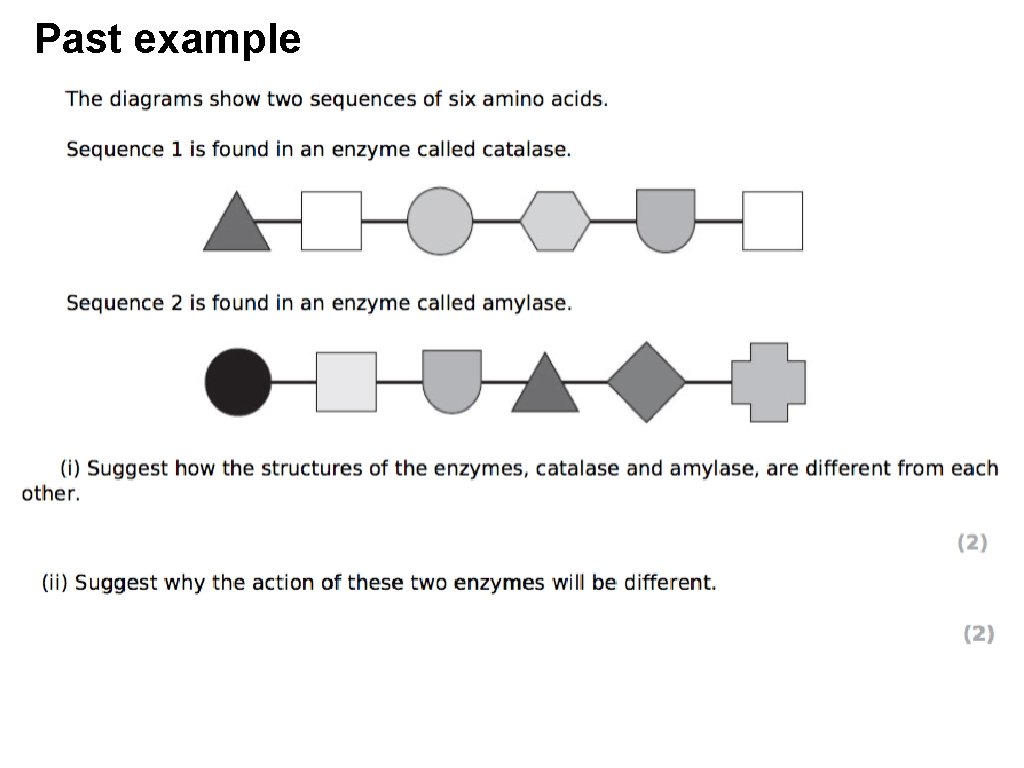
Past example
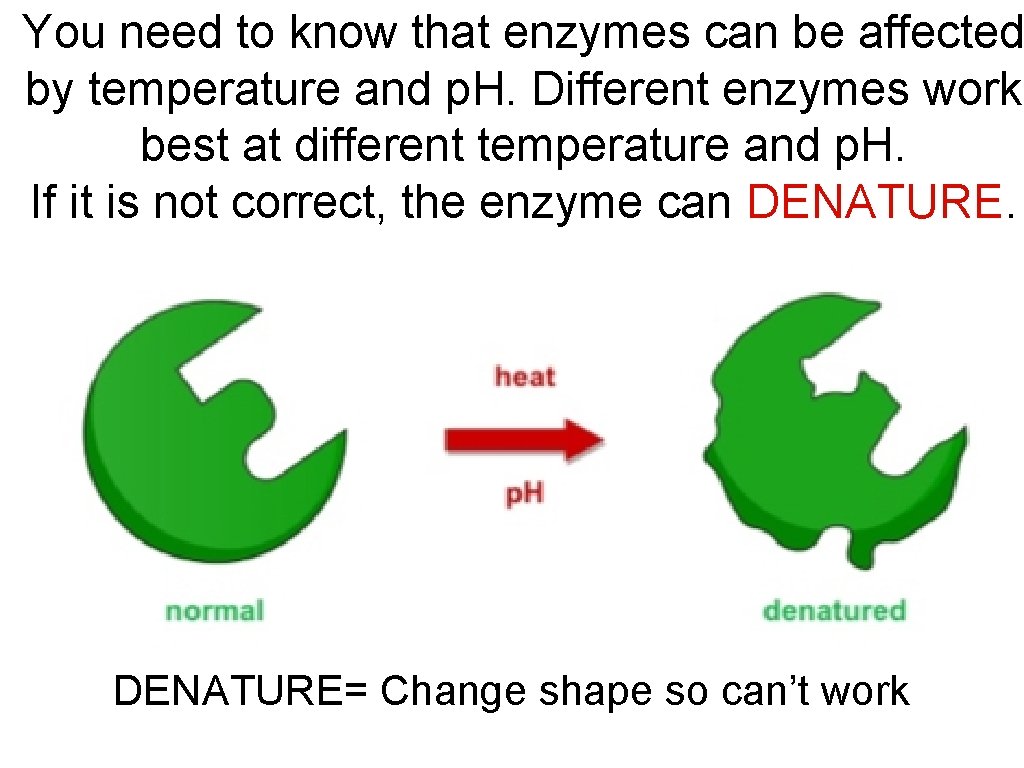
You need to know that enzymes can be affected by temperature and p. H. Different enzymes work best at different temperature and p. H. If it is not correct, the enzyme can DENATURE= Change shape so can’t work
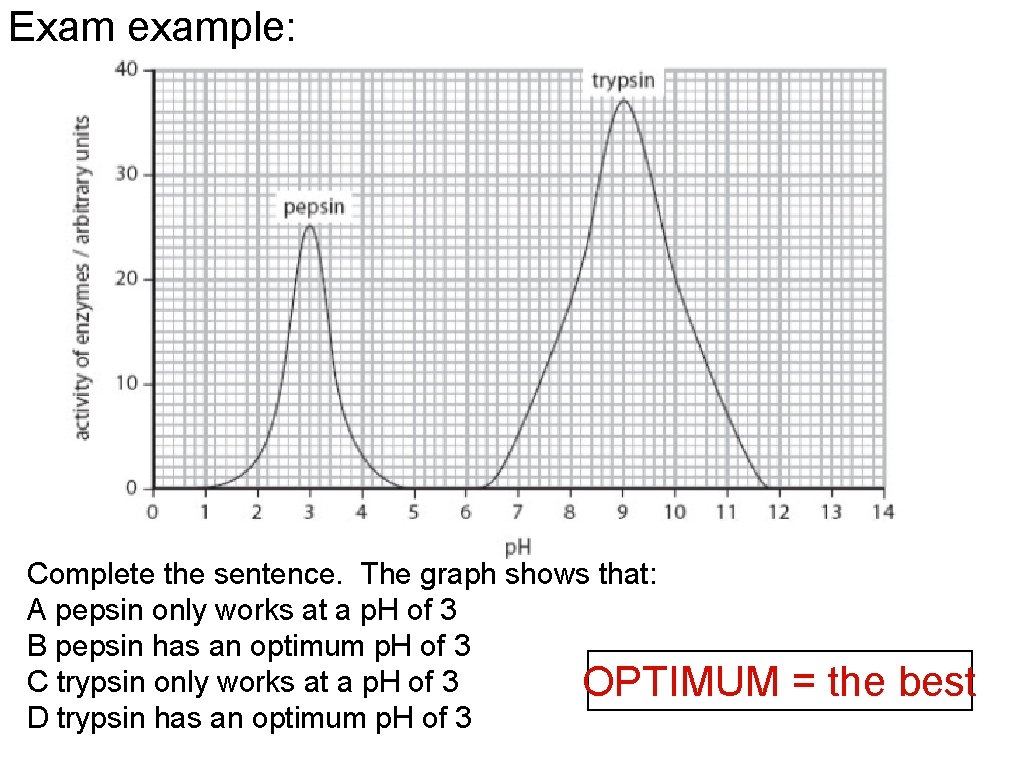
Exam example: Complete the sentence. The graph shows that: A pepsin only works at a p. H of 3 B pepsin has an optimum p. H of 3 C trypsin only works at a p. H of 3 OPTIMUM D trypsin has an optimum p. H of 3 = the best
Another example: A baby food is manufactured at 35 °C. Higher temperatures affect the protease enzymes in baby food. Explain how enzymes are affected by temperatures above 40 °C. (2) Less activity at 40 °C because enzyme has changed shape.
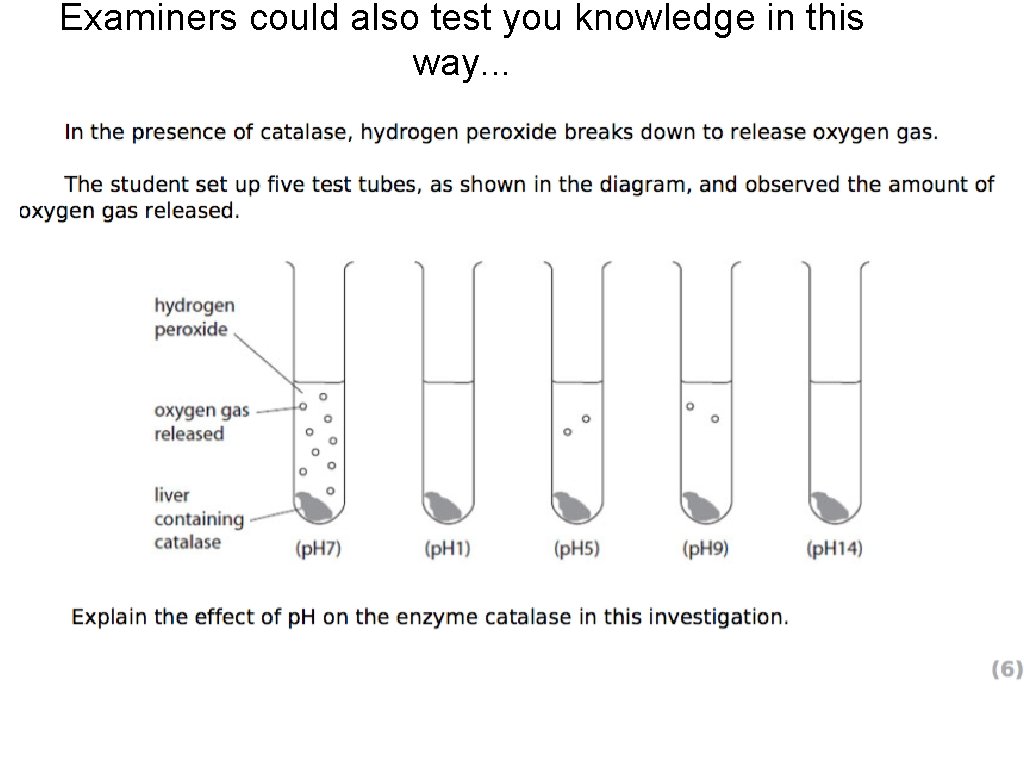
Examiners could also test you knowledge in this way. . .
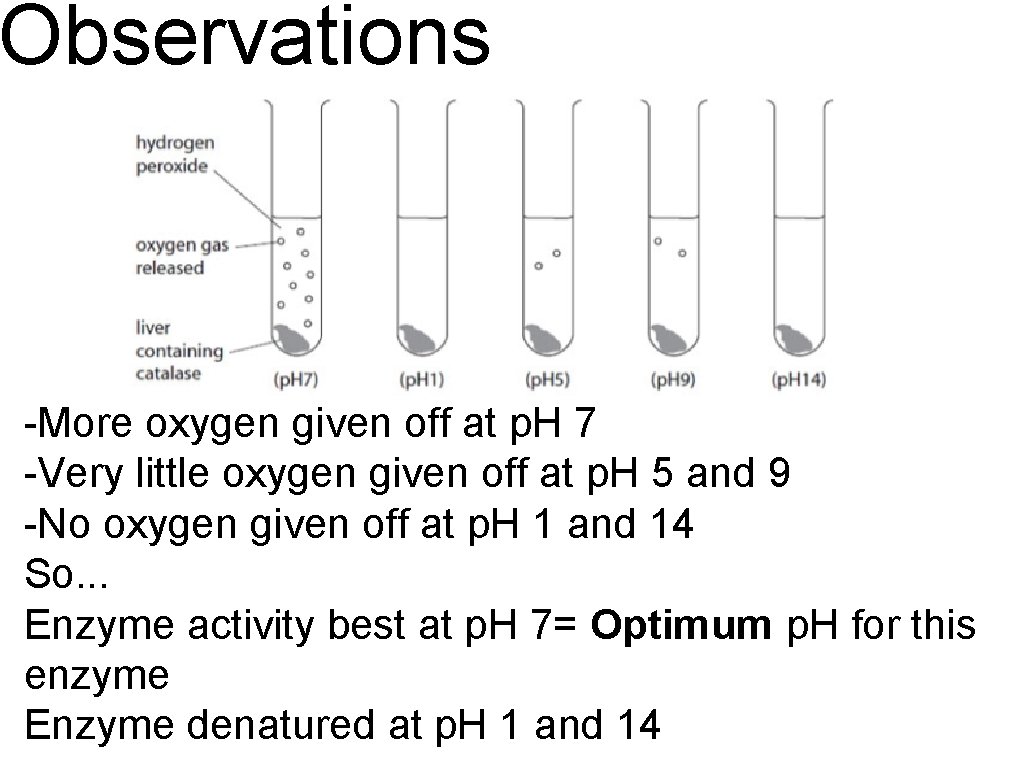
Observations -More oxygen given off at p. H 7 -Very little oxygen given off at p. H 5 and 9 -No oxygen given off at p. H 1 and 14 So. . . Enzyme activity best at p. H 7= Optimum p. H for this enzyme Enzyme denatured at p. H 1 and 14
Enzymes that break down your food • Must write these down and learn them!!! Carbohydrases, such as amylase, digest carbohydrates to simple sugars in the mouth and small intestines Proteases, such as pepsin, digest proteins to amino acids in the small intestines Lipase digests fats to fatty acids and glycerol in the small intestines
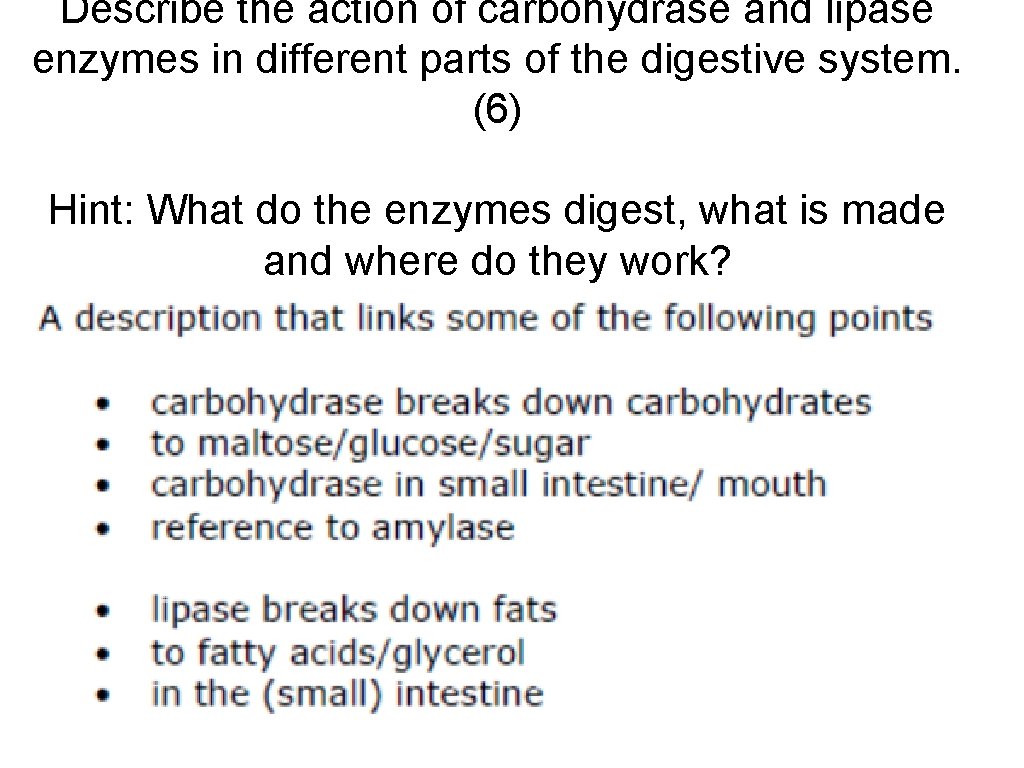
Describe the action of carbohydrase and lipase enzymes in different parts of the digestive system. (6) Hint: What do the enzymes digest, what is made and where do they work?
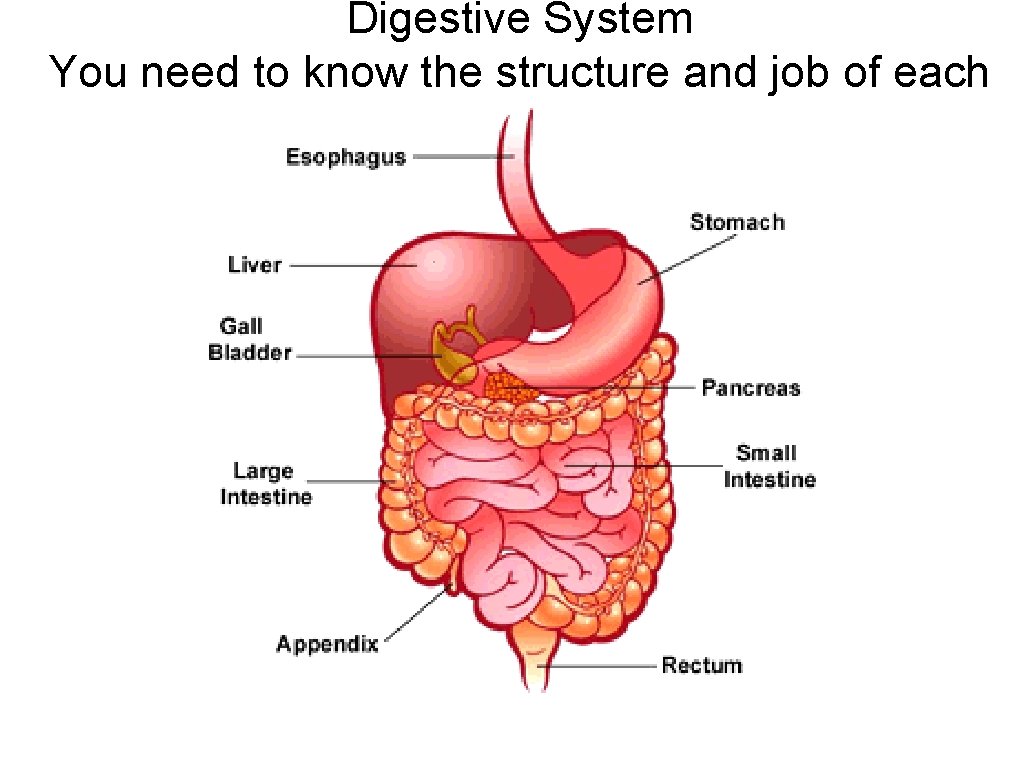
Digestive System You need to know the structure and job of each
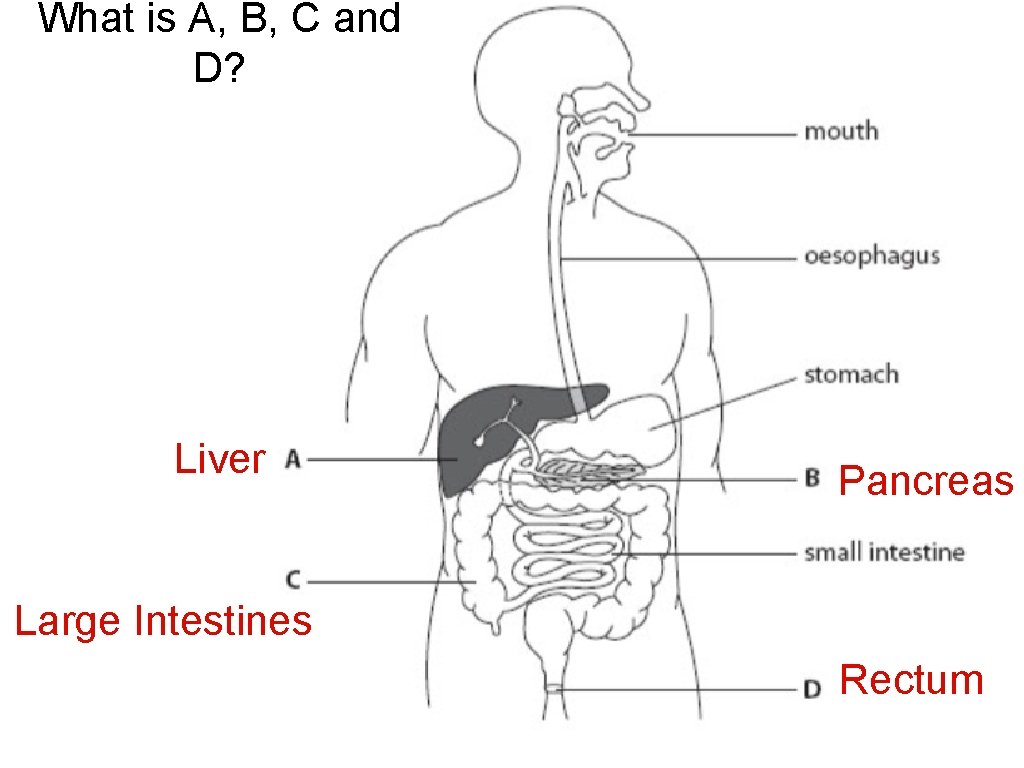
What is A, B, C and D? Liver Pancreas Large Intestines Rectum
Food mixed with saliva Hydrochloric acid increases p. H
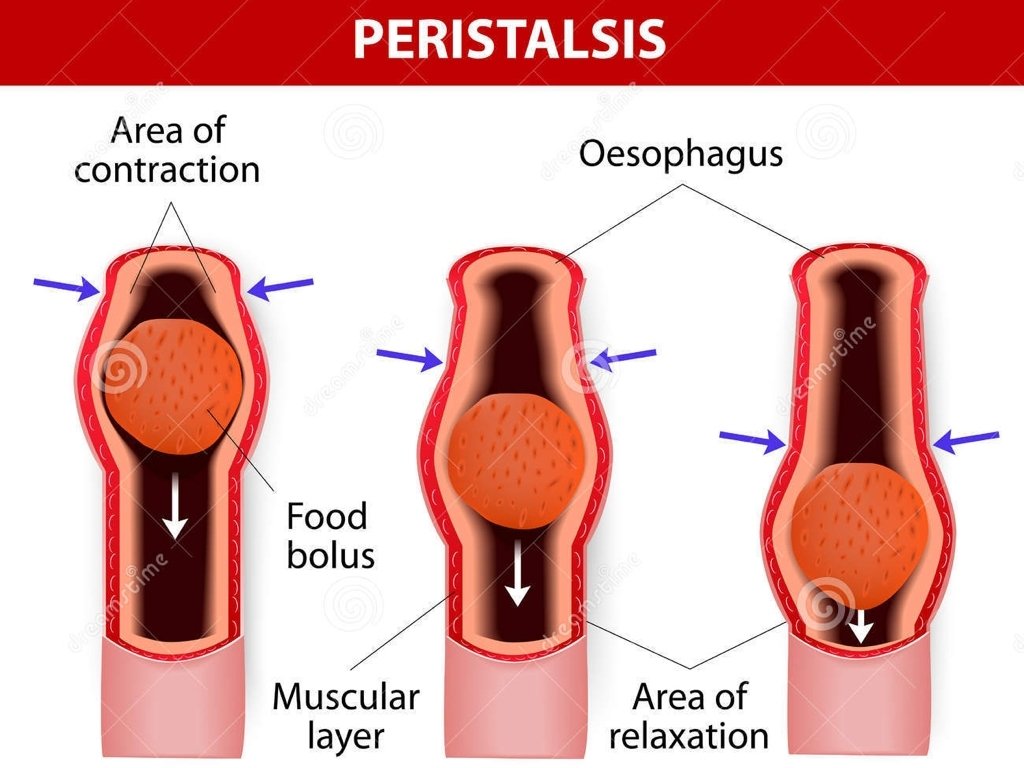
Use your diagram to answer this question • Describe how the action of the mouth, oesophagus and stomach contribute to the digestion of food.
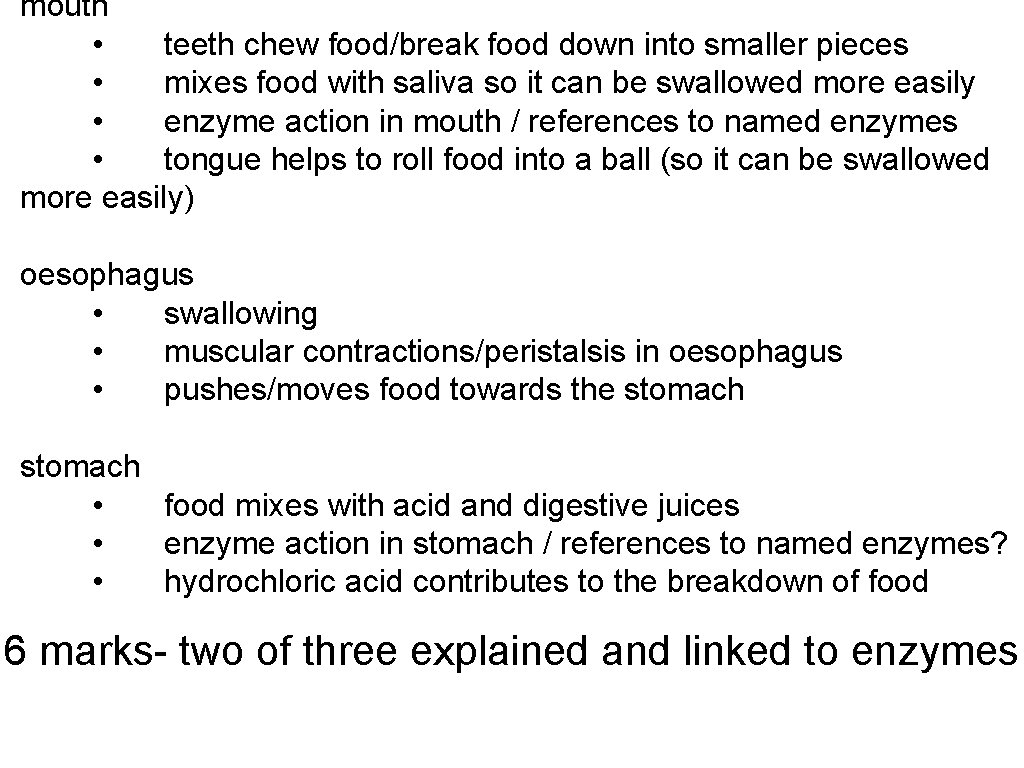
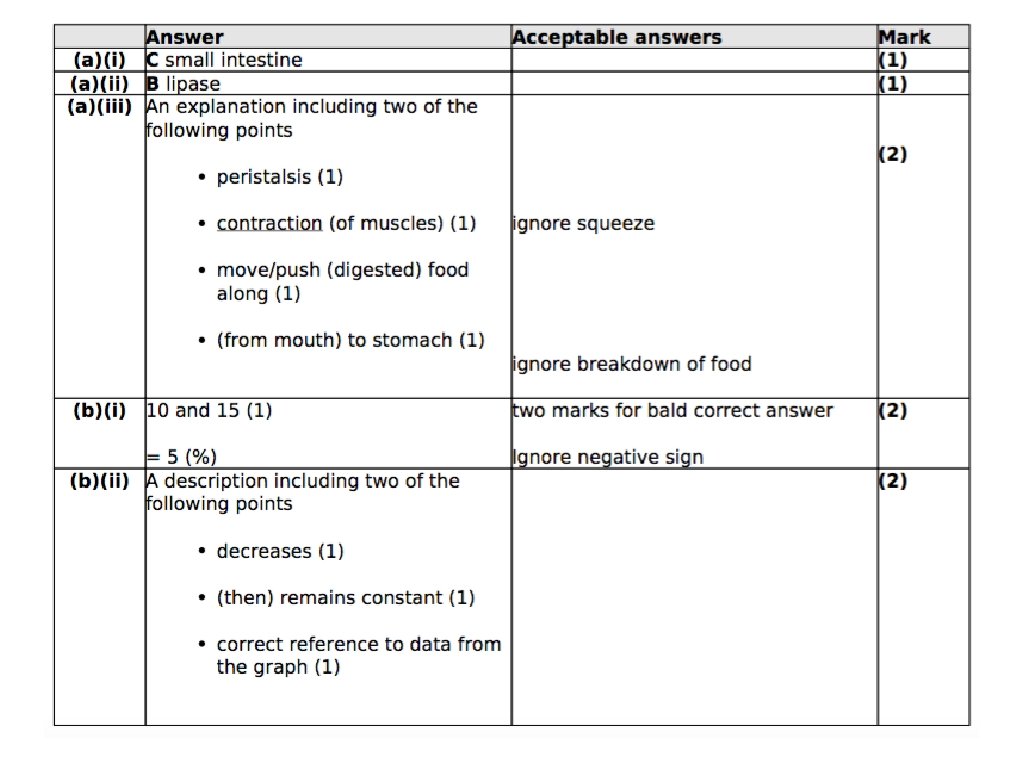
mouth • teeth chew food/break food down into smaller pieces • mixes food with saliva so it can be swallowed more easily • enzyme action in mouth / references to named enzymes • tongue helps to roll food into a ball (so it can be swallowed more easily) oesophagus • swallowing • muscular contractions/peristalsis in oesophagus • pushes/moves food towards the stomach • food mixes with acid and digestive juices • enzyme action in stomach / references to named enzymes? • hydrochloric acid contributes to the breakdown of food 6 marks- two of three explained and linked to enzymes
Past paper question 8 Minutes
- Slides: 26