
SMART System START Triage Bureau of Emergency Medical
SMART System & START Triage Bureau of Emergency Medical Services New York State Department of Health Jim Soto Associate Director

Objectives: • What is an MCI ? • Review Incident Management from EMS perspective • Review Triage & Practice START

What is the Goal of MCI Management?
EMS GOAL: TO SAVE THE LARGEST NUMBER OF SURVIVORS FROM A MULTIPLE CASUALTY INCIDENT

What is an MCI Scene?

What are some Common things affecting your MCI response? • Typical staffing of your ambulance service? • What does EMS routinely do daily? • How do you handle the following? – 4 victims in a two car “head-on” – 17 victims in a “team” van – 43 victims on a school bus – 350 victims on a train
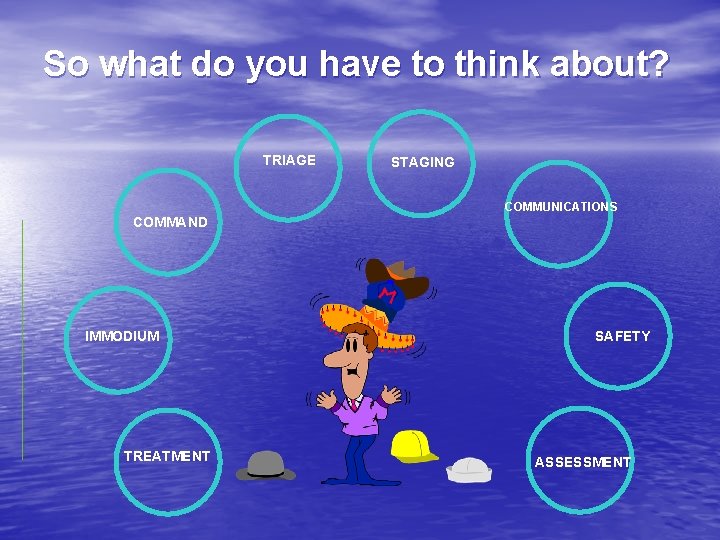
So what do you have to think about? TRIAGE STAGING COMMUNICATIONS COMMAND IMMODIUM TREATMENT SAFETY ASSESSMENT
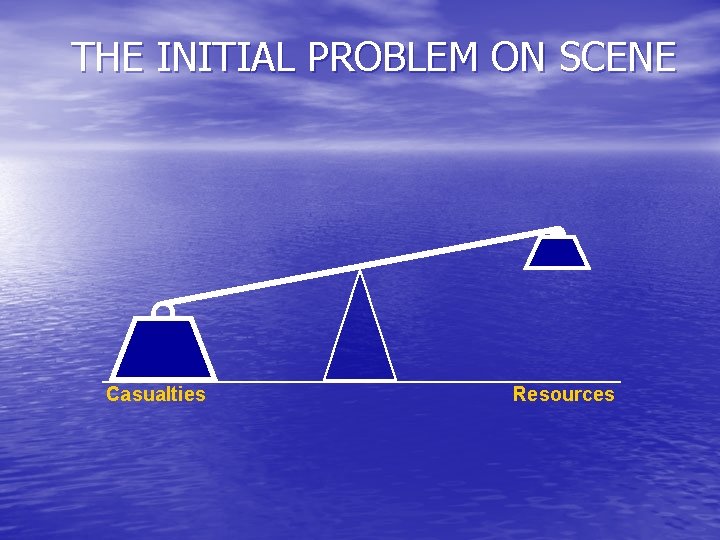
THE INITIAL PROBLEM ON SCENE Casualties Resources
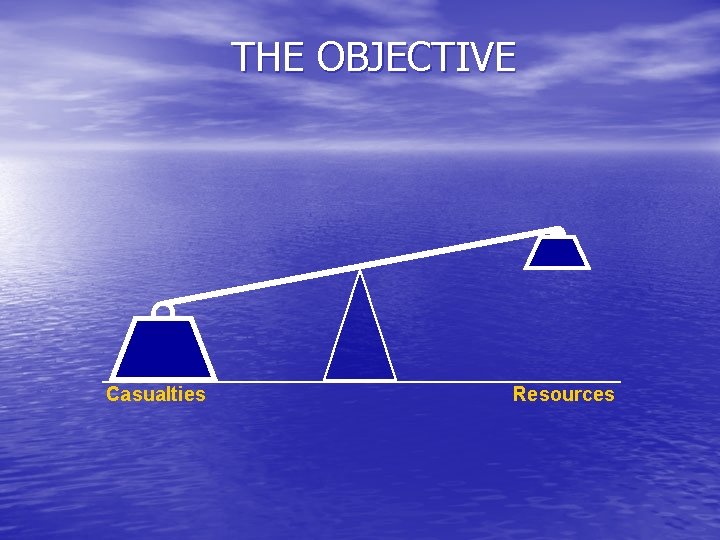
THE OBJECTIVE Casualties Resources
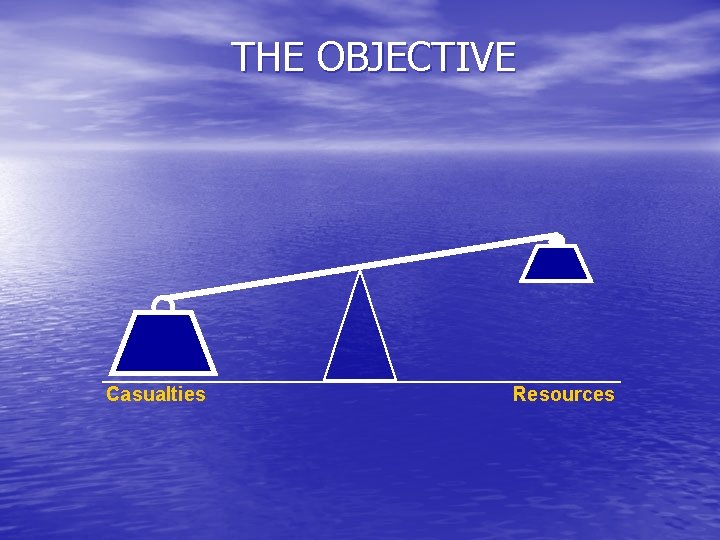
THE OBJECTIVE Casualties Resources
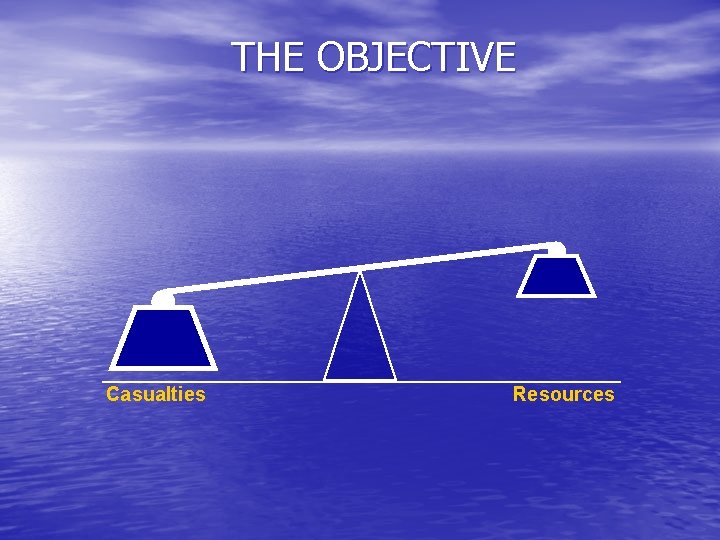
THE OBJECTIVE Casualties Resources
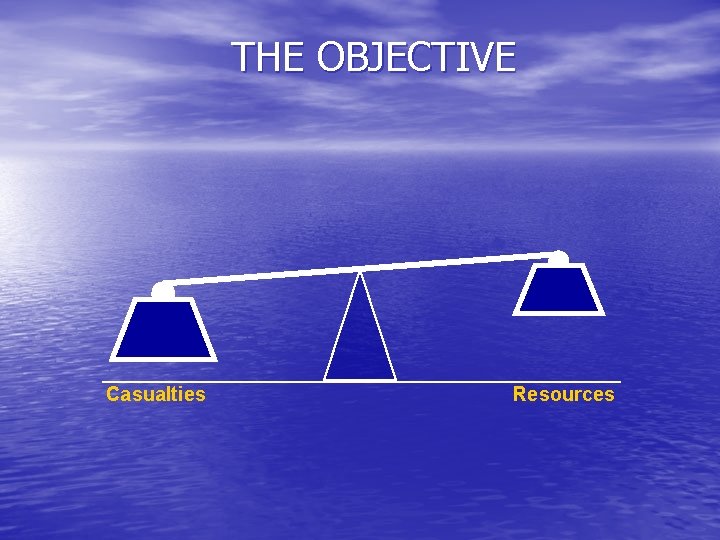
THE OBJECTIVE Casualties Resources

THE OBJECTIVE Casualties Resources
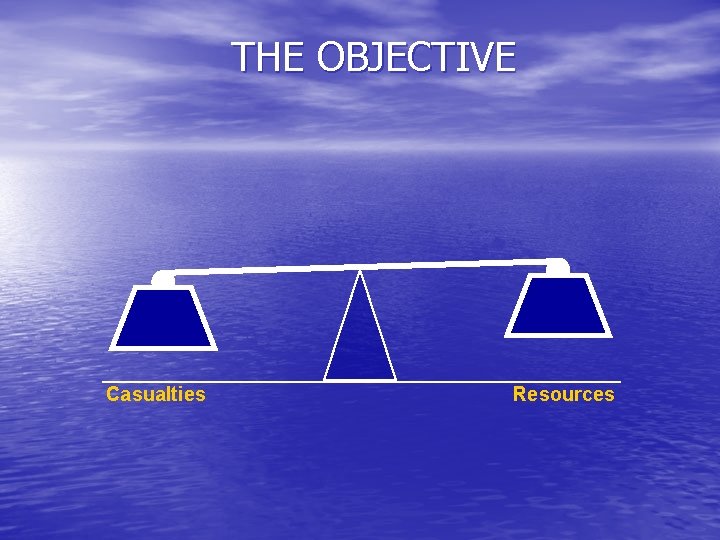
THE OBJECTIVE Casualties Resources
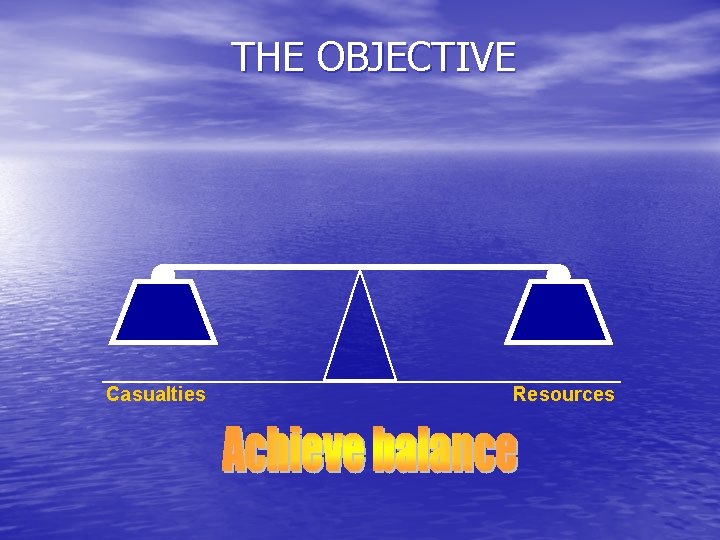
THE OBJECTIVE Casualties Resources
BUT - HOW IS EMS TRAINED? • BLS, ALS • CPR, ACLS, PALS • PHTLS, BTLS • CFR, EMT-I, EMT-CC, EMT-P How many patients are you taught to treat at one time?
WHAT CHANGES WHEN YOU HAVE AN MCI ? • What are my resources? • Who is a Patient? • Which Patient do I treat first? • Who can be salvaged? • Who gets transported first? • Who needs a Trauma/Specialty Center? • Who can help care for others?
TIME IS IMPORTANT ARRIVAL OF REQUESTED RESOURCES
TIME IS VERY IMPORTANT THE GOLDEN HOUR “The critical trauma patient has only 60 minutes from the time of injury to reach definitive surgical care, or the odds of a successful recovery diminish dramatically”. Pre-Hospital Trauma Life Support, Second Edition, Patient Assessment and Management, page 42. 1990.
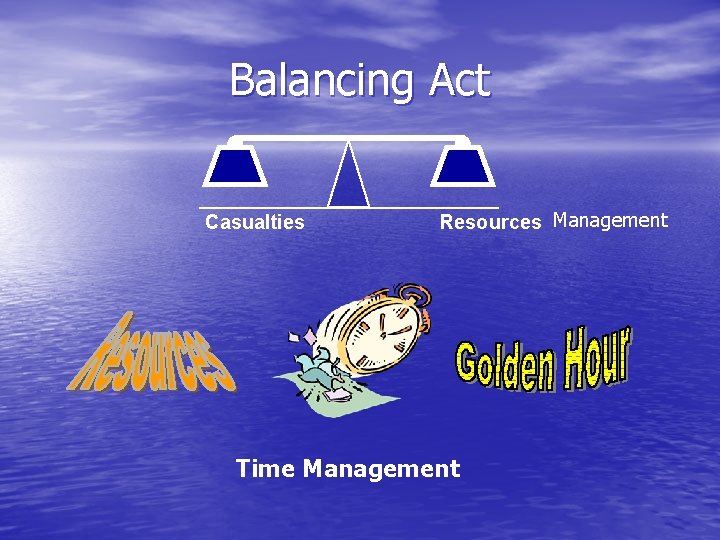
Balancing Act Casualties Resources Management Time Management
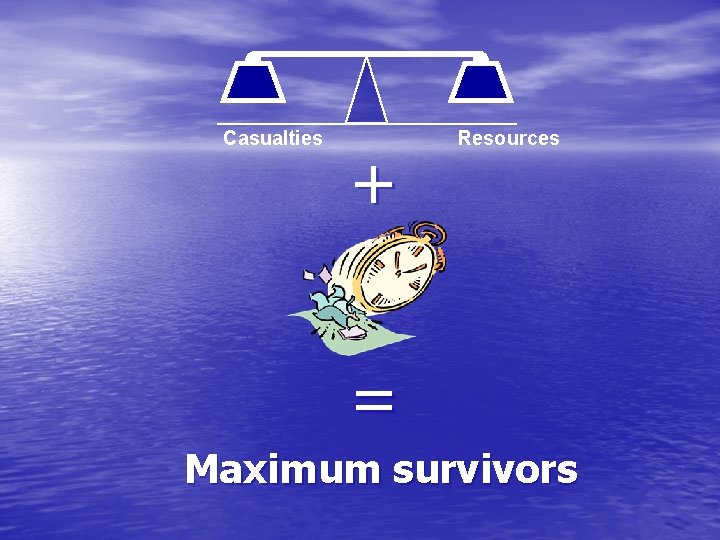
Casualties + Resources = Maximum survivors
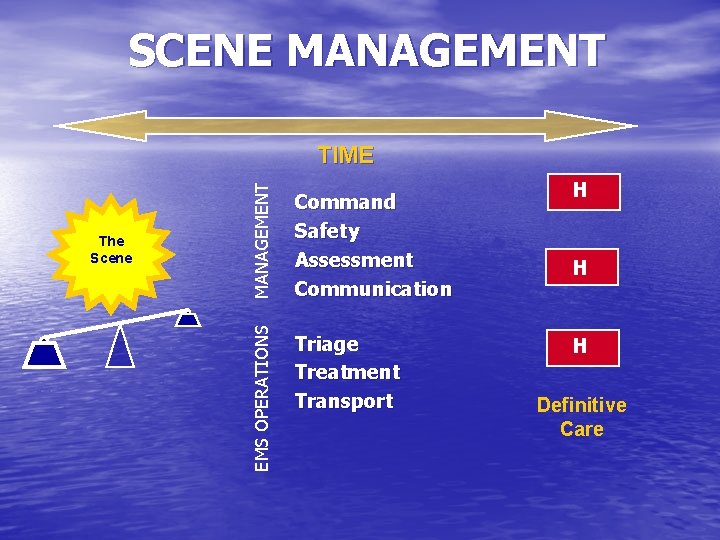
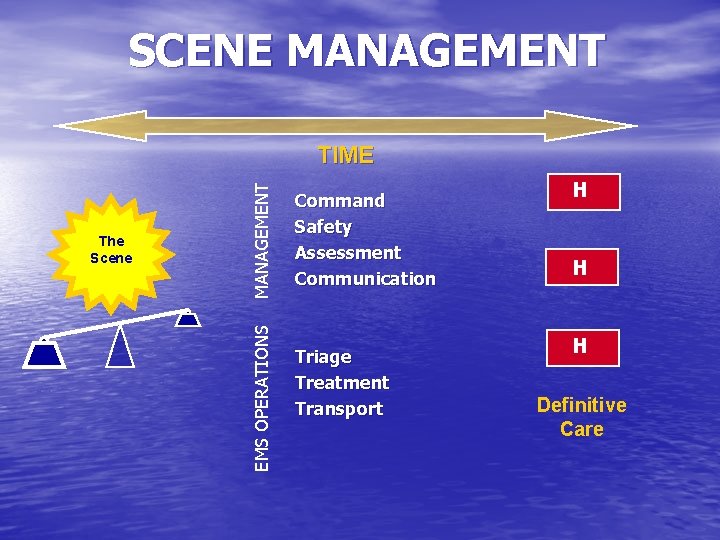
SCENE MANAGEMENT The Scene Command Safety Assessment Communication EMS OPERATIONS TIME Triage Treatment Transport H H H Definitive Care
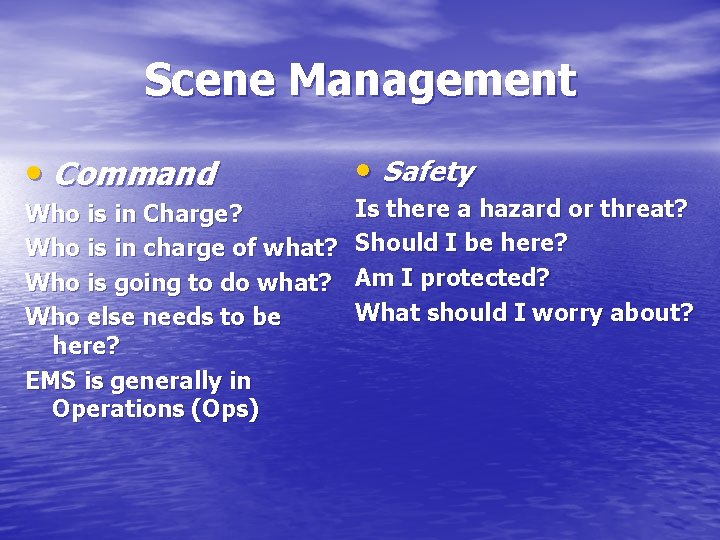
Scene Management • Command Who is in Charge? Who is in charge of what? Who is going to do what? Who else needs to be here? EMS is generally in Operations (Ops) • Safety Is there a hazard or threat? Should I be here? Am I protected? What should I worry about?
Scene Management • Assessment What is going on? How big is this, how many people? What do I need? How does what I do affect others? What are they doing that can affect me? • Communications Who needs to know? What do they need to know? Does Command & Ops know? Do the other players know?
Scene Management • Triage • Treatment Who is doing it? Where are they doing it? What are they finding? What the typical EMS provider comes “preloaded” with… How to organize? How much can we do?
Scene Management Transport • Who is doing it? • From where are they doing it? • Where are the patients going? • How many patients going where?
TRIAGE “Large scale triage is the hardest job anyone in pre-hospital care will ever do”. A. J Heightman, Mass Casualty Incident Management. A practical approach to solving complex operational dilemmas.
TRIAGE WHEN ? Casualties exceed the number of skilled rescuers.
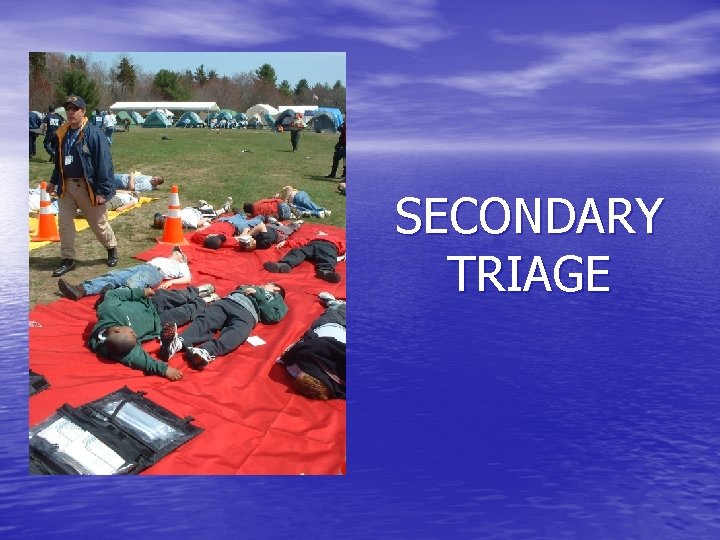
Types of Triage • Primary – On Scene prior to movement • Secondary – Incident dependant, probably prior to or during transport
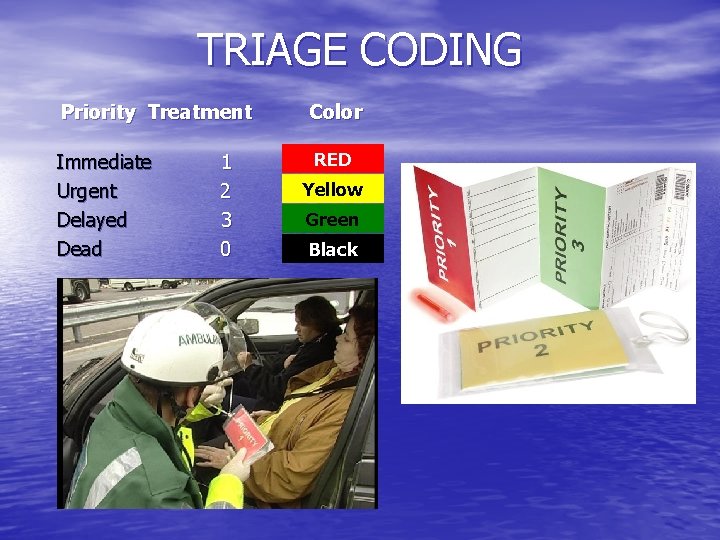
TRIAGE CODING Priority Treatment Color Immediate Urgent Delayed Dead RED 1 2 3 0 Yellow Green Black
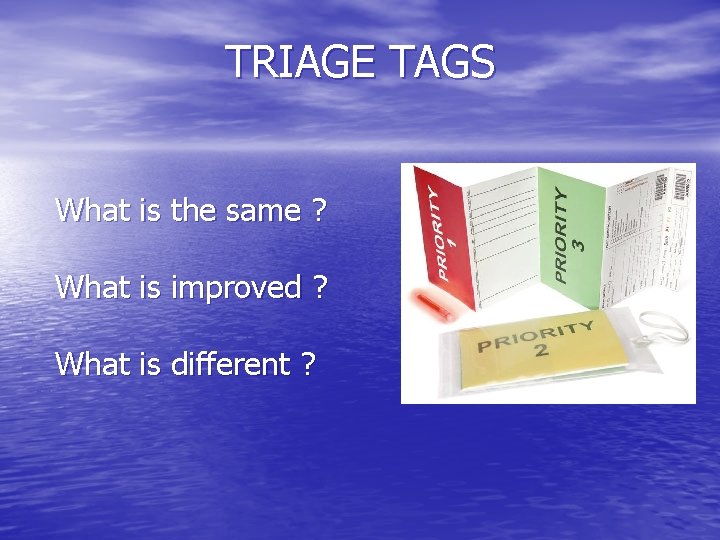
TRIAGE TAGS What is the same ? What is improved ? What is different ?
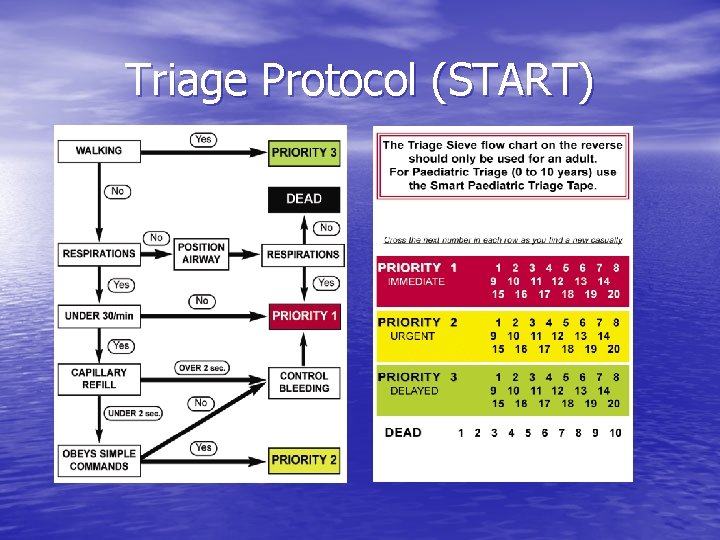
Triage Protocol (START)
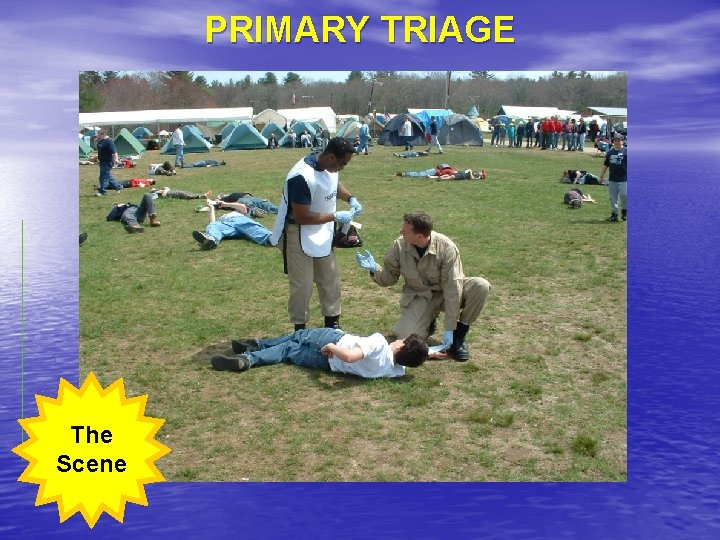
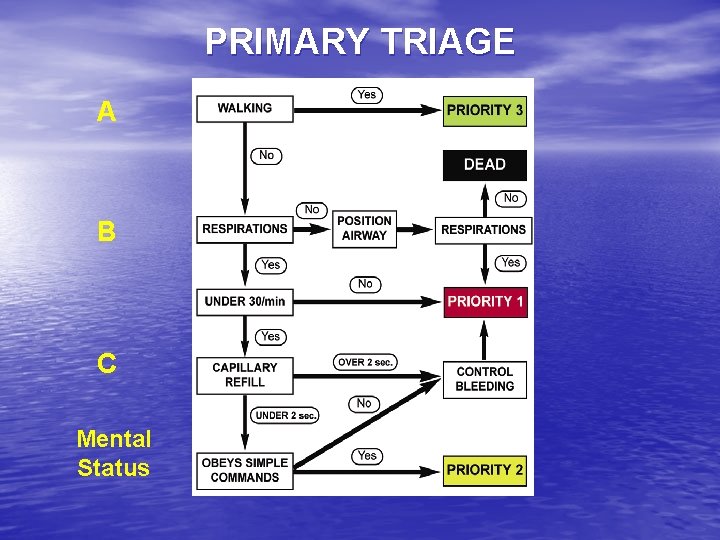
PRIMARY TRIAGE The Scene
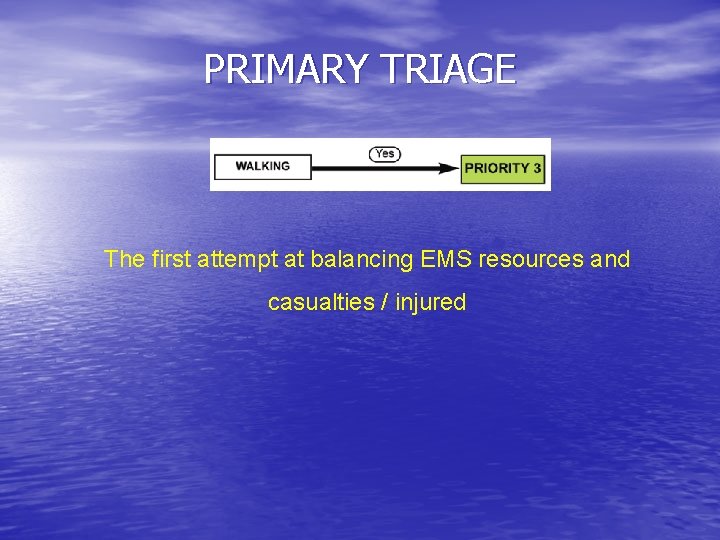
PRIMARY TRIAGE The first attempt at balancing EMS resources and casualties / injured
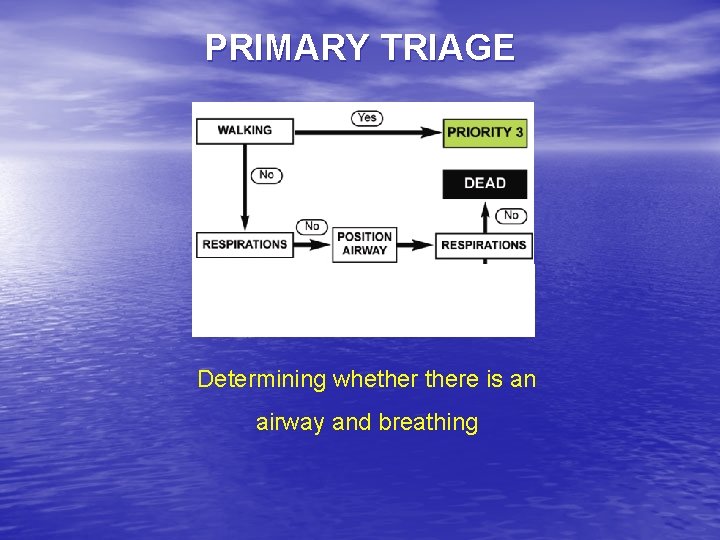
PRIMARY TRIAGE Determining whethere is an airway and breathing
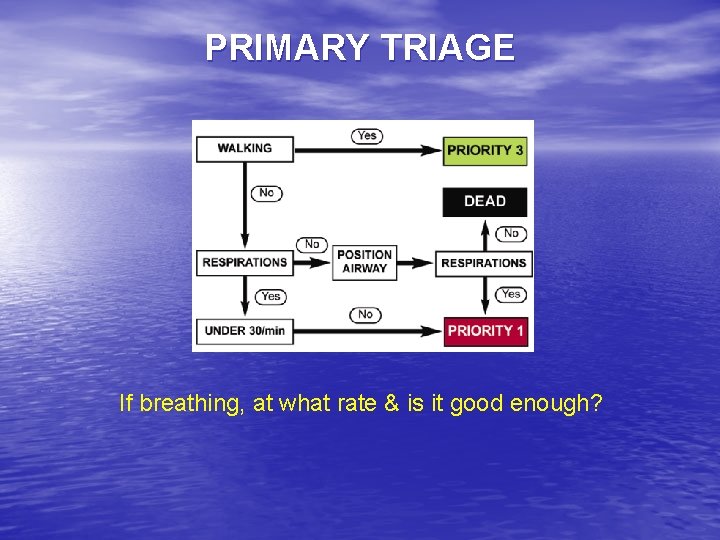
PRIMARY TRIAGE If breathing, at what rate & is it good enough?
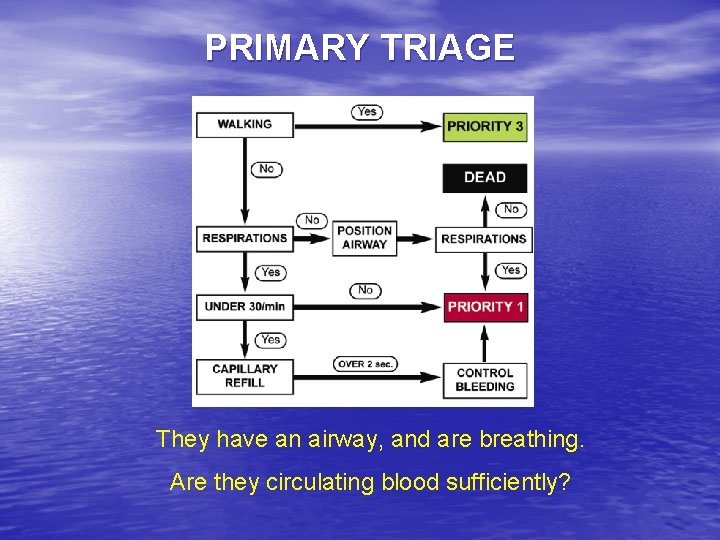
PRIMARY TRIAGE They have an airway, and are breathing. Are they circulating blood sufficiently?
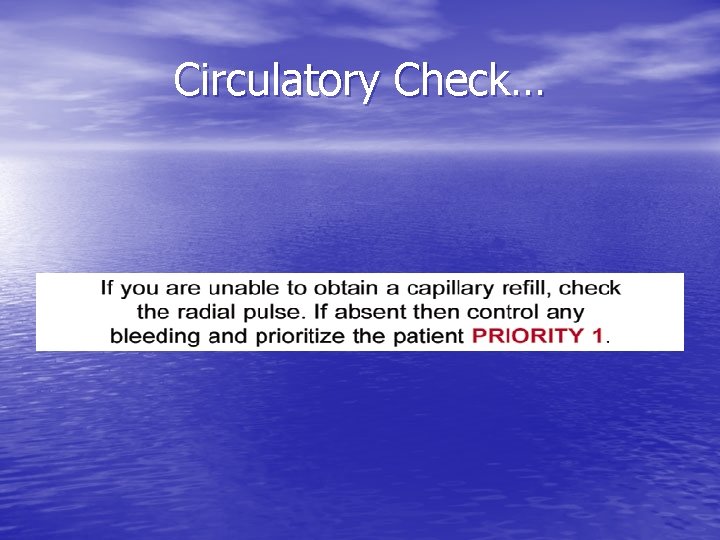
Circulatory Check…
PRIMARY TRIAGE A B C Mental Status
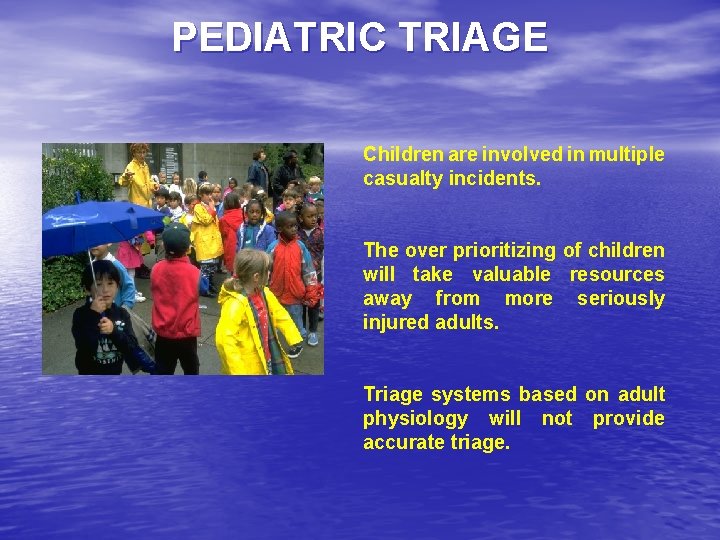
PEDIATRIC TRIAGE Children are involved in multiple casualty incidents. The over prioritizing of children will take valuable resources away from more seriously injured adults. Triage systems based on adult physiology will not provide accurate triage.
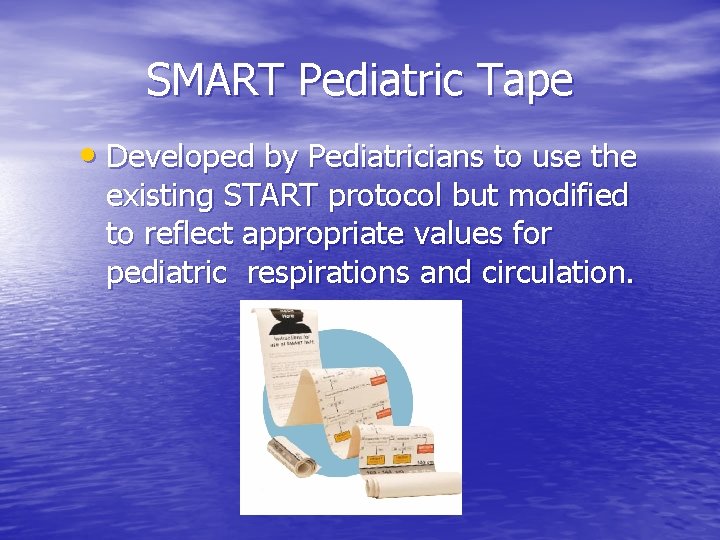
SMART Pediatric Tape • Developed by Pediatricians to use the existing START protocol but modified to reflect appropriate values for pediatric respirations and circulation.
START
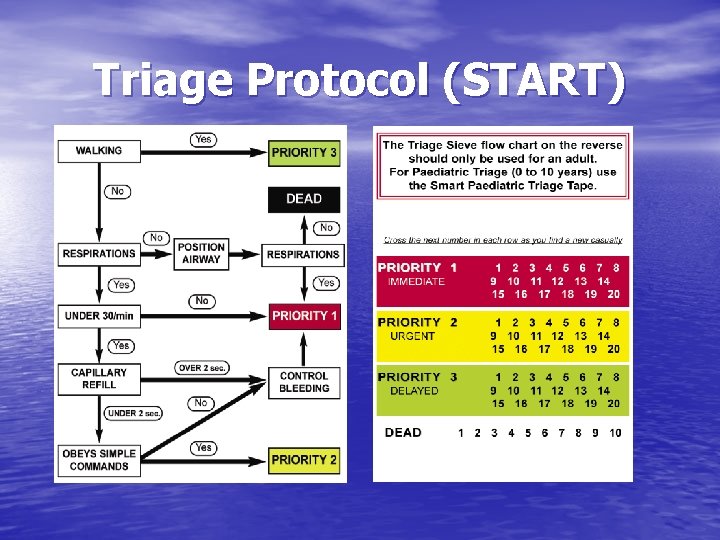
Triage Protocol (START)
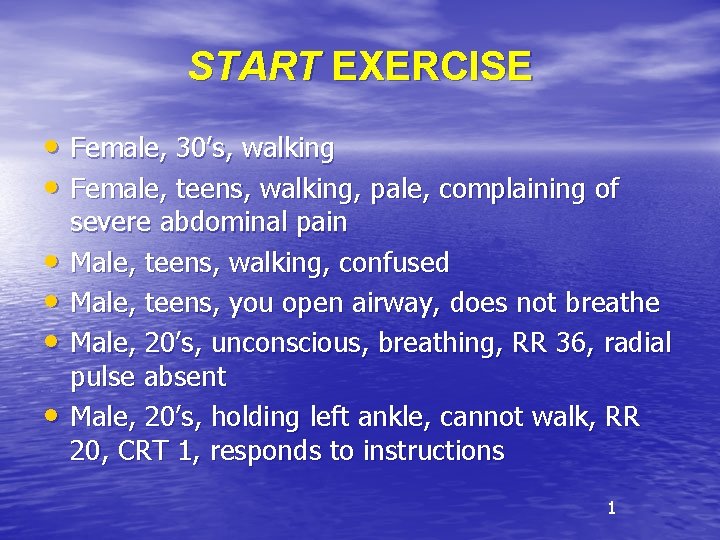
START EXERCISE • Female, 30’s, walking • Female, teens, walking, pale, complaining of • • severe abdominal pain Male, teens, walking, confused Male, teens, you open airway, does not breathe Male, 20’s, unconscious, breathing, RR 36, radial pulse absent Male, 20’s, holding left ankle, cannot walk, RR 20, CRT 1, responds to instructions 1
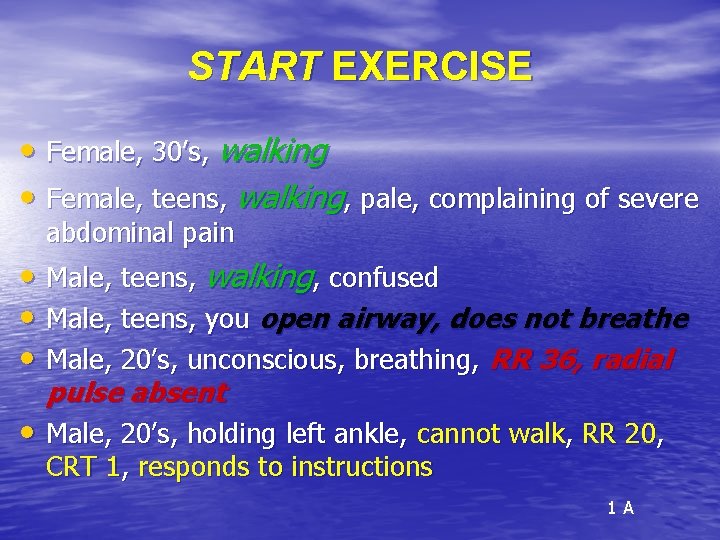
START EXERCISE • Female, 30’s, walking • Female, teens, walking, pale, complaining of severe abdominal pain • Male, teens, walking, confused • Male, teens, you open airway, does not breathe • Male, 20’s, unconscious, breathing, RR 36, radial pulse absent • Male, 20’s, holding left ankle, cannot walk, RR 20, CRT 1, responds to instructions 1 A
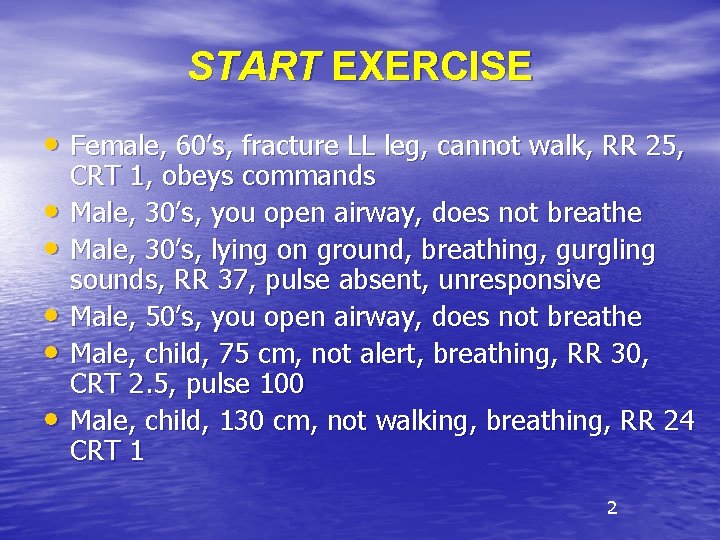
START EXERCISE • Female, 60’s, fracture LL leg, cannot walk, RR 25, • • • CRT 1, obeys commands Male, 30’s, you open airway, does not breathe Male, 30’s, lying on ground, breathing, gurgling sounds, RR 37, pulse absent, unresponsive Male, 50’s, you open airway, does not breathe Male, child, 75 cm, not alert, breathing, RR 30, CRT 2. 5, pulse 100 Male, child, 130 cm, not walking, breathing, RR 24 CRT 1 2
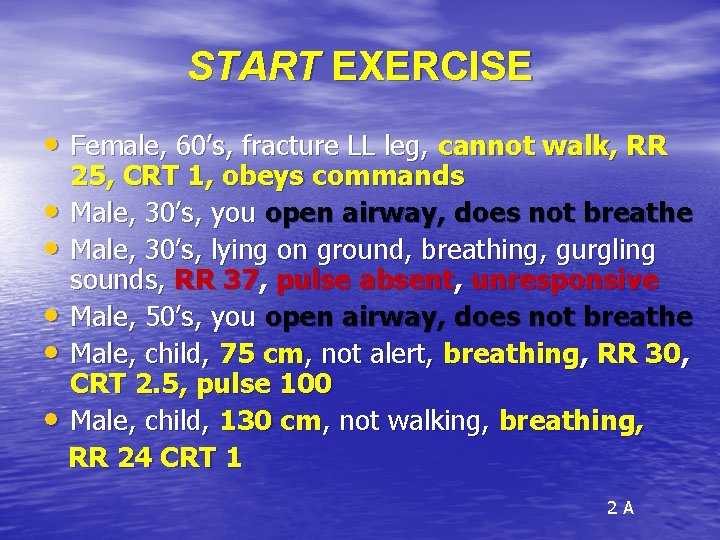
START EXERCISE • Female, 60’s, fracture LL leg, cannot walk, RR 25, CRT 1, obeys commands • Male, 30’s, you open airway, does not breathe • Male, 30’s, lying on ground, breathing, gurgling sounds, RR 37, pulse absent, unresponsive • Male, 50’s, you open airway, does not breathe • Male, child, 75 cm, not alert, breathing, RR 30, CRT 2. 5, pulse 100 • Male, child, 130 cm, not walking, breathing, RR 24 CRT 1 2 A
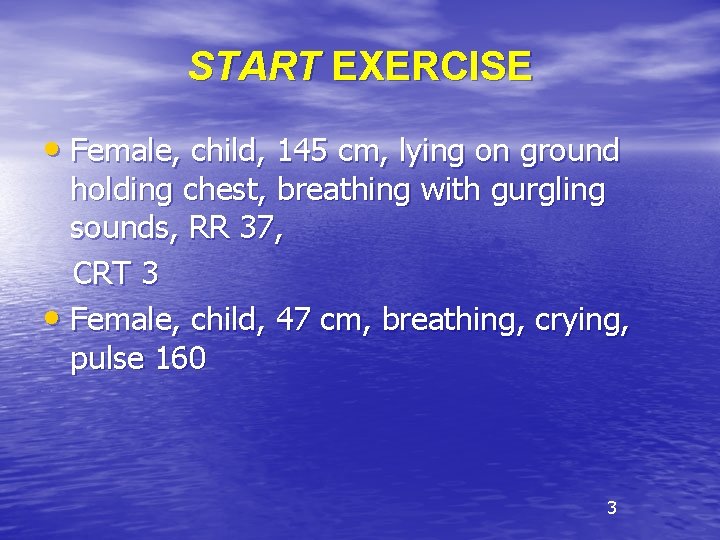
START EXERCISE • Female, child, 145 cm, lying on ground holding chest, breathing with gurgling sounds, RR 37, CRT 3 • Female, child, 47 cm, breathing, crying, pulse 160 3
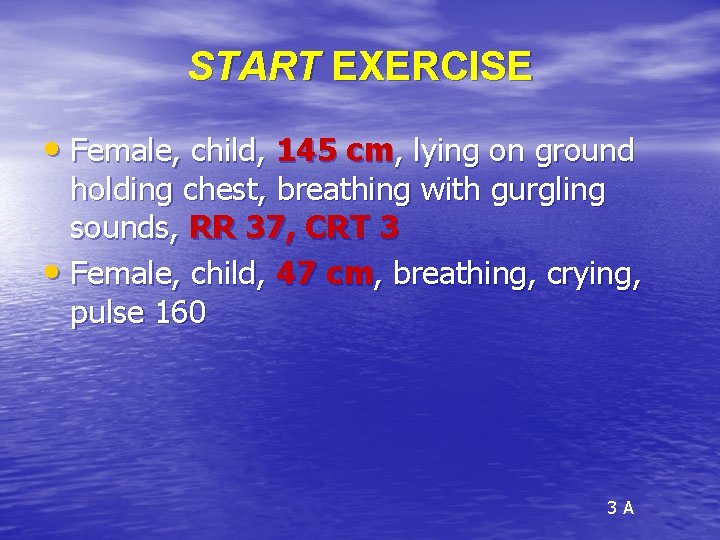
START EXERCISE • Female, child, 145 cm, lying on ground holding chest, breathing with gurgling sounds, RR 37, CRT 3 • Female, child, 47 cm, breathing, crying, pulse 160 3 A
SECONDARY TRIAGE
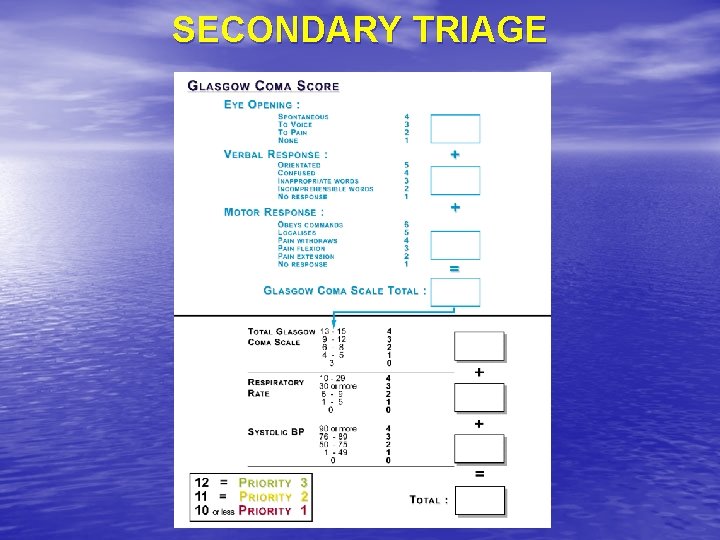
SECONDARY TRIAGE • Purpose – Determine among like priority category, higher priority patient • When does it happen? – Generally on extended duration events – If treatment areas are established, there will likely be a need for Secondary Triage before transport
SECONDARY TRIAGE
SCENE MANAGEMENT EMS OPERATIONS The Scene MANAGEMENT TIME Command Safety Assessment Communication Triage Treatment Transport H H H Definitive Care
Tools to help manage • Use of ICS • FOGs and SOGs – Field Operations Guides – Standard Operations Guides • Command Boards • Communications – – – Radios / Cellular, etc Verbal Documentation • Scribes/Runners

Tools to Organize
SMART COMMANDER ™
EMS INCIDENT MANAGEMENT
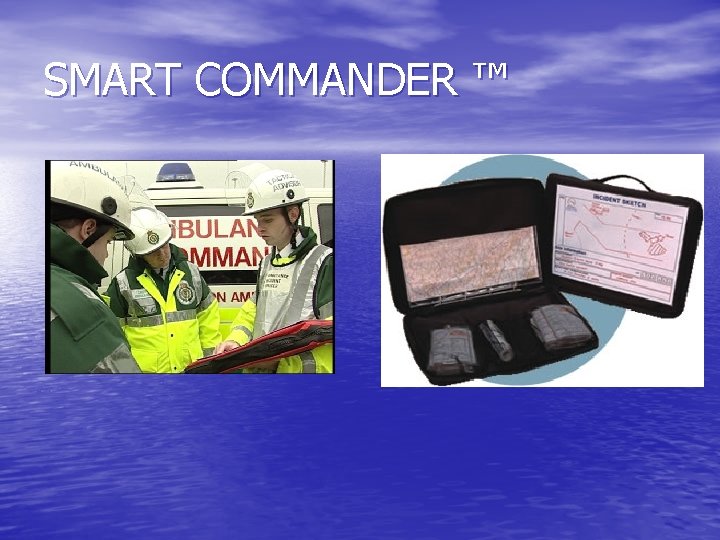
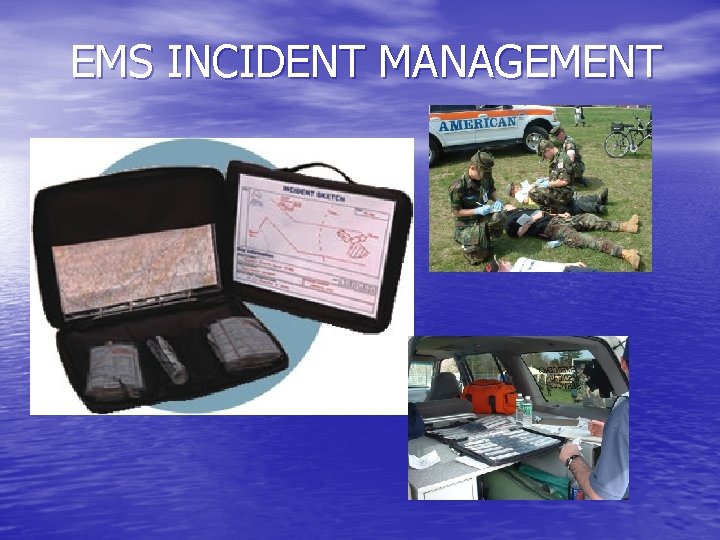
SMART COMMANDER ™ • Organization for: – Command, Control, Coordination • Provides: – – – – Overall Incident Management Team EMS Operations Specifics Incident Communications Weather Hazards Primary Triage Status Destination Capability & Patient Distribution
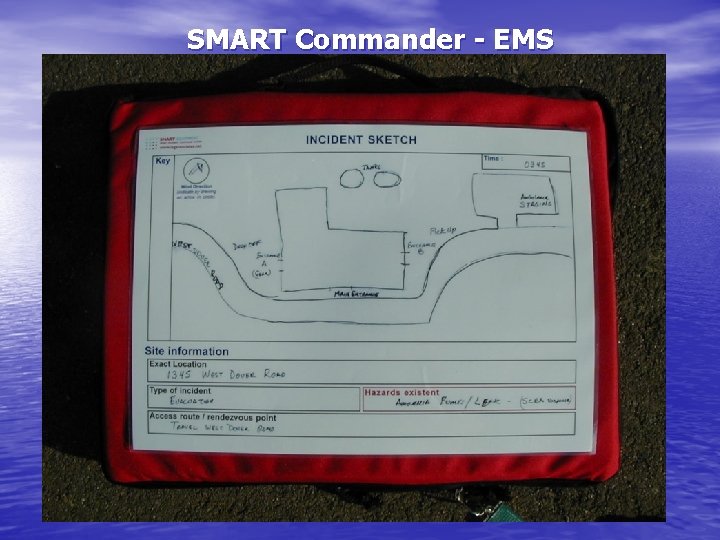
SMART Commander - EMS
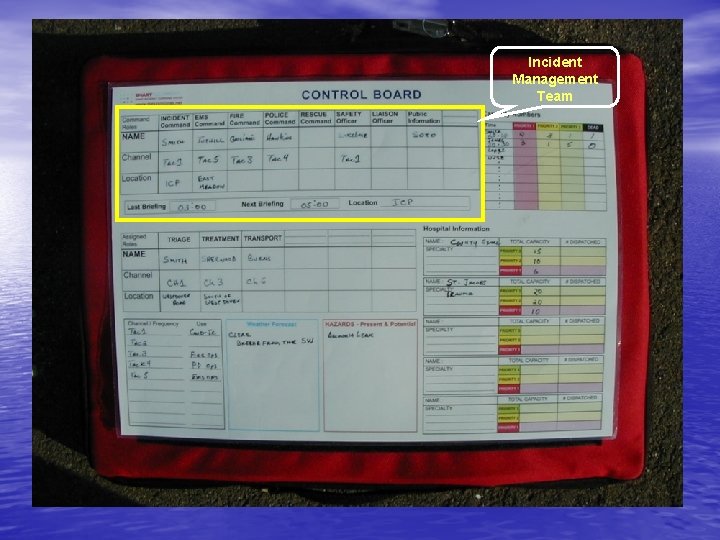
Incident Management Team
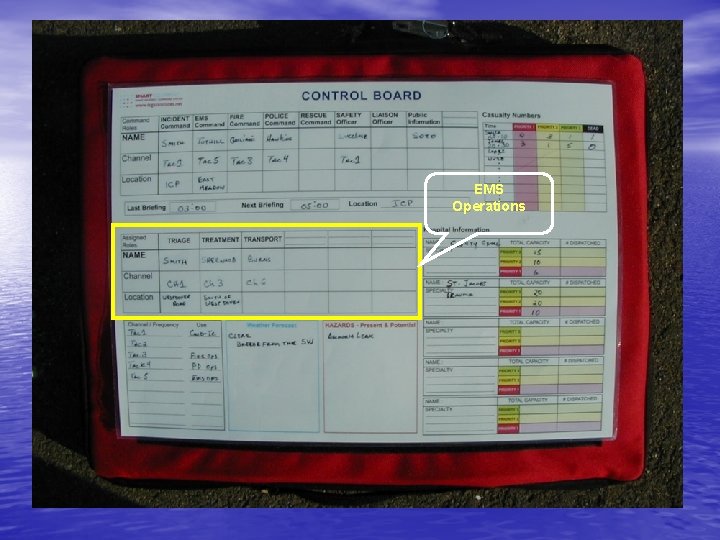
EMS Operations
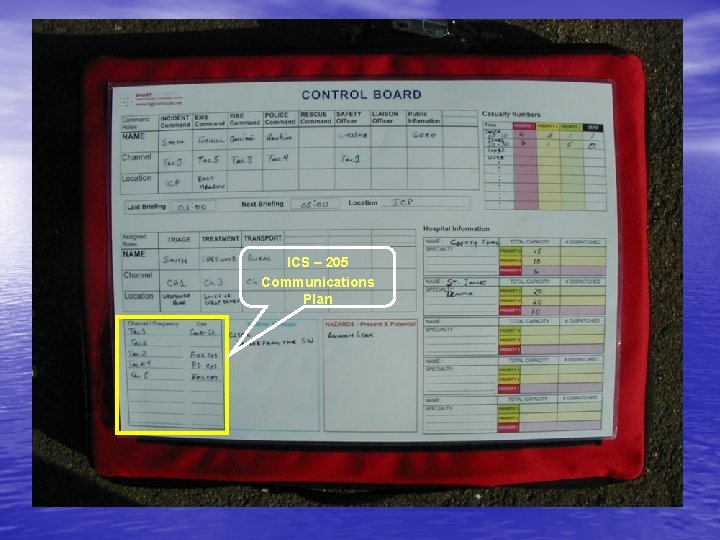
ICS – 205 Communications Plan
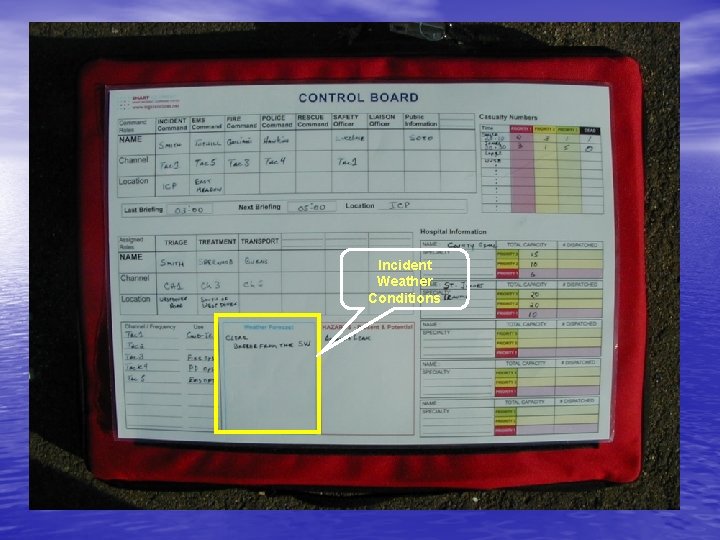
Incident Weather Conditions
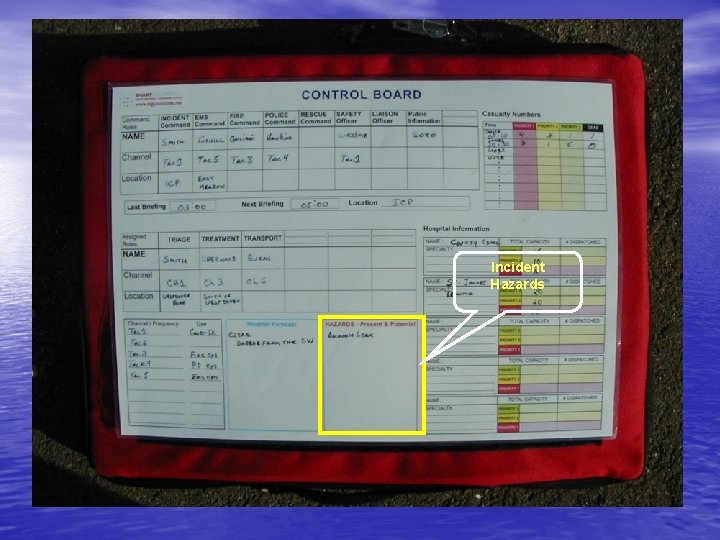
Incident Hazards
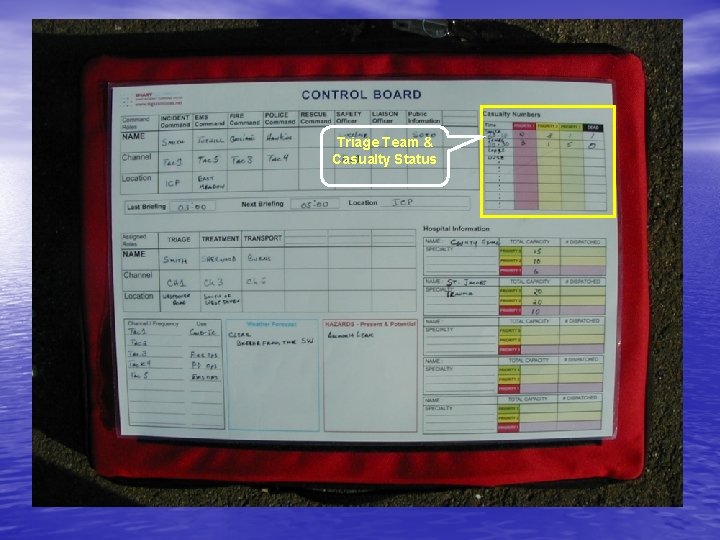
Triage Team & Casualty Status
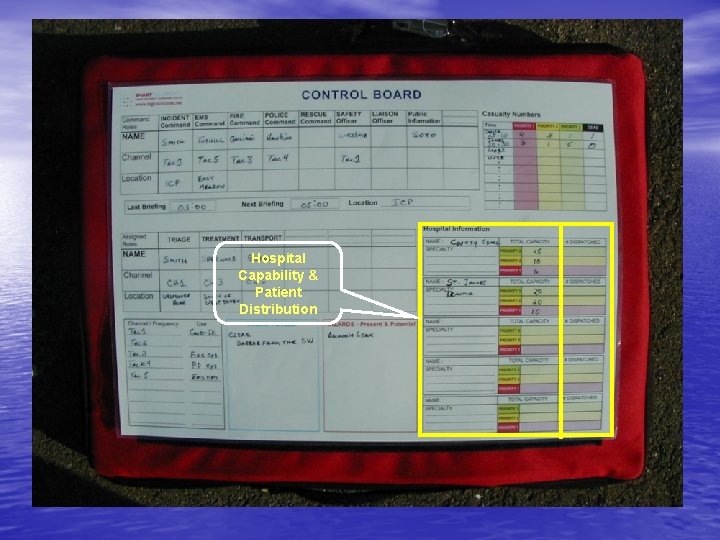
Hospital Capability & Patient Distribution
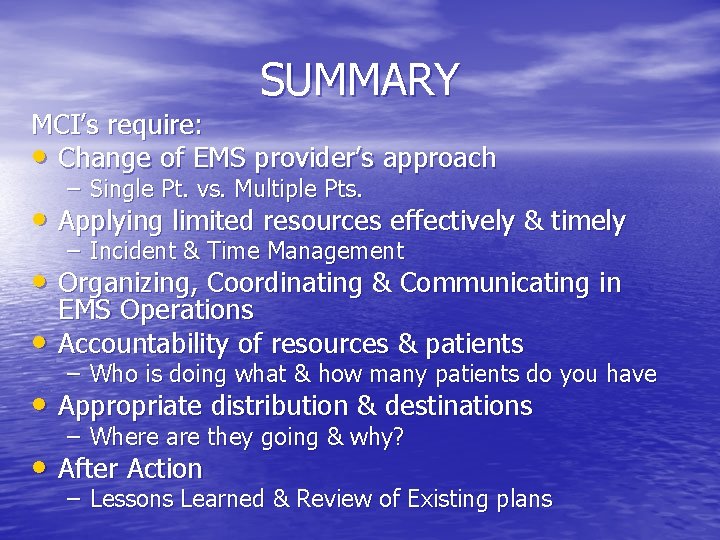
SUMMARY MCI’s require: • Change of EMS provider’s approach – Single Pt. vs. Multiple Pts. • Applying limited resources effectively & timely – Incident & Time Management • Organizing, Coordinating & Communicating in • EMS Operations Accountability of resources & patients – Who is doing what & how many patients do you have • Appropriate distribution & destinations – Where are they going & why? • After Action – Lessons Learned & Review of Existing plans
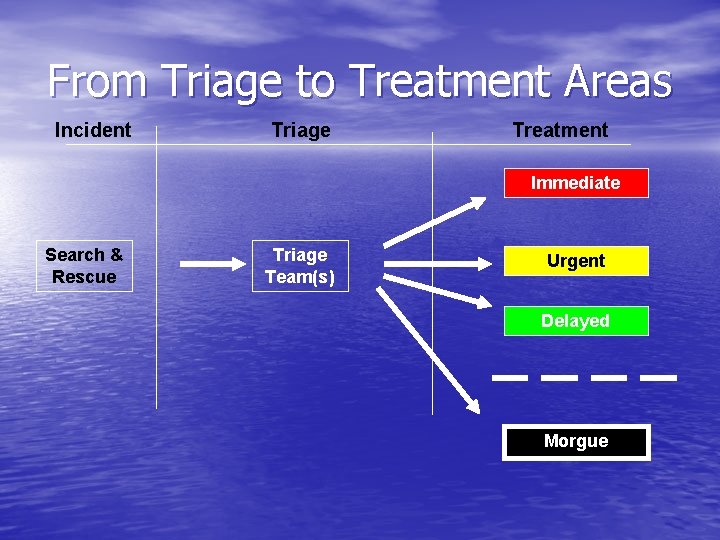
From Triage to Treatment Areas Incident Triage Treatment Immediate Search & Rescue Triage Team(s) Urgent Delayed Morgue
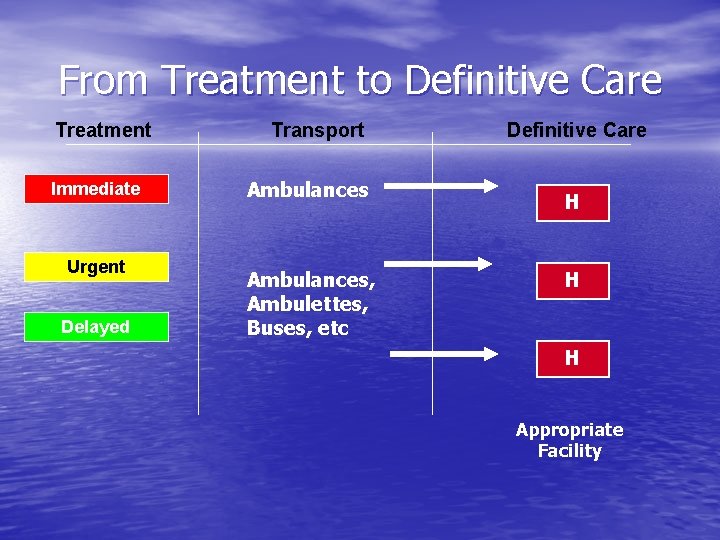
From Treatment to Definitive Care Treatment Immediate Urgent Delayed Transport Ambulances, Ambulettes, Buses, etc Definitive Care H H H Appropriate Facility

- Slides: 70