
Smart Parents Safe Kids Why Home Safety Matters

- Slides: 40
Smart Parents Safe Kids Why Home Safety Matters Introductory Webinar 1
Our Mission Keep all kids safe from preventable injuries View video. 2
Our Promise Skinned knees, bruised shins, and scraped elbows happen. Those are the telltale signs of a curious child exploring the world, seeking adventure. We focus on the serious injuries. We protect children from disabling injuries that don’t have to happen. The vast number of serious injuries to children are preventable with simple precautions. Safe Kids California and 18 coalitions across the state work to do everything we can so kids can grow up to be and do whatever they can imagine. 3
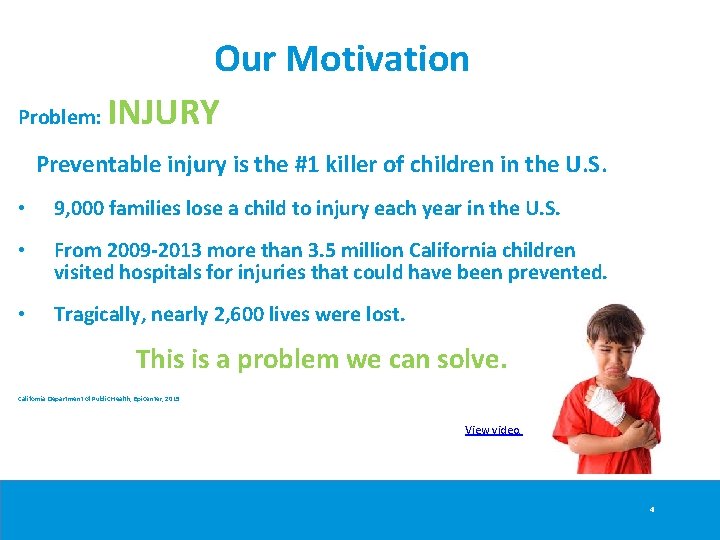
Our Motivation Problem: INJURY Preventable injury is the #1 killer of children in the U. S. • 9, 000 families lose a child to injury each year in the U. S. • From 2009 -2013 more than 3. 5 million California children visited hospitals for injuries that could have been prevented. • Tragically, nearly 2, 600 lives were lost. This is a problem we can solve. California Department of Public Health, Epi. Center, 2015 View video. 4
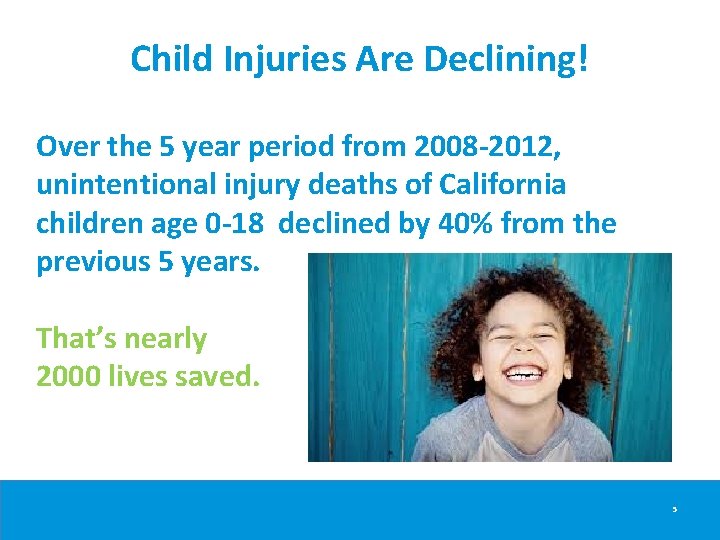
Child Injuries Are Declining! Over the 5 year period from 2008 -2012, unintentional injury deaths of California children age 0 -18 declined by 40% from the previous 5 years. That’s nearly 2000 lives saved. 5
Report to the Nation: Protecting Children in Your Home The Research • “Report to the Nation: Protecting Children in Your Home” is based on a survey of 1, 010 parents of children 12 and under. • What parents are concerned about and what they do or don’t do to keep kids safe in the home. • Research made possible by funding from Nationwide. They have a website on child injury prevention, Make. Safe. Happen. com. Working with Nationwide Children’s Hospital, they have created the Make. Safe. Happen app, which can be downloaded from their website. 6
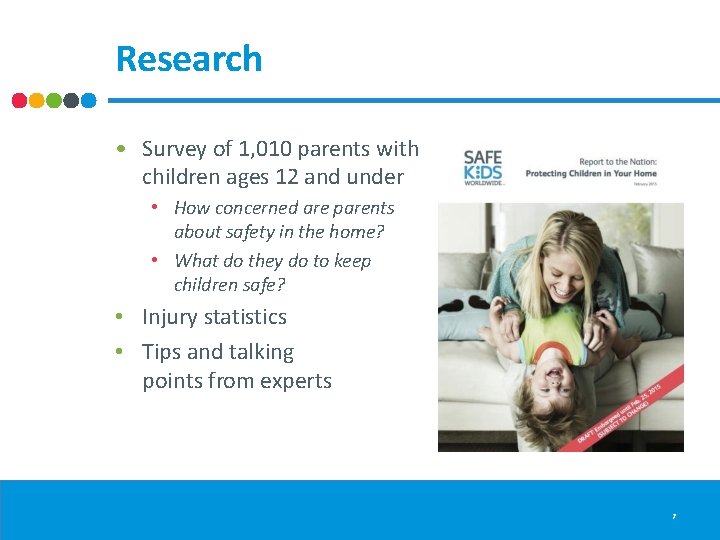
Research • Survey of 1, 010 parents with children ages 12 and under • How concerned are parents about safety in the home? • What do they do to keep children safe? • Injury statistics • Tips and talking points from experts 7
Research 8
Research 9
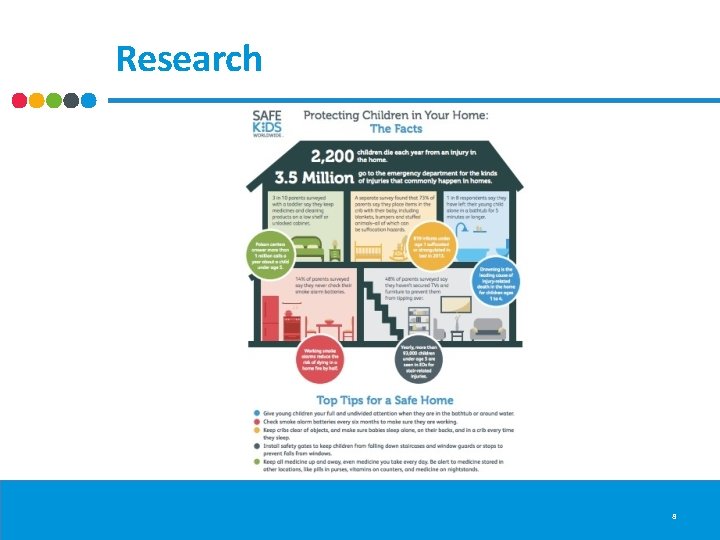
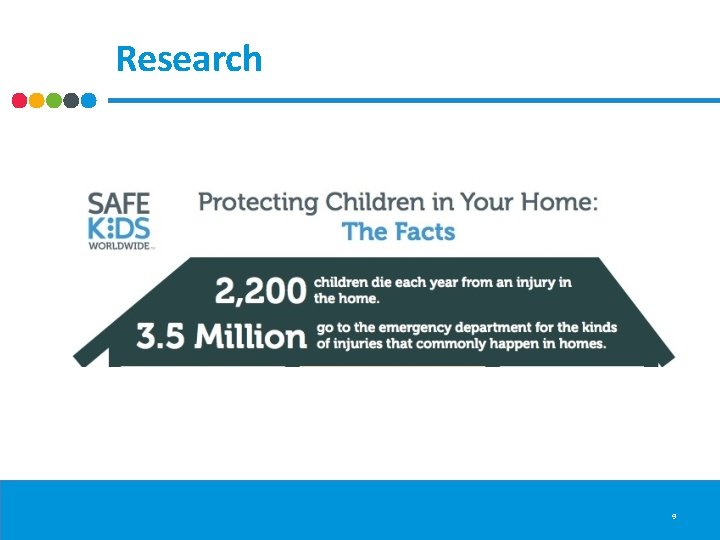
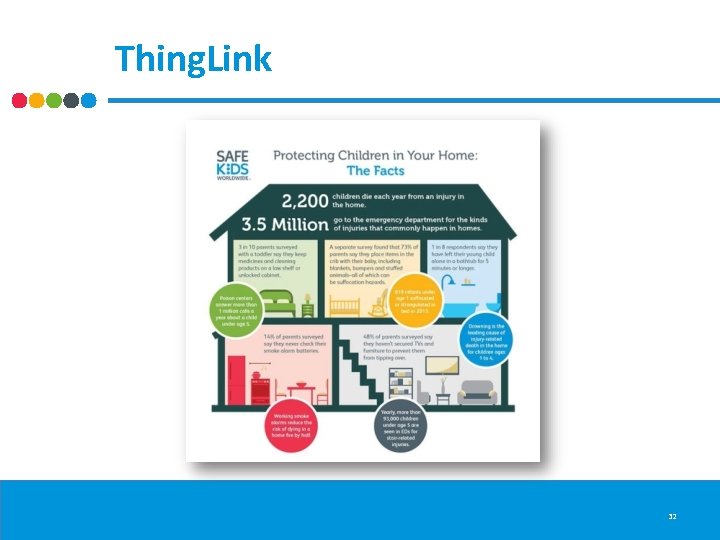
The Facts The Findings • Every day, six children die from an injury in the home, and 10, 000 go to the emergency department for the kinds of injuries that commonly happen in homes. • Every parent wants to protect their children, and we found that parents consider their own home to be safer than most. In fact, 77 percent of parents surveyed feel that their home is safer than most. Parents just can’t imagine it could happen to them, but it happens far too often. • Sadly, 2, 200 kids die from an injury in the home every year. • The good news is, we know how to prevent these injuries, and parents can take simple steps to protect their kids. 10
Research 11
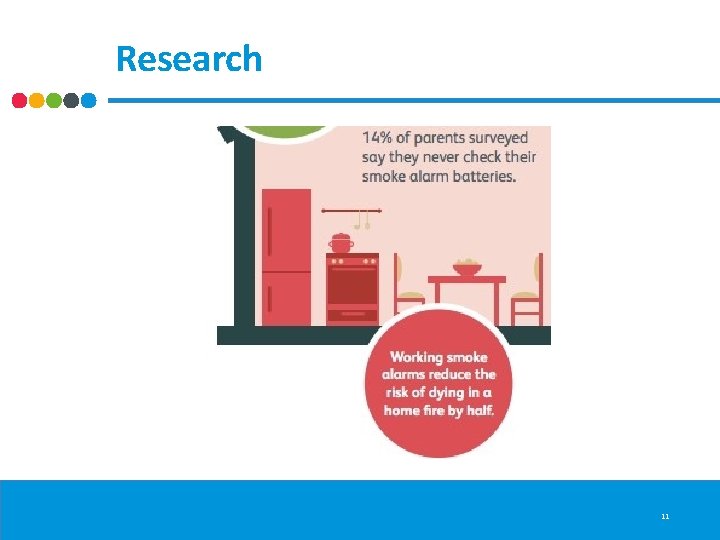
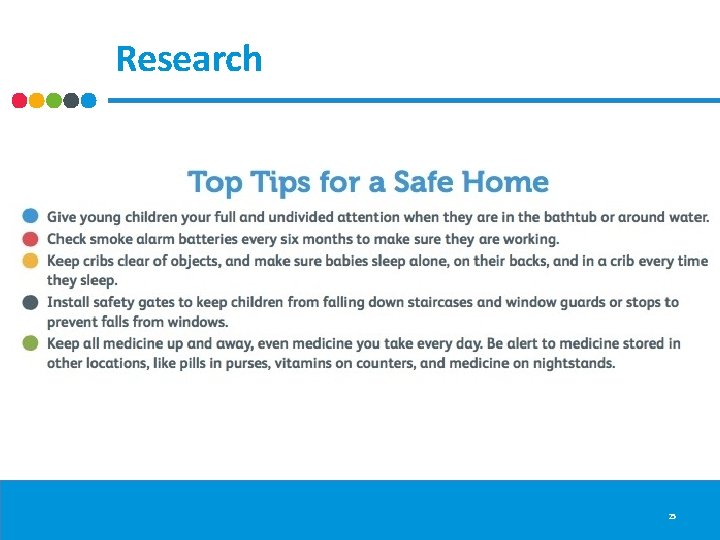
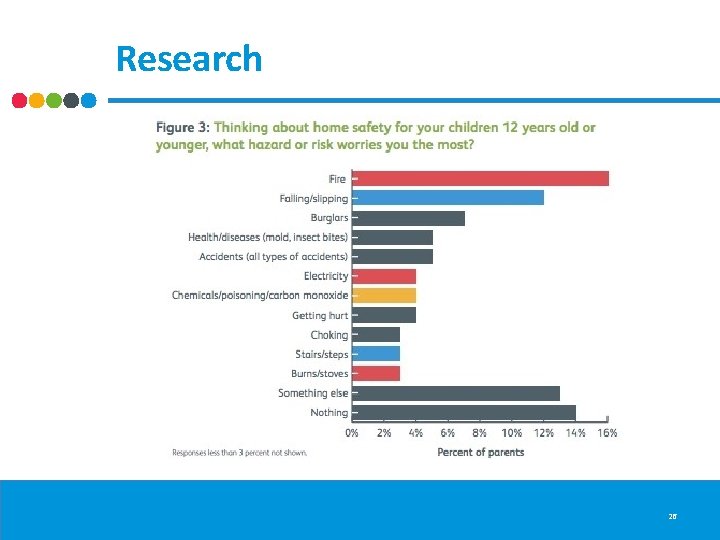
The Facts Fire and Carbon Monoxide • While parents say they are worried about fire safety, and 96 percent report they have a smoke alarm, 14 percent said they never check their smoke alarm battery. • Working smoke alarms reduce the risk of dying in a home fire by half. TIP Check smoke alarm batteries every six months to make sure they are working. TIP Install carbon monoxide alarms on every level of the home, especially near sleeping areas. 12
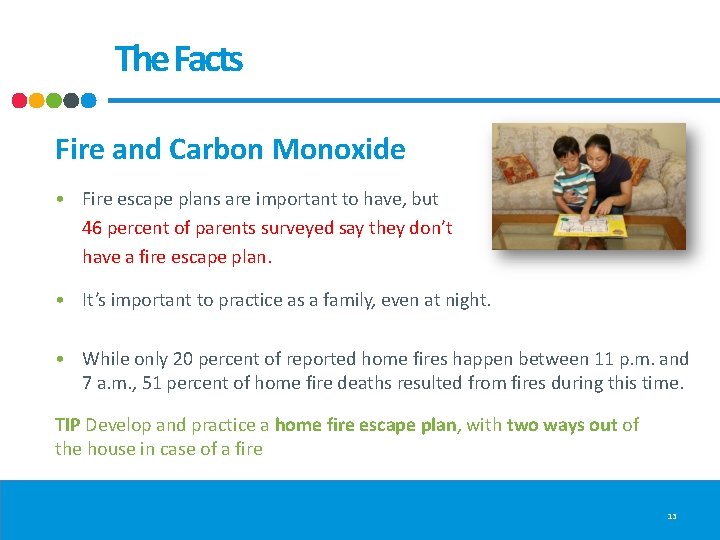
The Facts Fire and Carbon Monoxide • Fire escape plans are important to have, but 46 percent of parents surveyed say they don’t have a fire escape plan. • It’s important to practice as a family, even at night. • While only 20 percent of reported home fires happen between 11 p. m. and 7 a. m. , 51 percent of home fire deaths resulted from fires during this time. TIP Develop and practice a home fire escape plan, with two ways out of the house in case of a fire 13
The Facts Kitchen Safety • A separate study* found that on average, there are five emergency department visits every hour for an injury related to a stove for children and adults, and that 41 percent of injuries are among children 19 and under. TIP Cook on the back burner of the stove and keep pot handles turned away from the edge. *Am J Emerg Med. 2013 Nov; 31(11): 1571 -7. doi: 10. 1016/j. ajem. 2013. 07. 034. Epub 2013 Sep 14. Stove-related injuries treated in EDs in the United States, 1990 -2010. Sivam A 1, Rochette LM, Smith GA. 14
Research Right click to View video. 15
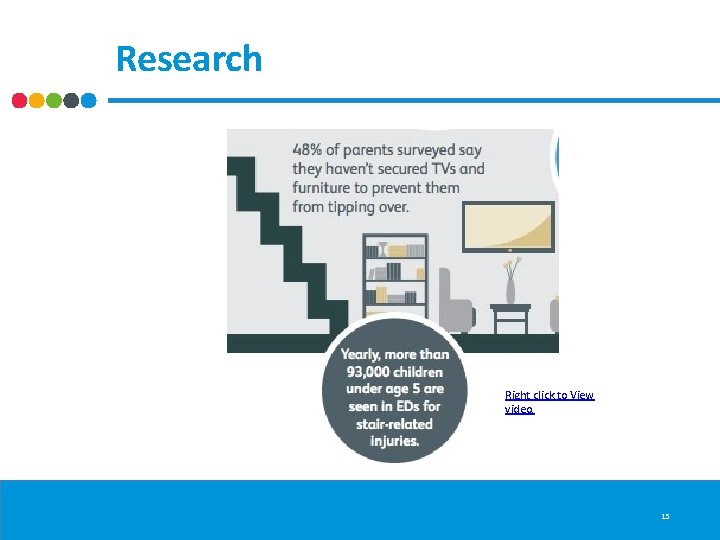
The Facts Preventing TV and Furniture Tip-Overs • Forty-two percent of parents in our survey say they have found their child climbing on bureaus, dressers, bookshelves or counters. • Serious injuries can happen when furniture and other heavy items become unbalanced. • According to the U. S. Consumer Product Safety Commission, 18, 900 children ages 9 and under are seen in emergency departments each year from injuries caused by TV, furniture and appliance tip-overs. • We also learned that 48 percent of parents say they haven’t secured TVs and furniture to prevent them from tipping over. TIP Secure TVs by mounting them to the wall or placing them on a low, stable piece of furniture. Use brackets, braces or wall straps to secure top-heavy or unstable pieces of furniture to the wall. 16
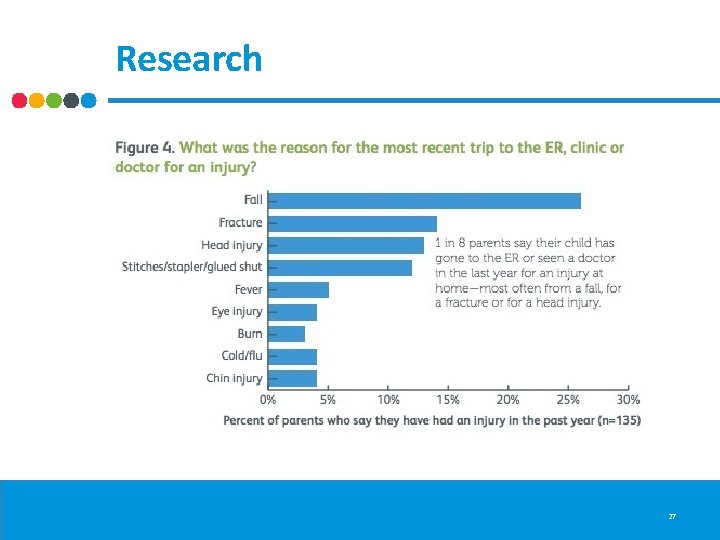
The Facts Preventing Falls • A separate study* found that on average, each year more than 93, 000 children under the age of 5 are seen in emergency departments for stair- related injuries. TIP Use approved safety gates at the top and bottom of stairs, and attach them to the wall if possible. * Pediatrics. 2012 Apr; 129(4): 721 -7. doi: 10. 1542/peds. 2011 -2314. Epub 2012 Mar 12. Stair-related injuries to young children treated in US emergency departments, 1999 -2008. Zielinski AE 1, Rochette LM, Smith GA. 17
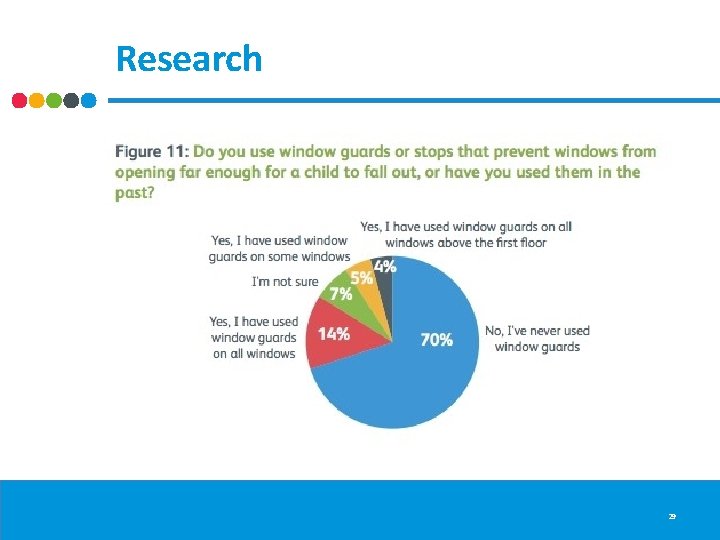
The Facts Window Safety • Window falls are preventable, yet 70 percent of parents say they have never used window guards or stops that prevent these types of falls. • Each year, 3, 300 children are injured from falling out of a window. TIP Install window guards or window stops to keep children from falling out of windows. 18
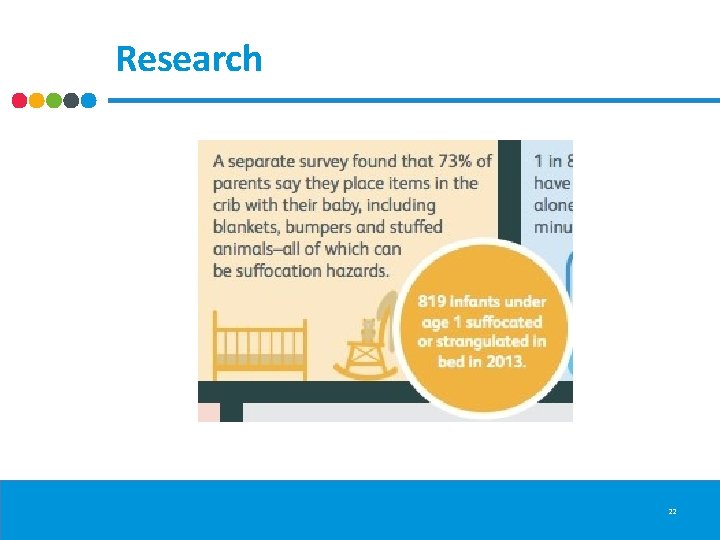
The Facts Window Safety • In addition to the risk of falls, parents also need to consider window cord blinds. • On average, a child dies almost every month from strangling in window blind cords. • We found that 73 percent of surveyed parents say they have heard of children strangling in window blind cords, • But only 23 percent say they have made changes to their window blinds such as removing the cord or installing tension devices. TIP Keep cords and strings out of reach of children, and move cribs, beds and furniture away from windows and cords. 19
Research 20
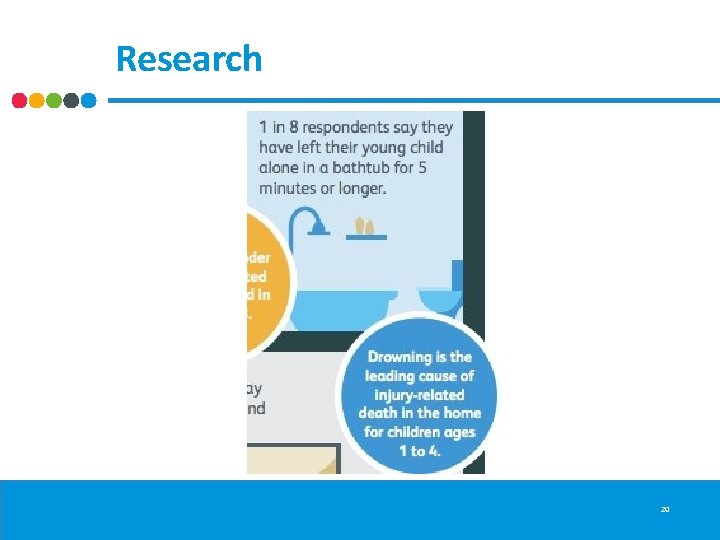
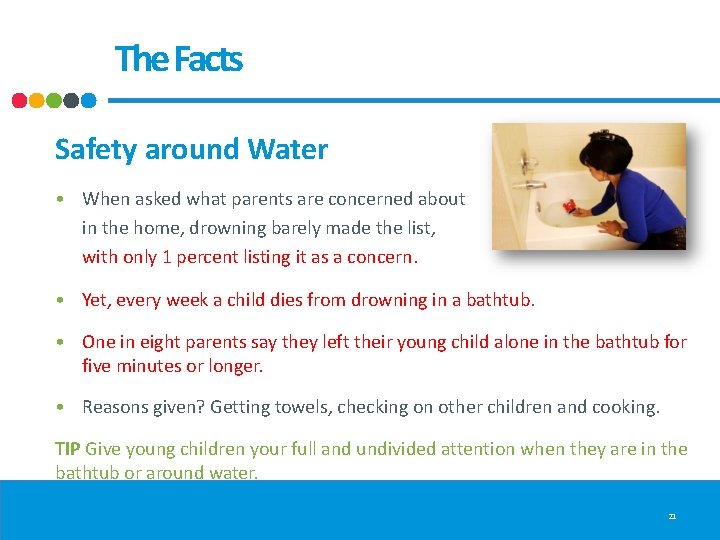
The Facts Safety around Water • When asked what parents are concerned about in the home, drowning barely made the list, with only 1 percent listing it as a concern. • Yet, every week a child dies from drowning in a bathtub. • One in eight parents say they left their young child alone in the bathtub for five minutes or longer. • Reasons given? Getting towels, checking on other children and cooking. TIP Give young children your full and undivided attention when they are in the bathtub or around water. 21
Research 22
Research 23
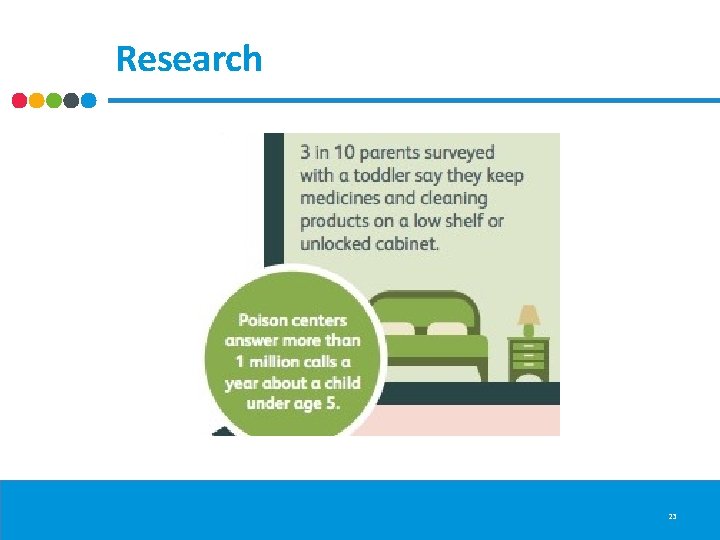
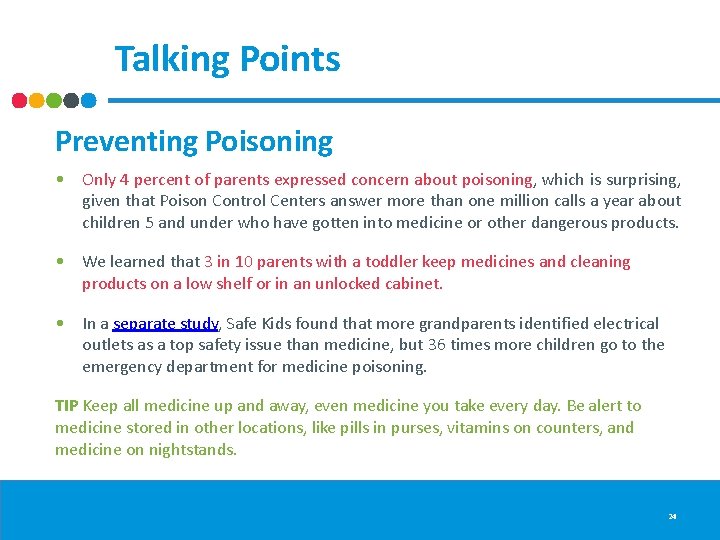
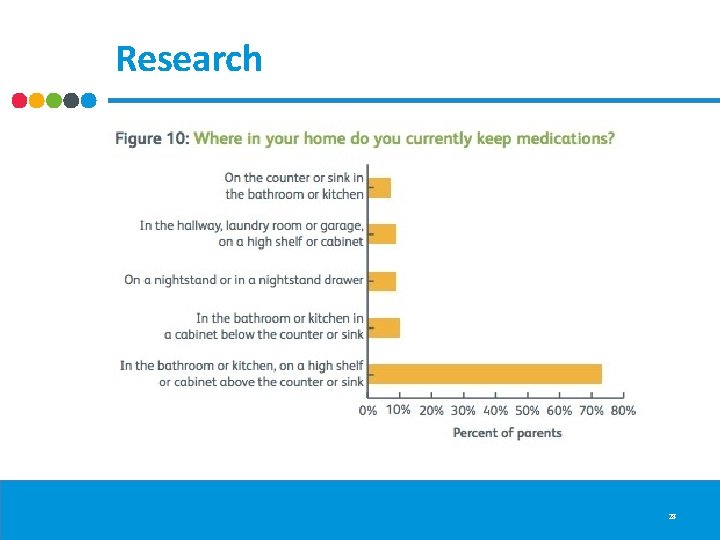
Talking Points Preventing Poisoning • Only 4 percent of parents expressed concern about poisoning, which is surprising, given that Poison Control Centers answer more than one million calls a year about children 5 and under who have gotten into medicine or other dangerous products. • We learned that 3 in 10 parents with a toddler keep medicines and cleaning products on a low shelf or in an unlocked cabinet. • In a separate study, Safe Kids found that more grandparents identified electrical outlets as a top safety issue than medicine, but 36 times more children go to the emergency department for medicine poisoning. TIP Keep all medicine up and away, even medicine you take every day. Be alert to medicine stored in other locations, like pills in purses, vitamins on counters, and medicine on nightstands. 24
Research 25
Research 26
Research 27
Research 28
Research 29
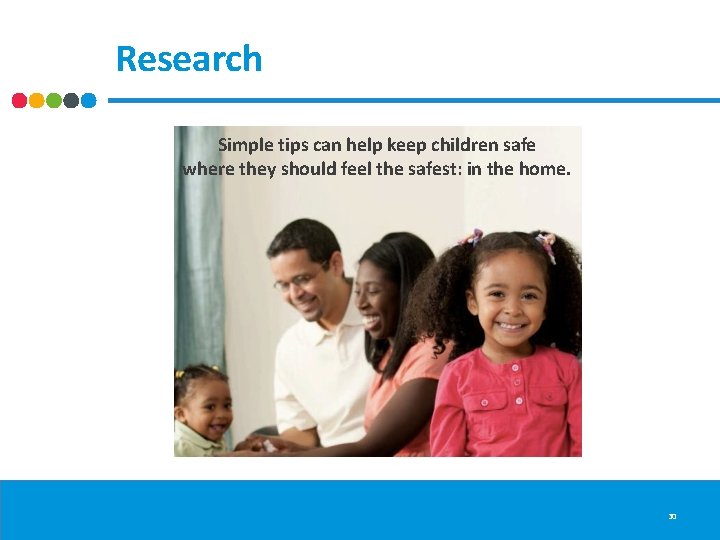
Research Simple tips can help keep children safe where they should feel the safest: in the home. 30
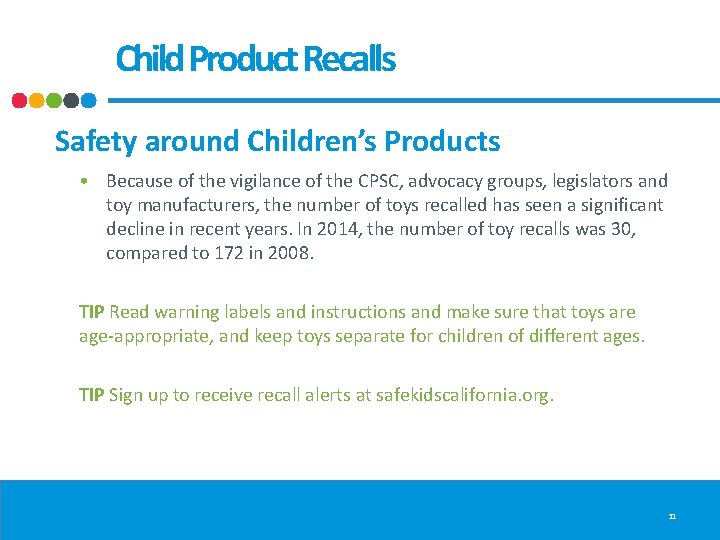
Child Product Recalls Safety around Children’s Products • Because of the vigilance of the CPSC, advocacy groups, legislators and toy manufacturers, the number of toys recalled has seen a significant decline in recent years. In 2014, the number of toy recalls was 30, compared to 172 in 2008. TIP Read warning labels and instructions and make sure that toys are age-appropriate, and keep toys separate for children of different ages. TIP Sign up to receive recall alerts at safekidscalifornia. org. 31
Thing. Link 32
Smart Parents, Safe Kids • Educate families on how to protect children from unintentional injuries in and around the home. • Raise public awareness to influence changes in knowledge and behavior. • Promote key messages in the community, in the media and through partner organizations. • Engage local partners to enhance the impact of outreach efforts in home safety. 33
Smart Parents, Safe Kids Program materials hosted on Safe Kids California website: www. https: //safekidscalifornia. org • Top Navigation Button: Home Safety 34
Smart Parents, Safe Kids Program materials hosted on Safe Kids California website: www. https: //safekidscalifornia. org • Top Navigation Button: Home Safety 35
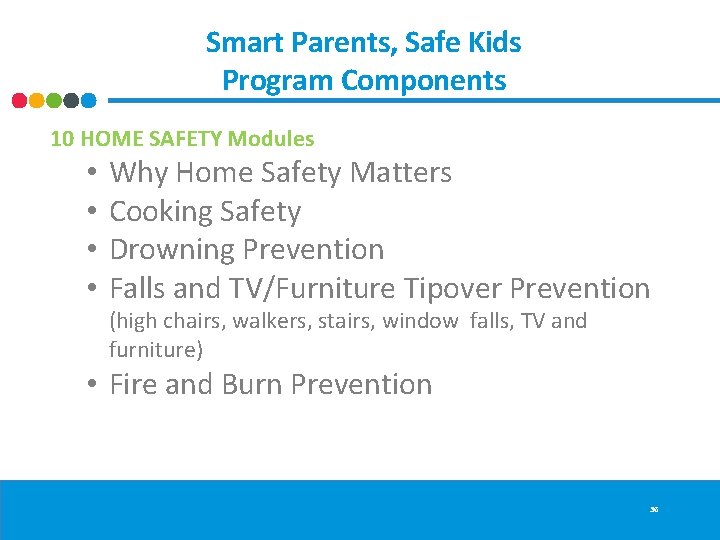
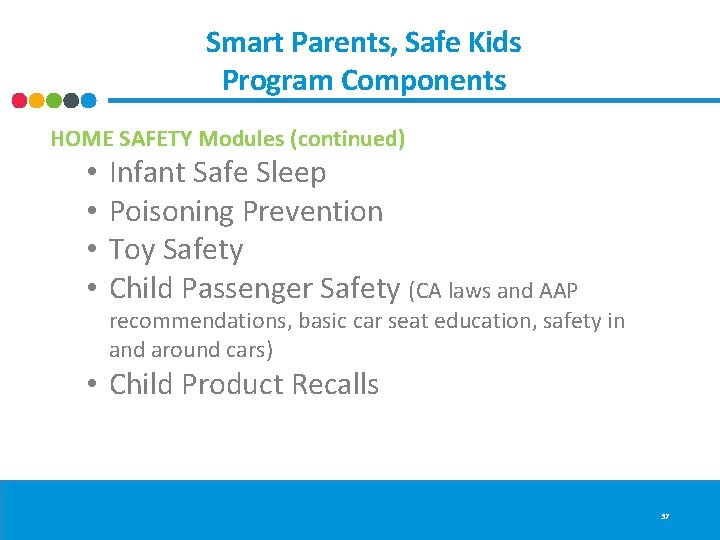
Smart Parents, Safe Kids Program Components 10 HOME SAFETY Modules • • Why Home Safety Matters Cooking Safety Drowning Prevention Falls and TV/Furniture Tipover Prevention (high chairs, walkers, stairs, window falls, TV and furniture) • Fire and Burn Prevention 36
Smart Parents, Safe Kids Program Components HOME SAFETY Modules (continued) • • Infant Safe Sleep Poisoning Prevention Toy Safety Child Passenger Safety (CA laws and AAP recommendations, basic car seat education, safety in and around cars) • Child Product Recalls 37
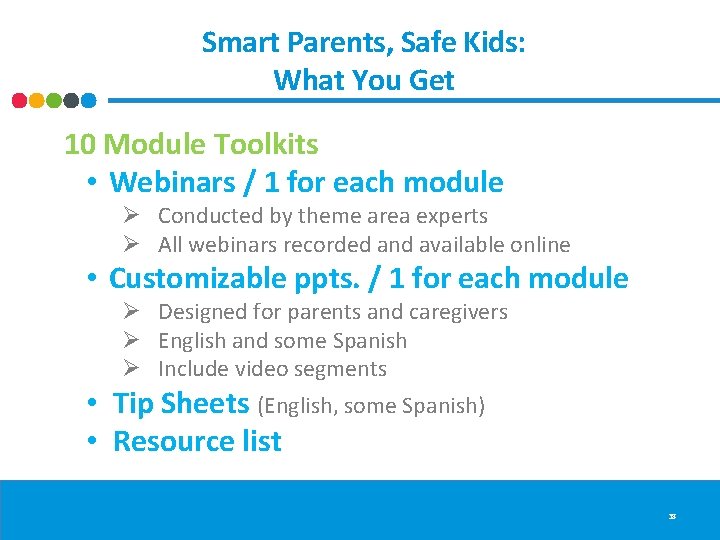
Smart Parents, Safe Kids: What You Get 10 Module Toolkits • Webinars / 1 for each module Ø Conducted by theme area experts Ø All webinars recorded and available online • Customizable ppts. / 1 for each module Ø Designed for parents and caregivers Ø English and some Spanish Ø Include video segments Tip Sheets (English, some Spanish) • • Resource list 38
QUESTIONS 39
Thank You! • Katie Smith • (916) 244 -1964 • ksmith@thecapcenter. org 40