
Smart Garage Door System May 03 03 Client


- Slides: 35
Smart Garage Door System May 03 -03 Client: Sr. Design Faculty Advisors: Dr. John Lamont Dr. Ralph Patterson Team Members: Dave Barto Kyle Leinen Ben Molayal Brodie Pederson 01 January 2022
Presentation Outline Introductory Materials Problem Statement Operating Environment Intended Uses/Users Assumptions and Limitations End Product Description Project Activity Description Accomplishments Approaches Definition Activities Research Activities Design Activities Implementation Activities Testing and Modification Activities Other Significant Activities Resources and Schedules Resource Requirements Schedules Closing Materials Project Evaluation Commercialization Recommendations for Additional Work Lessons Learned Risk and Risk Management Closing Summary
Problem Statement General Background: Auto-Closing Garage Door System Convenience for homeowner Home security Technical Issues: Remote transmitting State of the Garage Door Signal Processing Operation of Garage Door Opener External Lighting Circuit
Operating Environment Located Inside Garage Operational at (–) 40 to 120 Degrees Fahrenheit Conditions Used with Chain or Screw Drive Openers Residential Systems Only Two-Door Garages
Intended Users/Uses Intended Users: Home Owners Family or Neighbors Intended Uses: Automatic Closure of the Garage Door ON/OFF Capabilities NOT intended for Commercial or Industrial Use
Assumptions and Limitations Assumptions: Installed on Residential Grade Openers Only Power Source Maintained by the End User Obstruction Sensors Previously Installed Limitations: Door Opener must have external contacts Maximum of Two Garage Doors
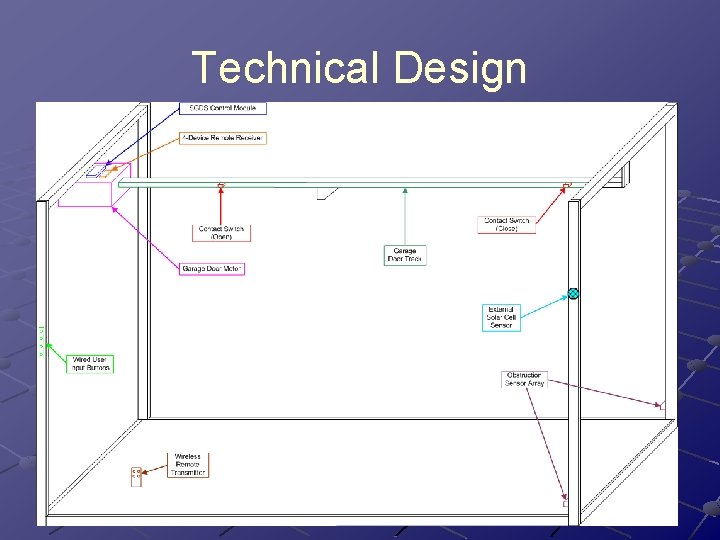
End Product Description Features: Rail-type Residential Grade Garage Door Systems Adjustable timer for Automatic Closure Two Garage Door Operation Override mode for leaving door open without timer Can be retrofitted for state-controlled openers
What Has Been Done? Accomplishments: Defined the Problem Determined the Technical Design Located and Received all Parts Finished all Necessary Documentation Implementation of the Design Testing Final Documentation Oral Presentation to Industrial Review Panel
Possible Approaches Building a Transmitter/Receiver from scratch vs. Buying a Fabricated Unit Building a “Hard-Wired” Logic Circuit vs. Signal Processing Different Types of Sensors for Input n n n Pressure Pad for Tire Contact Limit Switches Magnetic Switches IR (Obstruction) Sensor Light Sensor Using Openers with Exterior Contacts vs. Determining the Internal Circuitry
Solution Approach Scenarios: Leaving Garage Returning Home Desire to have the Garage Door Open Sensing: Contact Switches Light Sensors
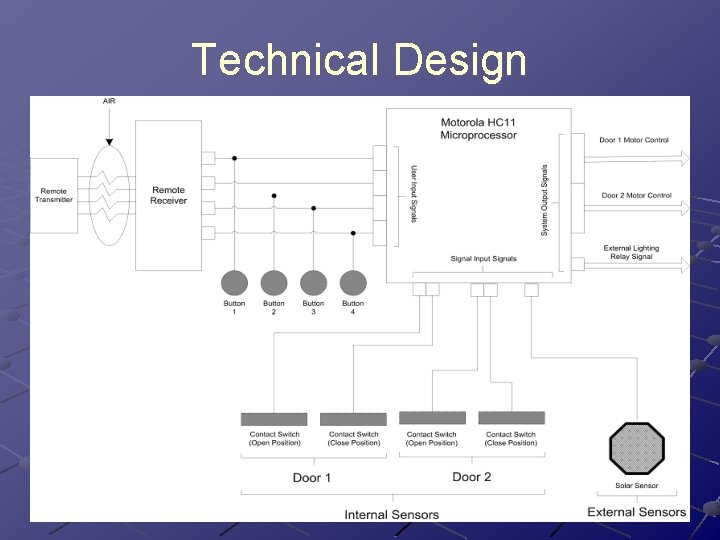
Final Project Definition Functionality: Operative in any environment Timers n n Door Timer Lights Timer Signal Processing n n Four-button Controller § Safety and Environmental n n Light Sensor Contact Limit Switches Micro-Controller (HC 11) Power Relays § Transmitter/Receiver Wall Mounting
Research Activities Research: Internet and Advisors n n Transmitter/Receiver – located and purchased online Relays – located and purchased online Micro-controllers – used ISUs HC 11 Sensors – Door Store, Previous Lab Projects Free Door Opener: Sears 1/3 H. P. Rail type - Chain driven n n Manufactured in 1992 Not Compatible with Recent Obstruction Sensors
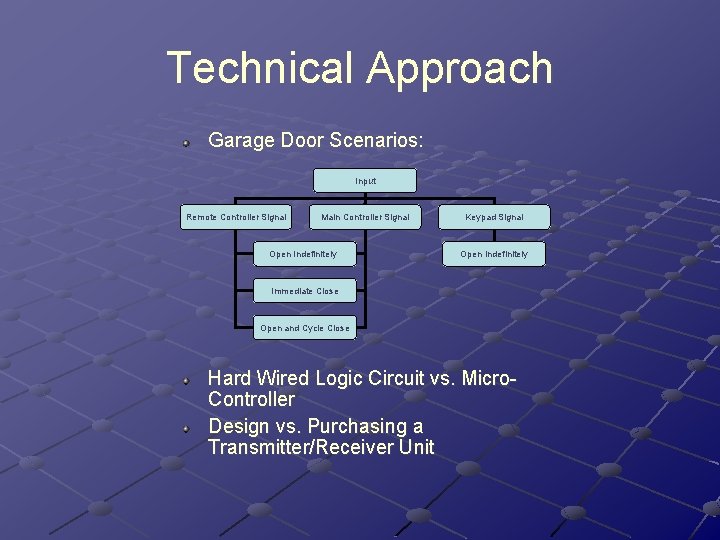
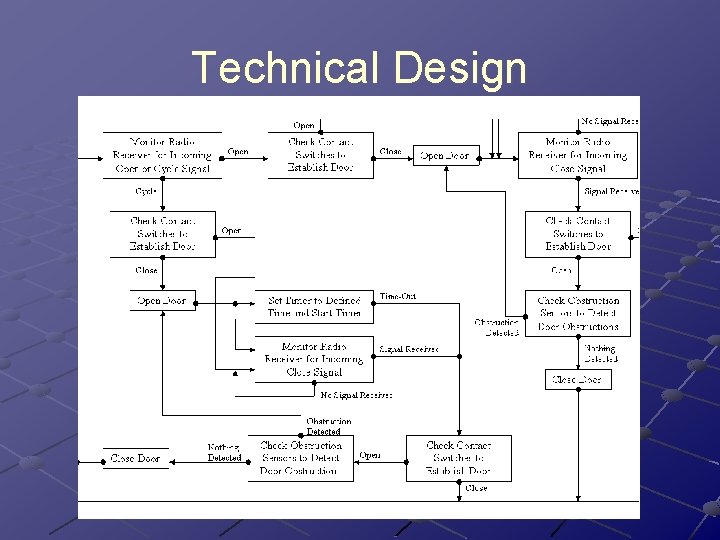
Technical Approach Garage Door Scenarios: Input Remote Controller Signal Main Controller Signal Open Indefinitely Keypad Signal Open Indefinitely Immediate Close Open and Cycle Close Hard Wired Logic Circuit vs. Micro. Controller Design vs. Purchasing a Transmitter/Receiver Unit
Technical Design
Technical Design
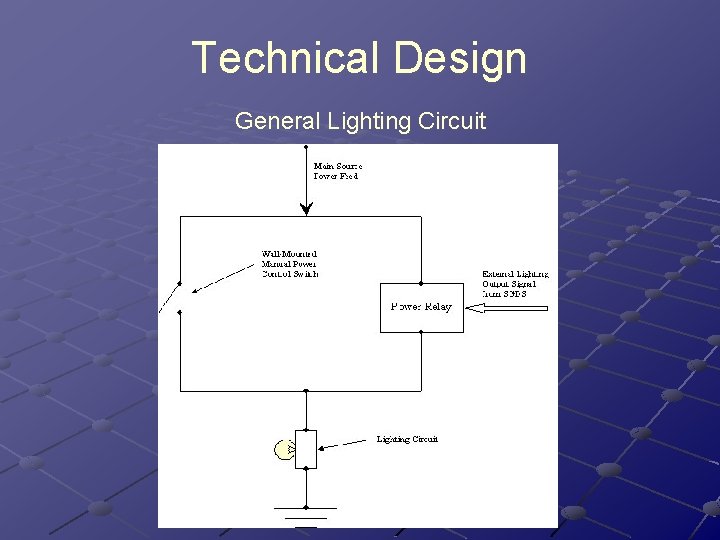
Technical Design General Lighting Circuit
Technical Design
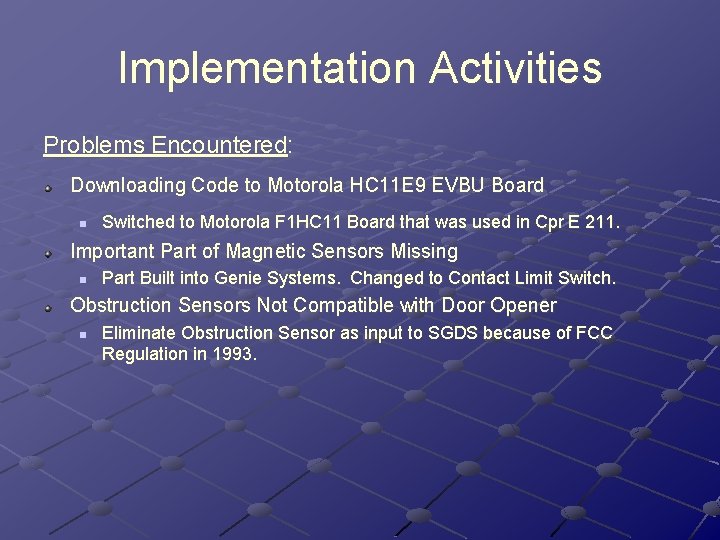
Implementation Activities Problems Encountered: Downloading Code to Motorola HC 11 E 9 EVBU Board n Switched to Motorola F 1 HC 11 Board that was used in Cpr E 211. Important Part of Magnetic Sensors Missing n Part Built into Genie Systems. Changed to Contact Limit Switch. Obstruction Sensors Not Compatible with Door Opener n Eliminate Obstruction Sensor as input to SGDS because of FCC Regulation in 1993.
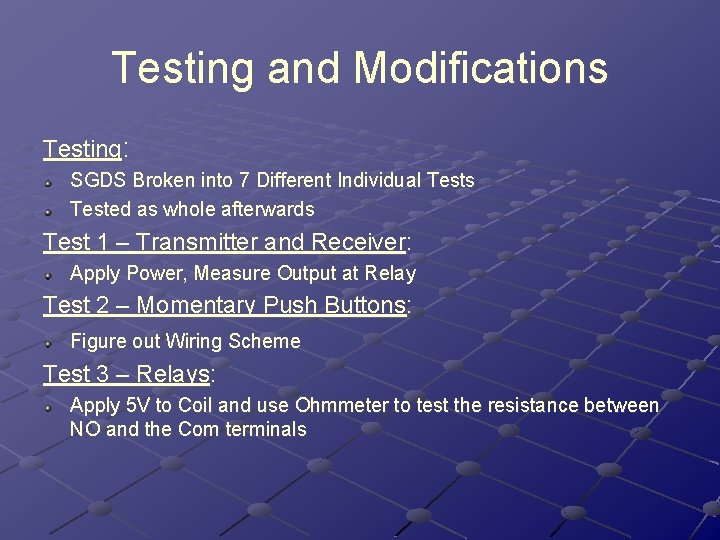
Testing and Modifications Testing: SGDS Broken into 7 Different Individual Tests Tested as whole afterwards Test 1 – Transmitter and Receiver: Apply Power, Measure Output at Relay Test 2 – Momentary Push Buttons: Figure out Wiring Scheme Test 3 – Relays: Apply 5 V to Coil and use Ohmmeter to test the resistance between NO and the Com terminals
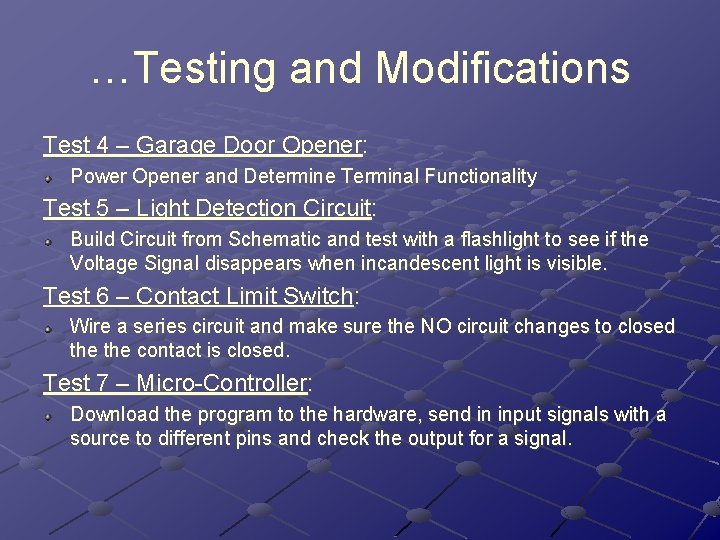
…Testing and Modifications Test 4 – Garage Door Opener: Power Opener and Determine Terminal Functionality Test 5 – Light Detection Circuit: Build Circuit from Schematic and test with a flashlight to see if the Voltage Signal disappears when incandescent light is visible. Test 6 – Contact Limit Switch: Wire a series circuit and make sure the NO circuit changes to closed the contact is closed. Test 7 – Micro-Controller: Download the program to the hardware, send in input signals with a source to different pins and check the output for a signal.
Other Significant Project Activities Relay Discussions with Jason Boyd Reporting and Necessary Documentation
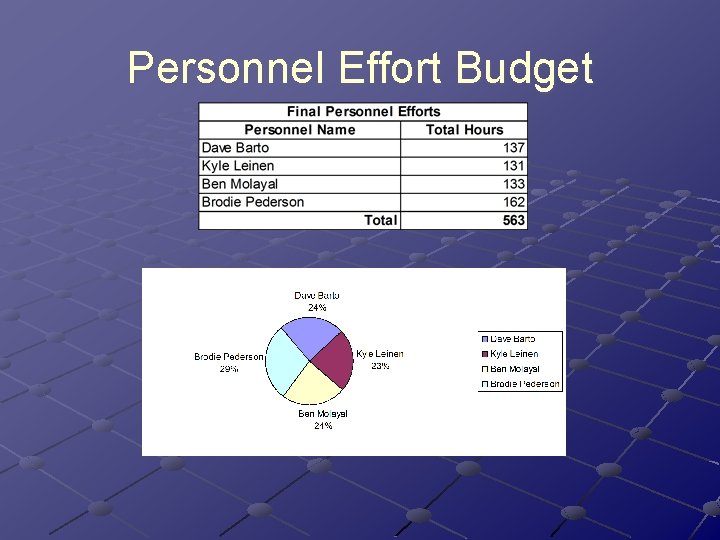
Personnel Effort Budget
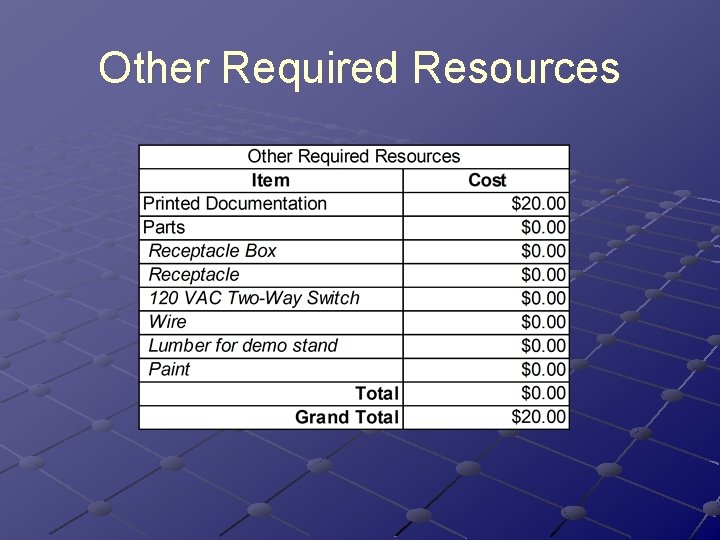
Other Required Resources
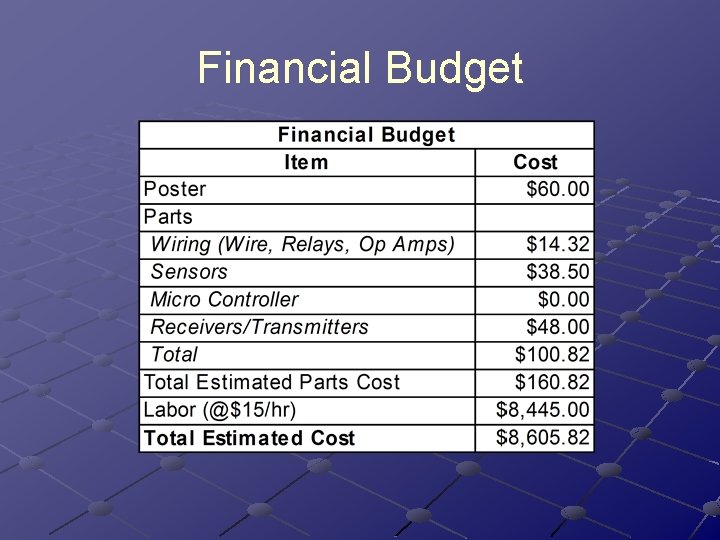
Financial Budget
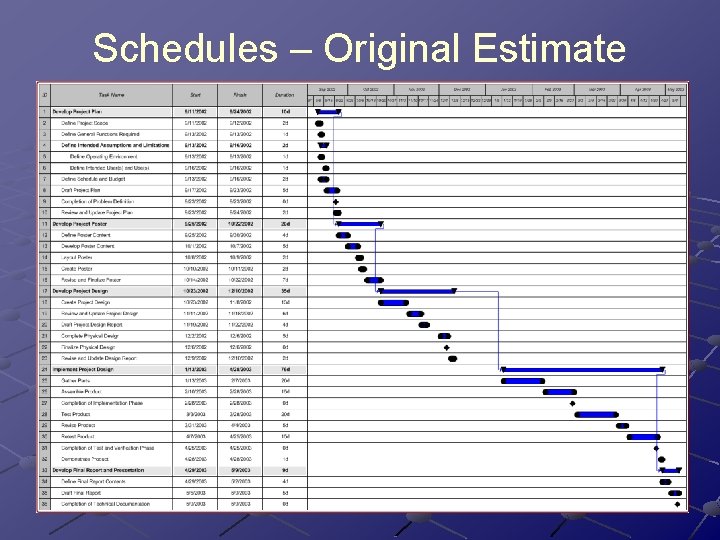
Schedules – Original Estimate
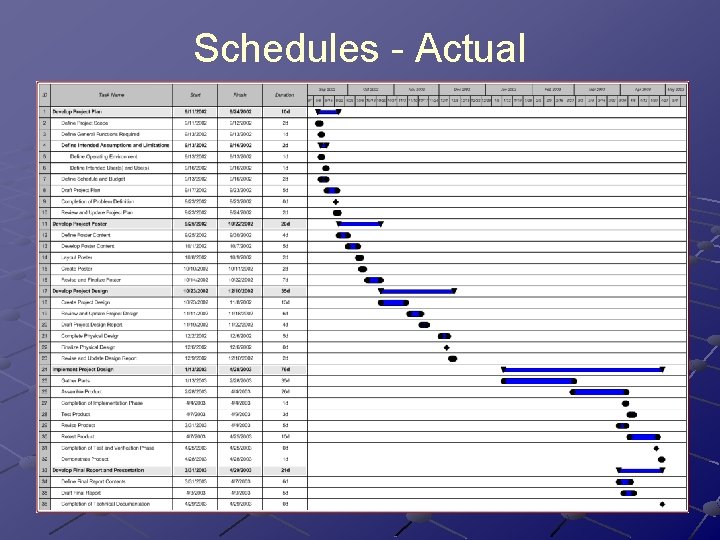
Schedules - Actual
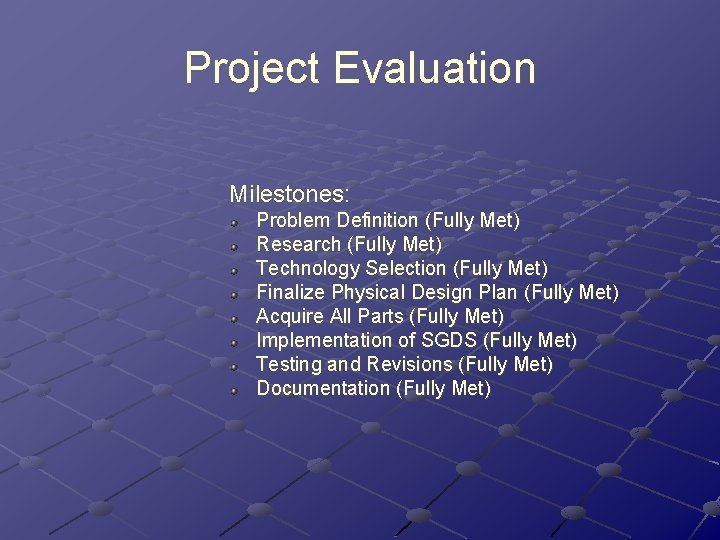
Project Evaluation Milestones: Problem Definition (Fully Met) Research (Fully Met) Technology Selection (Fully Met) Finalize Physical Design Plan (Fully Met) Acquire All Parts (Fully Met) Implementation of SGDS (Fully Met) Testing and Revisions (Fully Met) Documentation (Fully Met)
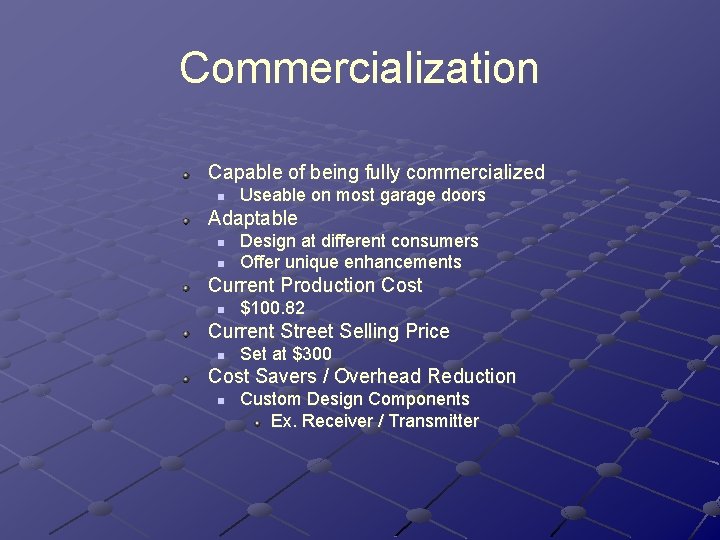
Commercialization Capable of being fully commercialized n Useable on most garage doors Adaptable n n Design at different consumers Offer unique enhancements Current Production Cost n $100. 82 Current Street Selling Price n Set at $300 Cost Savers / Overhead Reduction n Custom Design Components Ex. Receiver / Transmitter
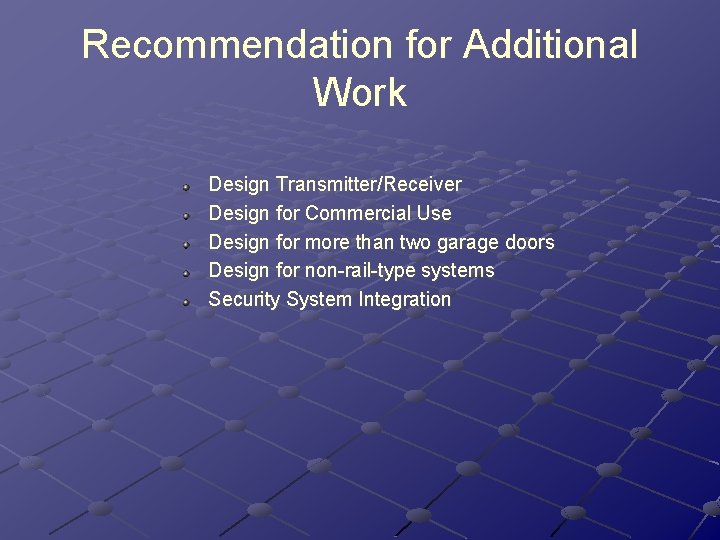
Recommendation for Additional Work Design Transmitter/Receiver Design for Commercial Use Design for more than two garage doors Design for non-rail-type systems Security System Integration
Lessons Learned No Delays Well Defined Project Specifications Communication Time Management Skills Resource Utilization
Risks and Risk Management Loss of a group member Parts are not available Accidental damage to parts Too many team donations
Closing Summary General Problem Auto-Closing Garage Door System Convenience for homeowner Home security Approaches Considered Building a Transmitter/Receiver from scratch vs. Buying a Fabricated Unit Building a “Hard-Wired” Logic Circuit vs. Signal Processing Different Types of Sensors for Input n n n Pressure Pad for Tire Contact Switch Light Sensor Using Openers with Exterior Contacts vs. Determining the Internal Circuitry
Closing Summary – continued Resultant Solution Purchased a Transmitter/Receiver Used Signal Processing n n Motorola HC 11 Power Relays Types of Sensors used n n Contact Limit Switch Light Sensor Used Opener with Exterior Contacts
Summary Technologies Role Societies Dependence Human Error Need of Smart Garage Door System n n Revolutionary Utilization of Sensory Input Interprets User’s Needs Offers Homeowners Peace of Mind
Questions?