
Smart Accessibility on Connected TV Accessibility standards for
Smart Accessibility on Connected TV Accessibility standards for audiovisual media Simão Campos* Counsellor, ITU-T Study Group 16 "Multimedia" Telecommunication Standardization Bureau, ITU simao. campos@itu. int ----------------------------------------------------------------------------------*Short version presented by Christoph Dosch (Chairman ITU-R SG 6 (broadcasting service) on behalf of Simão Campos
Contents • • Introduction to ITU Importance of standardization ICTs and rights of persons with disabilities Accessibility standards and ITU Extra slides • UN CRPD • Examples of ITU standards helping persons with disabilities
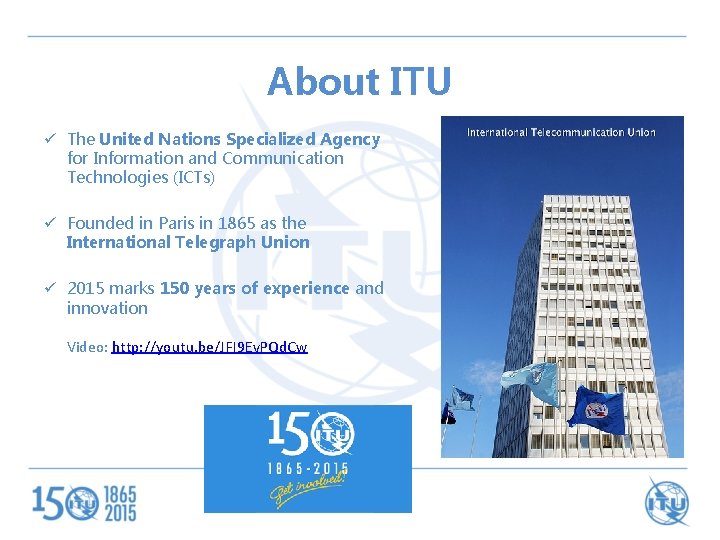
About ITU ü The United Nations Specialized Agency for Information and Communication Technologies (ICTs) ü Founded in Paris in 1865 as the International Telegraph Union ü 2015 marks 150 years of experience and innovation Video: http: //youtu. be/JFI 9 Ev. PQd. Cw
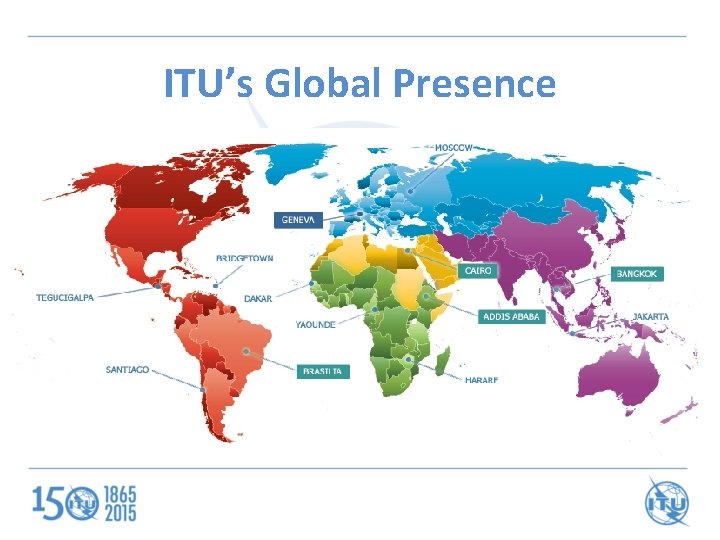
ITU’s Global Presence
A sample of ITU’s private sector members
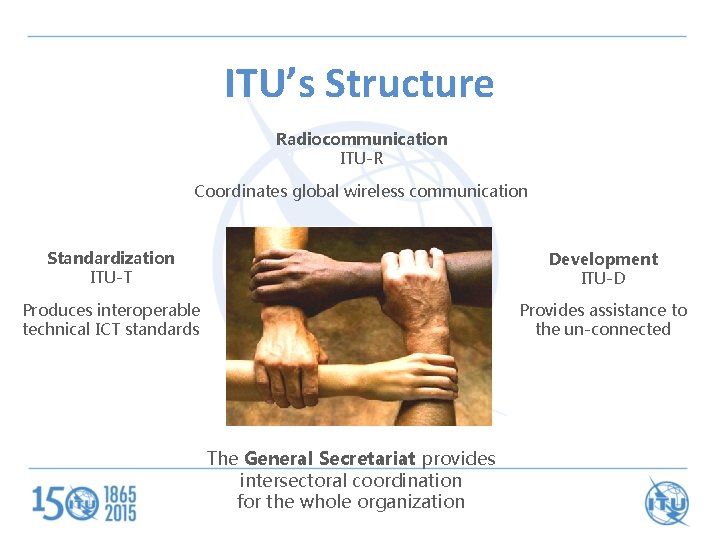
ITU’s Structure Radiocommunication ITU-R Coordinates global wireless communication Standardization ITU-T Development ITU-D Produces interoperable technical ICT standards Provides assistance to the un-connected The General Secretariat provides intersectoral coordination for the whole organization
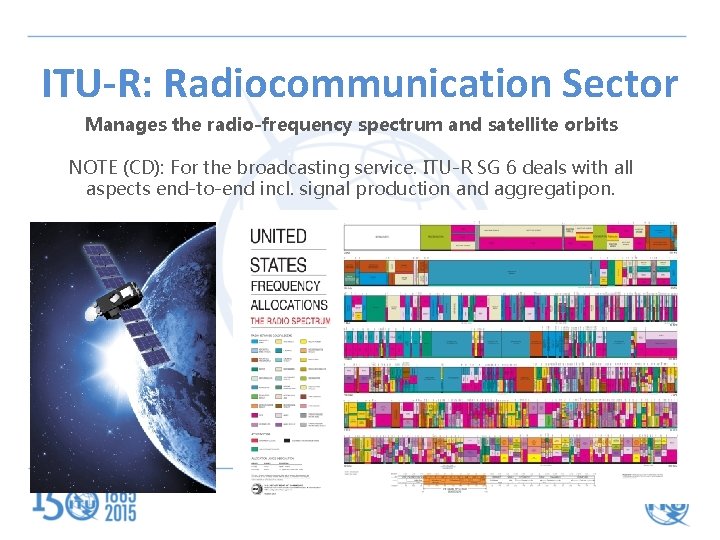
ITU-R: Radiocommunication Sector Manages the radio-frequency spectrum and satellite orbits NOTE (CD): For the broadcasting service. ITU-R SG 6 deals with all aspects end-to-end incl. signal production and aggregatipon.
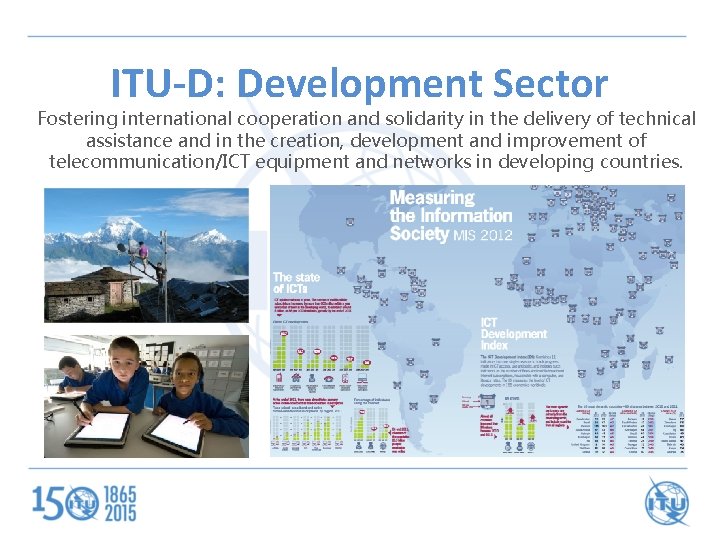
ITU-D: Development Sector Fostering international cooperation and solidarity in the delivery of technical assistance and in the creation, development and improvement of telecommunication/ICT equipment and networks in developing countries.
ITU-T: Standardization Sector Provides a neutral platform where governments and the private sector develop international standards covering all fields of telecommunications. Defines tariff and accounting principles for international telecommunication services.
Importance of standardization
Why is standardization important? 1. Technical compatibility (Interoperability) 2. Standards promote innovation, competition and international trade 3. Allows end users to enjoy wider choice range of services and products, richer functionality and lower costs with mainstreamed accessibility features 4. Facilitates transfer of technology between developed and developing countries and reduces the digital divide
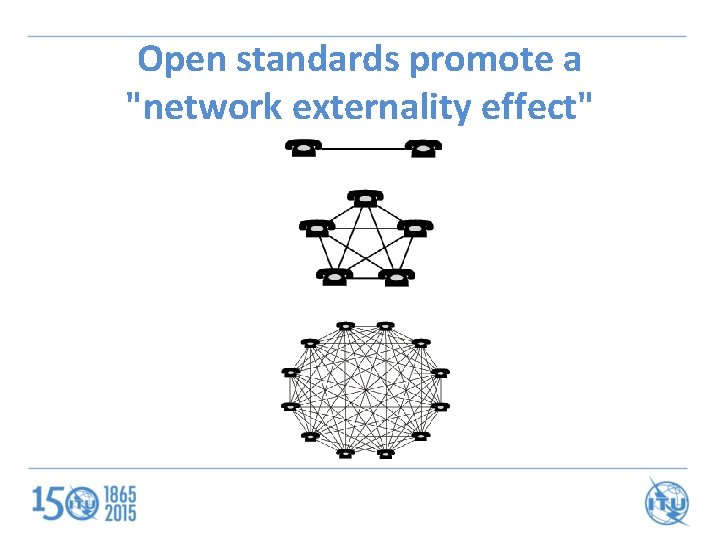
Open standards promote a "network externality effect"
Why accessibility? • Large number of persons affected – Disabilities touch 15% of world population; 80% live in low income countries • Increasing number of countries ratifying UN Convention on Rights of Persons with Disabilities – Consequences in legislation & regulation • It goes beyond persons with disabilities – Children, functional illiterate, elderly, … • Mainstreaming is important: – Human rights – Societal efficiency – Drives down cost, increases user base • An unanswered question: How to provide accessible ICT services in a cost effective manner? – Standards! – Universal design
Intersector Rapporteur Group on Audiovisual Media Accessibility (IRG-AVA) • Harmonized development of standards for audiovisual media accessibility across ITU-T and ITU-R – Survey of possible work items • ITU-R and ITU-T working together on making audiovisual media accessible – ITU-R Study Groups 6 (Broadcasting service) – ITU-T SG 16 (Multimedia) – ITU-T SG 9 (Broadband cable and TV) • Home page: http: //itu. int/en/irg/ava
Other experts groups • Joint Coordination Activity on Accessibility and Human Factors (JCAAHF) • Dynamic Coalition on Accessibility and Disability (DCAD) at the Internet Governance Forum (IGF) • ITU-T Focus Group on Audiovisual Media Accessibility (FG AVA) (concluded Oct. 2013; work transferred to ITU-T SG 16)
ITU and IPC IPTV Application Challenge Better quality of life with international standards: an accessible world for all • Raising awareness of the importance of multimedia and multimodal audio-visual accessibility for everyone, especially persons with a variety of levels and types of disabilities. • Promoting innovative accessibility ideas to be further developed for actual deployment in systems built to ITU-T’s IPTV specifications. • Awarding ceremony and showcase at Rio Paralympics Games 2016. • A first prize of USD 5, 000 for individuals and small-to-medium enterprises (profit or non-profit). • Selected participants will have an opportunity to receive technical support to develop ITU-T IPTV application. • Call for Concept Papers at: http: //itu. int/challenges/iptv
Conclusion • ITU has been a pioneer in ICT standards for accessibility • International standards are necessary for affordable, inclusive, accessible services • ITU 193 member countries have approved a number of key media accessibility standards – And Study Groups are working on more • ITU has embraced accessibility also at an institutional level
We are connecting the world by working on making technology accessible to all and by including persons with disabilities. Help us in this valuable work by joining us at the ITU. Thank you!
- Slides: 18