
Small is beautiful AGL physical modeling and salt
Small is beautiful: AGL physical modeling and salt measurements N. Dyaur, R. Stewart, and L. Huang Houston May 16, 2013 1
Introduction & motivation • Why physical modeling? • AGL physical modeling system • Scaled models of resource interest – laser-etched glass – 3 D printed materials – Inclusions and injection • Fracture results • Ultrasonic measurements on salt & sediments 2
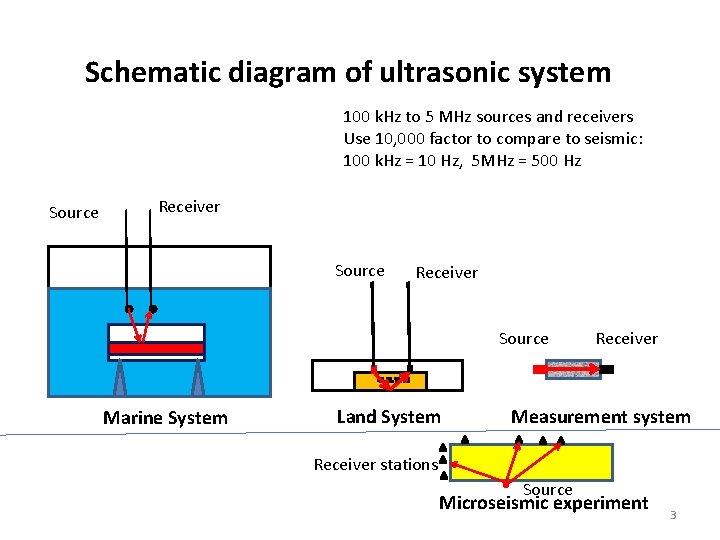
Schematic diagram of ultrasonic system 100 k. Hz to 5 MHz sources and receivers Use 10, 000 factor to compare to seismic: 100 k. Hz = 10 Hz, 5 MHz = 500 Hz Source Receiver Source Marine System Land System Receiver Measurement system Receiver stations Source Microseismic experiment 3

Marine system AGL Ultrasonic Research Systems Land System Ultrasonic measurement system 4
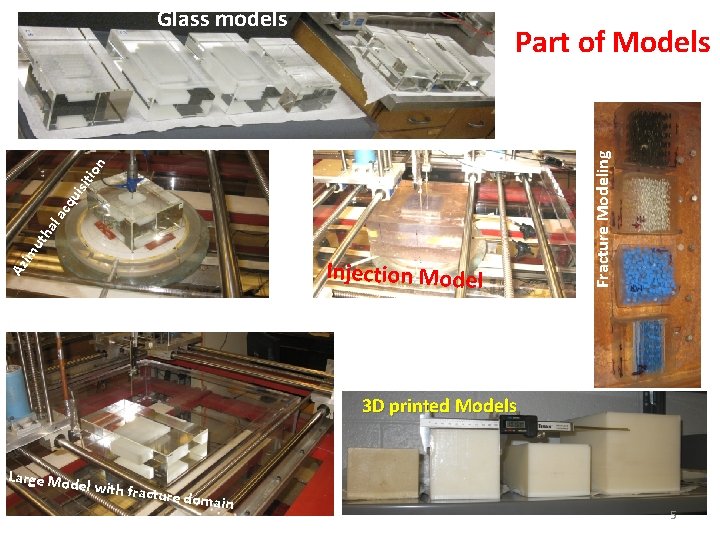
Glass models Injection Model Fracture Modeling Az im ut ha la cq uis iti o n Part of Models 3 D printed Models Large Mod el with fra cture dom a in 5

Example of CMP profiles in ultrasonic experiment in laser fractured glass (processed by Bode Omoboya) P-wave Reflection from Top of Fracture Direct Arrival P-wave Reflection from Base of Fracture P-Wave Reflection from Glass Bottom C-Wave Reflection from Glass Bottom Shear-Wave Reflection from Glass Bottom OFF Fracture Shear-Wave Reflection from Glass Bottom ON Fracture 6
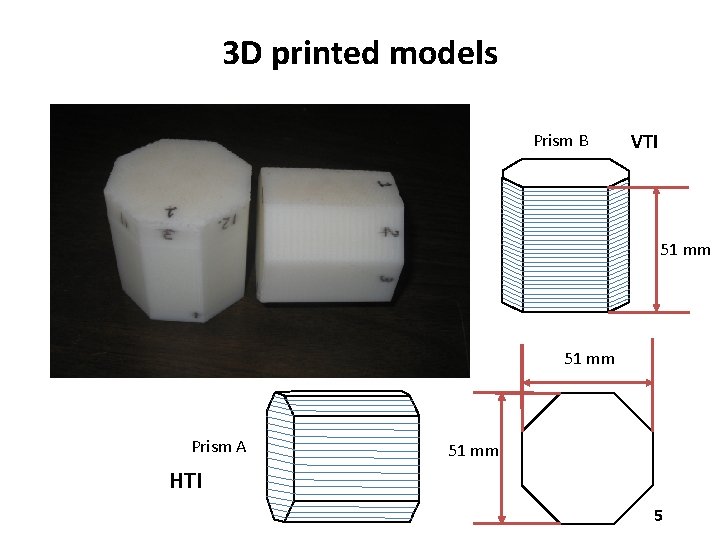
3 D printed models Prism B VTI 51 mm Prism A 51 mm HTI 5
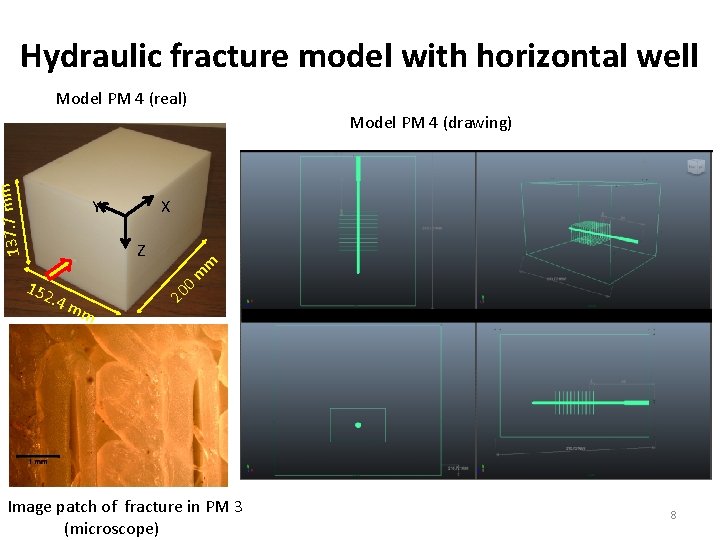
Hydraulic fracture model with horizontal well Model PM 4 (real) 137. 7 mm Model PM 4 (drawing) Y X 0 4 m m 20 152. m m Z Image patch of fracture in PM 3 (microscope) 8
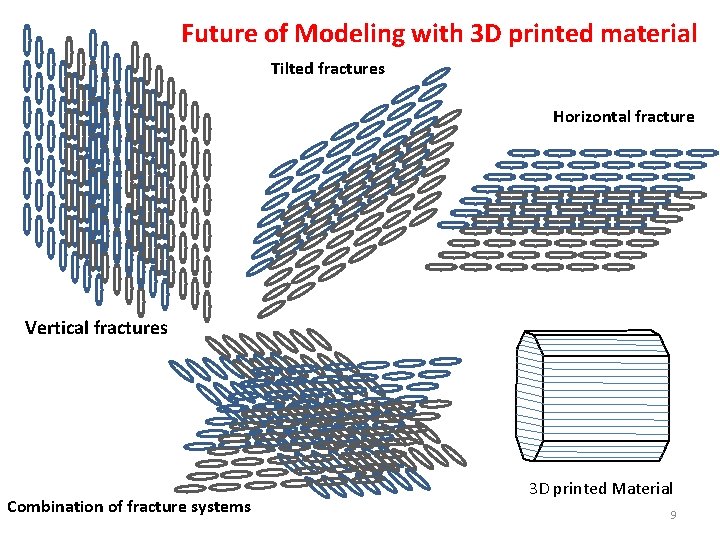
Future of Modeling with 3 D printed material Tilted fractures Horizontal fracture Vertical fractures Combination of fracture systems 3 D printed Material 9
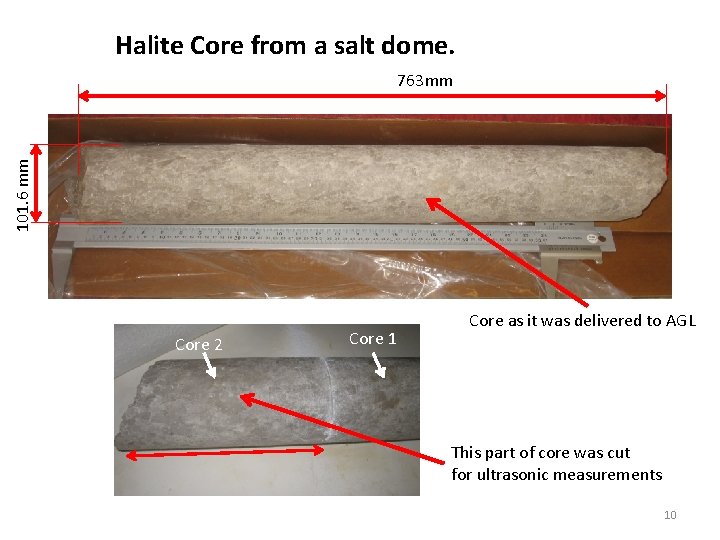
Halite Core from a salt dome. 101. 6 mm 763 mm Core 2 Core 1 Core as it was delivered to AGL This part of core was cut for ultrasonic measurements 10
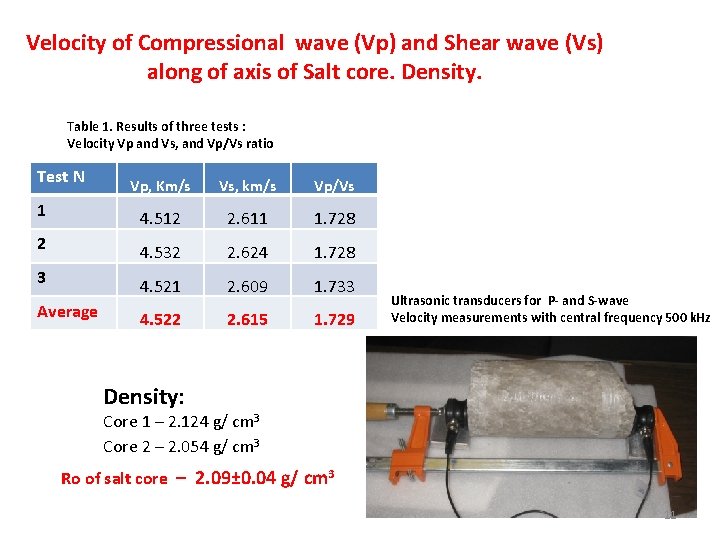
Velocity of Compressional wave (Vp) and Shear wave (Vs) along of axis of Salt core. Density. Table 1. Results of three tests : Velocity Vp and Vs, and Vp/Vs ratio Test N Vp, Km/s Vs, km/s Vp/Vs 1 4. 512 2. 611 1. 728 2 4. 532 2. 624 1. 728 3 4. 521 2. 609 1. 733 4. 522 2. 615 1. 729 Average Ultrasonic transducers for P- and S-wave Velocity measurements with central frequency 500 k. Hz Density: Core 1 – 2. 124 g/ cm 3 Core 2 – 2. 054 g/ cm 3 Ro of salt core – 2. 09± 0. 04 g/ cm 3 11
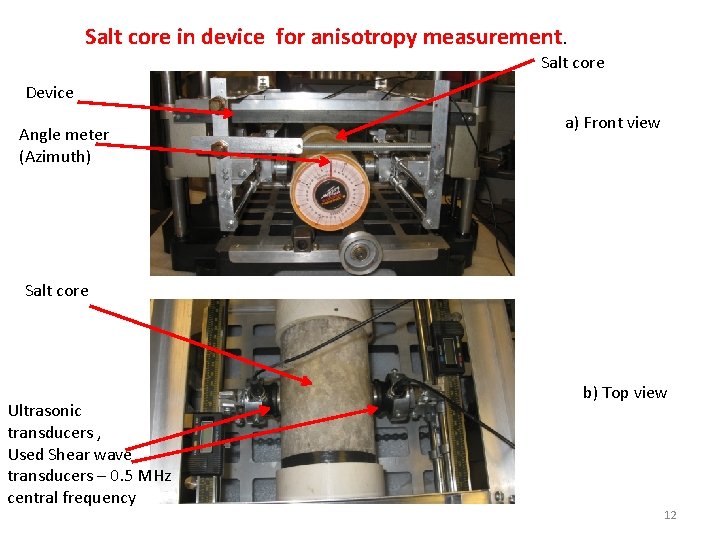
Salt core in device for anisotropy measurement. Salt core Device Angle meter (Azimuth) a) Front view Salt core Ultrasonic transducers , Used Shear wave transducers – 0. 5 MHz central frequency b) Top view 12
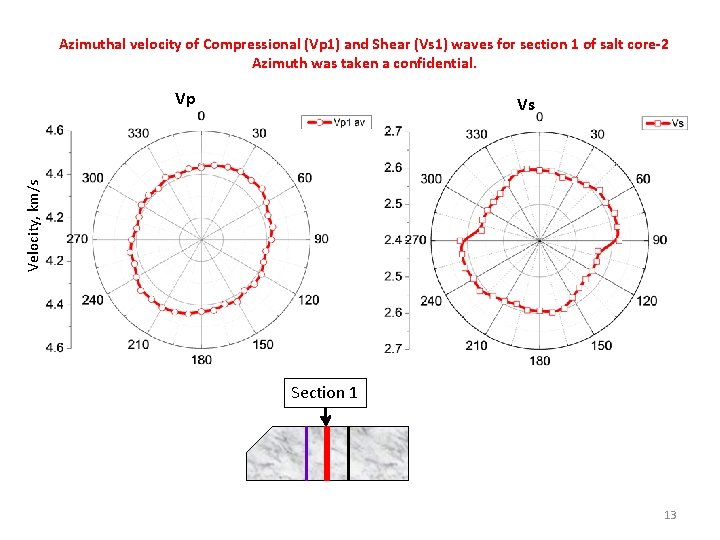
Azimuthal velocity of Compressional (Vp 1) and Shear (Vs 1) waves for section 1 of salt core-2 Azimuth was taken a confidential. Vp Velocity, km/s Vs Section 1 13
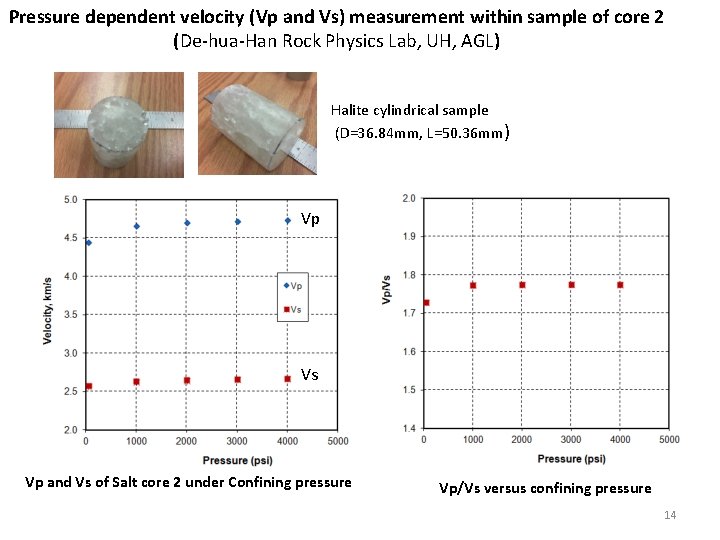
Pressure dependent velocity (Vp and Vs) measurement within sample of core 2 (De-hua-Han Rock Physics Lab, UH, AGL) Halite cylindrical sample (D=36. 84 mm, L=50. 36 mm) Vp Vs Vp and Vs of Salt core 2 under Confining pressure Vp/Vs versus confining pressure 14
Conclusions: Ø AGL physical modeling Laboratory has 3 Ultrasonic research systems: a) Marine, b) Land, c) Ultrasonic measurement system. Ø They are used for modeling seismic survey, microseismic monitoring tests, time-lapse seismic, and characterization of rocks and material elastic properties. Ø Seismic physical modeling solve the geophysical problems in more economical and fast way. Ø Study properties of rocks support in interpreting field data Ø 3 D printing material gives new opportunity for physical modeling of reservoir or rocks containing tectonic or hydraulic fractures in anisotropic medium. 15
ACKNOWLEDGEMENTS: Conoco. Phillips, AGL Students of AGL Dr. Peter Copeland Mr. Jose Baez-Franceschi Dr. De-hua Han Mr. Q. Yao Mr. F. Yan 16
Thank you ! 17
- Slides: 17