
Small intestine II jejunum and ileum Dr Anna
- Slides: 16
Small intestine II. jejunum and ileum Dr. Anna L. Kiss Department of Anatomy, Histology and Embryology Semmelweis University Budapest 2018
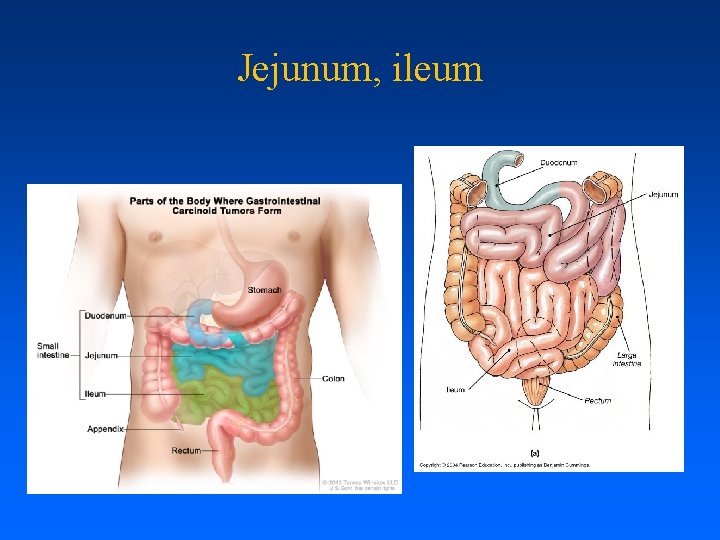
Jejunum, ileum
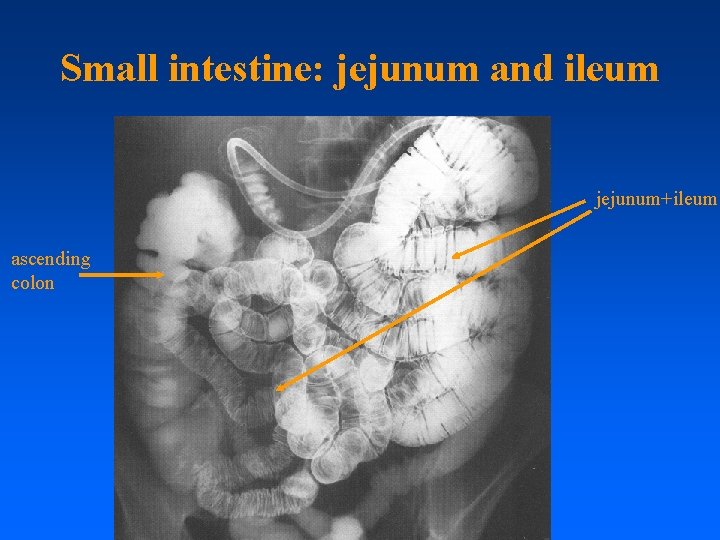
Small intestine: jejunum and ileum jejunum+ileum ascending colon
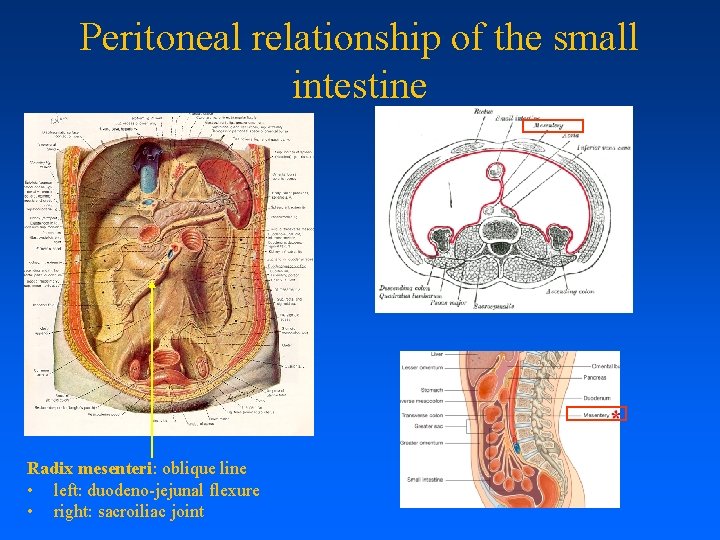
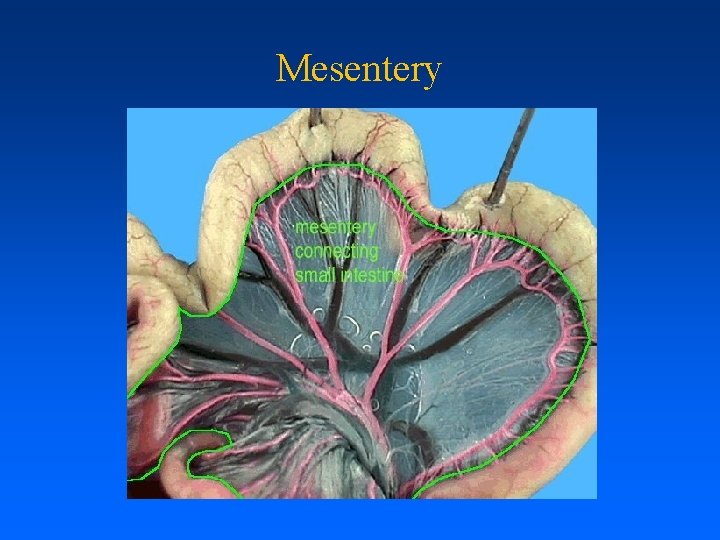
Peritoneal relationship of the small intestine Radix mesenteri: oblique line • left: duodeno-jejunal flexure • right: sacroiliac joint
Mesentery
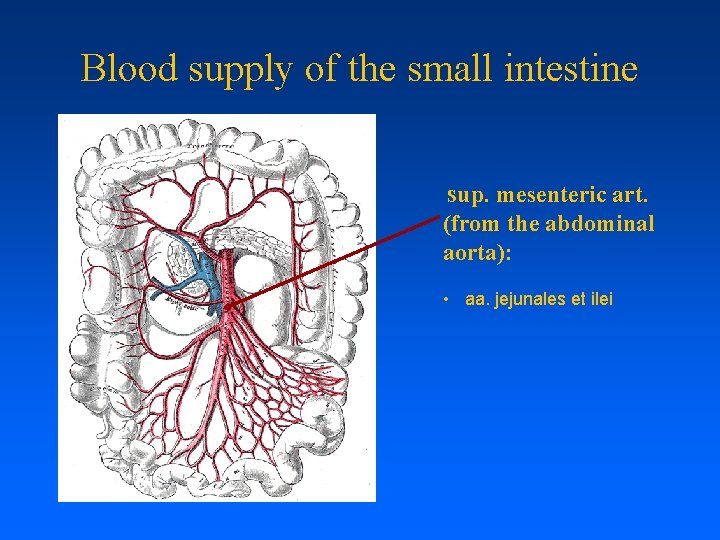
Blood supply of the small intestine Sup. mesenteric art. (from the abdominal aorta): • aa. jejunales et ilei
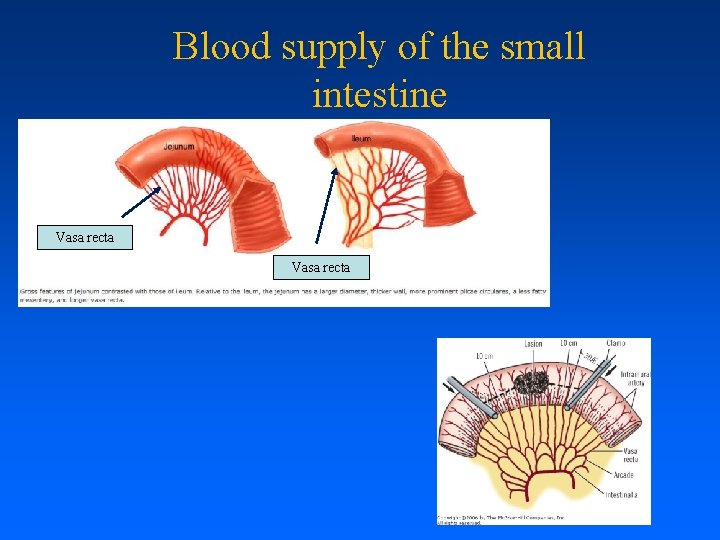
Blood supply of the small intestine Vasa recta
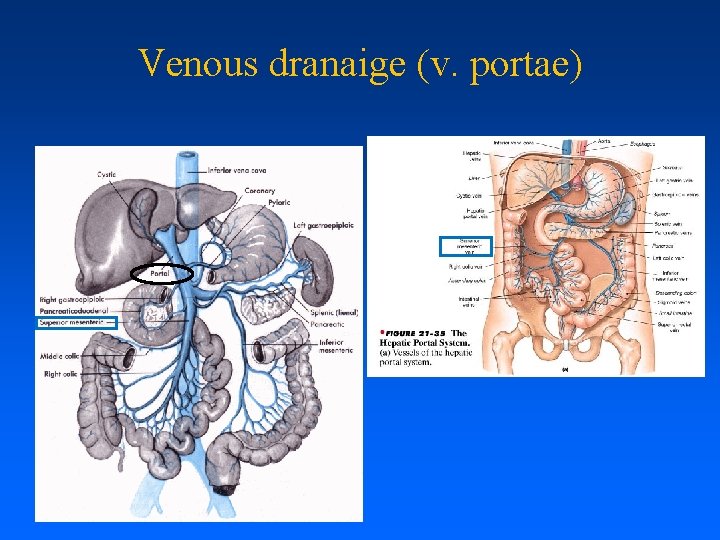
Venous dranaige (v. portae)
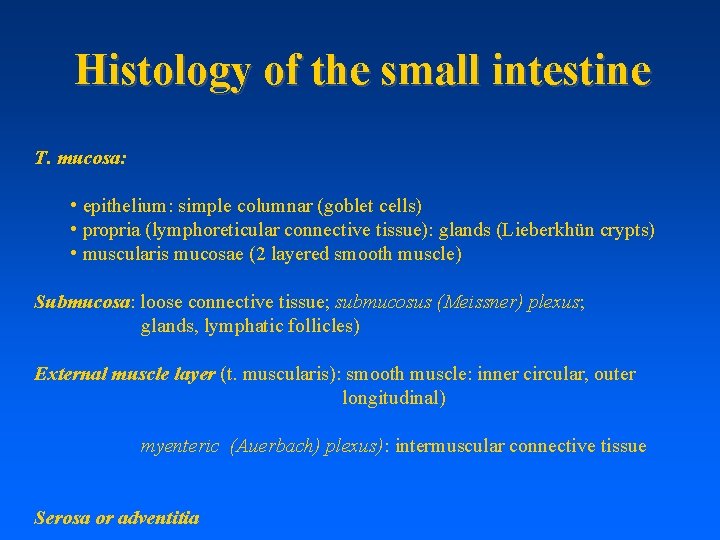
Histology of the small intestine T. mucosa: • epithelium: simple columnar (goblet cells) • propria (lymphoreticular connective tissue): glands (Lieberkhün crypts) • muscularis mucosae (2 layered smooth muscle) Submucosa: loose connective tissue; submucosus (Meissner) plexus; glands, lymphatic follicles) External muscle layer (t. muscularis): smooth muscle: inner circular, outer longitudinal) myenteric (Auerbach) plexus): intermuscular connective tissue Serosa or adventitia
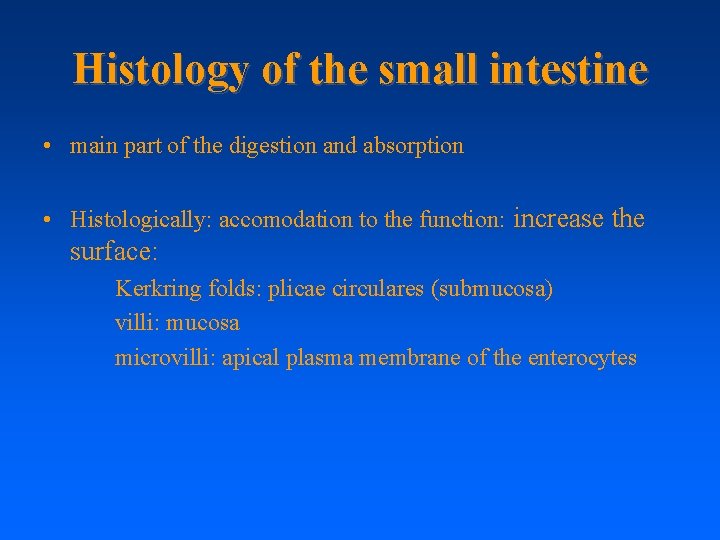
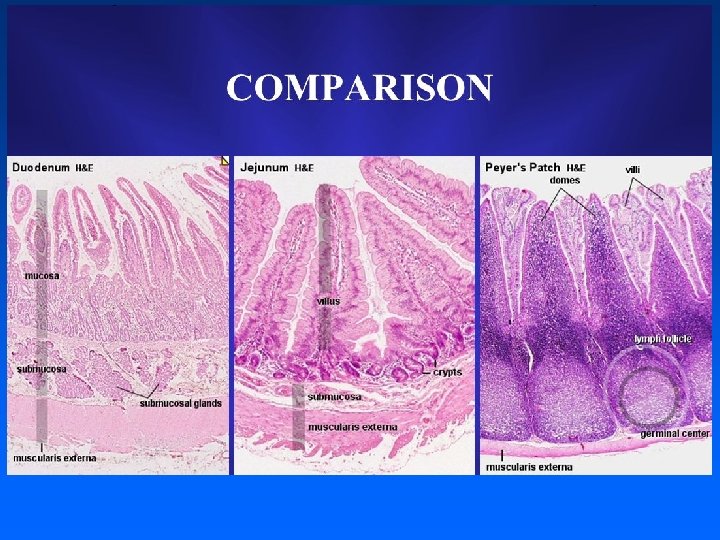
Histology of the small intestine • main part of the digestion and absorption • Histologically: accomodation to the function: increase the surface: Kerkring folds: plicae circulares (submucosa) villi: mucosa microvilli: apical plasma membrane of the enterocytes
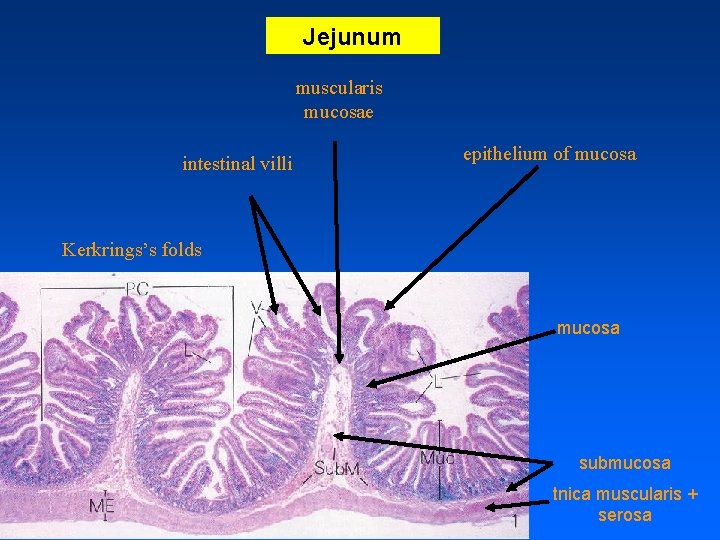
Jejunum muscularis mucosae intestinal villi epithelium of mucosa Kerkrings’s folds mucosa submucosa tnica muscularis + serosa
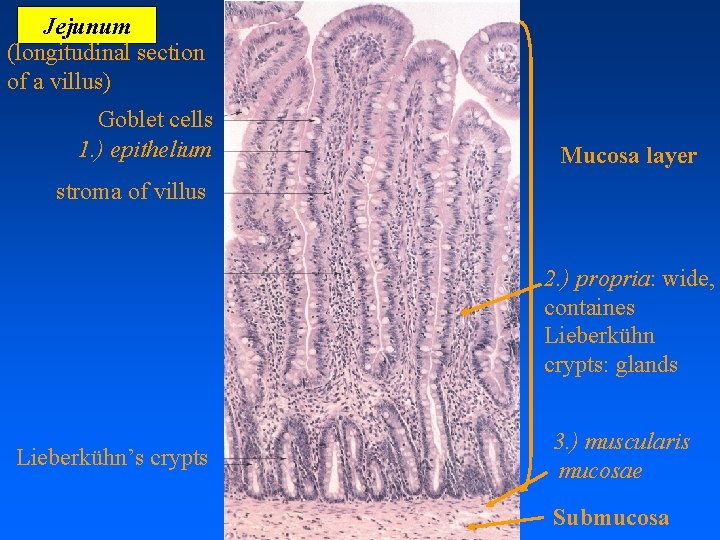
Jejunum (longitudinal section of a villus) Goblet cells 1. ) epithelium Mucosa layer stroma of villus 2. ) propria: wide, containes Lieberkühn crypts: glands Lieberkühn’s crypts 3. ) muscularis mucosae Submucosa
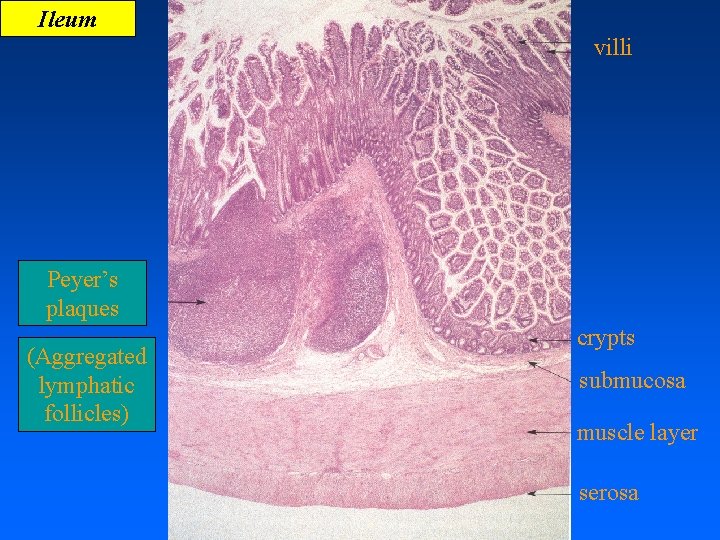
Ileum villi Peyer’s plaques (Aggregated lymphatic follicles) crypts submucosa muscle layer serosa
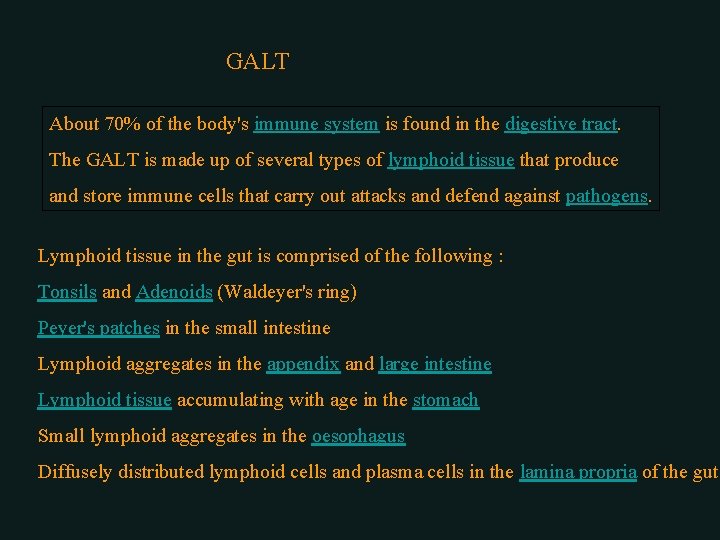
GALT About 70% of the body's immune system is found in the digestive tract. The GALT is made up of several types of lymphoid tissue that produce and store immune cells that carry out attacks and defend against pathogens. Lymphoid tissue in the gut is comprised of the following : Tonsils and Adenoids (Waldeyer's ring) Peyer's patches in the small intestine Lymphoid aggregates in the appendix and large intestine Lymphoid tissue accumulating with age in the stomach Small lymphoid aggregates in the oesophagus Diffusely distributed lymphoid cells and plasma cells in the lamina propria of the gut
Bibliography • Lippert H: Lehrbuch Anatomie, Urban & Fischer, München, 2000 • Mac Kinnon P, Morris J: Oxford Lehrbuch der klinischen Anatomie, Hans Huber, Bern, 1997 • Snell RS, Clinical Anatomy, Little, Brown & Co, Boston, 1995 • Moore KL, Dalley AF: Clinically Oriented Anatomy, Lippincott, 1999