
Small Group vs Large group teaching David Taylor
- Slides: 34
Small Group vs Large group teaching David Taylor
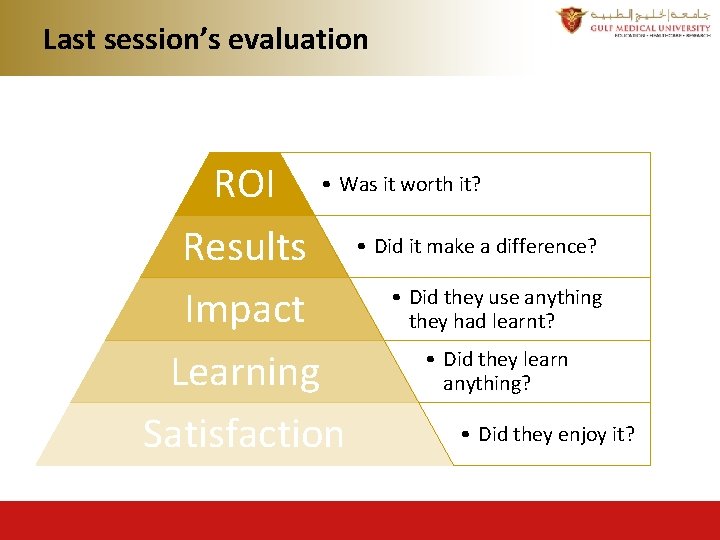
Last session’s evaluation ROI • Was it worth it? Results • Did it make a difference? • Did they use anything Impact they had learnt? • Did they learn Learning anything? • Did they enjoy it? Satisfaction
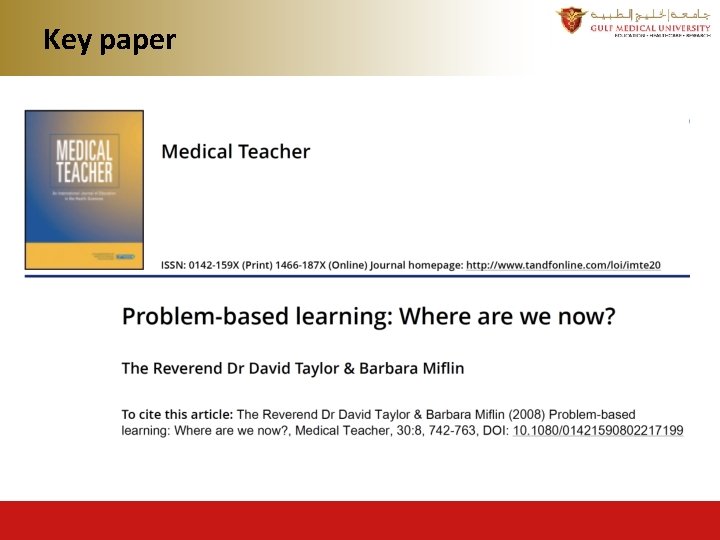
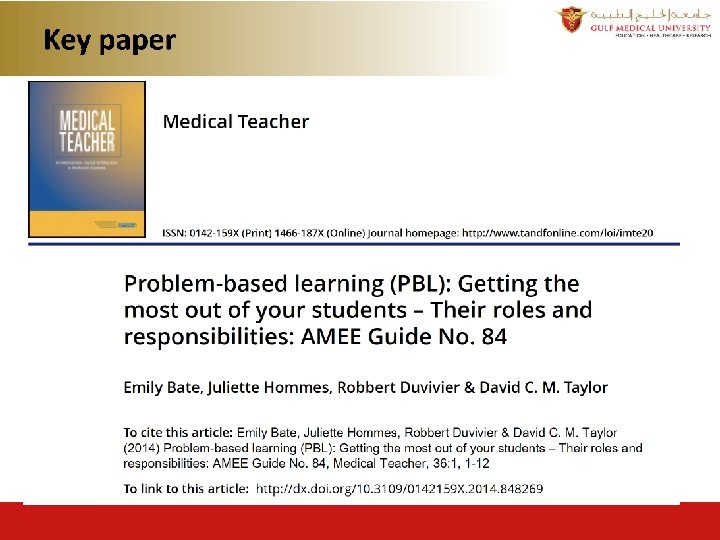
Key paper
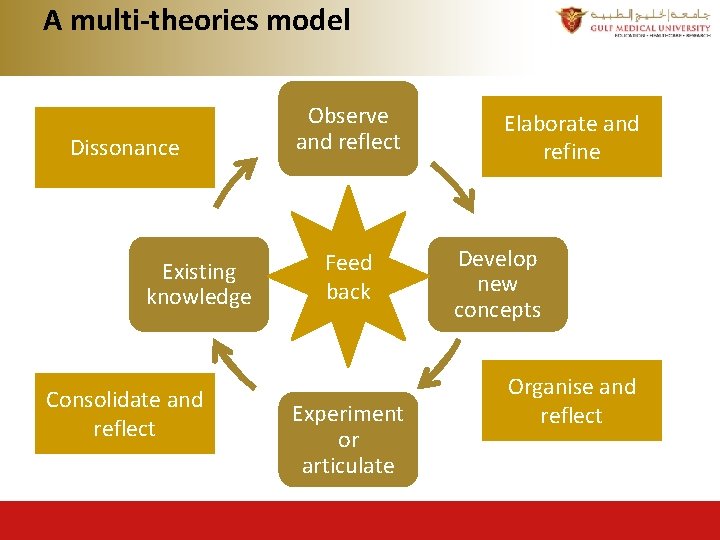
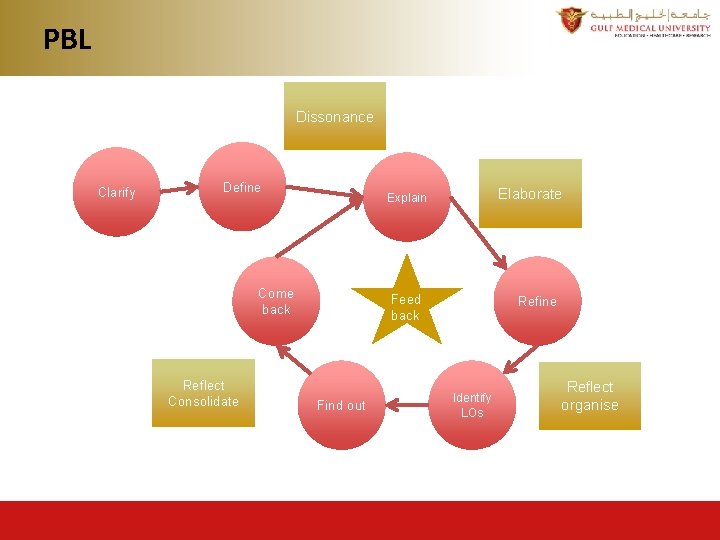
A multi-theories model Dissonance Existing knowledge Consolidate and reflect Observe and reflect Feed back Experiment or articulate Elaborate and refine Develop new concepts Organise and reflect
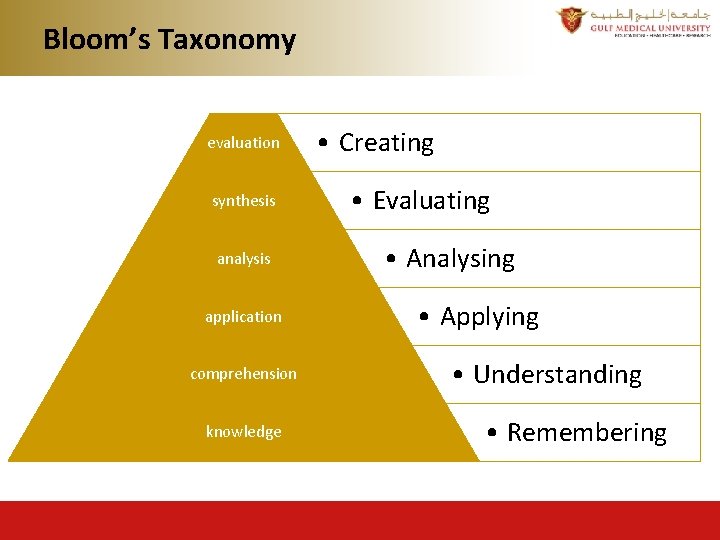
Bloom’s Taxonomy evaluation synthesis analysis application comprehension knowledge • Creating • Evaluating • Analysing • Applying • Understanding • Remembering
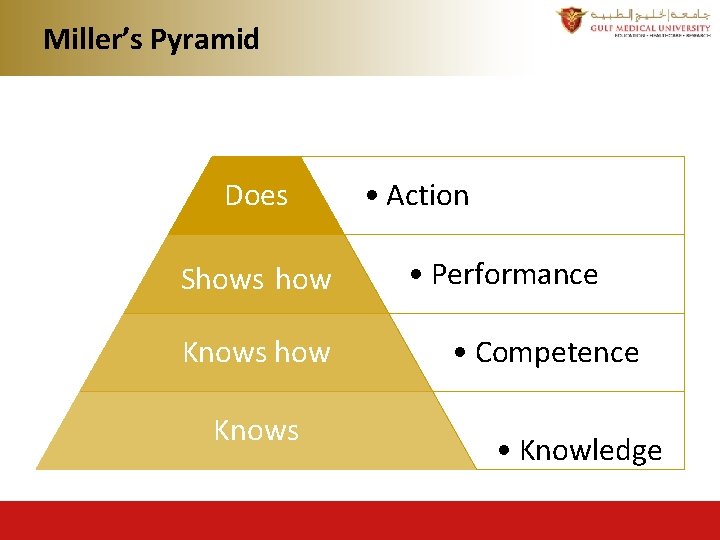
Miller’s Pyramid Does Shows how Knows • Action • Performance • Competence • Knowledge
Approaches • Possibilities are only limited by our imagination • But we need to provide scaffolding – – – Outcomes Learning objectives Aims Examples Targets
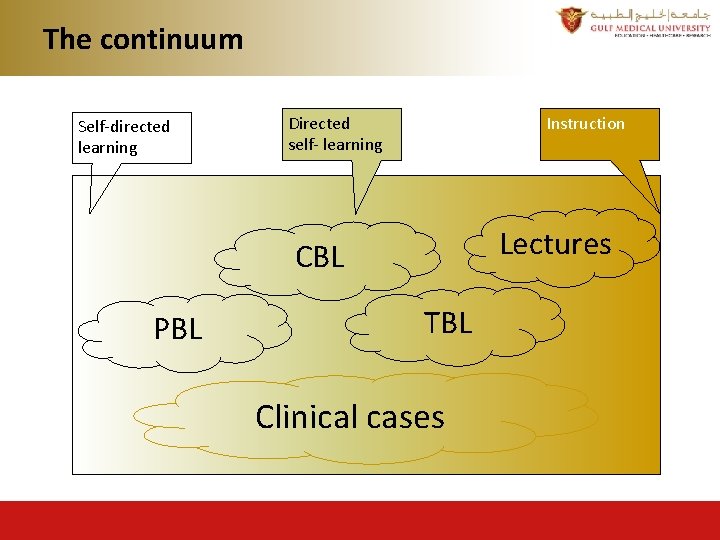
Options • Set pieces • • Lectures/ Practical work Small group work/observation of clinical practice • Opportunistic • • Research Clinical placements • But we need to know where we are on the continuum….
The continuum Self-directed learning Directed self- learning Instruction Lectures CBL PBL TBL Clinical cases
Problem Based Learning PBL
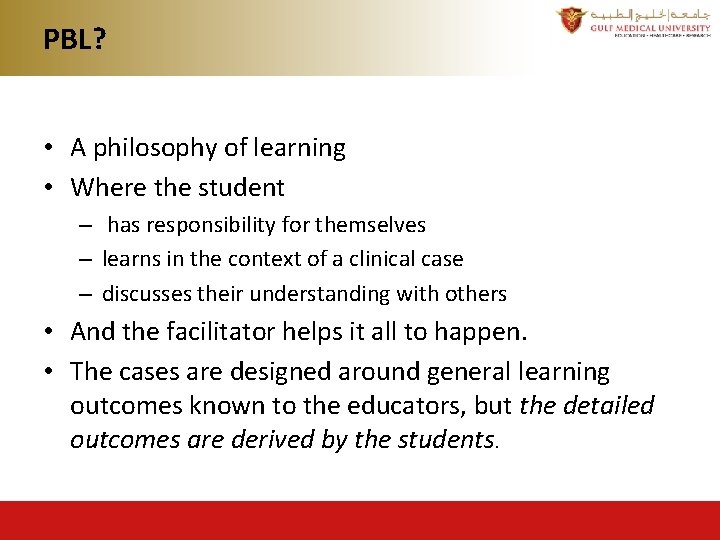
PBL? • A philosophy of learning • Where the student – has responsibility for themselves – learns in the context of a clinical case – discusses their understanding with others • And the facilitator helps it all to happen. • The cases are designed around general learning outcomes known to the educators, but the detailed outcomes are derived by the students.
Key paper
Key paper
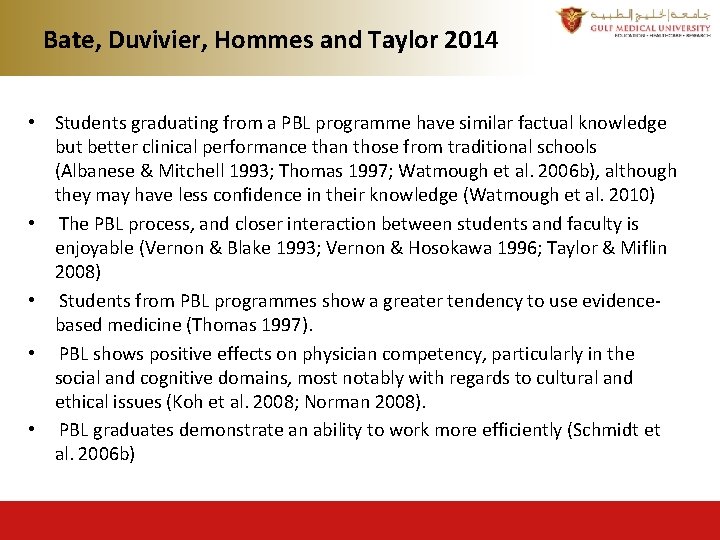
Bate, Duvivier, Hommes and Taylor 2014 • Students graduating from a PBL programme have similar factual knowledge but better clinical performance than those from traditional schools (Albanese & Mitchell 1993; Thomas 1997; Watmough et al. 2006 b), although they may have less confidence in their knowledge (Watmough et al. 2010) • The PBL process, and closer interaction between students and faculty is enjoyable (Vernon & Blake 1993; Vernon & Hosokawa 1996; Taylor & Miflin 2008) • Students from PBL programmes show a greater tendency to use evidencebased medicine (Thomas 1997). • PBL shows positive effects on physician competency, particularly in the social and cognitive domains, most notably with regards to cultural and ethical issues (Koh et al. 2008; Norman 2008). • PBL graduates demonstrate an ability to work more efficiently (Schmidt et al. 2006 b)
How to “do” PBL? Taylor and Miflin 2008 • Break the task down into small chunks. • Seven, in fact.
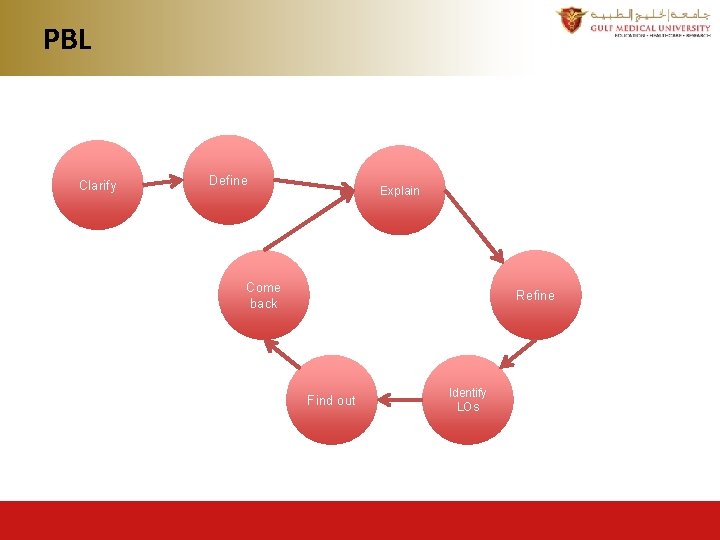
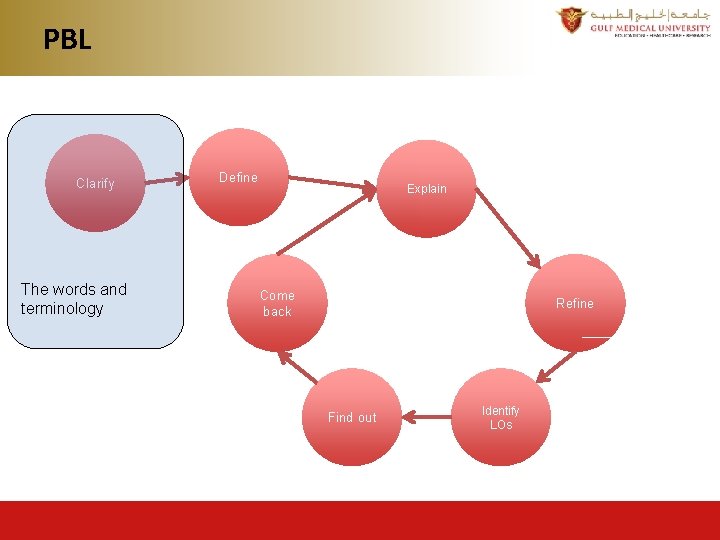
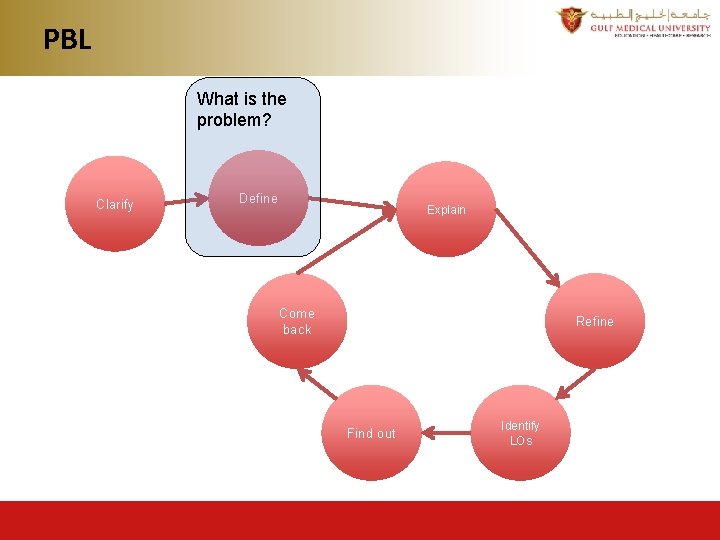
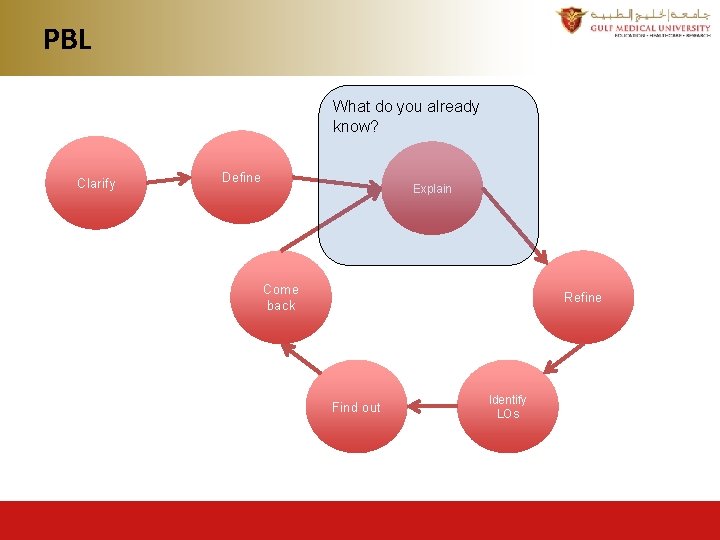
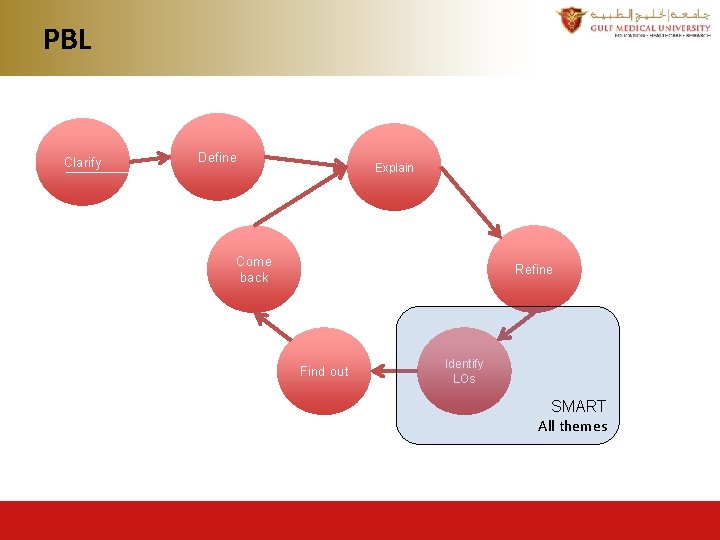
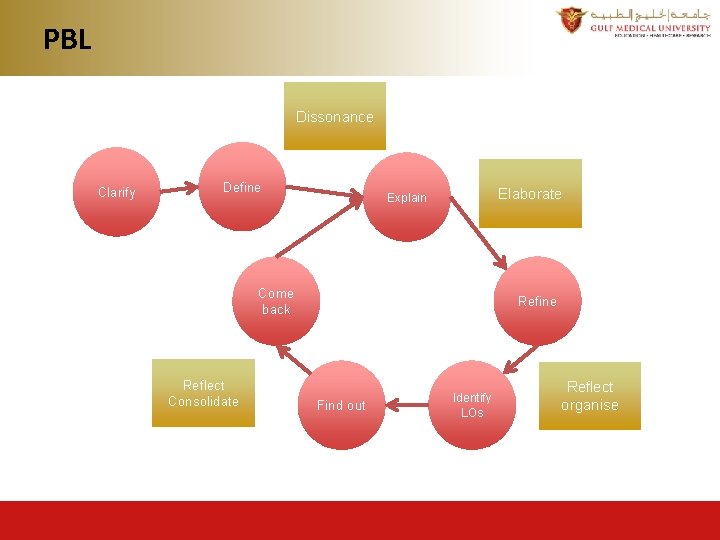
PBL Clarify Define Explain Come back Refine Find out Identify LOs
PBL Clarify The words and terminology Define Explain Come back Refine Find out Identify LOs
PBL What is the problem? Clarify Define Explain Come back Refine Find out Identify LOs
PBL What do you already know? Clarify Define Explain Come back Refine Find out Identify LOs
PBL Clarify Define Explain Come back Refine Find out Identify LOs SMART All themes
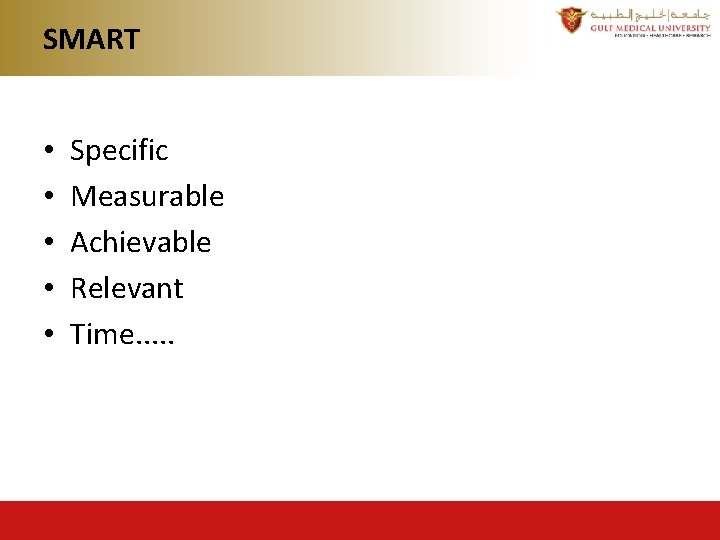
SMART • • • Specific Measurable Achievable Relevant Time. . .
PBL Dissonance Clarify Define Elaborate Explain Come back Reflect Consolidate Refine Find out Identify LOs Reflect organise
PBL Dissonance Clarify Define Come back Reflect Consolidate Elaborate Explain Feed back Find out Refine Identify LOs Reflect organise
Case based learning CBL
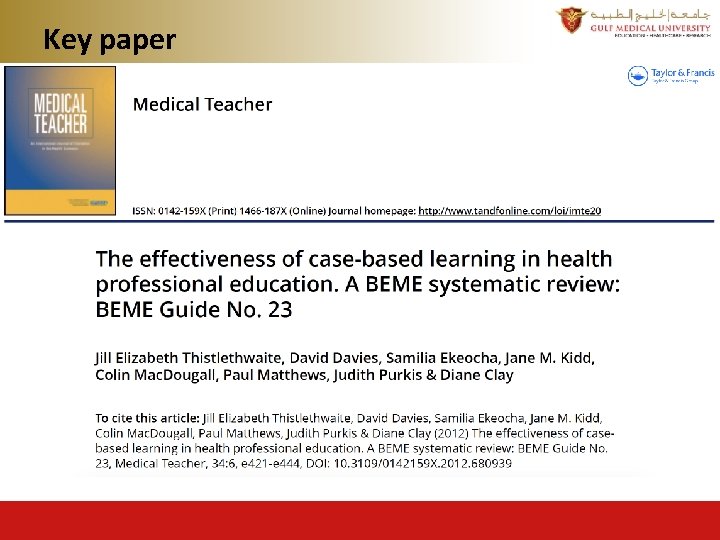
Key paper
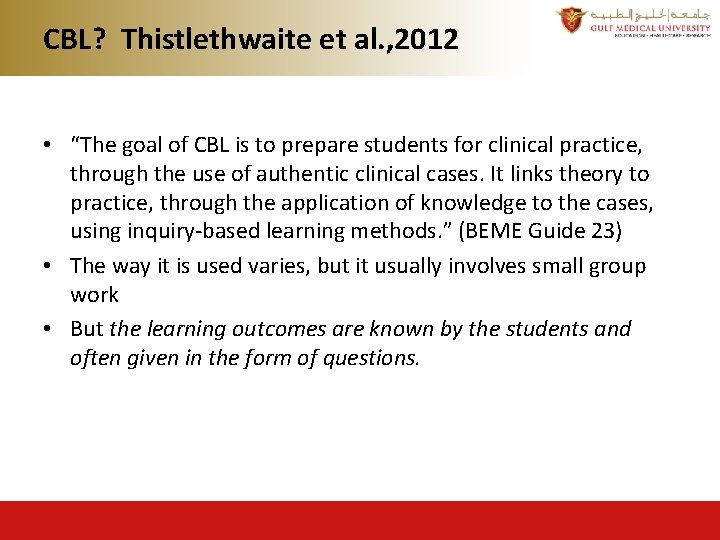
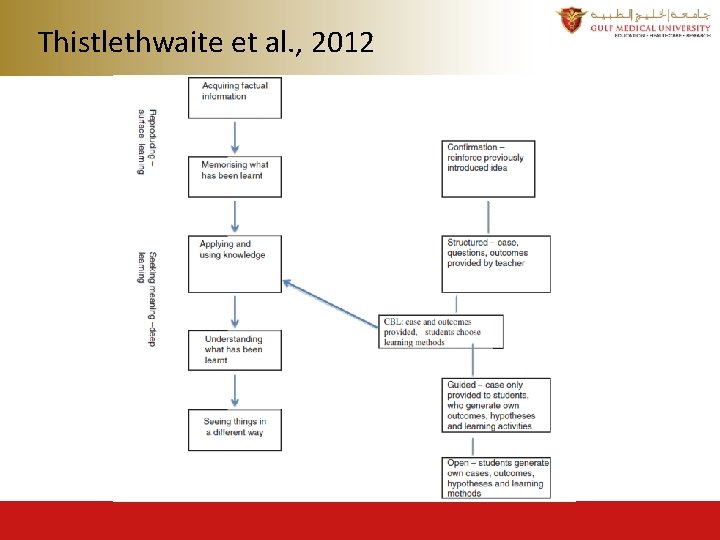
CBL? Thistlethwaite et al. , 2012 • “The goal of CBL is to prepare students for clinical practice, through the use of authentic clinical cases. It links theory to practice, through the application of knowledge to the cases, using inquiry-based learning methods. ” (BEME Guide 23) • The way it is used varies, but it usually involves small group work • But the learning outcomes are known by the students and often given in the form of questions.
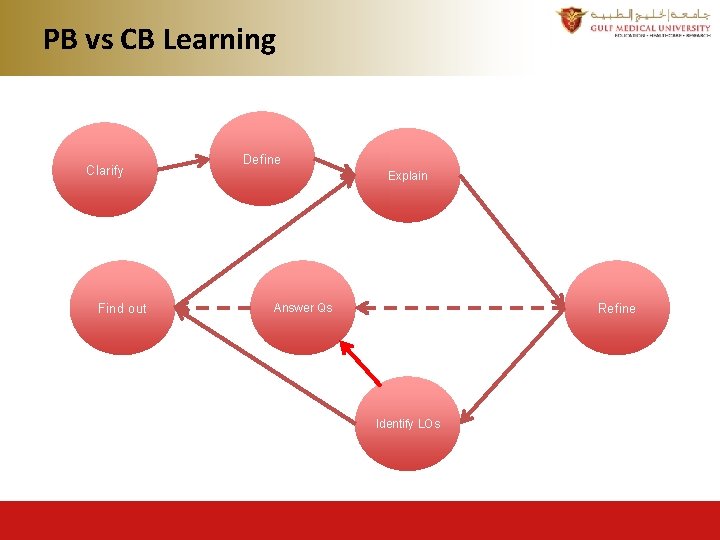
PB vs CB Learning Clarify Find out Define Explain Refine Answer Qs Identify LOs
Thistlethwaite et al. , 2012
Team based learning TBL
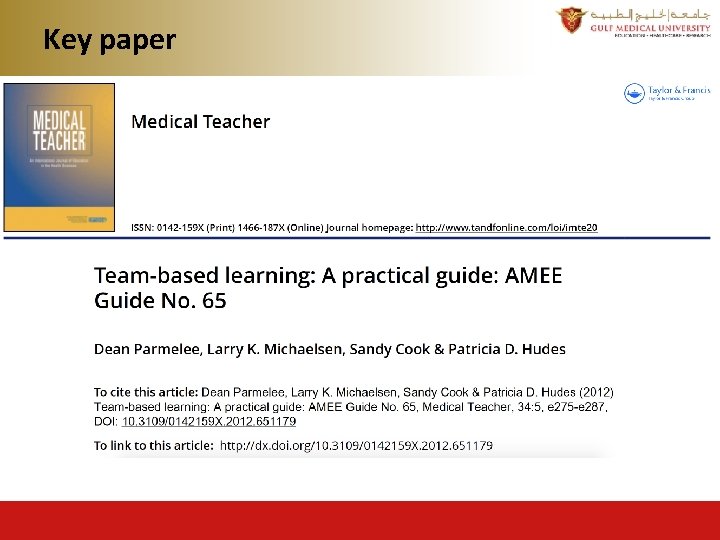
Key paper
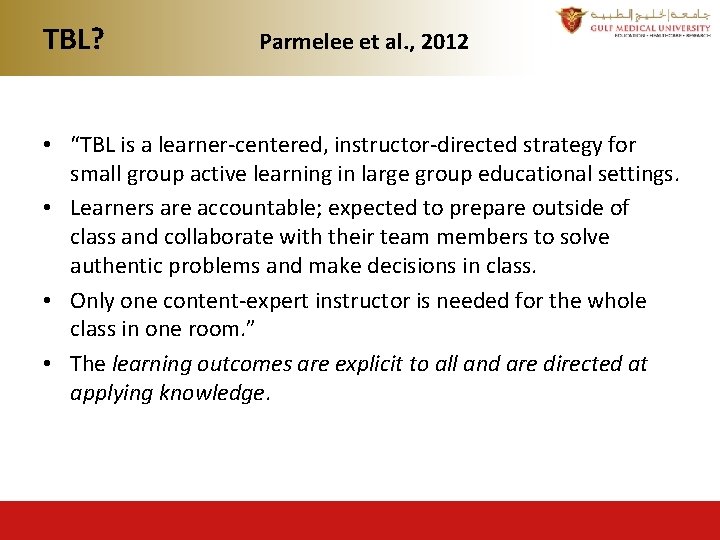
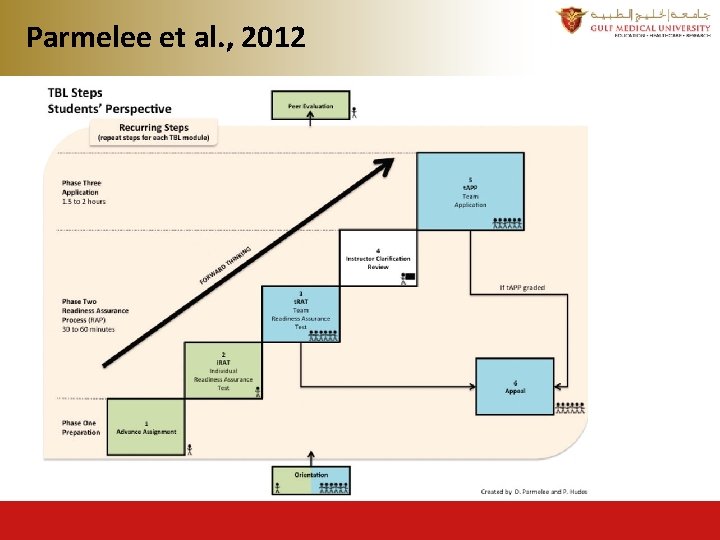
TBL? Parmelee et al. , 2012 • “TBL is a learner-centered, instructor-directed strategy for small group active learning in large group educational settings. • Learners are accountable; expected to prepare outside of class and collaborate with their team members to solve authentic problems and make decisions in class. • Only one content-expert instructor is needed for the whole class in one room. ” • The learning outcomes are explicit to all and are directed at applying knowledge.
Parmelee et al. , 2012
Lectures • Can be good or bad • The lecturer needs to know their material and be enthusiastic • And be able to convey the importance and interest to the students • It works best when the students know something about the subject.
So, ask yourself… • What are the strengths and weaknesses of each approach? • Which would you prefer (why)? • Which would produce a better doctor (why)?