
Small Group Communication The Importance of Negotiation Problem
Small Group Communication The Importance of Negotiation Problem Solving & Decision Making Communication & Conflict Styles

SMALL GROUP COMMUNICATION “individuals who interact verbally and nonverbally, occupy certain roles with respect to one another, and cooperate to accomplish a goal” (Gamble & Gamble) “…interaction among a small group of people [3 -12] who share a common purpose, or goal, who feel a sense of belonging to the group, and who exert influence on one another. ” (Beebe & Masterson)
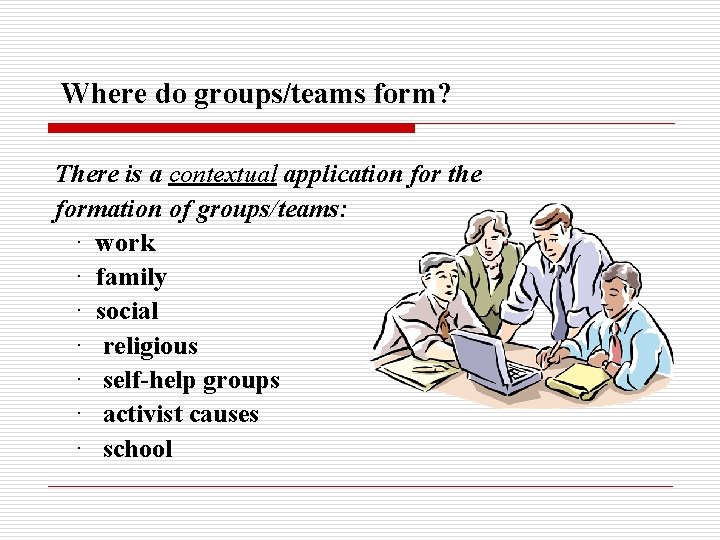
Where do groups/teams form? There is a contextual application for the formation of groups/teams: · work · family · social · religious · self-help groups · activist causes · school
Primary Groups: fulfill basic need to associate with others · Family · Friends
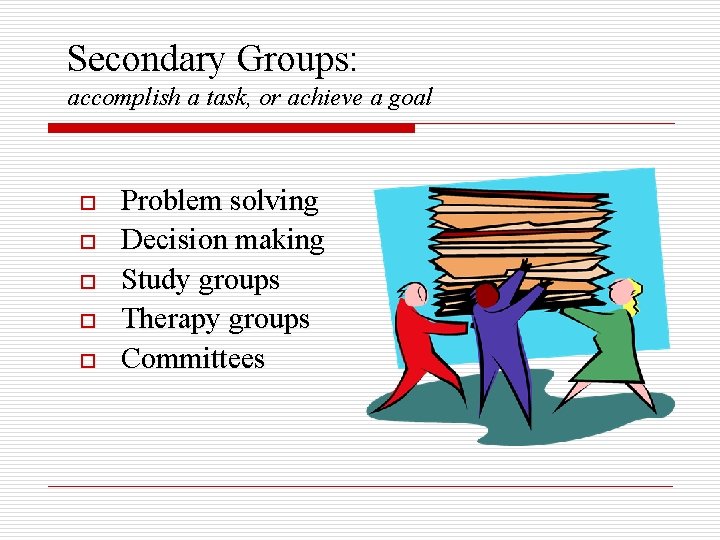
Secondary Groups: accomplish a task, or achieve a goal o o o Problem solving Decision making Study groups Therapy groups Committees
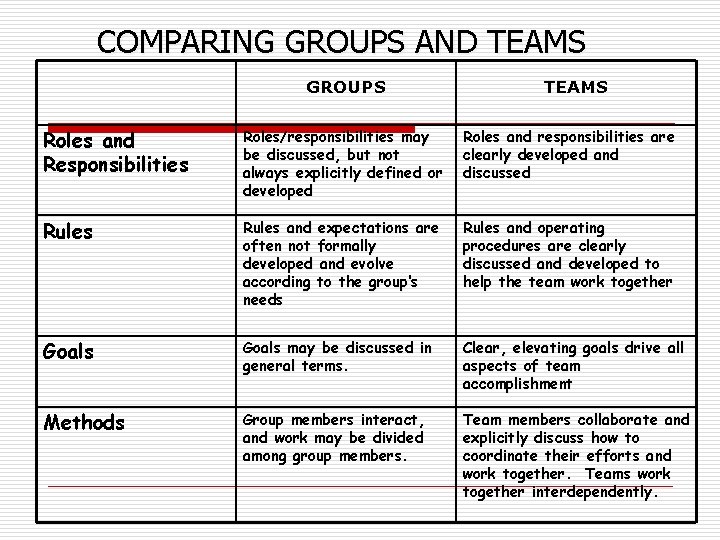
COMPARING GROUPS AND TEAMS GROUPS TEAMS Roles and Responsibilities Roles/responsibilities may be discussed, but not always explicitly defined or developed Roles and responsibilities are clearly developed and discussed Rules and expectations are often not formally developed and evolve according to the group’s needs Rules and operating procedures are clearly discussed and developed to help the team work together Goals may be discussed in general terms. Clear, elevating goals drive all aspects of team accomplishment Methods Group members interact, and work may be divided among group members. Team members collaborate and explicitly discuss how to coordinate their efforts and work together. Teams work together interdependently.

Matrix Group Assignments Marketi ng Sales Finance Producti Operati on ons John X Cindy Matt Juanita Sean X Linda Donna Robert X Peter X Cristy Martha Melissa X Raquel Laura Maria
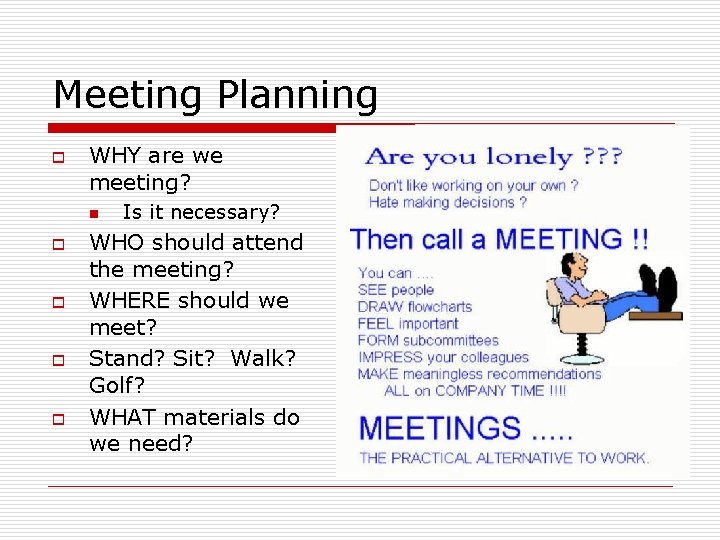
Meeting Planning o WHY are we meeting? n o o Is it necessary? WHO should attend the meeting? WHERE should we meet? Stand? Sit? Walk? Golf? WHAT materials do we need?
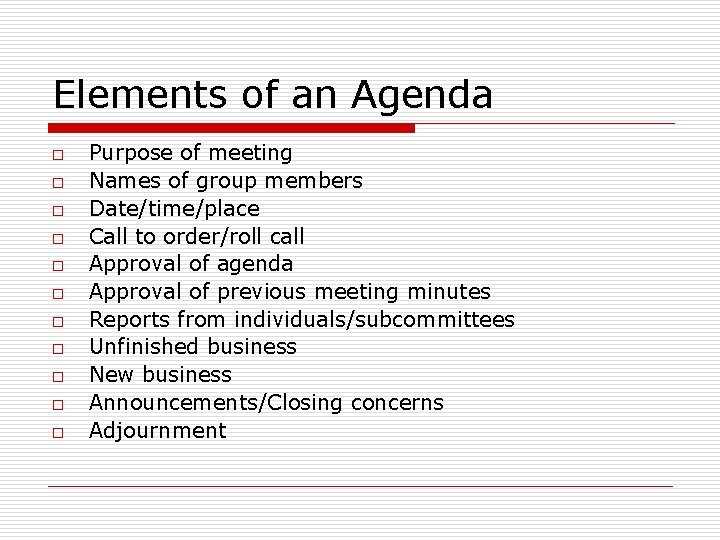
Elements of an Agenda o o o Purpose of meeting Names of group members Date/time/place Call to order/roll call Approval of agenda Approval of previous meeting minutes Reports from individuals/subcommittees Unfinished business New business Announcements/Closing concerns Adjournment
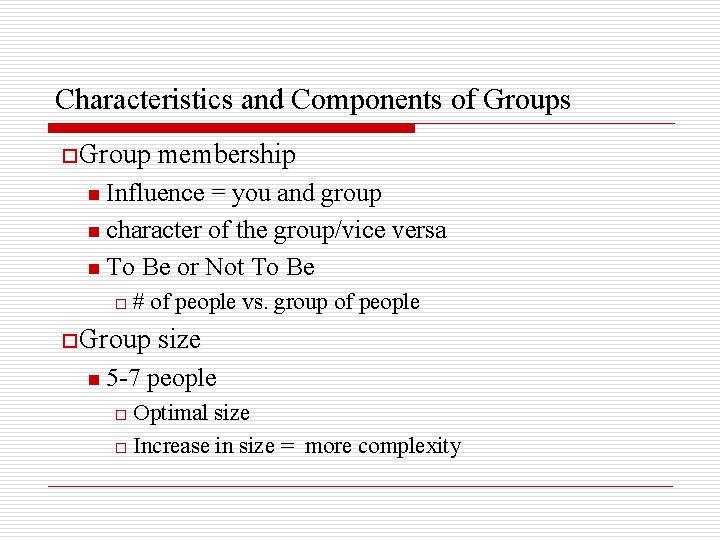
Characteristics and Components of Groups o Group membership n Influence = you and group n character of the group/vice versa n To Be or Not To Be o # of people vs. group of people o Group size n 5 -7 people Optimal size o Increase in size = more complexity o
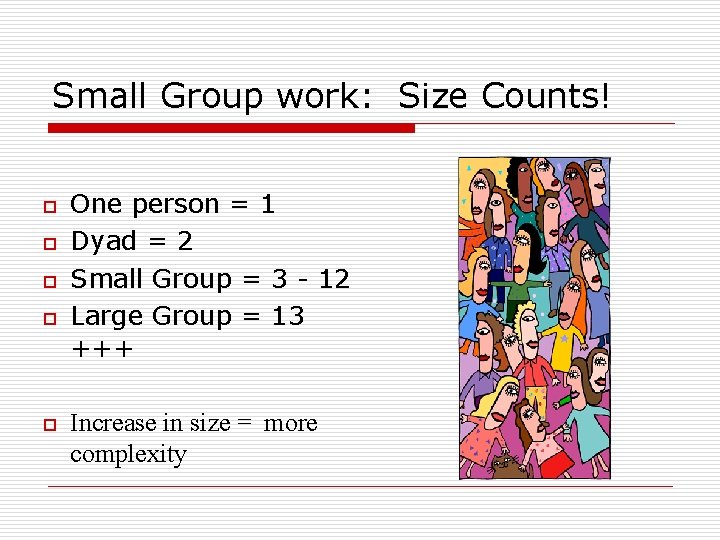
Small Group work: Size Counts! o o o One person = 1 Dyad = 2 Small Group = 3 - 12 Large Group = 13 +++ Increase in size = more complexity
Individual Activity: How well can you count? o Rules: 1. NO WHINING! 2. Estimate how many jelly beans are in the jar 3. NOTE: YOU MAY NOT TOUCH THE CANDY JAR-JUST LOOK
Group Activity: How well can you count? o Rules: 1. 2. 3. 4. 5. 6. NO WHINING! Form groups as directed NO WHINING Change group formation as directed NO WHINING Group decision must be made by consensus
Class Discussion - Size Counts How did the size of the group impact YOUR ability to perform the task assigned n What happened as the groups grew larger n Who did what…why? n Which group size was most productive? n Did you find the need to compromise your count with that of the group’s? n Why? n
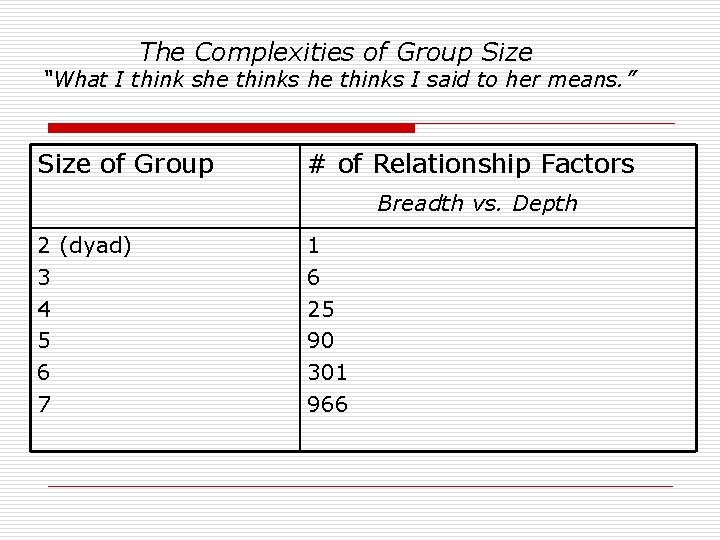
The Complexities of Group Size “What I think she thinks I said to her means. ” Size of Group # of Relationship Factors Breadth vs. Depth 2 (dyad) 3 4 5 6 7 1 6 25 90 301 966
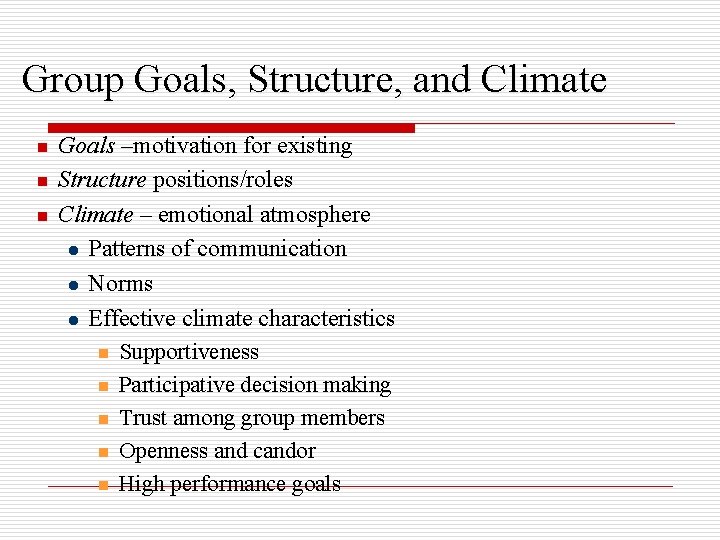
Group Goals, Structure, and Climate n n n Goals –motivation for existing Structure positions/roles Structure Climate – emotional atmosphere Climate l Patterns of communication l Norms l Effective climate characteristics n Supportiveness n Participative decision making n Trust among group members n Openness and candor n High performance goals
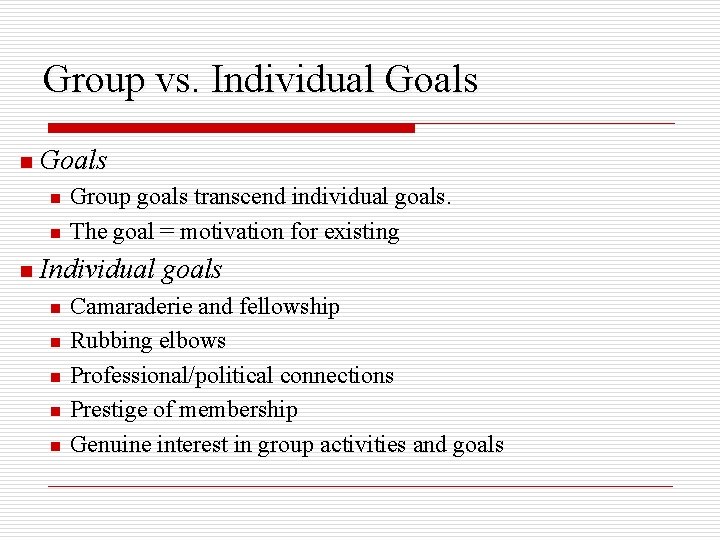
Group vs. Individual Goals n n n Group goals transcend individual goals. The goal = motivation for existing Individual goals n n n Camaraderie and fellowship Rubbing elbows Professional/political connections Prestige of membership Genuine interest in group activities and goals
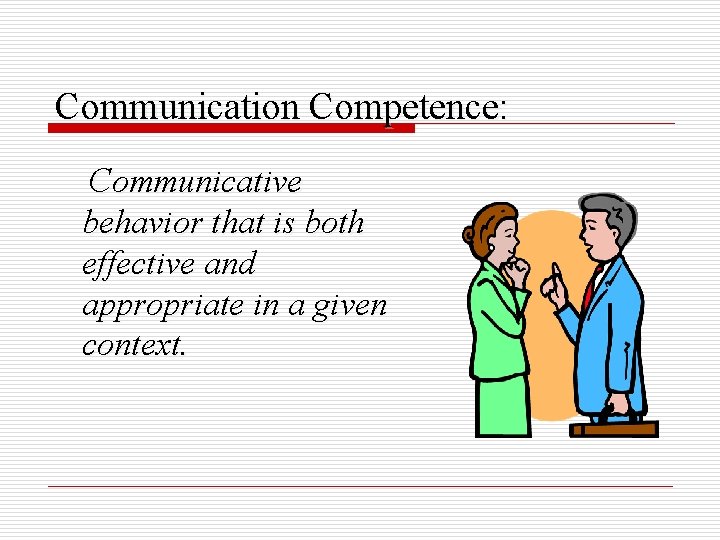
Communication Competence: Communicative behavior that is both effective and appropriate in a given context.
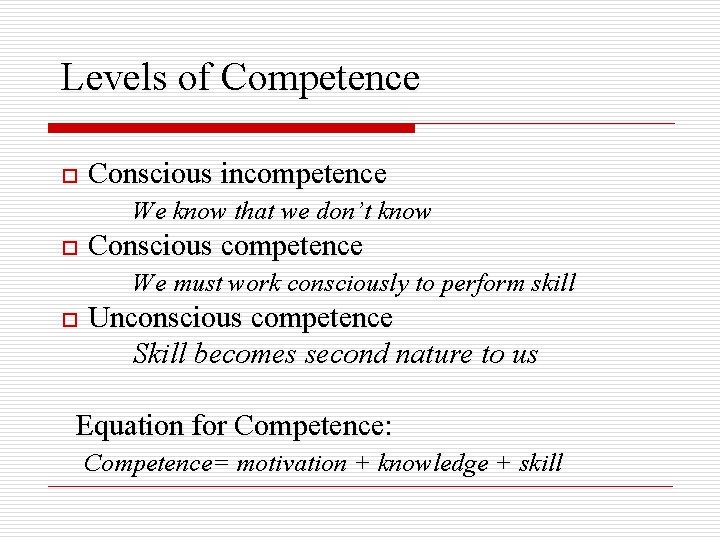
Levels of Competence o o o Conscious incompetence We know that we don’t know Conscious competence We must work consciously to perform skill Unconscious competence Skill becomes second nature to us Equation for Competence: Competence= motivation + knowledge + skill
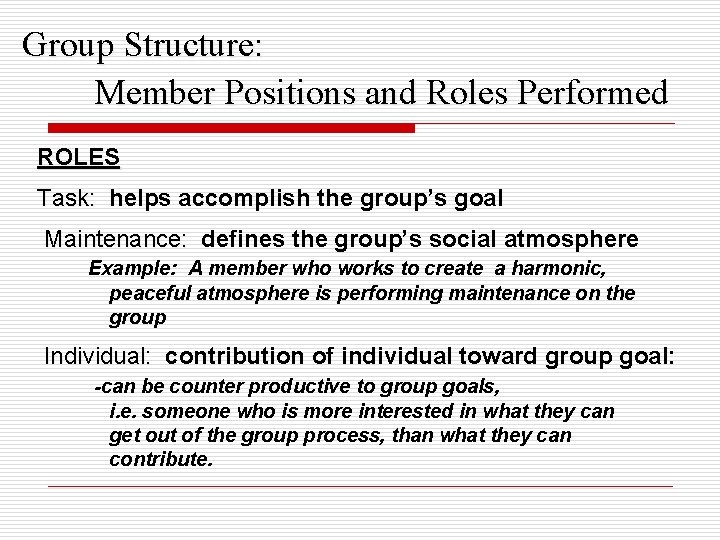
Group Structure: Member Positions and Roles Performed ROLES Task: helps accomplish the group’s goal Task: Maintenance: defines the group’s social atmosphere Maintenance: Example: A member who works to create a harmonic, peaceful atmosphere is performing maintenance on the group Individual: contribution of individual toward group goal: Individual: -can be counter productive to group goals, i. e. someone who is more interested in what they can get out of the group process, than what they can contribute.
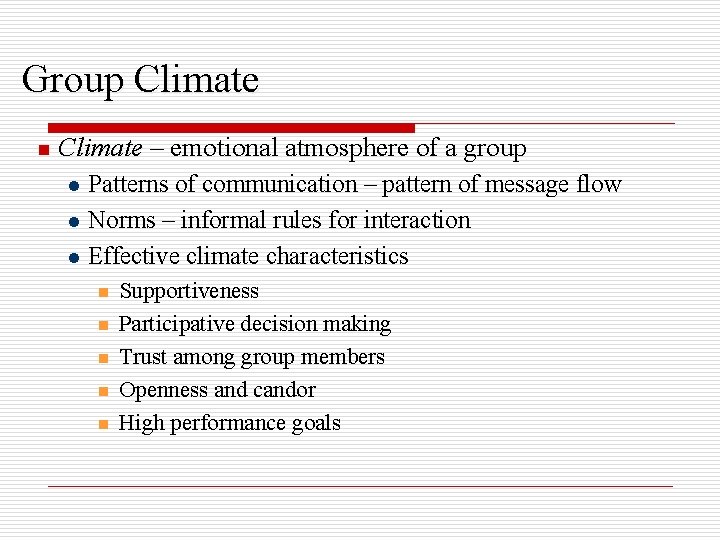
Group Climate n Climate – emotional atmosphere of a group Climate l l l Patterns of communication – pattern of message flow Norms – informal rules for interaction Effective climate characteristics n n n Supportiveness Participative decision making Trust among group members Openness and candor High performance goals
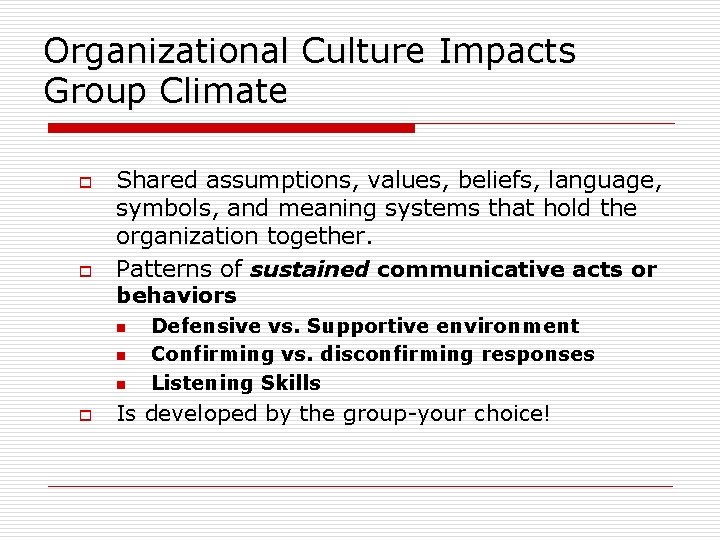
Organizational Culture Impacts Group Climate o o Shared assumptions, values, beliefs, language, symbols, and meaning systems that hold the organization together. Patterns of sustained communicative acts or behaviors n n n o Defensive vs. Supportive environment Confirming vs. disconfirming responses Listening Skills Is developed by the group-your choice!
Problem Solving vs. Decision Making o o Problem Solving Groups determine how to solve a problems, providing several choices to those making the final decision. Decision Making Groups consider the choices between all solutions offered, and decide which is the better choice.
Problem Solving & Decision Making Procedure I. Identify and define the problem: q Is/Is Not Analysis / Who/what/when/why/where/how q Analyze the Problem (Goal vs. Obstacles) q Generate Possible Solutions II. Make the decision o Select the Best Solution or a Combination of Solutions o Evaluate the Solutions - Pros/Cons q Test and Implement the Solution III. Use a structured process (Chapter 11) o Fishbone Diagram o Action Chart o Flow Chart
Advantages of Working in Groups/Teams Group = experience o Two Heads are better than one: stimulates creativity o Improved learning and comprehension (Auditory/Visual/Kinesthetic Learning o Styles) o Solving problems = commitment to solution
Disadvantages of Working in Groups/Teams Pressure to conform (Group Think) o Dominating group member o Reliance on others ~ TIME!!! To accomplish task Away from desk o
Negotiation o o Goal setting Situational knowledge n o Formal vs. informal bargaining Communication competence/presenting a position n Dimensions of negotiating/strategies, tactics, and behaviors o o o Information management Concessions Positioning
Negotiation o Goal setting n n n o Planned Structured Strategic (future based) Two or more positions n n n Different goals mutually desired outcome Give and take Concessions/compromise expected
Negotiation o Situational knowledge n Formal bargaining o Reoccurring issues: Labor management contract negotiations n n n Deliberation Confrontation Goal setting important! o o o Planned Structured Strategic
Negotiation o Situational knowledge n Informal bargaining o Spontaneous issues n n n Resolution of divergent goals Work schedules Office space Roles Even…prices of goods/services
Negotiation o Communication competence n Presenting a position o Dimensions of negotiating/strategies, tactics, and behaviors n n Information management § Personal goals vs. group goals Concessions Should serve both party’s goals Positioning § Focusing on issues that are important to you
Negotiation o Group Assignment
o The End…until next week!
Small Group Communication The Importance of Negotiation Problem Solving & Decision Making Communication & Conflict Styles
Status o o o Status is an individual’s importance to the group High Status Low Status Achievers Status Seekers
High Status o Shown more deference n n n n Are listened to Asked for advice Rewarded with greater share of goods o Bigger car/office/salary More recognition for contributions Talk more often o to other high status members o total group leadership role o highest status =leader More influence than low status members
Low Status Direct conversation to high status, not low status group members. o Communicate more positive messages to high status members o Whiners: victim mentality o Comments ignored o Communicate more irrelevant information o
Power Bases o Legitimate Power n o Referent Power n o Those with knowledge/experience Reward Power n o Those we allow to have power because we admire them Expert Power n o Those elected/chosen Those able to reward other’s performance (grades) Coercive Power n Those able to use threats/blackmail
Trust o o Trust must be earned Trust develops when you can predict how another will behave under certain circumstances-and they do as expected Trust is always a gamble Previous experiences in small group settings will influence how you are able to trust others to do tasks as agreed
Conflict o “Conflict” means different things to different people Conflict is not necessarily bad, just different n Conflict is, “disagreement over available options caused by seemingly incompatible goals among group members and their thinking that others can keep them from achieving their goals” n
Gender, Culture, and Personal Styles n Men and women focus on different aspects of the group’s life n The cultural background of group members affects the nature of communication in the group/team Class Discussion: How did the video describe gender Class Discussion communication at work? What were the major themes on this topic? How would you apply the same principles to cultural communication, as well.
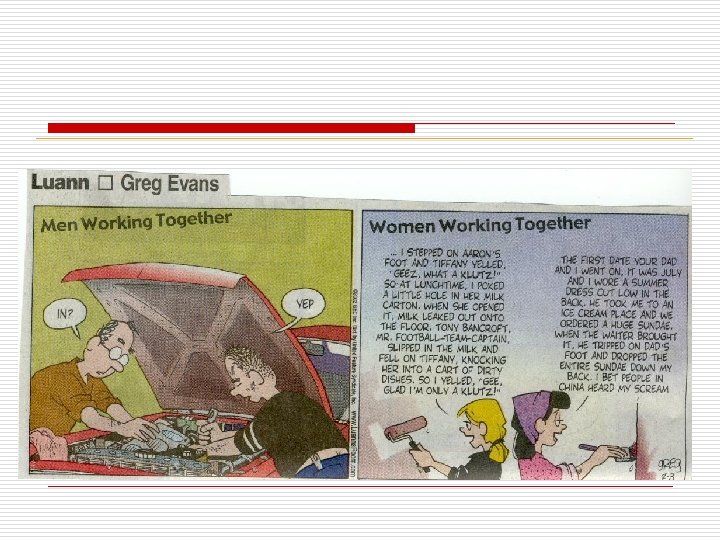
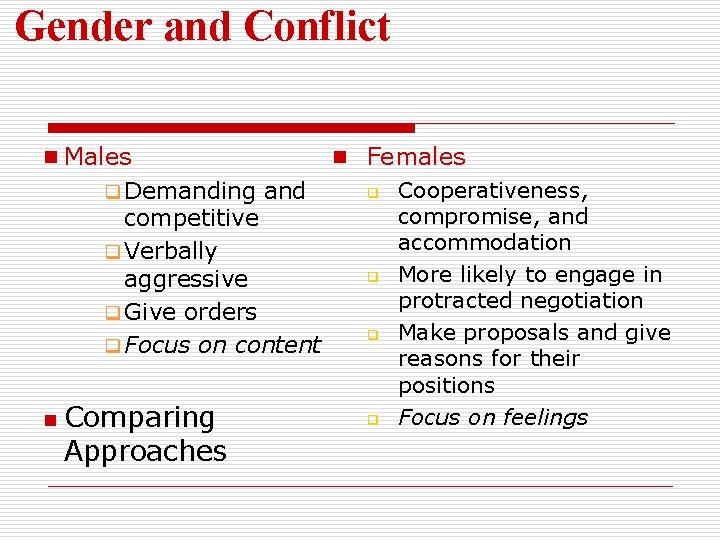
Gender and Conflict n Males q Demanding and competitive q Verbally aggressive q Give orders q Focus on content n Comparing Approaches n Females q q Cooperativeness, compromise, and accommodation More likely to engage in protracted negotiation Make proposals and give reasons for their positions Focus on feelings
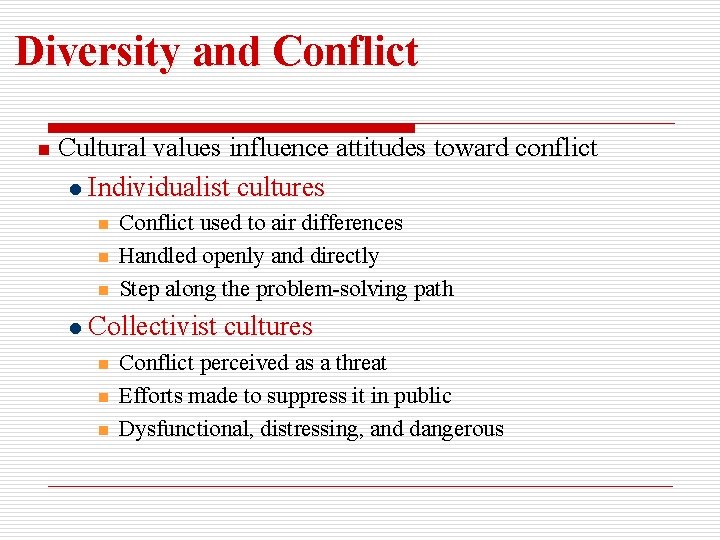
Diversity and Conflict n Cultural values influence attitudes toward conflict l Individualist cultures n n n Conflict used to air differences Handled openly and directly Step along the problem-solving path l Collectivist cultures n n n Conflict perceived as a threat Efforts made to suppress it in public Dysfunctional, distressing, and dangerous
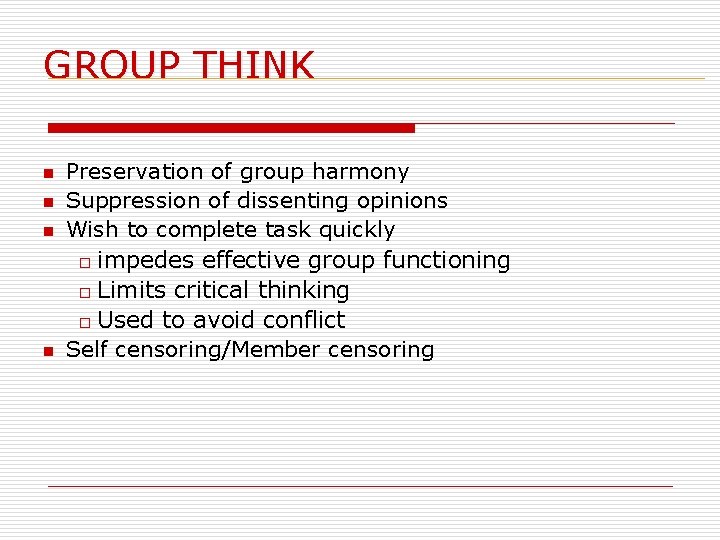
GROUP THINK n n Preservation of group harmony Suppression of dissenting opinions Wish to complete task quickly o impedes effective group functioning o Limits critical thinking o Used to avoid conflict Self censoring/Member censoring
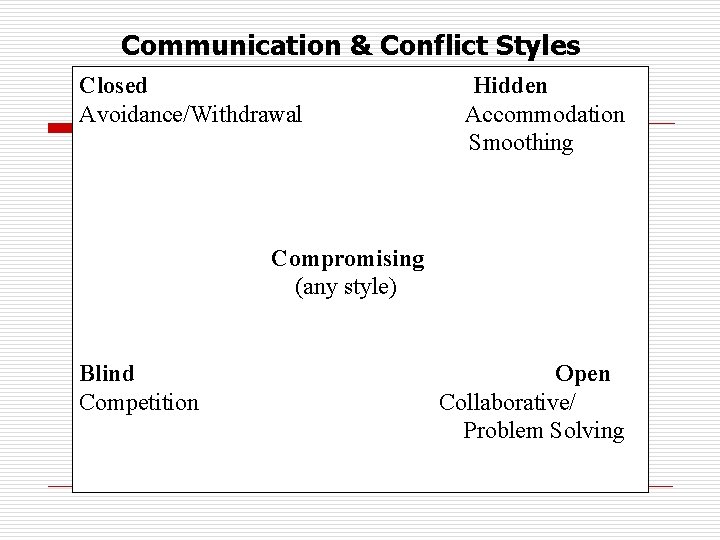
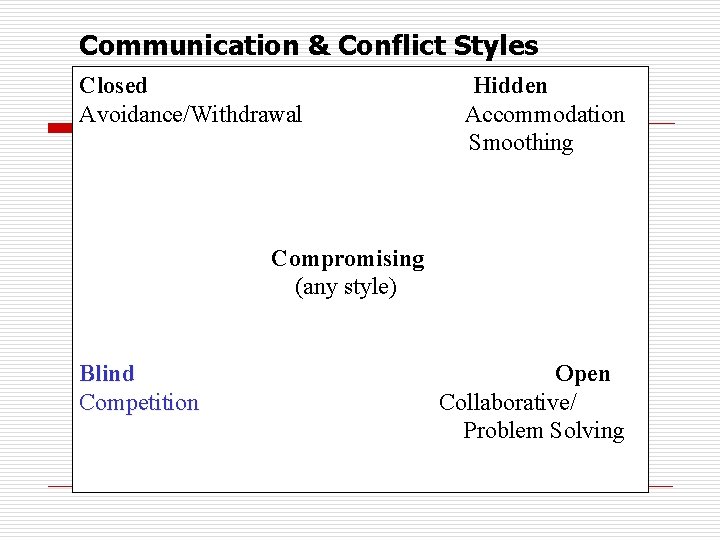
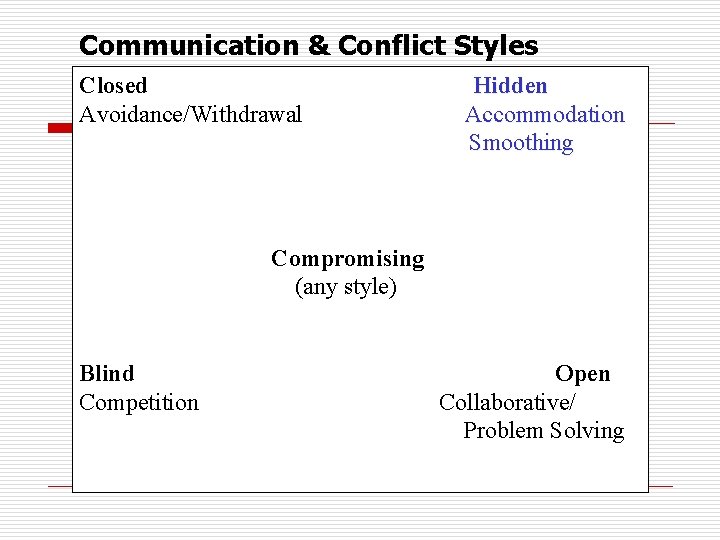
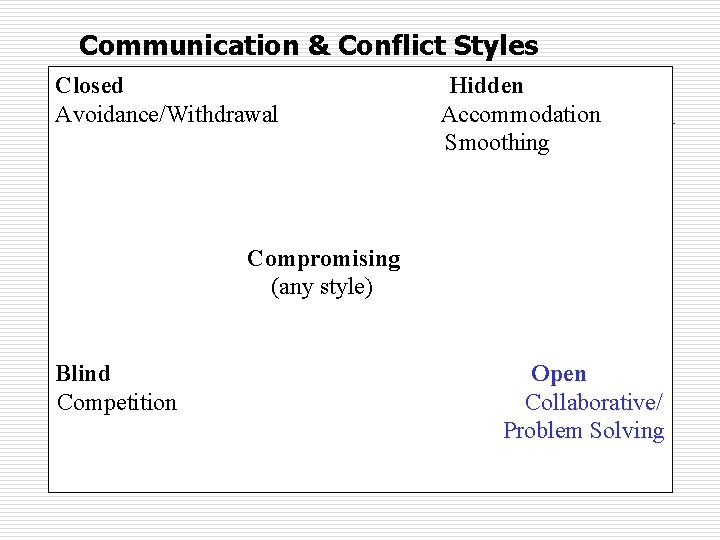
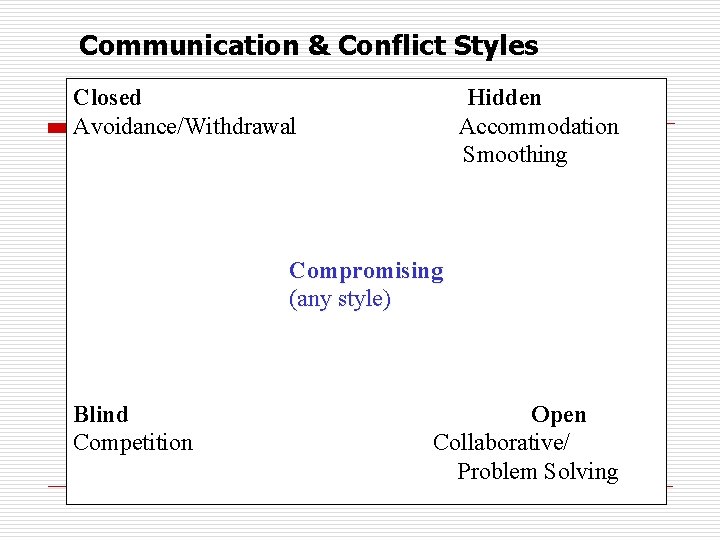
Communication & Conflict Styles Closed Hidden Avoidance/Withdrawal Accommodation Smoothing Compromising (any style) Blind Open Competition Collaborative/ Problem Solving
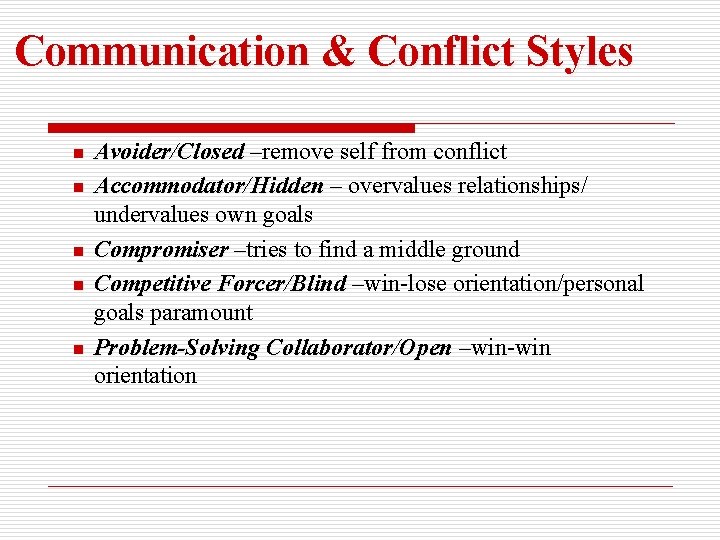
Communication & Conflict Styles n n n Avoider/Closed –remove self from conflict Avoider/Closed Accommodator/Hidden – overvalues relationships/ Accommodator/Hidden undervalues own goals Compromiser –tries to find a middle ground Compromiser Competitive Forcer/Blind –win-lose orientation/personal Forcer/Blind goals paramount Problem-Solving Collaborator/Open –win-win Collaborator/Open orientation
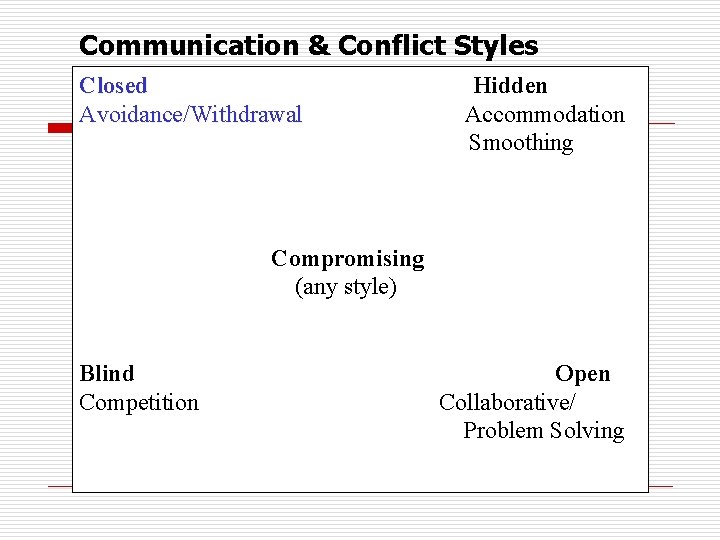
Communication & Conflict Styles Closed Hidden Avoidance/Withdrawal Accommodation Smoothing Compromising (any style) Blind Open Competition Collaborative/ Problem Solving
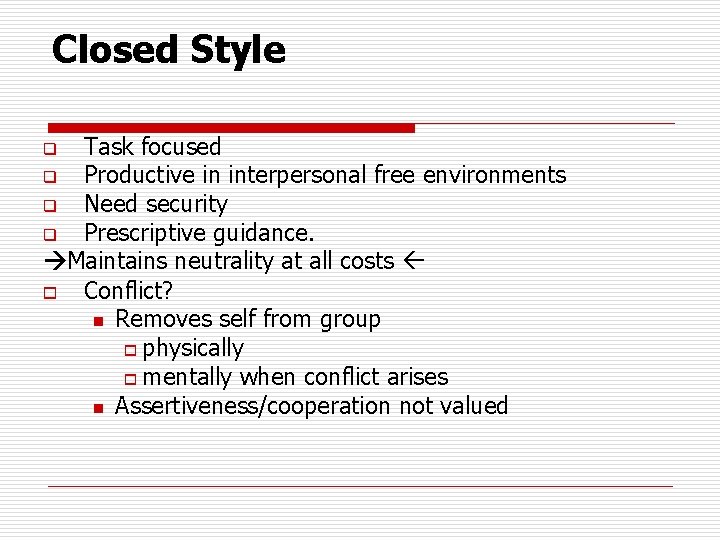
Closed Style Task focused q Productive in interpersonal free environments q Need security q Prescriptive guidance. Maintains neutrality at all costs o Conflict? n Removes self from group o physically o mentally when conflict arises n Assertiveness/cooperation not valued q
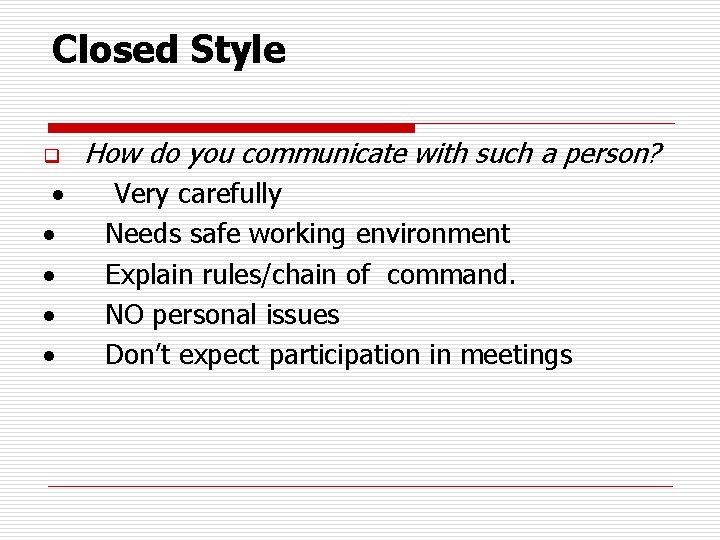
Closed Style q How do you communicate with such a person? · Very carefully · Needs safe working environment · Explain rules/chain of command. · NO personal issues · Don’t expect participation in meetings
Communication & Conflict Styles Closed Hidden Avoidance/Withdrawal Accommodation Smoothing Compromising (any style) Blind Open Competition Collaborative/ Competition Problem Solving
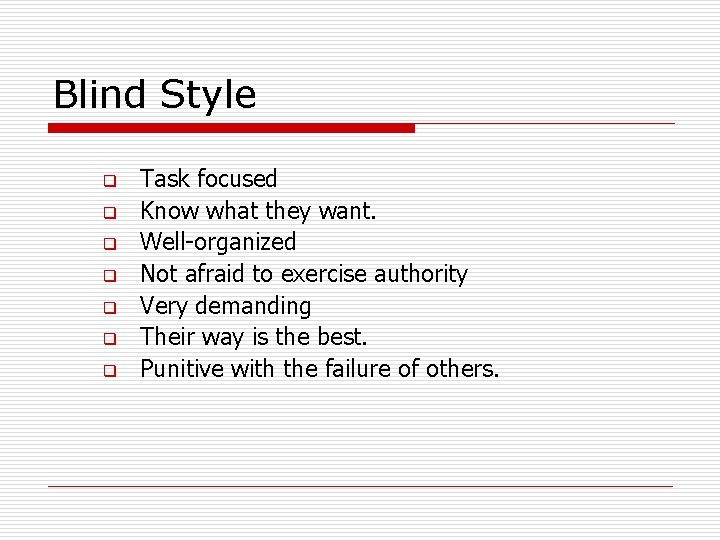
Blind Style q q q q Task focused Know what they want. Well-organized Not afraid to exercise authority Very demanding Their way is the best. Punitive with the failure of others.
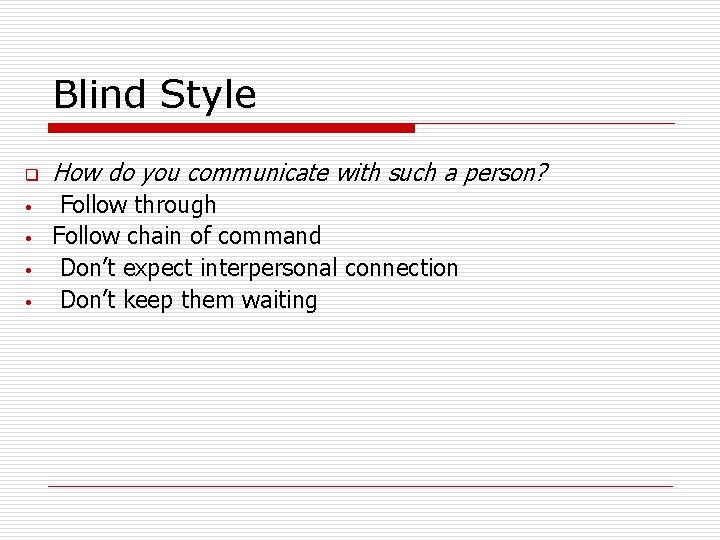
Blind Style q • • How do you communicate with such a person? Follow through Follow chain of command Don’t expect interpersonal connection Don’t keep them waiting
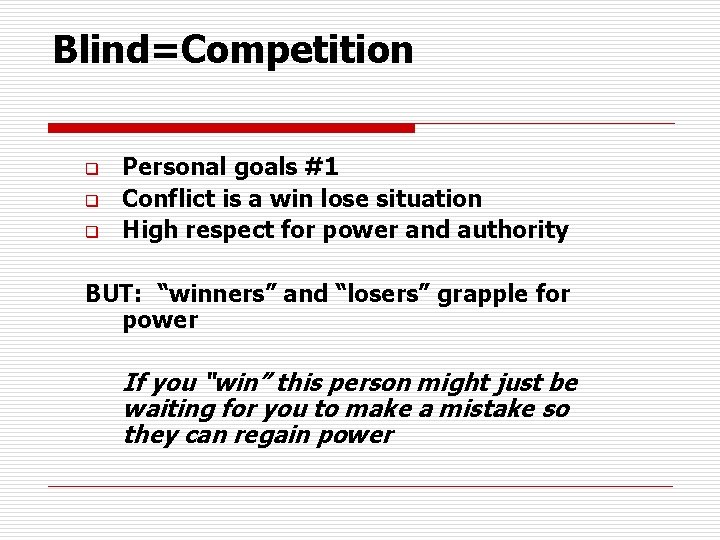
Blind=Competition q q q Personal goals #1 Conflict is a win lose situation High respect for power and authority BUT: “winners” and “losers” grapple for power If you “win” this person might just be waiting for you to make a mistake so they can regain power
Communication & Conflict Styles Closed Hidden Avoidance/Withdrawal Accommodation Smoothing Compromising (any style) Blind Open Competition Collaborative/ Problem Solving
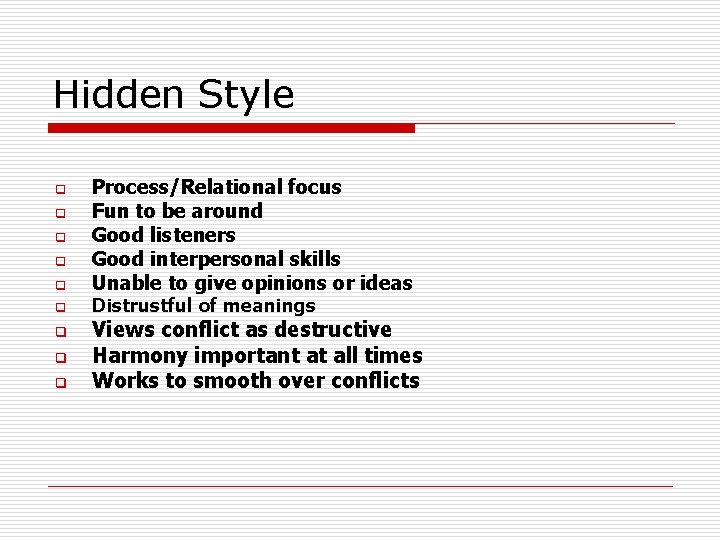
Hidden Style q q q q q Process/Relational focus Fun to be around Good listeners Good interpersonal skills Unable to give opinions or ideas Distrustful of meanings Views conflict as destructive Harmony important at all times Works to smooth over conflicts
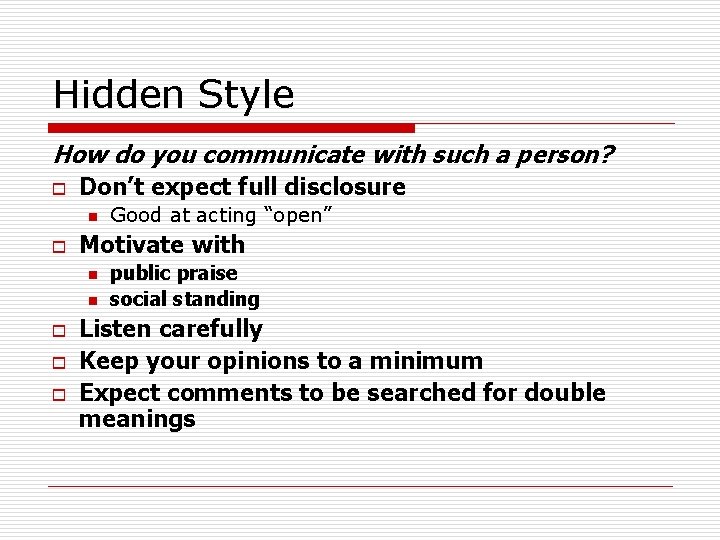
Hidden Style How do you communicate with such a person? o Don’t expect full disclosure n o Motivate with n n o o o Good at acting “open” public praise social standing Listen carefully Keep your opinions to a minimum Expect comments to be searched for double meanings
Communication & Conflict Styles Closed Hidden Avoidance/Withdrawal Accommodation Smoothing Compromising (any style) Blind Open Competition Collaborative/ Problem Solving
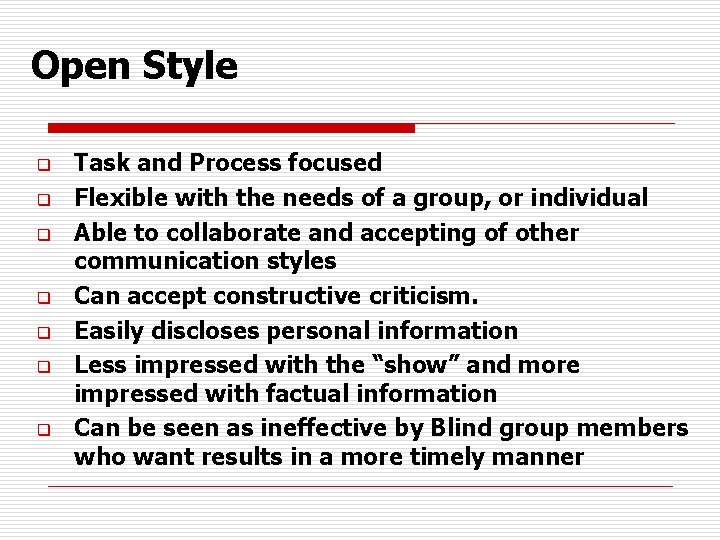
Open Style q q q q Task and Process focused Flexible with the needs of a group, or individual Able to collaborate and accepting of other communication styles Can accept constructive criticism. Easily discloses personal information Less impressed with the “show” and more impressed with factual information Can be seen as ineffective by Blind group members who want results in a more timely manner
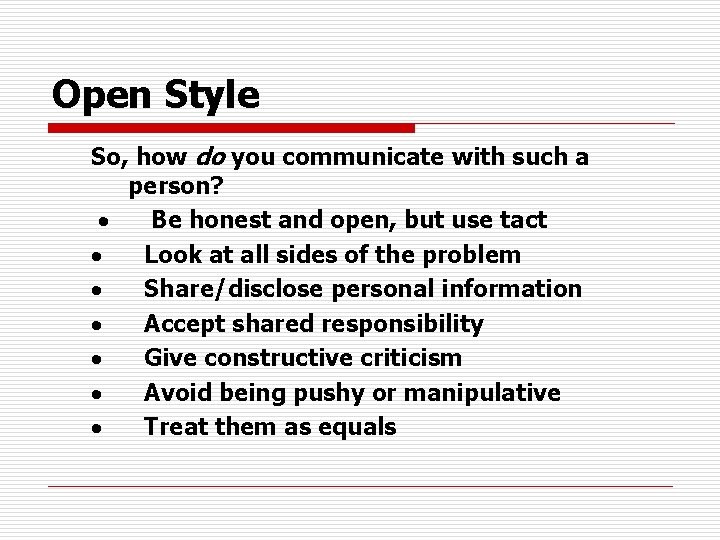
Open Style So, how do you communicate with such a person? · Be honest and open, but use tact · Look at all sides of the problem · Share/disclose personal information · Accept shared responsibility · Give constructive criticism · Avoid being pushy or manipulative · Treat them as equals
Communication & Conflict Styles Closed Hidden Avoidance/Withdrawal Accommodation Smoothing Compromising (any style) Blind Open Competition Collaborative/ Problem Solving
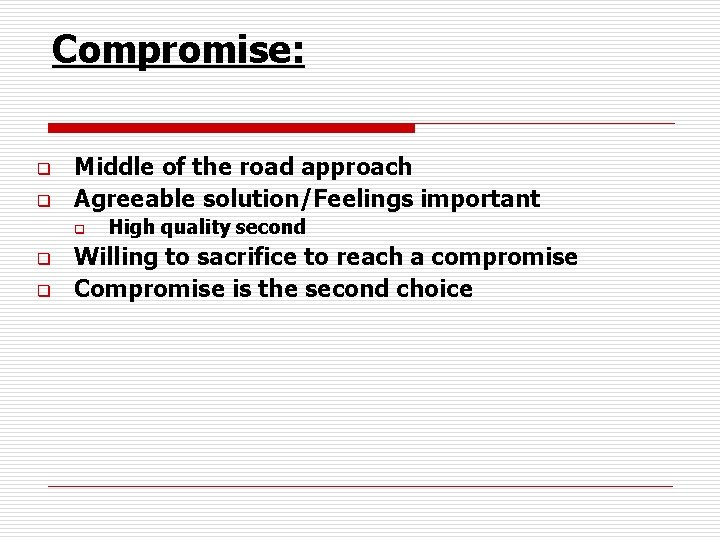
Compromise: q q Middle of the road approach Agreeable solution/Feelings important q q q High quality second Willing to sacrifice to reach a compromise Compromise is the second choice
Resolving Conflicts n Cooperative vs. Competitive Conflict l Cooperative – willingness to share rewards to resolve conflicts n n Seek mutually beneficial way to resolve disagreement Win-win situation l Competitive – all-or-nothing; must defeat other participants See winning as a test of personal worth n Win-lose situation Transform conflict from competitive to cooperative n Effective communication techniques n Role reversal n l
Resolving Conflicts n Focus on the problem, not the person – Problem approach: – “It is not the evidence you mentioned or the logic used to consider the validity and value of that evidence, but the conclusions drawn from that information that I find wrong” – Person approach: – “You always try to force your ideas on us. It’s probably because you are just a man/woman”
Productive vs. Destructive Results n Productive – all participants are satisfied and believe they Productive have gained something l l n Cooperative problem-solving methods Willingness to trust each other Destructive – all participants are dissatisfied and believe they have lost something l l Win-lose encounters characterized by misconceptions and misperceptions; inaccurate, sketchy, and disruptive communication Hesitancy to trust each other
End of presentation
- Slides: 66