
SMALL ENGINES LAB SAFETY 3 most common causes
SMALL ENGINES LAB SAFETY
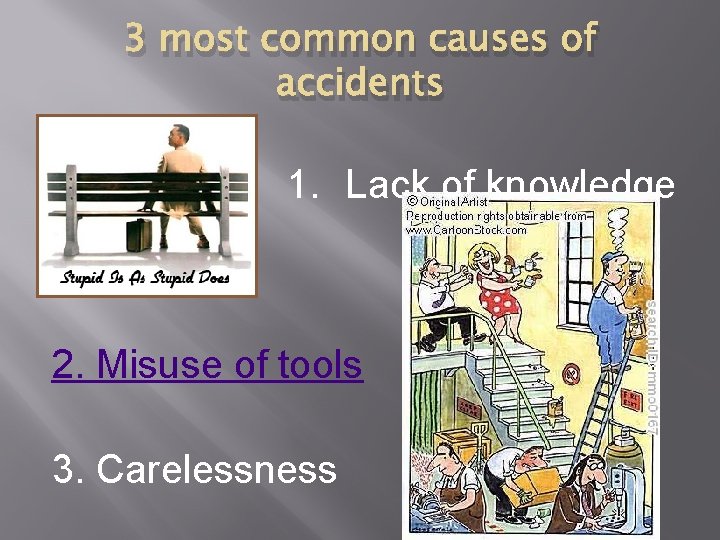
3 most common causes of accidents 1. Lack of knowledge 2. Misuse of tools 3. Carelessness
It is unsafe when… � You could get hurt � Someone else could get hurt � The tools and/or equipment could get hurt
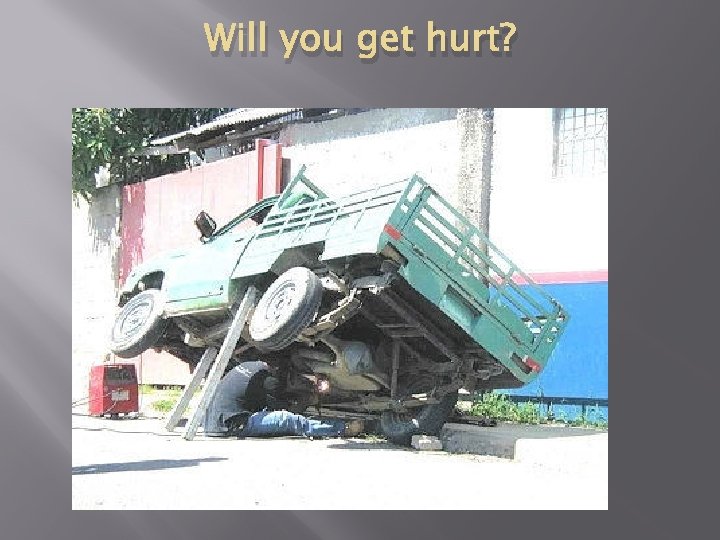
Will you get hurt?
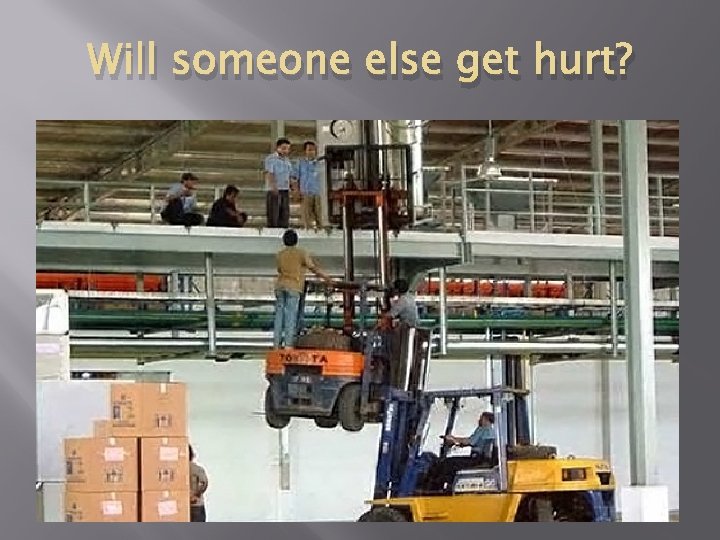
Will someone else get hurt?
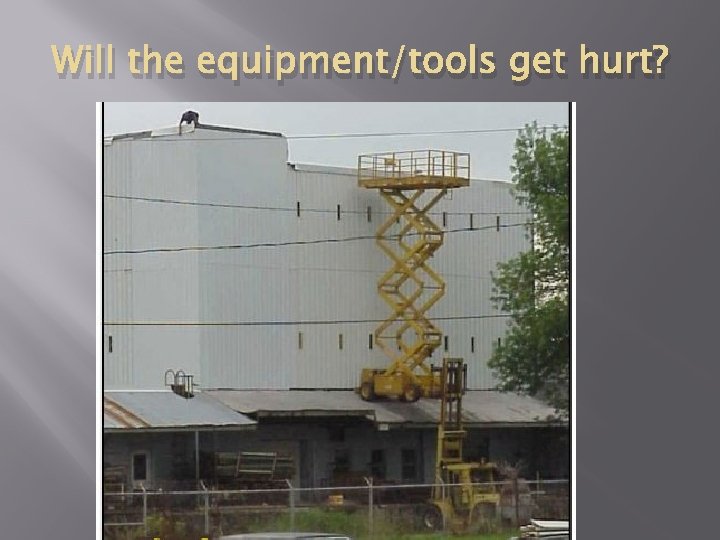
Will the equipment/tools get hurt?
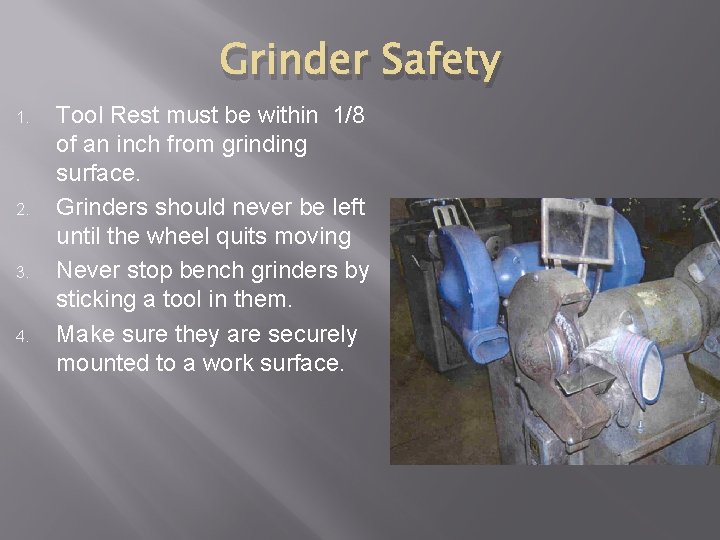
Grinder Safety 1. 2. 3. 4. Tool Rest must be within 1/8 of an inch from grinding surface. Grinders should never be left until the wheel quits moving Never stop bench grinders by sticking a tool in them. Make sure they are securely mounted to a work surface.
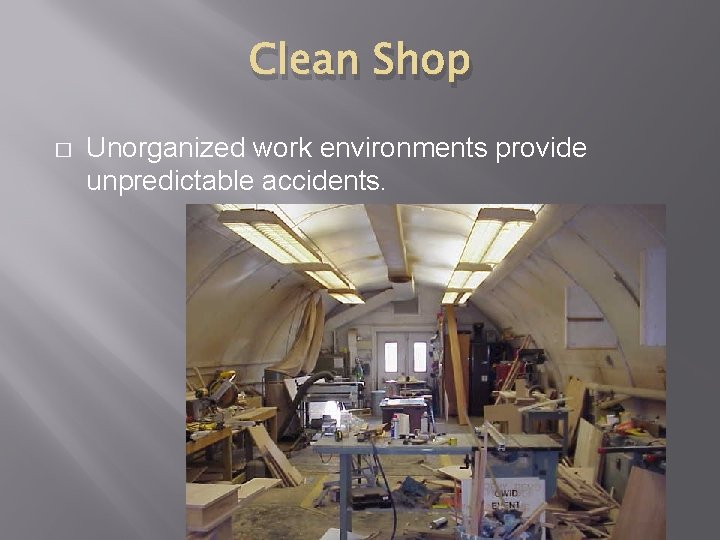
Clean Shop � Unorganized work environments provide unpredictable accidents.
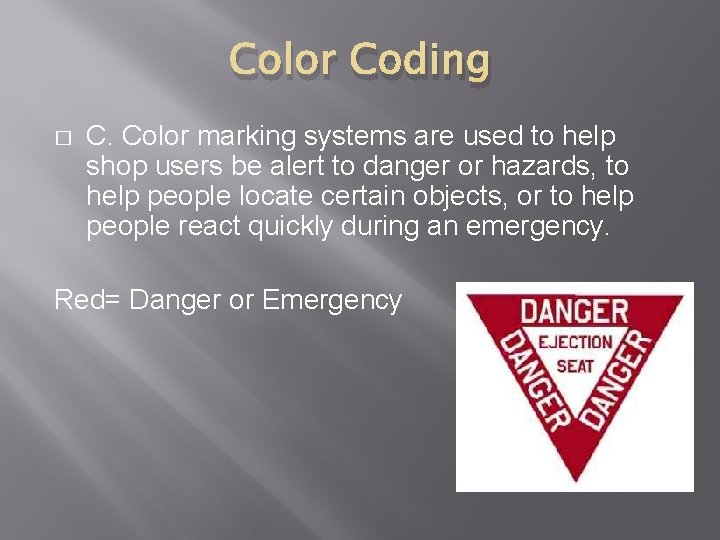
Color Coding � C. Color marking systems are used to help shop users be alert to danger or hazards, to help people locate certain objects, or to help people react quickly during an emergency. Red= Danger or Emergency
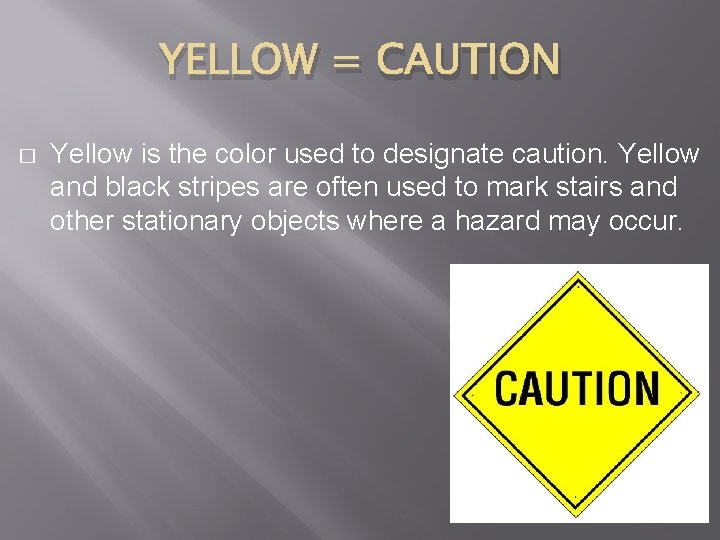
YELLOW = CAUTION � Yellow is the color used to designate caution. Yellow and black stripes are often used to mark stairs and other stationary objects where a hazard may occur.
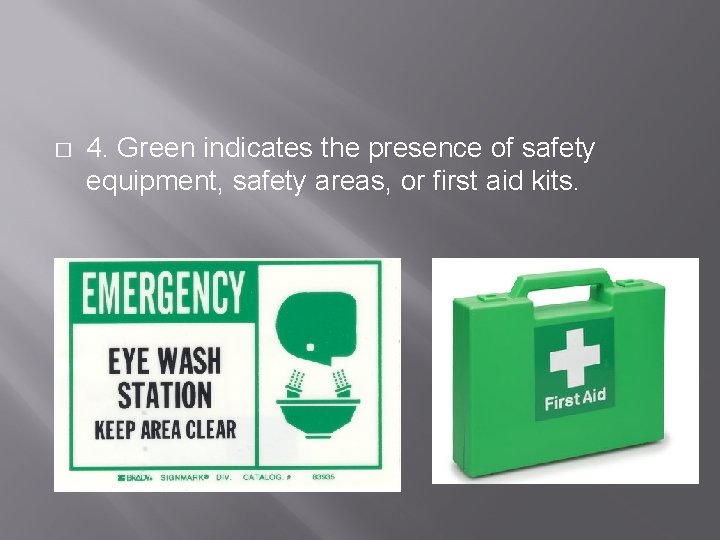
� 4. Green indicates the presence of safety equipment, safety areas, or first aid kits.
Correct Shop Attire � � � Safety Glasses Headgear Protective Clothing Footwear Gloves
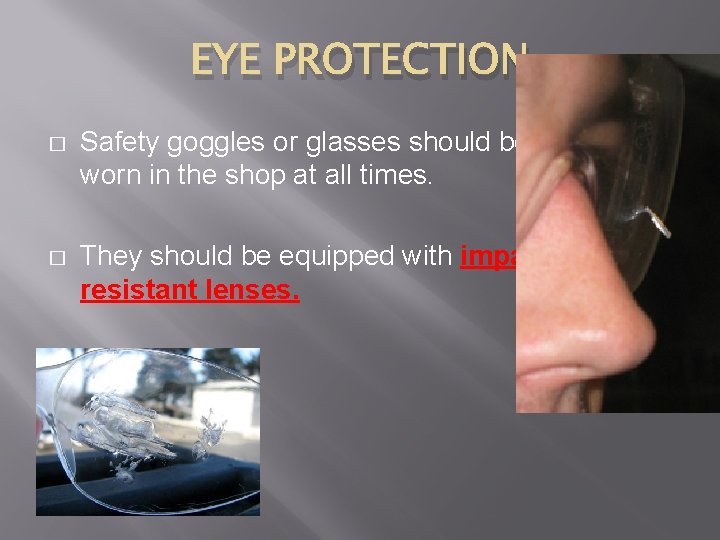
EYE PROTECTION � Safety goggles or glasses should be worn in the shop at all times. � They should be equipped with impact resistant lenses.
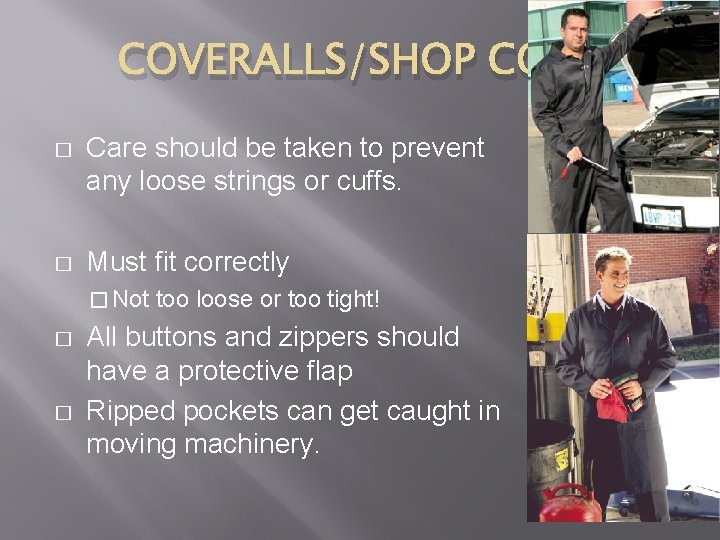
COVERALLS/SHOP COAT � Care should be taken to prevent any loose strings or cuffs. � Must fit correctly � Not � � too loose or too tight! All buttons and zippers should have a protective flap Ripped pockets can get caught in moving machinery.
FOOTWEAR � NO OPEN TOED SHOES � SANDALS/FLIP FLOPS ARE NOT ALLOWED!!!! � You may leave a spare of shoes in the lab.
Hair/Jewelry/Loose Articles of Clothing. � � � Catch hazards Tuck ties into your shirt Rings removed Long hair tied back Loose clothing is likely to get caught, and or absorb spilled gas.
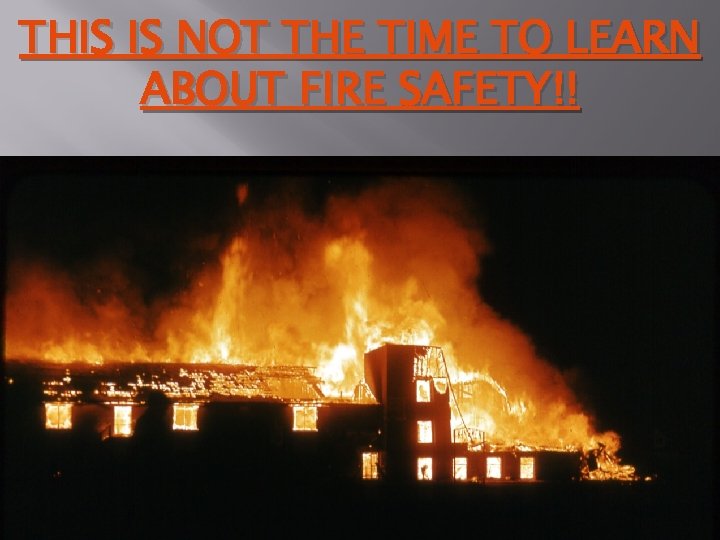
THIS IS NOT THE TIME TO LEARN ABOUT FIRE SAFETY!!
WHAT YOU NEED TO KNOW � CAUSES OF FIRES � METHODS OF PREVENTING FIRES � METHODS OF EXTINGUISHING FIRES � EMERGENCY PROCEDURES IN THE EVENT OF A FIRE
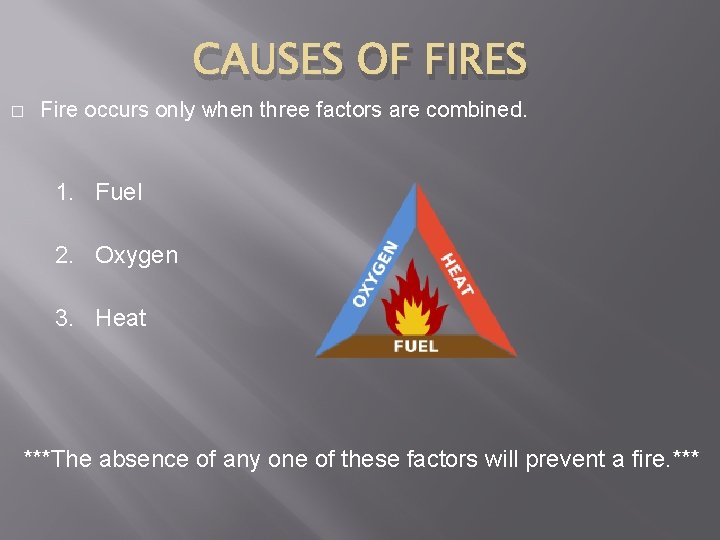
CAUSES OF FIRES � Fire occurs only when three factors are combined. 1. Fuel 2. Oxygen 3. Heat ***The absence of any one of these factors will prevent a fire. ***
YOU ARE NOT REQUIRED TO USE A FIRE EXTINGUISHER ON A FIRE. � Your responsibilities in a fire situation are: � Yell “fire” to make everyone in your area aware of the situation. � Assess the fire condition and decide if you have the necessary resources to extinguish it, or if you need help. � Remember: You are not a trained fire fighter. YOU SHOULD NEVER PUT YOUR LIFE IN DANGER.
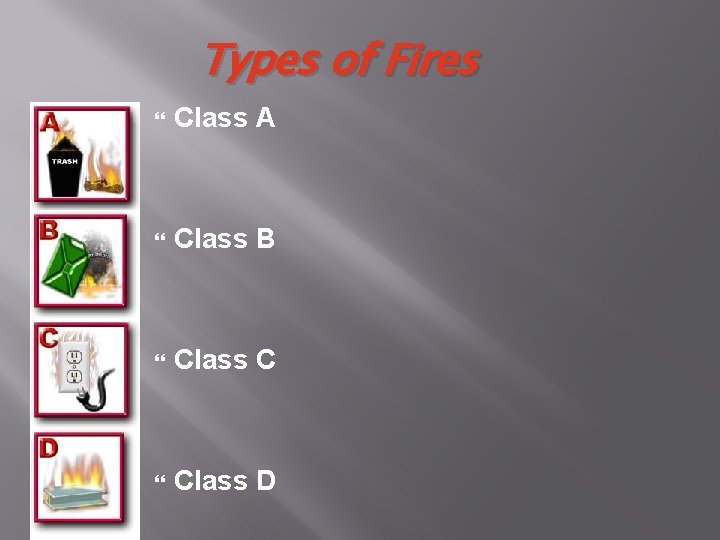
Types of Fires Class A Class B Class C Class D

CLASS A � � � Fires in wood, paper, cloth, and similar common materials. These materials usually form glowing coals, which help to sustain the fire. Can be stopped most readily by cooling with water or watery solutions. Water has the advantage of usually being plentiful and cheap.
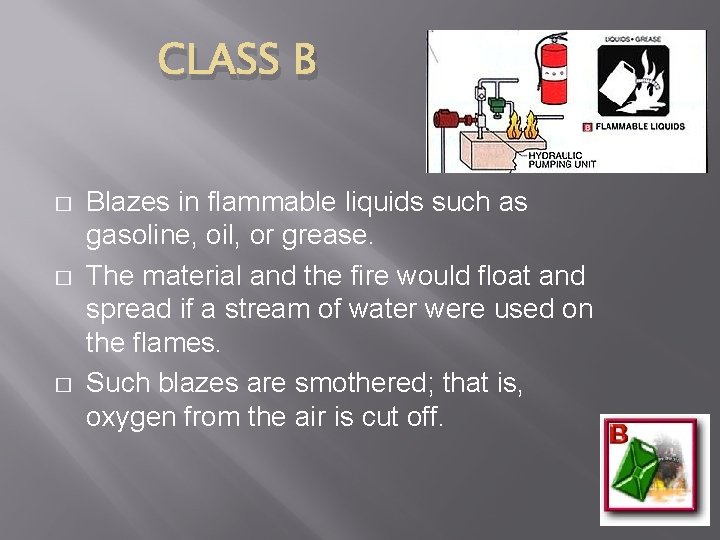
CLASS B � � � Blazes in flammable liquids such as gasoline, oil, or grease. The material and the fire would float and spread if a stream of water were used on the flames. Such blazes are smothered; that is, oxygen from the air is cut off.
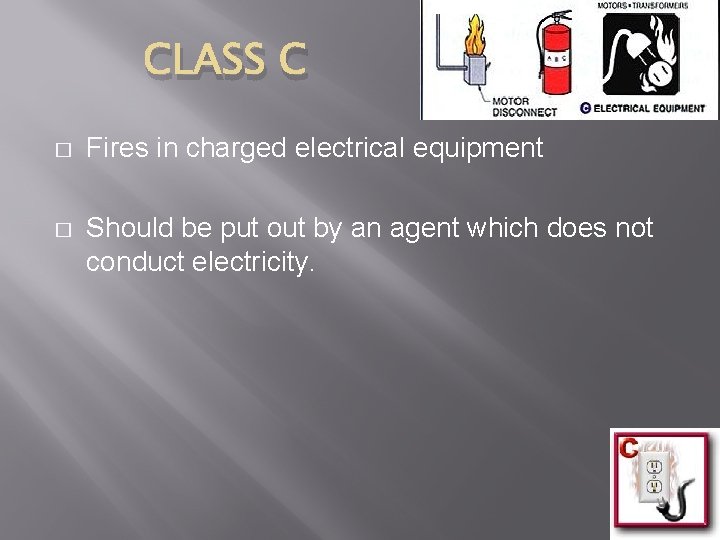
CLASS C � Fires in charged electrical equipment � Should be put out by an agent which does not conduct electricity.
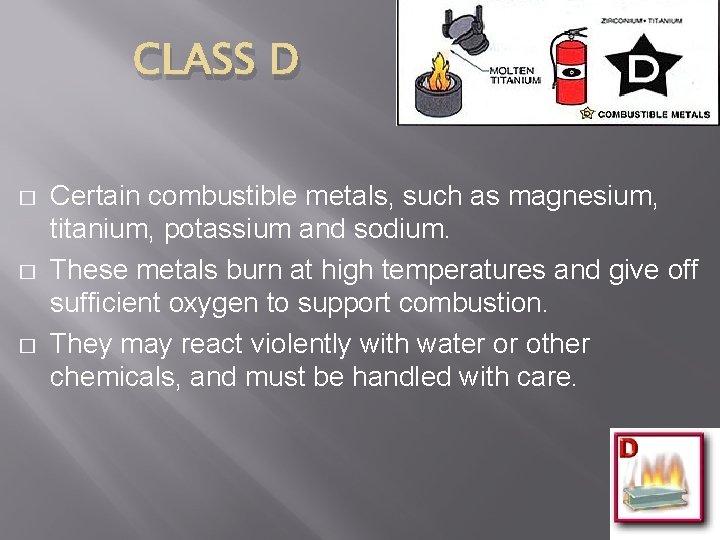
CLASS D � � � Certain combustible metals, such as magnesium, titanium, potassium and sodium. These metals burn at high temperatures and give off sufficient oxygen to support combustion. They may react violently with water or other chemicals, and must be handled with care.
Different Kinds of Extinguishers The common types of fire extinguishers: Pressurized Water (wood, paper, trash) � Carbon Dioxide (electrical) � Dry chemical (A, B, C) � Extinguishers that foam are not to be used on electrical fires. � � Class D fire extinguishers contain special chemicals that can extinguish combustible metal fires.
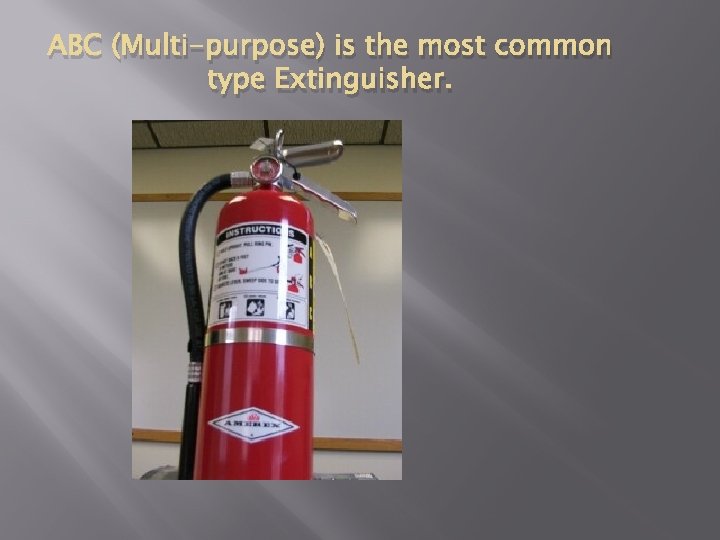
ABC (Multi-purpose) is the most common type Extinguisher.
Operation of an extinguisher Remember PASS � � � P = Pull the pin. A = Aim the nozzle at the base of the fire. S = Squeeze the handle. S = Sweep from side to side. The PASS Method will work on all types of extinguishers.
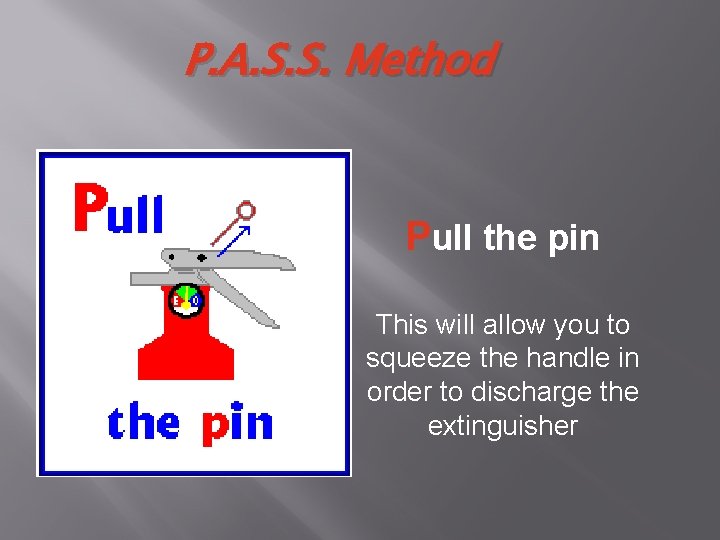
P. A. S. S. Method Pull the pin This will allow you to squeeze the handle in order to discharge the extinguisher
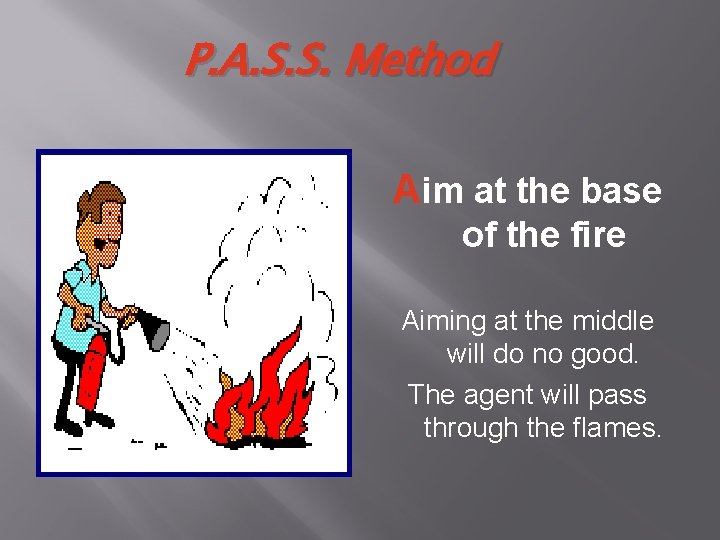
P. A. S. S. Method Aim at the base of the fire Aiming at the middle will do no good. The agent will pass through the flames.
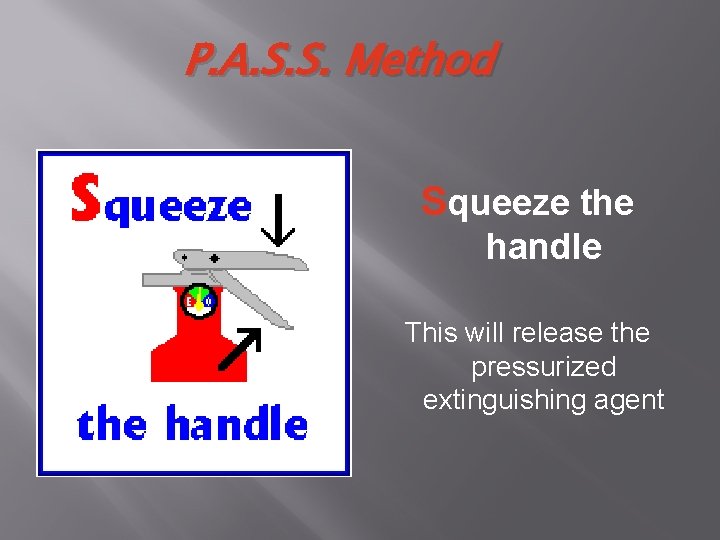
P. A. S. S. Method Squeeze the handle This will release the pressurized extinguishing agent
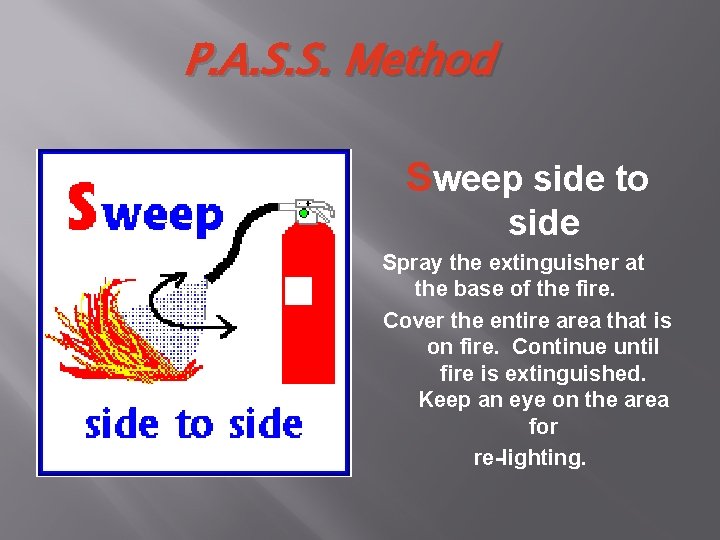
P. A. S. S. Method Sweep side to side Spray the extinguisher at the base of the fire. Cover the entire area that is on fire. Continue until fire is extinguished. Keep an eye on the area for re-lighting.
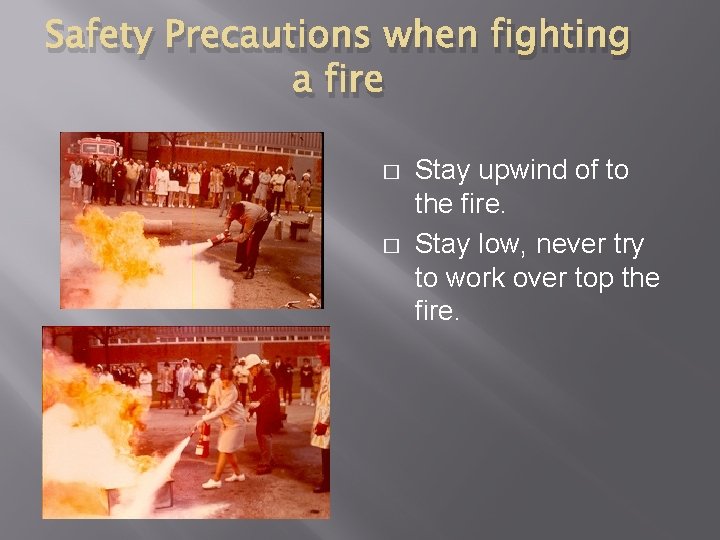
Safety Precautions when fighting a fire � � Stay upwind of to the fire. Stay low, never try to work over top the fire.
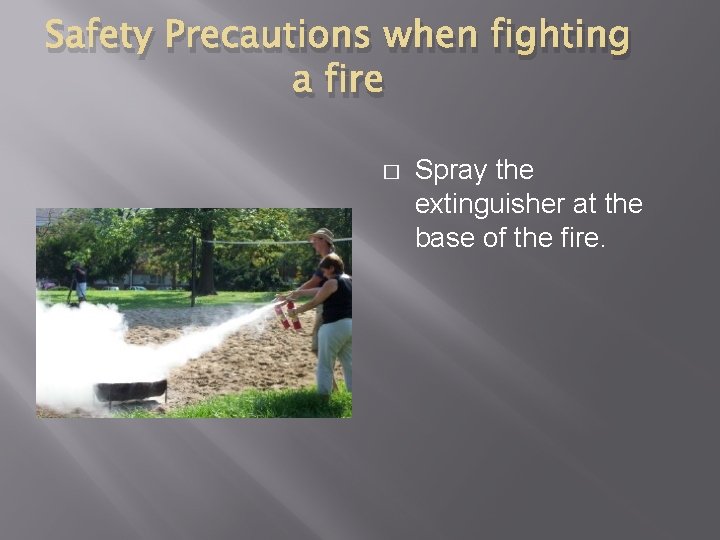
Safety Precautions when fighting a fire � Spray the extinguisher at the base of the fire.
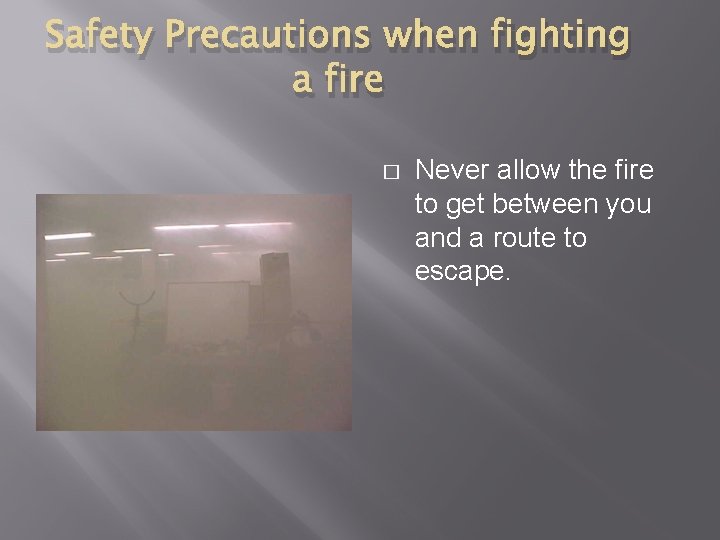
Safety Precautions when fighting a fire � Never allow the fire to get between you and a route to escape.
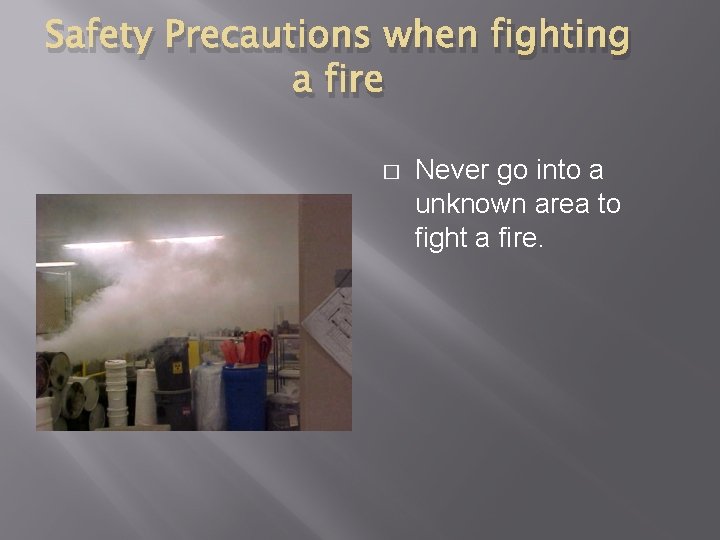
Safety Precautions when fighting a fire � Never go into a unknown area to fight a fire.
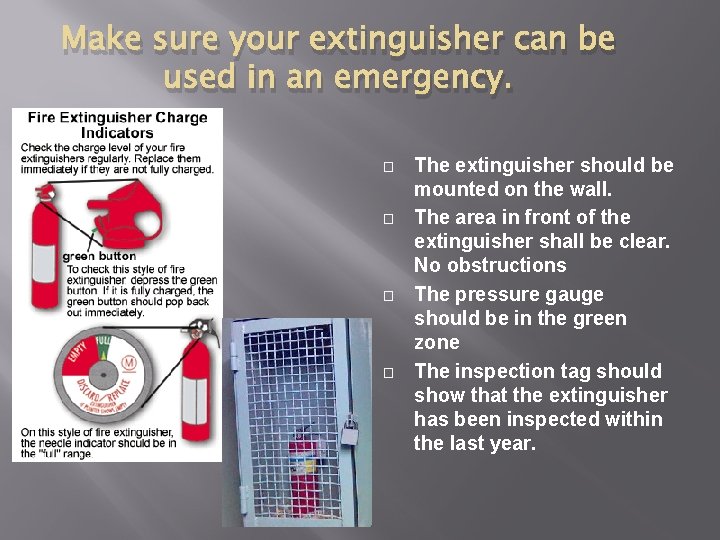
Make sure your extinguisher can be used in an emergency. � � The extinguisher should be mounted on the wall. The area in front of the extinguisher shall be clear. No obstructions The pressure gauge should be in the green zone The inspection tag should show that the extinguisher has been inspected within the last year.
You are NOT required to use a fire extinguisher on a fire. � Your responsibilities in a fire situation are: � Assess the fire condition. � Yell “fire” to make everyone in your area aware of the situation. � Remember you are not a trained fire fighter. You should never put your life in danger.
- Slides: 39