
Small Animal Science SA 101 Classifying Small Animals


- Slides: 15
Small Animal Science SA 101 Classifying Small Animals This presentation was produced and is copyrighted by Stewart-Peterson® Inc. 2003 -2019. Permission is granted for use by active Ag. Ed. Net. com® subscribers. All other use is prohibited. STEWART-PETERSON is a registered trademark.
Main idea: �What is small animal science and how are animals classified?
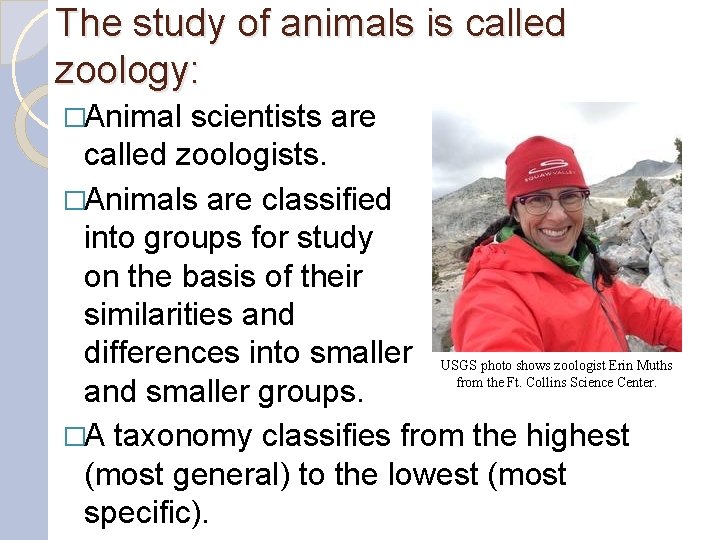
The study of animals is called zoology: �Animal scientists are called zoologists. �Animals are classified into groups for study on the basis of their similarities and differences into smaller USGS photo shows zoologist Erin Muths from the Ft. Collins Science Center. and smaller groups. �A taxonomy classifies from the highest (most general) to the lowest (most specific).
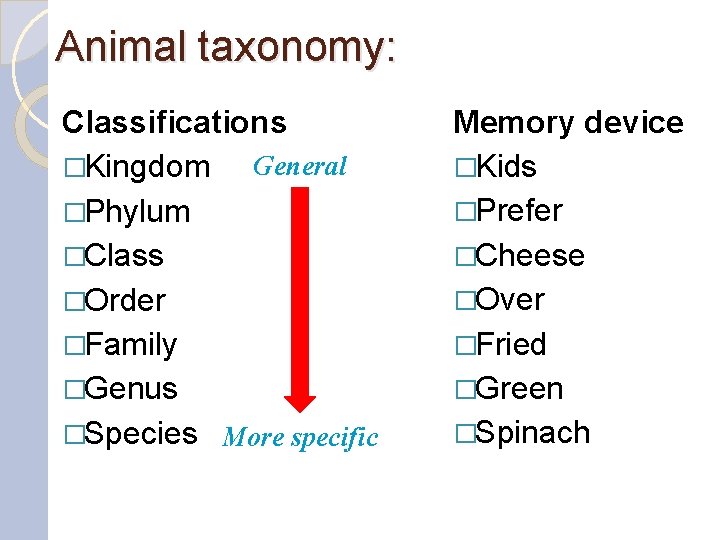
Animal taxonomy: Classifications General �Kingdom �Phylum �Class �Order �Family �Genus �Species More specific Memory device �Kids �Prefer �Cheese �Over �Fried �Green �Spinach
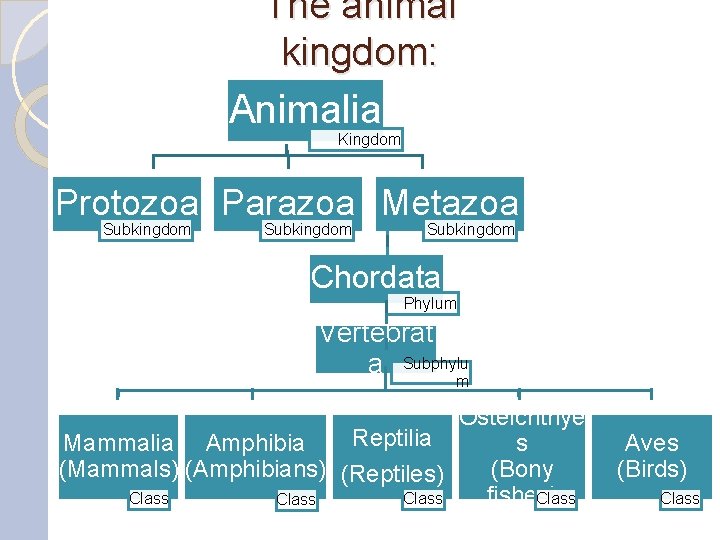
The animal kingdom: Animalia Kingdom Protozoa Parazoa Metazoa Subkingdom Chordata Phylum Vertebrat a Subphylum Osteichthye Reptilia Mammalia Amphibia s (Mammals) (Amphibians) (Reptiles) (Bony fishes) Class Aves (Birds) Class
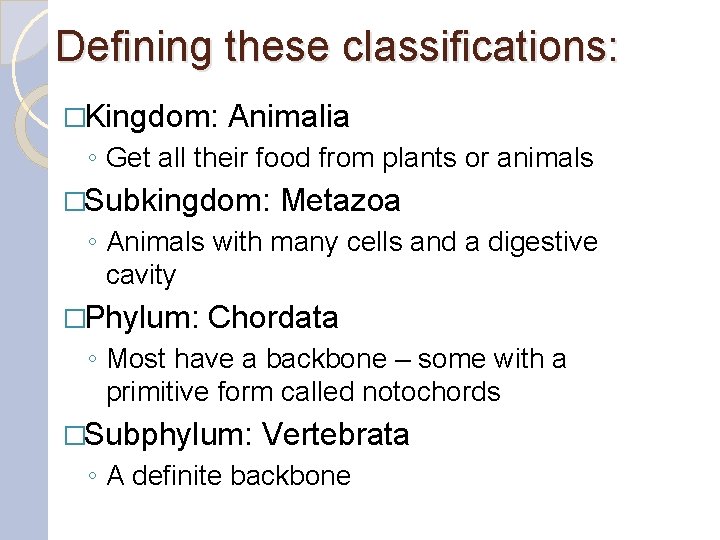
Defining these classifications: �Kingdom: Animalia ◦ Get all their food from plants or animals �Subkingdom: Metazoa ◦ Animals with many cells and a digestive cavity �Phylum: Chordata ◦ Most have a backbone – some with a primitive form called notochords �Subphylum: Vertebrata ◦ A definite backbone
Reviewing 5 classes of vertebrates: �Mammalia or mammals (dogs, cats and rabbits) �Amphibia or amphibians (frogs and toads) �Reptilia or reptiles (snakes and lizards) �Osteichthyes (bony fishes) �Aves or birds
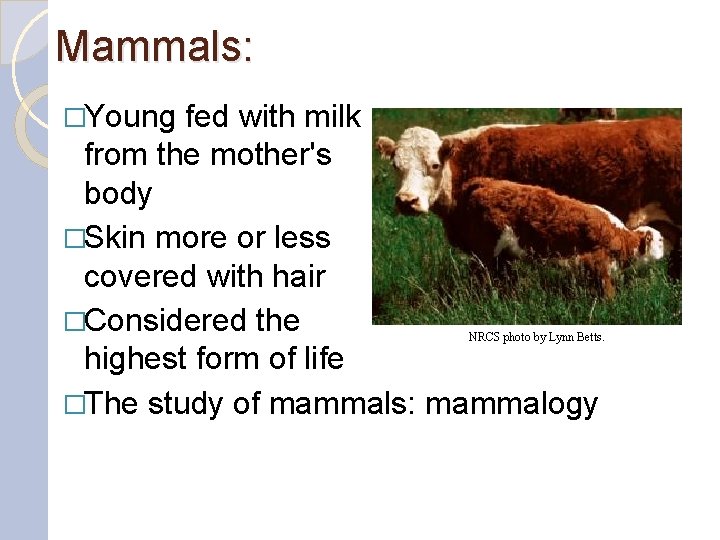
Mammals: �Young fed with milk from the mother's body �Skin more or less covered with hair �Considered the highest form of life �The study of mammals: mammalogy NRCS photo by Lynn Betts.
More on mammals: �A very diverse group �Aquatic mammals: much or all of their lives in water �Marine mammals: much or all of their lives in the sea �Marsupials: pouch for their young �Chiroptera: flying mammals
Examples of mammals: �Humans �Non-human primates �Dogs, cats, rabbits, mice, rats, guinea pigs, chinchillas, ferrets, cows, pigs, goats, sheep, horses �Marine mammals like dolphins and whales �Marsupials like kangaroos and possums �Flying mammals like bats
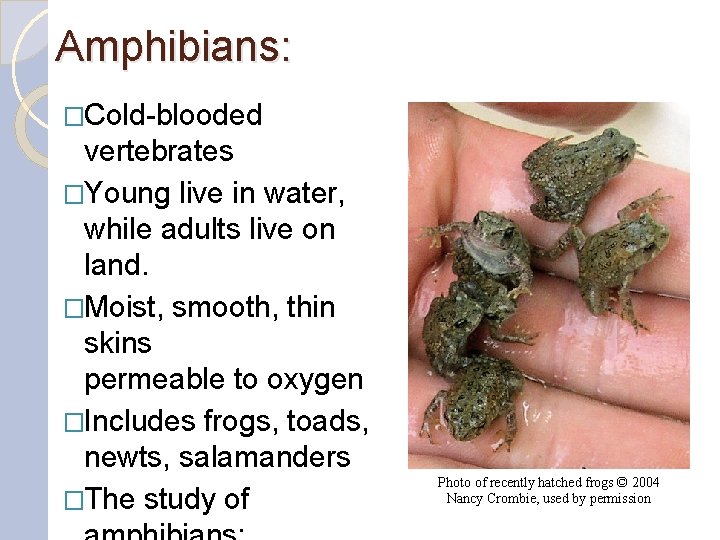
Amphibians: �Cold-blooded vertebrates �Young live in water, while adults live on land. �Moist, smooth, thin skins permeable to oxygen �Includes frogs, toads, newts, salamanders �The study of Photo of recently hatched frogs © 2004 Nancy Crombie, used by permission
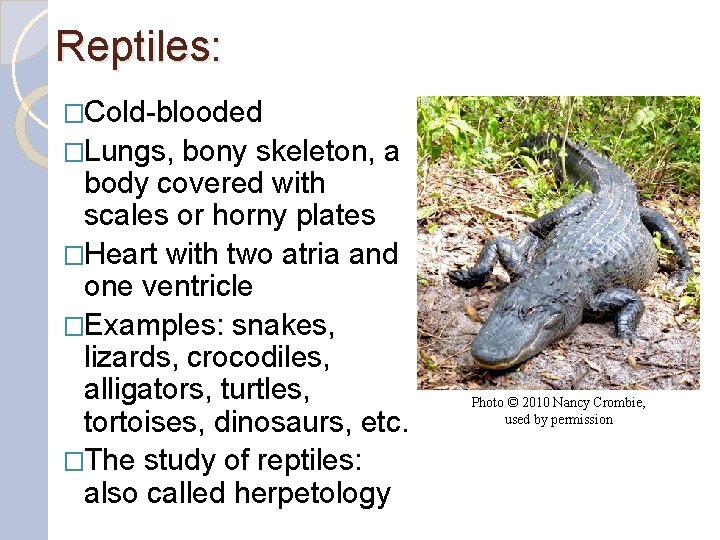
Reptiles: �Cold-blooded �Lungs, bony skeleton, a body covered with scales or horny plates �Heart with two atria and one ventricle �Examples: snakes, lizards, crocodiles, alligators, turtles, tortoises, dinosaurs, etc. �The study of reptiles: also called herpetology Photo © 2010 Nancy Crombie, used by permission
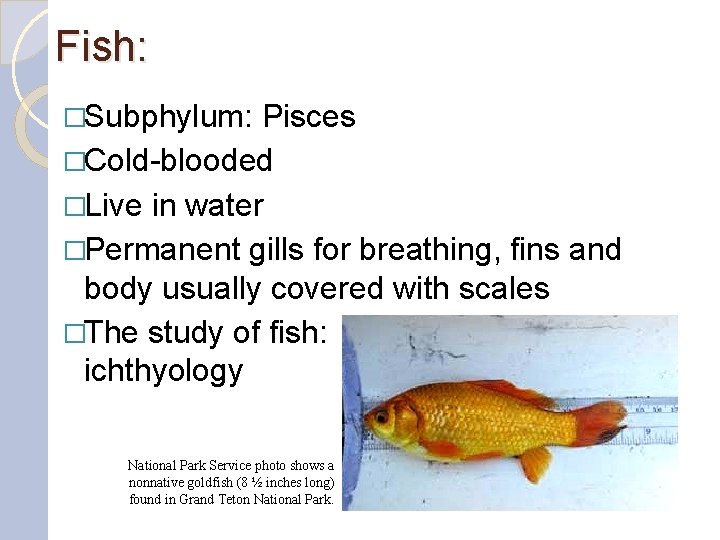
Fish: �Subphylum: Pisces �Cold-blooded �Live in water �Permanent gills for breathing, fins and body usually covered with scales �The study of fish: ichthyology National Park Service photo shows a nonnative goldfish (8 ½ inches long) found in Grand Teton National Park.
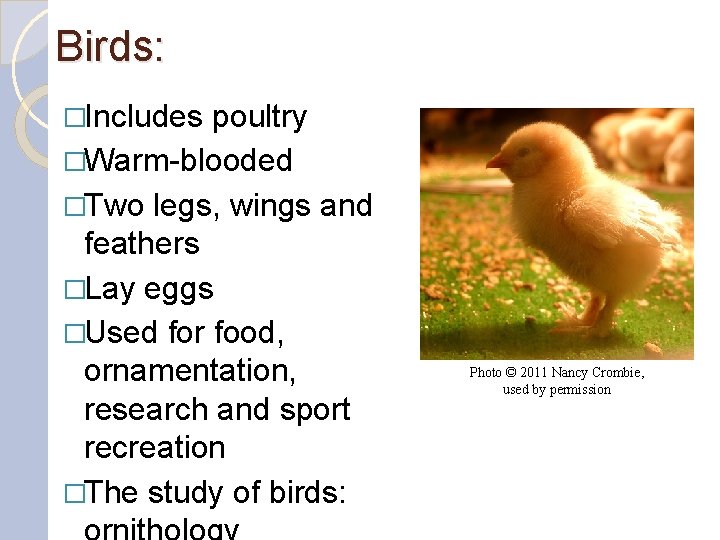
Birds: �Includes poultry �Warm-blooded �Two legs, wings and feathers �Lay eggs �Used for food, ornamentation, research and sport recreation �The study of birds: Photo © 2011 Nancy Crombie, used by permission
Small Animal Science www. agednet. com 800 -236 -7862 This presentation was produced and is copyrighted by Stewart-Peterson® Inc. 2003 -2019. Permission is granted for use by active Ag. Ed. Net. com® subscribers. All other use is prohibited. STEWART-PETERSON is a registered trademark.